Is the Seller Really “Paying” for Anything?
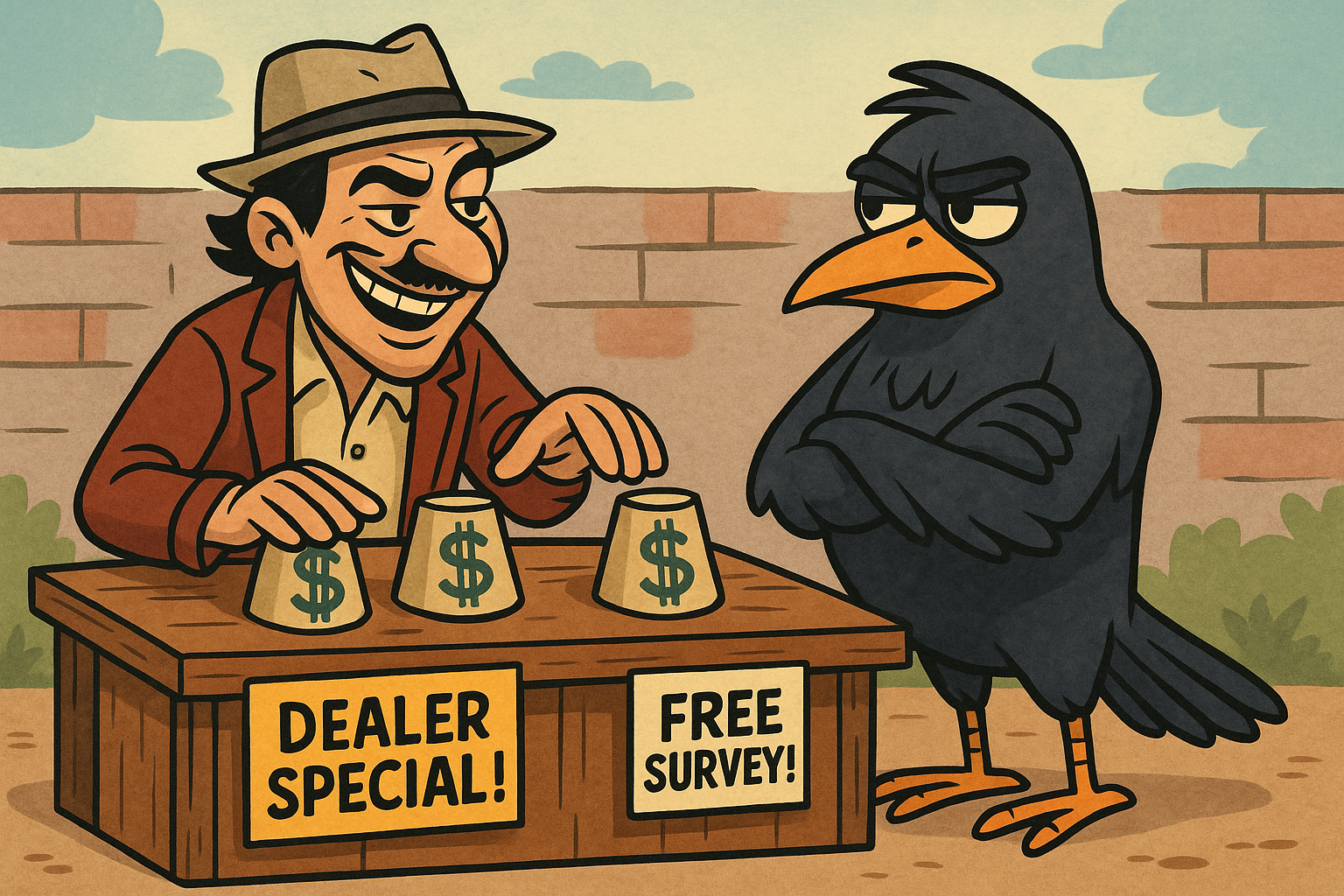
I know I compare real estate negotiations to car lot deals a lot—but there’s a reason. Most people go through more car purchases than home sales in their lives. And while they aren’t identical, the dynamics can be surprisingly similar. Especially when fast talk and fuzzy math make it feel like the only people winning are the salespeople or agents.
We’ve all had that moment on a car lot where the salesperson hypes up the amazing price you’re getting, or how much they’re giving you for your trade. They talk in circles, and by the end of it, you’re not sure what just happened.
Here’s a simple way to cut through the noise:
The only number that matters is the difference between the price of the new car and the value of your trade.
That’s your bottom line—the amount you’re actually coming out of pocket (cash or financed). Forget how they slice and dice it. That one number tells you if it’s a good deal or not.
A few years ago, I went to CarMax before visiting a dealership. They offered me $10K for my trade. I figured if I could get the new vehicle for $40K, I’d be financing $30K.
At the dealership, I negotiated and got the deal I wanted—$30K difference. But when I looked at the paperwork, they had listed my trade at $14K and the truck at $44K.
Did I care? Not a bit. The bottom line was still $30K, which is what I’d set out to spend. They got to show a higher sale price; I got the deal I wanted. Everybody wins.
Same thing in real estate.
Deals often go sideways because people start bickering over who’s “paying” for the survey, the HOA fee, or some other line item. But here’s how it actually works (not always in this order):
- Buyer (and/or their lender) wires money to the title company and signs paperwork
- Seller signs paperwork
- Expenses are paid
- Seller gets what’s left
“Who pays what” is mostly just semantics. In reality, the buyer is the only one bringing in new money. All closing costs are paid from that pool. The seller might “pay” some costs, but only with funds they received from the buyer’s money.
So what does that mean?
Focus on your bottom line.
If you’re the seller and the amount you’re taking home is what you expected—or better—don’t get bogged down in the minor stuff.
Sometimes it helps the deal move forward if the seller “pays” certain buyer costs—like a survey or title policy. That’s fine. Just build it into the price upfront. Then pay those costs at closing. (And where it makes sense, write the contract so the buyer covers those costs if they back out.)
Do it right, and the buyer feels like they’re getting something extra—while you still walk away with everything you wanted.
All because you focused on the number that actually matters: your bottom line. Not the noise above it.
Got a lot you might want to sell?
Get a FREE, no obligation report on what it could sell for today.
Get Your Lot Valuation
Own land instead?
Get a report for that here:
Get Your Land Value
Just a glutton for punishment?
Sign up now to get more articles like this in your email.
Sign Up Now
Leave a Reply