Tag: Seller Strategy

  • The Negotiation Nobody Notices

    The Negotiation Nobody Notices

    Buyers sometimes lose deals for a strange reason.

    They win too many small arguments.

    Most people think negotiation means squeezing every last concession out of the other side.

    But small concessions often trigger the same psychology we talked about earlier. People feel losses about twice as strongly as equivalent gains.

    So every small “win” for the buyer can feel like a loss to the seller.

    And losses tend to demand compensation.

    Imagine you’re buying a tract of land.

    The price is close to working.

    But during negotiations you start asking for a list of smaller items:

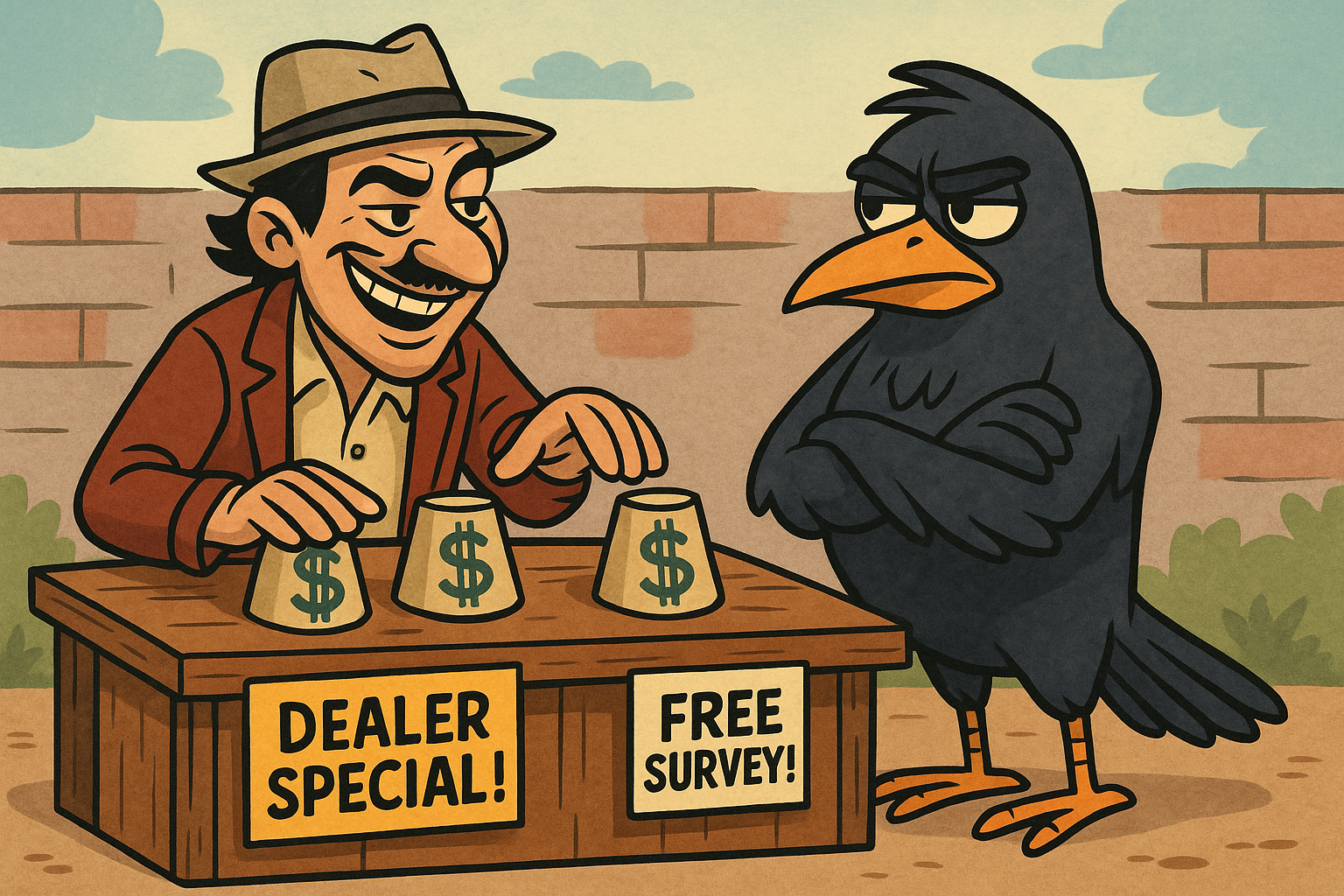
    Pay for the survey.
    Pay for title.
    Fix the fence.
    Cover some closing costs.

    None of these things are huge by themselves.

    But to the seller, every one of them feels like giving something up.

    Soon the deal starts to feel worse than the original offer.

    And the seller reacts the same way most people do when they feel losses stacking up.

    They push back harder on the price.

    Or they simply decide the deal isn’t worth the trouble.

    Ironically, buyers sometimes end up paying more by trying to win those smaller battles.

    The deals that close smoothly usually look different.

    Both sides focus on the big economics first.

    Once that works, they stop trying to win every small point.

    Because in negotiation, momentum matters.

    If the deal feels good, people want to finish it.

    If it starts to feel like a series of losses, they start looking for a way out.

    And most deals that fall apart don’t fail because of the big numbers.

    They fail because of the little ones.


    P.S. Before negotiating anything, it helps to know where you stand in the market. Even if you’re not looking to do anything today, the time to start paying attention is before you actually need to.

    That’s what the MBR Land Reality Check is for. Real market intelligence from someone with decades in the land business. You’ll know what’s selling, for how much, and what’s happening in terms of development.

    It’s free today. Never any obligation, and never any pressure to list.


    P.P.S. If you’re not ready for a Reality Check but liked reading this, you can get posts like this in your inbox below. Usually daily.


    Register to Receive Posts Via Email!

    By submitting, I understand I will receive marketing emails and blog posts from Mike Browning Realty and/or associated companies. Unsubscribe at any time.

  • The Quiet Compromise

    The Quiet Compromise

    One of the most important things to understand about negotiation has nothing to do with price.

    It has to do with how people experience gains and losses.

    Research by psychologist Daniel Kahneman showed that people feel losses much more strongly than gains. In simple terms, a loss hurts about twice as much as an equivalent gain feels good.

    Lose $100 and it bothers you.

    Gain $100 and it feels nice, but not nearly as strongly.

    To emotionally wipe out the loss of $100, you often need a gain closer to $200.

    This tendency is wired into us. It probably helped our ancestors avoid taking too many risks.

    But it also shows up constantly in negotiations.

    Imagine someone makes an offer on your land. The net number is close to acceptable to you, but not quite.

    Part of the deal is that they want you to pay for a survey that costs about $3,000.

    A lot of sellers immediately push back on that.

    They argue that the buyer should pay for the survey.

    But there’s usually an easier way to handle it.

    If you already plan to counter the price higher anyway, just leave the survey alone and increase your counter by a little more than you otherwise might.

    Maybe $5,000 higher.

    From your perspective, the math still works. In fact, it’s a little better for you than it would have been.

    But from the buyer’s perspective, the deal feels different.

    If you push them to pay for the survey, they experience that as a loss. And losses tend to loom larger than gains.

    They feel like they are giving something up.

    But if the survey stays the same and the price changes slightly, they don’t have the same reference point. They don’t know what your counteroffer would have been otherwise.

    So it doesn’t feel like they lost anything.

    The numbers may be almost identical either way.

    But one structure feels like friction.

    The other often sails right through.

    That’s what I think of as a quiet compromise.

    Same economics, different psychology.

    And in negotiation, psychology often decides which deals actually happen.


    P.S. Before negotiating anything, it helps to know where you stand in the market. Even if you’re not looking to do anything today, the time to start paying attention is before you actually need to.

    That’s what the MBR Land Reality Check is for. Real market intelligence from someone with decades in the land business. You’ll know what’s selling, for how much, and what’s happening in terms of development.

    It’s free today. Never any obligation, and never any pressure to list.


    P.P.S. If you’re not ready for a Reality Check but liked reading this, you can get posts like this in your inbox below. Usually daily.

    Register to Receive Posts Via Email!

    By submitting, I understand I will receive marketing emails and blog posts from Mike Browning Realty and/or associated companies. Unsubscribe at any time.

  • The Wrong Argument

    The Wrong Argument

    I used to get irritated when my kids ordered dessert at restaurants.

    Eight dollars for a slice of cake?
    No thanks.

    It felt wasteful. Unnecessary. Excess.

    Meanwhile, I had no problem ordering a drink that cost more than the dessert.

    Somehow that was different.

    It took me a while to realize what was actually happening.

    I wasn’t reacting to the total cost of the evening. I was reacting to one visible line item. I had already mentally accepted the cost of dinner. But I fixated on the extra eight dollars like that was the thing that would tip us into financial ruin.

    If eight dollars truly mattered, we shouldn’t have been at the restaurant in the first place.

    I was arguing about the wrong number.

    And I see sellers do the same thing all the time.

    A buyer asks for:

    • Help with closing costs
    • A survey
    • A minor repair
    • A concession here or there

    And suddenly it becomes a matter of principle.

    “I’m not paying for that.”
    “That’s their expense.”
    “Why should I give that up?”

    Fair questions.

    But often the better question is this:

    What is your acceptable bottom line?

    The buyer is the one bringing the money. In a very real sense, they are paying for everything. Line items are adjustable. Credits can be offset. Numbers can move.

    If a buyer wants $5,000 toward closing costs, one option is to fight about it.
    Another option is to account for it in the counter and protect the net.

    The goal is not to win the line item.
    The goal is to achieve the outcome.

    I have watched deals stall over issues that ultimately amounted to rounding errors in the context of the whole transaction. Not because the math didn’t work. Because someone needed to “win.”

    Principles are important. Ego is expensive.

    This doesn’t mean you give things away. It means you focus on the right target.

    If your objective is to sell your property at an acceptable number, don’t sabotage that objective by locking onto a number that doesn’t actually matter.

    Learning to question my own “obvious” reactions has made me better at helping clients question theirs.

    Sometimes the smartest move in a negotiation isn’t pushing harder.

    It’s zooming out.


    P.S. You may not be ready to sell today, but does it help to know what your realistic bottom line looks like before you negotiate? Request a MBR Land Reality Check below.

    No cost. No obligation. Just clarity before decisions.


    P.P.S. Not ready for an audit yet? If you’d rather stay in the loop and see how land is actually trading in North Texas, you can get these notes in your inbox here:

  • Making Themselves Feel Good While Hurting Others

    Making Themselves Feel Good While Hurting Others

    It made me think of another situation where this comes up. One where the do-gooders, in trying to signal virtue and make themselves feel better, actually make things worse.

    Think about hurricanes.

    In the past, when a big storm hit, some people would load up their trucks with plywood and other supplies, drive into the affected area, and resell them at a premium. Sometimes a big premium.

    That upset people. It didn’t feel right. Feelings were hurt.

    So laws were passed saying you can’t sell for more than X percent above the normal price. Everyone felt better. Justice was served. Or so it seemed.

    But what’s the actual result?

    Let’s say a hurricane hits and I know I can spend $1,000 loading my pickup with plywood, drive two or three hours, and sell it for $3,000 or $4,000.

    That’s something I might do.

    It makes the trip worth my time. It offsets missed work. And it gets plywood to people who need it now, not later.

    It also beats waiting on the home improvement stores to restock and ship more in. Those higher prices only exist for a short window anyway. And they disappear even faster when people are incentivized to bring supply into the area.

    More supply sooner means less demand later, which means prices normalize faster once the regular channels catch up.

    That’s the part people ignore.

    Trying to outlaw “price gouging” feels moral, but it’s not economic. And when you ignore incentives, you don’t get fairness. You get shortages, delays, and people worse off than they needed to be.

    Feeling good about a rule doesn’t mean it works.

    The same thing shows up in real estate, especially in short-term leverage situations.

    They’re rare, but when they appear, how you handle them matters.

    A lot of brokers rush to get something under contract just to relieve the pressure. These bidding situations aren’t like residential multiple offers.

    The buyer groups involved know how to apply leverage, and they expect you to blink.

    In one recent case, we didn’t. We let the leverage play out and allowed demand to show its hand.

    The result was a price well above what we would have gladly taken just a few weeks earlier, and it closed all cash in 30 days.

    The buyer who “lost” wasn’t happy at the time. That’s normal. But how you conduct yourself in those moments matters. People remember whether you were professional or reactive.

    We’re friends now.

    That’s the difference between using leverage and abusing it. One damages relationships. The other tends to compound over time.

    PS- You’re probably not ready to buy or sell land today. And that’s fine. But the time to prepare for anything is long before it’s actually time.

    I offer a free, no-obligation analysis on any non-residential property. It includes real comps with real prices near your tract, along with things like planned development, utilities, and current market conditions.

    Even if you’re not ready to sell, or never plan to sell, having current market information can’t hurt.

    And in the process you’ll get to know someone who won’t back down when things get touchy just because he’s uncomfortable.

    Can anything bad happen by just talking?

    Click Below:


  • Focus On What Matters

    Focus On What Matters

    Is the Seller Really “Paying” for Anything?

    I know I compare real estate negotiations to car lot deals a lot—but there’s a reason. Most people go through more car purchases than home sales in their lives. And while they aren’t identical, the dynamics can be surprisingly similar. Especially when fast talk and fuzzy math make it feel like the only people winning are the salespeople or agents.

    We’ve all had that moment on a car lot where the salesperson hypes up the amazing price you’re getting, or how much they’re giving you for your trade. They talk in circles, and by the end of it, you’re not sure what just happened.

    Here’s a simple way to cut through the noise:

    The only number that matters is the difference between the price of the new car and the value of your trade.

    That’s your bottom line—the amount you’re actually coming out of pocket (cash or financed). Forget how they slice and dice it. That one number tells you if it’s a good deal or not.

    A few years ago, I went to CarMax before visiting a dealership. They offered me $10K for my trade. I figured if I could get the new vehicle for $40K, I’d be financing $30K.

    At the dealership, I negotiated and got the deal I wanted—$30K difference. But when I looked at the paperwork, they had listed my trade at $14K and the truck at $44K.

    Did I care? Not a bit. The bottom line was still $30K, which is what I’d set out to spend. They got to show a higher sale price; I got the deal I wanted. Everybody wins.

    Same thing in real estate.

    Deals often go sideways because people start bickering over who’s “paying” for the survey, the HOA fee, or some other line item. But here’s how it actually works (not always in this order):

    1. Buyer (and/or their lender) wires money to the title company and signs paperwork
    2. Seller signs paperwork
    3. Expenses are paid
    4. Seller gets what’s left

    “Who pays what” is mostly just semantics. In reality, the buyer is the only one bringing in new money. All closing costs are paid from that pool. The seller might “pay” some costs, but only with funds they received from the buyer’s money.

    So what does that mean?

    Focus on your bottom line.

    If you’re the seller and the amount you’re taking home is what you expected—or better—don’t get bogged down in the minor stuff.

    Sometimes it helps the deal move forward if the seller “pays” certain buyer costs—like a survey or title policy. That’s fine. Just build it into the price upfront. Then pay those costs at closing. (And where it makes sense, write the contract so the buyer covers those costs if they back out.)

    Do it right, and the buyer feels like they’re getting something extra—while you still walk away with everything you wanted.

    All because you focused on the number that actually matters: your bottom line. Not the noise above it.