Tag: real estate advice

  • You Owe It To Yourself To Work With An Expert

    You Owe It To Yourself To Work With An Expert

    One of the people I did a MBR Land Reality Check for reached out to me recently. They had a rental house coming available and asked if I’d like to handle it for them.

    Which is sort of how I always talk about this business working.

    Most people are not looking to do a real estate deal today.

    But eventually, many of them will.

    The idea is not to pressure somebody into moving before they’re ready. It’s to already be there when the time comes.

    You don’t know who, when, or what the situation will be. But if you position yourself correctly over time, opportunities tend to show up.

    At least that’s the idea.

    This probably would have been fairly easy money.

    My license allows me to handle residential leasing. I could have figured out a reasonable rent pretty quickly. Probably could have helped coordinate repairs too.

    But then you start getting into the details.

    Which upgrades actually increase rent versus just costing money? Which repairs matter most? What corners can safely be cut, and which ones become expensive later?

    That’s where specialization starts mattering. And I’m not a residential leasing guy.

    A good leasing agent already knows which improvements tenants say they want versus what they’ll actually pay extra for. They know what tends to lease quickly, what creates problems later, and which contractors consistently do solid work.

    I don’t know those things the way they do.

    And that matters.

    If I had taken the listing, I’d estimate there was probably a 90% chance everything goes smoothly and nobody ever notices the difference.

    But what about the other 10%?

    When something unusual happens, experience starts compounding very quickly. The person who has already seen that exact situation three times operates differently than the person figuring it out in real time.

    So I passed on it.

    I appreciated the opportunity. I offered to help them find somebody who focuses on residential leasing instead, and we’ll see what happens.

    I think that was the right decision.

    And not just for them, for me too.

    I’ve said before that everybody has the same amount of time. Every hour spent doing something outside your core competency is an hour not spent getting sharper at the thing you actually specialize in.

    A lot of people in this business try to be everything at once. Residential. Commercial. Land. Leasing. Investment sales. Farm and ranch. Property management.

    Sometimes they can pull it off.

    There’s usually a reason the best people narrow their focus over time.

    You owe it to yourself to work with somebody who already lives in the world you’re stepping into.

    Not somebody hoping they can figure it out as they go.


    PPS – If you’re not ready for a Land Reality Check but enjoy reading about land, negotiation, and how markets actually work, you can sign up for the blog below and get future posts in your inbox.

    Register to Receive Posts Via Email!

    By submitting, I understand I will receive marketing emails and blog posts from Mike Browning Realty and/or associated companies. Unsubscribe at any time.

  • You Know You Should. You Also Know Why You Don’t

    You Know You Should. You Also Know Why You Don’t

    If you own non-residential real estate, you probably find yourself wondering from time to time what it might sell for today. How it fits into your overall financial picture. What’s going on around it.

    Even if you’re not planning to sell. Things change. Sometimes faster than expected. And it’s a lot easier to deal with that when you already have a handle on things, rather than trying to figure it out when you need it yesterday.

    Not to sound like an NRA ad, but it’s better to have the information and not need it than need it and not have it.

    And the reason is pretty simple.

    We’ve all had the experience of getting close to needing a new (or newer) car. You start looking online just to get a feel for things, and before you can even look at anything, a chat box pops up.

    It says there’s a real person there. You know there isn’t.

    If you get past that, you’re not getting much real information without giving them your email or phone number. And once you do, you’ve effectively signed up to hear from them for the foreseeable future.

    All the dealerships say they’re different. Experience says they’re mostly the same.

    Sounds a lot like Realtors, if we’re being honest.

    If you ask for an evaluation, you expect it to come in high. High enough to get your attention. Then adjustments get made later once you’re already in the process. And if you don’t move forward right away, you can expect follow-up. A lot of it.

    So while you know it would be smart to stay on top of things, I understand why you don’t.

    Most people don’t.

    But that doesn’t mean you’re wrong to want the information.

    It just means you don’t want everything that usually comes with it.

    So here’s the question.

    What if you could get a realistic view of where things stand, without someone trying to turn it into a listing conversation before you’ve even had a chance to think about it?

    That’s the difference.

    Am I going to follow up with you? Of course.

    But it won’t feel like what you’re expecting.

    Allow yourself to take a look while the pressure is off.


    PPS- If you’d rather just keep an eye on how this works, you can sign up below and get these posts in your inbox.

    Register to Receive Posts Via Email!

    By submitting, I understand I will receive marketing emails and blog posts from Mike Browning Realty and/or associated companies. Unsubscribe at any time.

  • You’re Not Avoiding Selling

    You’re Not Avoiding Selling

    Most people like the idea of a new car.

    They don’t like buying one.

    It usually means going somewhere, sitting down, and dealing with someone who says they’re there to help, and you know they’re trying to sell you something.

    That’s not a knock on them. The job is to sell. They also know that if you leave without buying, you’re probably not coming back.

    That changes the conversation.

    You start sorting through everything in real time. What’s real, what’s a line, what’s being left out. After a while, you’re just looking for a way to get up and leave.

    So you put it off.

    Not because you don’t want the car, but because you don’t want that process.

    If you own lots or land, it’s usually the same thing.

    You know at some point it might make sense to sell, or at least understand where things stand. But that usually means stepping into that same kind of conversation.

    Sitting down with someone who talks in generalities, leans on clichés, and keeps nudging things toward a deal. Whether it’s obvious or not, there’s a preferred outcome.

    So you leave it alone.

    Not because doing nothing is clearly right, but because it’s easier than dealing with that.

    I see it all the time. People wait until something forces the issue, and by then they’re reacting instead of deciding.

    What you actually want is pretty simple.

    You want someone who will tell you the truth, even if it doesn’t lead anywhere. Even if it doesn’t make anyone money right now.

    And you don’t want to block off half a day just to get there.

    That’s how I handle it.

    I do things in a way that doesn’t soak up your time or leave you feeling dragged along in the process.

    I’m here to advise, but you’re in control. I work for you, not the other way around.

    A lot of the properties I’ve sold, I didn’t meet the seller until closing. Some I never met at all. Not because I avoid it. I’ll meet whenever it makes sense.

    But it doesn’t have to start there.

    It can start with a conversation. Email is fine. That’s usually what I prefer anyway.

    Sometimes that turns into a sale. Sometimes later. Sometimes not at all.

    But at least you’re deciding based on what actually makes sense, not because you got pulled into something you didn’t really want to deal with in the first place.


    PS – Most people aren’t planning to sell today.

    But things change, timing, markets, personal situations.

    When that happens, the people who already understand where they stand tend to make better decisions.

    That’s what the MBR Land Reality Check is for.

    It looks at nearby sales, current listings, development pressure, and the details that affect value but don’t show up in a quick search.

    This is typically something I’d charge for, but I’m offering it at no cost for now.

    If you’ve ever wondered what your property actually looks like in today’s market, it’s a straightforward way to find out.


    PPS – If you’re not ready for that but you like thinking through land, markets, and negotiation, you can sign up below and get these posts in your inbox.

    Register to Receive Posts Via Email!

    By submitting, I understand I will receive marketing emails and blog posts from Mike Browning Realty and/or associated companies. Unsubscribe at any time.

  • The Plan They Sell Isn’t Always The Plan They Use

    The Plan They Sell Isn’t Always The Plan They Use

    A while back I talked about The 4-Hour Workweek. The idea that most people already have that, they just spread it across forty.

    One thing I didn’t mention then is the guy who wrote it, Tim Ferriss.

    He wasn’t wrong about the mechanics. You can automate parts of a business, outsource work, and cut down the time you personally spend on certain things.

    But the title was a marketing decision. It was the one that tested best.

    And when that book came out, he was everywhere. TV, interviews, flights, promotion. If you paid attention, it felt like he was on TV more than four hours a day by itself, before you even account for travel, prep, or whatever else he had going on. He didn’t have the four hour week he was selling.

    So there’s a split there. The idea has some truth to it. The presentation is doing something else.

    That doesn’t make it useless. It just means you don’t take it at face value. You look at what the person is actually doing, not what they’re telling you can be done.

    That shows up in a lot of places. Real estate is one of them.

    There’s a version of this where every seller gets the same pitch and the same process, no matter what they actually need. That’s usually about the agent, not the property.

    Because the situations aren’t the same. Some people need to sell now. Some want to sell if it makes sense. Some only want to sell if everything lines up just right. Those don’t get handled the same way, even though they often are.

    Yes, I get paid on commission. That part isn’t hidden. But I’m not set up where every conversation has to end with a listing. I’ve got other things going on, so I don’t need every situation to force the same outcome.

    If the only path someone offers you is the one that gets them paid, you’re not really being advised. You’re being moved.


    PS – Most landowners are not planning to sell today. But things change, and when they do, the people who already understand their market tend to make better decisions.

    That’s what the MBR Land Reality Check is for. It looks at nearby sales, current listings, development pressure, and the details that affect value.

    Is it a bad idea to know where things stand?

    PPS – If you’re not ready for a Reality Check but enjoy reading about land, markets, and negotiation, you can sign up below and get these posts in your inbox.

    Register to Receive Posts Via Email!

    By submitting, I understand I will receive marketing emails and blog posts from Mike Browning Realty and/or associated companies. Unsubscribe at any time.

  • Never Ask a Barber If You Need a Haircut

    Never Ask a Barber If You Need a Haircut

    And be careful asking a real estate agent if it’s a good time to sell.

    You already know how agents get paid.
    Property sells, they get a commission. If it doesn’t, they don’t.

    That part isn’t confusing.

    What people don’t always think through is what that does to the conversation before anything sells.

    Most brokers give out information upfront.
    Valuations, pricing opinions, strategy.

    I do it too.

    It looks free, and in a narrow sense it is. You’re not writing a check for it.

    But it’s not neutral.

    If someone only gets paid when something sells, their advice is going to lean that way. Not because they’re lying. Because that’s how the structure works.

    List it.
    Price it.
    Get it done.

    You’ll hear about timing, positioning, exposure. A lot of that is right.

    What you won’t hear as much about is doing nothing. Holding. Waiting. Changing the plan in a way that doesn’t lead to a quick transaction.

    Those paths don’t pay.

    So they don’t get the same attention.

    That doesn’t make the broker bad. It just means you should understand what’s driving the advice.

    In my case, I’m in the same model. I get paid when something sells.

    But I’m not in a position where every conversation has to end there. I can tell someone to sit still when that’s the better move.

    A lot of brokers can’t.

    If the only path someone lays out for you ends in a listing, it’s worth noticing.

    Not arguing. Not accusing.

    Just noticing.

    And asking yourself one question.

    Would this still make sense if I didn’t sell?


    PS – Most landowners aren’t planning to sell today.
    But situations change, and when they do, the people who already understand their position tend to make better decisions.

    That’s what the MBR Land Reality Check is for.
    It looks at nearby sales, current listings, development pressure, and the details that don’t show up in a quick search.

    Is it a bad idea to know where things stand?


    PPS – If you’re not ready for that but like reading about land, markets, and negotiation, you can sign up below and get these in your inbox.

    Register to Receive Posts Via Email!

    By submitting, I understand I will receive marketing emails and blog posts from Mike Browning Realty and/or associated companies. Unsubscribe at any time.

  • You May “Know,” But Do You Know?

    You May “Know,” But Do You Know?

    Understanding something in theory is useful.

    But theory isn’t the same as knowing what to do.

    Understanding what’s happening in the market around your land is theoretical knowledge. Sales. Listings. Prices. Buyer activity. Development pressure. All of that is information.

    Knowing what it means, and what to do with it, is applied skill.

    And like most applied skills, it’s better to develop it before you actually need it.

    Or find a trusted advisor who will be on your side when that time comes.

    Because life changes quickly. What you expect the next six months to look like today might look very different tomorrow. Health changes. Jobs change. Kids move. Opportunities appear. Problems appear.

    We all know this. We just prefer not to think about it too much because it reminds us how little control we actually have.

    Most landowners aren’t planning to sell. That’s normal. In fact that’s the default.

    Sometimes people even call me after getting one of my letters just to tell me they would never sell their land. Thank you very much. Like I asked them to sell a kidney.

    And then six months later the property is on the market.

    Sometimes listed by me.

    You don’t have to decide anything today. You may never have to make that decision. But if the day ever comes, it helps to already understand the terrain.

    Is there any downside to learning?


    P.S.- For landowners who would like to get the most current info on things affecting their land and its value, I’ve created the MBR Land Reality Check.

    It’s a professional Broker Opinion of Value based on current listings, recent sales, and what buyers are actually doing in your area. And more.

    It’s free today (tho it may not always be). And never any pressure to list.


    P.P.S. If you don’t need the Reality Check today but enjoyed reading this, you can get these in your inbox whenever I publish them (usually daily).

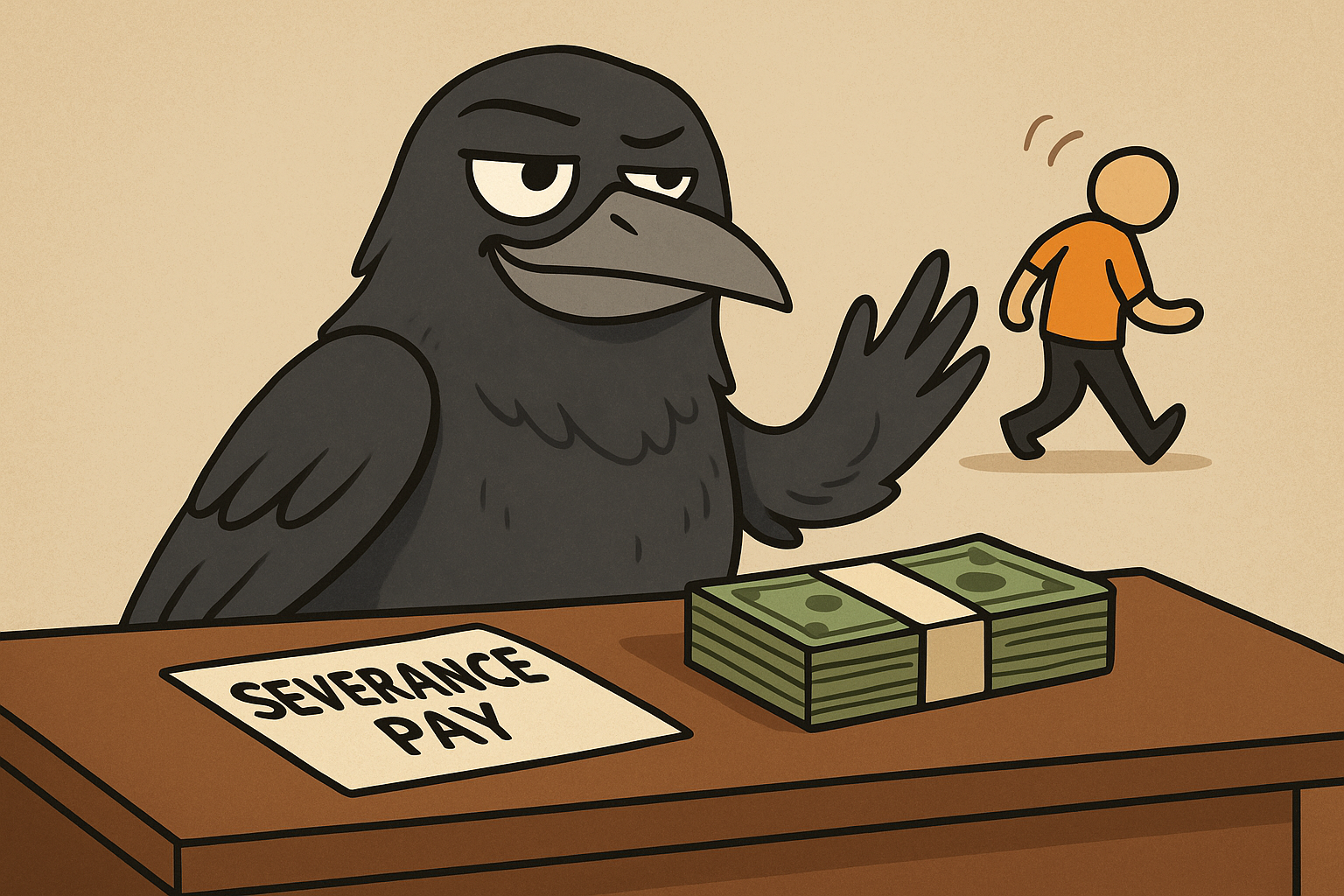
  • Sometimes They Even Get Severance Pay (sort of)

    Sometimes They Even Get Severance Pay (sort of)

    I was talking yesterday about how the only sane way to do business is to only work with good clients. You have to get rid of the bad ones who waste your time.

    They picture some dramatic moment where you slam a folder shut, stand up from the table, and announce you won’t be treated that way.

    The truth is a lot quieter — and a lot simpler.

    I’m pretty good at reading people, so it doesn’t happen often. But if I list a property and realize the seller is a flake, or dishonest, or just likes wasting people’s time?

    If the property isn’t under contract, I fill out a termination form, sign it, email it over, and tell them it’s not working. Two seconds later, the contact is deleted from my phone.

    But what if it is under contract?

    Well, a closing ends the relationship too.

    In that case, the smartest way to fire a bad client is to finish the deal, get paid, and then never work with them again.

    That’s it.
    No drama.
    No speeches.
    Just a clean exit.

    (even if it “costs” you a little)

    A while back, I had a couple of those deals where everything looked normal until the closing table.

    Then the buyer pulled a last-minute stunt — trying to back out of a standard cost he’d already agreed to.

    It’s always the same type of personality: someone who waits until the very end, when everyone’s time is spent, and tries to squeeze one last thing out of you.

    Not because they need to.

    Because they want to see if they can.

    (if you’re in my business you’ve seen it too, and know what I’m talking about…but no need to name it)

    A lot of people think the “strong” move is to dig in and refuse to budge. And yes, if I had pushed back, I probably would’ve “won.” The deal would have closed anyway and I’d have walked out with the full amount.

    But here’s the part most people never account for:

    The second he pulled that stunt, I knew I was never speaking to him again after that day. If we close, great. If we don’t, I’m pulling the listing.

    And he might get sued by the buyer.

    Not my problem.

    If there’s even a 20–30% chance that kind of person blows up the deal, the expected value drops fast.

    Option A:

    Fight it out, maybe get $8,000, maybe get $0 — and never deal with them again. Other than maybe testify against them in court later.

    Option B:

    Pay a small amount out of pocket, guarantee the deal closes, walk away with (say) $7,000 — and never deal with them again.

    It’s not a hard choice once you strip out the ego.

    You don’t build a strong business by letting bad clients take up space.

    You don’t build sanity by keeping people around who nickel-and-dime you.

    And you don’t build a reputation by escalating pointless standoffs.

    The smartest operators I know — in real estate, development, legal, construction, you name it — all do the same thing:

    They protect their pipeline, not their pride.

    A good client pays you in money, time saved, referrals, easier deals, smoother communication, and less chaos.

    A bad client takes far more than they ever give.

    So no, I don’t hesitate.

    If covering a small cost gets the deal closed and gets the wrong person out of my world forever, that’s not weakness.

    That’s strategy.

    You don’t have to win every little battle.

    You just have to win your time back.

    Once you understand that, firing bad clients becomes easy — even when it means paying them to leave.

    PS- You may not be ready to sell today, but wouldn’t it be smart to be prepared ahead of time?

    I offer a free opinion of value on any property, along with market info etc. And no time wasting, no pestering you to hurry up, none of that.

    Is it ever a bad time to start talking to a pro who will treat you the right way?

    (and will have time for you because he doesn’t let bad actors mistreat him?)

    Click Below:


  • Play Ball!

    Play Ball!

    The World Series starts Friday.

    With so much riding on every game, postseason baseball can be a lot more fun to watch—even for casual fans. For a sport that measures everything, it sure gets unpredictable when it matters most.

    And that’s the point. The numbers show who’s better over time, not who will win today.

    A .250 hitter is considered average. A .300 hitter is a star.

    But the difference between them? About one extra hit per week.

    Watch only a few games, and you’d never know which one was which. Many weeks, the “average” guy might even look better. The game’s randomness keeps it interesting—and keeps fans hopeful.

    Kind of like real estate.

    You’ve seen the agent who lucked into one great result and now claims she gets her clients THE MOSTEST THE FASTEST.

    Maybe she does. But there’s no way to know. Every deal is different, and the numbers you see usually come from the same place the bragging does—the agent.

    So what do you do? Go with someone you trust.

    If your agent doesn’t realize those stats don’t mean much, they’re clueless.

    If they do and use them anyway, they’re dishonest.

    Either way, not who you want representing you.

    If you’d rather work with someone who tells you the truth, even when it’s not shiny, I know a guy.

    PS — You’re probably not ready to buy or sell anything today. But it never hurts to know where you stand. Getting current market info is free, useful, and comes with zero obligation or pressure.

    Is it ever a bad time to start a conversation with an honest expert?

    Click below.


  • Begging Strangers Is a Terrible Strategy

    Begging Strangers Is a Terrible Strategy

    Thoughts and prayers” won’t pay your bills, proper preparation will.

    I’ve ranted before about people who think they can predict the future—and insist on telling you even though nobody asked. If they really knew, they wouldn’t be here lecturing you.

    But here’s one prediction you can take to the bank:

    If someone starts with “you know I’m not racist…,” you can bet your last dollar the next word will be “but,” and whatever follows will be racist.

    And when someone says “I’m not trying to be political…”? Same story.

    It’s either about to get political, or they’re pointing out something so obvious it shouldn’t be controversial—although there’s always that chunk of society that will argue with a stop sign.

    So. I’m not being political here.

    A while back, somebody told me their friend got sick—cancer, I think. No insurance. Didn’t know what they were going to do, except maybe start a GoFundMe.

    Apparently my response wasn’t the “right” one.
    Instead of a sympathetic head tilt, I said, “Maybe they should have had insurance.”

    You’d think I’d just kicked a puppy.

    Here’s the thing: insurance isn’t a mythical gift your employer hands you if they’re feeling generous.

    It’s for sale. You can go buy it.

    I do. And it’s not cheap—I pay more for my family’s insurance than I do for our house every month. It sucks. But that beats begging strangers on the internet for treatment money.

    But if you don’t make much money? What do you do then?

    I literally just helped someone price full coverage. For them the total cost—premiums plus max out-of-pocket—worked out to about seven bucks a day. That’s a fancy coffee.

    Don’t mistake this for an endorsement of Obamacare. I wish it were gone yesterday.

    But you play the hand you’re dealt, not the one you wish you had.

    It’s called being prepared.

    If you can protect yourself for $7/day—or even my number—it’s a no-brainer.

    What’s this got to do with real estate?

    If you own land or lots and there’s even a chance you’ll sell soon, is there any downside to having the most current info?

    Especially considering I’m not going to charge you a penny to talk.

    You know what to do below. But if you’re not subscribed yet, fix that first—before your GoFundMe for “real estate mistakes” goes live.


  • Do You Need it Right Now? Then Wait ‘til Tomorrow

    Do You Need it Right Now? Then Wait ‘til Tomorrow

    One step to never being taken advantage of at the negotiating table again

    I talked about the danger of neediness yesterday, but it’s so important I’m going to stay with it.

    Negotiation is a fundamental skill in life and business—but most people aren’t great at it. Mainly because they just don’t get a lot of practice.

    In the U.S., we’ve standardized just about everything. Prices are fixed. Products are labeled. You go to the store, you pay what it says. No haggling. No dance. So when it is time to negotiate—whether it’s for a house, land, or a job offer—most people get uncomfortable fast.

    And it’s immediately obvious to the salesperson. They negotiate every day. Even if they’re not a pro, the repetition alone makes them better than most. And they’re more comfortable by default—they’ve got nowhere else to be. This is their job.

    Here’s the part most folks miss: negotiation is not about intimidation. It’s not about being slick. It’s about posture.

    Neediness is what kills your position.

    If you have to buy it today, you probably shouldn’t.

    Make yourself wait until tomorrow.

    If the salesperson says you have to buy today or the deal is off, call the bluff a few times and see what happens.

    If they can sell you a car (or anything else) for a certain number today, is there really any reason they couldn’t do it tomorrow?

    Maybe there is, but I doubt it. And if they won’t do it—so what?

    Start over somewhere else.

    Simple things like this will shake the desperation right out of your system. The clearer your mind, the better your decisions.

    Get rid of neediness, and you’ll almost never experience buyer’s remorse. Because you weren’t chasing—you were choosing.

    Salespeople—real ones, trained negotiators—can smell neediness a mile away. They don’t always use it against you, but make no mistake: they see it.

    Don’t set deadlines.

    They’re usually fake, and all they do is stir up neediness.

    On the rare occasion there is a real deadline, don’t let the other side know what it is.

    Just these basic ideas can improve your negotiation results almost immediately. All it takes is a little practice.

    Use it a few times and it’ll work so well, you’ll never go back to the old way.

    Even if the results don’t change right away, you’ll feel a lot better about how you handled it.

    If someone says you have to act now or lose the deal—call their bluff. You’ll either learn that you didn’t lose the deal, or that you didn’t need it so bad to begin with.

    If you’re a people pleaser and feel pushed into things, tell the next three people “no,” no matter what they ask.

    Even if you’re afraid they’ll get mad.

    Most won’t. But even if they do—they’ll live.

    And you’ll learn that you’ll live without their approval. That makes life easier to steer from then on.

    Am I worried that by sharing these secrets you won’t need my services as an agent?

    Not at all.

    I think once you see the value of being a clear-headed negotiator, you’ll want a pro in your corner when it really counts.

    And if not, that’s great too.

    I ain’t needy—I’ll just help someone else.