Tag: Land Values

  • Only Two Problems

    Only Two Problems

    There’s a line that’s been passed around for years, usually credited to Jim Rohn, who said he got it from Neil Armstrong.

    Going to the moon only involves two problems. How to get there, and how to get back.

    The key is you don’t leave until you’ve solved both.

    Rural land investment is pretty similar, although a lot of people ignore one of the problems.

    First problem is pretty straightforward. You find something underpriced in an area where you expect values to grow. Then you run all the traps, and if it checks out you have something worth buying.

    What a lot of people forget is the second problem. What’s the plan for unwinding it on the back end?

    Then they buy it anyway.

    Ask how they get back out and you’ll usually get a shrug. Something about how land always goes up.

    There are only so many ways out of a piece of ground, and they’re all worth knowing before you own it. Hold it and sell it whole to somebody who wants what you wanted. Split it into smaller tracts, since smaller acreage generally brings more per acre. Develop it, if the location and the money and your patience all happen to line up. Put a building on it and collect rent. Farm it or lease it and let it carry itself while you wait.

    None of those is the right answer. The point is knowing which one you’re betting on.

    You don’t want to be rigid about it. Things change. Sometimes a better exit shows up than the one you planned on. A road gets built, a neighbor decides he’d rather be your buyer than your neighbor. Someone shows up with a plan you never considered and offers you a price you didn’t expect.

    When that happens you don’t turn it down, and you don’t fret about being “wrong” about how you would exit.

    But there’s a difference between changing your plan and never having one.

    And there’s a difference between a deal that looks good going in and a deal you know how to get out of.

    A land deal needs to work today, on today’s numbers. It also needs a believable way back out before you write the check. Both, not one.

    Miss the first one and you overpaid. That stings, and you find out about it fairly quick.

    Miss the second one and you didn’t buy an investment. You bought a place to keep your money where you can’t reach it.

    That one’s quieter. Nobody finds out for years.

    Then they need the money.


    Register to Receive Posts Via Email!

    By submitting, I understand I will receive marketing emails and blog posts from Mike Browning Realty and/or associated companies. Unsubscribe at any time.

  • Sticktoitiveness

    Sticktoitiveness

    Didn’t happen fast. But we stayed with it.

    Finally!

    Last Friday we closed on a lot.

    If you’ve been reading here awhile, you know why that feels like a bigger deal than it would have a few years ago. The lot market has been slow the last 2-3 years. Mainly interest rates. Someone building a custom home is usually taking out a sizeable loan, and the rate makes a real difference in the monthly payment.

    So fewer people are building. And if you’re not ready to build, you’re not ready to buy a lot.

    Lots are more extreme than houses that way. Everyone needs somewhere to live, so there’s always some demand for existing homes. The price might have to come down a little to get it moving, but it moves. Nobody needs a new custom home, no matter how much they want one. If a buyer isn’t ready to build, knocking $10K off the lot price doesn’t change that.

    So you wait. And keep doing what’s worked before, because it works again. Just a question of when.

    This one had its fits and starts. Fell off the market twice, came back a month later as a new listing both times. A couple of price reductions. A builder who wanted to put a model home on it, until the HOA told him no. Another builder who made an offer, then decided he couldn’t stick his neck out right now.

    We kept going anyway. Congratulations to the McWhorters, who’ll be building on the lot, their agent Ron King, and Chicago Title in Dallas for handling the details.

    And thanks to my clients, for their patience.

    Selling lots was more fun 4-5 years ago, when everything just came easy. Anyone could do it. Getting one done today means more.

    If you own lots or land, you’re probably not looking to sell right now. That’s probably the right call. But things change fast, and it’s better to know where you stand before you need to than after.

    That’s what the MBR Land Reality Check is for. A clear eyed view of what your property might sell for today, what the market in your area is doing, and what you need to be paying attention to.

    It’s free for the asking, with no obligation or pressure to list. Just accurate information from someone who focuses on non-residential property, not a home seller masquerading as a landman.

    Is it a bad idea to know where things stand? Give yourself permission to look!

    Get yours here.

    P.S. If you’re not ready for a Reality Check but like reading about land, lots, and the North Texas market, you can get these posts by email instead.

    Register to Receive Posts Via Email!

    By submitting, I understand I will receive marketing emails and blog posts from Mike Browning Realty and/or associated companies. Unsubscribe at any time.

  • Everyone But Me

    Everyone But Me

    As it turns out, not everyone.

    I never got into gaming.

    But it felt like everybody else had a console, a headset, and a whole second life happening on a screen I wasn’t looking at. My kids, their friends, plenty of adults…even some older than me. So I made an assumption and never questioned it.

    If everybody’s playing, somebody must be making a fortune.

    Then I read something about Microsoft and the Xbox recently.

    They have spent billions building games, buying studios, and chasing market share, only to discover that popularity and profitability aren’t the same thing. From the outside it looked like an easy business. From the inside it was far more complicated.

    It’s a good reminder that what “everybody knows” is often just the part everyone can see.

    Land works the same way.

    If you own property anywhere near the DFW growth path, you’ve probably heard the stories.

    A neighbor sold for three times what he paid. Somebody got bought out for a data center. A family down the road suddenly became millionaires.

    Those stories spread fast. Before long, they become what “everyone knows.”

    Sometimes they’re even true.

    The problem is that they usually don’t tell you much about your property.

    Land values can change from one road to the next. Sometimes from one side of the fence to the other. Access, utilities, topography, floodplain, buyer demand, surrounding uses, and dozens of other factors can push one tract well above or well below the one everyone keeps talking about.

    That’s why I think there’s a difference between hearing what land is worth and knowing what your land is worth.

    Most people don’t need that answer today. You’re probably not considering selling. You may even plan to never sell.

    But when life changes, a health issue, an estate, a buyer calling unexpectedly, or a family decision, that’s a terrible time to discover you’ve been relying on local folklore instead of current market information.


    P.S.– Most landowners who request an MBR Land Reality Check aren’t planning to sell.

    They simply want to know where they stand before they ever need the answer.

    The report includes recent comparable sales, current market activity, and my opinion of what a reasonable buyer might pay today, without any obligation to sell.

    Is it a bad idea to know?

    Get It Here


    P.P.S.– If you’re not interested in a Land Reality Check but enjoy reading about land, markets, and North Texas growth, you can subscribe to my occasional emails below.

    Register to Receive Posts Via Email!

    By submitting, I understand I will receive marketing emails and blog posts from Mike Browning Realty and/or associated companies. Unsubscribe at any time.

  • We Don’t Decide With Our Brains.

    We Don’t Decide With Our Brains.

    We Decide With Our Guts and Hire Our Brains as Lawyers.

    There’s a genre of video that shows up online every election cycle.

    Someone reads a quote to a stranger on the street. Says a politician on the other side said it. The stranger nods along, agrees with every word, maybe adds their own commentary about how reasonable it sounds.

    Then the interviewer reveals who actually said it.

    The person on camera backpedals. Gets flustered. Sometimes gets mad.

    We watch that and think: what a rube. Didn’t even evaluate the idea on its own merits. Just heard a name and reacted.

    Here’s the part nobody likes hearing. That’s not a them problem. Everyone is prone to this sort of thing.

    We decide with emotion first. Then we go looking for the reasons. Most of the time we don’t even notice we did it in that order, because the reasons show up so fast it feels like they came first.

    Car salesmen have known this forever. Their whole job is getting you to want the car before you’ve priced it out and started the paperwork. Once you want it, you’ll find your own reasons the payment makes sense. Even though it’s more than you said you wanted to spend just a little earlier.

    It’s not just dealing with salesmen. It’s most of what moves us, all day, every day, if we’re not paying attention.

    I can tell you it’s smart to have a real handle on your finances. I can tell you that if you own land or commercial property, it makes sense to know roughly what it’s worth, what’s selling around it, what the county or the highway department is planning nearby. Not because you’re doing anything about it. Just because things change, sometimes fast, and it’s better to know than not know.

    You’ll agree with all of that. Nobody argues with it.

    And most people still won’t do anything about it.

    Not because it’s hard. Because of what happens in your chest the moment you think about picking up the phone.

    If an agent calls about your property, most people’s first thought isn’t “great, information.” It’s a mental preview of getting talked into something. Buzzwords. Pressure. A conversation that ends somewhere you didn’t want to go.

    Or it’s the family part. Land that’s been sitting in the name a long time carries more than a market value. Selling it, or even looking like you might, comes with a conversation you’re not ready to have with your brother or your kids.

    I know because that’s the same thing that runs through my head when it’s my property.

    None of that has to be true here.

    Looking isn’t selling. Nobody has to know you looked. You’re not committing to a conversation with your family, a listing agreement, or anything else. You’re just getting the numbers so you’re not guessing later, when guessing costs more.

    Give yourself permission to look. That’s smart to do, and you don’t have to go further.


    PPS- If you’re not ready for a Reality Check but you liked this one, you can sign up below and get these posts in your inbox.

    Register to Receive Posts Via Email!

    By submitting, I understand I will receive marketing emails and blog posts from Mike Browning Realty and/or associated companies. Unsubscribe at any time.

  • What’s Good For The Goose…

    What’s Good For The Goose…

    Sometimes I need to remember to follow my own advice.

    If you’ve been reading here any length of time, you know I like to talk about how putting things off isn’t smart. It’s understandable why we do it. We’re avoiding something we think will be unpleasant. But usually we’re better off facing it now, because the unpleasantness doesn’t shrink while we wait. It grows. And half the time you find out the thing you were dreading wasn’t worth the dread.

    We all know it’s a bad idea. We all do it anyway. That includes me.

    I run another site called hiswordtogether.com. It helps people stay on a Bible reading plan that gets you through the whole thing once a year. If you’re interested, you can check it out at the link.

    When I started the site late last year, I also reserved the .net and .org versions of the name. Ever since then, up until last week, there was an item on my to-do list to point those addresses to the main site.

    It had been there so long I stopped noticing it most of the time. When I did see it, I’d think about how I needed to get it done, then immediately start getting nervous about doing it. I’m not the most tech-savvy guy around, and I’d start picturing what happens if I click the wrong spot and take all my sites and my email offline.

    Again.

    That’s happened before. Inconvenient doesn’t cover it. Support got me through it, but when you don’t know how to explain what you did, it’s not exactly fun.

    So I kept trading the low-key annoyance of seeing it on my to-do list for the sharper worry of “what if.”

    Last week I finally did it. Logged into my registrar, four clicks, done. I spent something like a hundred times more effort avoiding it than it took to just do it.

    Nothing in my life is visibly different now, except I feel a little silly.

    I bring this up because I see the same thing happen with landowners, just about a different kind of click.

    You know it’s smart to have a read on what your land is worth and what’s happening around it. You’re probably not selling anytime soon, maybe not ever. But you also know that not knowing is its own kind of risk, the kind where you find out too late that something changed.

    What stops people isn’t the info. It’s what they think asking for it will cost them. Call an agent for “just some information” and a lot of them hear that as an invitation to start walking you toward a listing appointment, whether you asked for one or not. So people skip it. Same as I skipped four clicks for months.

    That’s what the MBR Land Reality Check is for. It gives you real market data, a heads up on what’s happening nearby, and whatever else might be relevant for your property.

    All without pressure to list, or having to sit through a buzzword-filled presentation. And it can be requested in a couple of minutes, or less time than it took me to fix my domain issue.

    Register to Receive Posts Via Email!

    By submitting, I understand I will receive marketing emails and blog posts from Mike Browning Realty and/or associated companies. Unsubscribe at any time.

  • The First Step Is Usually the Hardest

    The First Step Is Usually the Hardest

    I remember being told growing up that it takes less gas for a car to idle for a few minutes than to shut it off and restart it. Something about wear on the starter too. I heard the same thing about lights. About computers. If the goal was saving energy, you were often better off leaving things running than flipping them on and off.

    Might not have been true. I’m not an electrician or a mechanic, and it was a long time ago. So even if it was true then maybe it isn’t now.

    Beside the point anyway.

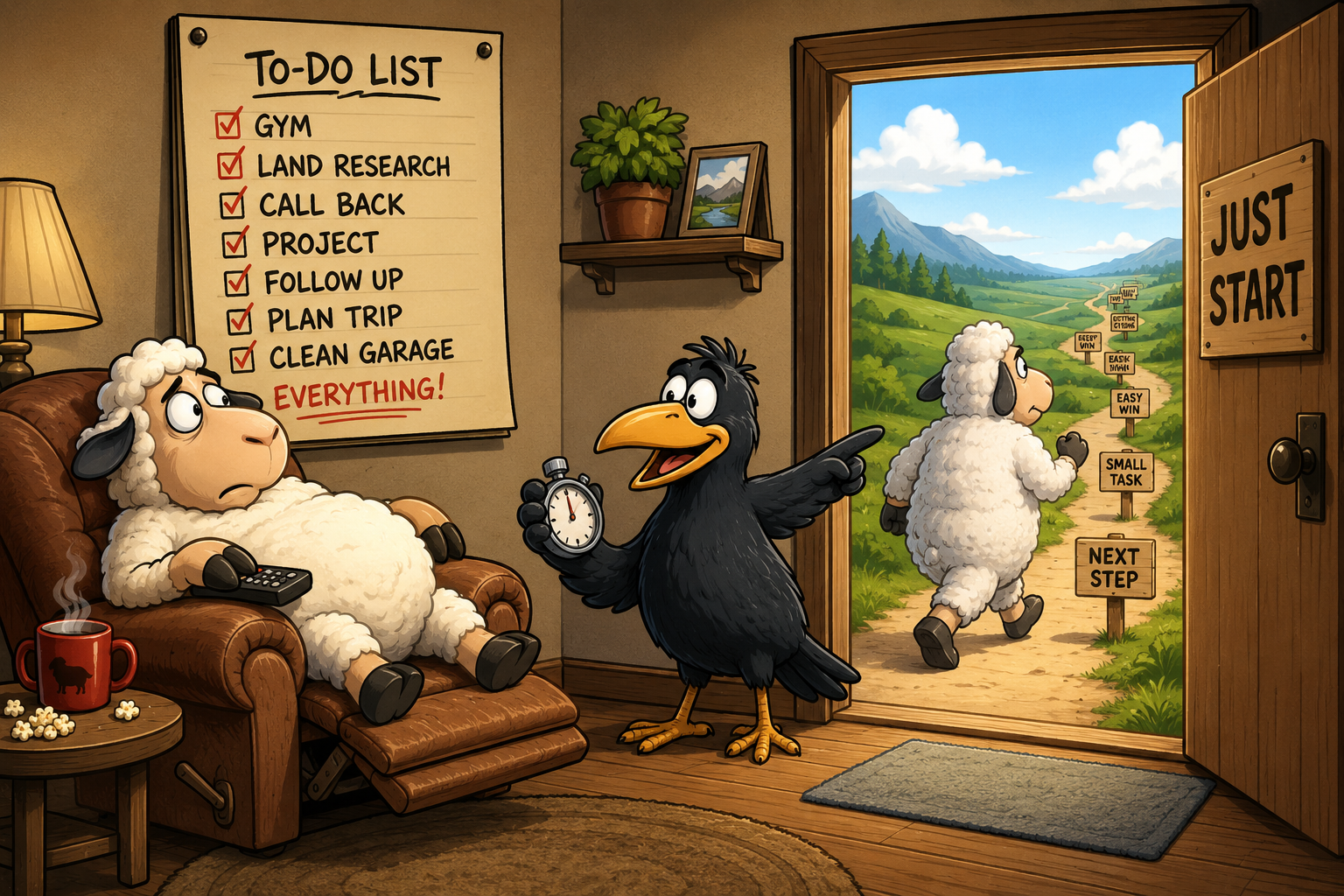
    I read something recently noting that the hardest part of most tasks isn’t the task itself. It’s going from not moving to moving. Once you’re in motion, momentum does most of the work. The whole fight is getting off the couch.

    Once you see that, you can use it against yourself, in a good way. Can’t get motivated for the gym? Make a deal. You’ll get dressed, drive there, walk in. If you still don’t feel like it once you’re inside, you can turn around and go home.

    Do this enough times and you’ll find you almost never leave.

    Just getting started was the whole battle.

    I use this at the office too. There are some projects I have that I don’t look at every day, but are large and have lots of moving parts. When it’s time to pick them back up, they’re overwhelming enough that putting them off a little longer feels reasonable. Which would just make it worse.

    If I commit to ten minutes, just one small task like sending an email or reviewing what’s left to do, I almost never stop at ten minutes.

    If anything I end up with the opposite problem. I get moving and don’t stop. An hour turns into four, and something else I meant to get to that day doesn’t happen. I’ve started setting alarms just to make myself quit.

    The same thing happens with bigger decisions too.

    If you own non-residential real estate, it’s probably a real chunk of your financial picture. Worth knowing what it’s worth, and what’s happening around it that affects that. Not because you’re looking to sell. Usually the smart move is waiting, unless you’ve got somewhere better to put the money or a reason that forces your hand.

    But it’s better to have the information and not need it than to need it and not have it.

    Most people never get the information. Getting started feels like a bigger thing than it is.

    And there’s the barber problem. Ask a barber if you need a haircut and you already know the answer.

    Call about your land looking for information and you end up on the phone with a salesperson telling you all the things you need to do that happen to be very good for them. So people put it off.

    It doesn’t have to go that way.

    It takes about two minutes to request, and it shows up in your inbox a few days later.

    No pressure, because there isn’t a pitch waiting on the other end.

    You don’t have to be ready to sell.

    You just have to be willing to know where things stand.

    Register to Receive Posts Via Email!

    By submitting, I understand I will receive marketing emails and blog posts from Mike Browning Realty and/or associated companies. Unsubscribe at any time.

  • The Gap Between Stories

    The Gap Between Stories

    Most people in a conflict become very, very good at one thing.

    Their version.

    I’ve watched it happen enough times to recognize the pattern early. Someone gets into a dispute, and immediately everyone assembles their case. The evidence. The timeline. Getting to others first, so they can get you on their side. They can tell you exactly what happened and exactly why the other person is wrong, and they’ve told it so many times it has the smooth, rehearsed quality of something that stopped being examined a while ago.

    What they usually can’t do is explain the other side.

    Not a real version of it anyway. Not the version the other person might actually recognize. They can do a kind of highlight-reel caricature where the other person comes off as selfish or unreasonable or oblivious, but that’s not the same thing. That’s just their own story with a different character labeled.

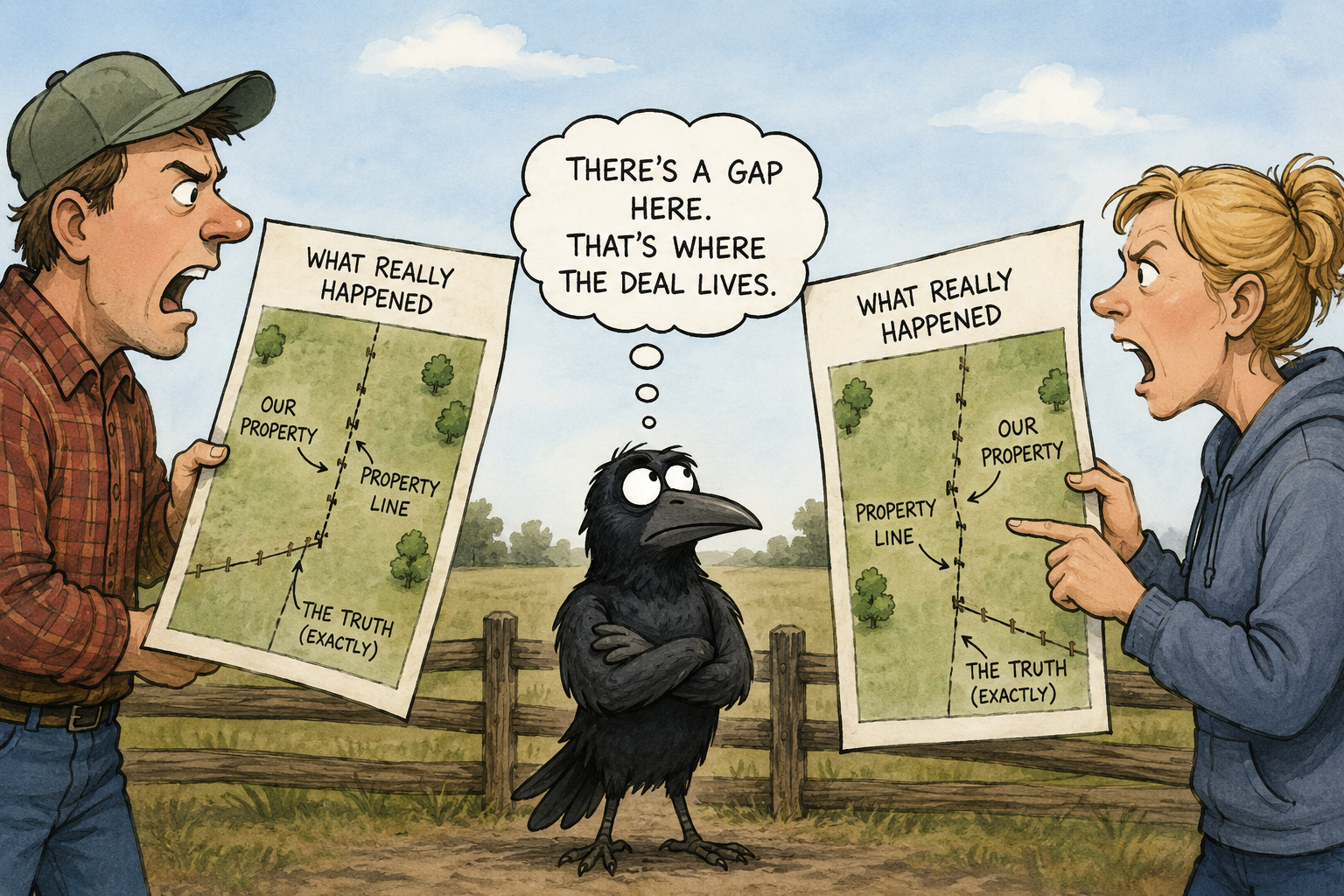
    Chris Voss has a line I keep coming back to. There are three sides to every story: my side, your side, and the truth. Most people spend their whole lives defending the first one.

    People forget to consider what that costs.

    It costs resolution, obviously. But it also costs information. If you can’t articulate the other person’s position in a way they’d agree with, you’re not negotiating with them. You’re negotiating with your idea of them, which is almost always a worse version than the actual person. Easier to dismiss. Easier to be right about.

    I’ve seen this play out many times where both sides are so committed to their read on what’s fair that they let something genuinely good fall apart. One side thinks the other is greedy. The other finds the offer insulting. Neither one has sat with the question of what the other person actually needs and why. The gap between the two stories is where the deal lives, but a lot of times nobody goes there.

    It shows up everywhere. Families. Business partnerships. Long friendships that quietly go cold.

    The test Voss suggests is a good one. Can you make the other person’s case as well as they could? Not a version that secretly makes you look reasonable by comparison. The real one, with their actual concerns and their actual logic and the parts of their position that, if you’re honest, have some merit.

    Most people can’t do it. Which means most people are still negotiating with their own story instead of with the situation in front of them.

    That’s not a moral failing. It’s just expensive.


    Register to Receive Posts Via Email!

    By submitting, I understand I will receive marketing emails and blog posts from Mike Browning Realty and/or associated companies. Unsubscribe at any time.

  • The World As It Is

    The World As It Is

    Some people spend a lot of energy being offended by things that were never about them.

    Someone says something careless. Or acts a certain way in public, or online, or at work. And someone else sees it and decides it was aimed at them personally. Now there’s a problem to solve. A wrong to correct. A wound that needs acknowledging.

    A lot of times the other person wasn’t thinking about them at all.

    People are self-absorbed, although usually in ordinary, harmless ways. They’re worried about their own day, their own bills, their own kid’s homework. The comment that landed wrong, the look that seemed pointed, the rule that felt unfair. Most of it is just noise other people are making while they live their own lives. It only becomes about you if you decide it is.

    Obviously I’m not saying bad behavior doesn’t exist. People are rude and small and unfair plenty. As the saying goes, some people are just jerks.

    But there’s a difference between noticing things and letting those things ruin your day, or organizing your life around the idea that the world should have treated you a certain way and now owes you something for not doing it.

    That’s exhausting. And it doesn’t change anything. Whatever happened still happened. All that’s changed is you’ve spent the afternoon carrying it around.

    The people who do best are the ones who deal with the world as it actually behaves instead of how they wish it did. And move forward accordingly. That doesn’t mean you can’t be disappointed at times, but it happens to everyone.

    This is one of those concepts you see everywhere once you notice it for the first time.

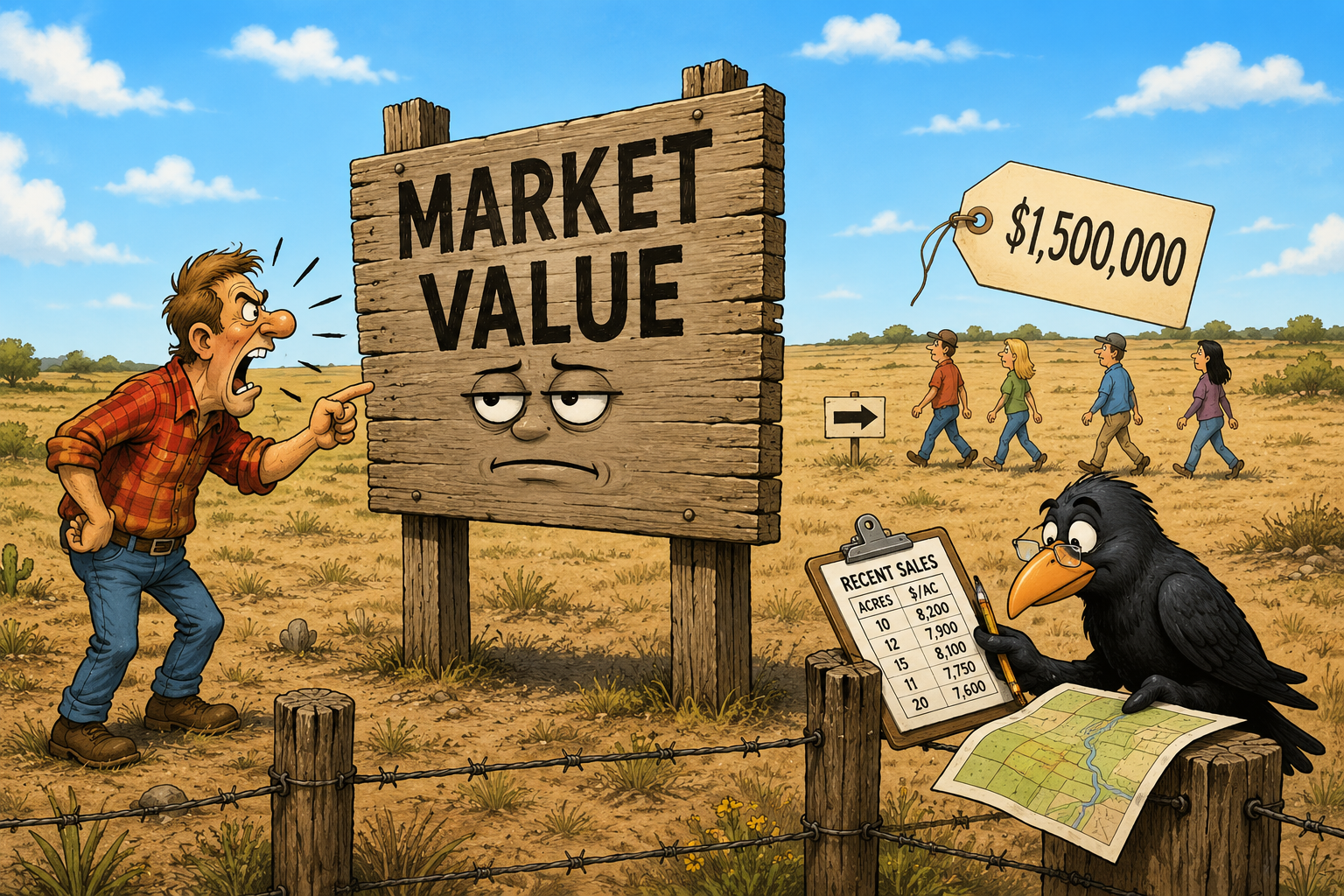
    A seller looks at their property and decides what they want it to be worth. Based on what they put into it, what they need out of it, what the neighbor claimed his sold for at the mailbox. None of that is the market. The market doesn’t know what you need and doesn’t owe you a number.

    You can list at an unrealistic number you wish were true, but I don’t recommend it. Buyers will simply ignore you, politely or not, and the property sits.

    You can price it at what the market will actually pay, today, with the buyers who actually exist, and move forward. Or you can wait. And maybe later things will be more to your liking.

    Both are real choices. Waiting for the market to come around to your number may be the right call. Nobody knows the future, but in north Texas land has tended to rise over time. If you’re not in a hurry, or don’t need to sell, it might be the best choice.

    But the market isn’t being unfair to you for not acting like you wish it would. It isn’t being anything. It’s just being a market.

    PPS- If you’re not ready for a Reality Check but enjoy reading about land, markets, and negotiation, you can sign up below and get these posts in your inbox.

  • You Did All That Without Visiting the Property?

    You Did All That Without Visiting the Property?

    I recently did a Land Reality Check for someone in Alvarado.

    I was up front when I sent it. The property was a couple hours away so I hadn’t actually been there. What he was getting was what I call a desk valuation.

    So I did what I could from here. Pulled comparable sales, looked at competing listings, checked aerial imagery, topography, floodplain data, road access, utility providers, ownership history, and what’s been developing in the surrounding area. Put it together into a pretty good picture of both the property and the market around it.

    When I asked what surprised him most, he said it was how much data I’d been able to pull without ever setting foot on the ground.

    Here’s the thing about land. A lot of what drives value isn’t on the property. It’s around it. Who’s been buying nearby. What they’ve been paying. How much competing inventory is sitting on the market. Where the development pressure is coming from, if any. What infrastructure exists in the corridor.

    None of that requires walking the dirt. It requires understanding what’s happening in the market.

    Of course, site visits matter. There are things you won’t know until you’re there. If we get a little further along and he’s considering selling, I’ll get out there. And it could change things some if there are things I couldn’t see from hours away. A neighbor situation. A drainage problem. A view that the aerials don’t capture. A transmission line sitting just outside the frame. When talking about selling a million dollar property, you need to see it obviously.

    But the assumption that useful information only comes from physically visiting a property, that one’s not right. In a lot of cases, the most important questions get answered before anyone starts the truck.

    Which is part of why the Land Reality Check works for people who aren’t ready to sell. He is thinking about maybe selling, but not immediately. The report was still useful. He wanted to understand what he owned, what the market around it looked like, whether anything had changed.

    That’s a reasonable thing to want to know. And it’s easy to get.


    PPS- If you’re not ready for a Reality Check but enjoy reading about land, markets, and negotiation, you can sign up below and get these posts in your inbox.

    Register to Receive Posts Via Email!

    By submitting, I understand I will receive marketing emails and blog posts from Mike Browning Realty and/or associated companies. Unsubscribe at any time.

  • Things Change. That’s Not the Problem.

    Things Change. That’s Not the Problem.

    My daughter started her first job recently. Retail. Big store.

    She’s a couple weeks in. Shows up on time, good attitude, does what she’s asked. In retail, that combination already puts you ahead of a significant portion of the workforce. The industry runs around 60% annual turnover. No-call-no-shows are a daily problem for store managers. Someone who just reliably shows up is one less thing to worry about.

    Which means they’ll notice. And eventually they’ll start asking more of her. She’s already getting way more hours than she initially expected. That’s fine. That’s how it works. You accommodate when you can, especially when you’re new. You never know who’s watching or where people end up. I have clients who’ve hired six-figure salespeople out of fast food drive-thrus because someone made an impression.

    But there’s a line.

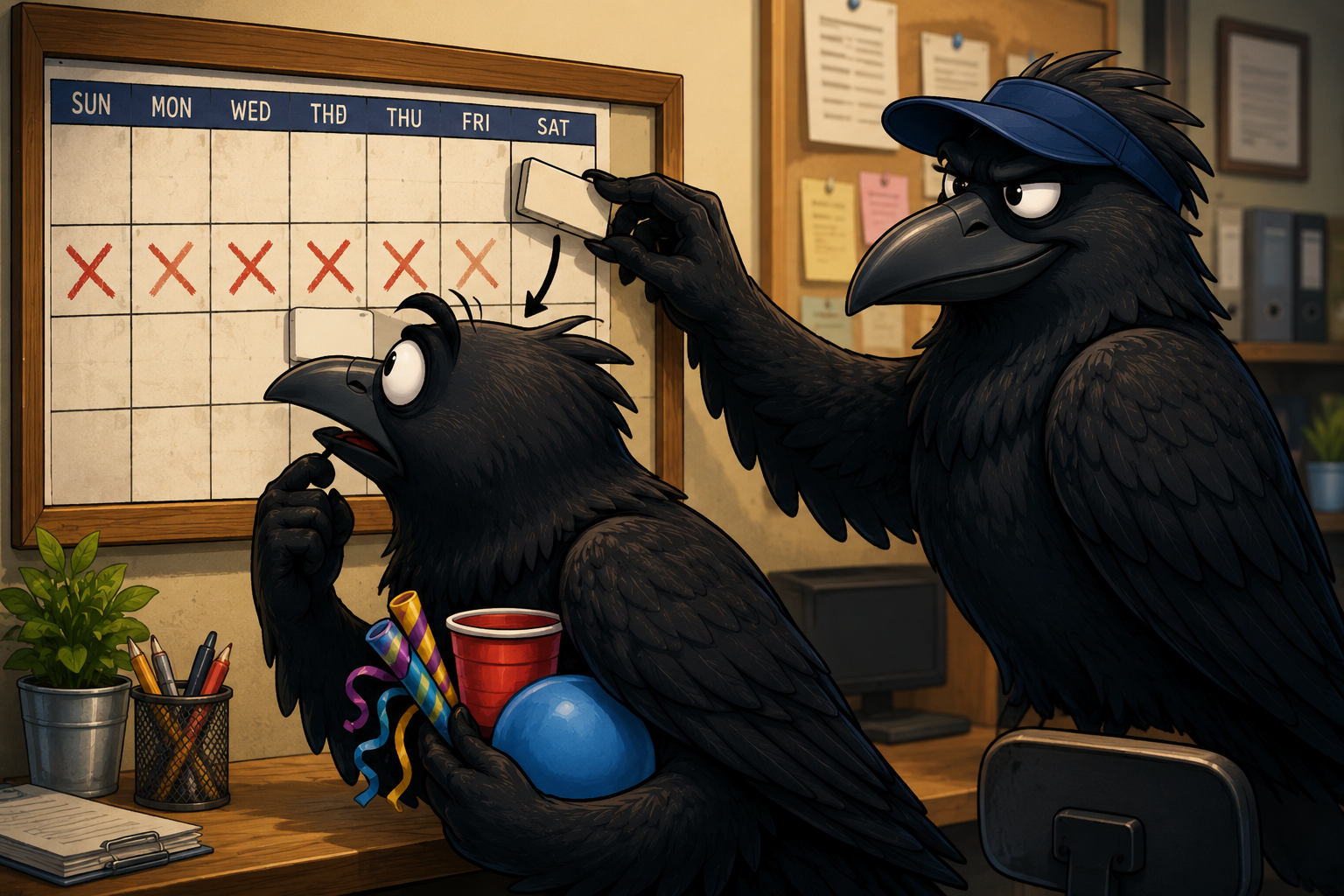
    She has a friend leaving the country. Going away party scheduled around my daughter’s work schedule. She was off at 4, plenty of time. Except she looked back at the schedule and her shift had been moved. Hours later. Nobody asked. Nobody called. It was just different.

    That’s not a scheduling issue. That’s a respect issue.

    She was upset. I was able to talk her through how to approach it and she got things switched back. The boss said the only reason she changed it was that my daughter had written “open to any hours” on her application. Which is true. But a reasonable person knows that if you’re scheduled off, you’re not just sitting around waiting to work. You’re living your life. Sometimes a change is no big deal. Sometimes it’s a huge deal.

    Things change. The market moves. A buyer falls through. A timeline shifts. I’ve seen deals that looked simple get complicated fast and complicated ones come together out of nowhere. That’s just how it works and there’s no point pretending otherwise.

    But there’s a difference between things changing and someone changing things on you without a conversation.

    If something shifts that affects your timeline, your plans, what you thought was going to happen, you’re going to hear it from me first. Not after the fact. Not when it’s already done. You’re not going to look at the schedule one day and find out it’s been changed.

    You control this. That part doesn’t move.

    I can’t promise everything goes according to plan. Nobody can. What I can promise is that you’re never going to feel like you woke up and someone had already decided something for you.


    PPS- If you’re not ready for a Reality Check but enjoy reading about land, markets, and negotiation, you can sign up below and get these posts in your inbox.

    Register to Receive Posts Via Email!

    By submitting, I understand I will receive marketing emails and blog posts from Mike Browning Realty and/or associated companies. Unsubscribe at any time.