Understand What to Expect With Your Land

You don’t have to be ready to sell.

But it helps to understand where things stand.

  • The Majority Is Always Wrong

    The Majority Is Always Wrong

    Every group has one. The guy who argues with whatever gets said, just because it got said. Somebody mentions the weather and he’s got a problem with it.

    Nobody likes that guy. You spend half the get-together managing around him instead of just enjoying it.

    So don’t be him. That part’s easy to agree with.

    But not being the contrarian doesn’t mean going along with whatever the room decides. Those are two different things, and most people only learn the first one.

    Last week I laid out the pyramid. However you divide the exact percentages, the basic shape isn’t very controversial. A relatively small group ends up doing extremely well financially. A much larger group doesn’t.

    Which raises an obvious question.

    If you want an uncommon financial result, why would you copy common financial habits?

    The good thing is you don’t even have to know the right move to get started using this.

    Watch what most people actually do. They spend what shows up before it clears. They finance things that lose value the second they leave the lot. They treat “I deserve this” like a financial strategy.

    None of that tells you what you should do instead. It tells you what to cross off the list, which is most of the way to an answer before you’ve even picked one.

    Same logic works outside of money too. Look around any waiting room, any checkout line, any church pew five minutes before service starts. Half the room’s face down in a phone, and most of them would tell you they’re being productive.

    They’re not. They’re just bored in a way that feels busy.

    Doesn’t mean throw your phone away. Means the constant, twitchy, always-checking version of “staying connected” isn’t actually buying anybody anything. You can see that just by watching, without having a better system worked out yet.

    That’s the whole trick.

    You don’t need the answer sitting there ready to go before you start paying attention. You need to notice what the majority’s doing, ask whether it’s producing a result you actually want, and let that rule things out one at a time.

    You’re not arguing with anybody at the party either. You’re not standing up and announcing that everyone’s broke and bad with their phones.

    You just quietly stop doing what they’re doing. Let your own results talk whenever they get around to it.

    Ignore the crowd. Keep your mouth shut about it. Check back in ten years.

    If you want a whole book built around this idea, and one that will actually give you something to put in place of what you crossed off, get The Slight Edge by Jeff Olson.

    His argument is that the little decisions that are easy to make are also easy not to make. One doesn’t look like it matters much either way. But stack enough of them together over enough time and the difference gets enormous.

    Most people won’t do that because nothing dramatic happens today.

    Which is kind of the point.

    P.S. That link goes through Amazon, and I’m an affiliate. Doesn’t cost you a dime more, but if you click through and buy the book, or anything else while you’re there, I get a small commission.


  • It’s Probably Not Time Today

    It’s Probably Not Time Today

    From what I’ve seen, the land market around here has been moving mostly sideways for about three years now.

    With acreage it’s hard to do an apples-to-apples comparison because every tract is different. But I’ve seen it with custom home lots, where the exact same lot has sold more than once over the past few years.

    From 2020-2022, rapid appreciation. Since then, basically the same prices, But much less activity overall.

    The usual explanation is that interest rates are higher and that’s slowing down development and investment. Or uncertainty about wars and geopolitics.

    Those are both probably part of it, but I think there’s sort of a musical-chairs aspect to it as well.

    There was a growing subset of land investors who would buy tracts, sell at a profit when new investors came along, buy something else, rinse and repeat.

    Until the new guys stopped showing up.

    Some of them are now trying to sell things they may have overpaid for, and so far they haven’t been willing to bite the bullet.

    Some of that probably needs to work its way through the system before things really start moving again.

    And with agricultural valuation, debt-free land can be relatively inexpensive to carry. So owners who don’t need to sell can, and probably will, wait out the market.

    So it’s probably not time to sell today.

    That doesn’t mean it’s not time to know where you stand.

    Things can change fast, and getting your ducks in a row now pays off. You’re not scrambling at the last minute.

    The MBR Land Reality Check gives you a clear-headed review of where things stand for you today, with actual sold comps and other information that puts you ahead of the game.

    You’re not deciding to sell and there’s no pressure. You’re just giving yourself permission to look.

    You can do that below.

    Of course, you could be someone who needs to sell sooner. Loan coming due, estate issues, you found a better opportunity, or whatever.

    If that’s you, the course of action is the same.

    Register to Receive Posts Via Email!

    By submitting, I understand I will receive marketing emails and blog posts from Mike Browning Realty and/or associated companies. Unsubscribe at any time.

  • The Command We Break the Most

    The Command We Break the Most

    If you went out and asked 100 random people what Jesus commanded people to do most often, you’d likely get several answers quite a bit. Be kind. Love your neighbor. That sort of thing.

    They’d be wrong. It may be hard to pin down exactly, the best answer would probably be something along the lines of “Don’t Worry” or “Don’t be afraid.” Jesus says some version of it constantly.

    Stop being afraid. Don’t worry about tomorrow. Don’t let your heart be troubled.

    We nod along and act like we believe it. If you ask people if they trust God, we say yes without blinking. Ask if we believe He’s in control, that He said He’d work things out to His own purposes, and you’ll get another yes. All of it with a straight face.

    Then we lie awake at night worrying about bills. Or fretting about something that happened in a place we couldn’t locate on a map, and might not have even known about if we’d put our phones down more often.

    We build an entire mental prison out of things that haven’t happened yet and might never happen, while the stuff sitting right in front of us, the stuff we could actually do something about, gets ignored.

    Mostly because we’re too worn out from worrying to touch it.

    We are reasonably good at saying the right things, but our actions don’t back up that we actually believe what we say. Sometimes we will even admit to this and say maybe if we just had a sign it would be easier to believe.

    Don’t bet on it.

    The Israelites watched God divide the sea and wipe out the enemy pursuing them. Then God started raining bread on their camp for food. Moses told them not to keep it until morning.

    Some of them did anyway.

    You’d think after witnessing miracles in the recent past they’d have listened. But apparently they still weren’t quite convinced that the God who had just saved them was going to provide again tomorrow.

    We do the same thing, although maybe not as dramatically.

    Our lives tend to be a cycle of (usually) minor problems, followed by despair, then it all works out somehow. Then repeat. Ask yourself how often you feel like you’re not going to make it. Probably a lot. Then ask yourself how many times you actually didn’t make it. If you’re reading this, the answer to that is zero.

    Jesus tells us we will have problems. He doesn’t tell us everything will work out the way we’d prefer.

    He tells us not to be afraid anyway.

    It’s safe to believe Him.


    Register to Receive Posts Via Email!

    By submitting, I understand I will receive marketing emails and blog posts from Mike Browning Realty and/or associated companies. Unsubscribe at any time.

  • No Calculator Required

    No Calculator Required

    There’s a saying you’ll hear a lot in real estate investing: if you need a calculator to determine if something is a deal, it’s not a deal.

    Obviously you need to run financial projections and all that.

    But the point is that a truly good deal will sort of jump off the page at you. It’s clearly priced in a way that makes it appear to be below market, without requiring a spreadsheet.

    Of course, it doesn’t take long being in this business to learn that if something is really cheap, there’s usually a reason.

    Something’s wrong.

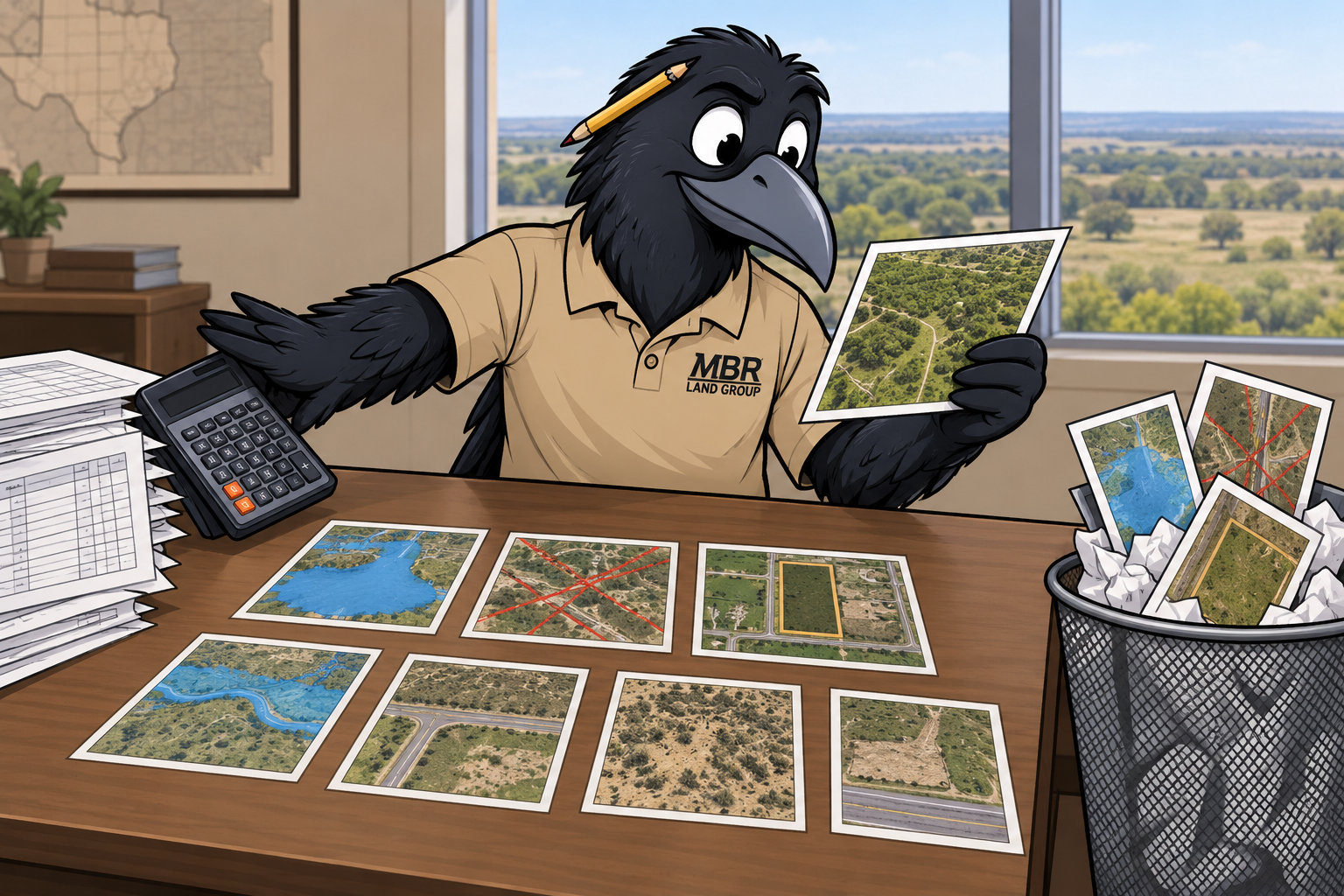
    It’s almost totally in the floodplain. It’s got pipeline easements on it that make it look like a spiderweb. It has no road frontage. Or any number of things.

    A lot of times what catches my eye turns out to be something that wouldn’t really be worth owning if they gave it to you. At least not from an investment perspective.

    But not always.

    Every so often I run across something that’s priced low and doesn’t appear to have the usual problems. The sort of thing that makes me stop and look harder.

    And if it’s in an area where I already know someone who would be interested, I usually know who to call. But sometimes it’s in an area where I don’t have someone looking.

    That’s what the Buyer’s Short List is for.

    Covering 21 counties in North Texas, I have a screen that flags newly available or reduced-price listings that are priced low relative to what’s been selling around them.

    Most of them aren’t deals, for the reasons discussed above.

    But every once in a while, one makes it through the first screen and still looks interesting after I dig into it.

    If you’re on the Short List, when that happens you get an email and a chance to see more.

    No schedule. No spam. Just when something makes it through.

    Register to Receive Posts Via Email!

    By submitting, I understand I will receive marketing emails and blog posts from Mike Browning Realty and/or associated companies. Unsubscribe at any time.

  • The Pyramid Doesn’t Change

    The Pyramid Doesn’t Change

    Most people have heard of the 80/20 rule, where in any business or endeavor a relatively small percentage of the people involved are responsible for a disproportionately large percentage of the output.

    It’s not exact, of course, but it works pretty well as a rule of thumb.

    In a business, a relatively small group of customers will often account for most of the revenue. A relatively small group can account for most of the complaints too. Usually not the same group, unfortunately.

    Real estate works that way too. A minority of brokers do a very large percentage of the transactions.

    And so forth.

    What’s interesting is that you can often see the same thing inside the successful group. Some of the top performers substantially outperform the rest of the top performers.

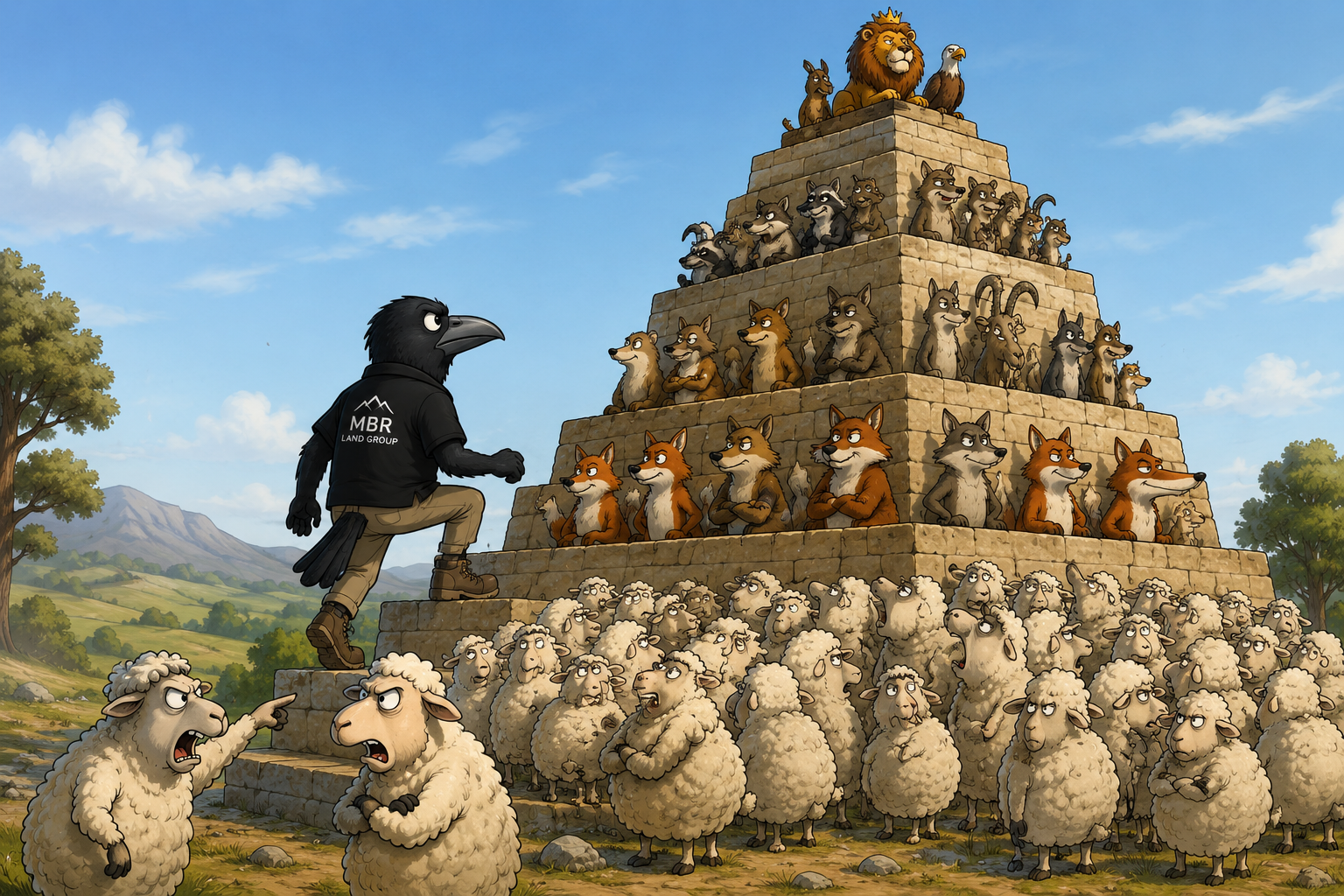
    The pyramid keeps getting narrower as you go up.

    You can complain about that if you want, but unequal results show up just about everywhere people are producing, competing, creating or accumulating something.

    You probably aren’t going to change the shape of the pyramid.

    You can change your spot in it.

    Part of that is making sure you’re in a field where you have a reasonable chance of being one of the better performers. We’re all good at different things. Find what you’re good at and start there.

    Aside from that, operate in a way that makes success more likely.

    Contrary to what many people think, success usually isn’t a matter of doing one big thing at exactly the right time. More often it’s doing a lot of little things right for a long time.

    There’s a book called The Slight Edge by Jeff Olson that explains this a lot better than I do.

    The basic idea is that you arrange your life so you’re doing things just a little better than average, often by such a small amount that an observer wouldn’t notice much difference from one day to the next.

    But those little differences compound.

    And eventually the difference isn’t little anymore.

    The best part is there’s no name-it-and-claim-it or manifest-the-life-you-want mumbo jumbo.

    Just actionable advice you can actually implement in your life.

    P.S. That link goes through Amazon, and I’m an affiliate. Doesn’t cost you a dime more, but if you click through and buy the book, or anything else while you’re there, I get a small commission.
    Register to Receive Posts Via Email!

    By submitting, I understand I will receive marketing emails and blog posts from Mike Browning Realty and/or associated companies. Unsubscribe at any time.

  • The Wall That Keeps Out Disappointment

    The Wall That Keeps Out Disappointment

    Most of us spend a lot of time and go to a lot of effort to prevent bad things from happening to us.

    Some of it is smart. Like wearing your seatbelt. Looking both ways before crossing the street. Requiring your bank to call and verify with you verbally before wiring money to or from your account.

    Common sense, in other words. Low-effort things that can prevent major problems.

    But we tend to overdo it. And overestimate our ability to stop anything bad from ever happening.

    Some people try to build a wall around their lives that will keep problems or disappointment from affecting them.

    And the wall can be surprisingly effective. Most of the time anyway. Today we won’t get into all the things people thought would protect them that turned out not to.

    But the thing to remember is that the wall you build against problems keeps other things out too.

    Like opportunity.

    A lot of people want total certainty before making a move on anything. But you can never have it.

    Or they act like the worst thing that can happen is making a mistake or failing at something. But the only way to never make mistakes is to never do anything. And failing is one of the best ways to learn.

    The idea isn’t to be reckless. It’s to lower the wall enough that some of the good can get in.

    Will that result in more problems than you otherwise would have had?

    Possibly. Probably, even.

    But you’ll probably have more successes too.

    And have more fun.

    Register to Receive Posts Via Email!

    By submitting, I understand I will receive marketing emails and blog posts from Mike Browning Realty and/or associated companies. Unsubscribe at any time.

  • Designed, Not Random

    Designed, Not Random

    I think I’ve mentioned on here at least in passing the calculations Peter Stoner did. He took a group of prophecies about Christ and tried to put some numbers around the probability of one man fulfilling them by chance.

    The numbers he came up with were so long that it’s hard to explain in a way someone can understand clearly. Something about a cloud of electrons with an almost 100 million mile radius. Which obviously sounds like a lot, but I don’t think we can grasp the enormity.

    So he scaled it back to just 8 prophecies and got something you can visualize a little better. Cover the ground of the entire state of Texas with silver dollars. Two feet deep, with one of the coins marked with an X. The chance of someone picking the marked coin on the first try is roughly the probability one man would fulfill the 8 prophecies.

    In other words, Stoner’s point was that at some point “coincidence” becomes a pretty unsatisfying explanation.

    Now let’s do something we are all great at, making it about ourselves. What is the probability that you came to exist at all? You’d have to trace your lineage all the way back, knowing that every one of these people had to be born, in the same order, with the same parents, etc., all the way up the line.

    One of them doesn’t show up where they did, doesn’t meet the person they met, dies a little earlier, or makes any of a thousand different decisions, and everything downstream changes.

    And you’re not here today.

    And that’s just your direct ancestors. Their lives intersected with thousands of other people, any one of whom could have changed what happened next. Wars. Disease. Accidents. Bad decisions. Good decisions. Pure dumb luck, if that’s what you want to call it.

    That probability can’t be calculated, there’s just too many moving parts. But it doesn’t need to be. Sometimes the results tell you all you need to know.

    In his books Nassim Taleb has a couple of recurring characters. Dr. John, a man of science who lives by logic, and Fat Tony, who lives by his wits and experience. In one section they are told to assume a coin is fair, and that it has been flipped 99 times and has come up heads every time. They are asked the probability of a tails on the next throw.

    Dr. John gives the textbook answer. If the coin is fair, what happened before doesn’t affect the next toss. It’s still 50/50.

    Fat Tony doesn’t accept the premise.

    After 99 heads in a row, he’s not betting on tails. He’s betting that you’ve been wrong about the coin.

    At some point the more reasonable conclusion isn’t that you just witnessed another astonishing coincidence. It’s that your assumption about randomness was wrong.

    You’re not random either. And what you do matters.

    So act accordingly.


    Register to Receive Posts Via Email!

    By submitting, I understand I will receive marketing emails and blog posts from Mike Browning Realty and/or associated companies. Unsubscribe at any time.

  • If It Sounds Too Good To Be True

    If It Sounds Too Good To Be True

    It’s happened to most of us.

    You’re in the used car market and see something online that looks like a really great deal. You’re skeptical that it’s just a scam to get your info, but it turns out to be a real person. So you get excited, only to find out it has a salvage title. Or it’s been in three accidents. Or something. The seller wasn’t lying exactly. He just wasn’t volunteering.

    We’ve all heard the saying and mostly believe it. If something sounds too good, be skeptical. Knowing that and acting on it in the moment are two different skills, and the second one is a lot harder than it sounds when you’re the one standing next to something you need and want.

    Nobody falls for the Nigerian prince anymore. We’ve all had that training by now. It’s the smaller version that still gets people. The retirement account with a “guaranteed” return. The stock tip from a brother in law who heard it from a guy at work. The story about a politician you already don’t like, one that fits exactly what you expected to hear about him, so you share it before you check it.

    There’s always somebody out there advertising a screaming deal on rural acreage, half the going rate or less. The honest question isn’t whether you can afford it. It’s why a deal that good needs to be advertised at all.

    Most of the time it’s cheap for a reason you haven’t found yet. Floodplain. An easement running through the middle of it. Something next door nobody wants to look at from their porch. Maybe the listing agent knows. There’s a pretty good chance the neighbor who’s farmed next to it for thirty years does.

    And by the time an obvious screaming deal reaches somebody two counties away with no history in the area, it’s worth asking why somebody closer to it hasn’t already grabbed it.

    There’s a difference between a deal nobody’s found yet and a deal everybody already turned down.

    Every so often, the real thing does show up. An estate that needs to close fast. An out of town agent who priced it off the wrong comps. An owner who’s been sitting on it since 2004 and never bothered updating his number. Those exist. They’re just a lot rarer than the other kind, and the little jump in your pulse feels exactly the same either way. That’s the part that gets people.

    Whether you check first or get excited first is on you.

    That’s why I run a screen through thousands of available tracts looking for the ones priced under what’s around them. And that’s only the first pass.

    Most of what survives it turns out to be fool’s gold once I actually dig into it. Every once in a while, one doesn’t.

    Usually I already know who the right buyer is for it. Depending on the area, the size, the timing, sometimes I don’t, and I end up sitting on something worth a look with nobody in mind for it yet.

    That’s what the Buyer’s Short List is for.

    When something actually clears the screen, I send a short note to a small list of people who asked to see them. No spam, no newsletter, nothing on a schedule.

    They won’t all be a fit for you. And something being on the list doesn’t mean you should buy it.

    It means I’ve looked for the reason it was too good to be true and haven’t found it yet.

    Register to Receive Posts Via Email!

    By submitting, I understand I will receive marketing emails and blog posts from Mike Browning Realty and/or associated companies. Unsubscribe at any time.

  • Say It Before They Do

    Say It Before They Do

    One of my repeat clients told me something I really appreciated not long ago. They are capable of performing on large transactions both as a buyer and seller, so naturally they have lots of brokers showing them anything and everything.

    Some of it makes sense and a lot of it doesn’t. But as you can expect, most of it gets presented to them with all the good parts highlighted and the not-so-good downplayed. If mentioned at all.

    So what did he say? Basically that he knows I want to sell deals, that’s how I make money after all. But he really likes that I get to the so-called “hair” on a deal pretty quick, if not right from the jump.

    To me, it’s the only sensible way to operate. But if you’ve dealt with real estate folks very long, you know it doesn’t always work that way.

    For my part, it’s just smart business. If you intend to be around a long time, you need people to trust what you tell them. And the best way to keep a client wanting to buy land deals is to make sure they do well on the ones they’re buying today.

    Besides, these are sophisticated guys. If I know about something affecting a deal, they’re going to find it sooner or later anyway.

    Chris Voss has a name for this in Never Split The Difference. He calls it an accusation audit. The best way to deal with baggage where your counterpart might have an issue with what you’ve said or done is to be the one who brings it up first. Usually right at the start.

    It sounds like handing the other person ammunition. It’s usually the opposite. Once you’ve said the uncomfortable thing yourself, they don’t have to wonder whether you see it too. You’ve put it on the table where both of you can deal with it. And often, hearing their own worst thought said back to them plainly takes some of the force out of it.

    Or maybe you are right, and they are carrying a grudge and they aren’t going to do business with you no matter what. At least you found it out up front, and saved time and effort for both of you.

    There’s a difference between defending yourself against an accusation and never letting it land in the first place.

    It only works if you’re honest about what the accusations actually are. Sugarcoating them defeats the whole point, and people can tell when you’re doing it. You have to say the version that actually stings a little.

    PS- That link goes through Amazon, and I’m an affiliate. Doesn’t cost you a dime more, but if you click through and buy the book, or anything else while you’re there, I get a small commission.
    Register to Receive Posts Via Email!

    By submitting, I understand I will receive marketing emails and blog posts from Mike Browning Realty and/or associated companies. Unsubscribe at any time.

  • What Do You Expect For Nothing?

    What Do You Expect For Nothing?

    Free has a reputation.

    Usually it means automated. Generic. A teaser designed to get your phone number so somebody can call you and start selling.

    So I understand if that’s what you expect when I tell you the MBR Land Reality Check is free.

    It’s not.

    Each one is prepared manually. I look at the property, recent comparable sales, what’s currently happening in the surrounding market, and the things that could affect what a reasonable buyer might actually pay today.

    Then I put it together as a Broker Opinion of Value so you can see the information behind my opinion, not just the number itself.

    Could I charge for that? Probably.

    I’ve had people tell me I’m crazy not to.

    Maybe I will eventually.

    But I don’t today.

    You’re probably not ready to sell. And that’s great.

    But if you look at most of the land on the market, many of those sellers were saying the same thing not long ago.

    Things change. Sometimes quickly.

    Getting a handle on where you stand doesn’t mean you’re going to sell. It’s just being ahead of the game.

    And you’ll get no pressure from me. I only want to work with people who are ready. If I have to talk you into it, it’s not a fit. For either of us.

    Is it a bad idea to have current information?

    It’s still free. For now, anyway.

    Register to Receive Posts Via Email!

    By submitting, I understand I will receive marketing emails and blog posts from Mike Browning Realty and/or associated companies. Unsubscribe at any time.