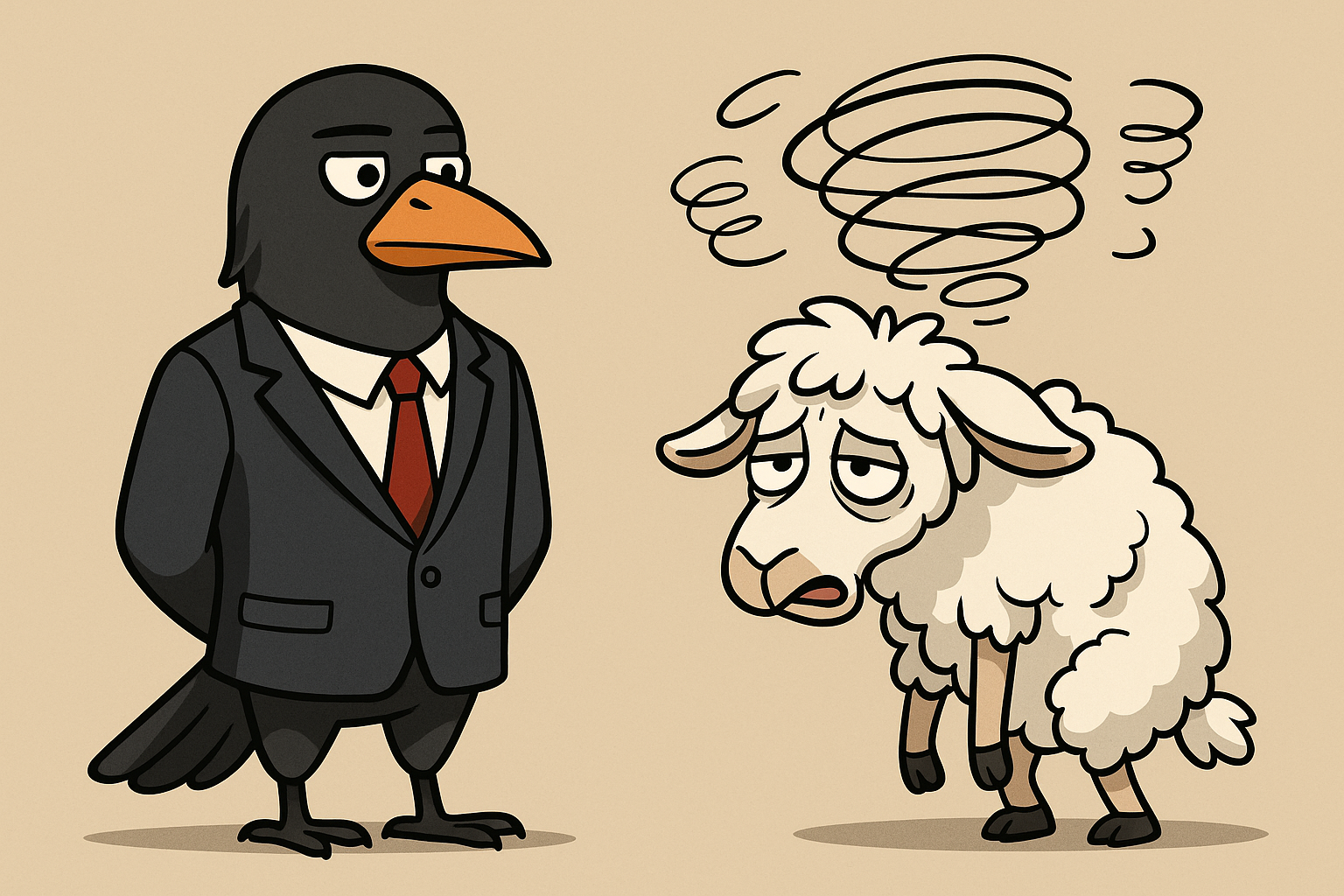
Mistakes are unavoidable. Wallowing in self-pity isn’t.
I’ve been writing the last few days about planning, breaking things down to small pieces, and controlling what you can control.
But even with that, it can still go sideways.
Sometimes it’s not your fault.
But what about when you just blow it?
We’ve all made a bad call in the middle of something important.
Said the wrong thing. Picked the wrong strategy. Misread a person.
Maybe you got caught off guard and went along with something you shouldn’t have.
Maybe you pushed too hard when you should have asked one more question.
It happens to everybody. Even when you plan well, think clearly, and go in with the right mindset.
The issue isn’t really the mistake. The real issue is what happens after the mistake.
Most people go into a kind of self-punishment spiral. They relive it in their head while they’re still in the middle of the situation.
They start questioning themselves.
They start “trying” harder.
Their emotions creep in.
And then they make a second mistake. Then a third. Before long the whole thing has rolled downhill.
Jim Camp talks about this in Start With No. His point is that once a decision is made, it’s made.
You don’t go back and replay it in the moment. You move to the next action.
No dwelling. No self-judging. No rewriting the past while you’re still in the middle of the mission.
There’s a sports version of this that makes the idea even clearer.
Think about a cornerback in football. A corner can be perfect on 58 plays and get beat once — and that one play might be a touchdown on national TV that everyone remembers.
It’s a tough position. You’re exposed. Everyone sees your mistakes.
The ones who succeed don’t have better physical gifts. They have short memories.
If they get beat on a route and spend the next five plays stewing about it — they’ll get beat again. And again.
Because their attention isn’t on the next snap anymore. It’s on the last one.
But the good ones don’t pretend the mistake never happened. They don’t ignore it. They just wait to deal with it.
After the game, they’ll go to the film room. Slow everything down. Look for what tipped the receiver’s route. Study how their hips opened. Look at footwork and spacing. Then they learn from it.
But not during the game.
During the game, all that matters is the next play.
And it’s the same everywhere else — business, negotiation, family, anything that matters.
You’re going to make mistakes. Even with good planning. Even with experience.
Even when you know better.
The key is not to drag the last mistake into the next decision.
Handle the moment you’re in. Then, when it’s over, look back honestly and learn from it.
One snap at a time.
PS- You’re probably tired of me flogging these books. But if you actually bought one you wouldn’t be.
For one you’d probably still be busy reading it. But mostly, you’d understand why I keep hammering on it.
They are that good.
If I know of something that will help you and don’t keep telling you about it, what does that say about me?
Click below and pick one, you won’t be sorry.
(Disclosure: As an Amazon Associate I earn from qualifying purchases. Clicking that link may earn me a small commission, at no extra cost to you.)
Leave a Reply