Tag: Decision-Making

  • The Myth of the Perfect Market

    The Myth of the Perfect Market

    People waste a lot of time waiting for the market to become “perfect.”

    Perfect for buying.
    Perfect for selling.
    Perfect for building.
    Perfect for subdividing.
    Perfect for investing.

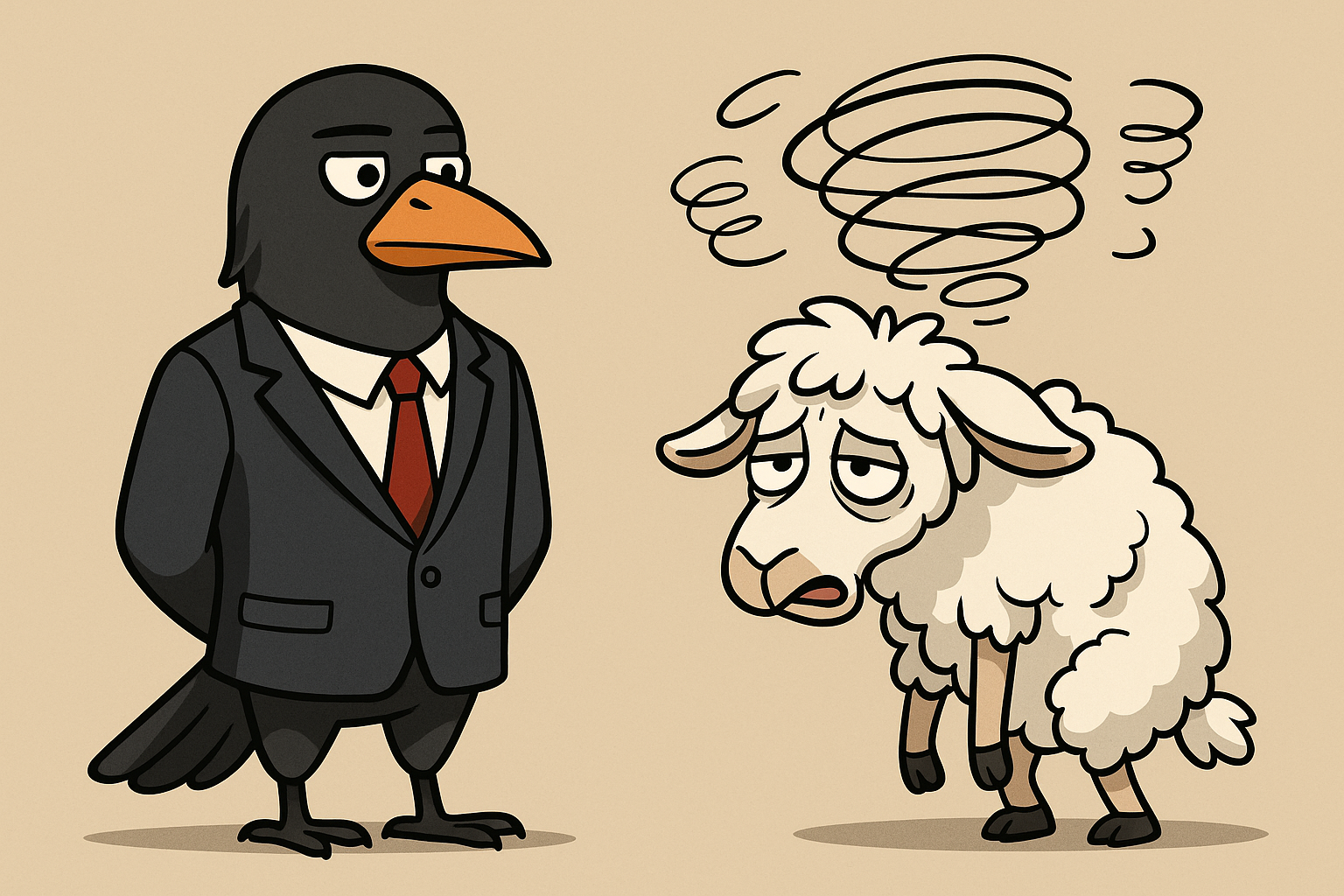
    Much of the time, it seems like their main fear is that other people are going to point out how they screwed up after the fact.

    If you wait long enough, the perfect moment eventually shows up… about two years after it would have done you any good.

    I’ve watched this play out for two decades:

    someone waits and waits and waits because they’ve convinced themselves they’re going to catch the absolute top or the absolute bottom. They think there’s going to be a magic bell that rings to tell them, “OK, now.”

    That bell doesn’t exist. The perfect market doesn’t exist.

    Only hindsight pretends it does.

    And hindsight is a world-class liar.

    Real estate — and land especially — never lines up neatly.

    Interest rates rise.
    Then construction costs fall.
    Then inventory drops.
    Then a factory announces expansion.
    Then a buyer disappears.
    Then a new buyer shows up out of nowhere.

    It’s never tidy.
    It’s never predictable.
    And it never waits for you.

    Here’s the truth:

    Most success in land deals doesn’t come from timing.
    It comes from clarity and execution.

    Clarity means knowing what you want out of the transaction before you start.

    Execution means acting when the numbers make sense — not when the voices in your head finally stop arguing.

    The people who do well aren’t the ones who wait for perfect conditions.

    They’re the ones who look at the information in front of them today, make a plan, and move. Or don’t. If it makes sense to wait.

    They adjust when new information arrives.
    They don’t re-litigate the decision every morning.
    They don’t pull back because their neighbor’s cousin said “the market’s about to crash.”
    They don’t freeze because the new highway is “probably” moving three years from now.

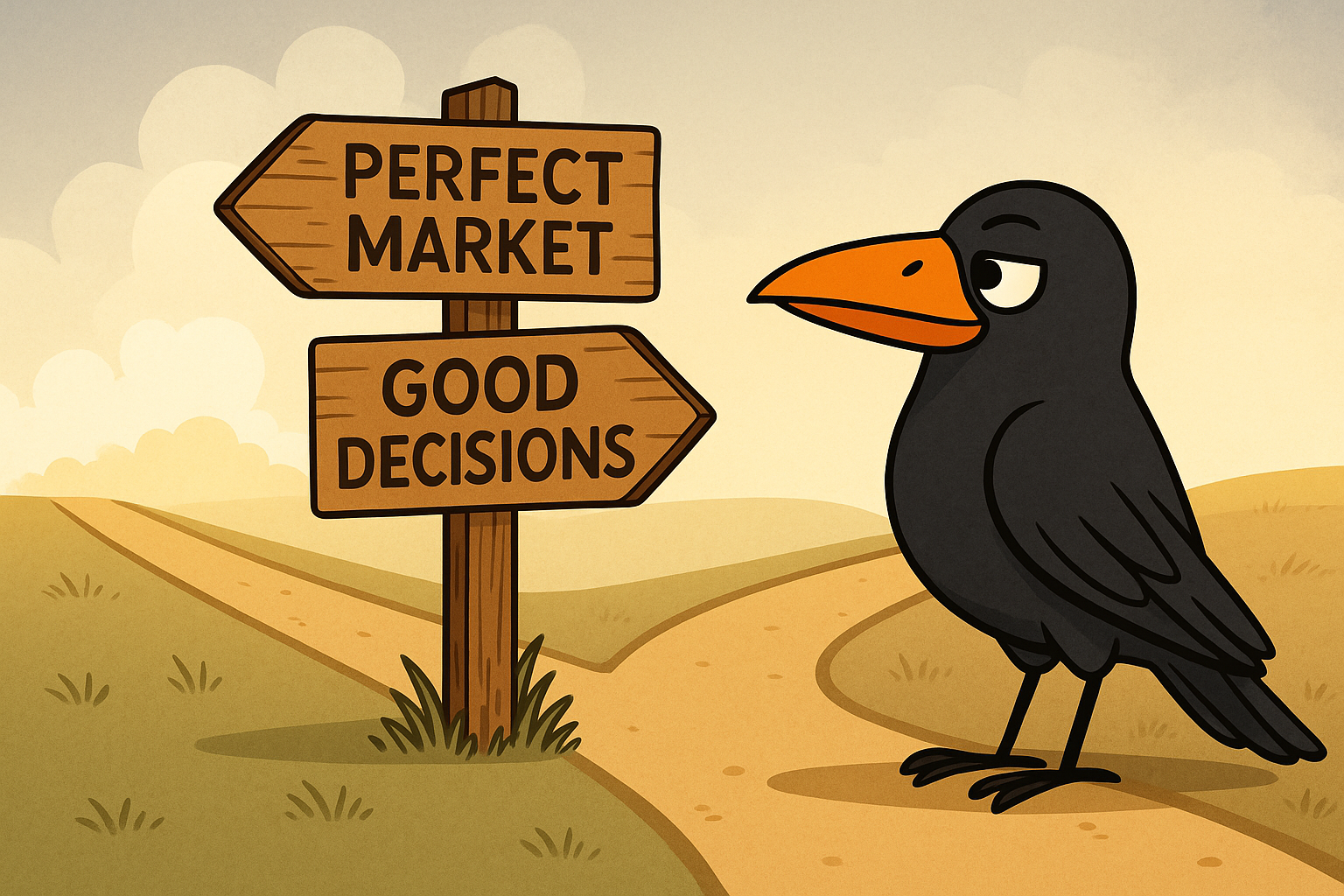
    Perfect markets are a mirage.

    Good decisions are real.

    And good decisions tend to have a few things in common:

    1. The price makes sense today.
    Not “if rates fall.” Not “if a developer shows up.” Today.

    2. The timeline fits your life.
    If you don’t want to hold something for five more years, that matters more than whatever Yahoo Finance says.

    3. The numbers work even without the dream scenario.
    If a deal only makes sense with the perfect buyer, perfect zoning, perfect weather, and perfect timing… it’s not a deal.

    4. You’re not trying to outsmart the universe.
    Markets reward discipline, not clairvoyance.

    There is no perfect moment.

    There’s only the moment when the facts line up well enough that you can move confidently.

    People who act on “good enough” usually beat the people waiting on “perfect” — because they’re actually in the game.

    Pick your direction. Know your numbers. Then act.

    Everything else is noise.

    PS- It may not be the right time for you to buy or sell land today. But is it ever a bad time to have the most current information?

    I offer a free, no obligation value report on any property (non residential). All you have to do is click the relevant link below to get started.

    No pressure, no BS, just straight talk.

    Is it crazy to want to deal with someone like that?

    Click Below:


  • You Blew It. Big Time. Now What?

    You Blew It. Big Time. Now What?

    I’ve been writing the last few days about planning, breaking things down to small pieces, and controlling what you can control.

    But even with that, it can still go sideways.

    But what about when you just blow it?

    We’ve all made a bad call in the middle of something important.

    Said the wrong thing. Picked the wrong strategy. Misread a person.

    Maybe you got caught off guard and went along with something you shouldn’t have.

    Maybe you pushed too hard when you should have asked one more question.

    It happens to everybody. Even when you plan well, think clearly, and go in with the right mindset.

    The issue isn’t really the mistake. The real issue is what happens after the mistake.

    Most people go into a kind of self-punishment spiral. They relive it in their head while they’re still in the middle of the situation.

    They start questioning themselves.

    They start “trying” harder.

    Their emotions creep in.

    And then they make a second mistake. Then a third. Before long the whole thing has rolled downhill.

    Jim Camp talks about this in Start With No. His point is that once a decision is made, it’s made.

    You don’t go back and replay it in the moment. You move to the next action.

    No dwelling. No self-judging. No rewriting the past while you’re still in the middle of the mission.

    There’s a sports version of this that makes the idea even clearer.

    Think about a cornerback in football. A corner can be perfect on 58 plays and get beat once — and that one play might be a touchdown on national TV that everyone remembers.

    It’s a tough position. You’re exposed. Everyone sees your mistakes.

    If they get beat on a route and spend the next five plays stewing about it — they’ll get beat again. And again.

    Because their attention isn’t on the next snap anymore. It’s on the last one.

    But the good ones don’t pretend the mistake never happened. They don’t ignore it. They just wait to deal with it.

    After the game, they’ll go to the film room. Slow everything down. Look for what tipped the receiver’s route. Study how their hips opened. Look at footwork and spacing. Then they learn from it.

    But not during the game.

    During the game, all that matters is the next play.

    And it’s the same everywhere else — business, negotiation, family, anything that matters.

    You’re going to make mistakes. Even with good planning. Even with experience.

    Even when you know better.

    The key is not to drag the last mistake into the next decision.

    Handle the moment you’re in. Then, when it’s over, look back honestly and learn from it.

    One snap at a time.

    PS- You’re probably tired of me flogging these books. But if you actually bought one you wouldn’t be.

    For one you’d probably still be busy reading it. But mostly, you’d understand why I keep hammering on it.

    They are that good.

    If I know of something that will help you and don’t keep telling you about it, what does that say about me?

    Click below and pick one, you won’t be sorry.

    (Disclosure: As an Amazon Associate I earn from qualifying purchases. Clicking that link may earn me a small commission, at no extra cost to you.)

  • Your Deal. Your Business.

    Your Deal. Your Business.

    Aside from the actual process of buying one, the worst part about purchasing a car may be hearing from everyone afterward that you paid too much. Or that you didn’t get enough for your trade.

    Or that you should have done it their way because you’d have gotten a better deal.

    It was for me, at least until I learned not to engage in that conversation in the first place. And if I can’t avoid it, I just ignore it.

    For one thing, I negotiate for a living. And given the size of my family, I’ve bought and sold way more cars than the average person. So while it’s possible that some random bystander could have squeezed out a significantly better deal, it’s highly unlikely.

    Mostly it’s just bluster. You know how people are.

    But more importantly, if I’m happy with the deal and decide to move forward, what difference does it make what someone else thinks?

    There’s no need to explain.

    It applies to real estate too. Just this week I got a call from someone an attorney friend had referred.

    Her neighbor had proposed swapping some land that would reduce her road frontage and increase her back-yard depth.

    On paper it sounded like a fair trade. But she worried the road frontage was worth more than what she’d get in return.

    I told her that, in a vacuum, road frontage is usually more valuable. But there are always other considerations. And in her case the difference might be negligible.

    She didn’t have a sketch or map to show me, so I couldn’t give a definitive opinion. But assuming she wasn’t making a clearly bad trade, I told her this:

    If you think your property is better off after the swap, do it. Don’t get paralyzed over a value difference that’s likely minimal.

    And if you don’t want to explain to neighbors why you didn’t demand money as part of the deal, don’t.

    It’s none of their business.

    In life and in business, you don’t owe most people an explanation.

    Your client, your wife, your boss—fine.

    But you don’t owe strangers a PowerPoint about your pricing, your timing, or your strategy.

    No matter what they say.

    My experience is that whenever someone offers you facts you didn’t ask for, it’s pretty smart to ignore it as it’s usually wrong.

    Is it ever a bad time to get real world data and advice from an expert in the field?

    Just click below if not: