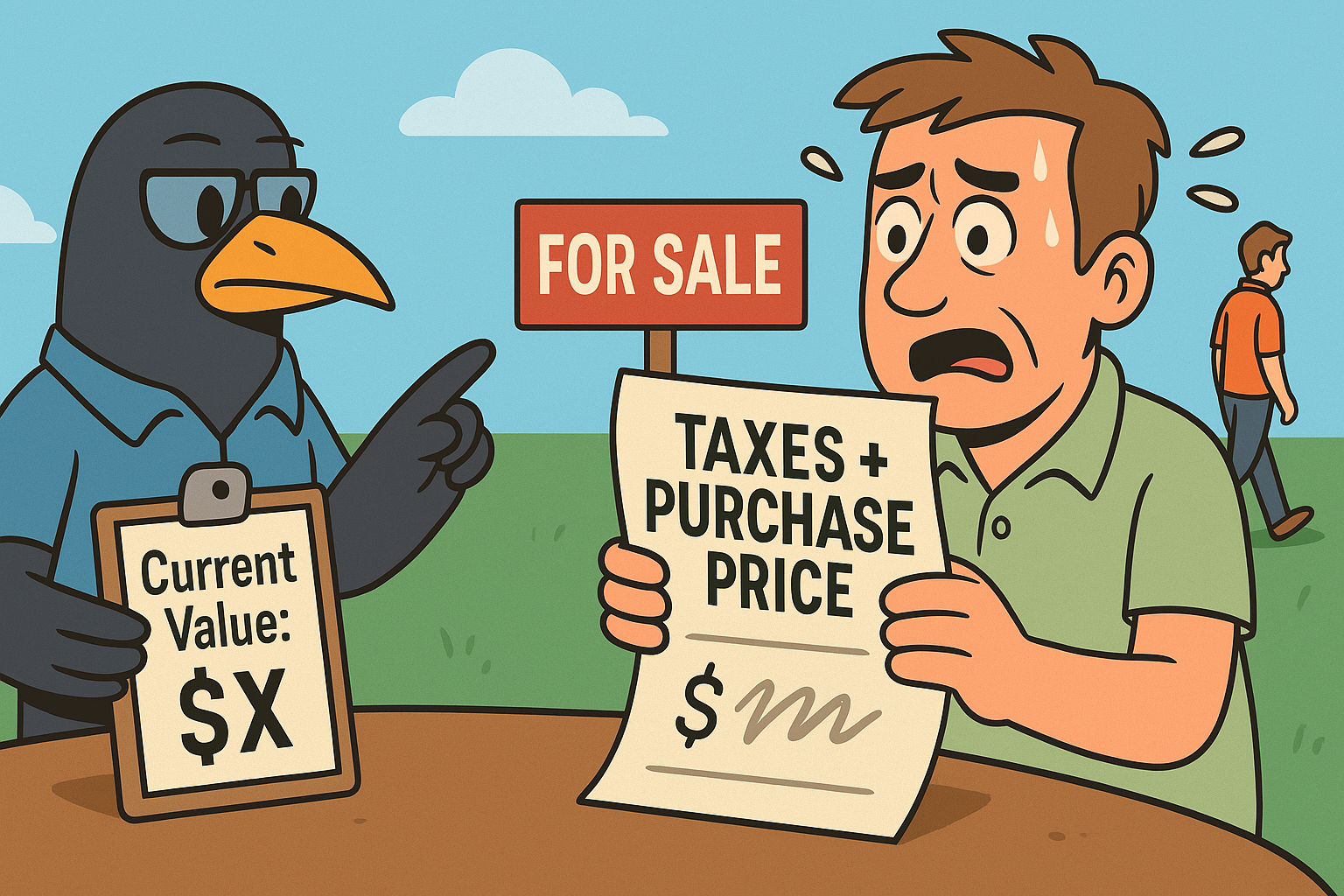
(And the market definitely doesn’t.)
When I talk to lot owners — especially people who bought 5, 10, or 15 years ago — the first thing I usually hear is some version of this:
“We paid X… and we’ve spent Y on taxes and upkeep, so we really need to sell for more than that for it to make sense.”
I get it. You want to feel like it was a good decision.
But unfortunately…
The market doesn’t care what you paid.
It never has.
You could have paid $12,000 or $120,000 — doesn’t matter.
If it’s only worth $9K today, that’s what you can sell it for.
If it’s worth $90K, that’s what it’ll bring — regardless of whether you picked it up for $8K or $80K.
Funny how people understand this perfectly when it goes the other direction:
“I only paid $10K, but now it’s worth a million.”
Exactly. Because the value isn’t determined by what you spent.
It’s determined by what the next person is willing to pay.
Exhibit A: MySpace
News Corp (the parent company of FOX) bought MySpace for $580 million in 2005.
Six years later, they sold it for $35 million.
They didn’t get to say:
“But we spent so much!”
The market didn’t care.
Facebook had already taken over, the platform was dying, and the price reflected reality — not the emotions attached to the invoice.
Sunk Costs ≠ Smart Strategy
This isn’t just about land.
It’s about decision-making in general.
Let’s say you bought movie tickets for Saturday night, but a friend offers you a last-minute seat at a playoff game or a concert you’d rather attend.
Many people will say,
“Well I already paid for the movie, so I don’t want to waste the money.”
But that money’s gone either way.
So the only rational decision is to ask:
What do I want more — right now — given what I know?
Same goes for your land or your lot.
You already spent the money. You can’t unspend it.
The smart question isn’t “How do I get it back?”
It’s “What’s the best move from here?”
Even the Pros Get It Wrong
Teams do this in sports all the time.
A front office pays big money for a free agent.
Then he underperforms… but they keep starting him anyway.
Why?
Because they “have to get something out of the investment.”
Except they don’t. The money is gone.
The only smart move is to play the guy who gives you the best chance to win today — not the one who used to look good on paper.
Back to Your Lot
If you’re thinking about selling, start with this:
- What is it worth today?
- What are your real options going forward?
- And what’s the smartest move based on that — not based on what you hoped would happen when you bought it?
Emotion’s allowed — but it doesn’t set the price.
Buyers don’t pay extra for sentimental value.
The best decision isn’t always the one that feels best in the moment.
It’s the one that gets you where you’re trying to go.
Want to Know What Yours Is Worth?
I offer a free, no-pressure value analysis on any non-residential property.
No fluff, no hype — just real comps, utility and access info, market trends, and any nearby sales activity that matters.
Would it be a bad idea to get a clear picture so you can start to ask the right questions?
Click below to get started:
Got a lot you might want to sell?
Get a FREE, no obligation report on what it could sell for today.
Get Your Lot Valuation
Own land instead?
Get a report for that here:
Get Your Land Value
Just a glutton for punishment?
Sign up now to get more articles like this in your email.
Sign Up Now
Leave a Reply