Tag: North Texas real estate

  • The salesman’s doom loop: chase, convince, close.

    The salesman’s doom loop: chase, convince, close.

    If I’m “explaining”, I’m already losing

    You’ve seen it before, especially with car dealers. You so much as glance at a car online or ask for a quote to sell yours, and suddenly you’ve got your own personal stalker. Usually a guy. He’ll message, call, email, daily, like his only job is bugging you.

    And the more you say “not interested,” the more he hears “maybe later.”

    I swear, ignoring them works better than saying no.

    That’s the “chase” part.

    If you show even a flicker of interest, they move to the “convince” phase. You’ll hear every reason you should do what they want — buy the thing, sign the deal, whatever — completely ignoring the fact that it helps them way more than it helps you.

    They’re just trying to wear you down at that point. It’s exhausting.

    As a customer, it sucks. And if you’ve ever been in sales and your boss made you do it, you know it feels pretty gross.

    Even if you end up saying yes, are you really happy about it? Usually not.

    Then comes the “close.” You walk through the door or agree to a meeting, and now it’s game time.

    They say whatever they need to say to lock it down. Pressure ramps up.

    Nobody’s enjoying themselves at that point.

    I get this same nonsense all the time. People trying to sell me real estate marketing subscriptions. It’s awkward for both sides. I’ve even said yes a few times. Never happy I did.

    Turns out the stuff that’s actually useful doesn’t require a hard sell. Go figure.

    I’m sure you’ve had real estate agents do similar things. Show a little curiosity and suddenly you’ve got someone “following up” forever. You get hit with every sales tactic in the book, some you didn’t know existed. Then if you finally agree to meet, the first listing or offer that comes up is always “perfect.”

    Yeah, sure it is. Cue the close.

    It’s not fun.

    So I don’t do it that way.

    Yes, I send these emails. But I’m not chasing anyone. And I’m not going to browbeat you or wear you down into working with me.

    If anything, you’ll have to chase me, because I only work with people who actually want to work with me. Not folks I had to “convince.”

    I try to make these messages useful, maybe even a little entertaining. There’s good info in here, especially if you read between the lines. Some of it about land and real estate, some just about how the world works. You can unsubscribe anytime.

    But if I’ve got something that will help you and I don’t speak up, what good am I?

    I’m around if you ever need me. No chasing. No convincing. No closing. When you’re ready, we move forward.

    If it makes sense for both of us.

    Simple as that.


  • This Isn’t for Everyone, But Is It for You?

    This Isn’t for Everyone, But Is It for You?

    Rural acreage where you can create something your friends don’t have

    Some land listings are clean slates. Others have some history, some natural texture, something that makes you stop and think. This one falls squarely in that second camp.

    We’ve got 39.66 acres for sale southeast of Sherman, just outside of Whitewright. It’s got over 1,300 feet of frontage on Rochelle Cannon Rd, and it sits outside any city limits or ETJ. That means no zoning hoops to jump through.

    And no surprises from a busybody city councilwoman down the road.

    It’s listed at $30,000 per acre. I’m part owner—could be some flexibility on price depending on what a buyer wants to do.

    The tract can be divided, we already have up to three water meters available for purchase from Kentuckytown WSC. That’s not a small detail: the water line extension is fully paid for, and construction is expected to start this summer. For someone looking to build now or soon, that’s a big plus.

    But here’s what makes this place stand out: it’s not a blank canvas. This tract has deep wet-weather creek beds crossing it. These aren’t little low spots—they’re real features that cut through the land and shape how you’ll use it. Yes, they limit where you can build or cross. And it may not be cheap. But they also give the place a ton of natural character.

    There are also mature oak trees, a varied topography, and a sense of privacy you don’t get on wide-open pastures. You could carve out a custom home site, keep some land wild, run a few cows, or create a really striking entry if you’ve got a good eye.

    If you’re thinking about splitting it up, keeping tracts above 11 acres avoids platting, and still leaves room for a home and potential ag exemption on the rest. That flexibility opens it up to buyers who want more than a postage-stamp lot, but don’t want to go full ranch.

    You’re also in Whitewright ISD, with quick access to US 75 and the TI chip plant development in Sherman. Location-wise, it’s in the path of growth but still feels tucked away.

    This one’s not for everyone. But if you’re looking for land with a little soul—and the room to make it your own—this might be the one.

    If you have MLS, check #20880254.

    Or take a look here:

    Flyer available. Drone aerials too—just reach out if you want to see more.


  • It’s Easy to Do. And Easy Not to Do.

    It’s Easy to Do. And Easy Not to Do.

    Could if they would. Won’t, so they can’t.

    I probably come off like I’m bragging sometimes.

    Like I think I’m the best land broker you’ll find.

    Maybe even full of myself.

    And yeah — there’s probably some truth to that. I’ve never been accused of being the most humble guy (though I have been called the most stubborn).

    I am good at what I do. But the truth is, getting good at it wasn’t all that hard.

    It was just… consistent.

    It’s been years of small, simple things — repeated (almost) daily — that add up.

    Like:

    — Looking at MLS sales every day and cataloging them. Only takes ten minutes. At first it felt like a waste of time. Now? I’ve got custom maps with years of comps at my fingertips.

    — Talking to agents, builders, developers, investors every day. Most of it goes nowhere, at least in immediate terms. But now? I’ve built a network that trusts me and tells me the things that actually move deals.

    — Negotiating. Over and over again. Not always fun, but I’ve gotten good at it. I use a different style than most — sounds weird when I explain it, but it works.

    None of this was complicated. It was all easy. I just had to do it.

    But it’s just as easy not to do — and most people don’t.

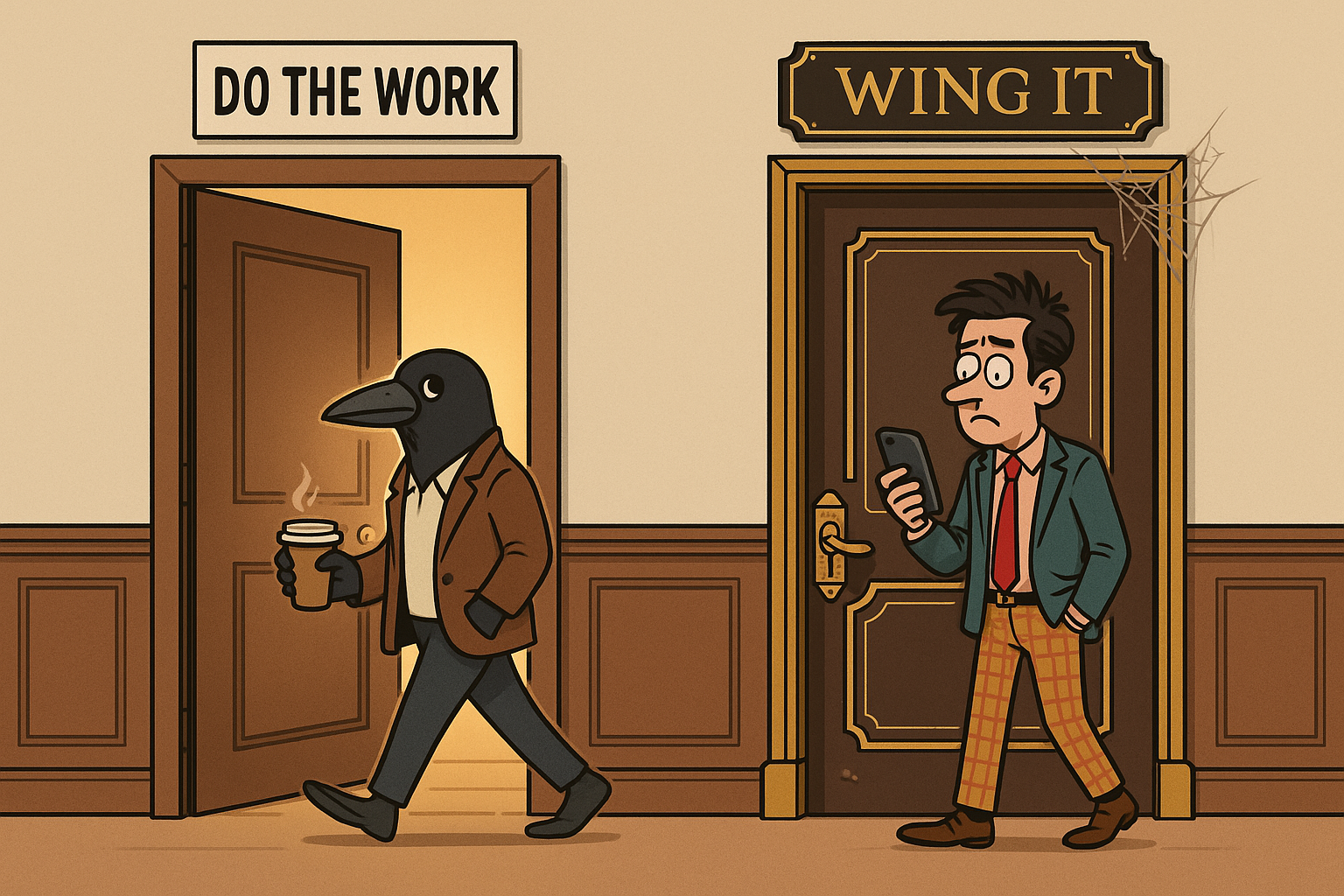
    Most brokers wing it. They focus on sounding impressive just long enough to “get in the door.” Then they scramble to gather the info they need, try to fake the network, and lean on cookie-cutter negotiation tricks to push you to say yes.

    But wouldn’t you rather work with someone who already did the work?

    Someone who’s got the info, knows the players, and knows how to deal with them?

    If you ever even think about selling, just let me know.

    P.S. Curious about how I negotiate? Just ask — I’ll tell you what books to start with. Negotiation shows up in every part of life, and getting better at it makes everything smoother. My approach feels like playing a different game entirely.

    P.P.S. Do I worry you won’t need me if you learn what I know? Not one bit. Once you really understand what goes into this, you’ll realize how important it is to have the right professional in your corner.


  • Negotiation So Strong, It’d Be Dangerous in the Wrong Hands

    Negotiation So Strong, It’d Be Dangerous in the Wrong Hands

    Only use your powers for good

    Yesterday I mentioned that I use a different kind of negotiating system than most people. Once you get good at it, it honestly feels like you’re playing a whole different game.

    Most folks think negotiation only happens in land deals (or maybe car deals, I’ve got a few stories there for another day). But it’s everywhere.

    Trying to get your kid to clean their room?
    Negotiation.

    Deciding where to eat?
    Negotiation.

    Need time off work for a midweek appointment?
    Yep—negotiation.

    And the better you are at it, the smoother things go and the better your outcomes.

    A lot of people assume great negotiators are pushy. Ruthless, even. Like the guy at the dealership who’ll say anything to close the deal. They’ll lean hard on pressure, power, and urgency. And sure, if you’ve got leverage, sometimes it makes sense to use it.

    But ask yourself how you feel after most car-buying experiences. Even when you like the car, you probably leave thinking, “Never again with that place.”

    That’s the problem with strong-arm tactics: even when they “work,” they burn bridges. People don’t come back. You win the deal but lose the relationship.

    The method I use isn’t weak or soft. It’s not about caving in or rushing to “yes.” If that’s your approach, the sharks out there will eat you alive. But it does lower the tension, make deals easier to close, and keep everyone on good terms when it’s done.

    Sometimes it works so well it’s almost scary.

    Quick story: my wife bought something online from a vendor that was very clear, no refunds, all sales final. And of course, it broke almost immediately. Not a fortune, but enough to be frustrating.

    She reached out. They repeated the no-refund policy. She was even more upset.

    So I wrote a short message, maybe three or four sentences, and told her to send it. She read it and said, “There’s no way this works.”

    I said, “What have you got to lose?”

    She sent it. Refund came back immediately.

    She thought it was magic. Then she looked at me suspiciously and said, “Wait… have you been using this on me?”

    I hadn’t. I only use my powers for good.

    If you want to know how it works,you can buy the book at the link below — only use it for good.


  • Real Estate Market Extremism

    Real Estate Market Extremism

    The Housing Market’s Moody Cousin

    I try not to pay too much attention to the news. It’ll drive you nuts. And let’s be honest, the point isn’t to inform you—it’s to keep you watching. (More on that some other time, probably with a bourbon in hand.)

    That said, real estate is my job, so I have to keep tabs on that part of the circus. But even there, most of what gets talked about boils down to whether the housing market is “hot” or “cold.” It’s the same game: grab your attention and keep you scrolling. Everyone either owns a home or wants to, so they know that’ll get clicks.

    But when you start talking about custom home lots, the rules shift. The regular home market and the lot market are connected, sure—but not twins. More like cousins who only get along half the time. In fact, the lot market tends to be even more extreme.

    Everyone needs a place to live. Job transfers, family moves, divorces, new babies, empty nests, whatever—it keeps the regular housing market in motion, even when it’s slow.

    But nobody needs a 4-bed, 4-bath custom masterpiece on 1.5 acres. That’s a “want,” not a “must.” And when money’s tight or rates are high, “wants” get put on hold.

    Here’s how that plays out:

    When the housing market is hot—prices rising, equity growing, interest rates low—building a dream house feels doable. People see their current home value going up and start dreaming bigger. The lot market? It goes nuts. I’ve seen times where I’d run the comps, take an already-aggressive number, tack on $50–75K, and bam—sold. Immediately.

    But when things cool off?

    The same buyers say, “Maybe we’ll just wait a bit.” And they do. If they’re not building soon, why buy a lot now? So they don’t. And the market for lots doesn’t just slow down—it basically vanishes.

    That’s the thing with lots: it’s not a gradual shift. If your lot is worth $200K in a hot market, it’s not going for $195K in a soft one. It might not go at all. You either ride it out or sell at a steep discount—and no one likes a steep discount.

    So while the housing market moves in degrees—warm, chilly, cold—the lot market goes from “on fire” to “ghost town” in a snap.

    What’s the takeaway?

    If you’re thinking about selling and the market is good, go. Don’t wait. These windows don’t stay open long. If the market’s soft, sit tight until it turns. You’re not missing a few grand—you’re missing all the buyers.

    Not sure where things stand? Just ask. I’ll give you the truth, whether it’s “now’s the time” or “hold off and I’ll keep you posted.”


  • But We Can Get More… Right?

    But We Can Get More… Right?

    Selling isn’t just about numbers—it’s about outcomes.

    When I list lots for clients—especially custom home lots—I’m often asked that question. And the answer is: maybe. But that’s not always the point.

    I feel like I usually negotiate stronger deals than most agents. Part of that’s volume, part is experience—but a big part is that I’m not desperate to close something today. I can afford to wait, and more importantly, I can afford to tell my clients to wait, if that’s what’s best for them.

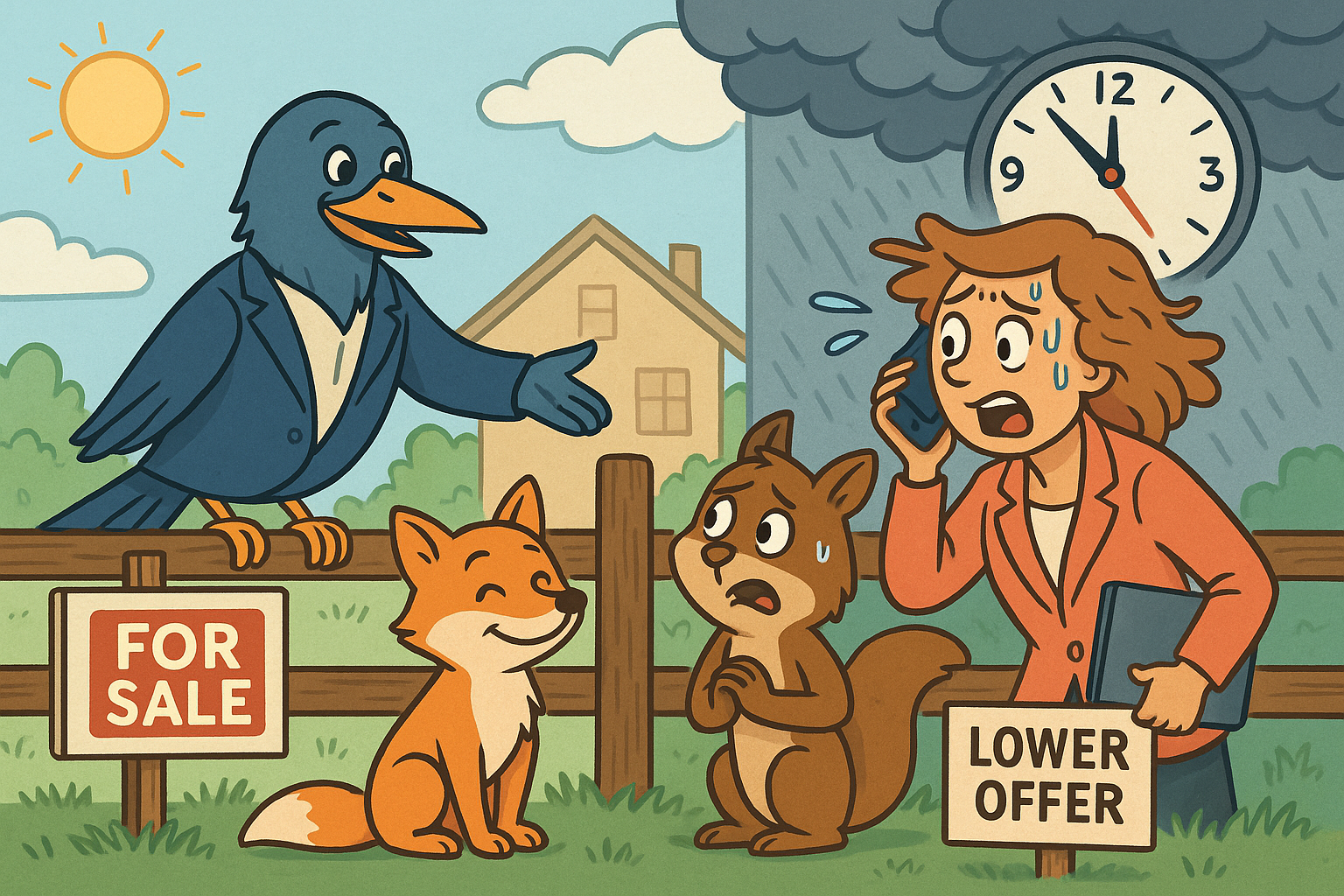
    A lot of agents can’t. They need the deal, now. So they lean on their sellers to take the first offer that shows up—even if it’s 20% below ask.

    I don’t do that.

    I’ve seen patience pay off again and again. My sellers walk away with more, and I walk away with another high comp that helps the neighborhood and everyone else trying to sell.

    But here’s the thing: “more” isn’t always better.

    Right now, I’ve got a client who donated a lot to a nonprofit. We had a target price in mind. When an offer came in 5% below that number, they passed.

    Then they came back, second-guessing: Should we have taken it?

    I wanted the higher price—it helps my numbers, helps the market. But I told them no, this time the better decision might be to take the lower offer and move on.

    Because every extra month the charity holds the lot costs them money: taxes, HOA dues, insurance. If they wait six months hoping for more, they could lose that gain in holding costs.

    And the longer they wait, the longer they’re not using that money to do what they’re meant to do—help people.

    So yes, I want to sell your lot for as much as possible. But even more than that? I want to help you make the best decision for your situation. Sometimes that means walking away from an offer. Sometimes it means taking one before it slips through your fingers.

    Either way, I’m here to give you the kind of advice that’s not based on what I need—but what you need.

    When you’re ready for that kind of agent, I’m ready to help.


  • A $3.5M Deal That Was Never Meant to Happen

    A $3.5M Deal That Was Never Meant to Happen

    When it looks too good to be true, it usually is.

    Yesterday I was talking about how I need to be able to spot a deal instantly, because the kind of deal I can sell with one phone call doesn’t stick around.

    And how I might only see a few of those in a year, even though I’m looking almost every day. Maybe a 1% chance on any given day, probably less.

    So guess what happened yesterday?

    Right after I finished writing about how rare those are, I jumped into my usual search and came across something that looked promising. Asking price: $3.5M.

    It’s not an area I work in much, near Texas Motor Speedway. Tons of development happening out there. And a quick check showed that several major players already own the land close by.

    That alone tells you a lot. When I say decades of experience pay off, this is what I mean. Not only can what and where tell you something, but who is a big factor too.

    Now, I wasn’t 100% sure it was a deal. But it was close enough to rattle a few cages. That’s another piece of experience: knowing when to share something and when to hold back. You don’t want to be the boy who cried wolf, but you also don’t want to miss something real.

    I’ve done both. It stings more when you don’t share and that person ends up buying it through someone else.

    So I reached out to the listing broker with basic questions about utilities, zoning, etc., and then contacted a client who could handle a deal that size.

    Then I waited.

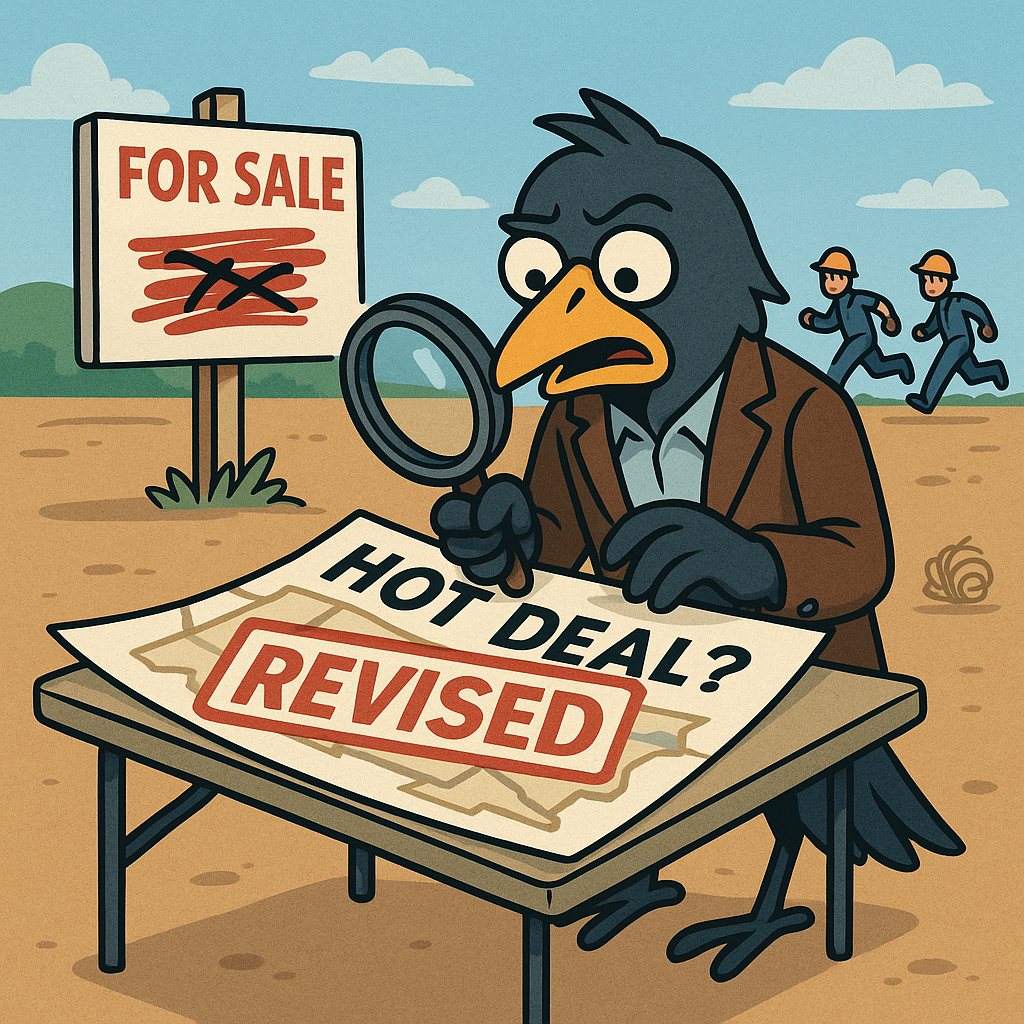
    Later that evening, I got a mass email from the broker. Turns out their office made a mistake. The asking price wasn’t $3.5M—it was $4.9M. If anyone wanted to update their offers, now’s the time.

    Apparently, they got multiple contracts within hours. Meaning my gut was right: at $3.5M, it was a deal.

    At $4.9M? Not so much.

    So I’ll keep looking.

    And as always—if you ever need someone who can spot these things before the crowd, you know how to reach me.


  • Getting Paid Like a Genius After Decades of Eating Dirt

    Getting Paid Like a Genius After Decades of Eating Dirt

    Overnight success 20 years in the making

    A while back I sent a message saying my commission on a particular deal might’ve worked out to about $3,000 per hour. And yeah, that can sound ridiculous.

    Heck, even I think it sounds ridiculous sometimes.

    What’s easy to forget, even for me, is all the work I didn’t get paid for that made that outcome possible.

    All the deals that fell through? I learned from every one. That’s how I know what to watch for now. That’s how I help clients avoid wasting time on bad deals or pricing land in a way that ignores costs buyers will absolutely notice.

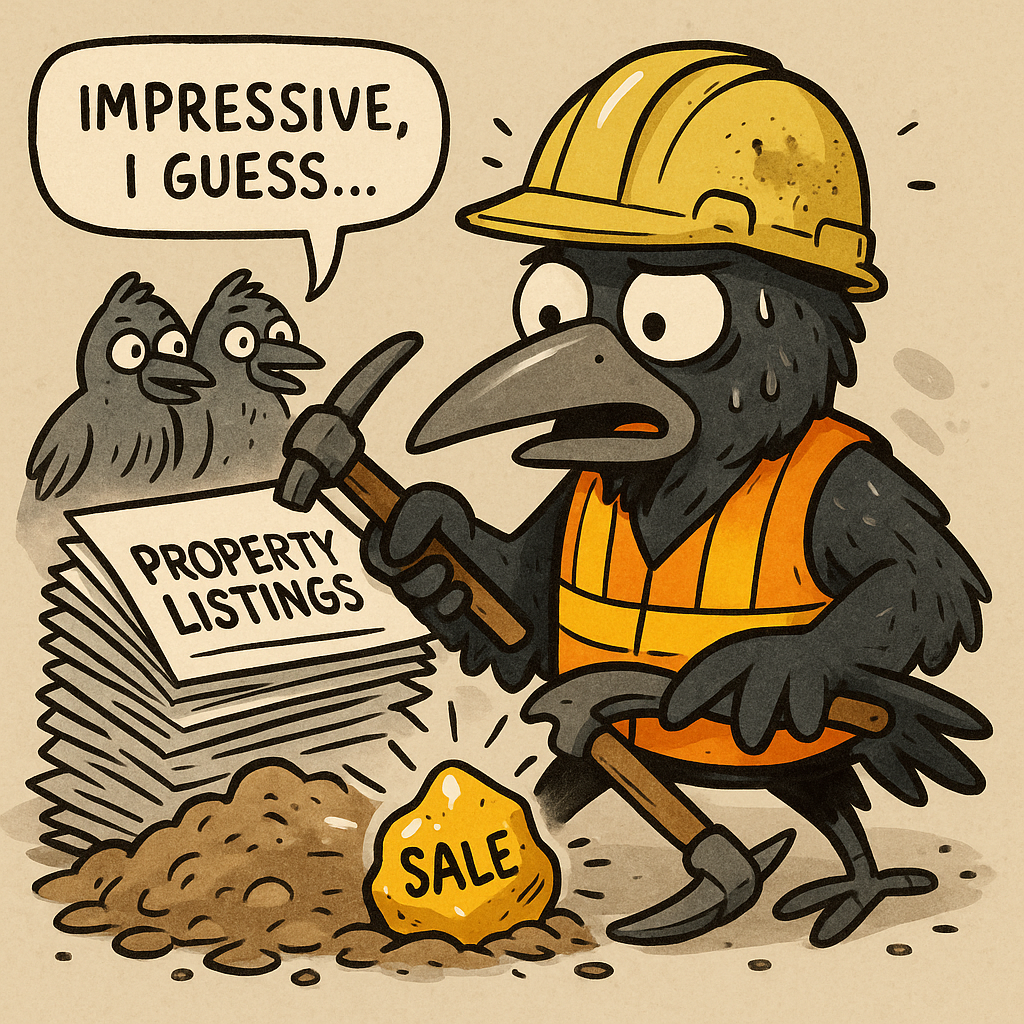
    All the time I spend combing through MLS and off-market listings? Most of that is “wasted,” too. If something’s a true deal and advertised broadly, it disappears fast. So I’m sifting through endless overpriced listings or stuff with obvious problems.

    I look basically every day. On a good year, I might find 2–3 truly great deals that way. What’s “great”? The kind of deal I can sell with one phone call.

    When that happens, yeah—it might look like I got paid an absurd amount for doing barely anything. But for that to happen, a ton had to be in place beforehand:

    • I need to recognize a deal instantly
    • I need a reputation with other agents that makes them want to work with me, even if it takes an extra day
    • I need clients who trust me enough to move the second I say go

    To the naked eye, it might look like I clicked a few buttons, made a couple calls, and cashed a check. But the only reason that can happen is because of decades of work, most of it unpaid.

    The good news is: that work can benefit you now, too.

    Just let me know when you’re ready to put it to work.


  • The Answer to Every Question in Real Estate

    The Answer to Every Question in Real Estate

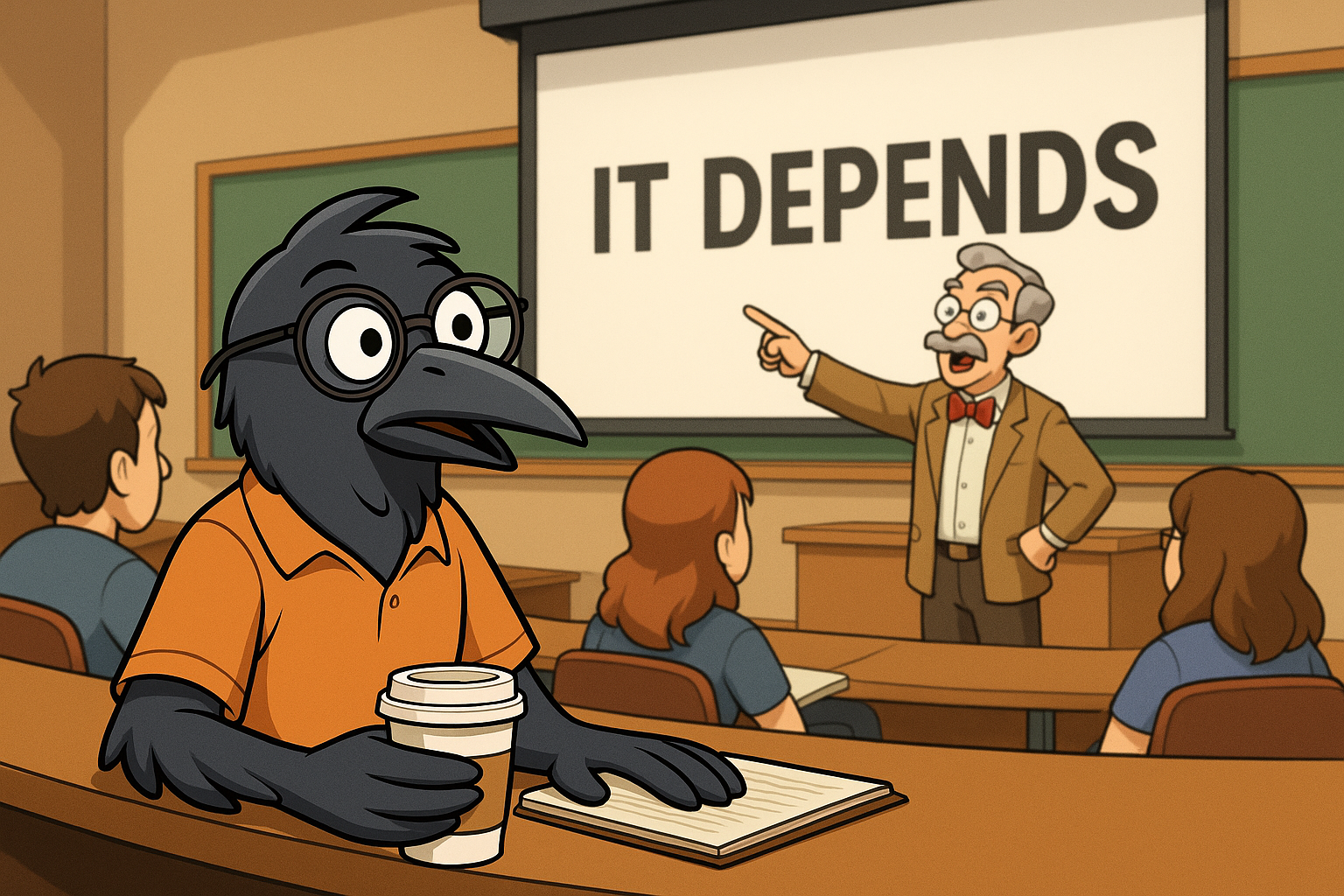
    In my business, “it depends” is a real answer not a cop-out

    Back when I was at the University of North Texas, my favorite professor was a guy named Dr. John Baen. He was one of those colorful real estate personalities—funny, sharp, and full of stories from the real world. Nobody missed his class because you never knew what he was going to say next.

    He wasn’t just a professor—he was also a practicing broker. So when he talked, you knew it wasn’t theory. It was the way things actually work.

    I don’t remember a lot from college. But I do remember things he said, like:

    • You don’t want to make straight A’s—the C students end up making all the money (thank God).
    • Don’t be a crook.
    • If you’re in real estate long enough, even if you aren’t a crook, you’ll eventually get sued. (Hasn’t happened yet—fingers crossed.)

    But the one I’ve never forgotten was on the first day of class:

    “The answer to every question in real estate is: it depends.”

    At first, it sounded like a joke—or maybe just a way to avoid giving a straight answer. But over time, I realized it’s the most honest response you can give.

    What’s your land worth?

    It depends—on zoning, access, floodplain issues, comps, demand, utilities, timing… and all of that can change.

    Is now a good time to sell?

    It depends. What’s your plan? What does it cost to hold it? What are you comparing it to?

    Most of what you hear online is too generic to be helpful—and sometimes, it’s flat-out self-serving. The truth? Real estate is local, situational, and constantly changing.

    If you own property in North Texas—Grayson, Collin, Denton, or somewhere nearby—there’s no one-size-fits-all answer.

    But I can give you a real one.

    No pressure. Just data, comps, and honest advice.

    Because in real estate, the only real answer is:

    It depends.


  • A PhD in Shut-Uppery

    A PhD in Shut-Uppery

    The less you’re talking, the more you’re probably winning

    Not talking might be the most powerful negotiating move you’ve got. Just not talking. No pitch, no follow-up, no filler.

    Maybe a bit of an exaggeration, but not by much. Silence makes most people squirm. And when they’re uncomfortable, they talk. And when they talk, they say more than they should.

    I first heard the advice “just shut up” early in my career. I was helping an acre-lot developer try to acquire a tract. We took the seller to dinner. Every time the conversation slowed down, I jumped in to keep things moving—just like you’ve probably seen plenty of agents do.

    Afterward, the buyer pulled me aside and shared something he’d read in a book on unconventional negotiation:

    Stop talking. Let the silence work.

    Being a natural introvert, I didn’t need much convincing. I tried it out, and the results were immediate.

    Fast forward a few years. That developer had become a publicly traded homebuilder. Same guy in charge of acquisitions. I was helping them with a deal in Seagoville that had gone cold. I set up a call with the seller. After introductions, I didn’t say a word. My client barely said anything either. But five minutes later, the deal was done. Big one, too.

    When the seller dropped off the call, my client laughed and pointed out that I hadn’t said a single word.

    I reminded him: “I’m just doing what you taught me.”

    He nodded. “You did it right.”

    Now, I’ll admit my way isn’t always flashy. Sometimes it doesn’t look like I’m doing anything. But if the deal gets done, isn’t that what actually matters?

    Especially if you don’t have to sit through a bunch of pointless yammering to get there?