Tag: North Texas real estate

  • Advanced  Lessons in Shut Uppery

    Advanced Lessons in Shut Uppery

    Talk big, get busted. Hire someone who knows better.

    Before I got into real estate, I had my sights set on being a professional pool player.

    I learned a couple things quick:

    1. It was a lot harder than it looked.
    2. There wasn’t much money in it. Not back then, and even less today.

    Back then, you could catch the big tournaments on ESPN. Now you’re lucky to find a livestream that works. A handful of players could make a living on tour. Most couldn’t. If you wanted to make money playing pool, you gambled.

    I gave up the dream, but kept playing. And I was good, a notch or two below great. In the right setting, to the average person, I could look like a world-class player. But anyone who really knew the game could spot the gap in a heartbeat. I was just good enough to be dangerous, to myself if I wasn’t careful.

    Luckily, I knew who the real players were. And I kept my mouth shut.

    One night, I was sitting at the bar in a poolroom, a couple seats down from the owner. A guy who, if you told certain people he was the best in the world at one time, they wouldn’t laugh. They might not all agree, but it wouldn’t be a ridiculous claim. He was certainly one of the best.

    In walks this other guy I know. Full of himself, always name-dropping. He starts talking loud about how he just played and beat the guy sitting next to me at another pool hall. Obviously didn’t even really know who he was, other than the name.

    We didn’t say a word. Just let him talk.

    Sometimes the best way to save someone from embarrassment is to let them walk away thinking they impressed you.

    So what’s this got to do with real estate?

    Not much — except it’s the same kind of game.

    There are a lot of loud voices out there trying to sound smart. Name-dropping builders. Quoting bad comps. Acting like they know the players. But if you really know what you’re looking at, it’s easy to spot who’s bluffing.

    I don’t just know land and development, I know the people behind it. And they know me. I don’t run around bragging about it and making it about me, which is part of the reason they will talk to me. And by talk I mean in a way that might actually help a deal happen, instead of just to get me to go away.

    Am I ever wrong? Sure. But I don’t say things just to impress people, and hope I don’t get found out.

    Isn’t that the kind of guy you want on your side?

    If you’re ready to get started, just let me know here.


  • Flipping the Script on Water Companies

    Flipping the Script on Water Companies

    Sometimes you have to get creative

    I’ve talked a lot about water. How critical it is to property values. How frustrating the water companies can be. And how the whole thing can feel like a bit of a racket.

    Other utilities matter too, but they’re often easier to manage.

    No sewer? You can always go with septic. It means your lots have to be larger, typically at least one acre depending on the location, but development is still very doable.

    Electric is usually not far away. Most providers will bring power to the front of your property at no cost. From there you just cover the cost of running it to your home or development. Unless you’re miles from the grid, which is unlikely around here, it’s almost always manageable.

    Internet is getting more important all the time. If someone wants to live in an outlying area and can afford today’s prices, it’s almost a given they work remotely at least part of the time. Ideally there’s fiber or at least DSL available, and that’s becoming more common. But even if not, there are cellular and satellite options that are improving fast and can bridge the gap.

    But water? You can’t work around that. If you don’t have water service, there’s not much you can do.

    You need water to build. To develop. To sell smaller tracts. You can drill a well, but that’s expensive and the water quality can be hit or miss.

    Water is the gatekeeper, and the water companies know it. That’s where the racket comes in. You need them, and they don’t have competition. So they make the rules.

    But there are ways to turn the tables.

    Years ago I was part of a group buying land as an investment. We knew a larger line would be needed for future development, so we met with the local co-op. Of course they wanted us to pay for any improvements.

    But then they mentioned they were looking for a new well site, possibly on the west side of our land.

    Instead of negotiating the sale price, we offered to donate a site on the east side. That meant they’d have to run a line across the front of our property.

    That move didn’t just help the water company. It made our land more valuable and future-proofed development.

    That’s the kind of thinking I bring to a project. I’ve built solid relationships with utility providers. I know what’s possible, and I know how to get it done even when it feels rigged.

    When you’re ready to buy, sell, or develop land in North Texas, I can help you avoid the headaches and find the wins others miss.

    Just tell me when.


  • Why It Looks Easy (But Isn’t) and Sounds Expensive (But Not Really)

    Why It Looks Easy (But Isn’t) and Sounds Expensive (But Not Really)

    You’re Not Paying for the Hours You See—You’re Paying for the Years You Don’t

    Expanding on what I said yesterday about how the real work happens before a property ever hits the MLS…

    It’s kind of like watching an NFL quarterback drop a 46-yard touchdown pass right into a receiver’s hands. On TV, it looks effortless. Like anyone could do it. Just drop back and throw it—he was wide open.

    But you can’t. And that’s the point.

    You don’t see the years of work it took to make that moment possible. All the early mornings, late nights, missed throws, and unpaid effort. He didn’t get paid for any of that. He hoped it would pay off later. He bet on himself.

    And that’s the difference. The guy who insists on getting paid before doing anything? He never puts in the reps it takes to earn the big checks. Because he never gets good enough.

    Now, I’m not pulling down $60 million a year like our local QB. Not yet anyway. But when it comes to real estate, I can close the big one. And your deal is the big one—whether it’s the highest dollar amount I’ve got or not.

    Sometimes I do all the work and don’t get paid. Spent money. Spent time. And the deal falls apart. Seller backs out. Market shifts. Life happens.

    That stings in the short term. But I don’t walk away empty-handed. Every deal—win or lose—adds to the knowledge base. And that knowledge pays off down the line.

    Over 25 years, I’ve built a deep arsenal of experience. Most of it didn’t pay right away. Some of it still hasn’t. But when it does—it’s worth it. For me, and for my clients.

    That’s what you’re getting when you work with me:
    The hard work I’ve already done.
    The mistakes I’ve already made and learned from.
    The insight that puts you in a better spot than you would’ve been with someone still figuring it out on your dime.

    Sure, I charge a lot. I’m worth it. And most of the time, my clients still come out ahead—not just in dollars, but in knowing they were treated honestly and had a truly competent broker in their corner. No second-guessing. No wondering if they just got worked over.

    If you’re thinking about selling—or just want a no-BS look at your options—reach out. I’ll give you a straight answer, no pressure.

    Let’s make the next move the right one.


  • (Much) Harder Than I Make it Look

    (Much) Harder Than I Make it Look

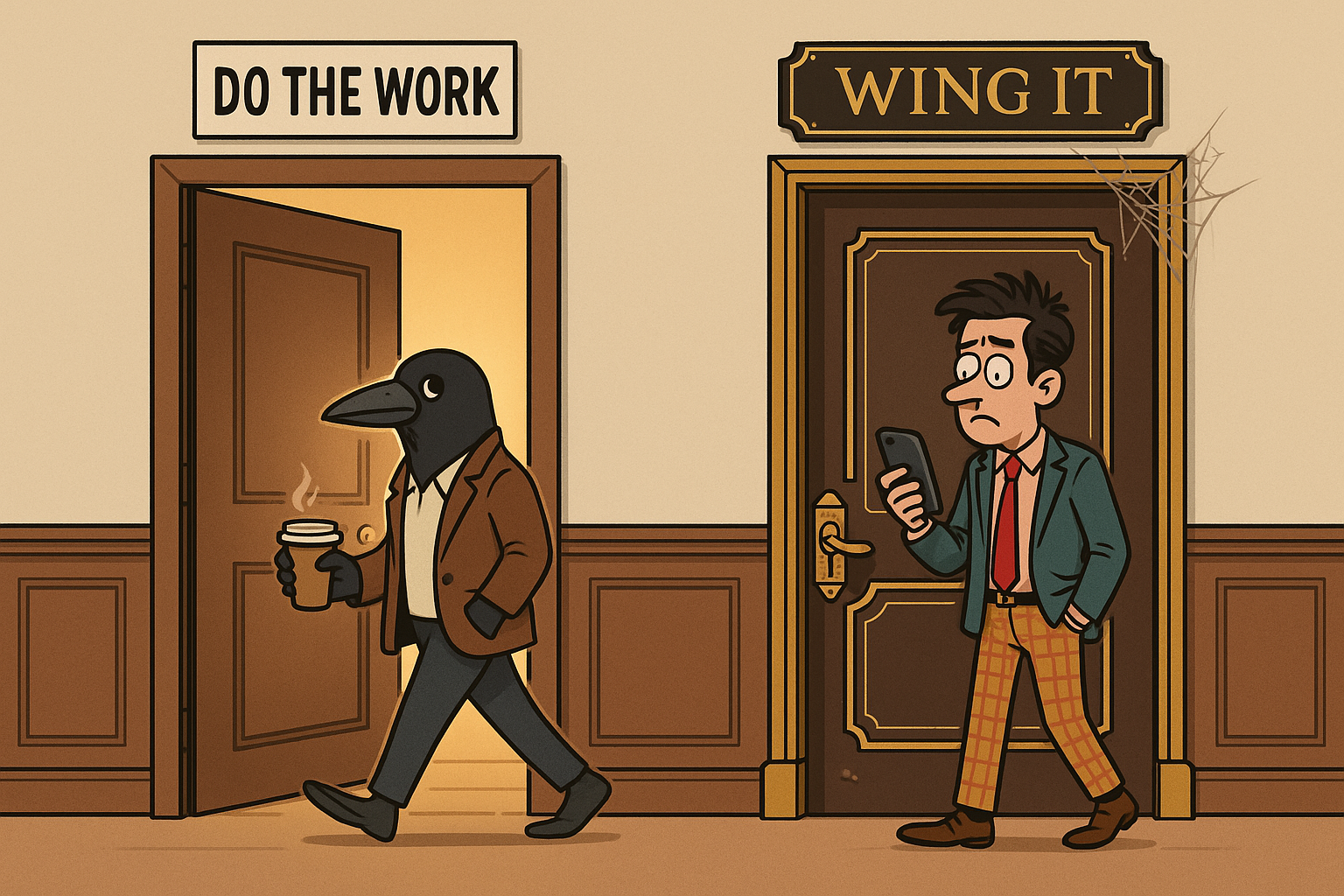
    It just looks easy because of everything I did before we met

    It doesn’t happen every time, but it’s not unheard of for properties I list to move really fast. It can look like we sign a few documents, I put some info into MLS, and take a few pictures. Then boom, it’s under contract before your coffee gets cold.

    It’s not luck, and it’s not magic.

    OK, sometimes there is a little luck involved. Although some people say you make your own luck.

    But it is a lot harder than I make it look.

    Selling land isn’t like selling a house. You can’t just guess based on what the neighbor’s asking and hope it sticks. Every property has its own quirks—some of them obvious, some hiding in the fine print or buried under a brush pile.

    You’ve got to know how to price it, how to position it, and what questions to ask before someone else finds the problem during their inspection period. That’s the kind of stuff that kills deals, or keeps a property sitting on the market for months longer than it should.

    Most of the work I do happens before it ever hits MLS. That’s where the value is—figuring out the real story of the land, not the made-up one. That means calling the county, checking surveys, reviewing restrictions, walking the property, and putting the right comps together. It’s not glamorous, but it works.

    The goal is to make it look simple when it hits the market. Good info, clean photos, a fair price based on real data—and a plan to back it all up.

    So no, it’s not easy. But I don’t mind doing the hard part.

    If you want to know what your lot or land is really worth—or why it hasn’t sold—just email me here.

    I’ll shoot you straight. No pressure, no pitch. Just the truth, even if it’s not what you were hoping to hear.


  • Doing What Everyone Else Is Doing Ain’t Enough

    Doing What Everyone Else Is Doing Ain’t Enough

    Scroll less. Do more. Whether it’s land or a job

    I’ve been helping my daughter look for a job lately. Like a lot of people, she’s been combing through Indeed and ZipRecruiter. Good places to start, but it’s only a start.

    We talked about how most job seekers stop there. They wait for something to pop up on a listing site. Then they apply—usually only if it feels like the perfect fit—and wait. And then they sit around wondering why nothing’s happening.

    If you really want to stand out, you’ve got to go further. Apply to jobs even if they’re slightly outside what you’re looking for, as long as you’re qualified. Not every opportunity gets posted. There might be a better role that isn’t public yet, or one that could be shaped around the right person.

    Check company websites directly. Reach out to businesses even if they don’t have anything listed. Tell them what you’re looking for. Get on their radar before they realize they need someone.

    Sometimes the payoff isn’t immediate. But showing initiative, doing what others won’t, leaves a mark. A hiring manager might not respond today, but when something opens up next month, they may remember the person who reached out. That kind of effort stands out.

    And don’t forget—your next job almost certainly isn’t your last, especially early in your career. The best time to find a job is like the best time to find a car: when you don’t need one.

    So when you do land something, you don’t stop looking. You just get more selective. And because you’ve already gotten yourself in front of more employers than most people, you’re ahead of the game. Your network keeps growing, and opportunities start to build on each other.

    It’s the same in real estate.

    I talk to a lot of people—buyers, sellers, curious neighbors, folks who aren’t quite ready. Most of those conversations don’t turn into a deal that day. But they all matter. The compound effect of those touchpoints builds relationships, credibility, and trust. You never know which one will circle back into something real.

    The market rewards consistency and integrity. Not every action has a dollar sign attached. But if you keep showing up and doing what others skip, you build momentum. That momentum turns into opportunity.

    If I’m running comps every day, I know a good deal when I see it—or when someone mentions wanting to sell fast. If I’m regularly talking to buyers, I know exactly who’s looking for what. When those pieces line up, it can look like an overnight success. One or two phone calls, and suddenly it’s a five or six-figure deal.

    It might sound like a lucky break. But in reality, I’ve been working on that deal for years without knowing it. And when the timing is right, it pays off.

    But I don’t stop there. I keep having conversations, sharing what I know, and doing the kinds of things that help people and add value. Working on the next opportunity—before I even realize it’s an opportunity.

    Whether you’re job hunting or buying land, the people who get ahead are the ones who do what others won’t. And they do it consistently.

    The funny thing is, all of this looks obvious in writing. But it takes years to make it work the way it really can. So if you’re thinking about buying or selling real estate, doesn’t it make sense to work with someone who’s already been doing the work that will pay off for you?


  • Why I Don’t Nickel-and-Dime People in Business (Except for Car Dealers)

    Why I Don’t Nickel-and-Dime People in Business (Except for Car Dealers)

    I’ll squeeze a car dealer like a lemon—but I won’t lowball a pro.

    I was buying a car for my wife recently and negotiated with several dealerships at once—exclusively by email. In my opinion, that’s the only way to get the best result (more on that another time).

    I wrung every nickel out of the deal and ended up with a better price than I expected. More importantly, my wife’s happy.

    Whenever I’m buying a car, jewelry, real estate—anything like that—I approach it the same way. I work the numbers hard, and if I don’t like the deal, I walk. No hard feelings.

    But when it comes to professional services? I don’t negotiate rates. Not one bit.

    Now, a fee might be more than I’m willing to pay for my situation, and I may decide to go elsewhere. But I’ll never ask a real estate broker, attorney, accountant, or consultant to “do it for less.”

    These folks have the same 24 hours in a day as anyone else. The best in their field bring real value, and they expect to be paid for it. They deserve to be.

    Top professionals are usually in high demand. Their schedules are packed. Every hour they give me is an hour they can’t spend with someone else. If I ask them to cut their rate, I’m not just negotiating—I’m taking money out of their pocket. That’s not right.

    At best, they’ll turn me down. At worst, they’ll take the job and resent it. Either way, I lose. And I definitely don’t want someone working for me half-heartedly because I pressured them on price.

    If I hire someone, I want them all-in. Focused. Energized. I want them glad they’re working with me—not counting the minutes.

    Now look—I get how this could come across as self-serving. I’m in real estate. But I think you know where I’m coming from. If you’re hiring someone to help sell your property and you want the best, why shoot yourself in the foot by asking for a discount?

    That’s not negotiating—that’s working against your own interest.

    Now, it’s totally possible that what you need can be handled by a discount broker. If so, I’ll tell you. I might even help you find one.

    But if you’re looking for a seasoned pro with a track record of strong results, it just makes sense to pay what they’re worth.

    If you’re ready to sell your property, just respond here.


  • Getting In the Way of My Own Success

    Getting In the Way of My Own Success

    Some people say you make your own luck

    “Sow your seed in the morning, and at evening let your hands not be idle, for you do not know which will succeed, whether this or that, or whether both will do equally well.”
    — Ecclesiastes 11:6

    When people say someone’s “getting in the way of their own success,” it’s usually a dig—like they’re sabotaging themselves. Looking in the mirror and seeing their own worst enemy.

    But I mean it differently.

    I mean setting things up so that small wins today create bigger wins tomorrow. Succeeding now, while positioning myself for even greater success later.

    Colleagues sometimes ask why I bother listing and selling custom home lots. I’ve spent years building the relationships and knowledge to work on larger land and development deals. My time is limited. So why “waste” it on smaller transactions, when I could be chasing deals that might pay 10x—or more?

    I usually say two things:

    1. I like helping people.
    2. These smaller deals tend to move faster and help smooth out my income.

    And that’s true.

    But the real reason?

    My long-term success depends on staying connected to investors, developers, and builders. Who owns custom home lots? Often, those same people.

    Here’s an example:

    A few years ago, I listed a lot for a guy who had shifted from homebuilding to commercial and multifamily work. I sold it, did my job well, charged my standard fee—and moved on.

    A few months later, I got a call from someone looking to invest in the same area. He’d been referred by the construction guy.

    It’s been nearly four years since that intro. The commissions I’ve earned from helping this new client buy and sell land? Over 150 times what I made on the original lot.

    And that’s not counting the deal we’re working on right now (had to stop while writing this to discuss)—which could be substantial as well.

    That’s just one story. It’s not the only one. The point isn’t to brag—it’s to show this was intentional. I don’t know in advance who’s going to refer me, but I know they’re out there. Every listing creates that chance.

    Worst case? I help someone sell something they don’t need, put the money to better use—and maybe make a friend.

    Best case? The upside is enormous.

    And you know who else might benefit from this network I’ve built?

    Maybe you.