Tag: Lot Sales

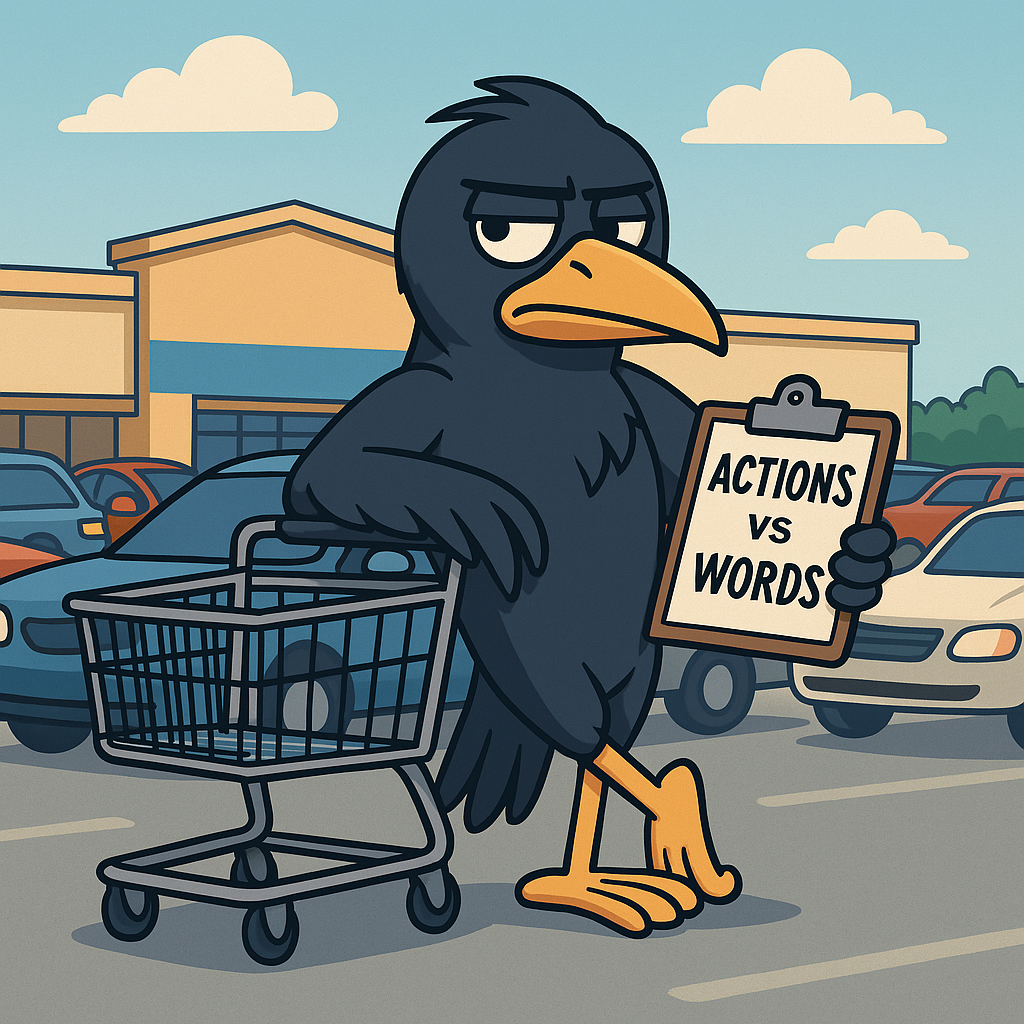
  • What People Say Doesn’t Matter. It’s What They Do.

    What People Say Doesn’t Matter. It’s What They Do.

    We’d like to think they are the same thing. Reality tells us otherwise.

    Whenever a big new retail project gets proposed — Walmart, Costco, whatever — the storyline’s predictable:

    The developer and city work through approvals. Most people are happy for the convenience (or don’t care), but there’s always the loud minority who need to virtue-signal.

    “I hate Walmart!”
    “The city shouldn’t allow it!”
    “I’ll never shop there!”

    Then it gets approved. And the parking lot is full — often with the same people who swore they’d never be there.

    I get it — places like that can be a hassle. But if you’re going anyway, don’t pretend you won’t.

    Same thing with the Cowboys.
    “I’m tired of their BS!”
    “I haven’t watched in years!”

    Funny how ratings go one direction — and how the guys who “aren’t paying attention” somehow know every detail about the latest roster moves.

    I get it, it’s been a frustrating 30 years. But the fake boycotts get old.

    Even sports media plays the game. Before the Netflix Cowboys documentary dropped, hosts were saying they didn’t want to watch — “too above it all.” Now? It’s the greatest series ever, and you can’t turn on the radio without hearing about it.

    I’m glad I don’t make my living talking for hours a day about something I say I can’t stand to even think about — but that’s beside the point.

    Here’s the point:

    What people say doesn’t matter. What they do does.

    You probably know plenty of agents and brokers who say they’ll deliver — big promises, smooth talk, all confidence. But when it comes time to back it up? Different story.

    I don’t say much. It’s the best way I’ve found to avoid saying something dumb. But when I do speak, I make sure my actions line up.

    When it’s time to buy or sell, would it be smart to entrust things to someone who doesn’t do what they say?


  • Effectiveness > Being Liked

    Effectiveness > Being Liked

    Sure, I want you to like me. But I’d rather be seen as effective first.

    There’s a concept in Jim Camp’s Start With No that says:

    Never “save the relationship.”

    That doesn’t mean go scorched earth on everyone. Real estate is a relationship business — and honestly, most businesses are. You want to conduct yourself in a way that promotes healthy, long-term relationships.

    But there are times when what’s best for one deal doesn’t line up with what might be “best” if you were thinking only about future deals that may or may not ever happen. That’s when you face a choice: do I do what’s best for the client I promised to represent to the best of my ability, or do I cave so the guys on the other side of the table don’t decide they don’t like me anymore?

    It’s not fun to make decisions you know will disappoint someone. But deep down, you already know the answer.

    Sure, the folks on the other side may get mad for a while. But they’ll get over it. And if they’re the kind of people you actually want to do business with long term, here’s what happens once they cool off:

    “I didn’t like the way that whole thing turned out. But after thinking about it, what Mike did was really the only thing he could have done, even though I know it wasn’t easy. And he was honest about it. That’s the kind of guy I want to keep working with in the future.”

    Or maybe they stay mad. That’s fine too. If they do, they weren’t the people you needed to work with long term anyway.

    This came up for me recently. I represented the owner of a key property in an area that suddenly became ripe for investment and development. The deal’s been in the paper, though I’ll skip the details here. We started getting offers, culminating in one that was so strong it would’ve been unthinkable just two months earlier. So we said, “Sure, write it up.”

    Then an even better offer came in, and we had to switch horses. It wasn’t fun telling the first broker he’d lost out, and it was too late to improve his offer (skipping a lot of detail here for confidentiality). He didn’t like it — so much so that he went quiet on me for a couple of days.

    But then he called back. He said he realized it wasn’t my fault, and he’d be proud to work with me in the future.

    By not “saving the relationship,” I actually saved the relationship. And we made a better deal.

    Another way to put it: I’d rather be seen as effective than liked. But here’s the twist — when you focus on being effective, you usually end up being liked anyway. Not by everyone, but by the people who matter.

    Maybe I just got lucky, but this one doesn’t even need the pretzel twist to get back to “call me when you’re ready to talk about your property.”

    Is it crazy to think that if you’re considering selling it would be smart to have someone willing to have tough conversations on your behalf on your side?

    You know what to do…


  • The Fastest Way to Lose Respect? Keep Saying Yes Even When You Don’t Want To

    The Fastest Way to Lose Respect? Keep Saying Yes Even When You Don’t Want To

    Stop chasing approval. Start earning respect.

    There’s nothing wrong with being agreeable, friendly, and a generally nice guy. But if you set your boundaries wrong, you’ll get taken advantage of — and you’ll end up miserable.

    We all know people who bend over backwards to make others happy. Obviously, there’s nothing wrong with helping people — to a point. But if you’re dealing with someone inclined to take advantage of others (and there are plenty of those), you’re asking for trouble.

    The people pleaser thinks that if they just give in one more time, things will finally balance out. But they never do — they just get worse. The pleaser ends up doing more of what they don’t like, resenting it more each time, and getting more miserable.

    I guess it works pretty well for the “pleasee,” at least in the short term.

    Everybody’s different, but I think most people fall into this trap at some point. Some figure it out fast. Others… not so much.

    Here’s something to try: The next three times someone asks you to go out of your way — and it isn’t justified — tell them no. And stick to it.

    Will it make the other person mad? Yeah, probably. Especially if they’re used to you being a pushover. They may have waited too long, created a mess for themselves, and now expect you to bail them out. Saying no causes them a short-term problem.

    And if they don’t? They weren’t really that great of a friend to begin with, and you’ve just improved your life by removing them. More often, though, they respect you more after the fact — and the relationship ends up on better footing. And your life’s better for it.

    If you’ve been reading here awhile, you know I talk a lot about not discounting commissions, not being on a leash for late-night calls, and setting boundaries with clients. I work hard for my clients and aim to provide the best service possible — but I don’t let people abuse my time or treat me like a 24/7 employee.

    That’s not stubbornness. That’s knowing where I stand. And if someone insists on crossing those lines, it’s usually a sign we’re not a good fit for each other anyway.

    When your business relationships are based on trust and respect, everyone has a better experience. And funny enough, the financial results can be better, too — even without discounted commissions. I can’t guarantee it, of course; you only get to run a deal once, and there’s no “control group” to compare against. But when you’ve got someone negotiating at a high level daily on your side, that small percentage in commission may get recovered — and then some.

    And aside from the numbers, there’s this: never having to wonder whether your broker is working for you or just working you makes the entire process better.

    Is it ever a bad time to start a conversation with someone who values your time, negotiates hard on your behalf, and treats you right — while expecting the same in return?

    Click below when you’re ready.


  • Stop Manifesting, Start Doing

    Stop Manifesting, Start Doing

    To get the results, you have to actually do the things

    A few weeks ago, I talked a little about goals from a couple of different angles.

    Most people do a terrible job setting them.

    Some don’t set any at all, just drift through life and wonder why they never get anywhere. Others set them so high they give up before they start. Most set them too low, hiding behind the excuse of being “realistic.”

    But none of that is really the point today. Here’s the thing:

    By itself a goal is worthless. You have to have action.

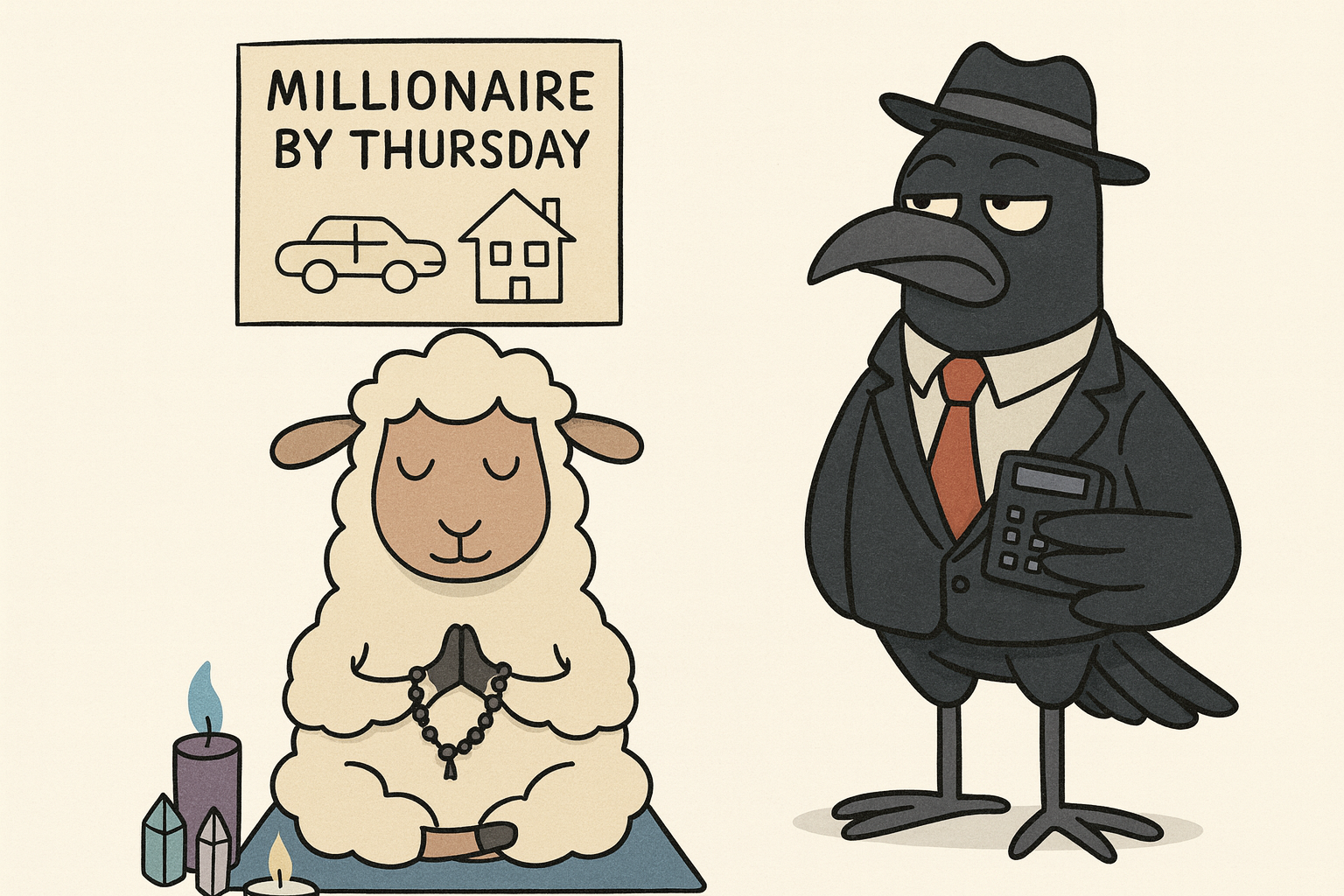
    Spend five minutes online and you’ll find someone preaching that you can “manifest” success. Write your goals down. Stare at them. Think really hard. The “universe” will do the rest.

    Bull.

    Yes, you need to know what you’re aiming at. Writing it down matters. And yes, your subconscious mind is powerful, and it can help move you along.

    But if you don’t actually take the steps, nothing happens. The goal isn’t magic. The work is.

    When you’ve got a valid goal, work backward from it. Figure out what steps might get you there. Break those into small, simple actions you can take every day.

    It doesn’t have to be huge. Some days it’s a phone call. Some days it’s a handwritten note or a follow-up email. Other days, it’s a meeting. Some days it’s more than others.

    And sometimes you’ll get it wrong. That’s fine. Adjust and keep moving. Momentum comes from motion.

    My goal is simple: build a brokerage where buyers and sellers have a great experience getting where they need to be — which also puts me where I need to be. There’s a lot packed into that one sentence, but most of it comes down to showing up and doing small things consistently. And being honest.

    I do them. They add up. And it pays off for everyone involved.

    As you know, I don’t deal in pressure. But is it really a bad time to just start a conversation?

    Click below when you’re ready:


  • Can’t Argue with This Reasoning

    Can’t Argue with This Reasoning

    Convincing works even less in personal relationships than in business.

    I’ve gotten pricklier with age, so it doesn’t happen to me much anymore — but I see it all the time with people close to me.

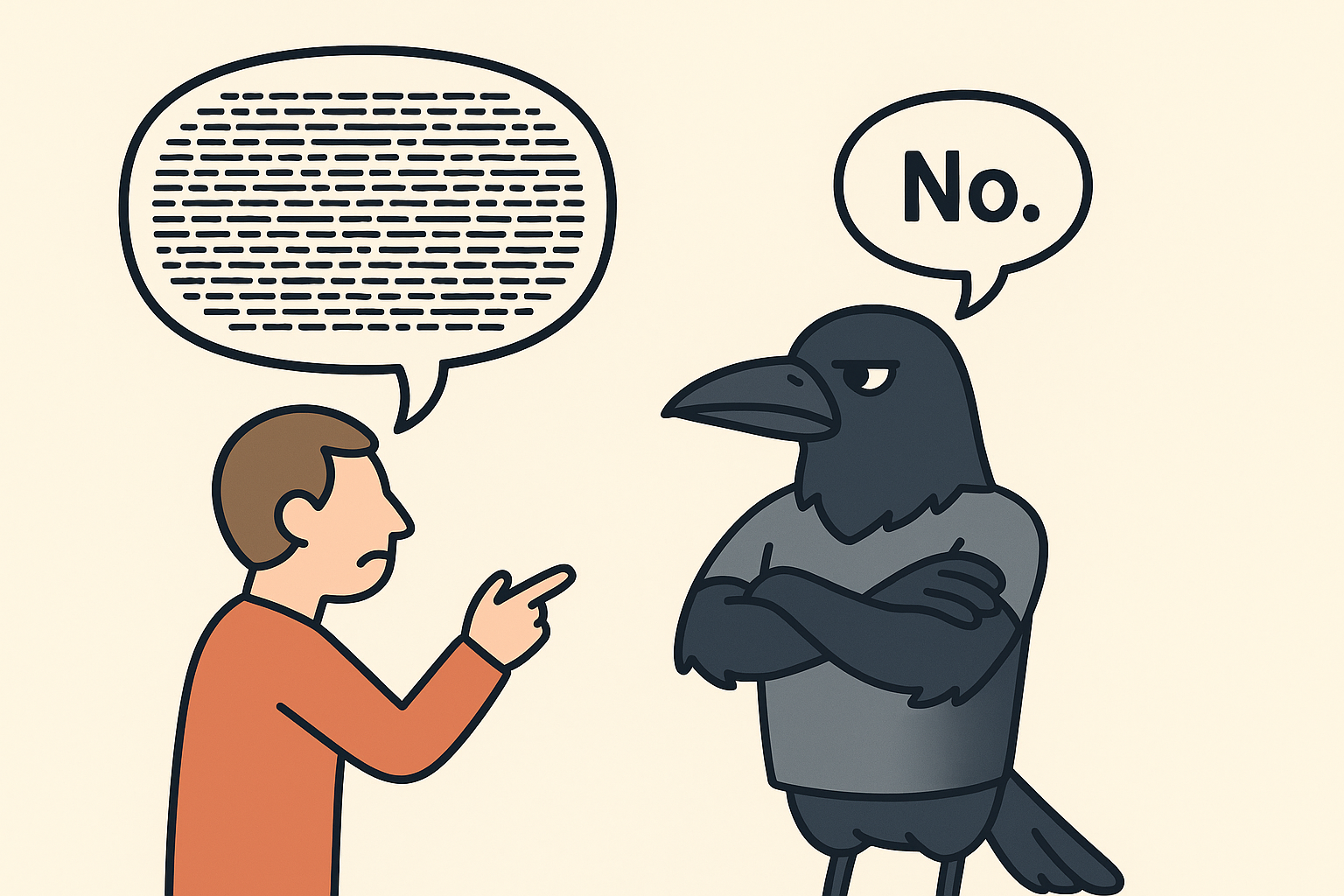
    Someone asks them to do something, and they say no. But instead of leaving it there, they give a reason why.

    And that’s when it starts.

    Because when you give someone a reason, you give them something to argue with.

    Suddenly, they’re explaining why your reason doesn’t matter:

    • “You don’t really need to do that thing.”
    • “This is more important.”
    • “You’ll have more fun if you just do this instead.”

    In other words, they’re trying to convince you that what they want is really good for you.

    It reminds me of casino operators trying to get gambling legalized in Texas — pitching us on how great it’ll be for everyone, when really, they’re the ones who get rich. But that’s another story.

    Here’s the point:

    • Learn to take “no” for an answer. You’ll feel better, and some people will return the favor — which is still better than you’re getting now.
    • When someone asks you to do something you don’t want to do, give one reason:

    That’s it. You can’t argue with it.

    Here’s the pretzel twist back to real estate:

    I’ll never try to talk you into selling. If you’re not ready, you’re not ready. I might follow up occasionally, but I’ll never pressure you.

    My job is to give you information and advice — to help you see how that might get you where you want to go. Not to tell you where to go. (And if I ever do, you have permission to tell me where to go.)

    Is there ever a bad time to stay up to date on things, in a no-pressure environment? You may never be ready to sell, and I’ll never try to convince you. But it’s always smart to be ready.

    Click below when you’re ready to start with that.


  • More Than One Reason? More Like No Reason.

    More Than One Reason? More Like No Reason.

    If you’re trying to convince, you’re already losing.

    Awhile back, one of my clients had a tract under contract he planned to develop. During due diligence, he realized the timing wasn’t right.

    We tried to get a price reduction to reflect the longer hold time but failed (so far).

    So he dropped it.

    It cost me a commission in the short run, but it was the right call. And long term, that’s better for me too. If my clients make bad deals, they can’t come back for more.

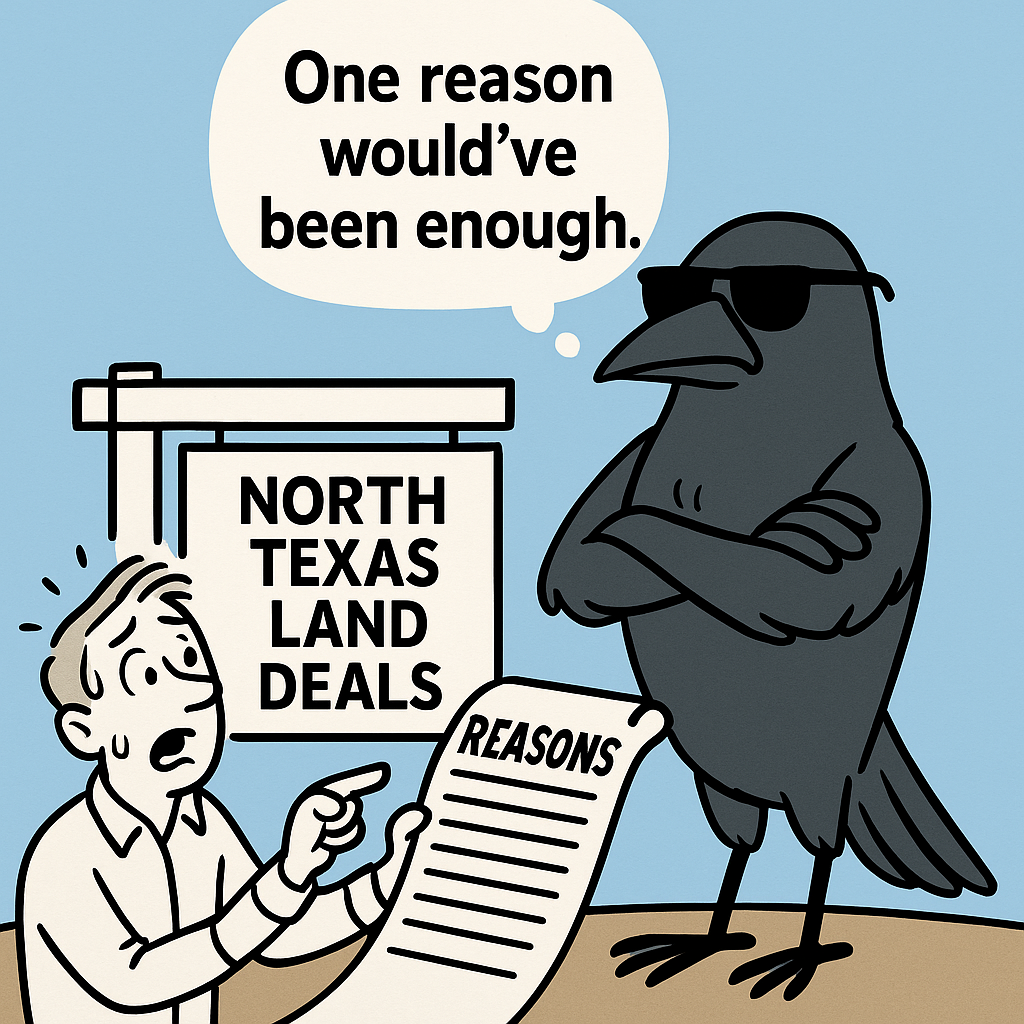
    When he backed out, he gave me a long list of reasons to send the seller in hopes of getting a price cut:

    • High construction loan rates
    • High mortgage rates slowing the housing market
    • Oversupply of lots
    • Overestimated job growth
    • Utility capacity issues

    All true. All reasonable. But also too much. I told him it was a bad idea, but he wanted to send it — and at the end of the day, it’s my job to do what you want.

    Nassim Taleb put it well in Antifragile: if you need more than one reason to do something, you’re trying to convince yourself. One solid reason should be enough. The more you pile on, the weaker your case sounds.

    My client wasn’t trying to convince himself — he was trying to convince the seller — but I still think the long list worked against us. Instead of being persuasive, it diluted the point.

    We would have been better off keeping it simple:

    “We think this is a 7–10 year play, not immediate. We’re still interested, but at a lower price. If you’re not ready, we understand. Call us when you are.”

    Would that have changed the seller’s mind? Maybe not. But the odds would’ve been better.

    Fewer words hit harder. “It’s too expensive” carries more weight than a 10-point memo. People fill in their own reasons — and their reasons are always more powerful than yours.

    The lesson: you only need one good reason to act. More than that, and you’re either overselling… or talking yourself into something you shouldn’t.

    And speaking of one good reason — do you need more than “it’s a smart idea” to want the most current market info?

    Click below to get it.


  • Some People Protest Too Much

    Some People Protest Too Much

    You don’t have to believe, but you do have to decide

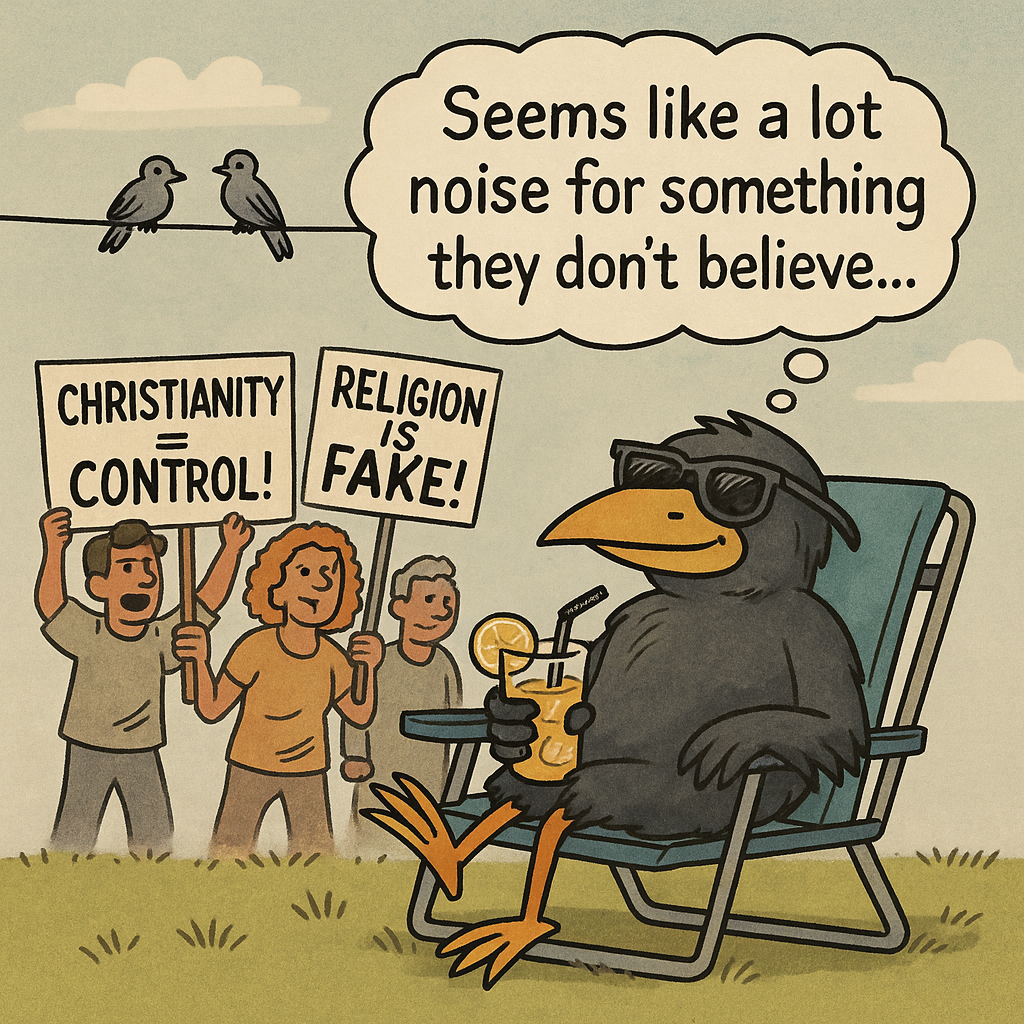
    We live in a culture that preaches tolerance — until you bring up Christianity.

    Most beliefs sit quietly in the background without much controversy. You don’t see social media mobs arguing about Hinduism. Nobody gets offended by someone practicing Buddhism. Even atheism mostly gets a shrug.

    But bring up Jesus… and suddenly, the temperature in the room changes.

    And here’s something interesting: atheists aren’t shy about religion in general, but notice where their energy goes. It’s almost never aimed at Hinduism, Buddhism, or Islam. It’s almost always aimed straight at Christianity.
    (By “almost never,” I mean I’ve personally never seen it. But hey — maybe it’s happened.)

    Why?

    Because Christianity makes claims you can’t sidestep. Jesus didn’t leave the door open for, “Hey, if this works for you, great — if not, do your thing.” He said, “I am the way, and the truth, and the life. No one comes to the Father except through me” (John 14:6).

    People try to get around that by saying they’re not Christians, but they think Jesus was a great moral teacher. Sounds polite. Doesn’t work.

    Because Jesus didn’t claim to be just a teacher. He claimed to be God in the flesh. That leaves you with three options:

    1. He was delusional — claiming to be God when He wasn’t (not exactly the mark of a “great moral teacher”).
    2. He was an evil liar — deliberately deceiving people on the biggest question there is (also not a “great moral teacher”).
    3. He was who He said He was.

    There isn’t a fourth category where you can respect Him but ignore Him. That’s why Christianity doesn’t sit in the same bucket as “other religions.” It forces a decision.

    And people don’t like that.

    Some get defensive. Some mock it. Others just get uncomfortable and change the subject. Some even build entire platforms to “debunk” it. People have tried daily for thousands of years. Nobody’s succeeded yet. Maybe you’ll be the one. But I doubt it.

    Almost nobody is neutral.

    Which is interesting — because you don’t fight fairy tales. You don’t see late-night comedians ranting against Santa Claus or Peter Pan. Nobody writes books disproving Zeus.

    Christianity gets pushback precisely because it hits close to home. It forces a question about identity, purpose, and eternity — whether you want to deal with it or not.

    The Bible actually predicted this: “The message of the cross is foolishness to those who are perishing, but to us who are being saved it is the power of God” (1 Corinthians 1:18).

    The gospel’s not just information. It’s an invitation. And invitations require a response — yes or no, in or out, believe or don’t.

    That’s why it stirs people up. It touches something too deep to ignore.

    And maybe that reaction — the tension, the resistance, the arguments — isn’t evidence against Christianity at all.

    It’s evidence of its truth.

    If you don’t hate me by now, here’s the other stuff for whenever you’re ready:


  • Anchoring (as in Your Top Lip to Your Bottom Lip)

    Anchoring (as in Your Top Lip to Your Bottom Lip)

    There are very few things that can’t be improved with less talking

    People think negotiation is all about talking. Or intimidation. Or acting like it’s a high school debate class.

    It’s not. A lot of the time, the less you talk, the better you do.

    There’s a concept called “anchoring.” It’s when someone sets the first number on the table, and everything after that gets compared to it — whether you like it or not. That number creates a reference point in everyone’s head, even if it makes no sense.

    It can even work when the number isn’t connected to the negotiation at all. If, right before we sit down, someone mentions the Powerball jackpot is over $700 million, that sticks.

    Now, if we’re negotiating a tract worth $5 million, you’re not suddenly walking away with $140 million just because of the Powerball number. But that huge figure can still shape the conversation in subtle ways.

    Even crazier? You don’t need numbers at all.

    If you ask me what something costs, and I say, “It’s expensive,” or, “It’s affordable,” I’ve just anchored the entire discussion.

    You might argue that “expensive” to one person could be “cheap” to someone else, but it doesn’t matter — the frame is set. People fill in the blanks based on their own reference points. And once that frame is in place, you’re steering the deal before it even starts.

    Most people try to anchor with words. They throw out their price first and have a big pitch to back it up, explaining why it’s “fair.” Sometimes, that works. But a lot of the time, silence works better.

    Here’s why: once a number hits the table, human nature takes over. People hate awkward silence, so they start filling it. And the more they talk, the more they second-guess themselves. I’ve watched buyers negotiate against themselves without me saying a single word.

    Example: I was at the table on a land deal a while back. Buyer comes in low. Really low. I didn’t argue. I didn’t counter. I didn’t defend the price. I just sat there.

    Thirty seconds later, he starts explaining why his offer “makes sense.” Another pause. He talks again: “I could probably come up a little if we can work out the terms.” Another pause. Then comes: “Okay, maybe we can do X.”

    I hadn’t said a single thing. We didn’t end up making a deal — we were just too far apart — but it’s still a perfect example of anchoring without saying a word.

    Of course, most negotiation today doesn’t happen at a table. It’s remote and electronic now. But the principle is the same.

    As a broker, I’m required to respond when someone reaches out to me. That doesn’t mean I have to engage.

    So if a lowball offer comes in on your property, I reply as soon as I see it — but all I say is:

    “Thanks, I’ll review with the seller and let you know what he says (if anything).”

    Then I come to you, and I usually recommend silence as the best strategy. You’re always in control, so it’s your call, but if you agree, we sit tight.

    Before long, if they’re serious, they come back to us — either explaining themselves or raising the price.

    People think power in negotiation comes from talking. The truth is, most of the power comes from not saying what the other side wants you to say. The less you explain, the more they have to. And when they’re talking, they’re usually giving up leverage.

    When you’re ready, click below. No pressure, no cost, no obligation.


  • I Don’t Use Scripts, But Couldn’t Resist Getting These

    I Don’t Use Scripts, But Couldn’t Resist Getting These

    As usual, when it comes to unsolicited free stuff, you get what you pay for.

    A while back, I talked about how some agents sound so smooth it feels like they’re reading from a script.

    Real estate agents aren’t the only ones. Scripts are everywhere in almost every sales field. And in some roles, they make sense.

    Take receptionists, customer service reps, or “student advisors” at a school. Their job isn’t just answering phones or questions.

    If the business is set up properly, these people are also responsible for some sales functions.

    Inbound calls, upsells, getting your contact info. You want a script for that. Having certain lines ready makes sense, especially if these employees aren’t trained salespeople. You want them to stick to the script to avoid problems, and hand things off if it gets outside their lane.

    For sales presentations like pitching a listing, showing a property, or giving a school tour, a script can turn into a liability fast.

    I took my daughter on a school tour yesterday. It went fine overall. We learned some things and figured out a little more about what we’re looking for. But walking out, the first thing she said was, “That was totally a canned presentation.”

    She’d never been through one before, but spotted it instantly. Now she knows. Especially since she also learned that “Career Services Advisor” is just another way of saying “Salesperson.” Nothing wrong with that — I’m a salesperson too — but it helps to see things clearly.

    It wasn’t that the presentation was polished. It was too polished. Like it wasn’t real.

    I get why scripts exist. They’re safe. They make sure you hit the bullet points.

    And if you’re listing tract houses in a subdivision, maybe they even work.

    But land sales are different. There’s too much variation. Too many what-ifs. Every property’s got its quirks, and if you’re leaning on a script, buyers pick up on it immediately.

    Want to test it? Next time you’re talking to an agent, ask a question they’re not expecting.

    If they lock up or repeat the same line three different ways, you’ve found the edges of the script.

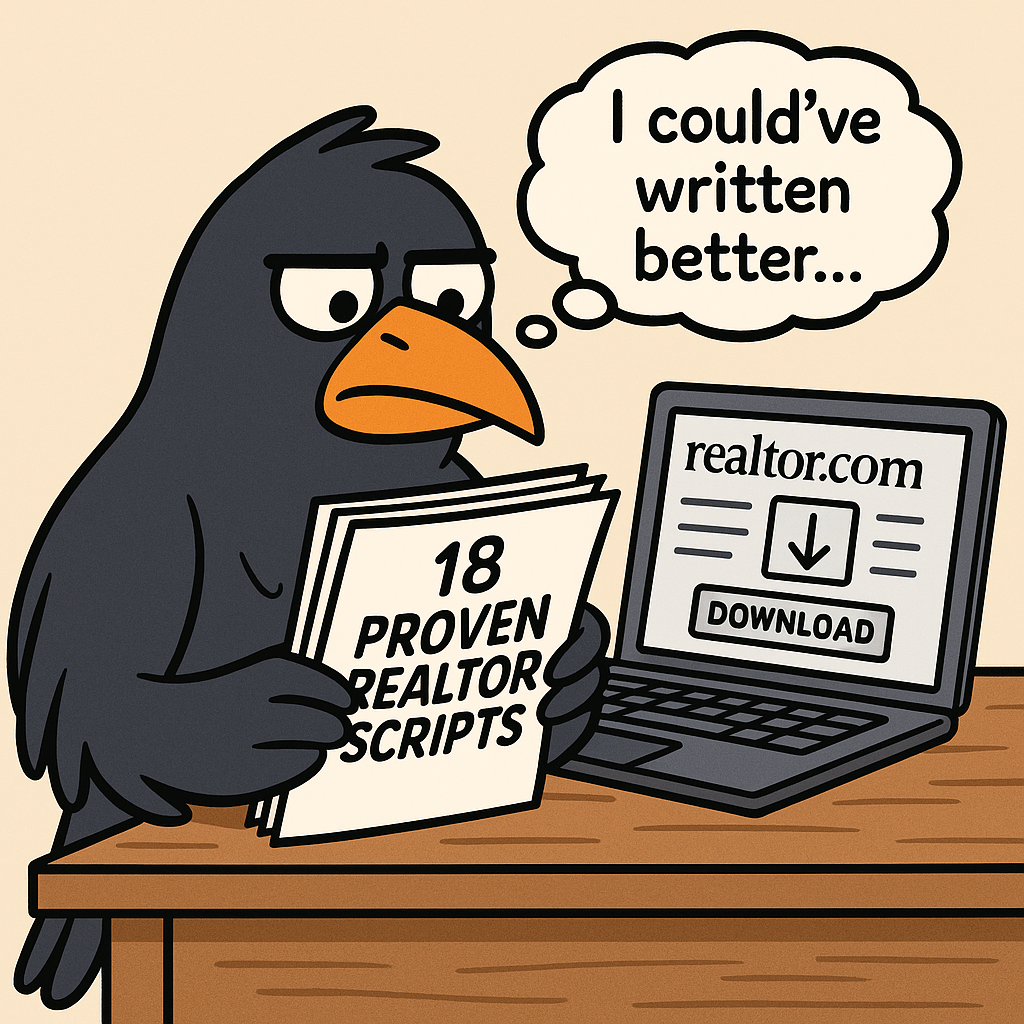
    Right as I sat down to write this, I got an email from realtor.com offering a free download of “18 Proven Scripts to Win the Listing.”

    You know I had to grab it.

    They were fine. Vanilla, predictable, and generic. Nothing you couldn’t make up on the fly when you’re saying, “Thanks, let me know if you have any questions.”

    Honestly, ChatGPT could’ve done better.

    But what do you expect from something offered for free in a blast email?

    When it’s time to start thinking about selling or buying land, do you really want someone treating you like they’re working off a script?


  • Score One for the Little Guys

    Score One for the Little Guys

    Sometimes you can’t help but gloat a little.

    I may have made it sound like they intentionally undervalue properties just to torpedo deals.

    That’s not really what I meant. They aren’t doing that. They’re just not as experienced with land, which can lead to some… wildly different results. I’ve even seen plenty come in higher than what I’d call realistic.

    Appraisers are generally good folks just trying to do their jobs like the rest of us. They just get thrown into situations they probably wish they wouldn’t sometimes. Like the rest of us.

    Most of them, anyway.

    If you’ve ever been through a eminent domain or right-of-way (ROW) proceeding — where the state acquires land to widen roads or build new ones — you deal with appraisers there too.

    My experience with those folks?

    Let’s just say they’re the kind of people you might call something implying their parents weren’t married when they were conceived.

    I’m not saying ROW appraisers intentionally understate values (and if any attorneys are reading, please note this is all opinion and conjecture on my part).

    But here’s what I’ve noticed: banks don’t always control who they hire, but the state tends to use the same appraisers over and over. And those appraisers make a very high percentage of their income from ROW work.

    Incentives for more business. Expectations about what the client wants to see. All that. Make of it what you will.

    They’ll tell you it’s all above board, and I’m not going to contend otherwise.

    Anyway.

    Last year, an attorney friend of mine had some land taken for ROW. Not surprisingly, he and the state couldn’t agree on a value. We went to a commissioners hearing, and he asked me to help.

    Since I’m not a licensed appraiser, I wasn’t allowed to comment on values directly — though I did manage to slide in the fact that my clients trust my numbers enough to keep coming back.

    We fought through a highly adversarial process stacked against the landowner and did the best we could.

    The commission awarded him about four times what the state originally offered. The state, being the state, appealed and dragged it into court.

    That tied it up for over a year, but it was finally settled this week — and let’s just say he’s very happy with the outcome.

    Sometimes, the little guy does win!

    The part I played was very minor, so I’m not taking the credit. If anything, my value was in knowing what not to say. The state’s rep kept trying to goad me into veering into licensed appraiser territory so he could disqualify me, but I didn’t take the bait.

    Is it ever really the wrong time to discuss your property with a real professional?