Tag: Collin County Land Sales

  • Just Start (Even If You Don’t Want To)

    Just Start (Even If You Don’t Want To)

    If you’re like me, you have to make a list of the day’s tasks or things get missed.

    Even the small stuff — returning a call, reaching out to a broker, updating a client — goes on the list.

    It works. Nothing slips through the cracks.

    But there’s a tradeoff: at the beginning of the day, that list can look like a mountain.

    Even when you know most of the items only take a few minutes, seeing all of them at once can make you want to freeze.

    And if there’s one task on there that’s bigger — something you don’t fully know how to do, or something with tech you haven’t figured out yet — it’s even worse. Suddenly, the whole list feels heavier than it really is.

    But the funny thing is: it’s almost never as bad as it looks.

    Most people think the difficulty is the task itself.

    It’s not.

    The hardest part is going from not moving to moving.

    Once you’re already in motion — whether it’s the workout, the cleanup, the writing, or the business task — it’s rarely as bad as the version of it that existed in your head five minutes earlier. But when you’re sitting still, everything feels bigger than it is.

    You start thinking things like:

    • I don’t have the energy.
    • I don’t know where to start.
    • I’ll do it later when I’m ready.
    • It’ll take forever.

    But here’s the truth:

    You don’t need readiness.
    You need momentum.

    And momentum doesn’t show up before you start — momentum shows up because you start.

    A good trick is to make the first step stupidly small — so easy your brain can’t argue with it.

    Want to go to the gym but don’t feel like it?
    Tell yourself: I’m just driving there and walking inside. If I want to leave right after, I can.

    Trying to clean up the house and it feels overwhelming?
    Tell yourself: Pick up five things. Just five.
    Once you grab those five, you’ll probably keep going.

    Staring at a work project you’ve been avoiding?
    Tell yourself: I’m just going to look at it. Not fix it. Not solve it. Just open it.

    It sounds ridiculous, but it works — not because the task changes, but because you shift from idle to forward motion.

    Your brain handles doing a lot better than it handles anticipating.

    Most of the dread lives in the waiting.
    Most of the stress lives in the buildup.

    But once you start?

    You think, Why was I avoiding this? This isn’t that bad.

    Starting small isn’t weakness.
    It’s strategy.

    Because once you’re in motion — even a tiny bit — finishing becomes easier than quitting.

    So next time you’re stuck, don’t wait for motivation.
    Just lower the bar until momentum has no choice but to show up.

    After that, the rest takes care of itself.

    PS — You may have seen Sunday’s post introducing HisWordTogether.com.

    Reading the entire Bible is something a lot of people say they want to do — or feel like they should do — but it can feel intimidating because it’s a big undertaking.

    Just like in business, the key is the same: start small and let momentum do the heavy lifting.

    The site breaks the readings into small, daily pieces — usually 5–20 minutes a day — which makes it manageable for anyone. And if you sign up, you’ll get the weekly readings in your email, so you don’t have to remember to go find them.

    It’s free of charge. No commitment. No pressure.

    If reading through the Bible has been on your mind, this may be the easiest way to finally start.

  • A Fast “No” Is Better Than a Slow “Maybe”

    A Fast “No” Is Better Than a Slow “Maybe”

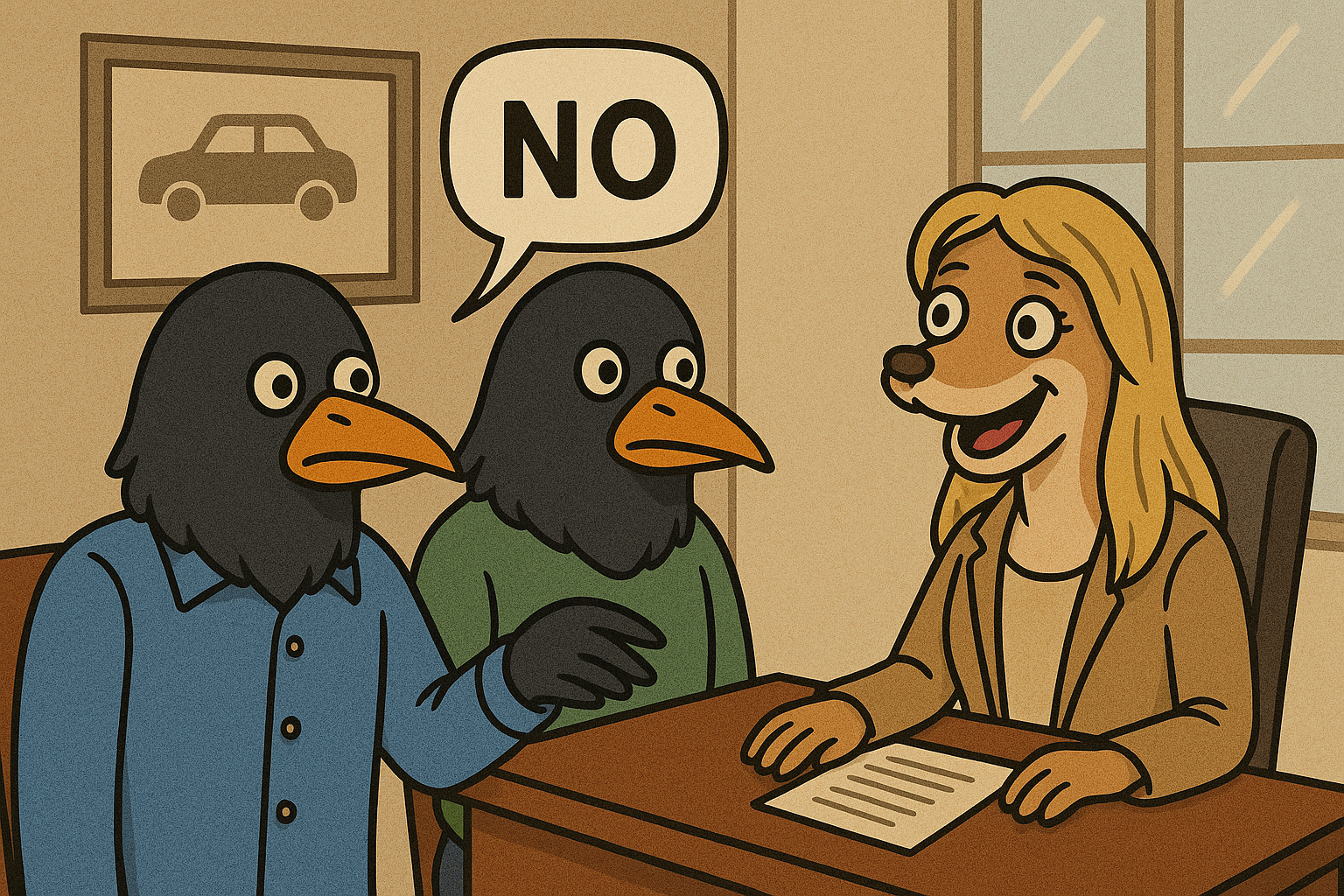
    Most people hate saying the word no. Even when they already know the answer, they’ll stall.

    They’ll say things like:

    “Let me think about it.”
    “Maybe.”
    or the classic— “Yes… but sometime later.”

    Which really just means: no, but they don’t want to be the one to say it out loud.

    It’s funny, because everyone gets irritated being on the receiving end of that behavior, but somehow it doesn’t translate when they’re the one avoiding the decision.

    Why do people drag it out?

    Part of it is simple: a lot of people don’t want conflict, even small conflict.

    And telling someone no feels confrontational.

    The other part is that most people don’t feel safe saying no.

    Because the second they do, someone tries to talk them out of it.

    Salespeople do it.
    Friends do it.
    Family definitely does it.

    Give a reason, and they’ll try to negotiate with the reason instead of accepting the answer.

    Personally, I love a clear no. It’s honest. It’s clean.

    And it gives both sides direction.

    It doesn’t stop the conversation — it just puts it on real footing.

    And here’s the part most people miss:

    A no today doesn’t mean no forever.

    People change their minds. Circumstances shift. Timing improves.

    But when you finally hear a yes from someone who wasn’t afraid to say no earlier, it’s a real yes.

    So whether you’re negotiating, selling, buying, planning, or just trying to get through everyday life without wasting time — a fast no is almost always better than a slow maybe.

    It’s cleaner.
    It’s kinder.
    And it’s honest.


    PS — If this topic interests you, Jim Camp is the gold standard.
    He taught that the fastest way to find the truth in any negotiation is to give the other person permission to say no.

    Not hint at it.
    Not tolerate it.
    Invite it.

    Most negotiation books focus on getting to yes.

    Camp’s approach is the opposite — and far more effective.

    I read the book at least once a year, it helps me that much.

    There’s a link to buy it on my recommended reading page.

    Would it be a terrible idea to spend five minutes there?

    Disclosure: As an Amazon Associate I earn from qualifying purchases. If you buy something—anything—after clicking that link, I may receive a small commission. It doesn’t change your price.

  • God Only Wrote One Book

    God Only Wrote One Book

    If you’re like most people, you’ve had times where you thought, “I really should read the Bible more.”

    And then life happens. You get busy, you forget, you lose momentum, or you open to a random chapter and think, “What on earth does this mean?”

    It’s not just you.

    A major study found that even though almost everyone owns a Bible, very few people actually read it with any consistency.

    But for people who do read, four days a week seemed to be the tipping point where people started seeing real, measurable change in their lives — lower stress, less destructive behavior, more stability, more hope.

    Four days.

    Not perfection. Not seminary. Not “read the whole Bible in a month.”

    Just steady contact.

    But most folks never get there.

    Not because they don’t want to.

    But because the Bible feels big. And intimidating. And confusing in places.

    And when you fall behind on a plan or miss a few days, it’s easy to quit.

    I’ve done it myself. And the one thing that’s actually helped me is embarrassingly simple:

    I just read.

    When I get to the end, I start over. I don’t panic when I don’t understand something, because I know I’ll see it again later.

    The pressure drops way down when you stop trying to “master” the Bible in one pass.

    That’s why I’ve started something called His Word Together.

    It’s not a commentary site.

    It’s not “Mike explains the Bible to you.”

    It’s not a bunch of opinions layered on top of your reading.

    It’s simply the readings for the week, delivered every Sunday, to help you stay on track.

    We’ll be starting back in Genesis in January, and if you want to follow along from the very beginning of the year, you can.

    But there’s no reason to wait.

    If it’s on your mind to start now, now is the time to start.

    Jump in with this week’s readings and let January meet you where you already are.

    No pressure. No cost. No extra obligations.

    Just a weekly nudge that says: “Here’s what to read. Keep going.”

    You can check it out here: https://hiswordtogether.com

    Or sign up to get the weekly readings emailed to you:

    You don’t need permission, perfect understanding, or a theology degree.

    You just need to start. And keep going.

    That’s where the change happens.

  • You Don’t Know If You’re Early or Late Until It’s Over

    You Don’t Know If You’re Early or Late Until It’s Over

    If you’ve been around real estate long enough, you’ve probably had this experience:

    I’ll see a property hit the market — or worse, see what it sold for — and realize I looked at it years ago when it was 10–25% of today’s price.

    Or I’ll see something sold in the past — personally or for a client — and the new number makes me shake my head.

    I joke sometimes that my only mistake back then was doing due diligence. Should’ve just bought everything and waited.

    And never sold.

    But that’s not real life. We all have finite capital. There are opportunity costs, trade-offs, other priorities, and other deals.

    No one knows the exact moment when a market bottoms out or tops out.

    It’s the same with stocks, if you’re into that. Everyone has a story about selling too early.

    Strangely, we rarely congratulate ourselves for selling before something tanked.

    We just act like that part doesn’t count because our brains are wired with loss aversion. Losses (or missed gains) tend to hurt about twice as much as gains (or missed losses). So we obsess over what we did “wrong.”

    Hindsight is perfect. In the moment?

    Timing always feels uncertain.

    When things look expensive, you tell yourself you should wait. When things look cheap, you’re afraid they’re cheap for a reason.

    Meanwhile, the only people who get anywhere are the ones who move forward despite not knowing.

    You make the best decision you can with the information you have at the time.

    You accept you might be early.
    You accept you might be late.
    But you keep going.

    The market (and life) rewards persistence more than perfection.

    So whether it’s land, business, stocks, or life in general — don’t expect a signal before the moment arrives.

    You won’t know until later whether it was the exact right time.

    All you can do is make the best decision you can, given where you are, and keep moving.

    PS — You’re probably not ready to buy or sell real estate right now, and that’s fine.

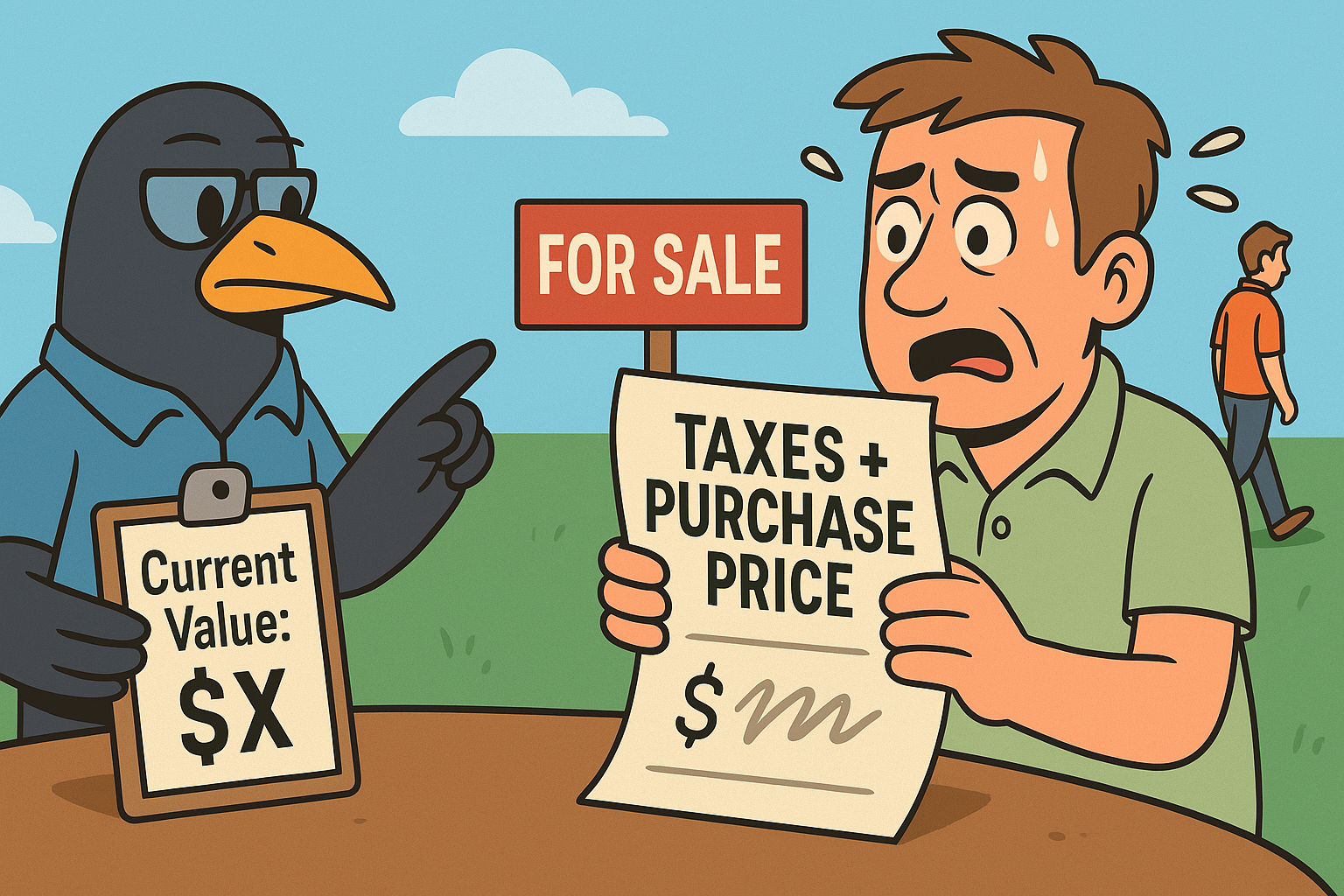
    But if you own land or non-residential property, it never hurts to know what it’s actually worth today.

    I offer a free, no-obligation analysis on any non-residential tract — no pressure, no sales pitch, and no guessing.

    Just current data, comps, trends, and a straight answer.

    Would it be a terrible idea to at least know where you stand?

    Click below to get started.


  • You Never Know Who Is Watching

    You Never Know Who Is Watching

    Years ago, I was riding around looking at deals with the acquisitions manager of a homebuilder.

    They didn’t have a local office back then, so I served as their eyes and ears up here. He’d come up maybe six times a year, and we’d drive the whole metroplex looking at land.

    There was a lot of windshield time, so we got to know each other pretty well.

    I liked picking his brain about how their business worked, they operated a little differently than the typical builder.

    One day we were talking about their salespeople, and he told me something that stuck with me.

    Their marketing machine was so strong that if a salesperson wasn’t making real money — six figures, and the first number wasn’t a 1 — they were sent to retraining.

    If that didn’t fix it, they were replaced. These were great jobs.

    A steady stream of prequalified buyers walked into the sales centers. The salesperson just had to follow their system and close.

    But the surprising part was who they hired.

    They rarely hired people with sales experience.

    Definitely not anyone who had sold homes before.

    Every office job applicant took a personality test, and if their profile matched what the company wanted, they were offered a sales job — even if that wasn’t what they applied for.

    He even recruited people who weren’t looking for jobs.

    The wildest example was a Taco Bell drive-thru. He said the woman working the window was sharp, fast, and personable. So he handed her his card and asked if she wanted to apply.

    She did, and she went through the process and got hired.

    Her income increased tenfold, all because she was doing her job the right way when someone happened to be paying attention.

    I’ve always thought of myself as a responsible guy who tries to do things the right way.

    But that story stuck with me. You never know who you’re talking to.

    So I’ve made an effort ever since to handle things professionally without slipping into performative BS. Just treating people the way they’d want to be treated.

    Most days, the results aren’t dramatic. Everyone just gets a little better service than they probably expect.

    Nothing wrong with that.

    But every once in a while, you get back way more than you gave. Happy clients refer people.

    Sometimes those people end up being prominent developers who were just getting started.

    Who handles a big chunk of his business now? Take a guess.

    And that’s even better.

    PS — You’re probably not ready to buy or sell land today, but the time to start preparing is before you feel like you need to.

    I offer a free, no-obligation analysis on any non-residential property. It never hurts to have the most current information.

    You’ll be listened to, treated the right way, and never pressured.

    I can’t promise you’ll never hear something you don’t want to hear, but you’re always in control when you work with me.

    Is it a terrible idea to at least check it out?

    Click below to get started:


  • When Someone Says Win/Win, Prepare to Lose

    When Someone Says Win/Win, Prepare to Lose

    I got an email today pitching a continuing-education class for real estate agents.

    The hook?

    “Seasoned pro Candy Cooke will offer real-estate-specific tips on how to close deals that are win-win for all parties.”

    Every time I see “win-win,” I know exactly what’s coming next:

    Now, I’m not against working together. Not even close.

    Good negotiators use empathy constantly — not to melt into the other side, but to understand what they actually want.

    Sometimes there is a way to structure a deal where both sides walk away happier than they expected.

    But that’s not usually what “win-win” means when it shows up in real estate training.

    What it usually means is: “Let’s teach agents how to get their own clients to settle faster so the agent can get paid sooner.”

    Because here’s the truth nobody in CE classes ever says out loud:

    Most “win-win” apostles aren’t preparing you to negotiate. They’re preparing you to fold. And worse, they’re preparing your clients to fold.

    A true negotiation is cooperative — but it isn’t compliant.

    Those are two very different things.

    The consumer thinks “win-win” means the agent is going to fight for them while still being reasonable.

    What it often means is the agent is going to protect the relationship with the other agent, move the deal along, and get to the closing table with as little friction as possible.

    Even if that means nudging their own client into giving up more than they should.

    That’s not working for someone. That’s working them.

    The sad thing is, most agents don’t even realize they’ve been taught to do this. The scripts and the slogans sound virtuous — “we’re looking for mutual benefit,” “we want everyone to win,” “we don’t want to create tension,” and so on.

    And the public hears those lines and thinks, “Well, that sounds nice.”

    Of course it sounds nice. That’s why it works.

    Meanwhile, in the real world, negotiation experts like Jim Camp and Chris Voss teach systems built on something entirely different: clarity, permission to say no, understanding what matters, and deliberately de-escalating pressure instead of giving in to it.

    Those systems work.

    They get better deals.

    And they do it without games, without manipulation, and without needing your client to be the “reasonable” one every time.

    I use those systems because they’re collaborative in the only way that matters: they produce honest results.

    They help my clients get what they actually want, without tricking the other side and without tricking my own people into thinking they have to settle early.

    And the best part? I don’t hide it.

    I tell everyone to read the books — agents, clients, anyone. Everything in life is a negotiation. The better you get at it, the better everything goes.

    Real collaboration isn’t phony “win-win.”

    It’s two sides telling the truth, knowing their purpose, and working toward an agreement that actually makes sense.

    That’s the game I’m playing. And I’m playing it on behalf of the people who hire me.

    If the other side happens to play it too? It almost always ends up better for everyone.

    You can buy the books off my recommended reading page here:

    Disclosure: As an Amazon Associate I earn from qualifying purchases. If you buy something—anything—after clicking that link, I may receive a small commission. It doesn’t change your price.

  • Maybe They Do, Maybe They Don’t

    Maybe They Do, Maybe They Don’t

    There’s a funny thing that happens in real estate whenever the market heats up — or whenever someone wants you to think it’s heating up.

    Suddenly every listing has “tons of offers.”

    If you’ve tried buying a house recently, you’ve heard it.

    And if you’re an agent with more than six months of experience, you’ve watched it happen enough times to know the truth:

    Sometimes they do.
    And sometimes… they really don’t.

    “Multiple offers” can mean actual competition.

    Or it can mean one lowball offer the agent never countered, but is counting anyway “for negotiation purposes.”

    It can mean thirty showings and legitimate interest.

    Or it can mean two neighbors stopped by because they were curious and the agent wants to sound busy.

    It can mean the seller is in a strong position. Or it can mean the agent is manufacturing pressure because they don’t know what else to do.

    Here’s the reality nobody likes to say out loud:

    A lot of agents inflate their position because they think it helps them negotiate. It doesn’t.

    When an agent calls me and asks if I’m working anything, I tell them the truth.

    Every time.

    Doesn’t seem like something that’s to my advantage. But because of that, they know I’m telling the truth.

    And you know what happens? They remember it.

    They realize I’m one of the few who isn’t trying to run a tactic on them.

    And that means the next time I tell them something, they believe me. That kind of credibility compounds.

    On the rare occasion I’m working with a buyer and the listing agent hits me with the classic,
    “We’ve got SO many offers…”

    I just tell them:

    “No problem. Call me if you don’t get a deal done.”

    Two things happen:

    1. My client wins by not wasting time in a bidding war they wouldn’t win anyway.
      Opportunistic buyers don’t chase. They wait.
    2. The listing agent gets an easy way to save face when their “multiple offers” evaporate.
      And they usually do.

    Most agents are so busy trying to look strong that they forget you can’t negotiate your way past reality.

    And you definitely can’t negotiate past your own credibility.

    When the truth eventually shows up — and it always does — people remember who inflated and who didn’t.

    And the next time they have to choose which agent to believe…

    they choose the one who didn’t play games.

    PS- You’re probably not looking to sell today, but remember it’s always best to start preparing ahead of time.

    If you have anything you might be in the market for soon (buy or sell), I offer free analysis on any non-residential property.

    Is it ever a bad idea to deal with someone who isn’t afraid of the truth?

    Click Below:


  • You Should Follow the FBI Handbook (Better Than They Appear To)

    You Should Follow the FBI Handbook (Better Than They Appear To)

    People love to talk about negotiation like it’s some slick performance.

    Say the magic line. Use the magic trick.

    “Frame it this way.”

    “Promise them something you’ll figure out later.”

    That’s not negotiation. That’s drama club.

    One of the best negotiation lessons I ever picked up comes straight out of the FBI playbook:

    You don’t lie. Ever.

    In a hostage situation, someone might say, “If you promise I won’t do jail time, I’ll come out.”

    A negotiator can’t promise that. It’s not their call.

    And if they fake it, even for a moment, the entire situation collapses — not just that conversation, but every future one.

    Same thing happens in business. In real estate. In life.

    Credibility is your currency. Once it cracks, you don’t get it back.

    You can patch it, glue it, tape it — but everyone can still see the fracture.

    And that’s where most people get themselves sideways:

    They think lying buys them time.
    They think exaggerating buys them leverage.
    They think “avoiding the truth” keeps people calm.

    No — what it buys is suspicion.

    And once people are suspicious of you, nothing you say ever lands clean again.

    If I tell a seller I have a buyer “ready to write,” I’d better mean it.

    If I tell a buyer “you’re competing with ten offers,” It better be true.

    If I tell someone “you’ll have an update tomorrow,” I’d better deliver one.

    Not because I’m noble. Because I want to keep negotiating tomorrow.

    Trust is a renewable resource only when you don’t drain it.

    If you’ve ever been tempted to stretch the truth “just a little” to move a deal along, here’s the simple fix:

    Say what you can do. Be honest about what you can’t.

    You don’t lose deals by telling the truth.

    You lose deals by being the person people can’t trust when the truth matters. (And the truth always matters)

    The long-term advantage is always on the side of the person whose word actually means something.

    Protect your credibility — your future depends on it.

    PS- If you think negotiation is just for business, you’re missing most of the picture.

    Negotiation shows up everywhere — with your kids, your spouse, contractors, strangers at the store, people who try to take advantage of you.

    Maybe even the cops if you ever find yourself explaining why you were “only going five over.”

    If you get better at negotiation, you don’t just get better deals.

    You get a calmer life. Better conversations. Fewer blow-ups.

    More clarity. Less stress.

    One of the best books I’ve ever read on negotiation is Never Split the Difference by Chris Voss.

    I read it once a year.

    It’s that good.
    And if you read it — and actually apply what it teaches — it will help you in every part of your life.

    I have it listed on my Recommended Reading page here:

    (As an Amazon Associate, I earn from qualifying purchases.)

  • Jesus Died For the Person You Don’t Like, Too

    Jesus Died For the Person You Don’t Like, Too

    Christians say “all have sinned and fall short of the glory of God,” but we don’t really mean it.

    What we usually mean is something closer to:

    “All fall short… but some fall way, way shorter than me.”

    It’s amazing how consistent we are about this.

    If I don’t struggle with some particular sin, then that sin magically becomes the “big one.”

    The one that ruins people. The one that’s absolutely unacceptable.

    But the stuff I struggle with?

    Well, that’s different, you see.

    That’s “human weakness,” or “a tough season,” or “something I’m working on.”

    We treat sin like a menu:

    • The sins I’m not tempted by → “terrible, awful, society-destroying”
    • The sins I fall into → “relatable, understandable, complicated”

    It’s convenient. It’s comfortable. It keeps us feeling righteous without actually being righteous.

    The Bible doesn’t draw those lines.

    Jesus didn’t tell the Pharisees, “You’re doing great — at least your sins don’t look like theirs.”

    Paul didn’t write, “Here are the respectable sins that don’t really count.”

    Sin is not measured by how socially acceptable it is or how well it lines up with our own strengths.

    Sin is measured by the holiness of God — which means every one of us is on the wrong side of the line.

    The gospel levels the field.

    We don’t get saved by avoiding the sins that never tempted us.

    We don’t get points for being naturally moral in areas where someone else is naturally weak.

    We need grace for all of it — including the sins we pretend are small and including the judgment we pass on sins we simply don’t prefer.

    After you were saved, you didn’t magically stop sinning but you don’t lose your salvation.

    It works that way for people who struggle with things that you see as way worse than your minor sins too.

    Humility starts with remembering this:

    All sins fall short of the glory of God.

    And grace is the only reason any of us stand at all.

  • You Don’t Bring a Knife To A Gunfight

    You Don’t Bring a Knife To A Gunfight

    Online (so-called) gurus love arguing about tactics.

    Which method is “most effective,” which approach has the “highest conversion rate,” which strategy is “objectively superior.”

    You see it in every area of life.

    But here’s the truth nobody likes to admit:

    The best tactic for you isn’t the one with the highest power on paper.

    It’s the one you’ll actually use when it counts.

    Take firearms, for example.

    Online, people argue endlessly about caliber, velocity, stopping power, muzzle energy — all the internet-expert stuff. But then I saw a guy boil it down perfectly:

    “The most important thing about a handgun is that you’ll actually carry it.”

    That hit me.

    Because the truth is simple:

    A smaller, less powerful gun that’s on you is far more effective than the “perfect” gun in your safe at home.

    If it’s bulky, uncomfortable, or doesn’t fit your hand, you’ll leave it behind.

    And when you need it, the one sitting in the safe has exactly zero stopping power.

    A weaker tool you carry beats a stronger tool you avoid.

    Same principle applies everywhere else.

    People say, “In-person meetings are best.”

    Probably true overall. I like to think I make a great impression when I’m face-to-face. The problem? I’m shy enough that I’ll find a reason not to schedule that meeting unless I absolutely have to. So even if it’s the “best” method, I won’t execute it consistently.

    Phone calls? I can do those well also.

    But my hearing isn’t perfect, so phone conversations take a lot of effort. And anything that takes extra effort is something your brain tries to avoid. Which means I’ll put them off.

    Electronic communication, though?

    Email, text, long-form written explanations — that’s my thing. I’m good at it, it fits my personality, and I can do it every single day without resistance.

    And a decent tactic used consistently will outperform a “better” tactic that sits on the shelf.

    Plus, a slice of the market prefers electronic communication anyway. So even my “less optimal” approach has a natural audience where it becomes the most optimal.

    That’s the point:

    The tactic that fits your structure becomes the best tactic — for you.

    Business works the same way.

    Some people crush it with cold calls.
    Some win in person.
    Some do well with video.
    Some win by being loud.

    I win by being steady and understated, but consistent.

    The mistake people make is trying to force themselves into a tactic that doesn’t fit who they are. They burn out, avoid it, or execute it half-heartedly.

    A tactic you’ll use daily beats a tactic you’ll use “when you get around to it” — every time.

    Find the method you’ll actually execute. Make it part of your structure. Then build everything else on top of that.

    That’s how you get results without fighting yourself.

    PS- I offer a free, no obligation value analysis of any non-residential property. It includes information (like sold comps) that are hard to get if you’re not a broker.

    It includes other information (could be things like coming developments, utility info, etc) that you could obtain on your own, but since I do it for a living I can do it much easier and faster.

    So by letting me do it for you, you’re able to continue doing the things that work best for you.

    Is it crazy to think this is a smart way of doing things?

    Click below to get started: