Author: MB

  • Everything Is Great, Til It Isn’t

    Everything Is Great, Til It Isn’t

    If you follow business news at all, over the last few months you know that commercial foreclosures are up (“commercial” being a catchall for anything non-residential, not necessarily retail buildings). Office and multifamily seem to be hardest hit. Especially class B and C properties.

    This month another large real estate fund announced investors would receive no return of capital.

    I’ve been at it long enough to see it play out more than once, although not always in the same market segment. You’ll see glowing profiles on a supposed investment genius who’s outperforming everyone, then a few years later you’ll see much more subdued stories about how his company imploded.

    Most of the time in these things, the people who appear the most successful when times are good are simply the ones who are taking the most risk.

    A rising market can hide a lot of mistakes, which you may not even realize you’re making. You start to believe your own hype, things keep working, and you do more and bigger deals. And since you’re succeeding, people throw more and more money at you, meaning you have to keep doing even more.

    Then the market turns, and there’s really nothing you can say but sorry.

    It happens over and over, especially when debt or leverage is involved. One minute you’re riding high, then your guru calls you and tells you all your money is gone.

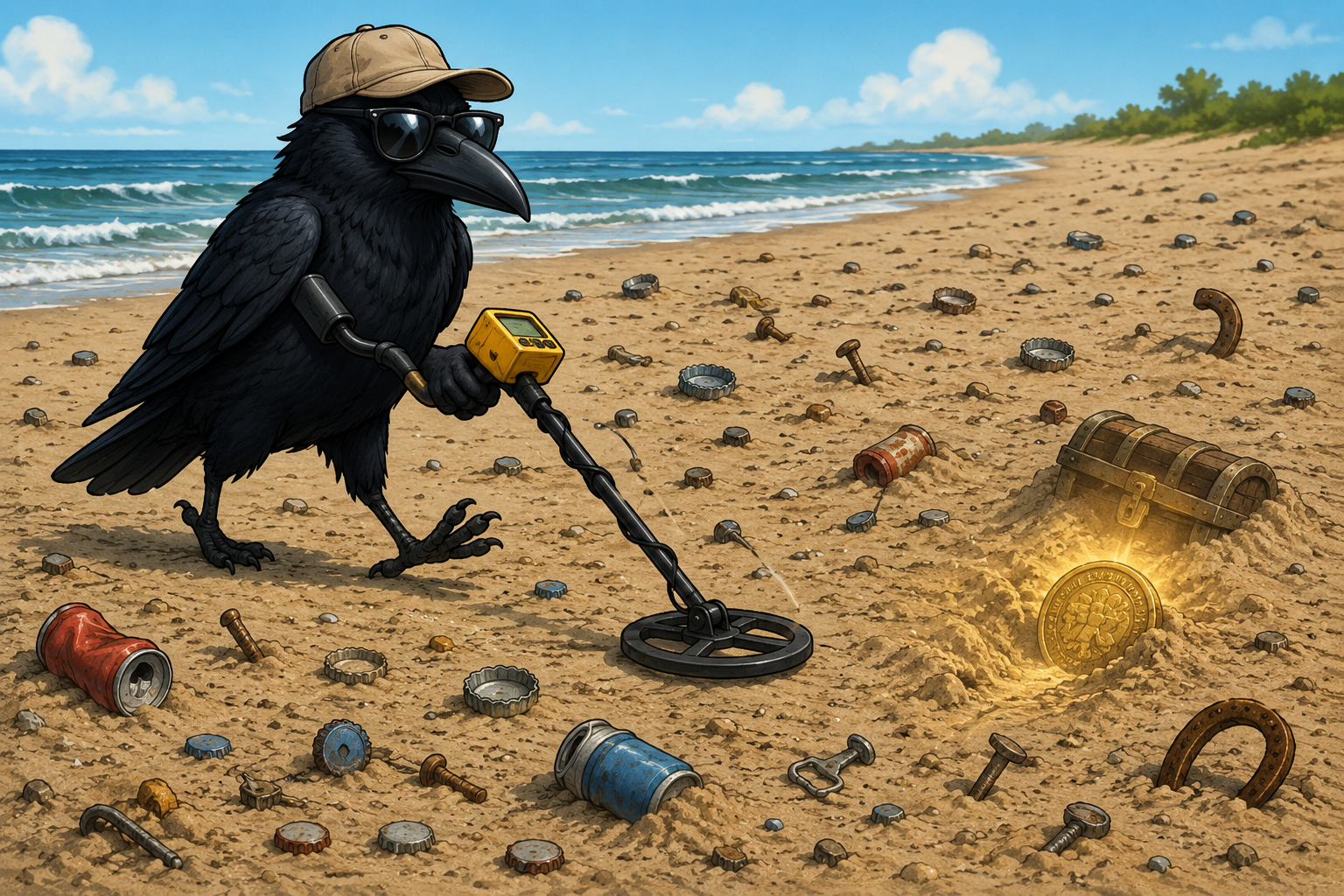
    I prefer land investing on a cash basis. One reason: it doesn’t require a heroic story. It doesn’t need perfect occupancy, rent growth, refinancing, or favorable debt markets. You buy it right, keep your carrying costs low, and let time do most of the work. You may not see giant annual returns, but you’re also a lot less likely to lose everything because someone borrowed money against your investment. It may take longer to see a return, but looking at it historically, land prices have trended up in north Texas.

    That doesn’t mean throw a dart at the map and buy whatever it hits, of course. You make your money when you buy, not when you sell. The safest way to play is to buy things that are underpriced in today’s market, while also being in an area expected to grow.

    Easier said than done for most of us.

    I spend a lot of time looking at land. Most of what I see isn’t interesting. Occasionally something is.

    When I find something I think deserves a closer look, I let a short list of people know first. If that sounds useful, click below and tell me what you’re looking for.

    Takes a couple minutes, no commitment required.
  • Being Impressive Can Be Overrated

    Being Impressive Can Be Overrated

    I told this story on here a while back, but a lot of you weren’t reading yet, and I think it’s worth revisiting.

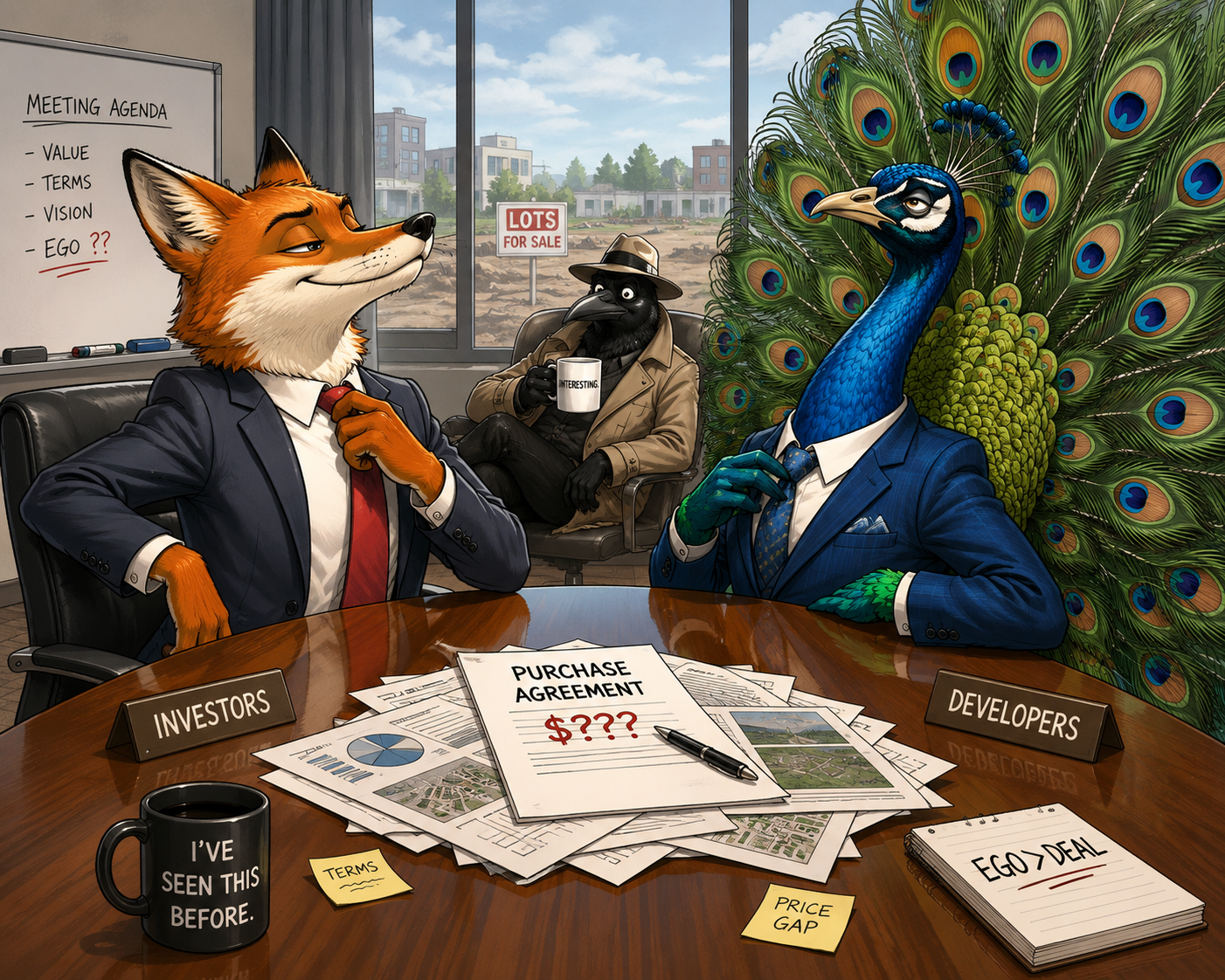
    Not long after the 2008 mortgage crisis, there were vacant lots everywhere and only a handful of buyers. I represented one of the few builders looking to acquire. We sat down with an investment group that was holding lots, to see if there was a fit.

    Realistically, a deal probably wasn’t happening regardless. The timing was wrong, the housing type probably wasn’t a fit, and pricing for builders and sellers was miles apart.

    But this meeting was doomed before anyone opened their mouth.

    The guy leading the investors was sharp. Sharp enough that he couldn’t stand to let it go unnoticed.

    Our builder’s CEO was the same. Two smart guys, both determined to be the one everybody left the room thinking about.

    They weren’t negotiating so much as performing. The rest of us just sat there and watched until the end, then went on our way.

    Not long after, my guy handed acquisitions to someone quieter and went back to running the company. Fifteen years on, that company is publicly traded, one of the biggest homebuilders in the country.

    The other guy didn’t fare quite as well. Overconfidence turned into overleverage, and overleverage turned into prison.

    He’s out now. I won’t be knocking down his door looking to do business again, although you never say never. As a broker you don’t always get to choose.

    Jim Camp writes about “okayness” in Start With No. In any interaction, only one person gets to feel completely okay. Your job is making sure it’s the other guy.

    If my client had just let the other man have his moment, instead of matching him move for move, it may have been different. Not that day, probably. The numbers were too far apart for that. But there’s a real chance we’re doing business with those investors again down the road, instead of never speaking to them again.

    If you remember the old TV show Columbo, he solved every case for the same reason. He walked in looking rumpled and half a step behind, and the guilty party relaxed just enough to talk too much.

    That’s the whole move. You don’t have to be less capable. You just have to stop trying to prove it so much.

    I’ve watched it play out both ways enough times to trust it. The guy who needs the room to know he’s the smartest one in it almost always ends up negotiating against himself. The one who can let that go usually walks out with the better deal, and sometimes a second chance at one he didn’t get the first time.

    Buy the book, and learn the system. It’s not hard and doesn’t require you to become some sort of master communicator or smooth talker (thank God).

    Register to Receive Posts Via Email!

    By submitting, I understand I will receive marketing emails and blog posts from Mike Browning Realty and/or associated companies. Unsubscribe at any time.

  • What’s Good For The Goose…

    What’s Good For The Goose…

    Sometimes I need to remember to follow my own advice.

    If you’ve been reading here any length of time, you know I like to talk about how putting things off isn’t smart. It’s understandable why we do it. We’re avoiding something we think will be unpleasant. But usually we’re better off facing it now, because the unpleasantness doesn’t shrink while we wait. It grows. And half the time you find out the thing you were dreading wasn’t worth the dread.

    We all know it’s a bad idea. We all do it anyway. That includes me.

    I run another site called hiswordtogether.com. It helps people stay on a Bible reading plan that gets you through the whole thing once a year. If you’re interested, you can check it out at the link.

    When I started the site late last year, I also reserved the .net and .org versions of the name. Ever since then, up until last week, there was an item on my to-do list to point those addresses to the main site.

    It had been there so long I stopped noticing it most of the time. When I did see it, I’d think about how I needed to get it done, then immediately start getting nervous about doing it. I’m not the most tech-savvy guy around, and I’d start picturing what happens if I click the wrong spot and take all my sites and my email offline.

    Again.

    That’s happened before. Inconvenient doesn’t cover it. Support got me through it, but when you don’t know how to explain what you did, it’s not exactly fun.

    So I kept trading the low-key annoyance of seeing it on my to-do list for the sharper worry of “what if.”

    Last week I finally did it. Logged into my registrar, four clicks, done. I spent something like a hundred times more effort avoiding it than it took to just do it.

    Nothing in my life is visibly different now, except I feel a little silly.

    I bring this up because I see the same thing happen with landowners, just about a different kind of click.

    You know it’s smart to have a read on what your land is worth and what’s happening around it. You’re probably not selling anytime soon, maybe not ever. But you also know that not knowing is its own kind of risk, the kind where you find out too late that something changed.

    What stops people isn’t the info. It’s what they think asking for it will cost them. Call an agent for “just some information” and a lot of them hear that as an invitation to start walking you toward a listing appointment, whether you asked for one or not. So people skip it. Same as I skipped four clicks for months.

    That’s what the MBR Land Reality Check is for. It gives you real market data, a heads up on what’s happening nearby, and whatever else might be relevant for your property.

    All without pressure to list, or having to sit through a buzzword-filled presentation. And it can be requested in a couple of minutes, or less time than it took me to fix my domain issue.

    Register to Receive Posts Via Email!

    By submitting, I understand I will receive marketing emails and blog posts from Mike Browning Realty and/or associated companies. Unsubscribe at any time.

  • We’d Never Do Something That Bad (Part 2)

    We’d Never Do Something That Bad (Part 2)

    A couple weeks ago I wrote about Peter’s denial, and how we read it like something we’d never stoop to. But the truth is it was a pretty garden variety move, the kind of go-along-to-get-along thing we all do more than we’d like to admit. God still used him anyway.

    Paul’s a different case. Most of us, hopefully, never go anywhere close to the lengths he did. And God still used him too. In a big way.

    I guess in Paul’s defense he thought he was doing good at the time. Which also sounds familiar to a lot of us if we are honest.

    When word got around that Saul of Tarsus had a change of heart, nobody believed it. Why would they?

    This wasn’t a guy who’d quietly disagreed with Christians. He’d built a reputation hunting them down. Stephen was stoned to death while Paul watched and held coats for the men doing the throwing. Another time he says “I cast my vote against them,” talking about believers being put to death. Not one incident. A pattern, with him positioned right in the middle of it.

    Later Saul obtains letters of authority to go after believers outside Jerusalem too. He was a man on a mission, and it wasn’t a mission for Jesus.

    Then the road to Damascus. Blinded, knocked down, told to go into the city and wait. A believer named Ananias gets sent to heal him and clearly does not want the job but he does it anyway. No word on whether he acted like Jonah later.

    Saul’s sight comes back. And he becomes Paul, who will be used by God to spread the Gospel.

    Obviously the disciples weren’t thrilled to see him at first. And it wasn’t easy. But Paul did what he was told and trusted God, and ended up writing most of what comes after Acts. Romans, Corinthians, Galatians, Ephesians, Philippians, Colossians, Thessalonians, the letters to Timothy and Titus.

    Most of the New Testament, written by the man who used to hold the coats of those killing believers.

    Here’s something you’re probably starting to notice a pattern about: God didn’t wait for Paul to clean up before using him.

    He went from a terrible oppressor to the greatest evangelist ever known in the blink of an eye. All because that’s what God wanted him to do and Paul trusted God.

    When you think you’re too damaged or have done too much for God to be able to use you, remember Peter, Paul and others. And just trust God and listen. And when you hear, act.


    Register to Receive Posts Via Email!

    By submitting, I understand I will receive marketing emails and blog posts from Mike Browning Realty and/or associated companies. Unsubscribe at any time.

  • Sometimes It Just Works

    Sometimes It Just Works

    A few weeks ago one of my clients who’s worked with me over 20 years called and asked me to help him find something pretty specialized. I don’t take that sort of project on all the time, but I did it for him.

    And I’m glad I did.

    I ran a search that day, which flagged two properties. One was basically a perfect fit, so we made a cash offer and closed it yesterday. Less than 30 days from the initial phone call to the closing table.

    Sometimes it just falls into place.

    Thanks to Amin and Perry, listing agent Bill Benton, and the folks at Texas Pioneer Title for making it all go as smoothly as possible.

    When I say as smoothly as possible, I mean everyone was on the same page from end to end. A willing buyer and seller working to get it done.

    But it’s still real estate.

    Even after close to 30 years, it seems like something I’ve never seen before pops up on almost every deal. So you never really know if it’s closing until after it’s done.

    That happened on this one too, but we got it done.

    I don’t do much buyer representation in the way a lot of agents do. For several reasons. I keep my eyes open, and if I see an opportunity I usually know who to take it to. But doing a dedicated search for a specific thing for a specific person, not nearly as often.

    If they were all like the one that closed yesterday, I might change my mind.

    We found exactly what he was looking for, got it under contract quickly, and closed in less than a month.

    Every week I look at hundreds of properties. Most aren’t worth talking about. Some are. And every so often one comes along where my first thought isn’t:

    “Who’s selling this?”

    It’s:

    “Who do I know that should see it?”

    A lot of times I have an answer immediately.

    Sometimes I don’t.

    Wrong area. Wrong deal size. They just bought something else. Whatever the reason, occasionally I end up looking at something I think deserves a closer look and don’t have the right investor to send it to.

    I’m trying to fix that.

    If you’re an investor and would like to hear about opportunities when they come across my desk, click below and tell me what you’re looking for.

    No obligation. No pressure. Just a way for me to know who might be interested when something survives the first round of filtering.

    Is it crazy to think you might want to see the deals I see?

  • The Danger of Needing It

    The Danger of Needing It

    One of the best books on negotiation is Start With No by Jim Camp. Probably the single most important idea in it: neediness is the first thing you have to get control of. Until you do, you’re at the mercy of whoever you’re sitting across from.

    Doesn’t matter if it’s a car, a house, a piece of land, or where you’re going for dinner Friday. Same rule.

    Go shopping for a car and it’s about a sure thing that once you show real interest, the salesman mentions someone else. They’re coming to look at it this afternoon. Or they were in yesterday, said they’d probably be back. Whatever the line is, the point is the same. Make you feel like if you don’t move now, you’re going to lose it.

    And it works. Not because you’re gullible. Because it’s aimed at something real. The second you stop thinking “I like this” and start thinking “I need this,” you’ve handed over the leverage.

    You don’t even notice it happening. You just start agreeing to things you wouldn’t have agreed to an hour earlier.

    Here’s what your brain skates right past. On the way to that lot, you passed a few thousand other cars. Other lots. Other listings. These things are mass produced. If this one gets away from you, there’s another one out there, probably better, and you’ll never think about this one again.

    You need food. You need shelter. Around here you probably need a vehicle of some kind. But you don’t need this particular car. You don’t need this particular house.

    Land’s a little different. No two pieces are exactly alike, so in a technical sense a specific tract really is one of one. But different doesn’t mean irreplaceable. Miss it, and the sun still comes up tomorrow. You still eat dinner. You’ll find something else that checks the boxes, maybe something you like better, and you won’t spend one more minute thinking about the one that got away.

    Wanting something is fine. Wanting it enough to stretch a little, work for it, negotiate hard. Also fine, as long as you’re doing it with your eyes open. Needing it is where it goes sideways.

    That’s when you stop negotiating and start hoping nobody notices you’re begging.

    The people on the other side of the table notice. Even the ones who aren’t trying to work you over will feel the shift, and the good ones absolutely will use it. Not because they’re crooked. Because that’s the game, and you just told them you’re not really playing it anymore.

    The fix isn’t complicated, even if it’s not easy. Notice when you’ve crossed the line from “I’d like this” to “I have to have this.” That’s your signal to slow down, not speed up. Ask yourself what you’re actually risking by waiting a day. Usually the honest answer is: not much. The deadline was mostly invented to make you feel exactly what you’re feeling right now.

    Camp built an entire system around this, and it’s worth your time if you’ve never read it. Whether you’re negotiating a purchase, a sale, a raise, or just trying to get your teenager to clean their room. Once you see how much of negotiation is really about who wants it less, you can’t unsee it.

    It’ll change how you walk into every negotiation. And since everything is a negotiation, it may change your life.

  • The First Step Is Usually the Hardest

    The First Step Is Usually the Hardest

    I remember being told growing up that it takes less gas for a car to idle for a few minutes than to shut it off and restart it. Something about wear on the starter too. I heard the same thing about lights. About computers. If the goal was saving energy, you were often better off leaving things running than flipping them on and off.

    Might not have been true. I’m not an electrician or a mechanic, and it was a long time ago. So even if it was true then maybe it isn’t now.

    Beside the point anyway.

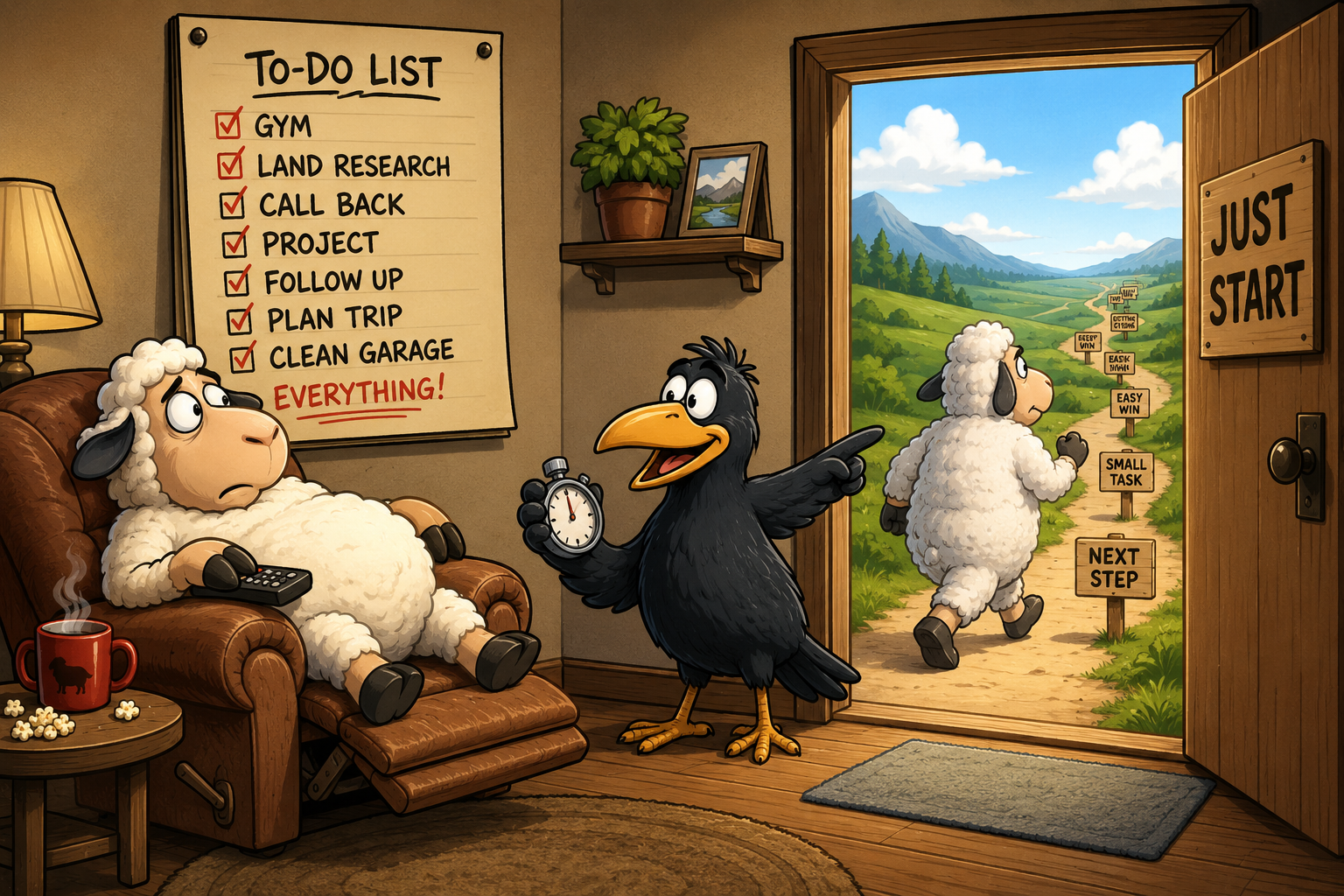
    I read something recently noting that the hardest part of most tasks isn’t the task itself. It’s going from not moving to moving. Once you’re in motion, momentum does most of the work. The whole fight is getting off the couch.

    Once you see that, you can use it against yourself, in a good way. Can’t get motivated for the gym? Make a deal. You’ll get dressed, drive there, walk in. If you still don’t feel like it once you’re inside, you can turn around and go home.

    Do this enough times and you’ll find you almost never leave.

    Just getting started was the whole battle.

    I use this at the office too. There are some projects I have that I don’t look at every day, but are large and have lots of moving parts. When it’s time to pick them back up, they’re overwhelming enough that putting them off a little longer feels reasonable. Which would just make it worse.

    If I commit to ten minutes, just one small task like sending an email or reviewing what’s left to do, I almost never stop at ten minutes.

    If anything I end up with the opposite problem. I get moving and don’t stop. An hour turns into four, and something else I meant to get to that day doesn’t happen. I’ve started setting alarms just to make myself quit.

    The same thing happens with bigger decisions too.

    If you own non-residential real estate, it’s probably a real chunk of your financial picture. Worth knowing what it’s worth, and what’s happening around it that affects that. Not because you’re looking to sell. Usually the smart move is waiting, unless you’ve got somewhere better to put the money or a reason that forces your hand.

    But it’s better to have the information and not need it than to need it and not have it.

    Most people never get the information. Getting started feels like a bigger thing than it is.

    And there’s the barber problem. Ask a barber if you need a haircut and you already know the answer.

    Call about your land looking for information and you end up on the phone with a salesperson telling you all the things you need to do that happen to be very good for them. So people put it off.

    It doesn’t have to go that way.

    It takes about two minutes to request, and it shows up in your inbox a few days later.

    No pressure, because there isn’t a pitch waiting on the other end.

    You don’t have to be ready to sell.

    You just have to be willing to know where things stand.

    Register to Receive Posts Via Email!

    By submitting, I understand I will receive marketing emails and blog posts from Mike Browning Realty and/or associated companies. Unsubscribe at any time.

  • Not Even Close

    Not Even Close

    Job was a good man. Loved God, kept his ways, and he was rich on top of it. Everyone around him looked at his life and saw a man who was clearly blessed.

    Then he lost it all in about four verses. Kids, livestock, servants, health. Gone, fast.

    His friends show up and spend most of the book explaining why. Different speeches, same theory underneath all of it. God is just, suffering is punishment, so the suffering must mean Job sinned somewhere and isn’t admitting it.

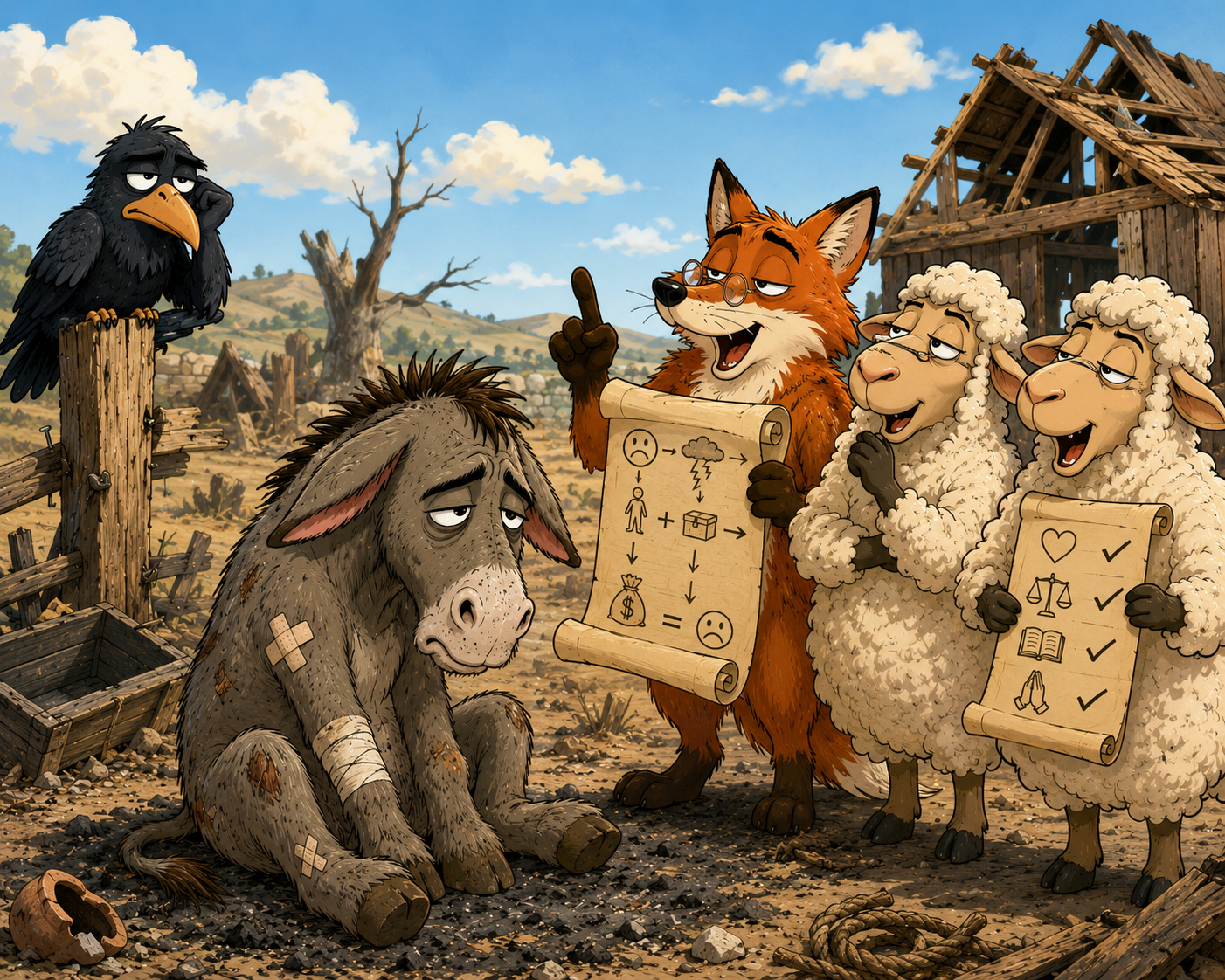
    Job won’t agree. He hasn’t done what they’re accusing him of, and he says so. They don’t believe him, because they need him guilty. Look at why for a second and it makes sense. If suffering is always earned, then being righteous keeps you safe, and they get to keep believing they’re in control of what happens to them. Easier to accuse Job than to give that up.

    We like that idea too. Be good enough, do it right enough, and God will help you. Except look at it for ten seconds and you’ll notice you don’t actually want a universe that runs on that rule. It means everyone who’s ever suffered did something to deserve it. And we’ve all done something to deserve it.

    If you’re honest, you know that even when you do something that’s technically right a large part of the time you’re not doing it for the right reasons.

    Job’s friends go through chapter after chapter of explaining why things happened like they did. Kind of like how we act like we can discern God’s plan for us. Here’s what actually happened: God let Satan destroy a man’s life over a bet Job had no say in. A righteous man, no less. Read that straight and it’s offensive. But once you sit with it, the friends’ explanations are the part that’s almost funny, how far off they were chasing a reason that didn’t exist.

    When God finally answers Job, He doesn’t explain the wager. He asks where Job was when the earth was made, whether he can command the morning. Shows him the size of what he isn’t equipped to know, not the reason behind it.

    We’d do well to spend less time hunting down the reason for things. Job’s friends never could have worked out what was actually happening, no matter how hard they tried. Job probably never found out either, this side of being back with God.

    We like to make it sound like it’s easy to trust. But it’s not. At least not all the time. Not when it’s impossible for us to know the why. That’s why we fail repeatedly. And why God made provision for us.


    Register to Receive Posts Via Email!

    By submitting, I understand I will receive marketing emails and blog posts from Mike Browning Realty and/or associated companies. Unsubscribe at any time.

  • The Gap Between Stories

    The Gap Between Stories

    Most people in a conflict become very, very good at one thing.

    Their version.

    I’ve watched it happen enough times to recognize the pattern early. Someone gets into a dispute, and immediately everyone assembles their case. The evidence. The timeline. Getting to others first, so they can get you on their side. They can tell you exactly what happened and exactly why the other person is wrong, and they’ve told it so many times it has the smooth, rehearsed quality of something that stopped being examined a while ago.

    What they usually can’t do is explain the other side.

    Not a real version of it anyway. Not the version the other person might actually recognize. They can do a kind of highlight-reel caricature where the other person comes off as selfish or unreasonable or oblivious, but that’s not the same thing. That’s just their own story with a different character labeled.

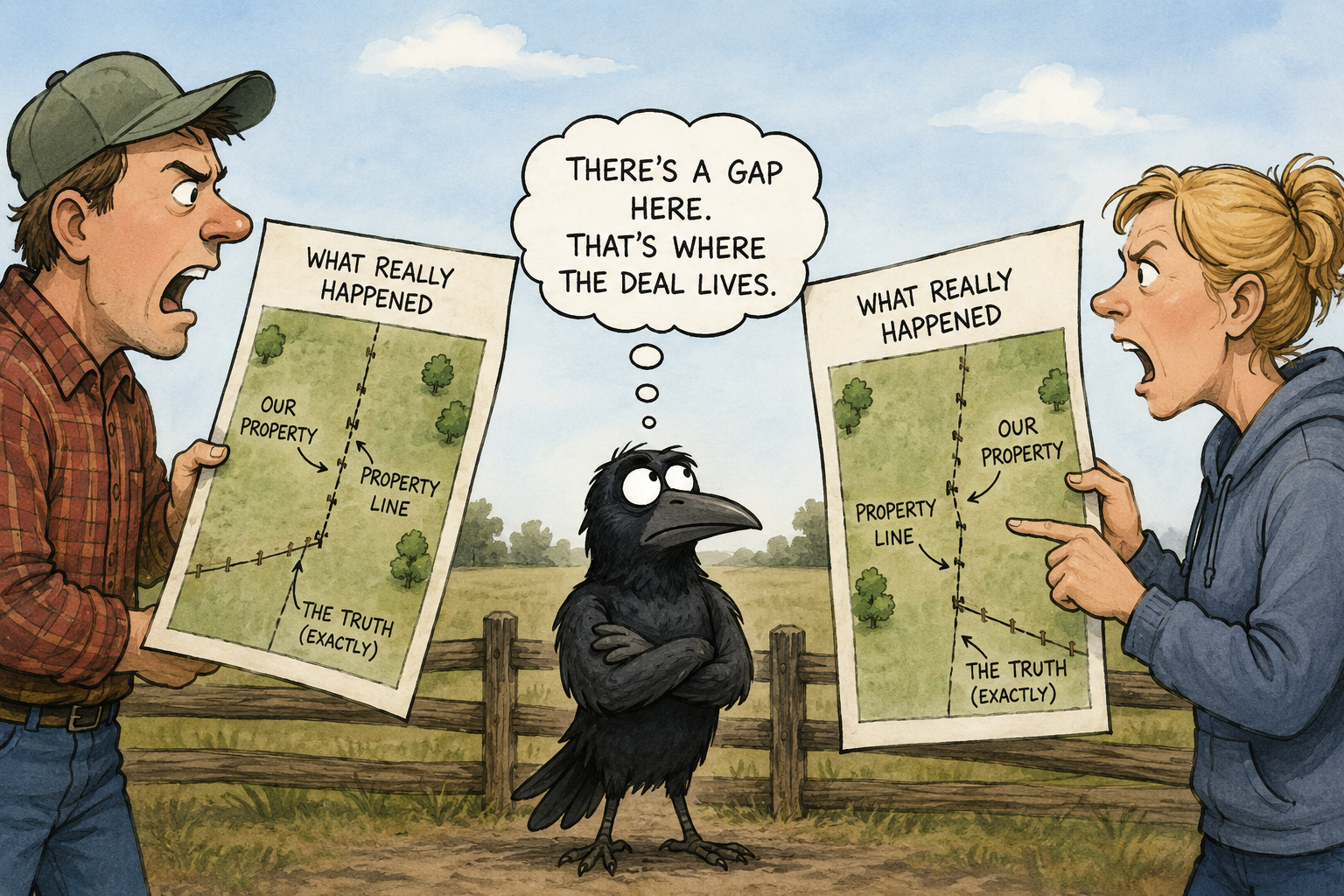
    Chris Voss has a line I keep coming back to. There are three sides to every story: my side, your side, and the truth. Most people spend their whole lives defending the first one.

    People forget to consider what that costs.

    It costs resolution, obviously. But it also costs information. If you can’t articulate the other person’s position in a way they’d agree with, you’re not negotiating with them. You’re negotiating with your idea of them, which is almost always a worse version than the actual person. Easier to dismiss. Easier to be right about.

    I’ve seen this play out many times where both sides are so committed to their read on what’s fair that they let something genuinely good fall apart. One side thinks the other is greedy. The other finds the offer insulting. Neither one has sat with the question of what the other person actually needs and why. The gap between the two stories is where the deal lives, but a lot of times nobody goes there.

    It shows up everywhere. Families. Business partnerships. Long friendships that quietly go cold.

    The test Voss suggests is a good one. Can you make the other person’s case as well as they could? Not a version that secretly makes you look reasonable by comparison. The real one, with their actual concerns and their actual logic and the parts of their position that, if you’re honest, have some merit.

    Most people can’t do it. Which means most people are still negotiating with their own story instead of with the situation in front of them.

    That’s not a moral failing. It’s just expensive.


    Register to Receive Posts Via Email!

    By submitting, I understand I will receive marketing emails and blog posts from Mike Browning Realty and/or associated companies. Unsubscribe at any time.

  • The Sun Is Probably Coming Up Tomorrow

    The Sun Is Probably Coming Up Tomorrow

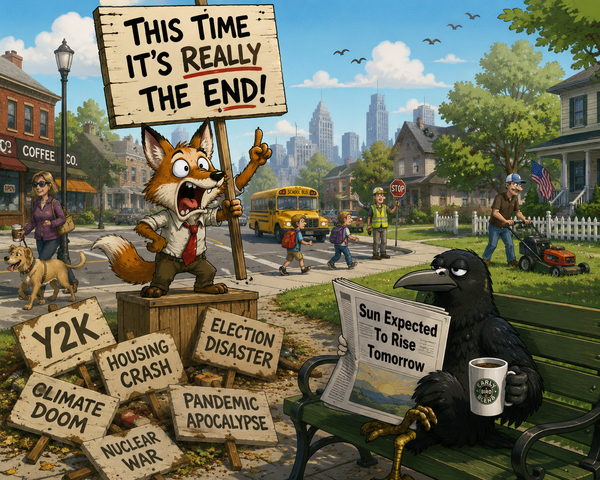
    Most people wake up these days and, they already know the world is ending before they’ve had their first cup of coffee.

    Used to be you’d flip on the morning news. Maybe Good Morning America. You’d hear some bad news, sure, but then there’d be a segment on a dog that learned to skateboard, or some heartwarming story about a kid raising money for his neighbor. You’d get the weather. Somebody would laugh too loud at something that wasn’t that funny.

    Now people roll over, grab the phone, and start scrolling. And the algorithm figured out a long time ago that outrage keeps you looking longer than a skateboarding dog does. So that’s what it feeds you, nonstop, before you’ve put your feet on the floor.

    Right now it’s the war that was going to end but now it isn’t (oh wait, yes it is, never mind it’s not). Gas is either already too high or about to get worse, depending on which story you read first. Or we’re living in a dystopian nightmare. It’s exhausting, it’ll ruin your morning or your whole day before it starts if you let it.

    But it’s always been this way, just maybe not quite as much in our faces.

    Just a few years ago we were all going to die. A sizable number of serious people were saying civilization was a few days away from coming apart. We’re still here.

    Before that, a particular election was going to send everything straight into the toilet. Whichever one you’re thinking of, someone said that about it. They all came and went and things are moving along. Most people would never even notice a difference if they weren’t told about it.

    Before that, the housing market had crashed and the same people who swore the crash wasn’t coming turned around and swore it would never recover. It recovered so much that now those same people say nobody can afford a house.

    Before that, terrorists were going to get us all. Hasn’t happened yet.

    Before that, the oceans were going to swallow everything if we didn’t figure out how to control the temperature of the sun. Still waiting on that one too, Al.

    Before that, nuclear holocaust by 1985. Wrong again.

    Before that, economic malaise was all we had to look forward to. Until things started growing so fast the 80s were known as the decade of greed.

    Eventually something is going to get us. That’s just the nature of things.

    But until then, you’ve got a life to live. And a morning to get through. If you spend it marinating in whatever disaster the algorithm decided you should be upset about today, you’ll make worse decisions, be harder to be around, and see problems everywhere, including in places that are actually fine.

    Here’s a pretty decent rule of thumb: if someone says it’s different this time or we will never recover from (insert problem here), they probably aren’t worth listening to.

    There will always be a reason to run and hide, if you just look for one.

    But the sun’s probably coming up tomorrow. Plan accordingly.

    PPS- If you’re not ready for a Reality Check but enjoy reading about land, markets, and how to think about both, you can sign up below and get these posts in your inbox.

    Register to Receive Posts Via Email!

    By submitting, I understand I will receive marketing emails and blog posts from Mike Browning Realty and/or associated companies. Unsubscribe at any time.