Author: MB

  • The Sun Is Probably Coming Up Tomorrow

    The Sun Is Probably Coming Up Tomorrow

    Most people wake up these days and, they already know the world is ending before they’ve had their first cup of coffee.

    Used to be you’d flip on the morning news. Maybe Good Morning America. You’d hear some bad news, sure, but then there’d be a segment on a dog that learned to skateboard, or some heartwarming story about a kid raising money for his neighbor. You’d get the weather. Somebody would laugh too loud at something that wasn’t that funny.

    Now people roll over, grab the phone, and start scrolling. And the algorithm figured out a long time ago that outrage keeps you looking longer than a skateboarding dog does. So that’s what it feeds you, nonstop, before you’ve put your feet on the floor.

    Right now it’s the war that was going to end but now it isn’t (oh wait, yes it is, never mind it’s not). Gas is either already too high or about to get worse, depending on which story you read first. Or we’re living in a dystopian nightmare. It’s exhausting, it’ll ruin your morning or your whole day before it starts if you let it.

    But it’s always been this way, just maybe not quite as much in our faces.

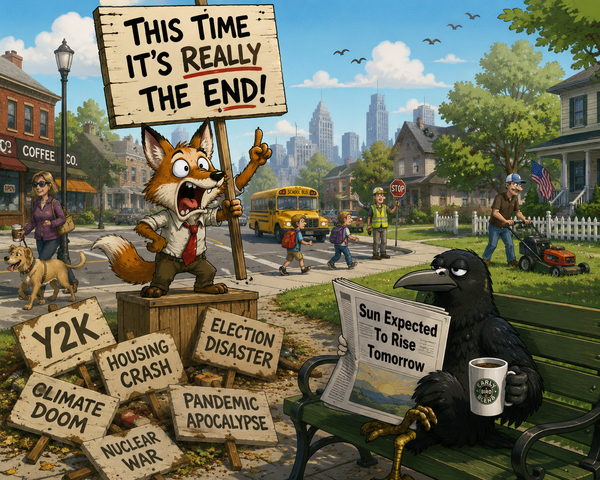
    Just a few years ago we were all going to die. A sizable number of serious people were saying civilization was a few days away from coming apart. We’re still here.

    Before that, a particular election was going to send everything straight into the toilet. Whichever one you’re thinking of, someone said that about it. They all came and went and things are moving along. Most people would never even notice a difference if they weren’t told about it.

    Before that, the housing market had crashed and the same people who swore the crash wasn’t coming turned around and swore it would never recover. It recovered so much that now those same people say nobody can afford a house.

    Before that, terrorists were going to get us all. Hasn’t happened yet.

    Before that, the oceans were going to swallow everything if we didn’t figure out how to control the temperature of the sun. Still waiting on that one too, Al.

    Before that, nuclear holocaust by 1985. Wrong again.

    Before that, economic malaise was all we had to look forward to. Until things started growing so fast the 80s were known as the decade of greed.

    Eventually something is going to get us. That’s just the nature of things.

    But until then, you’ve got a life to live. And a morning to get through. If you spend it marinating in whatever disaster the algorithm decided you should be upset about today, you’ll make worse decisions, be harder to be around, and see problems everywhere, including in places that are actually fine.

    Here’s a pretty decent rule of thumb: if someone says it’s different this time or we will never recover from (insert problem here), they probably aren’t worth listening to.

    There will always be a reason to run and hide, if you just look for one.

    But the sun’s probably coming up tomorrow. Plan accordingly.

    PPS- If you’re not ready for a Reality Check but enjoy reading about land, markets, and how to think about both, you can sign up below and get these posts in your inbox.
    Register to Receive Posts Via Email!

    By submitting, I understand I will receive marketing emails and blog posts from Mike Browning Realty and/or associated companies. Unsubscribe at any time.

  • The Big Deal Isn’t Harder

    The Big Deal Isn’t Harder

    Early in my career I spent months working a deal. Drove the area, ran the comps, found the right buyer, got it closed. Made about a thousand dollars on it.

    I was working with my dad at the time, so he saw all of it. The driving around, the dead ends, the slow grind toward a buyer. He told me I’d done everything right, worked it the way it should be worked. Then he told me something I didn’t fully get at the time.

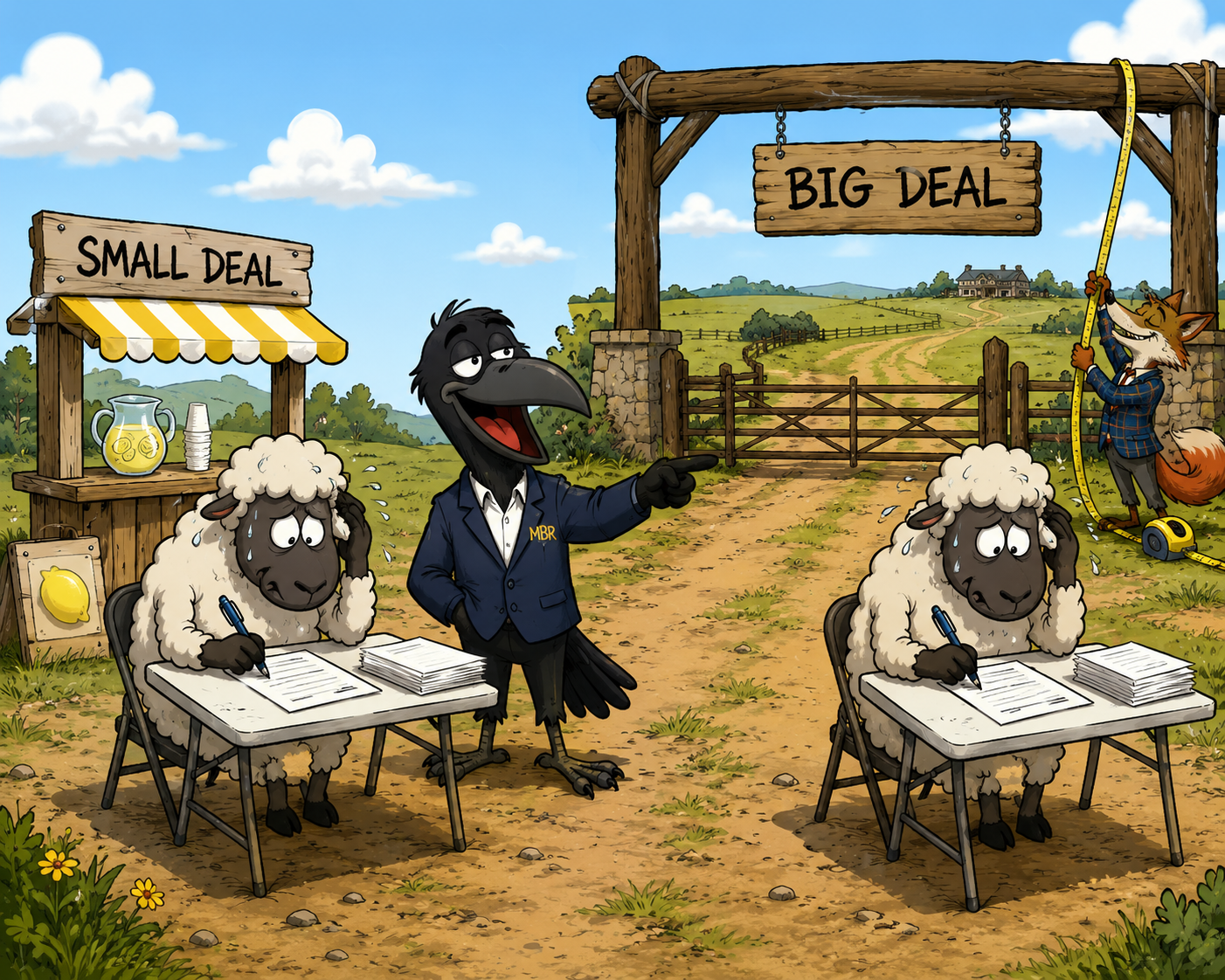
    He said it isn’t any harder to work a big deal than a small one.

    I argued with that a little in my head. Surely the bigger deal has more moving parts, more zeros, more ways to mess it up. More people who’d notice if you got it wrong.

    He was right and I was wrong. (Don’t tell him I said that.) The work is close to identical. Find someone who wants to buy, someone who wants to sell, put them together and get something done that leaves everyone better off. What changes is the number at the end, and that number doesn’t ask you to do anything different to get there.

    Most of what makes the big version feel harder isn’t the deal. It’s you. You start adding weight to it that isn’t actually there. Bigger feels like it should require more, so you tense up, slow down, second-guess yourself in ways you never would on something smaller. The deal didn’t get harder. You did.

    It applies to most things, and most people never test it. Making two hundred thousand a year isn’t meaningfully harder than making forty. It’s a different set of habits, different deals, different conversations, but it isn’t five times the effort or five times the stress. People assume the bigger number requires being a different kind of person. Mostly it just requires not getting in your own way at the size you’re currently working.

    People spend years circling the smaller version of something because it felt safer, only to find out later the bigger version asked the same of them. If not less. They just hadn’t been willing to find out.

    PPS- If you’re not ready for a Reality Check but enjoy reading about land, markets, and negotiation, you can sign up below and get these posts in your inbox.
    Register to Receive Posts Via Email!

    By submitting, I understand I will receive marketing emails and blog posts from Mike Browning Realty and/or associated companies. Unsubscribe at any time.

  • We’d Never Do Something That Bad

    We’d Never Do Something That Bad

    The story of Peter’s denial is one of the catastrophic failures in the whole Bible. Foretold by Jesus Himself the night before, like the whole thing was written in advance. It sounds like a uniquely terrible collapse of faith.

    It was terrible. That part’s not in question. He shot his mouth off about how he’d die before disowning his Lord. A few hours later he denied knowing Christ, in public, three separate times, to people who weren’t even pressing him that hard.

    A servant girl in the high priest’s courtyard looked at Peter and asked him directly, something close to, weren’t you with him too. Not a vague vibe in the room he had to read. A direct question. And three times, Peter answered it. No. Don’t know the guy. Never met him. Swore for effect on the third.

    So yes it was terrible. But it wasn’t unique.

    We do the same thing, regularly, and don’t call it that.

    We don’t usually deny Christ outright, because most of us never get asked that bluntly. What we get instead are smaller, more specific versions of the same question. Someone asks straight out what we actually think about something, and we know what the honest answer costs, so we give the rounded-off version instead. Technically not a lie. Worded carefully enough to stay out of trouble either way. We call that being diplomatic, or not making it a thing, or just being easy to deal with.

    Going along to get along. That’s the polite name for it. It’s also the exact move Peter made by the fire. He just didn’t have a softer phrase available to hide behind. He was asked, and he answered the wrong thing on purpose.

    Our version doesn’t get preached about on a Sunday. Nobody wrote it down with a rooster crowing at the end for effect. So it doesn’t feel like denial. It feels like being reasonable. Being easy to get along with. Not making things awkward.

    Call it what it actually is, though, and it’s the same transaction Peter made at the fire. Get asked directly, and trade a small piece of honesty about whose side you’re on for a small amount of comfort. He did it under torchlight with witnesses. We do it at dinner, at work, online, and walk away feeling like nothing happened.

    That wasn’t the end for him, though, and what happened after matters more than the failure itself. Peter wept over it. Didn’t try to explain it away. And later, after the resurrection, Jesus finds him on a beach and asks him one question three times. Do you love me. Once for every denial. Doesn’t make him relive the scene at the fire. Just asks, lets Peter answer, and tells him to go feed the sheep.

    That’s the man who ends up preaching at Pentecost, the one the whole early church gets built around.

    We definitely don’t have anything to be proud of, but despair isn’t called for either. It’s the opposite. If God still handed Peter the church after that, mid-failure, no cleanup required first, He’s not waiting on a clean record from the rest of us either.

    Your denial is real. So is what He’s still willing to do with you in spite of it.


    Register to Receive Posts Via Email!

    By submitting, I understand I will receive marketing emails and blog posts from Mike Browning Realty and/or associated companies. Unsubscribe at any time.

  • Somebody Should Own This by Now.

    Somebody Should Own This by Now.

    If you’re interested in Flower Mound or are an agent working with people looking there, you’ve probably seen this listing already.

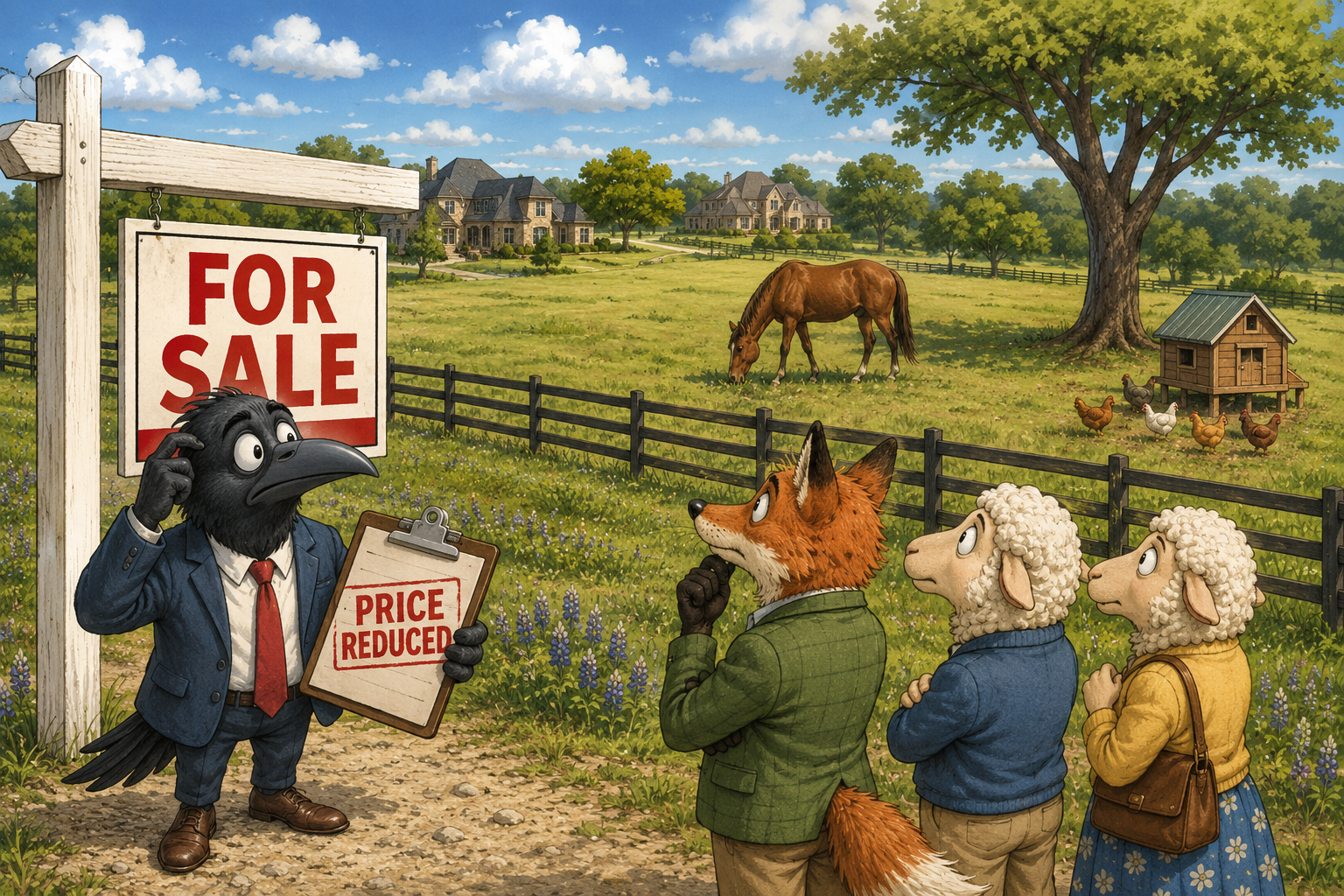
    4.38 acres on Hawk Road, room for a horse inside the city. That combination doesn’t come up often out here.

    The price just dropped to $1,225,000, down from $1,245,000, and further down from where it opened back in January. Not a fire sale, just a seller adjusting to a market that hasn’t moved as fast as everyone assumed it would.

    The size is more unique than people give it credit for. Smaller tracts don’t qualify for a horse under Flower Mound’s rules. Bigger tracts jump into a different price bracket and a different kind of buyer. This one sits in the gap between those two, and there isn’t much else sitting there with it.

    There’s a 2005 mobile home on the property, valued at zero. Three bedroom, two bath, 1,512 square feet, sellers live there now. May work as a caretaker setup, or a place to live while a buyer plans something bigger. Flower Mound may have something to say about that (they do about most things), so check with them. There’s a chicken coop too. Not a selling point for everyone, but it tells you something about how the place has actually been lived on.

    It backs up to the future Eden Ranch subdivision without being part of it. No HOA. No committee approving your paint color. Denton ISD schools, Adkins, Harpool, Guyer.

    Seller to keep the minerals and they will need a short leaseback.

    In MLS as both land (#21161389) and residential (#21144467), pictures and aerial are below, also a flyer is linked below.

    Showings are by confirmed appointment only. The land can be shown most any time, but the sellers still live on the property so advance notice is required. The home won’t be shown initially since the value is primarily in the land, but it can be made available later if needed.

    PS If you’d rather just keep an eye on what’s moving in this market before it shows up somewhere else, you can sign up below.

    Register to Receive Posts Via Email!

    By submitting, I understand I will receive marketing emails and blog posts from Mike Browning Realty and/or associated companies. Unsubscribe at any time.

  • The World As It Is

    The World As It Is

    Some people spend a lot of energy being offended by things that were never about them.

    Someone says something careless. Or acts a certain way in public, or online, or at work. And someone else sees it and decides it was aimed at them personally. Now there’s a problem to solve. A wrong to correct. A wound that needs acknowledging.

    A lot of times the other person wasn’t thinking about them at all.

    People are self-absorbed, although usually in ordinary, harmless ways. They’re worried about their own day, their own bills, their own kid’s homework. The comment that landed wrong, the look that seemed pointed, the rule that felt unfair. Most of it is just noise other people are making while they live their own lives. It only becomes about you if you decide it is.

    Obviously I’m not saying bad behavior doesn’t exist. People are rude and small and unfair plenty. As the saying goes, some people are just jerks.

    But there’s a difference between noticing things and letting those things ruin your day, or organizing your life around the idea that the world should have treated you a certain way and now owes you something for not doing it.

    That’s exhausting. And it doesn’t change anything. Whatever happened still happened. All that’s changed is you’ve spent the afternoon carrying it around.

    The people who do best are the ones who deal with the world as it actually behaves instead of how they wish it did. And move forward accordingly. That doesn’t mean you can’t be disappointed at times, but it happens to everyone.

    This is one of those concepts you see everywhere once you notice it for the first time.

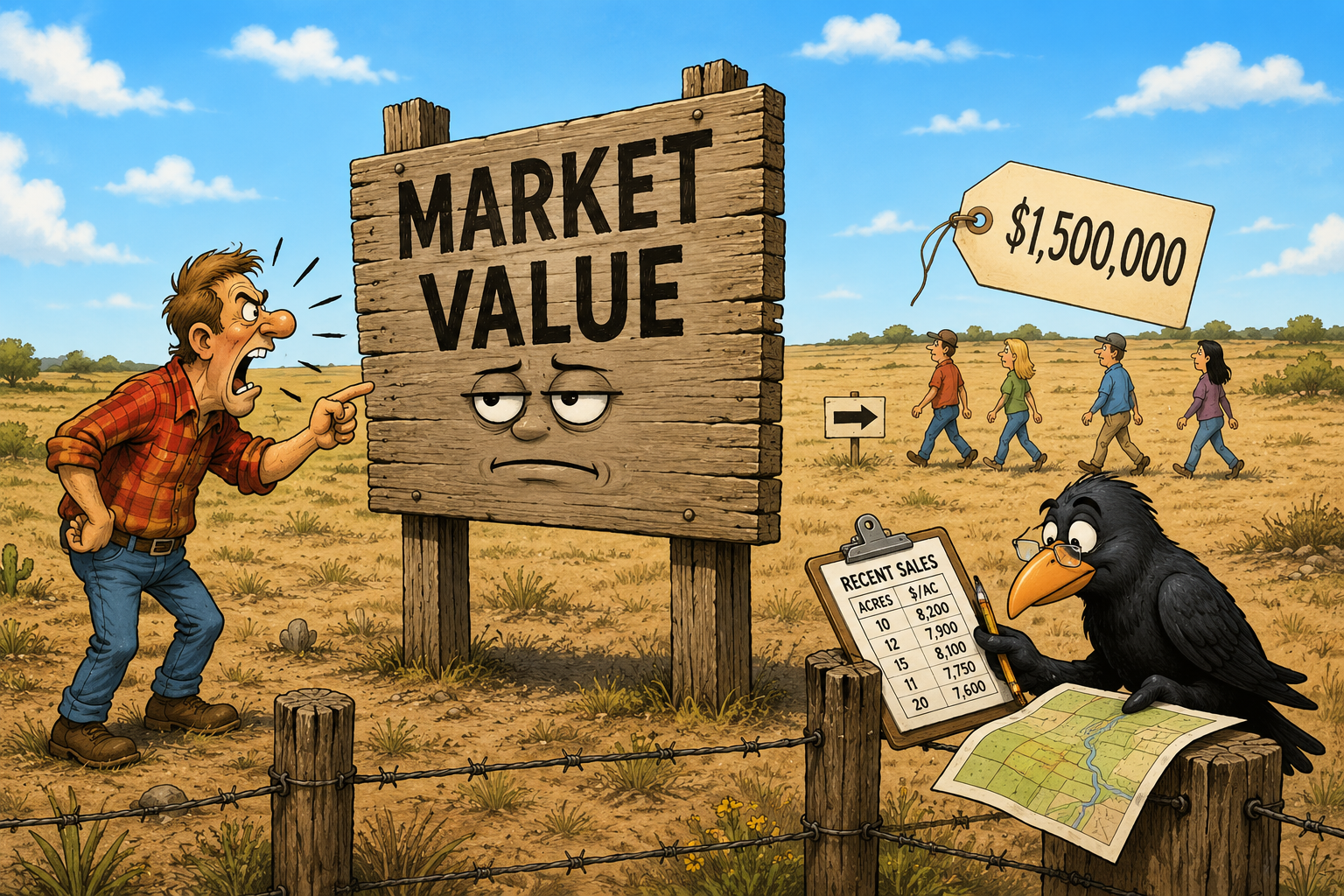
    A seller looks at their property and decides what they want it to be worth. Based on what they put into it, what they need out of it, what the neighbor claimed his sold for at the mailbox. None of that is the market. The market doesn’t know what you need and doesn’t owe you a number.

    You can list at an unrealistic number you wish were true, but I don’t recommend it. Buyers will simply ignore you, politely or not, and the property sits.

    You can price it at what the market will actually pay, today, with the buyers who actually exist, and move forward. Or you can wait. And maybe later things will be more to your liking.

    Both are real choices. Waiting for the market to come around to your number may be the right call. Nobody knows the future, but in north Texas land has tended to rise over time. If you’re not in a hurry, or don’t need to sell, it might be the best choice.

    But the market isn’t being unfair to you for not acting like you wish it would. It isn’t being anything. It’s just being a market.

    PPS- If you’re not ready for a Reality Check but enjoy reading about land, markets, and negotiation, you can sign up below and get these posts in your inbox.

  • The Open Shirt Rule

    The Open Shirt Rule

    Even if you don’t follow soccer, you’ve probably caught some of the World Cup coverage this month. One thing that keeps coming up: visitors are surprised by what kind of country this actually is.

    If all you knew was social media, you’d think we’re at each other’s throats. Police and immigration checkpoints on every corner. Nobody happy to be here. The place a mess.

    Then people show up and it’s nowhere close to that.

    It’s nice watching that land on someone in real time. You’d think it might make the rest of us put the phones down. Stop getting ourselves worked up over whatever someone decided to be offended by this week.

    You’d think that. You’d be wrong.

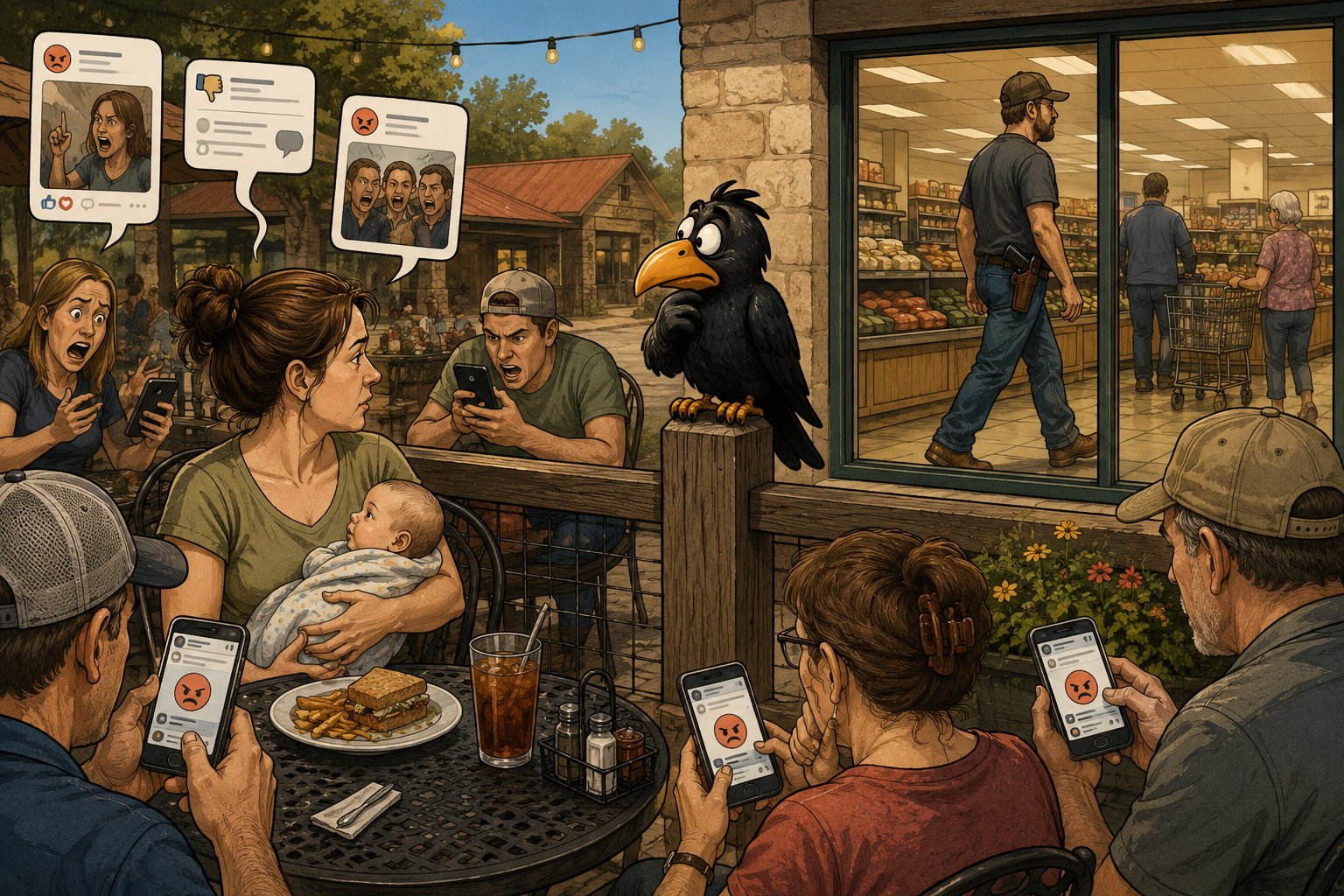
    A little over a week ago, a woman in Celina said a local restaurant made her leave for breastfeeding her infant. She posted about it. It went everywhere. People who weren’t in the building had a lot to say about how we’ve apparently traveled back in time a hundred years.

    The owner, also not in the building that day, said it was a miscommunication and that breastfeeding has never been against their policy. That part got considerably less attention.

    It made the paper, which tells you something on its own. Read the article and what you mostly get is one woman’s account, repeated back as fact, plus some comments from people online. The owner’s side is in there, technically. A video statement, summarized. Her first name. No last name. Strange, for a story where the reporter supposedly tried to reach her.

    If you’d actually talked to her, you’d probably have that. Or you could have asked around, it’s no secret who owns the place and she’s reasonably prominent around town.

    I don’t know what happened in that restaurant. Neither does anyone who wasn’t there, which is most of the internet. What people will walk away remembering isn’t the truth. It’s just who got cast as the villain.

    On the breastfeeding question itself: I don’t know a single person who’s bothered by it, or thinks it should be against the rules anywhere. I know plenty of people who believe in being considerate when you can be. Those aren’t the same position, and treating them like they are is how you end up shouting at people who already agree with you.

    You’re allowed to open carry in Texas. I think that’s a real right and I’m not interested in arguing about it. But when I see a guy walking through Walmart with a pistol on his hip for no particular reason, I don’t read that as confidence. I read it as someone hoping somebody says something so he gets to be right about it.

    Same instinct, different subject. You’re allowed to do the thing. Doing it the most visible way possible, without consideration for others, isn’t really about the thing anymore. Maybe the other person is wrong, doesn’t hurt you to accommodate them.

    Do what you need to do. Just notice when you’ve stopped doing it for the reason you started.

    Register to Receive Posts Via Email!

    By submitting, I understand I will receive marketing emails and blog posts from Mike Browning Realty and/or associated companies. Unsubscribe at any time.

  • Furious That It Worked

    Furious That It Worked

    Jonah gets remembered for the fish. That’s the part everybody knows. Swallowed, three days, spit out on a beach.

    But the fish isn’t really the story. It’s barely the warm-up.

    God tells Jonah to go preach to Nineveh, a city full of Israel’s enemies, and tell them to repent or be destroyed. Jonah immediately heads the opposite direction. Books a ship going the other way across the sea.

    Not because he doubted God would do it. Because he knew God actually would forgive them if they listened. And these were his enemies, so he didn’t want that.

    Most of the time we picture the reluctant prophet as scared of failing, scared of being laughed at, scared the mission won’t work. Jonah ran because he knew it would work exactly as advertised.

    Storm, sailors throw him overboard, fish, three days, thrown back up on shore. He goes to Nineveh. Preaches the one line God gave him. The city repents immediately and completely, all the way up to the king.

    God relents. Doesn’t destroy the city.

    Jonah is furious.

    Sits down outside town and tells God flat out he’d rather die than watch this. Says he knew this would happen, that’s exactly why he ran in the first place. God is gracious and compassionate, and Jonah resents Him for it.

    God grows a plant to give Jonah some shade. Jonah likes the plant. Next day a worm kills it, the shade is gone, and Jonah is back to wanting to die, this time over a plant.

    God asks him a simple question. You’re upset about a plant you didn’t plant and didn’t grow. Shouldn’t I care about a city of more than a hundred thousand people?

    The book ends there. No resolution. No Jonah repenting and learning his lesson. Just God’s question hanging in the air.

    We understand Jonah better than we’d like to admit. We’re perfectly fine with mercy for ourselves. Less fine with it landing on the specific people we think don’t deserve it.

    You can want the right outcome and still be furious when you get it, if it benefits someone you’d rather see lose.

    Jonah did his job. Eventually. Preached the message. People who deserved judgment got mercy instead.

    He couldn’t stand it.

    What is your Nineveh?


  • Ambushed By A Salesman In Real Time

    Ambushed By A Salesman In Real Time

    I keep coming back to this one: people put off stuff they already know they should deal with. Not because they’re lazy. Because they’re avoiding a hassle they’re pretty sure is coming.

    Take your land. You’re not looking to sell it today. But knowing what it’s worth, and what’s happening around it, can’t hurt you. You’d have the information sitting there if anything changes. If a neighboring tract comes up for sale, you’re not finding out last. And if it’s a good deal, you might be ready to move on it first.

    So why do most people pass when someone offers them free information?

    Mostly because they’ve been burned before.

    Mention you’re the slightest bit curious what your property’s worth and your mind jumps straight to a timeshare pitch. Numbers too good to be true. A guy who won’t take no for an answer.

    You ask one question. The phone starts ringing. And doesn’t stop.

    So you let it go. Not worth the hassle.

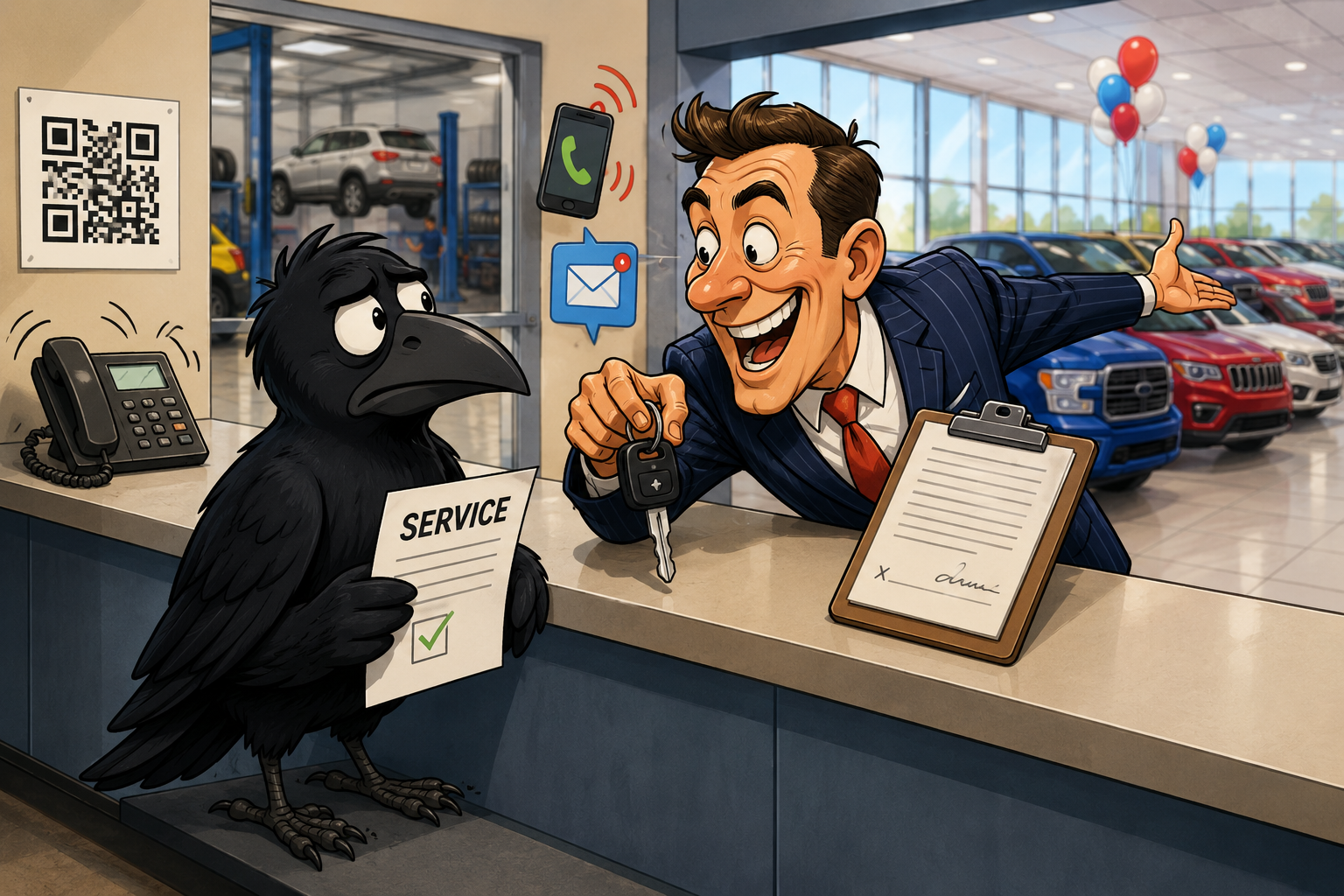
    That happened to me last week. My truck’s had a couple of recalls sitting open for a while (nothing major), and I’d been putting it off because I didn’t want to spend an afternoon at a dealership. A card came in the mail with a QR code, said I could schedule online. Figured I’d try it. The site barely worked, so I gave up after a few minutes.

    Except it worked fine, for what it was actually built to do.

    Within minutes my phone rang. Sales manager at the dealership. I let it go to voicemail. He wanted to know what car I was interested in and when I could come in for a test drive.

    A few minutes later, an email. Somehow he’d copied my wife on it too, asking what we were “working a deal” on.

    I asked for service. They tried to close me on a car I never mentioned.

    That’s the move. That’s why people stop raising their hand.

    When you raise yours with me, that’s not what happens. I’ll reach out, sure. Lightly. No pressure, no script.

    You can decide for yourself what that’s worth.


    PPS- If you’re not ready for a Reality Check but enjoy reading about land, markets, and negotiation, you can sign up below and get these posts in your inbox.

    Register to Receive Posts Via Email!

    By submitting, I understand I will receive marketing emails and blog posts from Mike Browning Realty and/or associated companies. Unsubscribe at any time.

  • The Gas Price People

    The Gas Price People

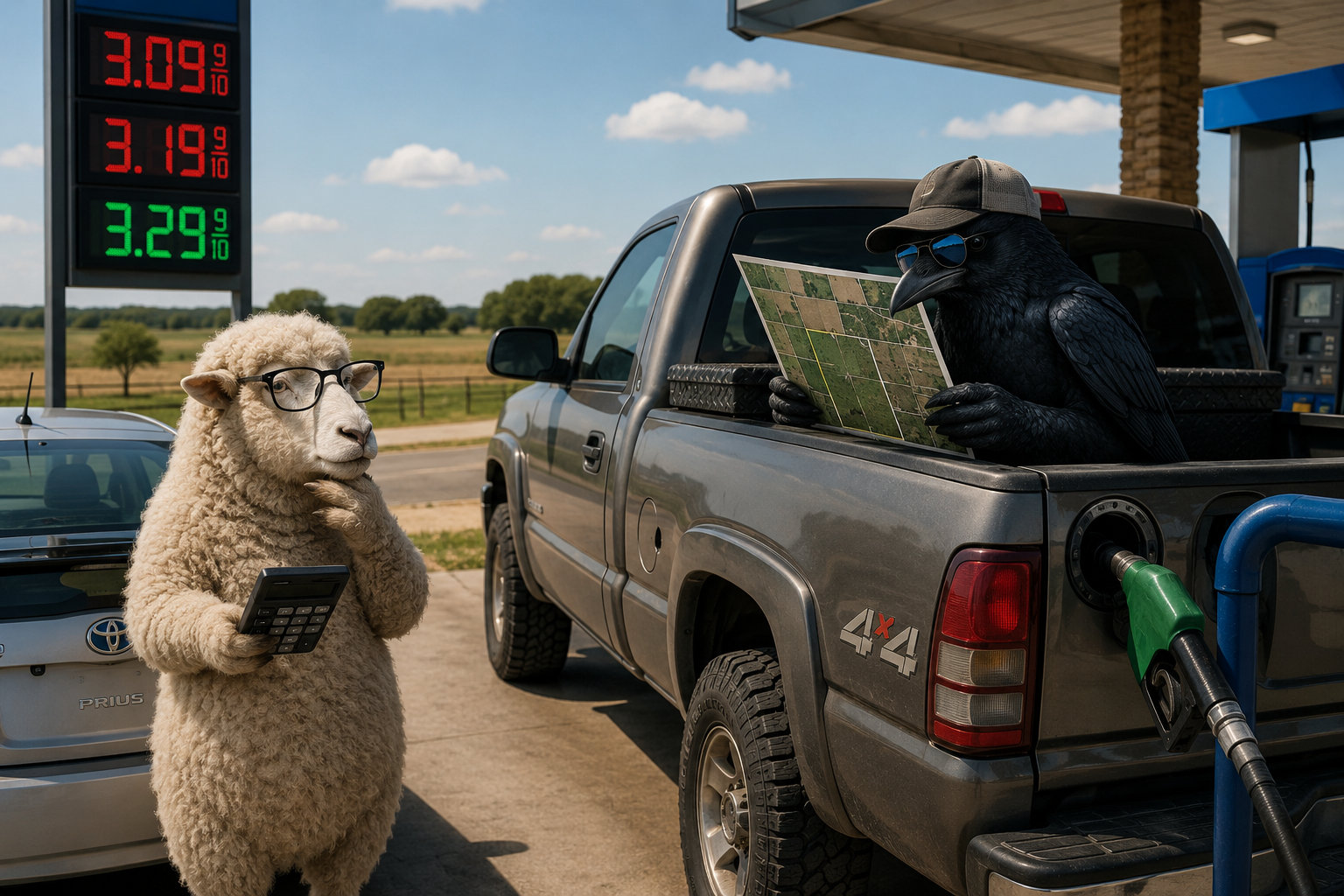
    Since I’m out looking at land all over DFW, I drive more miles than most people do in a month. And I don’t drive a Prius, I drive a pickup. Not one of the giant, jacked-up models, but I’m still not winning any awards for conservation.

    So if anyone should be paying attention to gas prices it should be me. But I don’t. But that doesn’t prevent others from telling me about the latest moves.

    You know the type. They watch the price board every time they pass a station. They’ll drive ten miles out of their way to save three cents a gallon. Burn more gas than the savings they get. They text their spouse: “Buc-ee’s in Melissa is at $3.09 right now.” The gas price conversation comes up at dinner like they’re tracking a stock.

    But think about it. Say prices jump twenty cents a gallon. My truck takes about 26 gallons. That’s five dollars more per fill up. Five bucks. The mental energy some people spend tracking that number, recalculating, stressing, and comparing costs more than five dollars. Probably a lot more.

    As a wise man once said: he who knows the price of everything knows the value of nothing.

    And that’s the real problem. When you’re focused on what something costs, you stop thinking about what it’s worth.

    Landowners do this too.

    Not with gas prices. With phone calls.

    They’ve been sitting on a piece of land, could be a hundred acres, could be forty, and every so often they wonder what it’s worth. What’s been selling nearby. Whether the market shifted. Whether now’s the time or not.

    But they don’t do anything about it.

    They’ve decided that the cost of checking is too high. Not in money. Something worse: the pressure. The pitch. The agent who’s going to spend forty-five minutes making it real estate conversation instead of land conversation, then follow up every two weeks until they finally block the number.

    So they wait. And while they’re waiting, they’re not getting the information they’d need to make a good decision when the time comes.

    That’s the real cost. And it’s not five dollars.

    Here’s what I’d ask you to think about.

    What if you knew ahead of time that the pressure thing wasn’t going to happen? If I promised you the conversation was just going to be information, that I wasn’t going to push, that you reach out and end up with a clearer picture and nothing more, would it still make sense to wait?

    Of course anyone can promise no pressure. But don’t take my word for it, hear it from people who actually got a Land Reality Check:

    — Mary G., Frisco

    — Lisa H., McKinney

    — Barbara K., Denison

    The value of knowing what your land is worth doesn’t go away because you’re not planning to sell today. If anything it goes up, because the people who make good decisions on land almost always understood the market before they needed to.

    The cost you’re worried about? It doesn’t exist here.


    PPS-Not ready for that yet? You can sign up below and just read. Land, markets, negotiation. No pitch.

    Register to Receive Posts Via Email!

    By submitting, I understand I will receive marketing emails and blog posts from Mike Browning Realty and/or associated companies. Unsubscribe at any time.

  • You Did All That Without Visiting the Property?

    You Did All That Without Visiting the Property?

    I recently did a Land Reality Check for someone in Alvarado.

    I was up front when I sent it. The property was a couple hours away so I hadn’t actually been there. What he was getting was what I call a desk valuation.

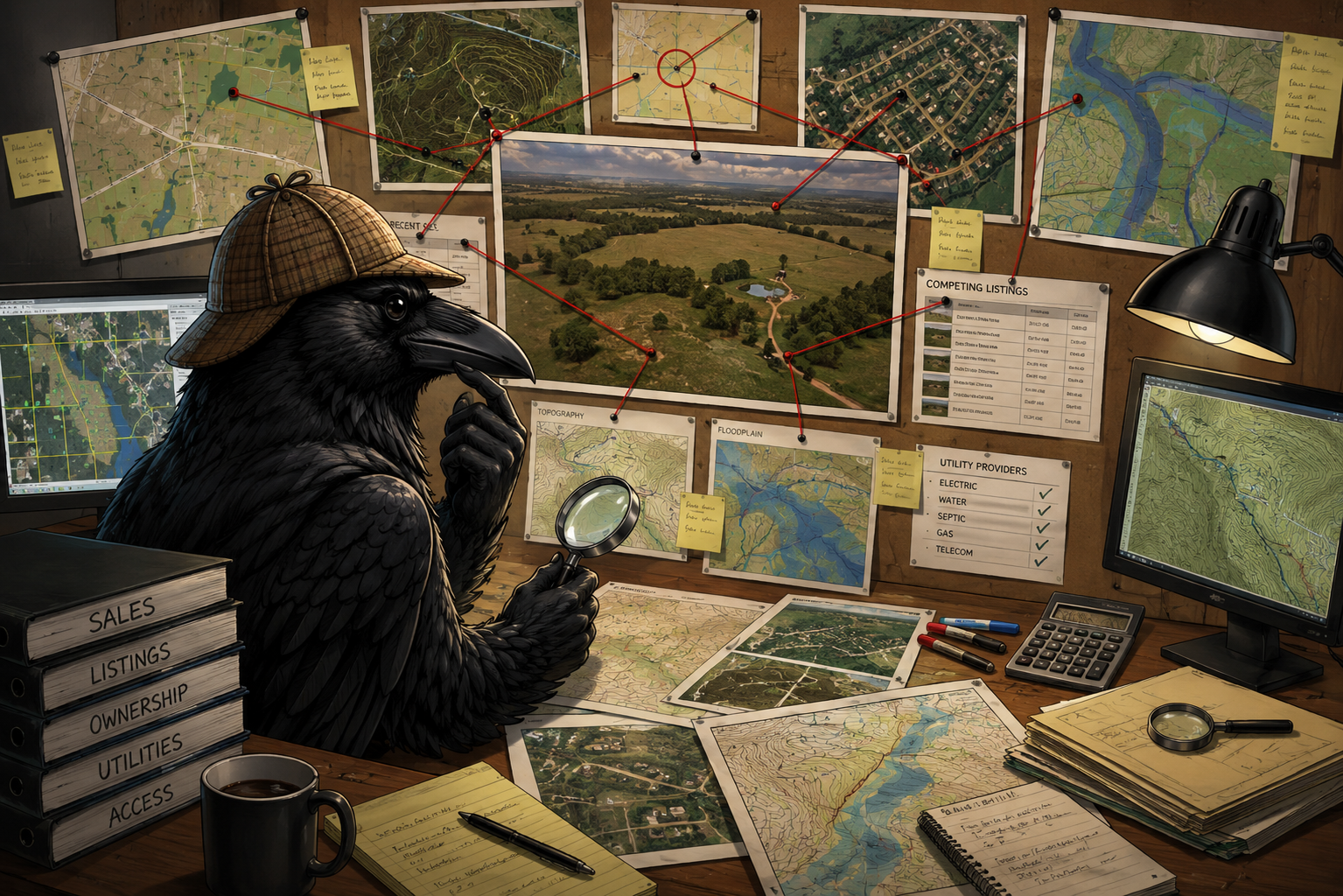
    So I did what I could from here. Pulled comparable sales, looked at competing listings, checked aerial imagery, topography, floodplain data, road access, utility providers, ownership history, and what’s been developing in the surrounding area. Put it together into a pretty good picture of both the property and the market around it.

    When I asked what surprised him most, he said it was how much data I’d been able to pull without ever setting foot on the ground.

    Here’s the thing about land. A lot of what drives value isn’t on the property. It’s around it. Who’s been buying nearby. What they’ve been paying. How much competing inventory is sitting on the market. Where the development pressure is coming from, if any. What infrastructure exists in the corridor.

    None of that requires walking the dirt. It requires understanding what’s happening in the market.

    Of course, site visits matter. There are things you won’t know until you’re there. If we get a little further along and he’s considering selling, I’ll get out there. And it could change things some if there are things I couldn’t see from hours away. A neighbor situation. A drainage problem. A view that the aerials don’t capture. A transmission line sitting just outside the frame. When talking about selling a million dollar property, you need to see it obviously.

    But the assumption that useful information only comes from physically visiting a property, that one’s not right. In a lot of cases, the most important questions get answered before anyone starts the truck.

    Which is part of why the Land Reality Check works for people who aren’t ready to sell. He is thinking about maybe selling, but not immediately. The report was still useful. He wanted to understand what he owned, what the market around it looked like, whether anything had changed.

    That’s a reasonable thing to want to know. And it’s easy to get.


    PPS- If you’re not ready for a Reality Check but enjoy reading about land, markets, and negotiation, you can sign up below and get these posts in your inbox.

    Register to Receive Posts Via Email!

    By submitting, I understand I will receive marketing emails and blog posts from Mike Browning Realty and/or associated companies. Unsubscribe at any time.