Tag: Negotiation

  • There’s Always More Than Enough

    There’s Always More Than Enough

    On two separate occasions, Jesus fed a multitude of people with what seemed like a tiny amount of food.

    The first time, He fed a crowd of 5,000 at Bethsaida with five loaves of bread and two fish.

    Later on, He fed 4,000 in the Decapolis with seven loaves and a few small fish.

    I don’t see it pointed out often, but in both cases the Bible says the numbers only counted the men — not the women and children. We don’t know how many that added up to, but it could easily have been two or three times the size we usually picture.

    So twice, He fed thousands of people with basically nothing. And this wasn’t a symbolic snack — they ate until they were full.

    And afterward, there was more left over than they started with.

    Pretty neat trick(s), you have to admit.

    But I think that part — the more left over afterward — doesn’t get the attention it deserves.

    It’s not just a miracle about food. It’s a picture of how Jesus works, and how it’s different from how we work.

    The apostles looked at what they had and thought there was no way it could be enough. But it was. More than enough.

    When we look at our sin — or at the world’s — it’s easy to think there’s no way provision has been made to cover it all. The idea that one man’s death and resurrection thousands of years ago could be enough for everyone seems impossible.

    But it is.

    It’s more than enough. There’s more left over when He’s done than when He started.

    Thankfully.

    There’s enough for all of us. And if we ever need more, it’s still available.

    You may feel like you’ve done too much, for too long, and strayed too far to be forgiven. Not true.

    Or you may think you need to clean yourself up first before coming to Jesus. Also not true. (And it’s a good thing, because without Him, you can’t.)

    Jesus offers forgiveness and salvation to whoever asks for it.

    And after you get it, there’s still more left over for the next guy. Hard to beat that deal.

    If you’re reading this, it’s not too late.

    Ask Jesus Christ to be your personal Lord and Savior today.

    PS – I’ve been saying recently it’s wise to keep a physical copy of the Bible.

    Reading the Bible won’t save you, only faith in Jesus does that. But it will help you understand God (and yourself), and can only lead you in the right direction.

    Reading or listening electronically is great—until the power or the connection goes out.

    Will that happen? Maybe not. Could it? Sure.

    It’s a risk you can remove easily and cheaply.

    Disclosure: As an Amazon Associate I earn from qualifying purchases. If you buy something—anything—after clicking that link, I may receive a small commission. It doesn’t change your price.
  • The Highballer

    The Highballer

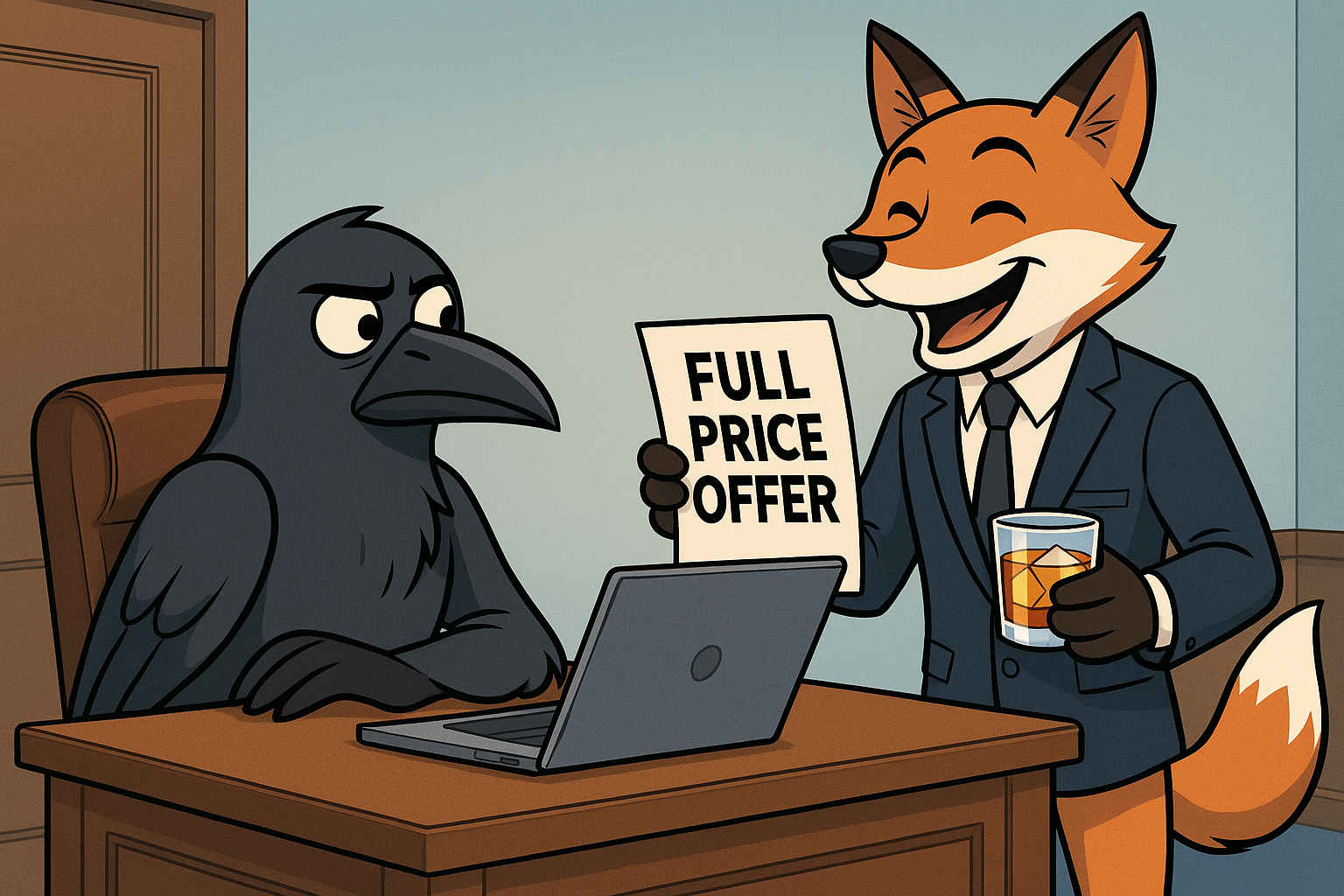
    I’m sure most people reading here have had the experience of going to a car lot. I kind of like the process, but I’m weird. And I negotiate for a living, so it’s kind of like practice.

    But for most people, it’s like pulling teeth.

    We all know how it goes. You find a car you like and take it for a test drive. Afterwards, the salesman asks this question:

    “If I can get you the right price, would you buy the car today?”

    Well, sure. Who wouldn’t for the “right price?”

    Next step you go in the office, and they ask you for a number. You try to give them a low number, but my experience is most people don’t go low enough. (a good rule of thumb is if you’re not at least a little embarrassed by your initial offer, it’s too high)

    Salesman takes the number, acts excited, and says he’s going to go get it signed off on by his boss.

    You know what happens next. They can’t do it. You start negotiating, and they use every trick they know to play off your neediness. Including dragging the process out for hours. So you feel like you’ve wasted time if you don’t make a deal.

    If they know what they are doing (and they do), you probably end up agreeing to something you regret.

    It’s not necessarily that you shouldn’t play the game, it’s that you need to know what the game is before playing.

    A similar thing happens in land sales, especially in areas that are ripe for development.

    It’s not every buyer, but certain buyers will be very aggressive in trying to get your property under contract. Even if they are pretty sure it won’t work at the number you’re asking.

    They say, “what will it take?” You give them a number, they write it up and you sign. And you start counting the days til you can spend the money.

    Even more than you expected!

    But don’t forget there are contingencies in those contracts. They can get out of the deal, and it doesn’t usually cost them much.

    So even if you’re asking too much, they go ahead and sign it up. Worry about that later.

    Come back to you a couple months down the line, use every trick they know to get the price down, get more time, whatever. They know you have a bunch of time invested, and it’ll feel wasted if you have to start over.

    So you give in more often than not.

    But you have to know what the game is, and what to expect.

    PS — Not every buyer works that way, and it doesn’t always mean they’re dishonest. To buy something, you’ve got to get it under contract first, and some are just more aggressive about getting there.

    The key is knowing what you’re getting into. If you’re not in the business, it’s hard to know who’s who—but you need to. Or have someone in your corner who does.

    Yes, you’ll pay on the back end—but the peace of mind is worth it.

    Is it ever a bad time to start a conversation with someone who knows the players and has the integrity to treat you right?

    Click below,


  • Sound Good?  Keep Your Head On a Swivel

    Sound Good? Keep Your Head On a Swivel

    There are certain phrases that just scream “look out” as soon as you hear them.

    Most guys know that if a woman says “we need to talk,” it’s not an invitation to a discussion. You’re about to be told something—most likely about how you’re being a jerk.

    If someone shows up talking about “fairness?” It’s a pretty safe bet they aren’t about to start listing ways they can improve things for you.

    And if someone tells you “it’s not about the money?” Trust me, it’s about the money.

    If you’re perceptive, you’ve noticed that all three of those things usually come right before a negotiation of some sort.

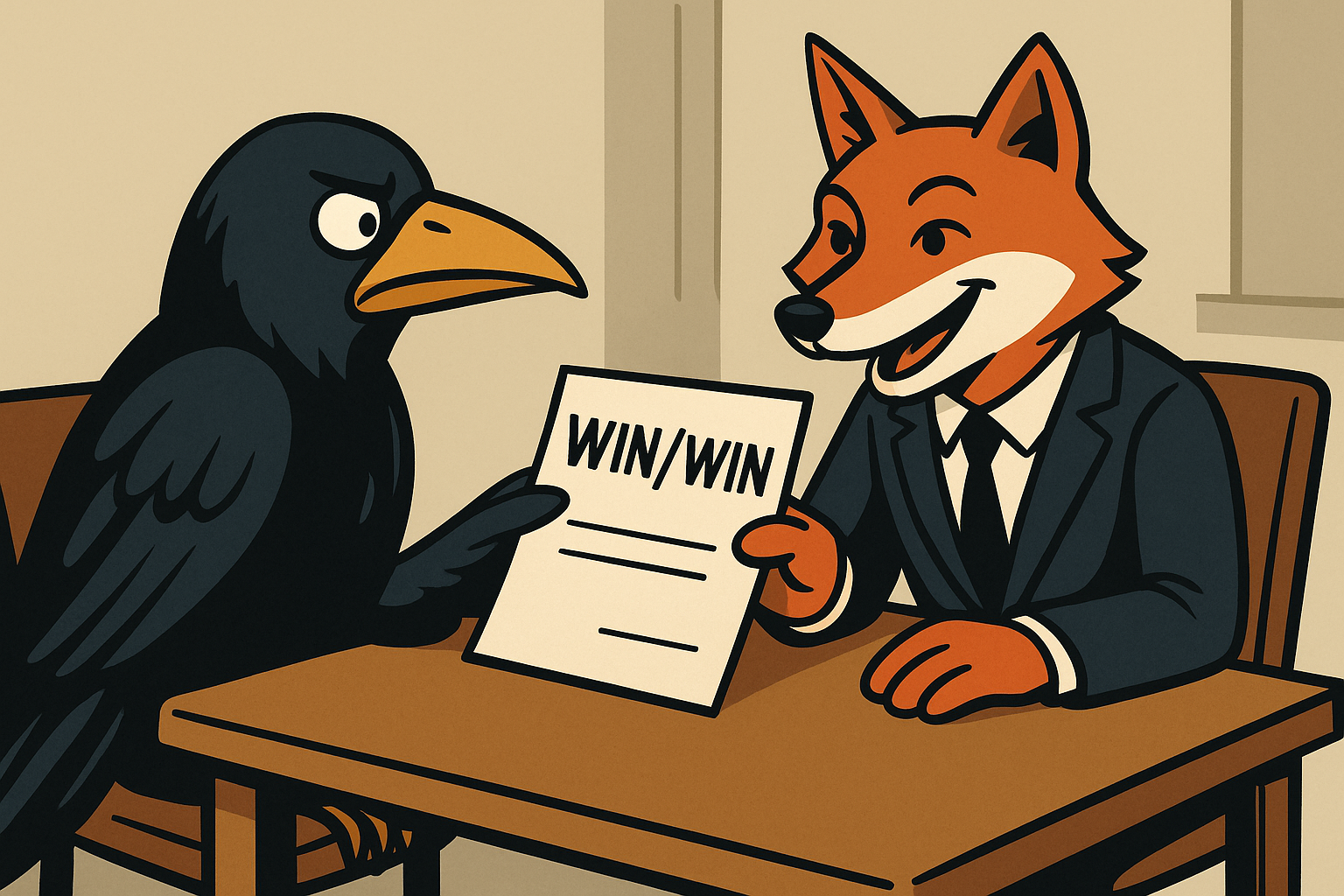
    There’s another phrase that should set off the same alarm bells: Win/Win.

    For most people, that phrase conjures visions of cooperation, collaboration, and conviviality. But win/win usually isn’t the real goal of those who preach it.

    For a trained negotiator, it’s a tactic—a way to use your good nature (and your neediness) to skin you alive.

    They say win/win, but they mean win/lose. And they don’t intend to be on the losing side.

    What win/win really means in practice is: “I’m about to demand concessions from you and give little or nothing in return.”

    And if you complain afterward? They’ll tell you the deal was fair.

    After all, any agreement you voluntarily sign is technically win/win by definition.

    Negotiation is voluntary. Everyone has the right to say “no.” The fact that you didn’t means you saw yourself as better off with the deal.

    So technically, you “won.” Just not as much as they did.

    So what do you do about it?

    First, lose your neediness. In almost every case, you don’t need to make any particular deal. You may want to, but the sun will come up tomorrow either way.

    Don’t let your need for approval push you into doing things you don’t want to. If your counterpart’s a pro, they might act offended—but that’s just theater. People actually respect those who won’t be pushed around. Once you drop the neediness, everything changes overnight.

    Finally, learn to live in your adversary’s world. You don’t have to agree with their position, but you have to understand it and be able to explain it as well as they can. When you can describe their perspective and get back a calm “That’s right,” (not “You’re right”)—you’re ready to win for real.

    PS — I talk a lot here about how negotiation touches every part of life. It’s one of the biggest leverage points you can improve. Two of the best books I know on the subject are Start With No by Jim Camp and Never Split the Difference by Chris Voss.

    I recommend both, but you can start with either. You can buy them at the link below.

    Disclosure: As an Amazon Associate I earn from qualifying purchases. If you buy something—anything—after clicking that link, I may receive a small commission. It doesn’t change your price.
  • Don’t Be an AI Lawyer

    Don’t Be an AI Lawyer

    Yesterday I wrote about how doing things the hard way is often the best way in the long run. Some things are necessarily complex if you do them right — and if they’re not done right, they don’t help you succeed.

    That doesn’t mean you should avoid an easier path if it truly gives you the same result. Or that you shouldn’t look for better ways to do things. It just means the goal should be to get it right first — then evolve from there.

    Like I said yesterday: hard is slow, but slow leads to smooth. Smooth leads to fast. And fast leads to easy.

    A little while after I wrote that post, I read something that said the same thing in fewer words:

    Efficiency is great, but effectiveness comes first.

    If you trade effectiveness for efficiency, you’re playing a losing game.

    There’s something new posted here most days. I try to stay ahead so I don’t have to write daily, but I write these myself. Maybe not the most efficient system — but I’ve found the more I write, the faster and better I get. And the more I write, the more ideas I have.

    If efficiency were the goal, I could hand the writing off to AI. But then you’d be reading “7 Ways to Prepare Your Property for Sale” and “Top 10 Home Staging Tips.” Clickbait.

    You wouldn’t be here if that’s what I did.

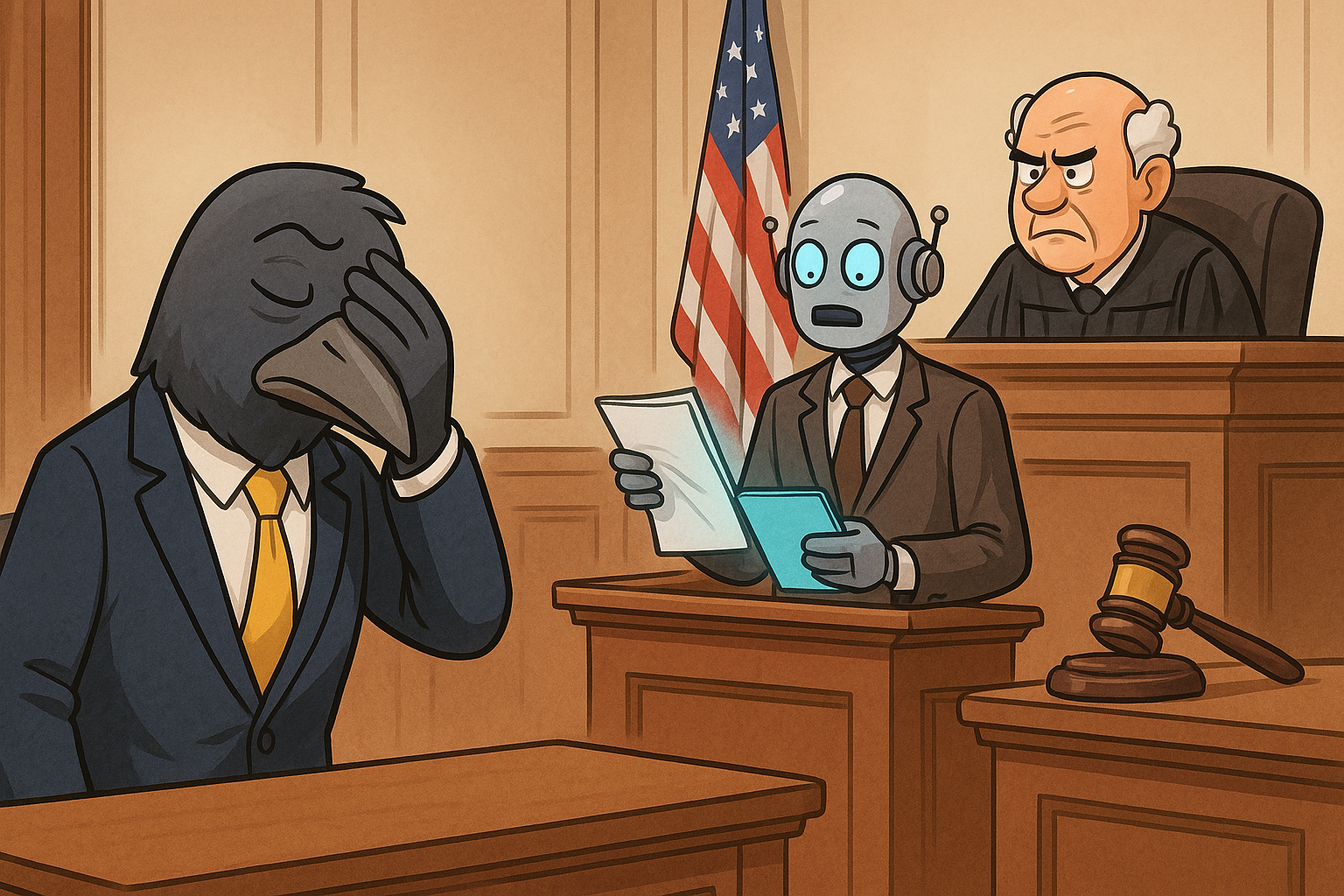
    That’s not to say AI tools can’t be useful. Proofreading, formatting, maybe. But you’d still better read the final product yourself and make sure it says what you meant.

    And don’t trust it with facts. It can make up some things that are… creative.

    And for sure don’t use it to write legal briefs. Ask the attorney who did that and ended up submitting fake case law.

    I don’t know what the future holds, but for now AI is fine for handling some basic tasks.

    Anything that requires accuracy or precision? You’d better check it yourself.

    Which means you’d better be an expert in whatever you’re using it for.

    And how do you get to be an expert? By doing the slow, hard work — at least at first.

    Efficiency is great. But not if it compromises effectiveness.

    PS – All this is really just a long-winded way of saying that while what I do might look easy, it isn’t. It’s taken decades of slow, hard work to get to this point.

    It’s not rocket science — but it’s not easy either.

    When it’s time to buy or sell land, is it crazy to say you might benefit from someone who’s done the hard work long enough that it’s second nature?

    Click below.


  • Hard Now, Easy Later

    Hard Now, Easy Later

    Everyone broker wants a fast way to find sellers.

    But the fast way and the way that actually works are often two different things.

    I run two direct mail programs geared toward generating listings — one for lot owners, and one for landowners.

    The lot program’s pretty straightforward. Every lot is different, but they’re not that different. I just pick the subdivisions, remove the ones with houses, and I’ve got a list with everything I need.

    Raw land is a different story. Getting an accurate list takes real work.

    You can pull a quick data list of owners for an area, sure. But here’s the problem: the way land is handled on the tax rolls, one owner might have multiple tracts — some touching, some miles apart.

    So yeah, you can get a list to mail to. It’s fast, it’s cheap.

    But it’s also obvious you don’t really know what those owners have. And to them, it looks like every other “We buy land” letter out there.

    I tried it.

    Response was terrible.

    Those lists are fine for “Just Listed” or “Just Sold” postcards. But for an actual letter asking if they’d like to list? It just doesn’t work.

    I talk a lot about how local knowledge matters. If you’re not dealing with someone who really knows the ropes, you’re asking for trouble.

    So how do you canvas an area and sound like you actually know it?

    Simple — you make sure you do.

    For me, that means manually creating the list while I build a custom aerial and drive the area.

    That way I know exactly how many acres someone owns in a given spot. If they own more than one tract, I know that too. If they’ve got property under different company names, I can see it right away.

    When they call, I can pull up my aerial and know exactly what they’re talking about — and odds are I’ve been out there recently myself.

    Yes, it’s slow. But it’s the only way to really succeed in a relationship business.

    And there’s a compounding effect. Once the work’s done, it doesn’t change much. You benefit for a long time.

    And people notice when someone actually puts in the effort.

    A younger, more technical client once looked at my system and said, “You could do X, Y, and Z and get the same results way faster.”

    Maybe.


    But to me it’s not about speed — it’s about actually knowing the ownerships and boundaries. Without that, you’re just another database user playing a numbers game.

    Maybe I’m missing out on something big.

    But I think the results speak for themselves.

    Besides, that same client still uses my brokerage almost exclusively. So I must be doing something right.

    Is it crazy to want to deal with someone who actually puts in the effort — instead of throwing around buzzwords to sound like it?

    You know it isn’t.

    I don’t deal in pressure, but is it ever a bad time to talk to an honest expert?

    Click below.


  • Guaranteed Returns?  Guaranteed Trouble.

    Guaranteed Returns? Guaranteed Trouble.

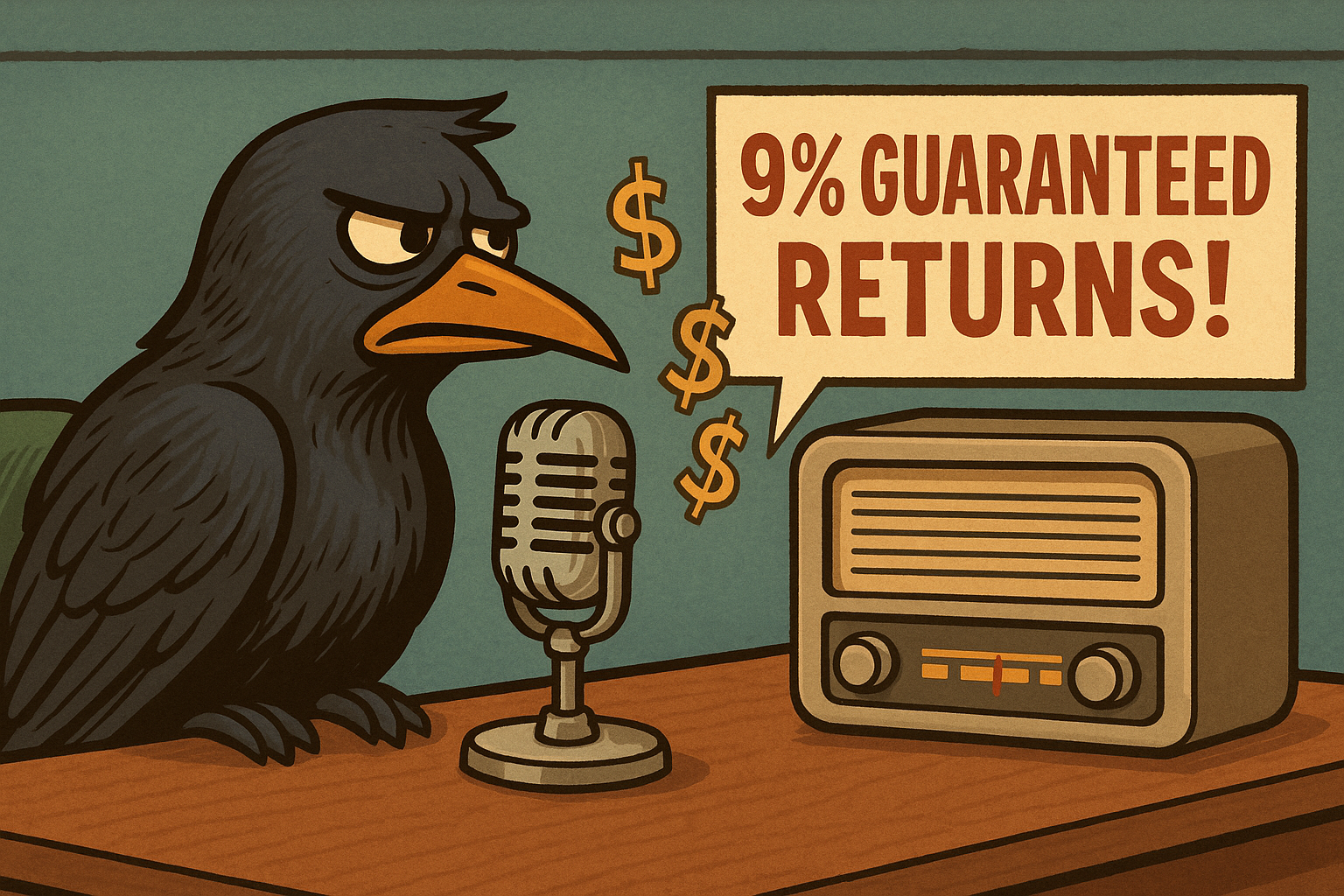
    A few years ago, there were radio ads from an investment firm promising a guaranteed 9% return.

    That always struck me as suspicious. There’s no such thing as guaranteed investment returns. Anyone promising that is either dishonest or incompetent.

    And if you really could generate a 9% return with no risk, there wouldn’t be any need to advertise. Money managers would be running each other over to get clients into it.

    Turns out, I was right. A few years later, the guys behind the scheme were sentenced to decades in prison.

    And in the small-world department — the lead investigator who arrested them was also my daughter’s soccer coach.

    But here’s the thing: if you listen to the radio today, you’ll still hear similar promises. I won’t name names (no need to get a call from anyone’s lawyer), but the fact remains:

    There’s no free lunch. Investments carry risk.

    That’s true whether it’s financial instruments, real estate, stocks, or bonds.

    Those “opportunities” were sold through mass media — where they reach the most people, and often the ones least prepared to know what they’re getting.

    The sad part is, if the victims had talked to an honest professional, they probably would’ve been steered clear of the whole thing.

    We’ve all heard the saying: If something sounds too good to be true, it probably is.

    But here’s something else to remember:

    You always have to do your due diligence, but if the deal comes looking for you instead of the other way around, you have to be especially careful.

    So what does that have to do with real estate?

    You know I’m biased, but if it’s done properly, I think there’s much more opportunity in real estate investing than in retail stocks or mutual funds.

    If it’s done properly.

    If you’re not experienced, it’s easy to get in over your head.

    Like I said, I’m biased — but if you’re not using the services of an experienced and honest broker (hello), you’re setting yourself up for trouble.

    Is it free? No.

    But it is a bargain.

    If you’re looking to invest/buy or sell, is it crazy to want to have skilled people on your side?

    Didn’t think so.

    Click below.


  • You Don’t Need An Injunction To Pray At Home

    You Don’t Need An Injunction To Pray At Home

    I’ve been thinking about how much energy we put into the public fights over faith—school prayer, the Ten Commandments on the wall, that sort of thing.

    They matter. But sometimes I wonder if we’ve got the order wrong.

    Jesus didn’t really talk about “fixing the system.”

    He talked about hearts. He told His followers to believe in Him, repent, forgive, pray, and trust God.

    And He warned against making a show of it.

    “Go into your room and close the door,” He said, “and pray to your Father in secret. And your Father who sees in secret will reward you.”

    That doesn’t mean there’s never a place to speak up publicly. But it does mean that the foundation is laid somewhere quieter.

    I’m the first person that needs to hear this.

    I pray most days, but we don’t always pray as a family before meals. We should, it’s not hard.

    We just don’t.

    No law is stopping us. No court ruling can make us start. It’s simply a matter of doing it.

    That’s what struck me about the recent headlines here in Texas. We’ve made it easier for students to pray in schools. We’ve passed laws requiring the Ten Commandments to be displayed.

    Those are good things in my opinion, but they don’t mean much if most of us aren’t doing the simplest things at home.

    I can’t help thinking that if more of us simply did those things—prayed at home, opened the Bible with our kids, treated the people in front of us with the grace Christ shows us—some of the bigger battles might take care of themselves.

    We probably wouldn’t be able to explain how it happened.

    And we wouldn’t get to take the credit.

    But I believe we’d see change.

    The good news is we don’t have to wait for permission to begin. We can start today, quietly.

    The cross and the empty tomb have already settled the ultimate question.

    What’s left is to choose our side and then be faithful with whatever God puts in front of us.

    And maybe it’s the work that moves the bigger things too.

    It’s important of course, but until we are doing the small things we can already do ourselves, maybe we should worry less about what everyone else can or can’t, will or won’t do.

    One easy thing you can do is make sure you and your loved ones all have physical copies of the Bible.

    Disclosure: As an Amazon Associate I earn from qualifying purchases. That means if you buy something—anything—after clicking that link, I may receive a small commission. It doesn’t change your price.

  • Respond, Don’t React

    Respond, Don’t React

    I once had a client who went under contract with a developer on what was clearly a longshot deal. The payout would’ve been huge — if it closed.

    Before signing, I told him several times: this is a 50/50 shot at best.

    Don’t start spending the money in your head. Don’t even plan on it closing. If it happens, great — but don’t count on it.

    At first, he took that to heart. But as the process dragged on, he started asking me if maybe it might even close early.

    I warned him again, but he couldn’t help it. He was already counting chickens.

    Then came the dreaded call from the buyer: “The city killed my deal.”

    My client was furious. And instead of just taking the loss in stride, he reacted. He got so angry that the buyer wanted nothing more to do with the property — or with us.

    He slammed the door on what could have been a future opportunity, all because his emotions got the better of him.

    Just another example of an important negotiating principle: the danger usually isn’t what the other party does. It’s how you react and whether you control yourself correctly.

    Real estate deals can be emotional — especially when the numbers are big or the stakes are personal.

    But reacting in the heat of the moment almost always makes things worse. Responding, on the other hand, keeps you in control.

    When someone doesn’t do what you think they should, remember: they’re probably doing exactly what they said they would. It’s in the contract.

    Option periods, title contingencies, financing clauses — all those timelines and outs are there for a reason. Buyers don’t sign contracts because they don’t want to buy. They sign them because they want the right to find out if they can.

    If they discover something that makes the deal fall apart, you’ve just learned something valuable about your property — at no cost to you.

    If they ask for more time or a price change, don’t take it personally. That’s not an insult. It’s a negotiation. You can say yes or no. Either way, you’re still in control.

    The moment you start taking things personally, you lose perspective — and sometimes, the deal.

    The best negotiators don’t stay calm because they’re detached. They stay calm because they know the rules of the game. They read the contract. They act in their own best interest, and they expect others to do the same.

    And when you understand that, it gets a whole lot easier to respond — not react.

    ****PS – Learning to control yourself is one of the best ways to improve your negotiating outcomes. It’s not about intimidation or chicanery, it’s about following your system. Principles above tactics. The best negotiating book I know of is Jim Camp’s Start With No. I read it once a year, when you understand the system it feels like you’re playing another game entirely.

    Unless your counterpart is using the system too, in which case things get exponentially easier for your both.

    (If that wasn’t the case, would I be telling you about it?)

    Is there any part of your life that wouldn’t improve with better negotiating skills?

    Disclosure: As an Amazon Associate I earn from qualifying purchases. If you buy something—anything—after clicking that link, I may receive a small commission. It doesn’t change your price.
  • In the Path of Growth? More Like Right in the Middle of It.

    In the Path of Growth? More Like Right in the Middle of It.

    Is it crazy to want to invest where growth is already in full swing?

    Check out this ± 25 acres at or near the intersection of Hubbard Road and the future Outer Loop (exact location TBD), with 425 feet of road frontage.

    Collin County – Josephine ETJ

    Utilities nearby

    Flat to rolling terrain, no flood

    This tract is shown on the land-use plan as future residential, but keep in mind: the Outer Loop corridor could change things. And this part of the county? It’s not “on the rise”—it’s already in motion.

    Obviously the city will have major input into the future use. But if this becomes a major corridor you don’t have to squint to see this would be a great spot for destination commercial, a car dealership, or multifamily.

    By the numbers:

    • 2028 population within 5 miles? Over 20,000
    • Average household income nearby? North of $117K
    • Location? On the radar and in the way of progress

    Whether you’re land-banking, building, or just smart enough to know where North Texas growth is headed, this one deserves a closer look.

    You can download the brochure at the link below (please note Loop location shown is not set in stone, it could shift several hundred feet to the west.

    ***All information provided is believed to be accurate but is not guaranteed. Buyers and lessees should conduct their own due diligence and verify all facts, measurements, zoning, and other details to their own satisfaction before making any purchase or lease decisions.***

  • It Works Both Ways

    It Works Both Ways

    Yesterday I talked about the importance of avoiding problem customers:

    But smart people know it works both ways. Good customers demand — and deserve — the best.

    If you’ve been reading here for a while, you know I refer often to personal and business development books. If you’ve paid attention, you’ve probably noticed they all focus on principles, not tactics.

    In other words, they aim to shape the kind of person you become. Someone people want to deal with for the long haul. Not someone relying on short-term tricks that may work once, but leave a bad taste.

    Think about buying a car.

    If you hesitate on the deal, the salesman often switches into closing mode. Suddenly the car’s “about to be sold.” Or the higher payment “pays for itself” in lower maintenance.

    It may get the sale. But it also makes you not want to come back.

    And the higher the level of the client, the worse those tactics work.

    A close that might move an average buyer just gets you laughed out of the room by sophisticated operators.

    Those clients know what they’re doing. Most of the time, better than you do. (And even if not, they think they know better.)

    Push them, and you won’t change their mind. You’ll just get crossed off their list.

    That’s not to say everyone needs to be handled the same way.

    If my client is someone who inherited a piece of land and doesn’t know much about it, as their broker I’m the expert. I don’t pressure them, but I might need to guide them a little more.

    But if I’m working with a publicly traded homebuilder or a regional developer who’s been through countless complex deals, I’m not the expert. I’m more like a vendor. My job is to make the process as smooth as possible — not to tell them how to run their business.

    It’s one thing to sell cars to the public. It’s another to sell trucks to a construction company.

    That buyer already knows exactly what they need.

    Most of my buyer clients are investors or developers. They know their business. They also know that finding the right deal can take time. I’ve often mentioned how slow that process can be on the front end.

    And just as often, during that slow part, the agent on the other side suggests I try to “apply a little pressure.” Or say something that’s not quite true to move things along.

    No thanks.

    Over time, I’ve realized there’s probably a reason I have the clients I do — and other agents have the ones they have.

    Good customers deserve good representation.

    That’s the standard I want to live up to.

    Interested in getting on the right side of the Principles Vs. Concepts divide?

    Disclosure: As an Amazon Associate I earn from qualifying purchases. That means if you buy something—anything—after clicking that link, I may receive a small commission. It doesn’t change your price.