Tag: Lot Sales

  • Don’t Put on a Show

    Don’t Put on a Show

    I’ve written before about how people make decisions emotionally, then come up with “reasons” afterward.

    Most of us understand this—about “other people.”

    When the stakes feel big, we drag out the charade. Take buying a car.

    Most buyers know pretty early which one they want.

    But they’ll still go test-drive three other models, as if the choice is still up in the air. It makes them feel rational and thorough, even though the decision was made in the first hour.

    But it wastes the time of those salesmen, which isn’t right. Not to mention most people don’t like dealing with car salesmen, so why subject yourself to more of that than you need to?

    Hiring is the same.

    My daughter had a second interview lined up this week. A few hours before, the company called to say they’d decided to hire someone else.

    Not fun to hear, but it saved her a trip and a pointless conversation.

    A lot of companies would have gone ahead with the meeting just to look like they were “following procedure.” This company didn’t, and I respect them for it.

    As it turned out, it worked out better for her anyway. Another company called a few minutes later and offered her a better job.

    Real estate is no different.

    A seller will line up three or four brokers, invite us out, and have us give our pitch. But most of the time, the seller already knows who they’re going to hire.

    The presentations just make them feel like they’re being diligent.

    That’s understandable, although selling land isn’t the same as selling a house.

    The rules of the game are different — from pricing and access, to how you market it, to how you negotiate.

    You want someone who plays that game every day, not just someone who’s good at selling houses. Although you may just have to use her anyway. So just do it.

    I try to get to the truth early.

    By asking the right questions, I can usually tell if I’m the Favorite—the one they really want to hire—or the Fool—the one they’re just talking to because they think they should.

    If I’m the Fool, I stop chasing.

    That saves me time and spares them the awkward “we went another direction” call later.

    Sounds callous, but it helps everyone.

    It cuts down on the wasted meetings and long sales pitches.

    It takes some of the stress out of the process for the seller too. They don’t have to pretend to be undecided just to feel like they’ve done their homework.

    Is it perfect? No. Can you ever “win” a listing if they were set on someone else? Sometimes.

    But the time saved, the reduced angst on both sides—that’s worth a lot.

    The truth is, most of us decide faster than we admit.

    There’s no shame in that.

    The trick is to recognize it and move forward, instead of staging a show for appearances.

  • Don’t Confuse Empathy with Sympathy

    Don’t Confuse Empathy with Sympathy

    Most people use the words “empathy” and “sympathy” as if they mean the same thing. They don’t. And getting them mixed up can cost you in a negotiation.

    In Never Split the Difference, Chris Voss, a former FBI hostage negotiator, talks about a concept called tactical empathy.

    It’s not about being nice. It’s about showing the other side you truly understand what’s going on in their head.

    Jim Camp taught the same principle in a different way: before you have any right to your own opinion, you have to earn it by proving you understand the other person’s world.

    Empathy is recognizing and acknowledging someone else’s feelings or point of view. You don’t have to agree with them, and you don’t have to feel the same emotion yourself.

    When you say, “It sounds like you’re frustrated with how long this process has taken,” you’re showing empathy. You’ve named what they’re feeling. That lowers their guard.

    The great part is even if you don’t get it right initially it doesn’t hurt anything. They will continue to explain and give you more insight.

    Sympathy is feeling sorry for someone’s situation. It’s your own emotional reaction to what they’re going through. Saying, “I’m really sorry this is happening to you,” is sympathy. It can be kind in personal life, but in a business discussion it often shifts the focus from their issue to your feelings about it.

    Empathy makes things about the other person. Sympathy makes it about you (while acting like it’s about them).

    In negotiation—whether you’re selling a piece of land, buying a home, or haggling over repairs—empathy opens doors, sympathy closes them.

    Empathy tells the other side, “I get you. I hear you.”

    That makes them feel safe enough to keep talking, which often leads them to reveal their real concerns. That’s when you can find a solution that works.

    Voss says a good sign you’re really in your counterpart’s world is when they respond to your summary of their position with, “That’s right.” It means they feel heard and understood.

    Contrast that with when someone says, “You’re right.” That often means they’re trying to brush you off, end the conversation, or placate you without actually being convinced.

    “That’s right” is a green light. “You’re right” is usually a red light.

    Your job early in a negotiation is not to push your proposal but to draw out their thinking, then summarize it so accurately that they say, “That’s right.” Until you get there, they’re still guarding their position. When they finally say it, they lower their guard and you can start exploring solutions together.

    For example, when a landowner says, “I don’t want to sell for less than my neighbor got,” you might respond, “It sounds like you’re worried you’ll leave money on the table.” If they reply, “That’s right,” you’ve nailed their core concern. From there, you can talk about the real differences between the properties. If they just say, “You’re right,” they probably still feel misunderstood and you’re not ready to move on.

    Empathy isn’t about giving in or feeling sorry for someone. It’s about understanding them well enough that they’ll work with you.

    That’s more valuable than any clever sales pitch. And it’s a skill anyone can practice: listen more, talk less, and aim for the moment when they nod and say, “That’s right.”

    ***Want to dig deeper into the skills that help you earn the “That’s right” moment?

    I highly recommend reading Never Split the Difference by Chris Voss.


    (Yes, if you use this link I earn a small commission, but it doesn’t change your price.)

  • The Biggest Wrecks Of All

    The Biggest Wrecks Of All

    Whenever you walk into a new church (or even one you’ve been to several times), it’s easy to feel out of place.

    Everybody looks put together. Families sitting in neat rows, kids dressed nice, smiles all around. You know in your head they aren’t perfect—but it sure feels like they are.

    And you feel like you don’t fit in. Like everyone else can see it too.

    Here’s the truth: none of us really feel like we fit in.

    We’re all sinners. We struggle to understand. And even when we do understand, we forget it the moment hard times hit.

    But here’s the good news: that’s not just you. That’s everyone. No matter how good a front they put on. And it’s by design.

    Even the apostles—the ones who walked side by side with Jesus—were wrecks too.

    They didn’t grasp who He was, even when He told them plainly. Peter could declare, “You are the Christ,” and then turn around and get rebuked as Satan because he didn’t want Jesus talking about the cross.

    They argued about who was the greatest. More than once.

    They saw Him feed thousands of people with almost nothing—twice—and still thought He was scolding them about bread when He warned about the leaven of the Pharisees.

    When the pressure was on, they folded. Peter denied Him. Most of them ran away when He was arrested. Thomas wouldn’t believe until he touched the wounds.

    Even after the resurrection, they hid behind locked doors, afraid of what might happen next. And later, after Pentecost, Peter still had to be corrected by Paul for pulling back from Gentile believers.

    In other words—they never had it all together here.

    But here’s what they did do: once they saw the truth, they never let go. They still stumbled, still sinned, still misunderstood—but they knew Jesus was Lord, and they would not deny Him. Most of them died because of it.

    Jesus used them, imperfect as they were, and He finished His work in them. Not on this earth, but in the end.

    It’s the same for us. We don’t “arrive” in this life. We don’t ever believe perfectly, understand completely, or apply it flawlessly. That’s by design, even if we don’t get it.

    Look at it this way: if the guys who were with Jesus almost all the time for 3 years didn’t get it, do you really think you’re going to be able to understand from where you are? I mean, we understand intellectually from reading the Bible, but we can’t really know until it’s written on our hearts. In due time.

    So the next time you feel out of place in a church pew, remember: the apostles didn’t belong either, at least not by appearances. But Jesus made them His. And He’ll do the same with you.

    PS – One of the best things we can all do is to actually spend time in the Word.

    That’s why I think it’s a good idea to own a physical copy of the Bible (or several). Reading online or on your phone is great—but it only works as long as the power’s on and the connection’s there.

    Is it likely to go away? Maybe not. Is it possible? Absolutely.

    Either way, there’s no downside to having a hard copy of the most important book ever written.

    Disclosure: As an Amazon Associate I earn from qualifying purchases. That means if you buy something—anything—after clicking that link, I may receive a small commission. It doesn’t change your price.

  • Still No End In Sight?

    Still No End In Sight?

    (Cue the standard disclaimer: I’m not a CPA or an attorney, I’m a real estate broker. None of this is financial or legal advice—it’s for informational and illustrative purposes only. If you have questions in those areas, talk to the right professional.)

    (I also don’t know the future. So even if I think I’m right, or even if you think I’m right, no guarantees)

    (Got it? OK.)

    When I first started in this business, we were just coming out of the S&L crisis. Deregulation had fueled a bubble in land prices, it burst, and many financial institutions failed.

    Lots of people went to jail. They are all out now, some of them are back in the land business. Based on my dealings with some of them, they didn’t all magically become honest in prison.

    The government stepped in to sell off all the foreclosed real estate. At first, buyers were gun-shy. But the ones who moved fast picked up incredible deals—they just had to hold while things normalized.

    Before long, values came roaring back. That’s when the doubts started. Many believed the upside was gone and that prices would turn south.

    Sound familiar?

    I remember a quarterly newsletter from an investment firm at the time. Investors were nervous. So the headline was simple and bold:

    A Boom That Won’t Go Away.

    The point was clear: what people thought was the ceiling was really the new floor. Population growth meant values had room to keep climbing.

    He was right. In the 25 years since, every deal I thought was overpriced turned out cheap in hindsight. My only mistake was doing too much due diligence.

    We’re in a similar spot today. Values have risen for so long that people wonder if there’s any toothpaste left in the tube. Nobody can predict the future—but the DFW area is still projected to add millions of people over the next 10–15 years.

    Some even say it could be the biggest metro in the U.S. by 2100.

    I’ll be about 130 then, can’t wait to see if they are right!

    Does any of this guarantee anything? No.

    But as they say in the stock market, the trend is your friend. And until the trend changes, the party (probably) isn’t over.

  • Exploding Growth, Prime Location

    Exploding Growth, Prime Location

    On Wednesday I highlighted a +/-40 acre tract southeast of Sherman. That property had unique terrain and privacy, but I made it clear it wasn’t for everyone.

    Truth is, no property is for everyone. But here’s one that checks the boxes for investors and developers alike.

    Just east of Howe, this 57.14 acres offers long road frontage, easy access, and the kind of location that makes serious buyers take notice. Priced at $50,000 per acre, it’s rare to find a tract this size in the direct path of such rapid growth.

    The draw here isn’t just the land — it’s the momentum:

    • Minutes from the new TI and Globitech plants
    • Tom Bean ISD
    • Surrounded by an area seeing record growth and investment

    With strong demographics in every direction and easy subdivision potential, this property works whether you’re looking for near-term development or a smart long-term hold.

    Opportunities like this don’t wait.

  • NFL Superagents Can Skip This Post

    NFL Superagents Can Skip This Post

    Yesterday I posted about the ±40 acres in Grayson County I have listed (and am part owner of).

    It’s a great tract for a rural showplace, although it’s not for everyone. Super private, so I shared it with a number of sports agents. It could be perfect for someone who wants to be away, but within an hour or so of the airport.

    That’s not what I want to talk about today, though. If you follow sports, you know that a lot of what you read isn’t about the game itself. It’s about contracts, money, and the drama surrounding them.

    The agents I spoke with are on the frontlines of that, negotiating high-dollar deals with billion-dollar owners. It sounds intense, but for them it’s just the job. Players may get nervous, but the agents and teams do this all the time.

    Most of us will never negotiate at that level. But negotiation is everywhere.

    Your salary.

    Working conditions.

    What you pay for a car.

    Which vaccines you take (or don’t).

    Even where to eat dinner or when your kid goes to bed.

    Improve your skills here, and you improve just about everything in your life.

    The problem is, most people see negotiation as either intimidation (bad) or “win-win” compromise that gets you run over by the pros (worse).

    This is why people run from negotiation, sales, and salespeople. Even though it’s where most of the money is.

    If there were a better way, would you still run from it?

    I first read Start With No by Jim Camp almost 10 years ago. It changed everything for me, and I still reread it at least once a year.

    In just a few hours you’ll learn:

    • The most important thing to control in a negotiation (hint: it’s not your opponent).
    • How to make it harder for you to be manipulated.
    • The real factors that actually drive a negotiation.
    • Why “yes” is to be feared and avoided, and “no” is your friend — especially at the beginning.

    Many of the concepts apply to life generally, not just negotiation. Outside of the Bible, I can’t think of another book that has helped me more.

    And the Kindle version is less than twenty bucks right now.

    (Disclosure: As an Amazon Associate I earn from qualifying purchases. That means if you buy something — anything — after clicking that link, I may receive a small commission. It doesn’t change your price.)

  • Sticks and Stones

    Sticks and Stones

    They can’t make you accept, but they are giving you insight.

    You’ve owned it, maybe cared for it, maybe just paid the taxes every year (hopefully ag taxes).

    When you decide to sell, you’ve got a number in mind—probably based at least partly on what a broker (hopefully me) has told you about comparable sales and nearby activity.

    Then the first offer comes in, and it feels like a slap in the face.

    Most sellers take it personal. I get it. But an offer isn’t a judgment.

    It’s just the number that works for that buyer.

    Every buyer looks at the same piece of ground through a different lens. On one extreme are the people who send obvious form letters saying they want to buy your land. They’re playing a numbers game and don’t need many hits to make money.

    I don’t recommend dealing with those folks, but don’t let them ruin your day either.

    A homebuilder runs numbers on what they can sell houses for. A rancher may only be thinking about grazing capacity. An investor is looking five years down the road and trying to pencil out a return.

    They’re all looking at the same dirt, but with different requirements, timing, and risk tolerances. That’s why offers can be all over the place.

    Another thing that throws people is timing. Some buyers can close in 30 days because they already know what they’re doing. Others need 90 or 120 days (or more) because they’ve got to get financing or city approvals.

    Asking for extra time doesn’t always mean they’re flaky.

    Sometimes it does, but other times it just means they’re being realistic. Sorting out which is which is part of the process.

    This is where having someone on your side who’s plugged in helps. Word gets around pretty quick in my circles if someone isn’t worth messing with.

    The first number a buyer throws out is rarely the final one. It’s a starting point. They’re showing you what they see, and you have the chance to respond.

    That’s what negotiation is.

    Sometimes you find middle ground, sometimes you don’t. But if you shut it down just because the number feels insulting, you might miss the one buyer who could actually stretch to meet your price.

    I’ve seen it happen more than once. A seller laughs off an early offer, only to come back to something similar months later after realizing the market isn’t lining up with their expectations. That doesn’t mean the land is “worth less.” It means the pool of buyers who can make it work at the higher number is smaller, and it takes longer to find them.

    The goal isn’t to win the first round—it’s to get the right deal closed.

    Land deals usually aren’t about fast punches and fireworks. They’re about patience, persistence, and finding the match between what you’ve got and what a buyer can realistically do with it.

    So when that first offer comes in and your instinct is to get mad, don’t. It’s just part of the process.

    Offers give us information, even when they aren’t acceptable.

    Real estate deals require trust on both sides, and if the buyer sees you as a flake it can make them reluctant.

    Remember—you’re in control until you sign a contract.

    The best clients stay level headed, but that doesn’t mean giving in immediately. It means being deliberate and trying to take the emotion out of it. Easier said than done sometimes, but you have to try.

    Is it a bad idea to want to work with someone like minded?


  • Does it Make Sense to Wait Forever?

    Does it Make Sense to Wait Forever?

    One of my long-time clients has spent years buying, selling, and developing small retail centers. You’ve seen the type—five or six tenants in a strip center, maybe a Domino’s, a nail salon, a tax office.

    I’ve sold him several sites for these projects, plus at least one that was already developed. From my side, the developed project was better—since my commission is a percentage of the sales price. So I always made sure to send him anything that looked promising.

    On one of the first deals I showed him, the rental income looked strong. Even better, every lease had automatic renewals with scheduled rent increases. I told him it looked good now, and even better in the future.

    That’s when he gave me advice that was so obvious, I didn’t see it until he said it:

    Those future numbers in the lease? They aren’t guaranteed. They’re the ceiling, not the floor.

    If a tenant isn’t doing well, when renewal comes around, they’ll ask for a cut. If things are going great, they’ll still ask for a cut. Your choices: reduce the rent or watch them leave. And then your “future income” goes to zero.

    That lesson carries over to where we are in land sales today.

    (Cue the standard disclaimer: I’m not a CPA or an attorney, I’m a real estate broker. None of this is financial or legal advice—it’s for informational and illustrative purposes only. If you have questions in those areas, talk to the right professional.)

    (Got it? Ok.)

    A lot of buyers are sitting on the sidelines, waiting for interest rates to drop further. Yes, there’s been some movement lately, but not as much as people hoped. More cuts may come later—or not.

    Here’s the key: real estate loans can usually be refinanced without penalty. Your interest rate won’t go higher than whatever your loan agreement says. But if rates go lower, you can refinance and take advantage of it.

    In other words, locking something in now gives you the upper limit on your loan cost. If rates fall, you can adjust later. If they don’t, at least you own the property and beat the folks still waiting.

    Is there risk? Of course. But sitting still has its own risks too.

    Is it ever a bad time to look at something from all the angles?

    When you’re ready, click below


    Just a glutton for punishment?
    Sign up now to get more articles like this in your email.
    Sign Up Now

  • Just Do What God Puts In Front of You

    Just Do What God Puts In Front of You

    Naaman was a Syrian general who had leprosy. He went to Elisha’s house expecting a grand miracle, but Elisha didn’t even come outside. He just sent a messenger telling Naaman to wash seven times in the Jordan River.

    Naaman was insulted. The Jordan was muddy, and he thought the command was beneath him. But his servants reasoned with him: “If the prophet had asked you to do something hard, you would have done it. Why not this simple thing?”

    Naaman humbled himself, did as he was told, and was healed.

    His pride almost kept him from it.

    There’s a bit of Naaman in all of us.

    We want to do good, solve problems, make an impact. But instead of doing the small things God puts in our path, we chase something big — something that might get us recognition.

    See a hungry family on the street? You could hand them a meal.

    Or you could decide to start a food pantry.

    One looks “bigger,” but which one do you think God cares about in that moment?

    We can’t see the whole picture or connect all of God’s dots. The one simple thing we dismiss may matter more than the results of our big plans.

    A kind word, given at just the right time, might keep someone from a disastrous choice. You may never know all the future effects as they extend past your life here.

    But we don’t need to see the future to do the right thing now.

    The short-term results might not look like much, and if something happens far in the future it won’t be tied back to what you did today.

    So nobody celebrates.

    Maybe that’s the real problem — we want the pat on the back more than we want to obey God.

    But God celebrates when we obey.

    Remember the widow who put two pennies in the Temple box?

    Jesus said she gave more than all the people giving large amounts for show.

    The big job — saving the world — is finished. What God asks is smaller: just do what He puts in front of you. If we all did that, the world would look very different.

    Naaman found healing in obedience. We might also.


    PS – Last week I talked about how it might be a good idea to get a physical copy (or copies) of the Bible if you don’t already have one. Reading electronically is great, but there’s no guarantee it will always be available. It can be turned off with the flick of a switch.

    Is it likely? Who knows. Is it possible? Certainly.

    Is there any downside to having a hard copy of the most important book ever written?

    Disclosure: As an Amazon Associate I earn from qualifying purchases. That means if you buy something — anything — after clicking that link, I may receive a small commission. It doesn’t change your price.

  • Why Do They Do It That Way?

    Why Do They Do It That Way?

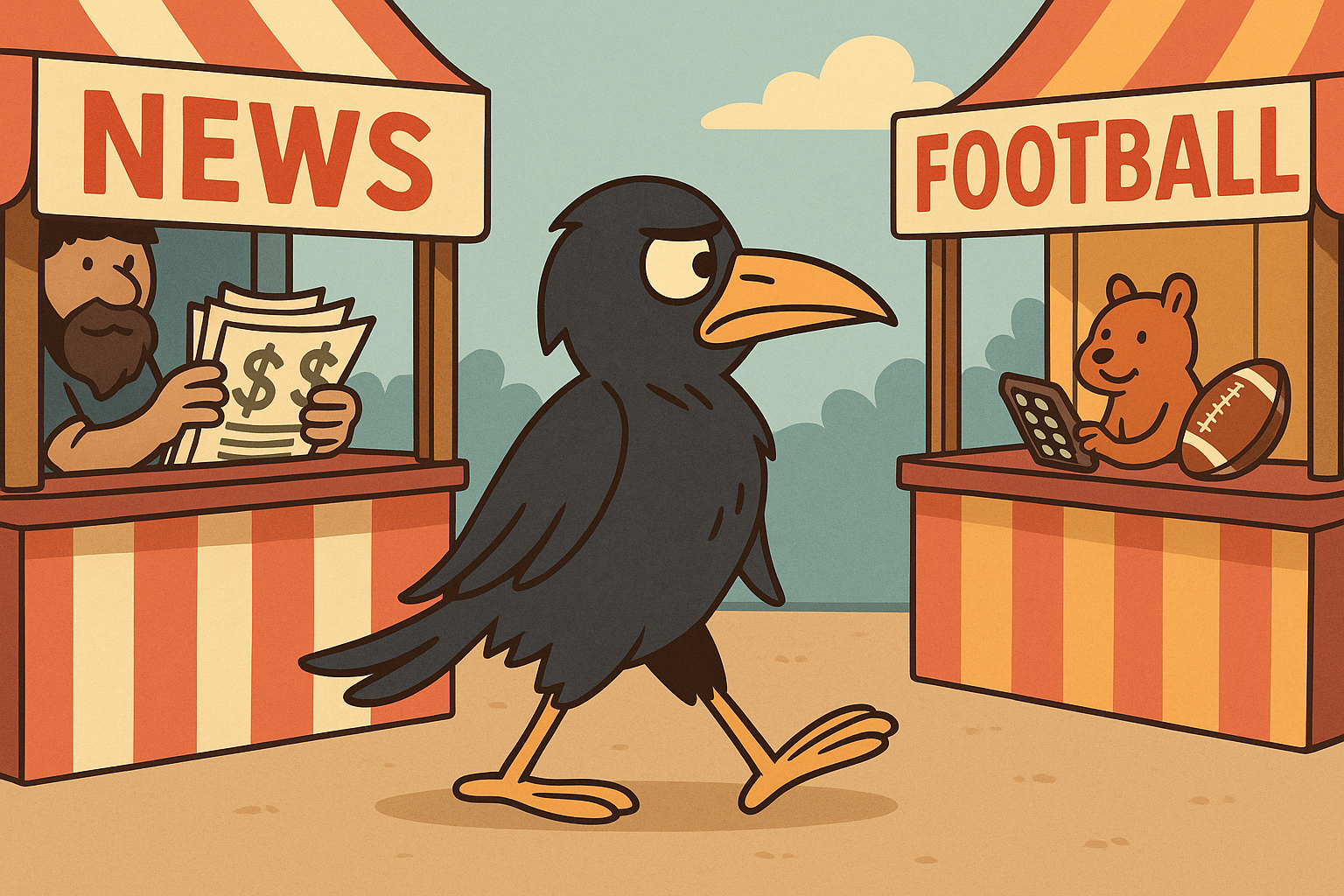
    Yesterday I was talking about how newspapers like the Dallas Morning News aren’t really in the news business.

    They’re in the click/engagement business. The news content is just bait to draw you in.

    Truth is, papers were never really in the news business. Before the internet, they were in the business of selling obituaries and advertising. That revenue dwarfed what they got from subscriptions or single-copy sales.

    Instead of calling it clickbait (since the term hadn’t been invented), you might have called it a loss leader back then.

    Although don’t tell that to the journalists who were saving the world.

    (Fine job they did too.)

    Their main product has always been the audience whose attention they could sell. It’s just become a non-viable business in the internet age.

    But what about a successful business like the NFL? What business are they in?

    Staging football games, sure. They sell lots of tickets — about $4.1 billion worth in 2024.

    But that’s not their main product. Broadcasters pay about $12 billion (three times ticket sales) each year for the right to show the games.

    So their real product is the audience. Same as newspapers, just a better model. And rest assured the NFL knows what business it’s in, even if the news business doesn’t.

    And you can always tell what business someone is in by the decisions they make.

    Papers sacrifice accuracy and clarity in search of clicks.

    The NFL changes its on-field product to suit TV — kickoff times, short weeks, odd schedules. That’s not always fair to the players or ticket buyers, but the people at home love it.

    In brokerage you see the same thing. Some people say they’re in the “you” business, but their decisions show they’re in the “them” business.

    The only way to succeed long term in brokerage is to be in the trust business.

    (Hello.)

    Yeah I talk a big game. How do you know I mean it? Only one way to find out.

    Is there ever a bad time to try a better way? (You can always go back to the old way.)