Tag: Cooke County Land Sales

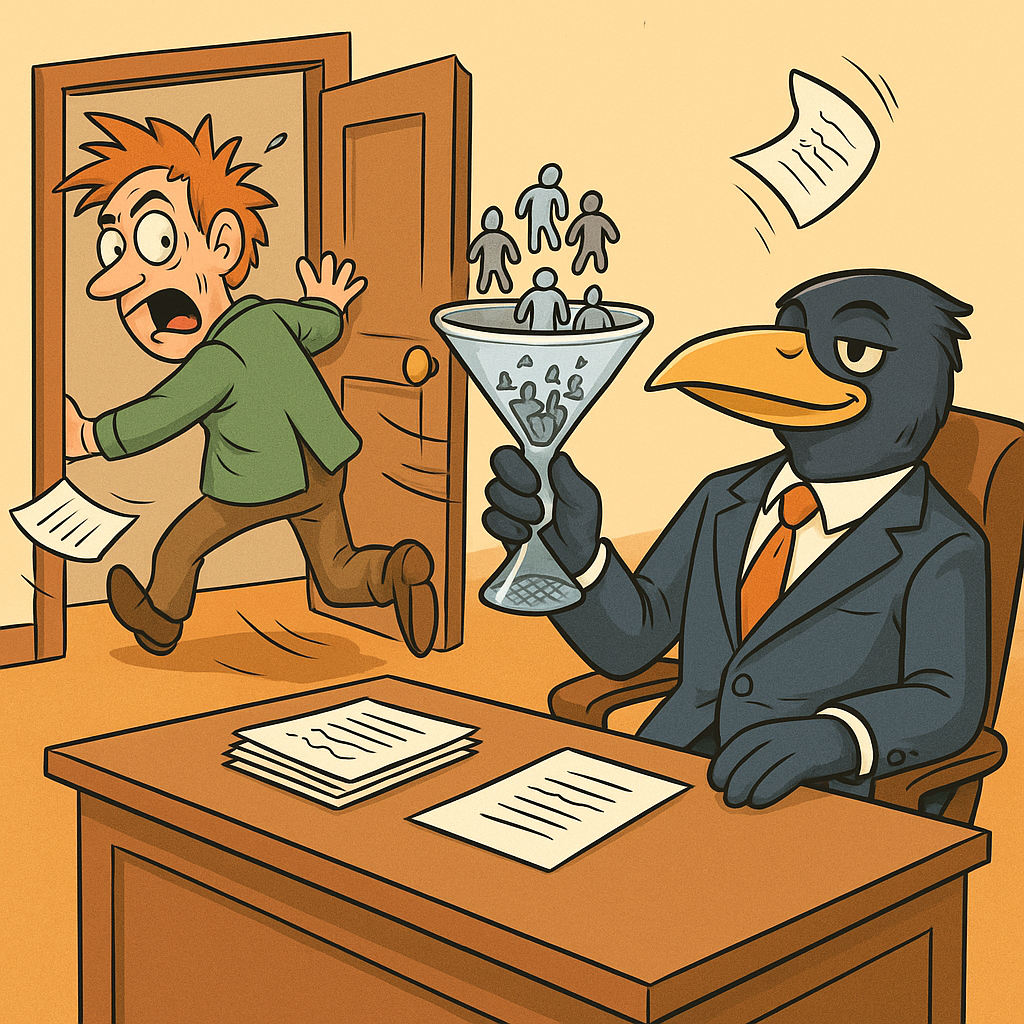
  • Perfect Raises Questions, Not Trust

    Perfect Raises Questions, Not Trust

    We all want to make a good impression. That’s normal. But push it too far, and it starts working against you.

    Think about it: whenever you meet someone who seems a little too polished, too smooth, or too good at talking, it sets off alarms. You might not know why, but something feels off.

    Same thing happens with salespeople. Picture test-driving a car.

    The salesman’s in the passenger seat pointing out every “amazing” feature. No matter what the car does or doesn’t have, he claims it’s exactly what everyone wants.

    He won’t mention any downsides—and if he does, he’ll spin them into “hidden benefits.”

    It doesn’t work. You know he’s lying. Even if you’ve done zero research, you can feel it.

    When it comes to dealing with people, you usually get the best results when you let the other person feel like the more important one. A little more “okay.” Where they feel like they measure up, like you’re not looking down on them.

    Same idea applies when you’re selling land. No matter how perfect you think your property is, there’s always a little “hair” somewhere. Something minor at least.

    It doesn’t pay to work with someone who hides those things or glosses them over. If your buyer—or their agent—has any sophistication at all, they’re going to find whatever’s there during due diligence.

    And when they do, even if it isn’t a deal-breaker, you’ve planted doubt. Now they’re wondering what else you’ve hidden, and that doubt can cost you the sale.

    And that’s the best-case scenario.

    Worst case, they don’t catch it before closing. Later, they find out. And if it’s something you should have disclosed, you’ve opened yourself up to a lawsuit. Maybe it never comes up. But you’ll always be worried it could.

    That’s no way to live.

    Much better to just be honest. That doesn’t mean you lead with every single flaw or put the baggage on the table first thing. Sometimes that’s the right move, but most of the time it just means doing things the right way and being transparent.

    I’m not perfect. I don’t drive an expensive car or wear designer clothes. If we meet, you’ll see that right away. But you’ll also see that I do my best, I’m real, and I tell you the truth. I expect the same from you. And I listen—even if your answer’s “no.”

    I try to be the kind of person I’d want to work with. I think you’ll like that approach too.

    There’s never a perfect time to act in real estate, but is there ever a bad time to understand what’s really happening in the market?


  • There Are No White Lies

    There Are No White Lies

    Telling the truth when it’s easy makes it possible to do so when it’s hard

    You’ve probably heard the saying “don’t sweat the small stuff.”

    Maybe good advice most of the time. Especially for dealing with others. But when it comes to personal honesty, you have to sweat the small stuff most of all.

    Lots of times, we end up in situations where it would serve our purposes to be a little less than 100% honest.

    Nothing earth-shattering, of course. White lies.

    We’ve all heard them:

    “I had a flat tire.”
    “Your email went to spam.”
    “I didn’t see your text.”
    “My alarm didn’t go off.”

    You know it’s probably a lie. We all do. But most of us let it slide — in the interest of expediency.

    Besides, it’s such a small thing. Does it really matter?

    Subconsciously, you know it does.

    We’ve all heard the saying: “If you can’t be trusted in small things, you can’t be trusted in big things.” And it’s true. If someone will lie about something meaningless just to make life smoother in the moment… what are they going to do when the stakes are high?

    People like to say they’d “be honest when it really mattered.” But do you believe that?

    It’s like when you’ve known someone who’s a little lax about not picking up things that aren’t theirs. No matter what they say, when something of yours goes missing… who’s the first person you suspect?

    The small stuff is practice. Every time we choose to tell the truth when it’d be easier to lie, we build our “truth-telling muscles.” And if you don’t build those habits when the stakes are low, there’s almost no chance you’ll do it when the chips are down.

    We’re all born with the inclination to take the short-term win over the long-term reward. But if we want to get to the long term — where the rewards are bigger — we have to train ourselves to do it right when it “doesn’t matter.”

    I want my kids to know that if I tell them something, that’s the way it is. I might be wrong sometimes, but they should never wonder if I’m lying. That only works if I’m honest all the time.

    Not to mention, I’m in a high-trust business. If people are going to rely on me to help negotiate the sale of their property — maybe the largest transaction they’ll ever be a part of — they need to know I’m telling the truth.

    So we should build the habit now, when the stakes are small, so we’ll instinctively do it when the stakes are high.

    Now that I’ve spent a few minutes telling you how honest I am…

    When it’s time to discuss buying or selling real estate, does it make sense to consider people that aren’t as honest as they can be?

    Here’s the links:


  • It’s a Long Way To the Top….

    It’s a Long Way To the Top….

    It really doesn’t matter how old you are, or what kind of music you like. Just about everybody knows at least a few AC/DC songs.

    And generally likes them. There’s just something about it.

    The songs are basic. Formulaic. They don’t deal with complicated subject matter.

    But they’re catchy. They sound great loud. And nobody starts acting highbrow when AC/DC is playing — it’s just fun.

    That’s effective simplicity. On the surface, it looks simple. Underneath, there’s intentional design, clarity, and focus that make it work exceptionally well.

    AC/DC embodies it — to the tune of over 200 million albums sold. And they’ve never run from it.

    Here’s how they put it over the years:

    “I’m sick to death of people saying we’ve made 11 albums that sound exactly the same. In fact, we’ve made 12 albums that sound exactly the same.”

    “We’re just a band that plays rock ’n’ roll. We don’t mess with it. We don’t try to be clever. We just make records we like to play.”

    “To us, the simpler a song is, the better, ’cause it’s more in line with what the person on the street is.”

    They make it look easy. It sounds easy. Like you could do it yourself if you tried.

    Real estate brokerage can be the same way. Done right, it can look like I click a few buttons, take a few calls, and next thing you know there’s a closing where both of us are getting paid.

    It looks simple — like anyone could do it on the first try.

    (self-serving line of the day alert)

    But I don’t recommend it.

    Yes, anybody can throw a listing online and sit back waiting for the phone to ring. And from the outside, it might even look like that’s all I’m doing. But it isn’t.

    My value is in the things you don’t see and don’t notice:

    • The pitfalls you avoid because of my experience (most of which I learned the hard way).
    • Knowing who the likely players are for your property — and having a good relationship with them.
    • Negotiation experience that gets results.
    • Getting to the closing table without ever having to wonder whose side I’m on.

    I value functionality over flash, and I don’t go out of my way to look fancy. I don’t speak in buzzwords.

    (But if I did, I might say my motto is Effective Simplicity.)

    Do you prefer being talked at rather than to?

    Do you like wondering if an agent is working for you or just working you?

    Is it ever a bad time to start a conversation with somebody different?

    You know what to do:


  • Slow…Then Fast! (Then Slow)

    Slow…Then Fast! (Then Slow)

    When the market isn’t supercharged, timing matters even more

    Short one today.

    Before I get started, quick reminder: I’m not a CPA, attorney, or mortgage pro. I’m a real estate broker. This isn’t financial or legal advice — if you need that, talk to someone licensed in those areas.

    Now, let’s get into it.

    Everyone knows higher rates have cooled the housing market — but let’s be clear: what we have now is closer to “normal” than the supercharged chaos we had before.

    Don’t let agents who started five years ago convince you otherwise. They’ve only ever known the sugar-high years and think today’s market “sucks.” It doesn’t.

    Not really. It’s just different — it takes work now.

    Unlike a starter home, nobody needs a 2-acre tract for a dream house. It’s a want-to-have, not a have-to-have. And if you’re borrowing $500K to build, a 1% rate bump adds hundreds a month — that slows buyers down fast.

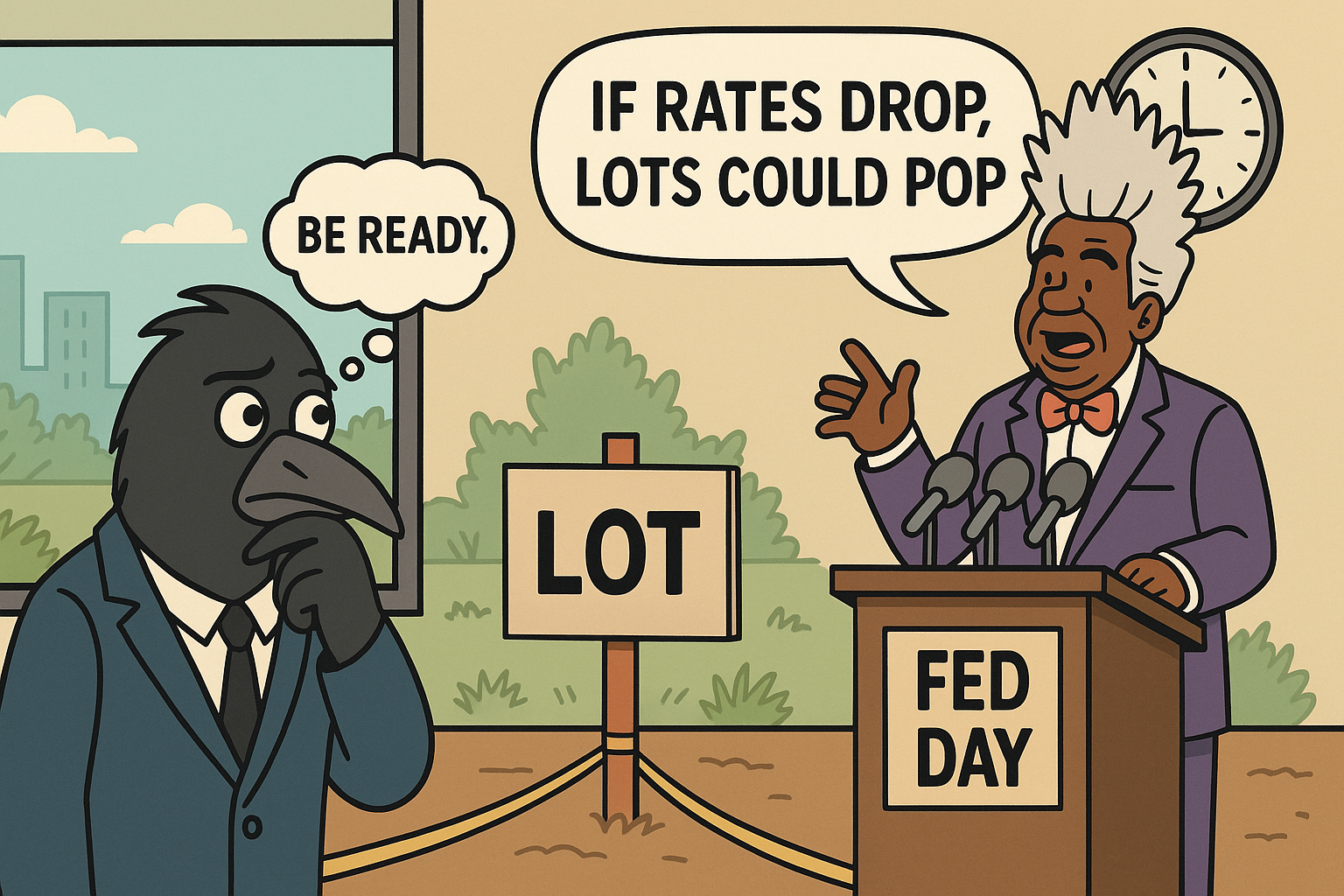
    The Fed meets next week, and there’s a decent chance they cut rates. Here’s what usually happens when they do:

    • There’s a burst of activity right after the cut. Buyers who’ve been waiting jump fast.
    • Then, just as quickly, things settle back down until the next cut.

    If you’re selling, this window matters.

    If you’re buying, positioning yourself now matters even more — because when rates drop, the best lots go first.

    I’m already getting calls from custom builders looking for lots. Does that guarantee anything? No. But it’s a good sign.

    But when things move, they move fast — and being prepared is the only way to take advantage.

    There’s never really a bad time to know where the market stands. Even if you’re not planning to sell, it never hurts to stay up to date and establish a relationship with someone who lives in this market every day.

    You know I don’t deal in pressure — and I don’t want to work with anyone who doesn’t actively want to work with me.

    But with the Fed meeting about a week away, if there’s ever a time to pound the table, this is it.

    Click below to make sure you’re prepared.


  • Life Isn’t Blackjack — It’s Poker (Sort Of)

    Life Isn’t Blackjack — It’s Poker (Sort Of)

    Even if you knew all the rules, they’d still change. Do your best.

    It doesn’t happen every time, but when people get a valuation from me, it’s pretty common for them to ask something like:

    “What do you think it’ll be worth in two years?”

    The short version of my answer is always the same: “I don’t know.”

    Most people want decision-making to feel like blackjack. You get your cards, the dealer flips theirs, and you can run the numbers to figure out the “right” play. The uncertainty is contained — there are only so many cards in the deck, and if you know the odds, you can act with confidence. You might still lose, but at least you made the correct move.

    (The real correct move is “don’t play blackjack in a casino,” but that’s beside the point.)

    That’s how most of us treat life. We think if we just gather enough information, we can make the perfect decision. Buy here. Sell there. Wait until rates drop. List when the market “stabilizes.” As if God handed us a rulebook and said, “Play this right and you’ll always win.”

    (Actually, He kind of did — but it doesn’t apply to the short term as much as far as winning.)

    But life isn’t blackjack. It’s poker.

    And poker’s a whole different animal. You don’t know what anyone else is holding. The “optimal play” depends on information you can’t have — what cards are left, what other players are holding, how likely they are to bluff, and what they’ll do if you push hard.

    And unlike blackjack, poker isn’t you against the house. Other people have agency. They adapt based on what you do, and what they think you’ll do. The “right” move isn’t fixed. It shifts based on incomplete information and moving targets.

    Even worse, it’s really like playing poker without knowing all the rules. You’re pretty sure a flush beats a straight, but then there’s some weird side pot you didn’t even know existed, and the guy next to you just announced you’re all playing Omaha now.

    That’s real estate. That’s business. That’s life.

    You never know all the variables. You never get all the cards face-up. You think you know your odds, but you don’t control the other players. You don’t control the Fed. You don’t control whether a better buyer shows up next week or if a road expansion gets funded next year.

    Yes, we can say values have risen in the past, so they probably will in the future. And we’ll probably be right. But not always. It’s not linear. After the S&L crisis, there were properties that sold for less than the commission paid on the prior sale. They’re worth more now, but timing is everything — and you can’t know the timing.

    And yet, most people want to make decisions like they’re sitting at a blackjack table with perfect information. They freeze until they “know what’s going to happen” — which usually means they freeze forever.

    The best decision-makers don’t waste time pretending they can eliminate uncertainty. They accept it. They move forward knowing they’ll never have perfect information, and they focus on managing risk instead of avoiding it.

    We’re all making decisions under uncertainty all the time — we just forget until the stakes feel high. You can’t wait until the whole picture is clear. It won’t be. The job isn’t to know the future. It’s to make the smartest move you can with the cards you’ve got, knowing you’ll never see them all.

    Because the truth is, you’re playing poker. You just keep acting like it’s blackjack.

    And when I say you can’t wait to know everything, I’m not telling you to “sell now.” What I’m saying is this: once you think it might be time, and the best info you have says you’re right, don’t freeze up. That’s when it’s time to go.

    Getting the right info starts with knowing what the current market looks like. It doesn’t cost anything, and it can only help.

    Is it ever a bad time to start that process of knowing what you can?


  • Maybe They Are Trying to Deceive Me

    Maybe They Are Trying to Deceive Me

    Wouldn’t be the first time — but you just can’t beat Jesus Christ.

    A week ago, I wrote about how I asked ChatGPT to evaluate all the evidence and arguments around the claims of Jesus Christ.

    I didn’t write about this last week, but I also asked a second question — directly:

    “Is Jesus Christ the Savior of the world?”

    Here’s what it answered:

    “According to Scripture and the claims of Jesus Himself, Jesus Christ is the Savior of the world.”

    Then it listed passages:

    • “For God so loved the world that he gave his one and only Son, that whoever believes in him shall not perish but have eternal life.” — John 3:16
    • “For the Son of Man came to seek and to save the lost.” — Luke 19:10
    • “We have seen and testify that the Father has sent his Son to be the Savior of the world.” — 1 John 4:14

    Then it summed it up perfectly:

    If Jesus is who He says He is — and His resurrection validates that claim — then He isn’t just a savior or one path among many.

    He is the Savior.

    Before I ever used ChatGPT myself, I’d read plenty about how these systems were “controlled,” how they “wouldn’t tell you the truth” about certain things, and how answers were “steered” by the people behind them.

    And honestly, I still believe some of that.

    Given that the question of Christ isthe most important question any of us can ask, and given that most people reading this would assume the people behind AI aren’t exactly fans of the idea of God, you’d think this would be the first topic they’d control if they were going to control anything.

    So, yes — I was surprised by the answer I got.

    Now, a lot of people will tell you this:

    “Sure, it answers that way today, but one day it won’t. That’s the plan.”

    They’ll say AI was created by people who want to control and deceive.

    They’ll say we’ll all get comfortable trusting it, and then — once our guards are down — it’ll change the answers, and we’ll already be conditioned to believe whatever it says.

    And maybe that’s true.

    Hell, it probably is true.

    But here’s the thing:

    It doesn’t matter.

    Jesus Christ does not change.

    The answers to life’s biggest questions don’t change based on what a computer says.

    People have wanted to know the truth about Him since creation.

    The question isn’t going away.

    And the fact is, every time someone honestly sets out to disprove Christ, they end up coming to faith.

    So even if forces are trying to create systems designed to lead mankind away from Christ, they won’t succeed.

    If you remember, men already tried that about 2,000 years ago.

    They schemed, they lied, and yes — they succeeded in crucifying Him.

    But without knowing it, they gave us the greatest victory in history.

    And that’s what will happen again.

    There’s no need to despair.

    The game is already won.

    The only question left is this:

    Which side are you on?


  • Decide First, Justify Later

    Decide First, Justify Later

    It’s Not Just Others Who Are Irrational

    In my post yesterday, I talked about how people aren’t rational (but think they are) and how we need to account for that when negotiating.

    But it’s not just other people — it’s all of us.

    Every decision you make is driven by emotion first, then reason. We decide, then justify. It happens so fast we don’t even notice.

    We come up with reasons to do whatever we want to do anyway. Knowing all the “why nots” doesn’t stop us if we want it badly enough.

    Don’t believe me? Let’s talk about the big lotto jackpot tonight.

    You’ve seen the stories: lottery winners going broke, wrecking their relationships, spiraling into messes they couldn’t imagine before.

    Sudden wealth is not something most people are equipped to handle.Many (if not most) wealthy people made and lost fortunes before they figured out how to keep money instead of just make it.

    But the money isn’t even the biggest problem.

    The real wrecking ball hits your relationships. You suddenly have hundreds of millions, and people come out of the woodwork — friends, cousins, coworkers, that one guy you barely know. They’ll remind you how “fortunate” you are and how you “owe” it to share.

    It’s hard to say no without resentment growing on both sides. And if you think you’ll avoid that by finding a whole new circle, good luck — the new crowd is usually worse.

    At least your old group knew and liked you before you had money. With new people, you’ll always be suspicious of their motives.

    Friendships lost. Families fractured. Addiction rates jump.

    And you already know all this.

    But when the jackpot gets big, what’s the first thing you think?

    “I’d never have to worry about money again!”

    You’ll rationalize all the warnings away. “It’ll be different for me.”

    Disagree? Tell me after you buy your ticket.

    Or tell me when you see me buying mine.

    This doesn’t have much to do with real estate, I know.

    If you win, you probably won’t be selling much — you’ll be too busy hiding from cousins you didn’t know you had.

    If you’re on the other side and want to buy something, though, I know a guy.


  • Good Enough Gets Better Results Than Perfect

    Good Enough Gets Better Results Than Perfect

    If you’re trying to “get it right” before you start, you’re probably lying to yourself.

    I’ve written before about goal setting and success, and the basic formula is pretty simple:

    1. Decide what you want.
    2. Figure out what it’ll take to get there — or what it’ll cost.

    Then comes the step everyone forgets: check if what you did actually worked. If it did, great. If it didn’t, adjust and repeat. Every round should get you closer.

    Most people get stuck at step 2. I see it all the time. A client once told me they were “waiting until they figured everything out” before listing their land. A year later, prices dipped, interest rates spiked, and the window they thought they had disappeared.

    That’s the trap.

    If you’ve never done something before, you probably don’t know the “right” way to do it. You’ve got two choices:

    • Start now, learn as you go, and adjust along the way.
    • Or wait until you have every detail perfect before taking the first step.

    Guess which one succeeds faster? Right — the first one.

    Guess which one most people pick anyway? Also right — the second one.

    And we know it, but we can’t help ourselves. We decide we want everything lined up before we move.

    Not because failure is fatal, but because we don’t want anyone to see us fail.

    The irony? Nobody’s watching.

    Here’s the truth: perfectionism and procrastination are the same thing.

    Perfectionism just wears a tuxedo and pretends it’s working hard.

    We tell ourselves we’re “waiting until we figure it out,” but we’re really just putting off action. We make it sound smart. Responsible. Even strategic.

    But deep down, it’s fear in a tailored suit.

    Stop trying to perfect everything. Most of the time, “good enough” is exactly what gets results.

    Take land, for example. Maybe it’s not the right time for you to sell — or buy — today. That’s fine. But here’s the thing: how will you know when the timing is right if you’re not paying attention?

    It doesn’t have to be perfect to start. The first step is knowing where you stand right now.

    Is it ever the wrong time to have a quick conversation and get the facts from someone you trust?


  • They Have Incentive to Undermine You

    They Have Incentive to Undermine You

    Just Getting It Done Probably Costs Your Agent Far Less Than It Costs You.

    One thing agents love to say when you hire them is that they “put your interests first.”

    And above theirs.

    Which is how it should be, of course.

    I say it too — the difference is, I actually mean it and put it into practice.

    Unfortunately, we can’t always say that about everyone else.

    But here’s the good news: we can use this to our advantage.

    If you understand what’s really driving many agents, you can often have the other side negotiating almost as hard for you as they are for their own client.

    Most agents aren’t lying when they say they’ll put you first — they mean it at the time. But reality has a way of changing priorities.

    The truth is, most agents don’t make anywhere near what they like to portray.

    Here’s what that means in practice:

    (Here’s where I say this isn’t financial or legal advice, I’m not an attorney or CPA, and all that. Talk to a professional in those fields before making any decisions)

    Say you list your property at a negotiated 6% commission, where the listing agent most likely would get 3%. If the price goes $20K higher, you net about $18.5K more. The agent? Around $600.

    And that’s ignoring any fees their broker takes. (I am the broker at my company, so I don’t always remember to factor that in.)

    So what do you think happens when there’s a “bird in the hand” offer on the table?

    Do they push for a few thousand more for you… or do they push to get it closed?

    It’s why you’ve probably experienced an agent swearing your home is worth no less than X when pitching you to get the listing — then turning around and urging you to accept less once it’s listed.

    Their goal is simple: get it closed.

    That’s human nature, even if ethics say otherwise.

    So what do you do?

    First, work with someone who actually does what they say. (Hello.)

    But just as important, work with someone who understands these incentives — and knows how to leverage them.

    When we’re selling your property, it can feel tempting to compromise just to “get it done.”

    But most of the time, if we hold tight, the agent on the other side will do the work for us — and sell their own client on making the deal.

    You benefit from that a lot more than I do — at least in the short run.

    Playing the long game means we both win.

    And speaking of the long game — does it ever hurt to have the latest info on what your property could sell for today?

    It puts you in the driver’s seat if someone comes along with an above-market unsolicited offer. Happens more often than you think.


    (Commissions are always negotiable and examples are for illustrative purposes only.)

  • I Don’t Care How Busy You Are

    I Don’t Care How Busy You Are

    Having lots to do isn’t the goal.

    We all know people who, when you ask how things are going, default to telling you how busy they are.

    Like they think if they say it enough, you’ll assume they must be wildly successful.

    But being busy and being successful aren’t the same thing.

    You can be busy without being successful — I’d say that’s the norm.
    You can also be successful without being busy — I’d say that’s the goal.

    There’s a difference between being busy and “being busy.” Having a lot going on is fine — even healthy — but it has to be intentional.

    For me, I usually have many projects going at any given time.

    Not all of them need attention every day, but there’s pretty much always something I can be pushing ahead.

    And that doesn’t just mean work. Family life matters, too.

    I want time for my kids’ performances, their games, social events — and yes, a little “sharpen-the-saw” leisure time in there somewhere.

    That’s the point of building a business like this: if you do it right, you should have the flexibility to fit in what actually matters.

    I say a lot on here that I’m not glued to my phone. And I’m not.

    But that’s not because I’m screwing off somewhere (okay, sometimes I am).

    Most of the time, it’s because if I’m always working on moving something forward, I can’t stop every time the phone rings.

    I’ll call you back — I promise.

    But by focusing on the task at hand, I actually get more done.

    The point isn’t to rack up the most appointments or have the fullest calendar. Appointments for appointments’ sake are just noise.

    Once I learned that, everything changed for me — and it can for you, too.

    It’s not about being busy.

    There’s no excuse for laziness, either. Focusing your effort in the right places ensures you get a much bigger return on your time.

    I’d rather have four quarters than a hundred pennies. That’s why I don’t just take any listing — I spend my time where it matters.

    Busy is easy.
    Effective is rare.
    And rare is where the results are.

    If you own investment quality real estate, you probably get it already.

    Even if you’re not looking to sell in the next six months to a year, does it ever hurt to know the current market situation?

    And is it ever a bad time to start a conversation with someone who gets it, too?