Tag: Collin County Land Sales

  • They Don’t Have Negotiating Class in Sportswriter School

    They Don’t Have Negotiating Class in Sportswriter School

    Earlier this week, the Cowboys made a couple of trades to (hopefully) improve their defense.

    They’re 3-5-1 after Monday, and it’s getting close to the point where you start quietly thinking about next year.

    Which is pretty much what these trades were: all the guys they brought in are under contract for multiple seasons.

    Will it work out? Would it have been better to keep the picks?

    We’ll see.

    But Monday, I heard something on the pregame show that made me shake my head in that special “man, sportswriters…” way.

    (You know the line — people go into sportswriting because they aren’t smart enough to do anything else.)

    Anyway.

    They were talking about how Jerry had already said a trade was agreed to, but the paperwork wouldn’t be submitted until the next day.

    The writer pointed out that if the Cowboys won, the other team could decide they now had more leverage and try to squeeze Dallas for more compensation before sending the paperwork in.

    Technically true.

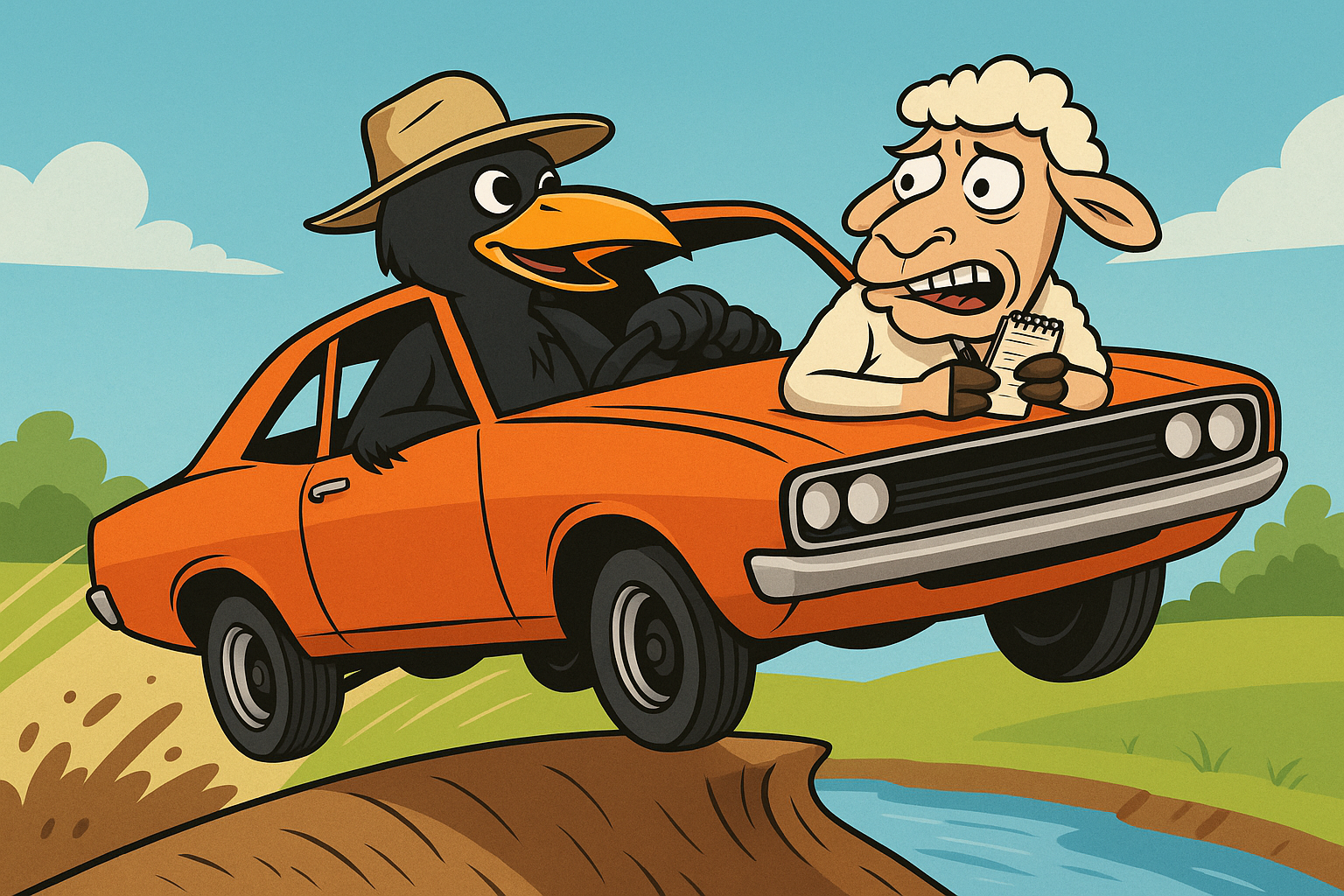
    In the same way it’s technically true you could decide to jump your car across a creek like you’re in The Dukes of Hazzard.

    Possible. Just not real likely. Not if you want to have a car anymore.

    Because in real business — and in the NFL — a deal is a deal.

    In real estate we call it a re-trade when someone comes back after the agreement and says, “Actually, I want to change the price/terms.”

    But often it’s just someone trying to take advantage of what they think is new leverage.

    And while it might be legal, it’s a great way to find yourself at the bottom of everyone’s call list.

    Commercial and institutional real estate is a very small world. We all work with each other over and over.

    If you get a reputation as someone who can’t be trusted, that follows you.

    Same thing in the NFL. There are 32 teams. That’s it.

    If you go back on your word, everyone knows it, and you don’t get deals done anymore.

    So no, Cincinnati wasn’t going to try to hold the Cowboys hostage after the game.

    Not if they want the phone to ever ring again.

    Now — a lot of people who read this aren’t buying or selling property all the time. They might only do one deal in their entire life.

    So what’s stopping them from playing games?

    Nothing, technically.

    But it’s still not smart.

    Because if you’re willing to bend your ethics “just this once,” it rarely stops there.

    It bleeds into your business. Your marriage. Your friendships. Your reputation.

    Which is all just another way of saying: your life.

    If you can’t be trusted in small things, you can’t be trusted in big ones either.

    And no “good deal” is worth that.

    PS – I’ve been hammering this all week: strengthening your negotiation skills will improve pretty much every area of your life.

    The best negotiation books don’t teach tricks, they teach behavior.

    Principles.

    Empathy (look it up, it doesn’t mean what most people think).

    Understanding the other person’s world.

    If you want to learn how to negotiate without being a jerk, start here:

    You can find them (and a few others I recommend) right here:

    (Disclosure: As an Amazon Associate I earn from qualifying purchases. Clicking may earn me a small commission, at no extra cost to you.)

  • And It’s Back!

    And It’s Back!

    This one was off the market for a bit.

    But it’s back as of this afternoon.

    If you’ve been looking for a custom home lot in The Bridges at Preston Crossing, this is a good one.

    .35 acres backing up to the 7th tee of the Fred Couples–designed course.

    Homes are already built on both sides, so you don’t have to gamble on what gets built next door.

    No timeline to build. Bring your own builder.

    Gunter ISD.

    This is a golf course lot in a fast-growing community where land isn’t getting cheaper.

  • You Blew It. Big Time. Now What?

    You Blew It. Big Time. Now What?

    I’ve been writing the last few days about planning, breaking things down to small pieces, and controlling what you can control.

    But even with that, it can still go sideways.

    But what about when you just blow it?

    We’ve all made a bad call in the middle of something important.

    Said the wrong thing. Picked the wrong strategy. Misread a person.

    Maybe you got caught off guard and went along with something you shouldn’t have.

    Maybe you pushed too hard when you should have asked one more question.

    It happens to everybody. Even when you plan well, think clearly, and go in with the right mindset.

    The issue isn’t really the mistake. The real issue is what happens after the mistake.

    Most people go into a kind of self-punishment spiral. They relive it in their head while they’re still in the middle of the situation.

    They start questioning themselves.

    They start “trying” harder.

    Their emotions creep in.

    And then they make a second mistake. Then a third. Before long the whole thing has rolled downhill.

    Jim Camp talks about this in Start With No. His point is that once a decision is made, it’s made.

    You don’t go back and replay it in the moment. You move to the next action.

    No dwelling. No self-judging. No rewriting the past while you’re still in the middle of the mission.

    There’s a sports version of this that makes the idea even clearer.

    Think about a cornerback in football. A corner can be perfect on 58 plays and get beat once — and that one play might be a touchdown on national TV that everyone remembers.

    It’s a tough position. You’re exposed. Everyone sees your mistakes.

    If they get beat on a route and spend the next five plays stewing about it — they’ll get beat again. And again.

    Because their attention isn’t on the next snap anymore. It’s on the last one.

    But the good ones don’t pretend the mistake never happened. They don’t ignore it. They just wait to deal with it.

    After the game, they’ll go to the film room. Slow everything down. Look for what tipped the receiver’s route. Study how their hips opened. Look at footwork and spacing. Then they learn from it.

    But not during the game.

    During the game, all that matters is the next play.

    And it’s the same everywhere else — business, negotiation, family, anything that matters.

    You’re going to make mistakes. Even with good planning. Even with experience.

    Even when you know better.

    The key is not to drag the last mistake into the next decision.

    Handle the moment you’re in. Then, when it’s over, look back honestly and learn from it.

    One snap at a time.

    PS- You’re probably tired of me flogging these books. But if you actually bought one you wouldn’t be.

    For one you’d probably still be busy reading it. But mostly, you’d understand why I keep hammering on it.

    They are that good.

    If I know of something that will help you and don’t keep telling you about it, what does that say about me?

    Click below and pick one, you won’t be sorry.

    (Disclosure: As an Amazon Associate I earn from qualifying purchases. Clicking that link may earn me a small commission, at no extra cost to you.)
  • You Know What They Say About God and Your Plans

    You Know What They Say About God and Your Plans

    Yesterday I wrote about having a plan — preferably written — and sticking to it. Things go smoother that way.

    You control what you can control. You stay on track.

    So you probably won’t be surprised at how things went yesterday.

    My morning routine is pretty normal: Get up, coffee, talk to the kids while they’re getting ready, look over my to-do list, add a couple things I thought of overnight. Nothing crazy.

    For a Monday, it didn’t look like a heavy day.

    I even thought I might get ahead a little in the afternoon — knock out a couple of things scheduled for later in the week.

    Write down the plan, work the plan, stick to the plan.

    And then I left the house.

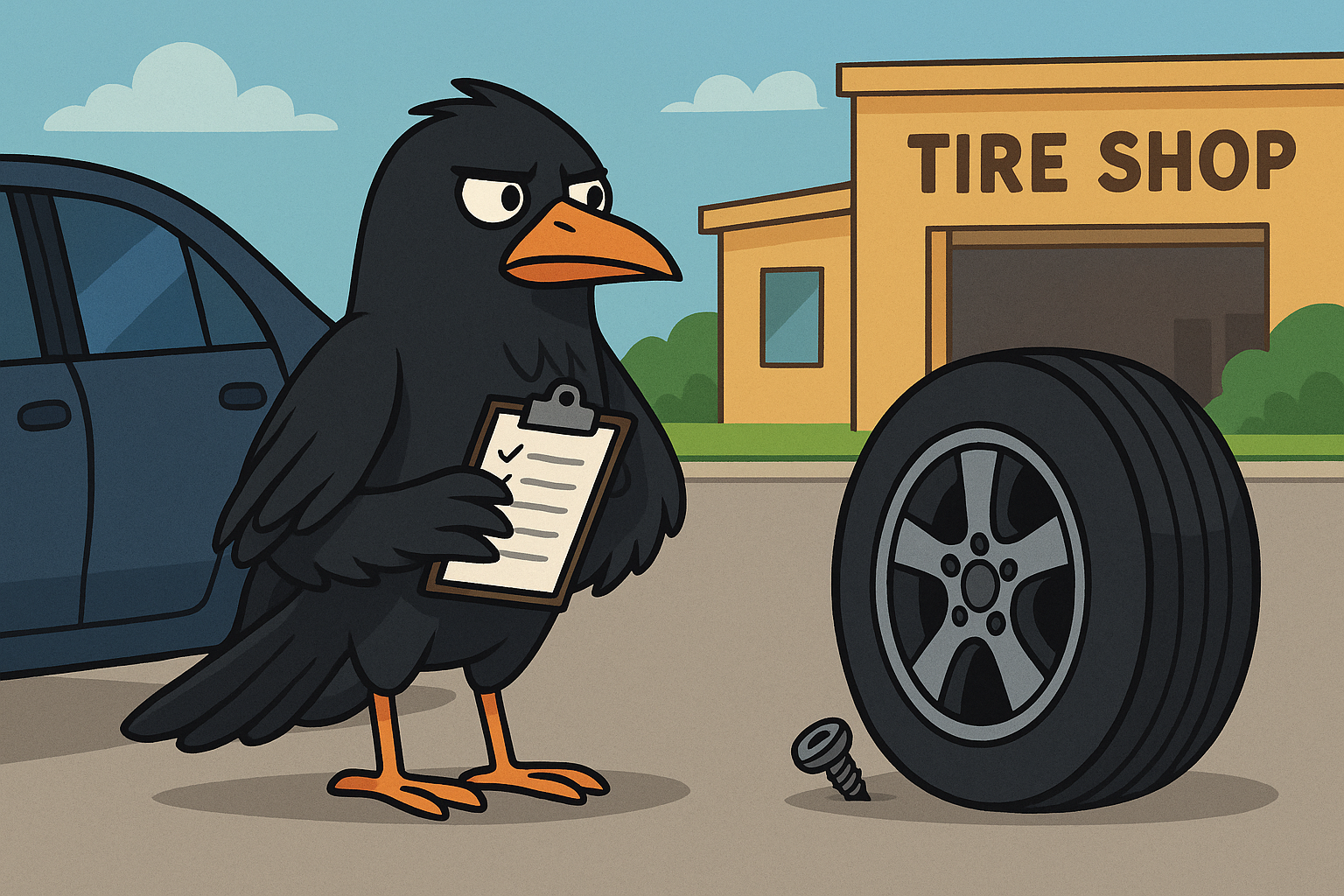
    About five minutes down the road I heard a noise. Checked when I parked. Sure enough: screw in the tire.

    So the plan changed. New plan: go to the tire shop.

    The good news: the tire was patchable and didn’t cost anything.

    And while I was there, they rotated the tires — something I’d been meaning to do for a while but never wrote down.

    And since it was never written down… it never happened.

    Another reminder: If you want it to happen, write it down.

    I still got the important tasks done yesterday. Just not the “get ahead” ones I had in my head when I left the house.

    So I’m calling it a successful day.

    Plus I got a refresher on something I have to remind myself of often:

    You can control what you can control. But something can always show up and blow up your plan.

    I’m not always great in the moment when that happens. But I am pretty good at getting back to execution mode quickly.

    And that’s usually what matters. I accomplished what I needed to accomplish.

    And if something goes sideways?

    I’ll handle it.

    PS — Like I was saying yesterday, negotiation touches every part of your life. If you get better at that, almost everything improves.

    If there’s a negotiation book better than Start With No by Jim Camp, I haven’t found it. I read it once a year.

    It’s less about tricky tactics and a lot more about managing your own behavior and reactions — which is the real game. Just like what happened above.

    If you want to check it out, along with a couple others I recommend, here’s the link:

    (Disclosure: As an Amazon Associate I earn from qualifying purchases. Clicking that link may earn me a small commission, at no extra cost to you.)

  • They Give Agendas a Bad Name

    They Give Agendas a Bad Name

    I think Jim Camp’s Start With No is one of the best negotiation books out there.

    (If you’ve been reading here for any length of time you know this, since I talk about it regularly.)

    One thing everyone should remember is just about everything in your life involves negotiation in some way:

    How much you get paid.
    Your work conditions.
    Getting your kids ready on time without a meltdown.
    Where to go for dinner.
    Which movie to watch.

    Almost everything.

    So if you can improve your negotiating skills, you can improve most areas of your life.

    And the system Camp lays out in that book is a real game changer. Once it clicks, it feels like the whole thing shifts.

    Like you’re suddenly playing a different game.

    One of the biggest concepts in the book is this:

    Have a Mission and Purpose for what you’re doing.

    And for every action you take toward that mission — have an agenda.

    I know. The word “agenda” has gotten a bad reputation.

    Mostly because city councils, school boards, and various committees have managed to drain every ounce of intelligence out of the term.

    But the tool isn’t stupid. The way they use it is stupid.

    There’s a difference.

    Camp says your agenda should be written. I’ll admit — I’m not always perfect with that part.

    But the point is the same:

    Have a plan. And stick to the plan.

    Even on small things.

    If you’re making a phone call to set up a meeting — write down the purpose of the call.

    If you’re sending an email — write down exactly what you want to accomplish.

    Not what you hope will happen.

    Your goal must be something you are 100% in control of.

    If you don’t control it, it’s not a goal — it’s a hope.

    For example:

    Your agenda is not to get a certain answer. You don’t control what the other person says.

    Your agenda is to ask the question in the clearest, most direct way possible. That you control.

    Break things into the smallest pieces possible.

    Then manage your actions by having simple agendas — basically written instructions for yourself.

    Track what you do, and you’ll hit your objectives far more often.

    That’s the whole trick.

    PS – This isn’t the whole system, of course. But the book details how controlling our own conduct goes a long way toward getting the results we want.

    The tactics and negotiation “moves” are in there too — but once the behavior principles are right, the tactics matter way less.

    It’s not about strong-arming anybody, being a jerk, pretending to be tough, or playing power games.

    It’s the opposite of that.

    I re-read it at least once a year. It’s that good.

    (Disclosure: As an Amazon Associate I earn from qualifying purchases. Clicking that link may earn me a small commission, at no extra cost to you.)

  • Obedience Before Understanding

    Obedience Before Understanding

    Awhile back I got a little irritated with one of my kids.

    Which one? Doesn’t matter.

    The same basic situation has happened with all four of them. (And if you have kids I promise you’ve had the same experience.)

    Anyway here’s the story:

    We were planning to go somewhere. About a half hour away. Which she knew.

    But I needed to make a stop along the way, so I told her to be ready an hour earlier than we’d normally leave.

    She said “okay” and I went on about my business.

    Did I explain why? No. Should I have? Maybe.

    But you know how it goes — if I explained every single why behind everything I do, I’d never get anything done.

    Anyone want to guess what happened next?

    Time to leave rolls around…

    She’s not ready.

    Which put me in a bind. So I was frustrated, and I explained then why we had to leave early.

    To which she replied:

    “Well I didn’t know that.”

    So I walked off thinking:

    I wouldn’t have told you to be ready early for no reason. Why couldn’t you just do what I asked even if you didn’t understand why?

    And then it hit me.

    God probably feels the same way about me.

    We’ve all had times where we feel like God wants us to do something — or not do something — and it doesn’t make sense to us.

    We think it would be better if we did it our way.

    Our timing. Our understanding.

    Pretty presumptuous when you think about it.

    Whenever something doesn’t line up with how we think it should go, we assume the instructions are wrong — instead of assuming we might be the ones who don’t see the full picture.

    But God doesn’t think like we do.

    I remember realizing in that moment that I was the one who needed to learn obedience just as much as she did. Maybe more.

    Have I gotten any better?

    I like to think so.

    But if I’m being honest — probably not nearly where I should be. Stubbornness is my superpower, and it doesn’t always serve me well.

    But I’ll keep trying.

    And I won’t give up.

    PS: I’ve mentioned this before, but having a physical Bible matters.

    Most people who own one don’t read it much. And most who do read Scripture only do it when it’s put in front of them on Sunday.

    But there have been studies showing that people who read their Bible at least 4 times a week have lower rates of depression, anxiety, addiction, and other issues.

    It’s a spiritual discipline with physical benefits.

    Reading or listening online is fine — until it isn’t.

    If access to digital content went away for any reason… what would you have?

    A physical Bible isn’t expensive.

    And it doesn’t require Wi-Fi.

    (Disclosure: As an Amazon Associate I earn from qualifying purchases. Clicking that link may earn me a small commission, at no extra cost to you.)

  • Whoever Says It’s a “Game of Inches” Probably Just Lost

    Whoever Says It’s a “Game of Inches” Probably Just Lost

    With the World Series happening, I’ve been thinking about some of the clichés you hear when people talk about baseball.

    A lot of them sound good.

    They feel like the kind of thing a manager or announcer is supposed to say.

    But if you watch what they do, it doesn’t always line up with the words.


    Managers always preach catching the ball.
    But in the real world: hitting is the hardest thing in sports.
    If a guy can hit, they will find a way to get his bat in the lineup.
    Hopefully he’s a DH. But just as often he’s a butcher in left field. But he’s out there.
    Meanwhile, the glove-first guy who can’t hit? He’s on the bench.
    He comes in late when you’re already winning.


    Supposed to mean bunting, stealing, hit-and-run, etc.
    The things that show discipline and “team baseball.”
    Except the analytics guys figured out those moves usually reduce run scoring.
    And fewer runs = fewer wins.
    So now most teams sit back and wait for the three-run homer.


    This one is basically circular.
    If a pitcher throws great and wins, we credit the pitching.
    If he throws just as well next time and gets lit up, now we say the hitters “made adjustments.”

    This is what just happens when experts are required to explain themselves to non-experts.

    You can’t say, “Well, hitting and pitching outcomes are highly variable and luck plays a larger role than most fans want to believe.”

    So instead: clichés. Buzzwords. Phrases that smooth everything over.

    And that’s fine for baseball. The stakes are entertainment.

    But in real life — especially when you’re talking to realtors, salespeople, consultants, or anyone positioned as an “expert” — buzzwords can be a way to hide ignorance or mislead you.

    If someone sounds confident, but can’t explain what they’re saying when you ask them to slow down?
    That’s not expertise. That’s just talking.

    So here’s the move:

    Ask one or two simple, pointed questions.

    If they take it in stride and explain clearly?

    You’re probably dealing with someone who knows what they’re doing.

    If they get defensive, vague, or irritated that you questioned them?

    You’ve already got your answer.

    I get it — not everyone is cut out for uncomfortable conversations. But there’s a way to avoid that problem entirely:

    Start early. Long before you actually plan to sell.

    Begin talking to brokers, and be up front about not being ready.

    The good ones will be happy to talk — and you’ll start building real trust.

    The shady ones?

    If they can’t make money immediately, they won’t spend much time on you.

    Which tells you everything you need to know without you having to push.

    Selling is a significant financial event — no way around that.

    So is it ever too soon to make sure you get it right?

    Click below.


  • How Do You Think I Got That Way?

    How Do You Think I Got That Way?

    There’s a management concept that says, “If you want something done, give it to a busy person.”

    People usually take that as a joke, but there’s a lot of truth to it.

    The busiest people are often the most reliable — not because they have more hours in the day, but because they know how to use them. They’ve built systems, habits, and standards that keep things moving.

    It’s not uncommon for a landowner to wonder how someone who lists and sells as many properties as I do could still have time to represent their property properly.

    Probably lucky for me they don’t also see the institutional client work I handle — the kind that doesn’t show up on MLS or get publicized. Then they’d really be worried.

    It’s a fair question. But in real estate, the truth is usually the opposite.

    The agents who are truly “too busy” aren’t the ones with a full plate — they’re the ones barely managing the plate they already have.

    The productive ones have rhythm. They’re working off systems, checklists, and experience that let them keep multiple deals in motion without losing sight of the details that matter.

    Highly productive agents also have the revenue to invest in tools and automation that make them more efficient.

    It wouldn’t make sense for a one-off landowner to pay for those things — and low-volume agents can’t afford them.

    So when you see a broker juggling multiple listings and still communicating clearly, showing up on time, and staying ahead of issues — that’s a good sign.

    It means they’ve figured out how to run their business, not just survive it.

    It means I’ve built a network of buyers who trust what I bring to market.

    It means I’ve learned how to keep deals organized, inspections scheduled, title issues handled, and marketing rolling without letting anything slip.

    It means when you list with me, you’re plugging into something that’s already working — not waiting for someone to “get around to it.”

    Busy isn’t the same as distracted. It’s the byproduct of momentum.

    If I were sitting around waiting for the phone to ring, that would be a problem.

    But I’m in constant contact with the people most likely to buy your property — because I’m already helping others like you.

    Deals create opportunities for other deals.

    Activity creates visibility.

    Momentum attracts attention.

    So no, I’m not too busy to take on another listing.

    I’m busy because I know how to get things done — and because the people who’ve worked with me know it too.

    If you’re ready to sell, or just curious what your property’s worth in today’s market, I’m happy to give you an honest, expert opinion.

    Because the busiest guy usually is the right one for the job.


    PS — You’re probably not ready today, but is there really a bad time to know what your property might be worth?

    That’s one of the ways highly productive people get that way — they start the non-urgent steps early, so they’re ready to move when the time is right.


    Click below:


  • Professionalism Is a Competitive Advantage

    Professionalism Is a Competitive Advantage

    I closed a transaction yesterday where I represented the buyer.

    But I also know the sellers well. And I’ve worked with the brokers on the other side of the table. So it was a friendly transaction.

    Friendly doesn’t mean easy.

    There’s always something that comes up on a deal — even when both sides are conscientious, experienced, and pay close attention to the details. And that was the case here. Both sides were “detail guys.” Nobody was asleep at the wheel. Everybody knew what they were doing.

    And still, something unexpected popped up.

    The good news is it was handled it in a way that won’t be an issue for my clients when it’s their turn to sell. And the seller even told me he appreciated how my clients approached it — and that he’ll know to look out for this kind of thing in the future.

    The only bad news is that it added some time. But the main thing is we got across the finish line.

    Unforeseen issues always surprise people who don’t deal with real estate transactions regularly. They assume that if everyone is smart and honest and knows what they’re doing, the deal should unfold like a clean set of instructions.

    In reality, land and real estate deals are more like surgery. Everyone can be careful and competent, and it can still get complicated. There are simply too many moving parts — title history, surveys, legal descriptions, lenders, insurance, funding timelines, utilities, escrow instructions, contract language, etc.

    You don’t avoid problems. You handle them.

    And that’s where this deal was a blessing.

    Not just because my client is sharp. Not just because the sellers are good people. And not just because the brokers involved are the kind who actually return calls and don’t invent drama.

    It’s a blessing because when the issue came up, everyone stayed professional.

    No accusations.
    No panic.
    No ego contests.

    Just: “Okay. Here’s the obstacle. How do we solve it so everyone gets what they agreed to?”

    That sounds simple, but it’s not common.

    So two points:

    First: It’s a gift when the people you’re working with are solid. When both sides want a fair outcome, respect each other, and don’t feel the need to posture, you can work through a lot — even if it takes longer than expected.

    Second: If this is what happens when experienced professionals are on both sides… what does that say about the importance of competent representation when that’s not the case?

    Deals rarely blow up because of the big, obvious things. They blow up because of the small things — deadlines, survey quirks, contract timing, miscommunication.

    Most of the time, the difference between a deal that closes and one that falls apart is whether the people involved can stay level-headed through the surprises.

    Professionalism is a competitive advantage.

    And not just in negotiation — in everything that comes after.

    PS — You’re probably not looking to sell today. But the more you prepare ahead of time (when it’s not urgent), the less chance you have a big issue later (when it is urgent).

    I offer a free, no obligation value report on any land/lot properties, including recent sold comps, market trends, and notes on any issues that might need to be addressed.

    All it takes is one click below and I’ll do the rest.

    Is it ever a bad time to start working toward a smooth finish?


  • I Don’t Recommend It (For Them….But Maybe For You)

    I Don’t Recommend It (For Them….But Maybe For You)

    There’s a certain group of agents who’ll list a property at almost any price just to get their foot in the door.

    The thinking is: get the listing, and once the seller sees the price is unrealistic, they’ll come down.

    From the seller’s side, even if they know it’s high, it’s tempting. They stand to gain if it works — and they can always adjust later, right?

    That premise isn’t completely wrong.

    But you have to be careful.

    From a marketing standpoint, your property gets the most attention right after it hits the market. Most buyers today are plugged in and will spot an overpriced listing immediately. Once they cross it off, it’s tough to get them back.

    Then it sits. And the longer it sits, the more people assume “something must be wrong.”

    Meanwhile, the clock is ticking on carrying costs — mortgage, taxes, insurance — eating away any imagined gain.

    So yes, be optimistic. But overplaying it can backfire fast.

    Especially with houses.

    Land can be different. Different buyers see different value, and if you own it outright with an ag exemption, your costs to hold can be next to nothing. So waiting doesn’t hurt as much.

    Plus, land buyers are often investors or developers. If the market rises, they may be willing to meet your price later.

    Many buyers are actually in the business instead of looking for somewhere to live. If something doesn’t work for them today, that doesn’t mean it won’t later.

    That doesn’t make overpricing good — but with land, it’s often less harmful. And sometimes, it’s even strategic.

    If I were listing a house worth $1 million and the owner wanted to ask $1.3M? Not worth anyone’s time. It would hurt the seller more than help.

    I wouldn’t take that listing.

    But land? Can be a different story.

    If I think it’s worth $1M, listing it for $1.2M or $1.3M can make sense — especially if selling isn’t urgent. You might not be trying to sell, but if someone overpays… maybe it’s worth a look.

    If it doesn’t take huge effort on your part, is it a crazy idea to put your property out there a little high just in case?

    PS — You’re probably not looking to sell today. But it never hurts to have up-to-date info. I offer free reports on any property showing recent nearby sales and current opinion of value.

    Is it ever not worth knowing what your property is worth today? Even if you aren’t ready to sell?

    If someone were to offer you “too much,” would it really be a terrible idea to listen?

    Click below to get your report: