Author: MB

  • But We Can Get More… Right?

    But We Can Get More… Right?

    Selling isn’t just about numbers—it’s about outcomes.

    When I list lots for clients—especially custom home lots—I’m often asked that question. And the answer is: maybe. But that’s not always the point.

    I feel like I usually negotiate stronger deals than most agents. Part of that’s volume, part is experience—but a big part is that I’m not desperate to close something today. I can afford to wait, and more importantly, I can afford to tell my clients to wait, if that’s what’s best for them.

    A lot of agents can’t. They need the deal, now. So they lean on their sellers to take the first offer that shows up—even if it’s 20% below ask.

    I don’t do that.

    I’ve seen patience pay off again and again. My sellers walk away with more, and I walk away with another high comp that helps the neighborhood and everyone else trying to sell.

    But here’s the thing: “more” isn’t always better.

    Right now, I’ve got a client who donated a lot to a nonprofit. We had a target price in mind. When an offer came in 5% below that number, they passed.

    Then they came back, second-guessing: Should we have taken it?

    I wanted the higher price—it helps my numbers, helps the market. But I told them no, this time the better decision might be to take the lower offer and move on.

    Because every extra month the charity holds the lot costs them money: taxes, HOA dues, insurance. If they wait six months hoping for more, they could lose that gain in holding costs.

    And the longer they wait, the longer they’re not using that money to do what they’re meant to do—help people.

    So yes, I want to sell your lot for as much as possible. But even more than that? I want to help you make the best decision for your situation. Sometimes that means walking away from an offer. Sometimes it means taking one before it slips through your fingers.

    Either way, I’m here to give you the kind of advice that’s not based on what I need—but what you need.

    When you’re ready for that kind of agent, I’m ready to help.


  • A $3.5M Deal That Was Never Meant to Happen

    A $3.5M Deal That Was Never Meant to Happen

    When it looks too good to be true, it usually is.

    Yesterday I was talking about how I need to be able to spot a deal instantly, because the kind of deal I can sell with one phone call doesn’t stick around.

    And how I might only see a few of those in a year, even though I’m looking almost every day. Maybe a 1% chance on any given day, probably less.

    So guess what happened yesterday?

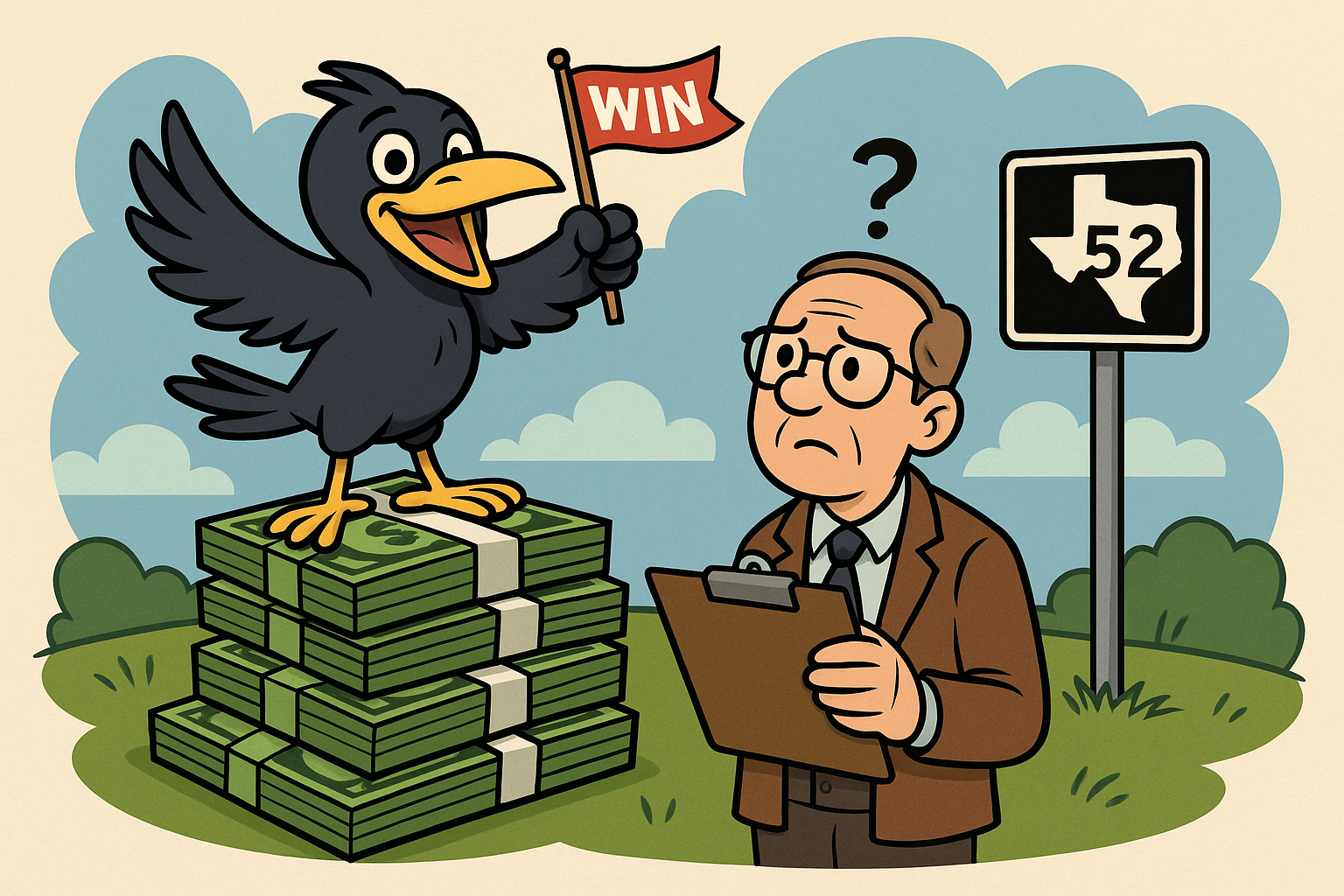
    Right after I finished writing about how rare those are, I jumped into my usual search and came across something that looked promising. Asking price: $3.5M.

    It’s not an area I work in much, near Texas Motor Speedway. Tons of development happening out there. And a quick check showed that several major players already own the land close by.

    That alone tells you a lot. When I say decades of experience pay off, this is what I mean. Not only can what and where tell you something, but who is a big factor too.

    Now, I wasn’t 100% sure it was a deal. But it was close enough to rattle a few cages. That’s another piece of experience: knowing when to share something and when to hold back. You don’t want to be the boy who cried wolf, but you also don’t want to miss something real.

    I’ve done both. It stings more when you don’t share and that person ends up buying it through someone else.

    So I reached out to the listing broker with basic questions about utilities, zoning, etc., and then contacted a client who could handle a deal that size.

    Then I waited.

    Later that evening, I got a mass email from the broker. Turns out their office made a mistake. The asking price wasn’t $3.5M—it was $4.9M. If anyone wanted to update their offers, now’s the time.

    Apparently, they got multiple contracts within hours. Meaning my gut was right: at $3.5M, it was a deal.

    At $4.9M? Not so much.

    So I’ll keep looking.

    And as always—if you ever need someone who can spot these things before the crowd, you know how to reach me.


  • Getting Paid Like a Genius After Decades of Eating Dirt

    Getting Paid Like a Genius After Decades of Eating Dirt

    Overnight success 20 years in the making

    A while back I sent a message saying my commission on a particular deal might’ve worked out to about $3,000 per hour. And yeah, that can sound ridiculous.

    Heck, even I think it sounds ridiculous sometimes.

    What’s easy to forget, even for me, is all the work I didn’t get paid for that made that outcome possible.

    All the deals that fell through? I learned from every one. That’s how I know what to watch for now. That’s how I help clients avoid wasting time on bad deals or pricing land in a way that ignores costs buyers will absolutely notice.

    All the time I spend combing through MLS and off-market listings? Most of that is “wasted,” too. If something’s a true deal and advertised broadly, it disappears fast. So I’m sifting through endless overpriced listings or stuff with obvious problems.

    I look basically every day. On a good year, I might find 2–3 truly great deals that way. What’s “great”? The kind of deal I can sell with one phone call.

    When that happens, yeah—it might look like I got paid an absurd amount for doing barely anything. But for that to happen, a ton had to be in place beforehand:

    • I need to recognize a deal instantly
    • I need a reputation with other agents that makes them want to work with me, even if it takes an extra day
    • I need clients who trust me enough to move the second I say go

    To the naked eye, it might look like I clicked a few buttons, made a couple calls, and cashed a check. But the only reason that can happen is because of decades of work, most of it unpaid.

    The good news is: that work can benefit you now, too.

    Just let me know when you’re ready to put it to work.


  • The Answer to Every Question in Real Estate

    The Answer to Every Question in Real Estate

    In my business, “it depends” is a real answer not a cop-out

    Back when I was at the University of North Texas, my favorite professor was a guy named Dr. John Baen. He was one of those colorful real estate personalities—funny, sharp, and full of stories from the real world. Nobody missed his class because you never knew what he was going to say next.

    He wasn’t just a professor—he was also a practicing broker. So when he talked, you knew it wasn’t theory. It was the way things actually work.

    I don’t remember a lot from college. But I do remember things he said, like:

    • You don’t want to make straight A’s—the C students end up making all the money (thank God).
    • Don’t be a crook.
    • If you’re in real estate long enough, even if you aren’t a crook, you’ll eventually get sued. (Hasn’t happened yet—fingers crossed.)

    But the one I’ve never forgotten was on the first day of class:

    “The answer to every question in real estate is: it depends.”

    At first, it sounded like a joke—or maybe just a way to avoid giving a straight answer. But over time, I realized it’s the most honest response you can give.

    What’s your land worth?

    It depends—on zoning, access, floodplain issues, comps, demand, utilities, timing… and all of that can change.

    Is now a good time to sell?

    It depends. What’s your plan? What does it cost to hold it? What are you comparing it to?

    Most of what you hear online is too generic to be helpful—and sometimes, it’s flat-out self-serving. The truth? Real estate is local, situational, and constantly changing.

    If you own property in North Texas—Grayson, Collin, Denton, or somewhere nearby—there’s no one-size-fits-all answer.

    But I can give you a real one.

    No pressure. Just data, comps, and honest advice.

    Because in real estate, the only real answer is:

    It depends.


  • A PhD in Shut-Uppery

    A PhD in Shut-Uppery

    The less you’re talking, the more you’re probably winning

    Not talking might be the most powerful negotiating move you’ve got. Just not talking. No pitch, no follow-up, no filler.

    Maybe a bit of an exaggeration, but not by much. Silence makes most people squirm. And when they’re uncomfortable, they talk. And when they talk, they say more than they should.

    I first heard the advice “just shut up” early in my career. I was helping an acre-lot developer try to acquire a tract. We took the seller to dinner. Every time the conversation slowed down, I jumped in to keep things moving—just like you’ve probably seen plenty of agents do.

    Afterward, the buyer pulled me aside and shared something he’d read in a book on unconventional negotiation:

    Stop talking. Let the silence work.

    Being a natural introvert, I didn’t need much convincing. I tried it out, and the results were immediate.

    Fast forward a few years. That developer had become a publicly traded homebuilder. Same guy in charge of acquisitions. I was helping them with a deal in Seagoville that had gone cold. I set up a call with the seller. After introductions, I didn’t say a word. My client barely said anything either. But five minutes later, the deal was done. Big one, too.

    When the seller dropped off the call, my client laughed and pointed out that I hadn’t said a single word.

    I reminded him: “I’m just doing what you taught me.”

    He nodded. “You did it right.”

    Now, I’ll admit my way isn’t always flashy. Sometimes it doesn’t look like I’m doing anything. But if the deal gets done, isn’t that what actually matters?

    Especially if you don’t have to sit through a bunch of pointless yammering to get there?


  • Advanced  Lessons in Shut Uppery

    Advanced Lessons in Shut Uppery

    Talk big, get busted. Hire someone who knows better.

    Before I got into real estate, I had my sights set on being a professional pool player.

    I learned a couple things quick:

    1. It was a lot harder than it looked.
    2. There wasn’t much money in it. Not back then, and even less today.

    Back then, you could catch the big tournaments on ESPN. Now you’re lucky to find a livestream that works. A handful of players could make a living on tour. Most couldn’t. If you wanted to make money playing pool, you gambled.

    I gave up the dream, but kept playing. And I was good, a notch or two below great. In the right setting, to the average person, I could look like a world-class player. But anyone who really knew the game could spot the gap in a heartbeat. I was just good enough to be dangerous, to myself if I wasn’t careful.

    Luckily, I knew who the real players were. And I kept my mouth shut.

    One night, I was sitting at the bar in a poolroom, a couple seats down from the owner. A guy who, if you told certain people he was the best in the world at one time, they wouldn’t laugh. They might not all agree, but it wouldn’t be a ridiculous claim. He was certainly one of the best.

    In walks this other guy I know. Full of himself, always name-dropping. He starts talking loud about how he just played and beat the guy sitting next to me at another pool hall. Obviously didn’t even really know who he was, other than the name.

    We didn’t say a word. Just let him talk.

    Sometimes the best way to save someone from embarrassment is to let them walk away thinking they impressed you.

    So what’s this got to do with real estate?

    Not much — except it’s the same kind of game.

    There are a lot of loud voices out there trying to sound smart. Name-dropping builders. Quoting bad comps. Acting like they know the players. But if you really know what you’re looking at, it’s easy to spot who’s bluffing.

    I don’t just know land and development, I know the people behind it. And they know me. I don’t run around bragging about it and making it about me, which is part of the reason they will talk to me. And by talk I mean in a way that might actually help a deal happen, instead of just to get me to go away.

    Am I ever wrong? Sure. But I don’t say things just to impress people, and hope I don’t get found out.

    Isn’t that the kind of guy you want on your side?

    If you’re ready to get started, just let me know here.


  • Flipping the Script on Water Companies

    Flipping the Script on Water Companies

    Sometimes you have to get creative

    I’ve talked a lot about water. How critical it is to property values. How frustrating the water companies can be. And how the whole thing can feel like a bit of a racket.

    Other utilities matter too, but they’re often easier to manage.

    No sewer? You can always go with septic. It means your lots have to be larger, typically at least one acre depending on the location, but development is still very doable.

    Electric is usually not far away. Most providers will bring power to the front of your property at no cost. From there you just cover the cost of running it to your home or development. Unless you’re miles from the grid, which is unlikely around here, it’s almost always manageable.

    Internet is getting more important all the time. If someone wants to live in an outlying area and can afford today’s prices, it’s almost a given they work remotely at least part of the time. Ideally there’s fiber or at least DSL available, and that’s becoming more common. But even if not, there are cellular and satellite options that are improving fast and can bridge the gap.

    But water? You can’t work around that. If you don’t have water service, there’s not much you can do.

    You need water to build. To develop. To sell smaller tracts. You can drill a well, but that’s expensive and the water quality can be hit or miss.

    Water is the gatekeeper, and the water companies know it. That’s where the racket comes in. You need them, and they don’t have competition. So they make the rules.

    But there are ways to turn the tables.

    Years ago I was part of a group buying land as an investment. We knew a larger line would be needed for future development, so we met with the local co-op. Of course they wanted us to pay for any improvements.

    But then they mentioned they were looking for a new well site, possibly on the west side of our land.

    Instead of negotiating the sale price, we offered to donate a site on the east side. That meant they’d have to run a line across the front of our property.

    That move didn’t just help the water company. It made our land more valuable and future-proofed development.

    That’s the kind of thinking I bring to a project. I’ve built solid relationships with utility providers. I know what’s possible, and I know how to get it done even when it feels rigged.

    When you’re ready to buy, sell, or develop land in North Texas, I can help you avoid the headaches and find the wins others miss.

    Just tell me when.


  • Why It Looks Easy (But Isn’t) and Sounds Expensive (But Not Really)

    Why It Looks Easy (But Isn’t) and Sounds Expensive (But Not Really)

    You’re Not Paying for the Hours You See—You’re Paying for the Years You Don’t

    Expanding on what I said yesterday about how the real work happens before a property ever hits the MLS…

    It’s kind of like watching an NFL quarterback drop a 46-yard touchdown pass right into a receiver’s hands. On TV, it looks effortless. Like anyone could do it. Just drop back and throw it—he was wide open.

    But you can’t. And that’s the point.

    You don’t see the years of work it took to make that moment possible. All the early mornings, late nights, missed throws, and unpaid effort. He didn’t get paid for any of that. He hoped it would pay off later. He bet on himself.

    And that’s the difference. The guy who insists on getting paid before doing anything? He never puts in the reps it takes to earn the big checks. Because he never gets good enough.

    Now, I’m not pulling down $60 million a year like our local QB. Not yet anyway. But when it comes to real estate, I can close the big one. And your deal is the big one—whether it’s the highest dollar amount I’ve got or not.

    Sometimes I do all the work and don’t get paid. Spent money. Spent time. And the deal falls apart. Seller backs out. Market shifts. Life happens.

    That stings in the short term. But I don’t walk away empty-handed. Every deal—win or lose—adds to the knowledge base. And that knowledge pays off down the line.

    Over 25 years, I’ve built a deep arsenal of experience. Most of it didn’t pay right away. Some of it still hasn’t. But when it does—it’s worth it. For me, and for my clients.

    That’s what you’re getting when you work with me:
    The hard work I’ve already done.
    The mistakes I’ve already made and learned from.
    The insight that puts you in a better spot than you would’ve been with someone still figuring it out on your dime.

    Sure, I charge a lot. I’m worth it. And most of the time, my clients still come out ahead—not just in dollars, but in knowing they were treated honestly and had a truly competent broker in their corner. No second-guessing. No wondering if they just got worked over.

    If you’re thinking about selling—or just want a no-BS look at your options—reach out. I’ll give you a straight answer, no pressure.

    Let’s make the next move the right one.


  • (Much) Harder Than I Make it Look

    (Much) Harder Than I Make it Look

    It just looks easy because of everything I did before we met

    It doesn’t happen every time, but it’s not unheard of for properties I list to move really fast. It can look like we sign a few documents, I put some info into MLS, and take a few pictures. Then boom, it’s under contract before your coffee gets cold.

    It’s not luck, and it’s not magic.

    OK, sometimes there is a little luck involved. Although some people say you make your own luck.

    But it is a lot harder than I make it look.

    Selling land isn’t like selling a house. You can’t just guess based on what the neighbor’s asking and hope it sticks. Every property has its own quirks—some of them obvious, some hiding in the fine print or buried under a brush pile.

    You’ve got to know how to price it, how to position it, and what questions to ask before someone else finds the problem during their inspection period. That’s the kind of stuff that kills deals, or keeps a property sitting on the market for months longer than it should.

    Most of the work I do happens before it ever hits MLS. That’s where the value is—figuring out the real story of the land, not the made-up one. That means calling the county, checking surveys, reviewing restrictions, walking the property, and putting the right comps together. It’s not glamorous, but it works.

    The goal is to make it look simple when it hits the market. Good info, clean photos, a fair price based on real data—and a plan to back it all up.

    So no, it’s not easy. But I don’t mind doing the hard part.

    If you want to know what your lot or land is really worth—or why it hasn’t sold—just email me here.

    I’ll shoot you straight. No pressure, no pitch. Just the truth, even if it’s not what you were hoping to hear.


  • Avoiding Self-Inflicted Wounds Since 1999

    Avoiding Self-Inflicted Wounds Since 1999

    I’ve been learning from mistakes (mine and others) for a long time

    A client of mine recently went under contract on a tract we think is prime for an acreage lot development. It’s outside any city limits—thankfully—so we’re dealing with the county instead of some slow-moving municipal planning department.

    County processes? Still not fast. But we’re talking 1–2 months for plat approval instead of 5–6. That’s a win.

    Even better, the seller had already started working with an engineer, so we’re ahead of schedule compared to most deals like this.

    But before you do anything with a plat, you have to confirm the local water co-op has capacity to serve the project. If they don’t, you need to know what has to happen to get service.

    That starts with paying $1,000 to their engineer—just for them to look at it. Seems like a few hours of work, right? Nah, they’ll quote you “a few weeks.” Feels like a racket because it kind of is. But here we are.

    Knowing this, I negotiated a 60-day option period for my client to complete due diligence. And in case we needed more time, we got two 30-day extensions built in—for a nominal fee that gets credited toward the purchase price. So, effectively free if the deal closes.

    Now here’s where things really went our way:

    The engineer came back quickly (shocker) and confirmed there is capacity—without needing system upgrades. That never happens. But we’ll take it.

    Phase I of the plat has already been approved. It just needs to be filed, and we can start selling those lots—they don’t require new streets. The rest of the plat is moving toward approval too.

    Now the seller wants to know: “Are you going to skip the extensions and close sooner?”

    I haven’t even asked my client, but I can already tell you the answer—hard no.

    Here’s why:

    When you’ve got a property under contract, you control it—without paying for it yet. That means we can start talking to builders and buyers, even write contracts on the lots. We just can’t close those until we officially own the land.

    Meanwhile, the purchase money? Sitting in my client’s bank account, earning interest.

    No brainer.

    When negotiating, I honestly expected the seller to insist that any extension fees be added to the price, not credited toward it. And that it be new money, not just a release of funds already at title. Nothing too crazy—just enough to make it worth our while to forgo an extension we don’t really need. And we’d have agreed to it.

    Why didn’t he? No idea. Maybe he didn’t think it through.

    Why didn’t I point it out? I’d have been breaking my fiduciary duty to my client. Plain and simple. It’s my job to get my client then best deal, not the other way around.

    So here are two takeaways:

    1. If your contract gives a buyer extension options, assume they’ll use every single one and close on the last day possible. That’s just smart business on their part.
    2. If you’re not experienced negotiating land contracts, there’s a good chance you’ll put yourself in a non-ideal but avoidable situation. This can cost you time, money or both.

    Having the right person on your side matters. Not every deal is perfect, but if I’m representing you, you’ll know exactly what you’re getting into—before you sign anything. Not after.

    Thinking about selling? You know where to find me.