Author: MB

  • Doing What Everyone Else Is Doing Ain’t Enough

    Doing What Everyone Else Is Doing Ain’t Enough

    Scroll less. Do more. Whether it’s land or a job

    I’ve been helping my daughter look for a job lately. Like a lot of people, she’s been combing through Indeed and ZipRecruiter. Good places to start, but it’s only a start.

    We talked about how most job seekers stop there. They wait for something to pop up on a listing site. Then they apply—usually only if it feels like the perfect fit—and wait. And then they sit around wondering why nothing’s happening.

    If you really want to stand out, you’ve got to go further. Apply to jobs even if they’re slightly outside what you’re looking for, as long as you’re qualified. Not every opportunity gets posted. There might be a better role that isn’t public yet, or one that could be shaped around the right person.

    Check company websites directly. Reach out to businesses even if they don’t have anything listed. Tell them what you’re looking for. Get on their radar before they realize they need someone.

    Sometimes the payoff isn’t immediate. But showing initiative, doing what others won’t, leaves a mark. A hiring manager might not respond today, but when something opens up next month, they may remember the person who reached out. That kind of effort stands out.

    And don’t forget—your next job almost certainly isn’t your last, especially early in your career. The best time to find a job is like the best time to find a car: when you don’t need one.

    So when you do land something, you don’t stop looking. You just get more selective. And because you’ve already gotten yourself in front of more employers than most people, you’re ahead of the game. Your network keeps growing, and opportunities start to build on each other.

    It’s the same in real estate.

    I talk to a lot of people—buyers, sellers, curious neighbors, folks who aren’t quite ready. Most of those conversations don’t turn into a deal that day. But they all matter. The compound effect of those touchpoints builds relationships, credibility, and trust. You never know which one will circle back into something real.

    The market rewards consistency and integrity. Not every action has a dollar sign attached. But if you keep showing up and doing what others skip, you build momentum. That momentum turns into opportunity.

    If I’m running comps every day, I know a good deal when I see it—or when someone mentions wanting to sell fast. If I’m regularly talking to buyers, I know exactly who’s looking for what. When those pieces line up, it can look like an overnight success. One or two phone calls, and suddenly it’s a five or six-figure deal.

    It might sound like a lucky break. But in reality, I’ve been working on that deal for years without knowing it. And when the timing is right, it pays off.

    But I don’t stop there. I keep having conversations, sharing what I know, and doing the kinds of things that help people and add value. Working on the next opportunity—before I even realize it’s an opportunity.

    Whether you’re job hunting or buying land, the people who get ahead are the ones who do what others won’t. And they do it consistently.

    The funny thing is, all of this looks obvious in writing. But it takes years to make it work the way it really can. So if you’re thinking about buying or selling real estate, doesn’t it make sense to work with someone who’s already been doing the work that will pay off for you?


  • Who’s Buying Your Land—and Why Do They Insist on Wasting Your Time?

    Who’s Buying Your Land—and Why Do They Insist on Wasting Your Time?

    Not all buyers need the same thing—or can pay the same price

    When you’re selling land, the dream is simple: some rich genius shows up, offers over asking in cash, and closes by 3 p.m. today.

    Unfortunately, that’s not how it usually goes.

    In the real world, buyers vary. Some will pay more than others. Some move fast, others move like molasses. And the more they’re willing to pay? The more time they’re going to need.

    That’s not a red flag—it’s just the cost of doing business, especially when permits, zoning, and government hoops are involved.

    To the uninitiated, the timelines can sound ridiculous. But they’re usually not—they just are what they are.

    This is where a pro comes in. Someone who knows what’s reasonable, how to keep the deal alive, and how to make sure you don’t end up empty-handed if it falls apart.

    If you’re in the market for a pro… I know a guy.

    Here’s a breakdown of the three main buyer types, what they pay, how they think, and how long they take to close.


    These are margin-hunters. They’re not flippers—they’re professional opportunists. The worse your situation looks, the better their offer gets (for them).

    Most of those “We want to buy your land!” letters come from this camp. They’re pulled from tax rolls, mass-printed, and sent to anyone with dirt and a mailbox. The offers are low—laughably low. But a few people say yes, and that’s all they need to make the model work.

    What They’ll Pay:

    The absolute bottom. They’re shooting for big discounts—well under market.

    Contingencies:

    Almost none. No inspections, no appraisals, no drama. They’ll usually cover closing costs to keep it simple.

    Timeline:

    Fastest. Once they’ve checked title, they’re ready to wire funds. You name the closing date.

    What They Want:

    A deal they can brag about. If you’re chasing top dollar, skip ’em. But if you’re in a jam—or chasing a better deal—they’ll clear the runway fast.

    If you do go this route, talk to more than one. Make them compete. Then call me—I’ve got real cash buyers too, and I might be able to get you more without slowing things down.


    This group includes builders, subdividers, and buy-and-hold folks. They’re not sentimental—they’re running numbers. If it pencils out, they’re interested.

    What They’ll Pay:

    More than vultures, but still under market. They’re looking for today’s discount and tomorrow’s upside.

    Contingencies:

    Some. Financing, surveys, maybe a feasibility period—but it’s all pretty reasonable.

    Timeline:

    Shorter. They won’t close overnight, but they move quickly if the deal’s clean.

    What They Want:

    Future value. Appreciation, income potential, or development opportunity. They don’t need a screaming deal—but it has to make sense on paper.


    These are end-users. They’re building a house, a business, or an entire subdivision. Real money, real plans, and usually a lot of homework.

    What They’ll Pay:

    Top of market—or even above—if your property fits what they need.

    Contingencies:

    Plenty. Surveys, engineering, environmental reports, zoning, utilities, site plans—you name it. Cities, counties, and agencies all get a say. And none of them are known for speed.

    Timeline:

    Longest. Not because they’re dragging their feet, but because the process is the process. If they need annexation, zoning, or approvals, it’s a long haul. Six months isn’t unusual—and that’s optimistic.

    What They Want:

    Certainty. They’ll pay more, but only if they’re confident they can build. No approvals = no deal. On the plus side, they pay for the due diligence. And with the right contract, you get copies of everything they generate. Worst case, you might walk away with a free survey, topo, or environmental report.


    Price, contingencies, and time all come down to the kind of buyer you’re dealing with.

    Want it done fast? Be ready to take less.

    Want top dollar? Be ready to wait.

    Know who’s across the table, and you’ll know what kind of offer’s coming. And if you want someone who can help you figure that out—I know a guy.

    Just reply here and ask me about him!


  • Why I Don’t Nickel-and-Dime People in Business (Except for Car Dealers)

    Why I Don’t Nickel-and-Dime People in Business (Except for Car Dealers)

    I’ll squeeze a car dealer like a lemon—but I won’t lowball a pro.

    I was buying a car for my wife recently and negotiated with several dealerships at once—exclusively by email. In my opinion, that’s the only way to get the best result (more on that another time).

    I wrung every nickel out of the deal and ended up with a better price than I expected. More importantly, my wife’s happy.

    Whenever I’m buying a car, jewelry, real estate—anything like that—I approach it the same way. I work the numbers hard, and if I don’t like the deal, I walk. No hard feelings.

    But when it comes to professional services? I don’t negotiate rates. Not one bit.

    Now, a fee might be more than I’m willing to pay for my situation, and I may decide to go elsewhere. But I’ll never ask a real estate broker, attorney, accountant, or consultant to “do it for less.”

    These folks have the same 24 hours in a day as anyone else. The best in their field bring real value, and they expect to be paid for it. They deserve to be.

    Top professionals are usually in high demand. Their schedules are packed. Every hour they give me is an hour they can’t spend with someone else. If I ask them to cut their rate, I’m not just negotiating—I’m taking money out of their pocket. That’s not right.

    At best, they’ll turn me down. At worst, they’ll take the job and resent it. Either way, I lose. And I definitely don’t want someone working for me half-heartedly because I pressured them on price.

    If I hire someone, I want them all-in. Focused. Energized. I want them glad they’re working with me—not counting the minutes.

    Now look—I get how this could come across as self-serving. I’m in real estate. But I think you know where I’m coming from. If you’re hiring someone to help sell your property and you want the best, why shoot yourself in the foot by asking for a discount?

    That’s not negotiating—that’s working against your own interest.

    Now, it’s totally possible that what you need can be handled by a discount broker. If so, I’ll tell you. I might even help you find one.

    But if you’re looking for a seasoned pro with a track record of strong results, it just makes sense to pay what they’re worth.

    If you’re ready to sell your property, just respond here.


  • Don’t Let Regret (or Fear of it) Run the Show

    Don’t Let Regret (or Fear of it) Run the Show

    Overthinking rarely leads to better outcomes—just longer delays

    This would be a good time to remind everyone I’m not a CPA, a financial professional, or an attorney. I’m a real estate broker. This isn’t financial or legal advice. Talk to a professional before making any big decisions.

    Back when I got into real estate, there was a broker who used to say, “Any deal is a good deal if you give it enough time.”

    Half joke, half truth. I watched him put people in deals that eventually worked out—but took a lot longer than he probably sold them as.

    Even if you overpay around here, odds are you’ll be “proven right” if you wait long enough. I’ve seen people make good money off properties I thought were overpriced 20 years ago. All of them are worth more now.

    A smart aleck might say my only mistake was doing due diligence.

    But here’s the thing: annual return matters more than gross return.

    Sure, land held for 20 years might look good on paper. But what could that money have been doing for you in the meantime?

    By buying and selling when prices were good relative to the market, my clients often made better returns than if they had just held.

    That doesn’t mean you should sell just because. But it also doesn’t mean you should hold forever out of fear you’ll regret it.

    Here are a few good reasons to sell:

    • You need the money. (I’ve got kids in college—enough said.)
    • You’ve got a better opportunity. Favorable tax treatment might make it smart to sell one and buy another.
    • Estate planning. Sometimes selling is simpler and keeps peace in the family.
    • You want more land and less traffic. Sell in the growth area, move a little further out, and repeat. Plenty of people have built wealth this way.

    The point is: no matter what you do, you might feel like you made the wrong call later. That’s normal. But it’s also not helpful.

    Do the best you can with the info you have, for the right reasons at the time. Then look forward—not back.

    No pressure. But if you’re ready to talk it through, you know where to find me.


  • You Don’t Know, til You Know

    You Don’t Know, til You Know

    Nothing’s Final ‘Til the Dirt Turns

    If you live in North Texas, you know two things: people are always moving here, and traffic keeps getting worse.

    The cities, counties, and state can’t build roads fast enough to keep up. And in my line of work—land and lot sales—knowing what roads are planned is part of the job.

    Property owners near these proposed roads usually know something’s coming. Once word gets out, their price expectations go up—sometimes way up.

    But here’s the catch: just because a road is “planned” doesn’t mean it’s happening any time soon—or at all. Projected dates mean nothing if the money’s not there. And politics can shift everything: the timeline, the location, or whether it gets built at all.

    Case in point: the Collin County Outer Loop. It was first announced back in 2010. A few segments are driveable now. The rest? Still on paper.

    One of my clients bought land near the “technically preferred alignment” not long ago—well after that 2010 route was released. Fifteen years passed with very little movement. Then, just last month, the county came out with four updated alternatives. Good news: all four ran right by our property. Even better news: it was in a prime spot, potentially on the corner.

    So we celebrated—too soon.

    Turns out, those four aren’t final. The alignment could still change. And until it’s locked in, we can’t sell. The value depends entirely on where that road ends up.

    Another property I handled had a highway interchange announced on it. One proposed route would’ve made the land worthless. The other? Worth millions. Thankfully, it went our way—but it was a stressful ride.

    Bottom line: until the dirt is turning, nobody really knows. Not the government, not the engineers, not the landowners—nobody.

    Sure, it helps to have the best info you can get. Just don’t bet the farm on it.

    Want to know what roads might be planned near your land? I’ll tell you what I know—no charge.


  • Getting In the Way of My Own Success

    Getting In the Way of My Own Success

    Some people say you make your own luck

    “Sow your seed in the morning, and at evening let your hands not be idle, for you do not know which will succeed, whether this or that, or whether both will do equally well.”
    — Ecclesiastes 11:6

    When people say someone’s “getting in the way of their own success,” it’s usually a dig—like they’re sabotaging themselves. Looking in the mirror and seeing their own worst enemy.

    But I mean it differently.

    I mean setting things up so that small wins today create bigger wins tomorrow. Succeeding now, while positioning myself for even greater success later.

    Colleagues sometimes ask why I bother listing and selling custom home lots. I’ve spent years building the relationships and knowledge to work on larger land and development deals. My time is limited. So why “waste” it on smaller transactions, when I could be chasing deals that might pay 10x—or more?

    I usually say two things:

    1. I like helping people.
    2. These smaller deals tend to move faster and help smooth out my income.

    And that’s true.

    But the real reason?

    My long-term success depends on staying connected to investors, developers, and builders. Who owns custom home lots? Often, those same people.

    Here’s an example:

    A few years ago, I listed a lot for a guy who had shifted from homebuilding to commercial and multifamily work. I sold it, did my job well, charged my standard fee—and moved on.

    A few months later, I got a call from someone looking to invest in the same area. He’d been referred by the construction guy.

    It’s been nearly four years since that intro. The commissions I’ve earned from helping this new client buy and sell land? Over 150 times what I made on the original lot.

    And that’s not counting the deal we’re working on right now (had to stop while writing this to discuss)—which could be substantial as well.

    That’s just one story. It’s not the only one. The point isn’t to brag—it’s to show this was intentional. I don’t know in advance who’s going to refer me, but I know they’re out there. Every listing creates that chance.

    Worst case? I help someone sell something they don’t need, put the money to better use—and maybe make a friend.

    Best case? The upside is enormous.

    And you know who else might benefit from this network I’ve built?

    Maybe you.


  • Am I Even A Real Person?

    Am I Even A Real Person?

    No meetings. No hassle. Just sold

    I’ve said before that in a high percentage of the land deals I handle—especially lots—I often don’t meet my clients until we’re signing documents at the title company. Sometimes, I don’t meet them at all.

    I do try to be at the closing, shake your hand, and say thank you in person. But sometimes it just doesn’t work out. Closings can happen without me there.

    Here’s a funny story from a few years ago: I sold a lot and couldn’t make it to the closing. I’d handled everything by email—pretty typical—and I don’t think I ever even spoke on the phone with the seller.

    She showed up at closing and asked the title agent:

    “Is Mike Browning even a real person?”

    The agent laughed and assured her I was. Said I was a great broker to work with.

    When I close deals with a new title company, I try to get there a little early. The staff are often surprised that I don’t know what my clients look like. Apparently, that’s unusual.

    If you’re selling a house, there’s a lot that needs to be shown, explained, and coordinated. And if someone’s going to be walking through your home while you’re not there, it makes sense to have met them and sized them up.

    But land—especially lots—is different. It’s usually straightforward. You just need someone who knows what to look for and what they need to know. With my experience, I can find all the key details (and probably a few you hadn’t thought about) without needing to meet in person.

    And you’re never committed to selling until you’re fully satisfied with the deal. You don’t owe me anything until the sale actually closes.

    I like to think my ability to close deals this way comes from writing clearly and helping people feel at ease. But really, most of the time, in-person meetings just aren’t necessary for this sort of thing.

    It’s not that I don’t want to meet you—we’re all just busy. Selling a piece of land usually isn’t at the top of your urgency list. So why not make it simple?

    My goal is to meet you once: at closing, when you’re being handed a check (or prepping for a wire). That way, our one in-person meeting is a good memory.

    No pressure. When you’re ready, I’m here.


    Got a lot you might want to sell?
    Get a FREE, no obligation report on what it could sell for today.
    Get Your Lot Valuation

    Own land instead?
    Get a report for that here:
    Get Your Land Value

    Just a glutton for punishment?
    Sign up now to get more articles like this in your email.
    Sign Up Now

  • If They Knew, They’d Be on a Boat

    If They Knew, They’d Be on a Boat

    Take predictions with a grain of salt, no matter how convincing

    Even if you don’t watch them regularly, I’m sure you’ve seen the financial news channels—the ones with talking heads predicting where this stock, that stock, or the whole market is headed.

    And I’ll admit, some of them sound pretty sharp. Convincing, even.

    But here’s the thing:

    If they really knew what was going to happen, they wouldn’t be on TV. They’d be retired on a yacht somewhere. So let’s be honest—they’re at least a little bit full of it.

    Same goes for real estate. There are plenty of people out there ready to tell you exactly what the market will look like six months or a year from now. And they can sound pretty slick while doing it. But be careful. Even if they end up being right, that doesn’t mean they actually knew anything.

    Anyone who claims to know the future—or promises specific results in selling real estate—is either lying or fooling themselves. And like I’ve said before, either way, that’s not someone you want working for you.

    You can ask me what I think is going to happen, and I’ll tell you: I don’t know. Historically, land values tend to go up. But it’s not a straight line, and it depends on a lot of factors. What I can do is show you what’s happened recently and give you a sense of today’s market—assuming things stay reasonably steady.

    Am I ever wrong? Sure. Just ask my wife. Or my kids.

    But I’ll never just tell you something I don’t know, just because it sounds good.

    As always, no pressure. Ever. But you can get me here anytime if you’re thinking about selling.


  • They want to buy my truck (at the cost of my sanity)

    They want to buy my truck (at the cost of my sanity)

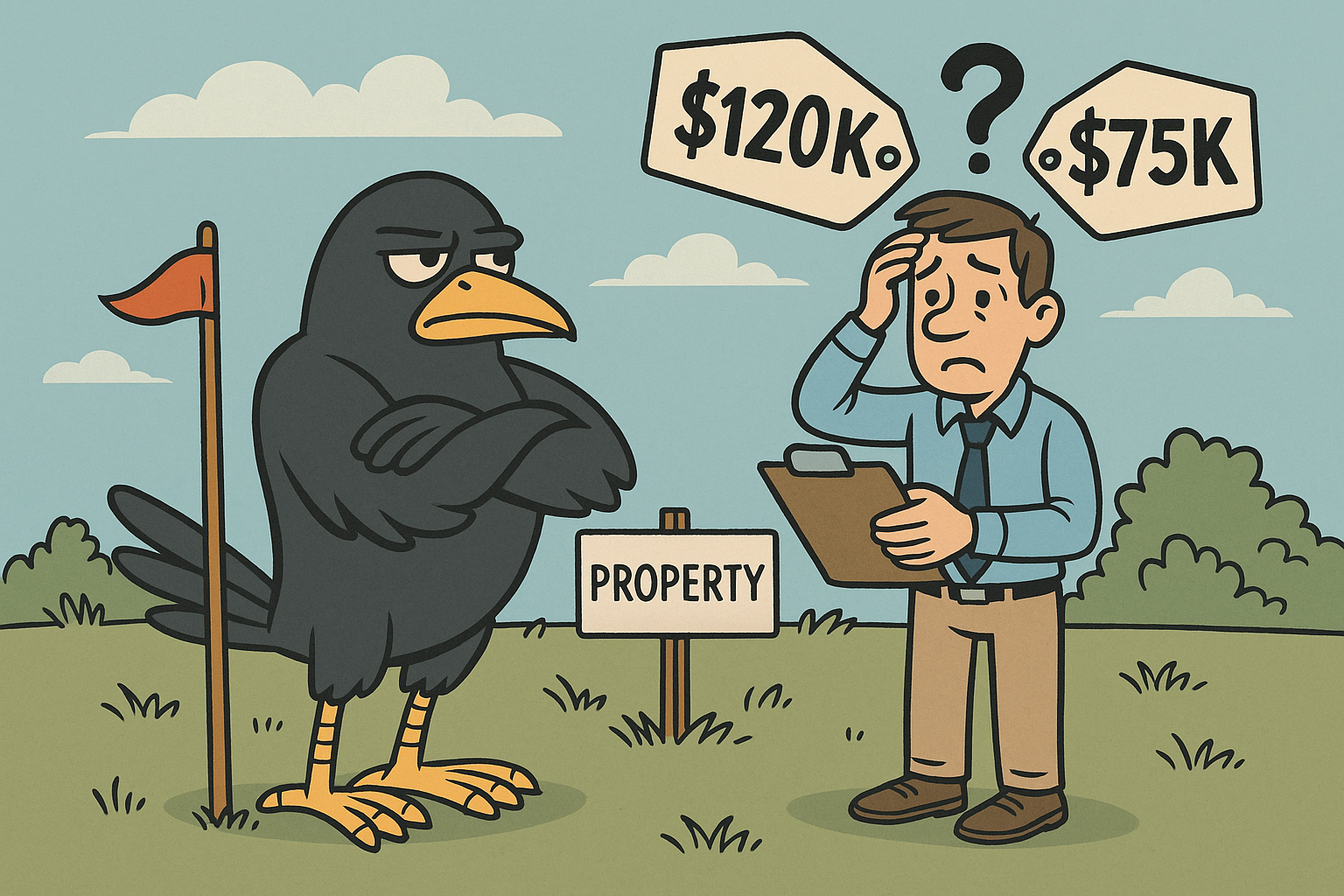
    Curiosity didn’t kill the crow—but it sure blew up his phone.

    I recently made the mistake of entering my info into one of those “we want to buy your truck” ads.

    I like my truck. I own it outright. There’s no way they’re giving me enough for it to get a new one without payments—so what’s the point?

    Well… I’m curious. And I couldn’t help myself.

    So I punched in all the info. And surprise—it was worth more than I thought. But like I said, still not enough. And I knew that going in.

    Now I’m paying for it.

    Multiple calls. Texts. Emails. Every day.

    The ad should’ve read:

    “Find out what your truck is worth—and also let us call you during dinner every night.”

    I’ve told them I’m not interested. Doesn’t matter. They keep trying new angles:

    “If anything changes, let me know!”

    “May I ask what you’re willing to sell it for?”

    “Would you consider trading it in?”

    And so on. Forever.

    Look—I’m not mad at the guy making the calls. He’s just doing his job. Somebody somewhere has decided this makes money. I guess it must.

    But there’s got to be a better way to follow up without actively annoying the person you’re trying to win over.

    Then again, it’s car sales. Maybe they’ve just accepted that alienating people is part of the process.

    Anyway, I’m in sales too. I get it. Most people don’t decide to work with you unless you ask them.

    But this is why I don’t cold call. I don’t text unless we’re working a deal. It’s intrusive. Pushy.

    I do email. A lot. Almost every day. Sometimes more, if we are doing business.

    But you can read or ignore it on your terms. And hopefully, it’s either helpful or entertaining—or both.

    And yes, I usually end these emails with a reminder that when you’re ready to buy or sell land, I’m easy to find.

    But you’ll never feel hounded. Promise.

    And if these ever feel like too much?

    Just hit unsubscribe. I’ll miss you, but I won’t bug you.

    Can’t say the same for the truck guys.


  • Hourly Rates That Would Make a Lawyer Blush

    Hourly Rates That Would Make a Lawyer Blush

    I’ve been working with a homebuilder recently who asked me to help him find 20–30 lots to build on. These are smaller, in-town lots—not the acre-plus kind many of you own.

    We spent about three hours driving around the area he was targeting. The next day, I spent an hour reaching out to builders and developers in that part of town, and another hour following up.

    It’s not a done deal yet, but I’m about five hours in, and I think we found the right fit. If this closes, I’ll probably make around $3,000 an hour on this deal, assuming a few more hours managing the transaction.

    Sounds ridiculous, doesn’t it?

    Well, not really.

    That kind of result only looks easy. I’ve spent years building the relationships it takes to pull something like this off. Builders and developers are swamped. And in my business, there are plenty of people who will waste your time—or worse. So getting these folks to even respond, much less share useful info that could help a deal come together, isn’t something most people can do.

    There’s no charge to the client unless we close, so there’s no risk on their end. And I’ll admit, I probably got a little lucky finding a match this fast. Normally, it takes longer. But this is why experience matters.

    What does my client think about the fee?

    He’s thrilled. Honestly, if I’d asked for more, I think he would’ve paid it. A builder makes money when he sells houses. If he doesn’t have lots to build on, he can’t sell anything. So the faster he gets lots, the faster he can do what he’s in business to do. He wants to pay as little as possible, sure—but he also knows value when he sees it.

    There are discount brokers out there. But when you’re not paying anything up front, and when you’ve got someone with real business negotiation experience (not just sales experience) working for you, chances are you’ll come out ahead—even if the commission isn’t the cheapest.

    Add in the peace of mind of having an honest advocate in your corner, someone with the right experience and connections to help make things happen faster?

    That’s an easy decision.