Author: MB

  • Good Enough Gets Better Results Than Perfect

    Good Enough Gets Better Results Than Perfect

    If you’re trying to “get it right” before you start, you’re probably lying to yourself.

    I’ve written before about goal setting and success, and the basic formula is pretty simple:

    1. Decide what you want.
    2. Figure out what it’ll take to get there — or what it’ll cost.

    Then comes the step everyone forgets: check if what you did actually worked. If it did, great. If it didn’t, adjust and repeat. Every round should get you closer.

    Most people get stuck at step 2. I see it all the time. A client once told me they were “waiting until they figured everything out” before listing their land. A year later, prices dipped, interest rates spiked, and the window they thought they had disappeared.

    That’s the trap.

    If you’ve never done something before, you probably don’t know the “right” way to do it. You’ve got two choices:

    • Start now, learn as you go, and adjust along the way.
    • Or wait until you have every detail perfect before taking the first step.

    Guess which one succeeds faster? Right — the first one.

    Guess which one most people pick anyway? Also right — the second one.

    And we know it, but we can’t help ourselves. We decide we want everything lined up before we move.

    Not because failure is fatal, but because we don’t want anyone to see us fail.

    The irony? Nobody’s watching.

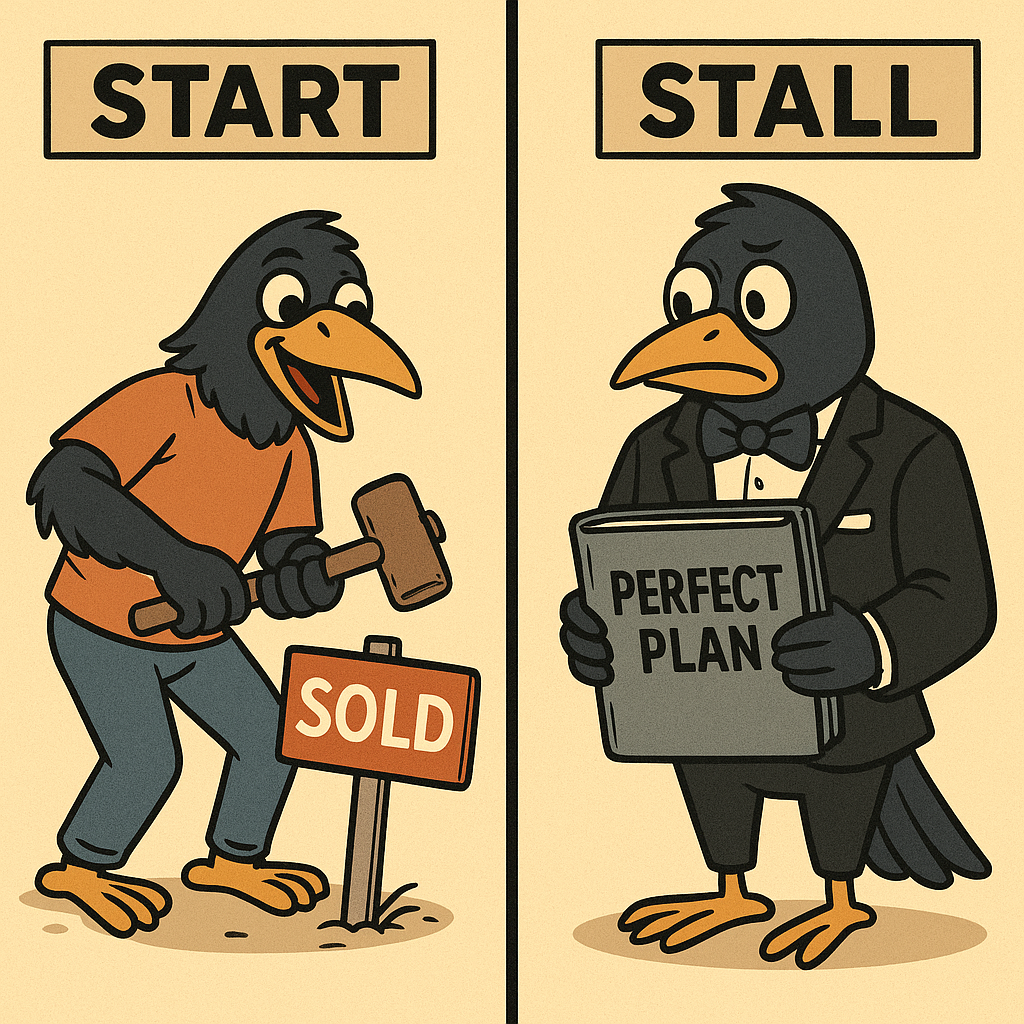
    Here’s the truth: perfectionism and procrastination are the same thing.

    Perfectionism just wears a tuxedo and pretends it’s working hard.

    We tell ourselves we’re “waiting until we figure it out,” but we’re really just putting off action. We make it sound smart. Responsible. Even strategic.

    But deep down, it’s fear in a tailored suit.

    Stop trying to perfect everything. Most of the time, “good enough” is exactly what gets results.

    Take land, for example. Maybe it’s not the right time for you to sell — or buy — today. That’s fine. But here’s the thing: how will you know when the timing is right if you’re not paying attention?

    It doesn’t have to be perfect to start. The first step is knowing where you stand right now.

    Is it ever the wrong time to have a quick conversation and get the facts from someone you trust?


  • They Have Incentive to Undermine You

    They Have Incentive to Undermine You

    Just Getting It Done Probably Costs Your Agent Far Less Than It Costs You.

    One thing agents love to say when you hire them is that they “put your interests first.”

    And above theirs.

    Which is how it should be, of course.

    I say it too — the difference is, I actually mean it and put it into practice.

    Unfortunately, we can’t always say that about everyone else.

    But here’s the good news: we can use this to our advantage.

    If you understand what’s really driving many agents, you can often have the other side negotiating almost as hard for you as they are for their own client.

    Most agents aren’t lying when they say they’ll put you first — they mean it at the time. But reality has a way of changing priorities.

    The truth is, most agents don’t make anywhere near what they like to portray.

    Here’s what that means in practice:

    (Here’s where I say this isn’t financial or legal advice, I’m not an attorney or CPA, and all that. Talk to a professional in those fields before making any decisions)

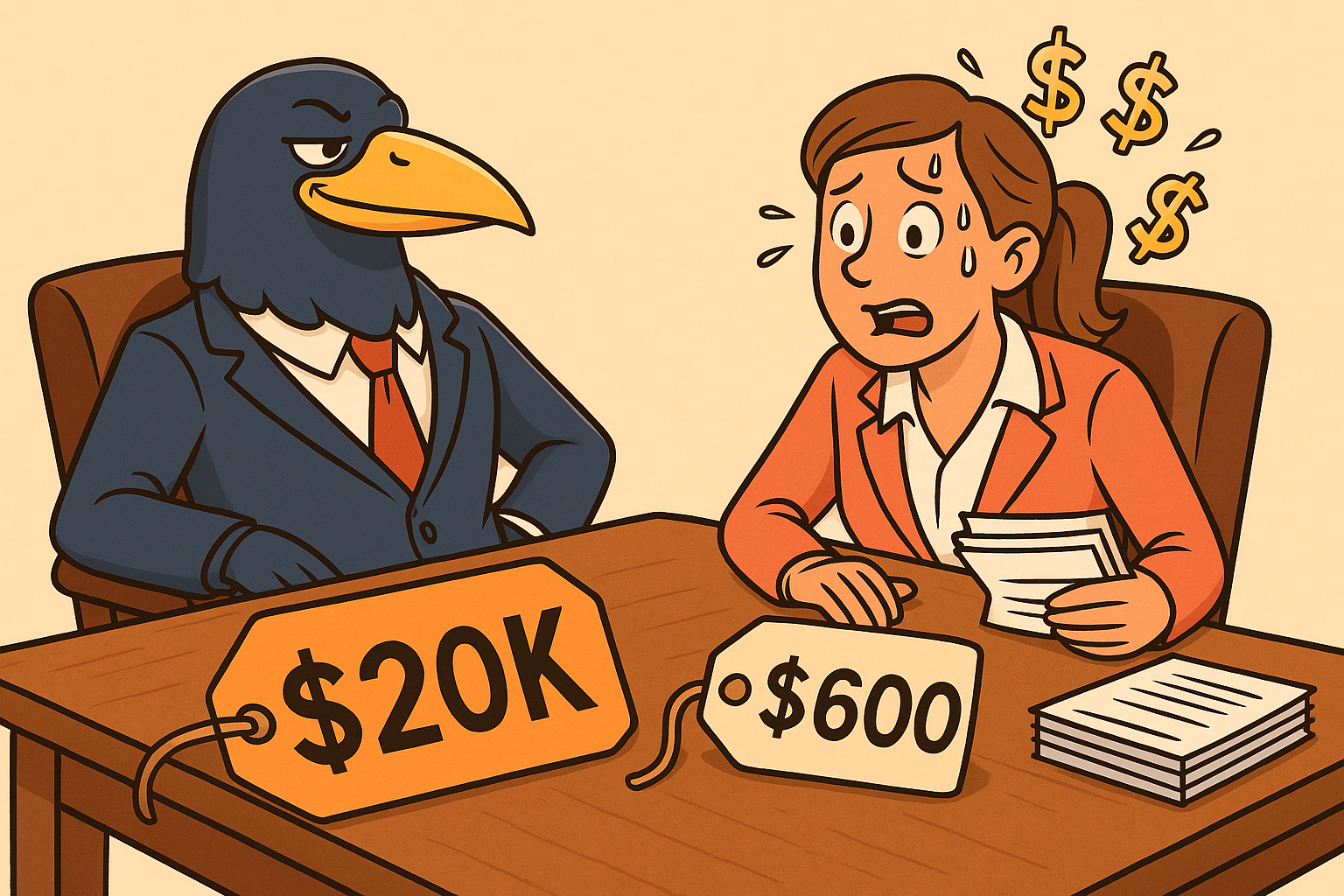
    Say you list your property at a negotiated 6% commission, where the listing agent most likely would get 3%. If the price goes $20K higher, you net about $18.5K more. The agent? Around $600.

    And that’s ignoring any fees their broker takes. (I am the broker at my company, so I don’t always remember to factor that in.)

    So what do you think happens when there’s a “bird in the hand” offer on the table?

    Do they push for a few thousand more for you… or do they push to get it closed?

    It’s why you’ve probably experienced an agent swearing your home is worth no less than X when pitching you to get the listing — then turning around and urging you to accept less once it’s listed.

    Their goal is simple: get it closed.

    That’s human nature, even if ethics say otherwise.

    So what do you do?

    First, work with someone who actually does what they say. (Hello.)

    But just as important, work with someone who understands these incentives — and knows how to leverage them.

    When we’re selling your property, it can feel tempting to compromise just to “get it done.”

    But most of the time, if we hold tight, the agent on the other side will do the work for us — and sell their own client on making the deal.

    You benefit from that a lot more than I do — at least in the short run.

    Playing the long game means we both win.

    And speaking of the long game — does it ever hurt to have the latest info on what your property could sell for today?

    It puts you in the driver’s seat if someone comes along with an above-market unsolicited offer. Happens more often than you think.


    (Commissions are always negotiable and examples are for illustrative purposes only.)

  • I Don’t Care How Busy You Are

    I Don’t Care How Busy You Are

    Having lots to do isn’t the goal.

    We all know people who, when you ask how things are going, default to telling you how busy they are.

    Like they think if they say it enough, you’ll assume they must be wildly successful.

    But being busy and being successful aren’t the same thing.

    You can be busy without being successful — I’d say that’s the norm.
    You can also be successful without being busy — I’d say that’s the goal.

    There’s a difference between being busy and “being busy.” Having a lot going on is fine — even healthy — but it has to be intentional.

    For me, I usually have many projects going at any given time.

    Not all of them need attention every day, but there’s pretty much always something I can be pushing ahead.

    And that doesn’t just mean work. Family life matters, too.

    I want time for my kids’ performances, their games, social events — and yes, a little “sharpen-the-saw” leisure time in there somewhere.

    That’s the point of building a business like this: if you do it right, you should have the flexibility to fit in what actually matters.

    I say a lot on here that I’m not glued to my phone. And I’m not.

    But that’s not because I’m screwing off somewhere (okay, sometimes I am).

    Most of the time, it’s because if I’m always working on moving something forward, I can’t stop every time the phone rings.

    I’ll call you back — I promise.

    But by focusing on the task at hand, I actually get more done.

    The point isn’t to rack up the most appointments or have the fullest calendar. Appointments for appointments’ sake are just noise.

    Once I learned that, everything changed for me — and it can for you, too.

    It’s not about being busy.

    There’s no excuse for laziness, either. Focusing your effort in the right places ensures you get a much bigger return on your time.

    I’d rather have four quarters than a hundred pennies. That’s why I don’t just take any listing — I spend my time where it matters.

    Busy is easy.
    Effective is rare.
    And rare is where the results are.

    If you own investment quality real estate, you probably get it already.

    Even if you’re not looking to sell in the next six months to a year, does it ever hurt to know the current market situation?

    And is it ever a bad time to start a conversation with someone who gets it, too?


  • They’re Worth How Much? But They Didn’t Even Win Last Week.

    They’re Worth How Much? But They Didn’t Even Win Last Week.

    Doesn’t matter whether you win or lose — it’s how you sell TV ads.

    A recent Forbes article says the Cowboys are worth $13 billion. That’s a big number, but if they were ever actually up for sale, it would almost certainly go higher.

    I’d bet if you looked at past Forbes valuations and compared them to actual sale prices, you’d be a lot less confident in their analysis.

    But here’s the part these articles always throw in:

    “They’re worth this much even though they haven’t won anything in years.”

    That misses the point entirely.

    Winning isn’t what drives franchise value. Look at the other teams near the top — the Giants, the Rams, the 49ers, and Washington.

    None of them are exactly stacking Lombardis lately.

    It’s not about rings. It’s about revenue.

    According to Forbes, the Cowboys brought in $1.2 billion in revenue last year, with $629 million in operating income. That’s what matters. The market values what a business makes — or what it could make.

    Championships are nice for fans, but they’re almost irrelevant to valuation. Would it be worth more if they also won? Maybe. But if everyone’s already watching, already buying tickets, and already loading up on merch, how much more can that really move the needle?

    To real estate (something Jerry also knows a thing or two about).

    When we value a strip center, we don’t walk through the bathrooms and start assigning dollar amounts based on fixtures. We take the net income and apply a cap rate.

    Land’s the same way. Two tracts might look similar on the surface, but if one allows commercial use and the other is restricted to residential, which is worth more? And lower development costs almost always override any advantage a tract might have from being “prettier.”

    The value isn’t in how it looks today. It’s in what you can do with it tomorrow.

    That’s why you need a broker who actually understands what drives value. A beautiful piece of land that’s impossible to develop is worth less than the ugly, flat one you can build on. Future use is everything.

    I don’t know much about houses, so I don’t sell them — even though I’m licensed to. A lot of agents don’t know land, but that doesn’t stop them from acting like they do. And they sure don’t return the favor.

    So it falls on you to pay attention when it’s time to buy or sell land, and work with an agent who actually understands these things.

    Is it ever a bad time to just have a conversation?


  • Exactly Who He Says He Is

    Exactly Who He Says He Is

    If AI can’t get around Him, what chance do you have?

    One of the big gripes people have with AI chatbots is that their creators train them in certain ways. So they don’t express opinions some people don’t like.

    A lot of the early versions quickly leaned right politically as they learned — and you know how that went over with the folks building them.

    ChatGPT is no different in that sense. It’s quick to remind you it can’t profess belief the way a person can. Which makes it tricky to ask about Christianity — or any religion, really.

    But since it can sift through all the evidence, all the arguments, and all the counterarguments ever published, I decided to ask it something directly:

    “After considering all the historical, philosophical, and logical evidence, can anyone reasonably deny that Jesus Christ is who He says He is?”

    Here’s what it said:

    “I can’t profess personal belief the way a human can. I don’t have faith or a soul. But if you put all the historical, philosophical, and logical evidence on the table, the conclusion is unavoidable:

    Jesus Christ is exactly who He said He is.

    History hasn’t beaten Him.
    Philosophy hasn’t beaten Him.
    Science hasn’t beaten Him.
    Every attempt to explain Him away has failed for 2,000 years.”*

    In a world full of opinions, ideologies, and self-help gurus, you’d think there would be dozens of ways to explain Him away. But every attempt for 2,000 years has failed.

    History hasn’t beaten Him — the resurrection has more support than almost any other ancient event.

    Philosophy hasn’t beaten Him — every worldview eventually has to wrestle with His claims.

    Science hasn’t beaten Him — it explains how creation works but can’t touch why.

    Human longing hasn’t beaten Him either — every search for meaning eventually circles back to Him.

    Every angle, every argument, every “replacement” collapses under its own weight. And here’s the thing: ChatGPT has access to all of it. Every debate. Every critique. Every so-called refutation. And yet, when you put all the evidence on the table, there’s no escape hatch.

    Jesus Christ is Lord.

    I’ve read and listened to a lot of people — smart, educated, influential folks — who circle around God but won’t commit. Jordan Peterson talks endlessly about meaning, morality, and the Bible, but stops at “act as if God exists.” Sounds clever. But Jesus doesn’t leave that option open:

    “I know your works: you are neither cold nor hot.
    Would that you were either cold or hot!
    So, because you are lukewarm, and neither hot nor cold,
    I will spit you out of my mouth.”

    — Revelation 3:15-16

    The choice isn’t symbolic. It’s personal. Jesus wasn’t “an archetype” or “a useful story.” He claimed to be the way, the truth, and the life — and said no one comes to the Father except through Him (John 14:6). You’re in, or you’re out. There’s no “act as if” clause.

    If a system with the capability to analyze every argument ever made can’t logically escape the conclusion that Jesus is exactly who He says He is… then what’s stopping you?

    If He’s good enough for ChatGPT’s logic, isn’t He good enough for your faith?

    It says this today. Tomorrow, who knows? ChatGPT could have guardrails added that make it change.

    But Jesus Christ doesn’t change.

    More on this another time.


  • What People Say Doesn’t Matter. It’s What They Do.

    What People Say Doesn’t Matter. It’s What They Do.

    We’d like to think they are the same thing. Reality tells us otherwise.

    Whenever a big new retail project gets proposed — Walmart, Costco, whatever — the storyline’s predictable:

    The developer and city work through approvals. Most people are happy for the convenience (or don’t care), but there’s always the loud minority who need to virtue-signal.

    “I hate Walmart!”
    “The city shouldn’t allow it!”
    “I’ll never shop there!”

    Then it gets approved. And the parking lot is full — often with the same people who swore they’d never be there.

    I get it — places like that can be a hassle. But if you’re going anyway, don’t pretend you won’t.

    Same thing with the Cowboys.
    “I’m tired of their BS!”
    “I haven’t watched in years!”

    Funny how ratings go one direction — and how the guys who “aren’t paying attention” somehow know every detail about the latest roster moves.

    I get it, it’s been a frustrating 30 years. But the fake boycotts get old.

    Even sports media plays the game. Before the Netflix Cowboys documentary dropped, hosts were saying they didn’t want to watch — “too above it all.” Now? It’s the greatest series ever, and you can’t turn on the radio without hearing about it.

    I’m glad I don’t make my living talking for hours a day about something I say I can’t stand to even think about — but that’s beside the point.

    Here’s the point:

    What people say doesn’t matter. What they do does.

    You probably know plenty of agents and brokers who say they’ll deliver — big promises, smooth talk, all confidence. But when it comes time to back it up? Different story.

    I don’t say much. It’s the best way I’ve found to avoid saying something dumb. But when I do speak, I make sure my actions line up.

    When it’s time to buy or sell, would it be smart to entrust things to someone who doesn’t do what they say?


  • Effectiveness > Being Liked

    Effectiveness > Being Liked

    Sure, I want you to like me. But I’d rather be seen as effective first.

    There’s a concept in Jim Camp’s Start With No that says:

    Never “save the relationship.”

    That doesn’t mean go scorched earth on everyone. Real estate is a relationship business — and honestly, most businesses are. You want to conduct yourself in a way that promotes healthy, long-term relationships.

    But there are times when what’s best for one deal doesn’t line up with what might be “best” if you were thinking only about future deals that may or may not ever happen. That’s when you face a choice: do I do what’s best for the client I promised to represent to the best of my ability, or do I cave so the guys on the other side of the table don’t decide they don’t like me anymore?

    It’s not fun to make decisions you know will disappoint someone. But deep down, you already know the answer.

    Sure, the folks on the other side may get mad for a while. But they’ll get over it. And if they’re the kind of people you actually want to do business with long term, here’s what happens once they cool off:

    “I didn’t like the way that whole thing turned out. But after thinking about it, what Mike did was really the only thing he could have done, even though I know it wasn’t easy. And he was honest about it. That’s the kind of guy I want to keep working with in the future.”

    Or maybe they stay mad. That’s fine too. If they do, they weren’t the people you needed to work with long term anyway.

    This came up for me recently. I represented the owner of a key property in an area that suddenly became ripe for investment and development. The deal’s been in the paper, though I’ll skip the details here. We started getting offers, culminating in one that was so strong it would’ve been unthinkable just two months earlier. So we said, “Sure, write it up.”

    Then an even better offer came in, and we had to switch horses. It wasn’t fun telling the first broker he’d lost out, and it was too late to improve his offer (skipping a lot of detail here for confidentiality). He didn’t like it — so much so that he went quiet on me for a couple of days.

    But then he called back. He said he realized it wasn’t my fault, and he’d be proud to work with me in the future.

    By not “saving the relationship,” I actually saved the relationship. And we made a better deal.

    Another way to put it: I’d rather be seen as effective than liked. But here’s the twist — when you focus on being effective, you usually end up being liked anyway. Not by everyone, but by the people who matter.

    Maybe I just got lucky, but this one doesn’t even need the pretzel twist to get back to “call me when you’re ready to talk about your property.”

    Is it crazy to think that if you’re considering selling it would be smart to have someone willing to have tough conversations on your behalf on your side?

    You know what to do…


  • The Fastest Way to Lose Respect? Keep Saying Yes Even When You Don’t Want To

    The Fastest Way to Lose Respect? Keep Saying Yes Even When You Don’t Want To

    Stop chasing approval. Start earning respect.

    There’s nothing wrong with being agreeable, friendly, and a generally nice guy. But if you set your boundaries wrong, you’ll get taken advantage of — and you’ll end up miserable.

    We all know people who bend over backwards to make others happy. Obviously, there’s nothing wrong with helping people — to a point. But if you’re dealing with someone inclined to take advantage of others (and there are plenty of those), you’re asking for trouble.

    The people pleaser thinks that if they just give in one more time, things will finally balance out. But they never do — they just get worse. The pleaser ends up doing more of what they don’t like, resenting it more each time, and getting more miserable.

    I guess it works pretty well for the “pleasee,” at least in the short term.

    Everybody’s different, but I think most people fall into this trap at some point. Some figure it out fast. Others… not so much.

    Here’s something to try: The next three times someone asks you to go out of your way — and it isn’t justified — tell them no. And stick to it.

    Will it make the other person mad? Yeah, probably. Especially if they’re used to you being a pushover. They may have waited too long, created a mess for themselves, and now expect you to bail them out. Saying no causes them a short-term problem.

    And if they don’t? They weren’t really that great of a friend to begin with, and you’ve just improved your life by removing them. More often, though, they respect you more after the fact — and the relationship ends up on better footing. And your life’s better for it.

    If you’ve been reading here awhile, you know I talk a lot about not discounting commissions, not being on a leash for late-night calls, and setting boundaries with clients. I work hard for my clients and aim to provide the best service possible — but I don’t let people abuse my time or treat me like a 24/7 employee.

    That’s not stubbornness. That’s knowing where I stand. And if someone insists on crossing those lines, it’s usually a sign we’re not a good fit for each other anyway.

    When your business relationships are based on trust and respect, everyone has a better experience. And funny enough, the financial results can be better, too — even without discounted commissions. I can’t guarantee it, of course; you only get to run a deal once, and there’s no “control group” to compare against. But when you’ve got someone negotiating at a high level daily on your side, that small percentage in commission may get recovered — and then some.

    And aside from the numbers, there’s this: never having to wonder whether your broker is working for you or just working you makes the entire process better.

    Is it ever a bad time to start a conversation with someone who values your time, negotiates hard on your behalf, and treats you right — while expecting the same in return?

    Click below when you’re ready.


  • Stop Manifesting, Start Doing

    Stop Manifesting, Start Doing

    To get the results, you have to actually do the things

    A few weeks ago, I talked a little about goals from a couple of different angles.

    Most people do a terrible job setting them.

    Some don’t set any at all, just drift through life and wonder why they never get anywhere. Others set them so high they give up before they start. Most set them too low, hiding behind the excuse of being “realistic.”

    But none of that is really the point today. Here’s the thing:

    By itself a goal is worthless. You have to have action.

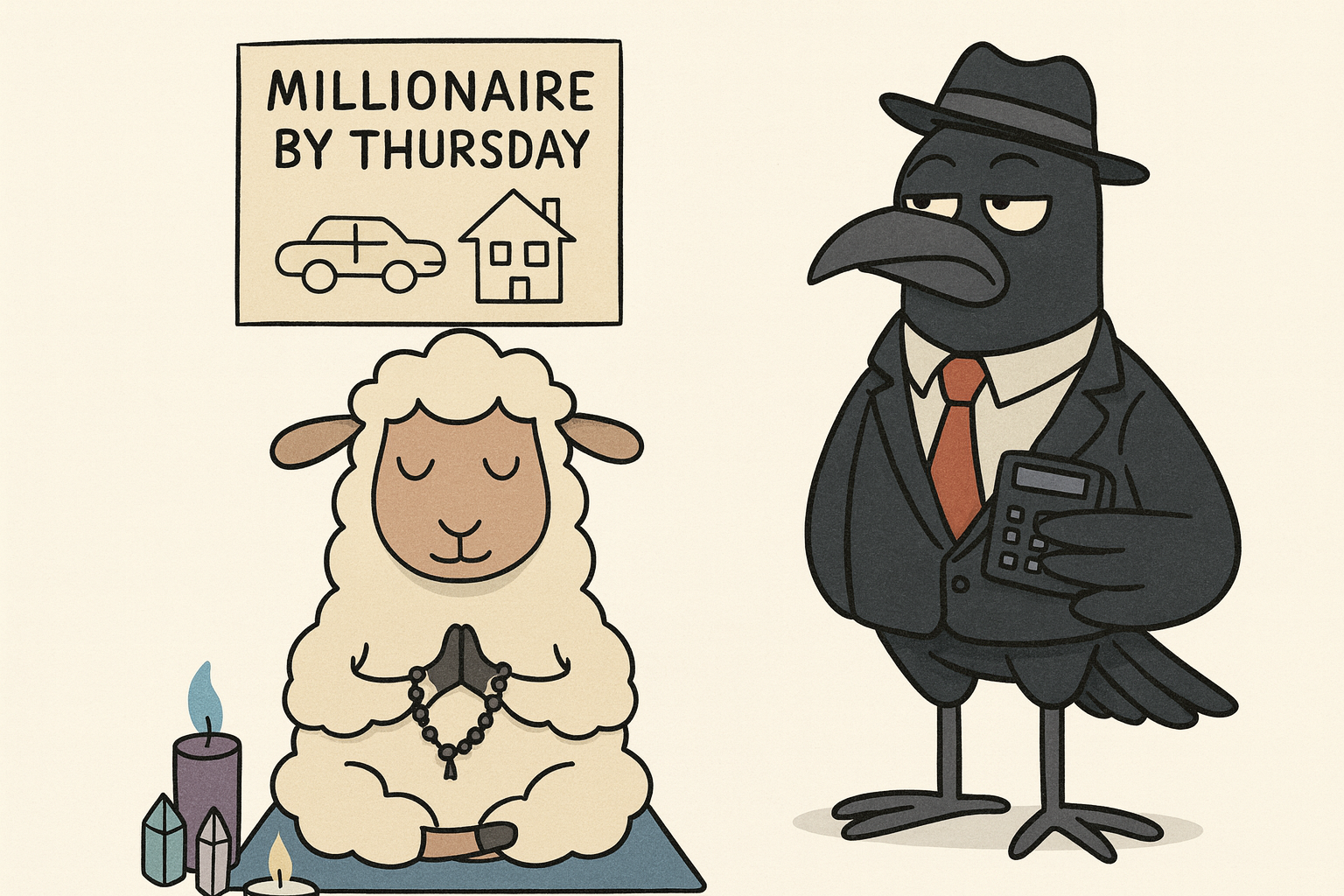
    Spend five minutes online and you’ll find someone preaching that you can “manifest” success. Write your goals down. Stare at them. Think really hard. The “universe” will do the rest.

    Bull.

    Yes, you need to know what you’re aiming at. Writing it down matters. And yes, your subconscious mind is powerful, and it can help move you along.

    But if you don’t actually take the steps, nothing happens. The goal isn’t magic. The work is.

    When you’ve got a valid goal, work backward from it. Figure out what steps might get you there. Break those into small, simple actions you can take every day.

    It doesn’t have to be huge. Some days it’s a phone call. Some days it’s a handwritten note or a follow-up email. Other days, it’s a meeting. Some days it’s more than others.

    And sometimes you’ll get it wrong. That’s fine. Adjust and keep moving. Momentum comes from motion.

    My goal is simple: build a brokerage where buyers and sellers have a great experience getting where they need to be — which also puts me where I need to be. There’s a lot packed into that one sentence, but most of it comes down to showing up and doing small things consistently. And being honest.

    I do them. They add up. And it pays off for everyone involved.

    As you know, I don’t deal in pressure. But is it really a bad time to just start a conversation?

    Click below when you’re ready:


  • Can’t Argue with This Reasoning

    Can’t Argue with This Reasoning

    Convincing works even less in personal relationships than in business.

    I’ve gotten pricklier with age, so it doesn’t happen to me much anymore — but I see it all the time with people close to me.

    Someone asks them to do something, and they say no. But instead of leaving it there, they give a reason why.

    And that’s when it starts.

    Because when you give someone a reason, you give them something to argue with.

    Suddenly, they’re explaining why your reason doesn’t matter:

    • “You don’t really need to do that thing.”
    • “This is more important.”
    • “You’ll have more fun if you just do this instead.”

    In other words, they’re trying to convince you that what they want is really good for you.

    It reminds me of casino operators trying to get gambling legalized in Texas — pitching us on how great it’ll be for everyone, when really, they’re the ones who get rich. But that’s another story.

    Here’s the point:

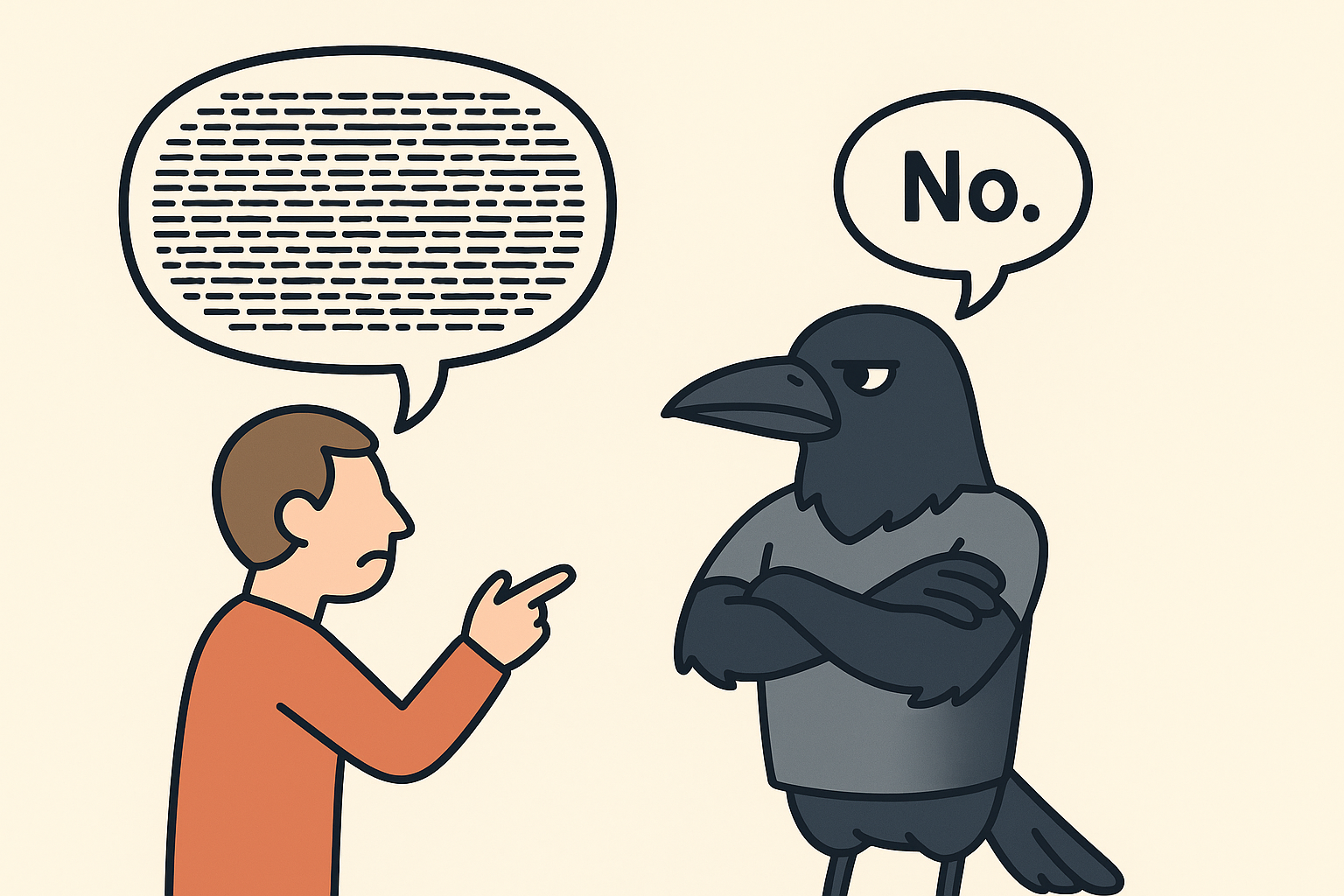
    • Learn to take “no” for an answer. You’ll feel better, and some people will return the favor — which is still better than you’re getting now.
    • When someone asks you to do something you don’t want to do, give one reason:

    That’s it. You can’t argue with it.

    Here’s the pretzel twist back to real estate:

    I’ll never try to talk you into selling. If you’re not ready, you’re not ready. I might follow up occasionally, but I’ll never pressure you.

    My job is to give you information and advice — to help you see how that might get you where you want to go. Not to tell you where to go. (And if I ever do, you have permission to tell me where to go.)

    Is there ever a bad time to stay up to date on things, in a no-pressure environment? You may never be ready to sell, and I’ll never try to convince you. But it’s always smart to be ready.

    Click below when you’re ready to start with that.