Tag: North Texas real estate

  • Brokerage Isn’t About Brokerage

    Brokerage Isn’t About Brokerage

    Dan Kennedy makes a point that most people in business miss.

    Success in a given business usually has less to do with the core craft than people think.

    Restaurants don’t fail because the food isn’t Michelin-star quality.

    They fail because the numbers don’t work.

    The food has to be good enough. After that, location, systems, consistency, pricing, and marketing determine who survives.

    You can see the same thing in music.

    The most technically gifted musicians rarely sell the most records. Read the comment section under any article about KISS or Mötley Crüe. Plenty of people will explain why they weren’t the “best” players.

    Doesn’t matter.

    They built machines around the music. Branding. Touring. Merchandising. Positioning. Distribution. They understood the business side.

    The craft mattered.

    It just wasn’t the deciding factor.

    Brokerage is the same way.

    There are plenty of agents who can fill in a contract correctly. Plenty who understand the forms. Plenty who can unlock a door and stick a sign in the yard.

    That’s table stakes.

    The difference shows up elsewhere.

    Positioning.
    Timing.
    Leverage.
    Awareness.
    Calm under pressure.
    Pattern recognition.
    And most importantly, trust that the client actually feels — not trust that gets talked about.

    Land especially does not move like houses do.

    It requires vision.
    Patience.
    The ability to recognize unusual activity.
    The discipline not to panic when something doesn’t sell immediately.

    The agent who understands how assemblages work, who watches adjacent sales daily, who knows when silence is leverage and when to press — that agent produces different outcomes.

    From the outside, brokerage can look simple.

    A sign.
    A listing.
    A closing.
    A check.

    From the inside, the real work is less visible.

    It’s in the judgment.
    The restraint.
    The positioning.
    The pattern recognition.

    The contract is the easy part.

    The hard part is knowing what to do before the contract ever gets written.


    P.S. You may not be ready to sell today, but does it hurt to know where you stand?

    No cost. No obligation. Just clarity before decisions.


    That’s fine.

    If you want to see how I think about land and positioning before ever making a move, you can enter the inner circle here:

  • What People Say They Want (And What They Actually Buy)

    What People Say They Want (And What They Actually Buy)

    I talk on here a lot about the gap between what people say they want and what they actually buy.

    If you’re in business, you better pay attention to the second one.

    Years ago, I had a client start a homebuilding company focused on “active adult” buyers.

    He did everything right.

    Spent two years interviewing prospects. Asking what they liked. What they hated. What was missing in the market.

    The answers were clear.

    Open layouts.
    Smaller footprints.
    Different finish packages.
    More practical storage.

    So he built exactly what they asked for.

    And waited.

    Turns out what people describe in a quiet interview and what they emotionally respond to when it’s time to write a check are not the same thing.

    The company failed.

    I’ve seen the same thing with custom homes.

    Buyers walk in with a vision. A look. A stack of inspiration photos.

    The builder already knows half of it won’t function the way they imagine. Or will cost far more than they think. Or will look very different once it’s actually built.

    People think they want something in the abstract.

    But they don’t want it in the concrete.

    One of the more successful builders I know builds 100% spec.

    No presales.
    No option sheets.
    No custom changes.

    Risky? Yes.

    But it removes a massive problem.

    The buyer walks into something real.

    They either love it or they don’t.

    And when they love it, they forget about the list of “must-haves” they swore they needed.

    Now zoom out.

    We say we want authenticity.

    We say we value substance.

    We say we want “real.”

    Then we spend hours consuming curated lives, filtered success, and carefully edited highlight reels.

    The market doesn’t reward what people claim to value.

    It rewards what they actually respond to.

    That’s true in homebuilding.

    It’s true in land.

    And it’s true in negotiations.

    Landowners say they want the highest number.

    Buyers say they want discipline.

    Both say they want fairness.

    Then a real contract hits the table.

    The seller who swore price was everything suddenly values certainty.

    The buyer who claimed to be rigid stretches when the property feels rare.

    Behavior reveals priorities.

    Words are cheap.

    That’s why I don’t build strategy around what sounds good in theory.

    I build it around what actually closes.

    Closed sales matter more than listing prices.

    Executed contracts matter more than opinions.

    And real movement matters more than what someone says over coffee.

    If you want to understand a market, watch what people do.

    Not what they post.


    P.S. You may not be ready to sell today, but does it hurt to know where you stand?

    No cost. No obligation. Just clarity before decisions.

  • Price Matters But It’s Not the Only Concern

    Price Matters But It’s Not the Only Concern

    Most landowners start in the same place when they think about selling:

    Price.

    And yes, price matters.

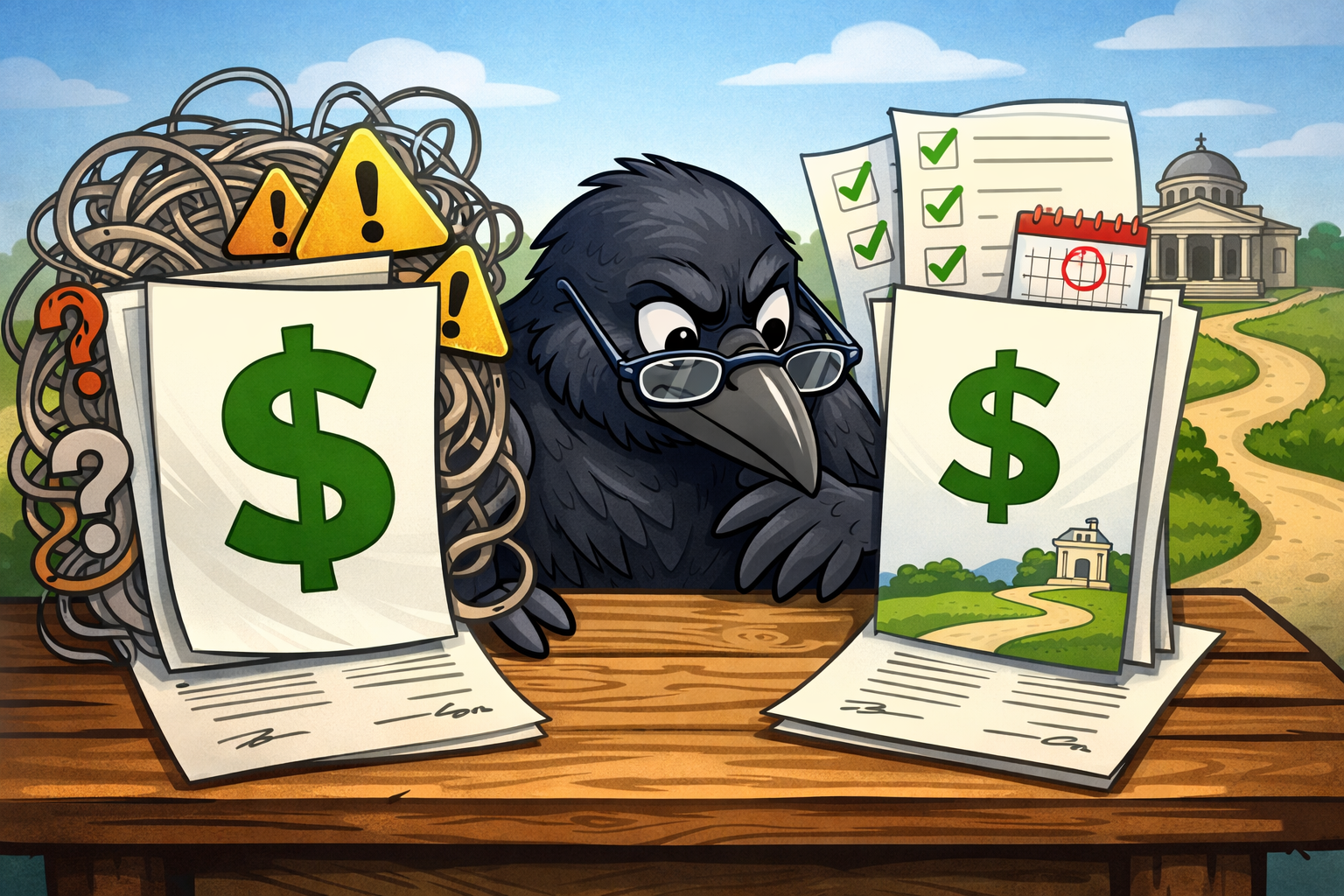
    But price always comes attached to terms, timelines, contingencies, and execution.

    That’s the part that doesn’t get much attention until something shifts.

    I grew up in the land business. My father was a broker and syndicator. I learned early how deals are structured, how risk gets priced, and how fortunes are made when someone misjudges leverage.

    I also learned this.

    The number on the first page of a contract doesn’t mean much if the deal never makes it to closing.

    Over the years, I’ve been on every side of the table. Syndicating deals. Working with investor groups. Brokering between experienced developers. Negotiating options. Watching retrades surface late in the process.

    You see patterns after a while.

    Buyers price risk differently than sellers do.

    An aggressive offer with a long diligence period and broad contingencies is not the same thing as a slightly lower offer from a buyer who has a clear path to close.

    I’ve seen the strongest number on paper turn out to be the weakest deal in reality.

    Some sellers have the time and patience to hold out and squeeze every dollar. Others care more about certainty and getting their capital deployed elsewhere.

    Neither approach is wrong.

    But the tradeoffs need to be understood.

    Landowners rarely regret choosing the wrong number.

    They regret not fully understanding what came with it.

    Price is obvious.

    Risk usually isn’t.

    And once a contract is signed, those tradeoffs are no longer theoretical.

    My job isn’t to promise outcomes I can’t control.

    It’s to make the structure visible before the decision becomes permanent.

    If you’re evaluating offers, slow down long enough to understand what each one is really attached to.

    Then decide.


    PS — If you own land or acreage and want a clear, no-obligation property analysis based on real comps and actual market behavior, I offer one at no cost.

    No algorithms.
    No guesswork.
    No pressure.

    You’ll know where you stand and what realistic options actually look like, without being rushed into anything.


  • Bois d’Arc Bonanza

    Bois d’Arc Bonanza

    There’s a saying in real estate: you make your money when you buy, not when you sell.

    Most people understand it.
    My clients and I actually apply it.

    Yesterday we closed on roughly 233 acres just off the shores of the new Bois d’Arc Lake near Bonham.

    I represented the buyer, a long-term client who understands land.

    When I see something that makes sense, I make a call.

    Large tracts around new water do not stay overlooked forever.

    They sit quietly.
    Infrastructure inches closer.
    Rooftops follow.
    Then everybody acts surprised.

    This was not a flip.
    It was not hype.

    It was a buy-and-hold decision based on positioning.

    Today it works as:

    • A recreational ranch
    • A private retreat
    • A long-term hold

    Down the road?
    Maybe development.
    Maybe not.

    That is not the point.

    The point is control.

    The best land moves rarely look exciting when they happen.
    They look disciplined.

    I do not represent retail buyers who need hand-holding.

    But when scale, location, and timing line up, I know who to call.

    That is how this one came together.

    Pricing is in MLS. Ask your agent.

    Or become a client and I will walk you through how we evaluated it.

    Land rewards patience.
    It also rewards preparedness.


    P.S. You may not be ready to sell today, but does it hurt to know where you stand?

    No cost. No obligation. Just clarity before decisions.


    P.P.S. Not ready for a valuation yet?

    That’s fine.

    If you want to see how I think about land and positioning before ever making a move, you can enter the inner circle here:

    No noise. Just straight analysis and the occasional opportunity.

  • Why Brokers Aren’t Paid by the Hour

    Why Brokers Aren’t Paid by the Hour

    I check land sales every day.

    Not because I have to.
    Because that’s where the real information is.

    Recently, a nearby tract traded at a strong number. That alone wasn’t unusual.

    What caught my attention was the buyer.

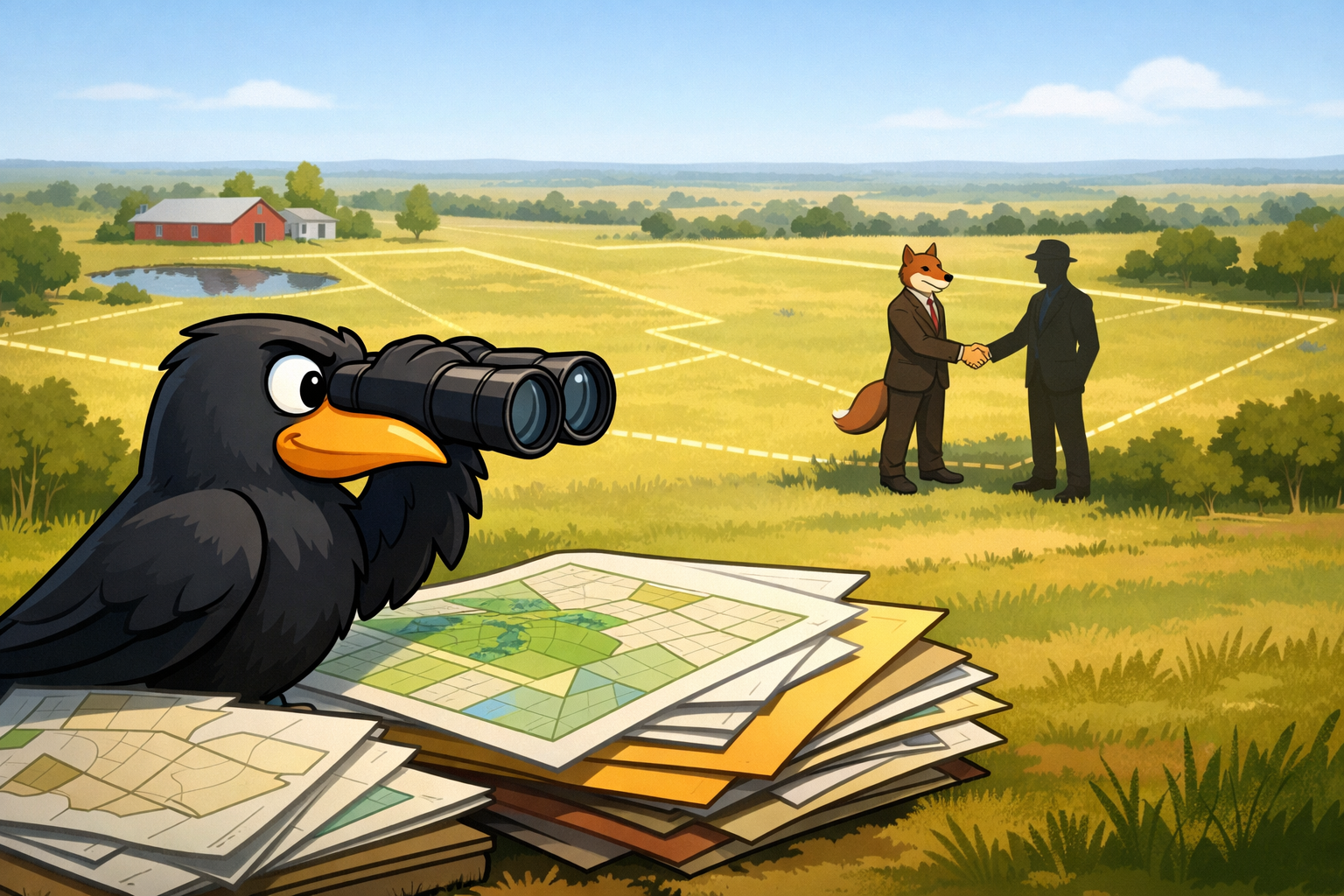
    After a little digging, it became clear this wasn’t a one-off purchase. It was a well-capitalized group adding to an already significant land position.

    That changes the math.

    Large buyers assembling acreage are not looking for one property. They’re looking for adjacency. Scale. Strategic fit.

    When I saw who the buyer was, I immediately thought of someone I knew who owned land directly next to that assemblage.

    So I made two calls.

    First to the landowner, to get permission to run it up the flagpole.

    Then to the buyer’s side, to see if there was interest in expanding.

    There was.

    The rest is mechanics.

    From the outside, brokerage income can look disconnected from effort.

    A deal closes.
    A commission is paid.
    And it may appear disproportionate to the visible work.

    But the visible work isn’t the real work.

    You’re not paying for “two phone calls.”
    You’re paying for me being the person who knew to make them.

    The value isn’t in dialing the number.

    The value is in:

    • Watching the market closely enough to spot unusual activity.
    • Understanding how assemblages work.
    • Knowing which owners might be a strategic fit.
    • Having relationships strong enough to make the introduction.
    • Acting quickly, but professionally.

    That effort didn’t start the day you called me.

    It started years ago.

    Land doesn’t trade the way houses do. It often moves quietly. Through relationships. Through pattern recognition. Through people who are paying attention.

    That’s what I do.

    Not noise.
    Not buzzwords.
    Not flashy marketing.

    Positioning.
    Awareness.
    Timing.

    And when the moment comes, you benefit from all the work that was already in motion.


    PS – If you own land or acreage and want a clear, no-obligation opinion of value, I offer a concise analysis based on real comps, ownership patterns, tax data, and actual market activity.

    Land is different from residential. The leverage points are different.

    You’ll know where you realistically stand today and what strategic options may exist, even if you’re just thinking ahead.

  • Almost Is a Dangerous Word

    Almost Is a Dangerous Word

    In Acts 26, Paul is defending himself before King Agrippa.

    He tells the whole story. What he believed. What changed. What he saw. What it cost him.

    And Agrippa answers:

    “In a short time would you persuade me to be a Christian?”

    Depending on the translation, it sounds sarcastic. Curious. Half-serious.

    Almost.

    That word should bother you.

    Agrippa heard it straight.
    He wasn’t ignorant.
    He wasn’t hostile.
    He wasn’t confused.

    He was close.

    And close is not the same thing as in.

    I suspect Paul did convince him. Agrippa knew Paul wasn’t crazy. He knew there was weight there.

    But following that line all the way through would have blown up his life. Position. Alliances. Reputation. Everything shifts if that’s true.

    That’s usually where people stall.

    We think the danger is open rejection.

    It isn’t.

    The bigger danger is endless consideration.

    Interested.
    Thinking about it.
    Respectful.
    Open-minded.
    Almost persuaded.

    Almost obedient.
    Almost serious.
    Almost surrendered.

    Almost doesn’t move anything.

    There’s no credit for being near the line.

    You cross it or you don’t.

    And most people living in “almost” feel fine about it, because they aren’t far away.

    But one inch short and a thousand miles short are the same result.

    So the question this Sunday isn’t whether you’re hostile.

    It’s whether you’re decisive.

    Where are you almost?

    Because almost is comfortable.

    And comfortable is where decisions quietly die.


    P.S. I usually offer a MBR Land Reality Check to landowners here.

    But I also run another site called HisWordTogether.com.

    It’s simple. It helps people read through the Bible in a year. Every year.

    No commentary. No spin. No one telling you what to think. Just the readings, posted weekly every Sunday.

    You can sign up to get them by email, or just check the site when you want.

    There’s no need to wait until January. Start where we are and keep going.

    If you want to take a look:

  • 4+ Acres Inside the City Limits

    4+ Acres Inside the City Limits

    There are not many 4-acre tracts left inside city limits.

    Fewer still that offer flexibility.

    Most in-city acreage is either:

    • Already subdivided
    • Overpriced based on speculation
    • In an HOA or tied to rigid developer restrictions

    This one is different.

    It offers space.
    It offers location.
    And it offers flexibility for the right buyer.

    That matters more than most people realize.

    Land value is not just about price per acre, although this one is attractive from that standpoint as well.

    It’s about positioning.

    It’s about optionality.

    It’s about whether the property allows you to move when you are ready instead of being forced into someone else’s timeline.

    Inside the city, 4+ acres can mean different things depending on who you are:

    • A long-term hold
    • A family compound
    • A strategic acquisition
    • A future hedge

    The flexibility here makes those options real.

    Not theoretical.

    If you have been looking for acreage without having to move an hour outside town, you already know how rare that is.

    This one is also roughly 30 minutes from DFW Airport.

    Serious buyers understand that when something checks the right boxes, you do not wait for perfect conditions.

    You evaluate.

    You decide.

    And you move accordingly.


    P.S. If you are evaluating land in this area and want a clear understanding of value before making a move, you can request a MBR Land Reality Check below. No cost. No obligation. Just clarity before decisions.


    P.P.S. Not ready for a formal review? You can stay in the loop and receive future notes on land opportunities and market shifts.

  • The Opposite of a Car Dealer

    The Opposite of a Car Dealer

    A couple of years ago I bought my daughter a car. Used car prices were so inflated it actually made more sense to buy new. Not long after that, I bought my wife a car too.

    If you’ve done this recently, you already know what comes next.

    The advertised price pulls you in.
    You get interested.
    You drive over.

    And suddenly the price is $3,000 to $5,000 higher than you expected.

    Floor mats. Window tint. Paint protection. Nitrogen in the tires. Perfectly fine products, already installed, presented as non-negotiable. Sometimes you can get them removed or avoid the cost. Sometimes you can’t.

    I usually do fine in those situations. That is not the point.

    The aggravating part is not the add-ons.

    It’s the surprise.

    When I bought my wife’s car, I asked before I ever showed up:
    What add-ons are going on this vehicle?
    What do they cost?
    What is my out-the-door number?

    That is the number you need before you step foot on the lot.

    In real estate, I operate the opposite way.

    If you are selling through me, I prepare a Seller’s Estimated Net Proceeds sheet early in the process. It is an estimate. At that stage it cannot be exact. Some costs are negotiable. Some may shift depending on the structure of the deal.

    But on the first pass, I show everything as if it is being charged to you.

    Not because that is what I want to happen.

    Because I do not want you surprised.

    When an offer comes in, I prepare a new net sheet based on that specific offer as written, or based on how we are countering it. That version is not perfect either, but it is much closer to reality.

    You see the numbers before you sign anything.

    You know what you are walking away with.

    You stay in control.

    If you do not like the deal, you do not sign it. Even if someone offers exactly what you asked for, it is still your property. Circumstances change. You can change your mind.

    I might not love it. I will not be mad.

    What I will not do is lure you in with one number and quietly move the goalposts later.

    There are enough surprises in a transaction already.

    The pricing should not be one of them.


    P.S. You may not be ready to sell today, but does it hurt to know where you stand? Request a MBR Land Reality Check below.

    No cost. No obligation. Just clarity before decisions.


  • Another Denton County Tract Closed (Quietly)

    Another Denton County Tract Closed (Quietly)

    My brokerage just closed a sale on approximately 72 acres on St. John Road in Denton County, north of Aubrey and south of Pilot Point.

    Details remain private, as they should.

    But there are a few observations worth sharing.

    Quality acreage in this corridor continues to draw serious attention, especially when pricing and expectations are grounded in reality.

    Larger tracts do not trade the same way small lots do.

    They require patience.
    Clear positioning.
    Buyers who understand the long game.

    In this case, alignment mattered more than noise.

    No hype.
    No auction theatrics.
    No artificial urgency.

    Just a disciplined process, realistic expectations, and a buyer who could execute.

    That is often how these transactions work best.

    Land is different than houses.

    It moves slower.
    It requires judgment.
    And when structured correctly, it rewards both sides.

    If you own acreage in North Texas, pay attention to what is actually closing, not just what is being advertised.

    That is where clarity begins.


    P.S. You may not be ready to sell today, but does it hurt to know where you stand?

    Request a MBR Land Reality Check below.

    No cost. No obligation. Just clarity before decisions.


    P.P.S. Not ready for an audit yet? If you’d rather just stay in the loop and see how land is actually trading in North Texas, you can get these notes in your inbox.

  • The Lot Isn’t Just Sitting There

    The Lot Isn’t Just Sitting There

    Yesterday I mentioned how higher carrying costs affect what someone is willing to pay for property.

    That matters more than most people think.

    I sell a lot of lots. And this is something I explain to sellers regularly.

    There’s a big difference between holding agricultural land way out of town and holding a $250,000 custom home lot in a subdivision.

    If farmland is under ag exemption, the annual taxes can be negligible. Sometimes under ten dollars a year.

    That is not the case with finished lots.

    On a $250,000 custom home lot, you might be paying $5,000 to $6,000 per year in property taxes. Add an HOA that could run $700 to $2,000 annually. Add mowing, maintenance, maybe insurance.

    And if you financed the purchase, don’t forget interest.

    It adds up fast.

    That’s real money leaving your account every year.

    People will say, “Well, it’s gone up $30,000.”

    Maybe it has. Over time, many do.

    But markets do not move in straight lines. And the property has to appreciate enough to cover your carry costs before you’re even breaking even.

    That’s the part that gets glossed over.

    If you hold a lot for ten years and spend $50,000 carrying it, not counting interest or opportunity cost, and it goes up $100,000, you technically made $50,000.

    That’s fine.

    But that $50,000 did not show up all at once. It dripped out of your pocket every year while you waited.

    That’s a different experience than the spreadsheet makes it look.

    For most people, custom home lots are not great “investments” unless they were bought well under market to begin with.

    If you’re a builder, that’s different.

    If you plan to build in five years and want to lock something down now so you’re not scrambling later, that can make sense.

    Just be clear-eyed about it.

    If you pay $200,000 today and hold it five years, you may effectively be in it for $225,000 or $230,000 by the time you break ground.

    I’ve sold plenty of lots where the original buyer fully intended to build.

    Then life changed.

    Plans shifted.

    Priorities moved.

    It happens more often than people admit.

    There’s nothing wrong with holding. There’s nothing wrong with selling.

    But there is something wrong with pretending the carrying costs don’t matter.

    They do.


    PS – If you own a lot or acreage and want a clear, no-obligation opinion of value, I’ll run a concise analysis based on real comps, tax data, carry costs, and actual market activity.

    Land is different from residential. The math works differently.

    You’ll know what you could realistically sell for today — and what it’s actually costing you to keep waiting.