Tag: Jim Camp

  • A Fast “No” Is Better Than a Slow “Maybe”

    A Fast “No” Is Better Than a Slow “Maybe”

    Most people hate saying the word no. Even when they already know the answer, they’ll stall.

    They’ll say things like:

    “Let me think about it.”
    “Maybe.”
    or the classic— “Yes… but sometime later.”

    Which really just means: no, but they don’t want to be the one to say it out loud.

    It’s funny, because everyone gets irritated being on the receiving end of that behavior, but somehow it doesn’t translate when they’re the one avoiding the decision.

    Why do people drag it out?

    Part of it is simple: a lot of people don’t want conflict, even small conflict.

    And telling someone no feels confrontational.

    The other part is that most people don’t feel safe saying no.

    Because the second they do, someone tries to talk them out of it.

    Salespeople do it.
    Friends do it.
    Family definitely does it.

    Give a reason, and they’ll try to negotiate with the reason instead of accepting the answer.

    Personally, I love a clear no. It’s honest. It’s clean.

    And it gives both sides direction.

    It doesn’t stop the conversation — it just puts it on real footing.

    And here’s the part most people miss:

    A no today doesn’t mean no forever.

    People change their minds. Circumstances shift. Timing improves.

    But when you finally hear a yes from someone who wasn’t afraid to say no earlier, it’s a real yes.

    So whether you’re negotiating, selling, buying, planning, or just trying to get through everyday life without wasting time — a fast no is almost always better than a slow maybe.

    It’s cleaner.
    It’s kinder.
    And it’s honest.


    PS — If this topic interests you, Jim Camp is the gold standard.
    He taught that the fastest way to find the truth in any negotiation is to give the other person permission to say no.

    Not hint at it.
    Not tolerate it.
    Invite it.

    Most negotiation books focus on getting to yes.

    Camp’s approach is the opposite — and far more effective.

    I read the book at least once a year, it helps me that much.

    There’s a link to buy it on my recommended reading page.

    Would it be a terrible idea to spend five minutes there?

    Disclosure: As an Amazon Associate I earn from qualifying purchases. If you buy something—anything—after clicking that link, I may receive a small commission. It doesn’t change your price.

  • When Someone Says Win/Win, Prepare to Lose

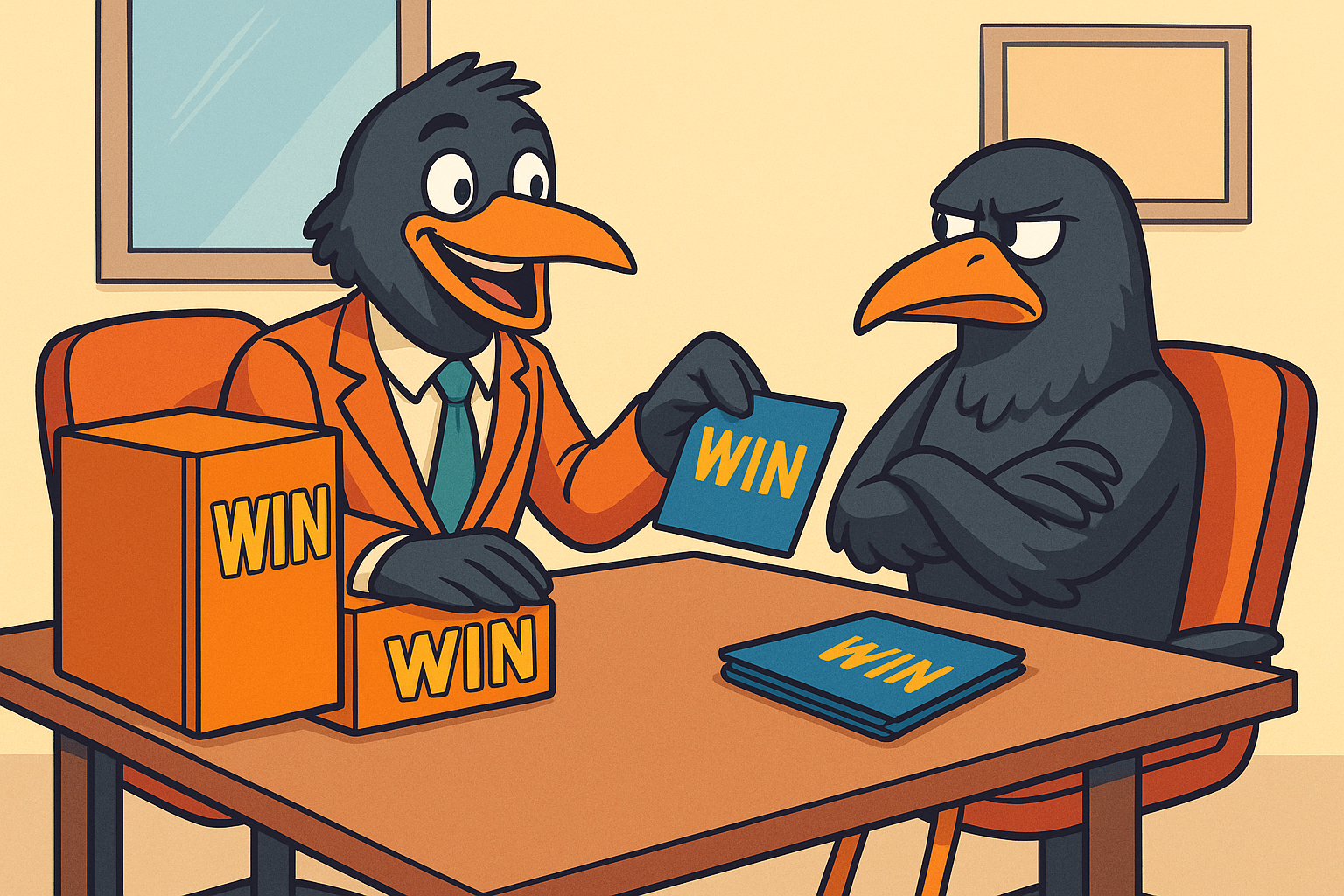
    When Someone Says Win/Win, Prepare to Lose

    I got an email today pitching a continuing-education class for real estate agents.

    The hook?

    “Seasoned pro Candy Cooke will offer real-estate-specific tips on how to close deals that are win-win for all parties.”

    Every time I see “win-win,” I know exactly what’s coming next:

    Now, I’m not against working together. Not even close.

    Good negotiators use empathy constantly — not to melt into the other side, but to understand what they actually want.

    Sometimes there is a way to structure a deal where both sides walk away happier than they expected.

    But that’s not usually what “win-win” means when it shows up in real estate training.

    What it usually means is: “Let’s teach agents how to get their own clients to settle faster so the agent can get paid sooner.”

    Because here’s the truth nobody in CE classes ever says out loud:

    Most “win-win” apostles aren’t preparing you to negotiate. They’re preparing you to fold. And worse, they’re preparing your clients to fold.

    A true negotiation is cooperative — but it isn’t compliant.

    Those are two very different things.

    The consumer thinks “win-win” means the agent is going to fight for them while still being reasonable.

    What it often means is the agent is going to protect the relationship with the other agent, move the deal along, and get to the closing table with as little friction as possible.

    Even if that means nudging their own client into giving up more than they should.

    That’s not working for someone. That’s working them.

    The sad thing is, most agents don’t even realize they’ve been taught to do this. The scripts and the slogans sound virtuous — “we’re looking for mutual benefit,” “we want everyone to win,” “we don’t want to create tension,” and so on.

    And the public hears those lines and thinks, “Well, that sounds nice.”

    Of course it sounds nice. That’s why it works.

    Meanwhile, in the real world, negotiation experts like Jim Camp and Chris Voss teach systems built on something entirely different: clarity, permission to say no, understanding what matters, and deliberately de-escalating pressure instead of giving in to it.

    Those systems work.

    They get better deals.

    And they do it without games, without manipulation, and without needing your client to be the “reasonable” one every time.

    I use those systems because they’re collaborative in the only way that matters: they produce honest results.

    They help my clients get what they actually want, without tricking the other side and without tricking my own people into thinking they have to settle early.

    And the best part? I don’t hide it.

    I tell everyone to read the books — agents, clients, anyone. Everything in life is a negotiation. The better you get at it, the better everything goes.

    Real collaboration isn’t phony “win-win.”

    It’s two sides telling the truth, knowing their purpose, and working toward an agreement that actually makes sense.

    That’s the game I’m playing. And I’m playing it on behalf of the people who hire me.

    If the other side happens to play it too? It almost always ends up better for everyone.

    You can buy the books off my recommended reading page here:

    Disclosure: As an Amazon Associate I earn from qualifying purchases. If you buy something—anything—after clicking that link, I may receive a small commission. It doesn’t change your price.

  • Respond, Don’t React

    Respond, Don’t React

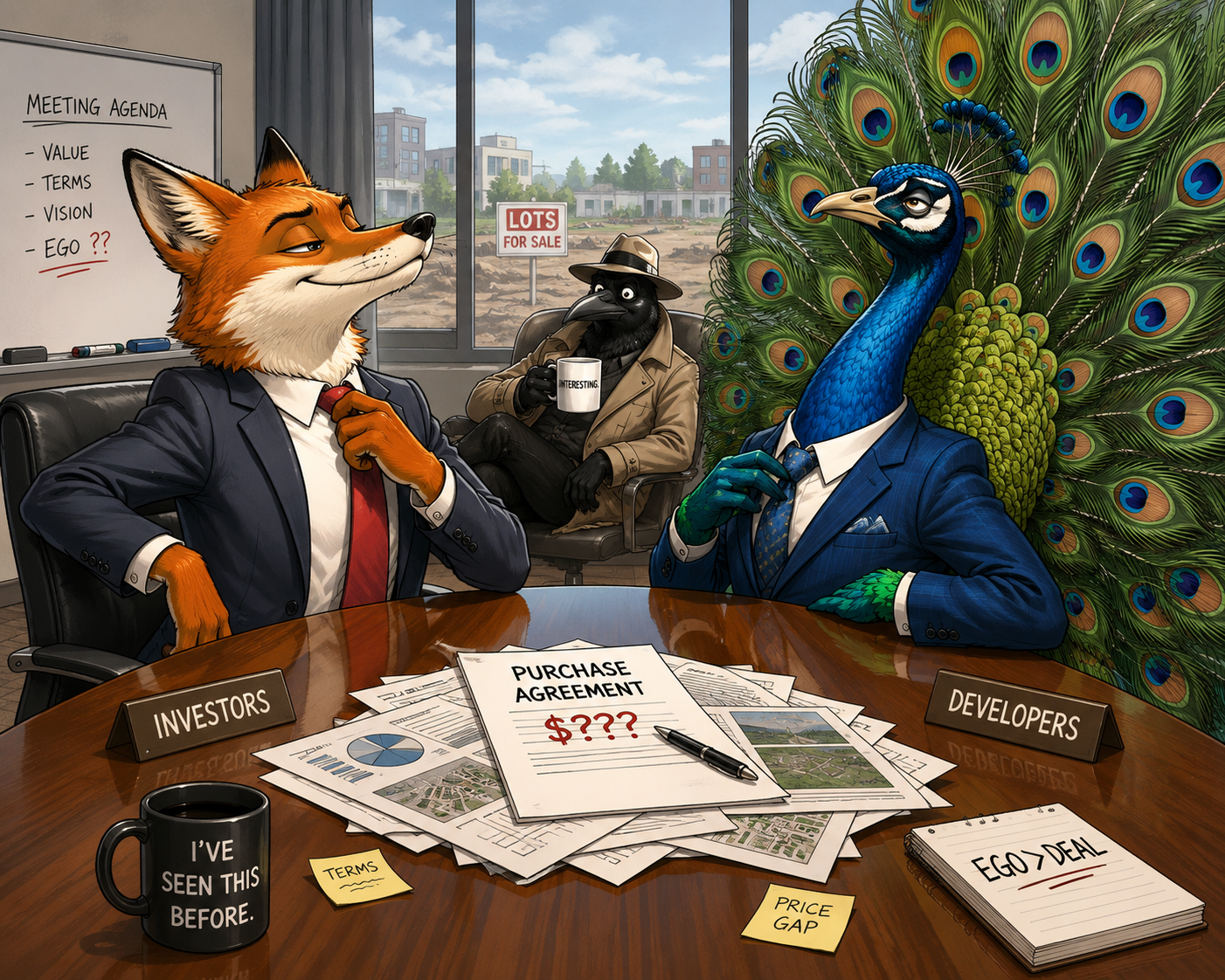
    I once had a client who went under contract with a developer on what was clearly a longshot deal. The payout would’ve been huge — if it closed.

    Before signing, I told him several times: this is a 50/50 shot at best.

    Don’t start spending the money in your head. Don’t even plan on it closing. If it happens, great — but don’t count on it.

    At first, he took that to heart. But as the process dragged on, he started asking me if maybe it might even close early.

    I warned him again, but he couldn’t help it. He was already counting chickens.

    Then came the dreaded call from the buyer: “The city killed my deal.”

    My client was furious. And instead of just taking the loss in stride, he reacted. He got so angry that the buyer wanted nothing more to do with the property — or with us.

    He slammed the door on what could have been a future opportunity, all because his emotions got the better of him.

    Just another example of an important negotiating principle: the danger usually isn’t what the other party does. It’s how you react and whether you control yourself correctly.

    Real estate deals can be emotional — especially when the numbers are big or the stakes are personal.

    But reacting in the heat of the moment almost always makes things worse. Responding, on the other hand, keeps you in control.

    When someone doesn’t do what you think they should, remember: they’re probably doing exactly what they said they would. It’s in the contract.

    Option periods, title contingencies, financing clauses — all those timelines and outs are there for a reason. Buyers don’t sign contracts because they don’t want to buy. They sign them because they want the right to find out if they can.

    If they discover something that makes the deal fall apart, you’ve just learned something valuable about your property — at no cost to you.

    If they ask for more time or a price change, don’t take it personally. That’s not an insult. It’s a negotiation. You can say yes or no. Either way, you’re still in control.

    The moment you start taking things personally, you lose perspective — and sometimes, the deal.

    The best negotiators don’t stay calm because they’re detached. They stay calm because they know the rules of the game. They read the contract. They act in their own best interest, and they expect others to do the same.

    And when you understand that, it gets a whole lot easier to respond — not react.

    ****PS – Learning to control yourself is one of the best ways to improve your negotiating outcomes. It’s not about intimidation or chicanery, it’s about following your system. Principles above tactics. The best negotiating book I know of is Jim Camp’s Start With No. I read it once a year, when you understand the system it feels like you’re playing another game entirely.

    Unless your counterpart is using the system too, in which case things get exponentially easier for your both.

    (If that wasn’t the case, would I be telling you about it?)

    Is there any part of your life that wouldn’t improve with better negotiating skills?

    Disclosure: As an Amazon Associate I earn from qualifying purchases. If you buy something—anything—after clicking that link, I may receive a small commission. It doesn’t change your price.