Tag: Cooke County Land Sales

  • Like Getting Paid In Advance

    Like Getting Paid In Advance

    Last week was about Solomon and how that ended. He was given everything and had every advantage. God appeared to him directly and told him what to do, which we all assume would settle it for us. It probably wouldn’t. It didn’t for him.

    But it’s worth considering how it started.

    God didn’t tell Solomon to go prove himself first. He didn’t say, follow these rules for a while and then I’ll give you wisdom, riches, and long life. He gave it to him, then told him what to do with it. That order matters.

    And it isn’t unique to Solomon.

    Look at David. Made king, established, given victory and position, and then later failed in a way that wasn’t subtle. Look at Israel as a whole. Delivered, restored, protected, and then the same pattern shows up again. Drift, idols, collapse, and eventually crying out to be restored again.

    It keeps happening, which makes it harder to treat as isolated mistakes.

    God gives first. Then people fail to hold onto what they were given. The issue isn’t that the instructions were unclear or that they didn’t have enough. They had more than enough. They just didn’t keep it.

    That includes you.

    There’s another place where the order matters.

    Through Jesus Christ, forgiveness is already there.

    It doesn’t work like clean yourself up and then come. It’s come, and then get cleaned up.

    Same pattern. God gives, God restores, and we don’t hold it together on our own, which is fortunate because we can’t.

    All that’s left is to turn, ask, and believe.

    It’s never too late.

    Until it is.


    Register to Receive Posts Via Email!

    By submitting, I understand I will receive marketing emails and blog posts from Mike Browning Realty and/or associated companies. Unsubscribe at any time.

  • You Know You Should. You Also Know Why You Don’t

    You Know You Should. You Also Know Why You Don’t

    If you own non-residential real estate, you probably find yourself wondering from time to time what it might sell for today. How it fits into your overall financial picture. What’s going on around it.

    Even if you’re not planning to sell. Things change. Sometimes faster than expected. And it’s a lot easier to deal with that when you already have a handle on things, rather than trying to figure it out when you need it yesterday.

    Not to sound like an NRA ad, but it’s better to have the information and not need it than need it and not have it.

    And the reason is pretty simple.

    We’ve all had the experience of getting close to needing a new (or newer) car. You start looking online just to get a feel for things, and before you can even look at anything, a chat box pops up.

    It says there’s a real person there. You know there isn’t.

    If you get past that, you’re not getting much real information without giving them your email or phone number. And once you do, you’ve effectively signed up to hear from them for the foreseeable future.

    All the dealerships say they’re different. Experience says they’re mostly the same.

    Sounds a lot like Realtors, if we’re being honest.

    If you ask for an evaluation, you expect it to come in high. High enough to get your attention. Then adjustments get made later once you’re already in the process. And if you don’t move forward right away, you can expect follow-up. A lot of it.

    So while you know it would be smart to stay on top of things, I understand why you don’t.

    Most people don’t.

    But that doesn’t mean you’re wrong to want the information.

    It just means you don’t want everything that usually comes with it.

    So here’s the question.

    What if you could get a realistic view of where things stand, without someone trying to turn it into a listing conversation before you’ve even had a chance to think about it?

    That’s the difference.

    Am I going to follow up with you? Of course.

    But it won’t feel like what you’re expecting.

    Allow yourself to take a look while the pressure is off.


    PPS- If you’d rather just keep an eye on how this works, you can sign up below and get these posts in your inbox.

    Register to Receive Posts Via Email!

    By submitting, I understand I will receive marketing emails and blog posts from Mike Browning Realty and/or associated companies. Unsubscribe at any time.

  • The Best Time to Look Is When You Don’t Have To

    The Best Time to Look Is When You Don’t Have To

    You’ve probably heard it said that the best time to find a job is when you don’t need one.

    Most people agree with that when they hear it. It makes sense. You don’t wait until something goes wrong. You keep your eyes open, pay attention to what’s out there, and stay aware of opportunities.

    Not because you’re planning to leave tomorrow, but because things change. If you’re paying attention, more likely for the better.

    The same idea gets repeated in different ways. Your real job isn’t just what you get paid to do. It’s to keep an eye on what might be next.

    And most people don’t actually do it.

    Not because they disagree with it, but because it makes them uncomfortable. They don’t want to have conversations that might go somewhere. They don’t want to deal with interviews. They don’t want their current employer to find out. They don’t want something to start that they don’t feel in control of.

    So they leave it alone.

    Until one day something changes. The company gets sold, things slow down, priorities shift, or they’re just no longer needed.

    And now they’re starting from zero.

    The time they thought they had turns out to be gone.

    Real estate works the same way, especially with land.

    The day you might need or want to sell is probably somewhere out in the future, if it ever comes at all. So it’s easy to assume there’s no reason to think about it now.

    But things change.

    Markets move. Situations shift. Priorities evolve.

    And when that happens, it’s a lot easier to make a good decision if you already understand what you have and how it fits into the bigger picture.

    The problem is, most people don’t want to look.

    Not because they think it’s a bad idea, but because of what they expect will come with it.

    They’ve dealt with real estate people before. They assume that once they start the conversation, it turns into pressure. Like they should have sold yesterday. Like they’re getting pulled into something they didn’t intend to start.

    So they avoid it.

    That’s the part that doesn’t need to be true.

    You don’t have to sell. You don’t have to list. You don’t have to make a decision about anything.

    But you are allowed to take a look and understand what you have.

    And it’s a lot easier to do that when you don’t need the answer right away than when you needed it yesterday.


    PPS – If you’d rather just follow along for now, you can sign up below and get these in your inbox.

    Register to Receive Posts Via Email!

    By submitting, I understand I will receive marketing emails and blog posts from Mike Browning Realty and/or associated companies. Unsubscribe at any time.

  • When Someone Keeps Coming Back

    When Someone Keeps Coming Back

    I got a testimonial recently from one of my longest-running clients. Probably the most consistent relationship I’ve had.

    Jack L. is the Executive Vice President of Acquisitions and Development for a national, publicly traded homebuilder. We’ve worked together on land and lot deals for over 20 years.

    Here’s what he said:

    “I’ve worked with Mike for over 20 years on land and lot deals. He’s a stand-up, trustworthy guy who is very knowledgeable about his market. He has strong relationships with landowners and a deep network in land development.

    He’s always willing to help with anything we need during due diligence, and he does a great job working with sellers, building relationships, and helping them understand what to expect throughout the process.”
    — Jack L.

    I went back and actually added it up after he mentioned the 20 years.

    A couple dozen deals.
    Over $50 million in total transaction volume.

    We haven’t done anything together in the last couple of years. The market shifted, and they opened a regional office in Dallas, so they handle more in-house now. We still stay in touch, but they don’t need outside brokers the same way they used to.

    Groups like that aren’t tied to any one broker. They see a lot of deals, and they’re more than capable of finding opportunities on their own.

    The fact that we continued to work together over that period of time is what matters.

    What stood out to me in that testimonial wasn’t the volume or even the length of the relationship.

    It was this part.

    Helping sellers understand what to expect.

    That’s the part most people underestimate.

    When a developer is the buyer, they can usually pay the most. They’re the ones who can turn the dirt into something else. But those deals come with a lot behind them.

    Underwriting.
    Market testing.
    Internal approvals.
    City approvals.

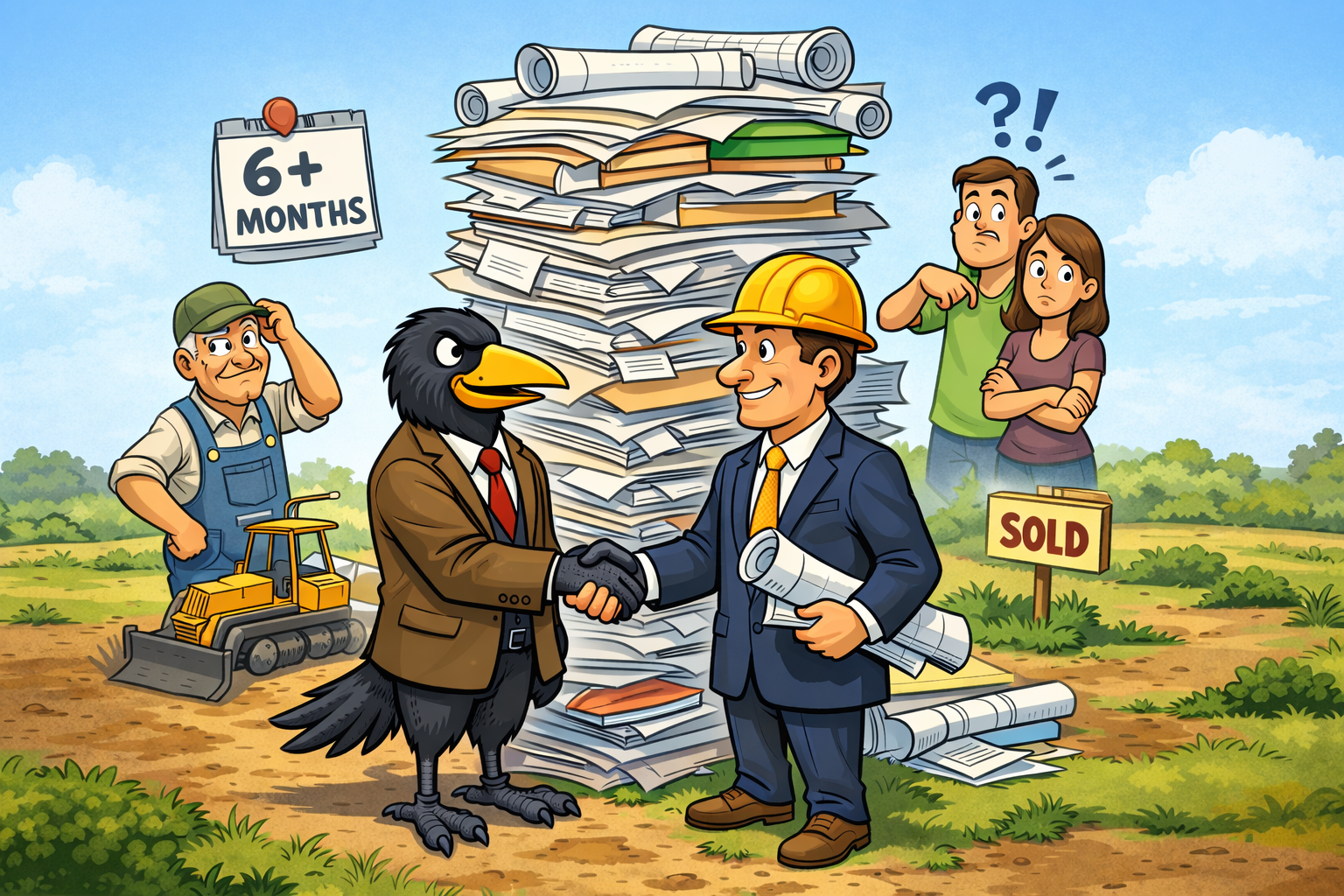
    The city alone can stretch things out. And it tends to get slower, not faster.

    What looks simple from the outside usually isn’t.

    Someone who doesn’t do this every day might assume a deal like that should close in a couple of weeks. Maybe 30 days.

    In reality, you’re often 45 days in just getting a survey and environmental work done. After that, you’re waiting on approvals, and those are not on your timeline. Four to six months is pretty normal if everything goes smoothly. Longer if it doesn’t.

    From the seller’s side, that can feel off.

    You know your property. You’re ready to sell it. Then you’re dealing with a process that feels slow and overly complicated, and it’s easy to start wondering what the buyer is really doing.

    Most of the time, they’re not being difficult.

    They’re trying to make sure the deal actually works before they commit to it.

    If that part isn’t explained up front, it can feel like the whole thing is getting dragged out for no reason.

    That’s where a lot of deals start to go sideways.

    And most of the time, it has nothing to do with price.

    It comes down to expectations.


    PS – Knowing what to expect is step one in making a smart decision.

    You may not be thinking about selling your land today, and you don’t have to make any decisions until you’re ready.

    Is it a bad idea to give yourself permission to just take a look?

    That’s where the MBR Land Reality Check comes in.

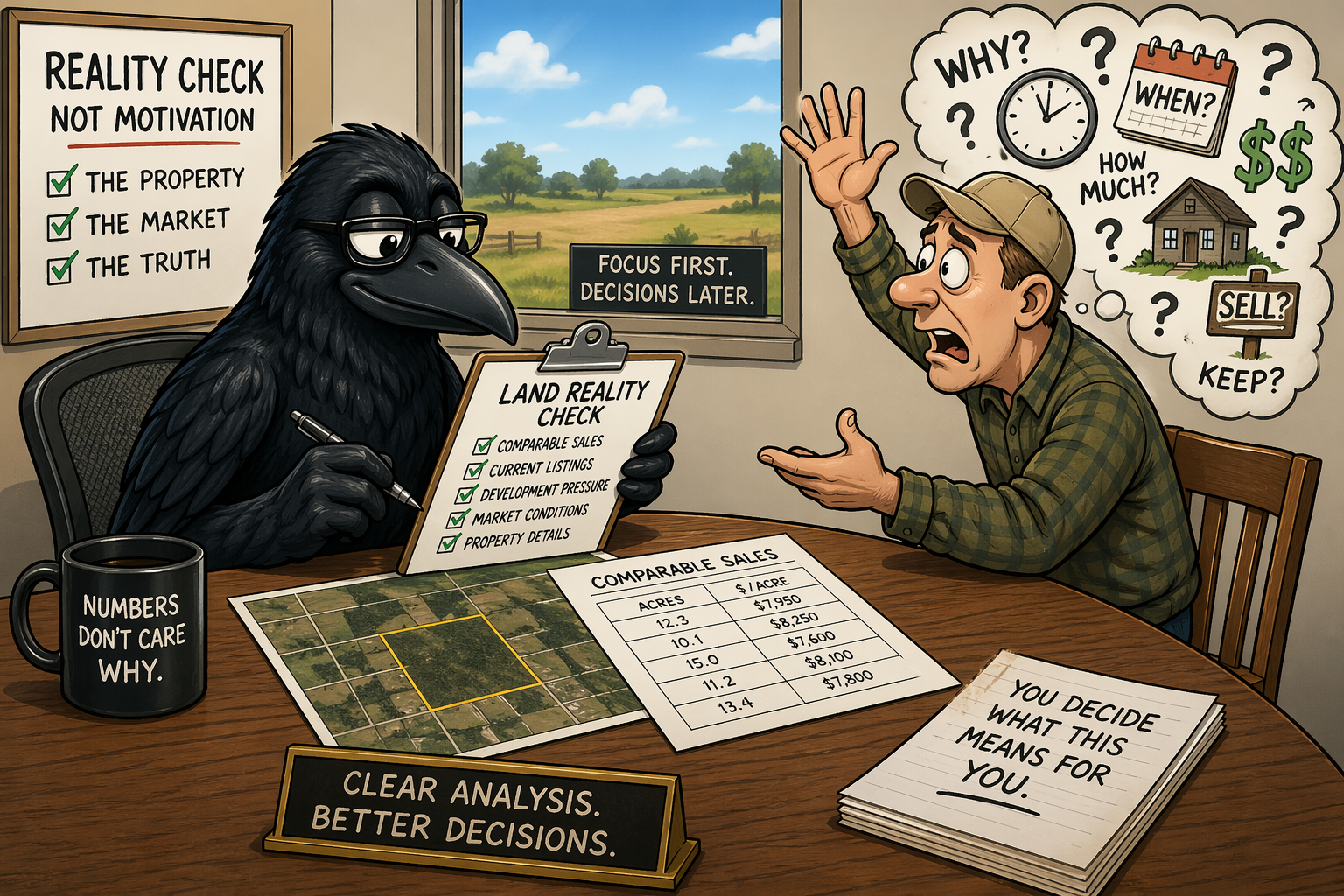
    It’s an in-depth look at recent nearby sales, market trends, development activity, and the types of buyers who might be interested in your property right now.

    Once you have it, you still don’t have to make any decisions about selling. But you’ll have what you need if things change.

    Allow yourself to take a look.


    PPS – If you’re not ready for the Reality Check but like this kind of thinking, you can sign up below to get these in your inbox.

    Register to Receive Posts Via Email!

    By submitting, I understand I will receive marketing emails and blog posts from Mike Browning Realty and/or associated companies. Unsubscribe at any time.

  • The Wisest Man Who Ever Lived

    The Wisest Man Who Ever Lived

    Solomon is usually treated like a success story.

    The wisest man who ever lived. Builder of the temple. King at the height of Israel’s power. Probably the richest man who ever lived.

    All of that is true.

    But if you read it straight through, it doesn’t land that way. He may be the most tragic figure in the Bible, although he’s got a lot of competition.

    God gave him what he asked for, wisdom, and then added everything he didn’t ask for. Wealth, power, reach. And He didn’t leave Solomon guessing. He appeared to him and told him directly what to do and what not to do.

    The instructions weren’t complicated. Stay loyal. Don’t go after other gods. Don’t marry foreign wives who would pull him that direction.

    Not all at once. It builds. More alliances. More marriages. More tolerance for things he would have rejected earlier. At some point it isn’t drift anymore, it’s direction.

    Seven hundred foreign wives and three hundred concubines. That’s not fudging what God says on some technicality. It’s about as blatant as you can get.

    And it didn’t stay private. He followed their gods, built places of worship for them, and made it normal.

    The wisest man who ever lived saw God, heard Him, knew better, and still walked straight into it.

    That part tends to get glossed over.

    Because it gets in the way of something people want to believe. That if things lined up for them, they would do better. More clarity, more money, more control, and they would handle it correctly.

    Don’t buy it.

    We’ve all seen it when we’re looking at someone else. Give them a little more room, a little more success, a little less pressure, and the lines start moving. What used to be off limits becomes negotiable. Then it becomes normal.

    So when someone says they would be different if they just had the right setup, don’t buy it. Things lined up for him as much as they ever will for anyone.

    Didn’t matter.

    The question isn’t whether you’ll hold the line perfectly. That part is already answered.

    Provision wasn’t made because we might succeed. It was made because we won’t.

    Through Jesus Christ.

    If you’re waiting until you feel more capable or more disciplined, you’re waiting on something that doesn’t show up.

    It’s never too late.


    P.S.
    If you’d like to read through the Bible this year, you can join us at His Word Together.
    No commentary.
    No telling you what to think.
    Nothing to buy.
    Nothing fancy.
    Just steady time in the Word.

    Register to Receive Posts Via Email!

    By submitting, I understand I will receive marketing emails and blog posts from Mike Browning Realty and/or associated companies. Unsubscribe at any time.

  • Unless You Want Something Truly Unique, This Isn’t For You

    Unless You Want Something Truly Unique, This Isn’t For You

    Most people looking at rural land think they’re buying distance.

    They’re not. At least not really. They’re buying time.

    Time before things change around them, before neighbors show up, before what felt quiet starts feeling crowded. Most people overestimate how long that lasts.

    I just put this one back in MLS. About 39.66 acres on Rochelle Cannon Rd outside Whitewright, with over 1,300 feet of frontage. Convenient to US 75 and the Sherman TI plant. Asking $30K per acre for the whole thing. It can be divided if needed.

    On paper, it sounds like a lot of other tracts.

    It isn’t. This one fights you a little.

    There are real creek beds running through it. Not decorative. They shape where you can go and where you can’t. There are mature oaks, uneven ground, and parts you’ll leave alone because it makes more sense to.

    Most buyers see that as a problem. It is, if your goal is efficiency.

    Flat land is easy. You can do whatever you want with it, and so can the next guy, and the one after that. That’s how you end up with something that felt rural for about five minutes.

    And once that happens, there’s no real way to undo it.

    This one doesn’t work that way.

    You don’t get a blank canvas. It pushes back, and you have to think about placement. Spend money in the right spots, leave other areas alone. That friction is what protects it long-term.

    You end up with separation that isn’t dependent on what your neighbors do next. That’s the part most people miss. They think separation comes from distance, but it usually comes from constraints.

    You’re still close enough to Sherman, US 75, and real life when you need it. But when you’re on the property, it doesn’t feel like you’re close to anything.

    That combination is harder to find than people think.

    There are up to three water meters available and strong frontage.

    This is not the right property for someone who wants simple, cheap, or predictable.

    If the goal is to buy something that stays different over time, this is the kind of land that actually does it.

    Most won’t want it.

    That’s part of the point.

    Send Me The Info!

    By submitting, I understand I will receive marketing emails and blog posts from Mike Browning Realty and/or associated companies. Unsubscribe at any time.

  • Why I Don’t Ask

    Why I Don’t Ask

    If you’ve ever requested a Land Reality Check from me, you may have noticed that I don’t ask why you’re requesting it.

    Most people in real estate start there. They want to know if you’re looking to sell, how soon, and what your motivation is. That makes sense from their perspective, because those answers usually shape how they handle the conversation.

    The reason I don’t ask is because I don’t want that to influence the analysis.

    People come to me in all kinds of situations. Some are thinking about selling in the near term. Some would sell at the right number but aren’t in any hurry. Others are just curious and want to understand what they have. All of those are completely valid, but none of them should change how the property is evaluated.

    So when I put together a Reality Check, I try to approach it the same way every time.

    I assume you’re what I’d call a sensible seller. Someone who might want to sell in the near term, but isn’t under pressure. Not a forced sale, but also not someone holding out indefinitely waiting for a perfect scenario.

    That middle ground is where most real transactions actually happen.

    You’re not trying to squeeze every last dollar out of it, but you’re also not looking to give it away. You’re trying to make a decision that makes sense, both financially and practically.

    That’s the lens I use when I look at comparable sales, how buyers are behaving, and what your property would likely look like in the current market.

    Once you see it laid out that way, you can decide how it applies to your situation. You might be more motivated than that. You might be less. You might not be planning to do anything at all.

    That part can come later.

    The first step is just understanding what you have and how it would likely be received, without that being shaped by what you think you might want to do.

    That’s why I don’t ask.


    PPS – If you’d rather just follow along for now, you can sign up below and get these posts in your inbox.

    Register to Receive Posts Via Email!

    By submitting, I understand I will receive marketing emails and blog posts from Mike Browning Realty and/or associated companies. Unsubscribe at any time.

  • All They Did Was Ask

    All They Did Was Ask

    Sometimes people assume there has to be a big reason to reach out.

    That you have to be ready to sell, or at least thinking about it in a serious way.

    Most of the time, that’s not really the case.

    I sent out a Land Reality Check recently to someone who owns property on Bois d’Arc Reservoir. There wasn’t any urgency, no timeline, and no stated plan to sell. As far as I can tell, it was just curiosity. I don’t even think it had been run by the other partners before requesting it.

    Just wanted to understand what to expect.

    After I sent it over, I got this response:

    That’s great to hear, of course, but it’s not really the point.

    What matters is what happened before all that.

    Just raising a hand and asking the question. Not to sell, and not to list, just to take a look.

    People check what their stocks are worth all the time, probably more often than they need to. But with real estate, they tend to avoid looking at it, even though it’s often a much bigger piece of the picture.

    Part of that is because they assume that once they start looking into it, they’re starting a process. That it leads to conversations, meetings, and decisions they may not be ready to make.

    So they leave it alone.

    Not because doing nothing is clearly the best move, but because they don’t want to deal with what might come with it.

    You don’t have to make a decision. You don’t have to move forward with anything. And you don’t have to keep talking beyond whatever you’re comfortable with.

    But you can take a step back and understand what you have and how it might fit with the rest of what you’re doing.

    Sometimes, after looking at it, nothing really changes. That’s probably the case more often than not. But sometimes it does, and when it does, you’re making a decision on purpose instead of avoiding one.

    That’s the difference.

    All they did was ask.


    PPS – If you’re not ready for that but like this kind of thinking, you can sign up below and get these in your inbox.

    Register to Receive Posts Via Email!

    By submitting, I understand I will receive marketing emails and blog posts from Mike Browning Realty and/or associated companies. Unsubscribe at any time.

  • It’s a bad idea to try to fix yourself.

    It’s a bad idea to try to fix yourself.

    The end of the Book of Judges is a long, ugly chain of decisions that all trace back to one moment.

    Israel made a vow not to give their daughters in marriage to the tribe of Benjamin. At the time it probably felt justified. Benjamin had done something so evil that the other tribes went to war over it.

    Then the war ended, and the consequences of that vow became clear. Benjamin wouldn’t recover. An entire tribe of Israel would disappear, not because God commanded it, but because of something they said.

    They saw the problem, but they wouldn’t deal with it directly. They could have admitted the vow was wrong and broken it. That would have cost them, mostly in pride, but it would have been clean.

    Instead, they started working around it.

    There was a town that hadn’t joined the war, so they attacked it, killed the inhabitants, and kept about four hundred young women alive to give to Benjamin. That solved part of the problem, if you ignore what they had just done to get there.

    It still wasn’t enough, so they came up with something else. There was a festival at Shiloh, and they told the men of Benjamin to hide nearby and take the women when they came out to dance. That way, technically, Israel wasn’t “giving” their daughters.

    They stacked one decision on top of another, each one designed to protect the original vow, and each one making things worse.

    Most people don’t go that far, but the pattern isn’t hard to recognize.

    We don’t like admitting we were wrong, so we adjust instead. We explain it, justify it, and look for ways to clean it up without ever backing up and saying it shouldn’t have happened in the first place.

    That trade almost always goes the same way. A smaller, honest wrong gets replaced by something bigger that’s easier to defend.

    The instruction from Jesus is simple. Confess.
    Not manage it. Not reframe it. Not work around it.

    Confess, and He will forgive you.
    Even the mess you made trying to fix it.

    The sooner you set aside your pride and say it plainly, the less you usually have to clean up later.

    Or you can keep digging.


    P.S.-If you’d like to read through the Bible this year, you can join us at His Word Together.

    No commentary.
    No telling you what to think.
    Nothing to buy.
    Nothing fancy.

    Just steady time in the Word.

  • You Don’t Have To Do Anything

    You Don’t Have To Do Anything

    One of the differences between highly successful people and everyone else is simple.

    They don’t talk themselves out of things before actually looking at them.

    They don’t act on every idea, but they give themselves permission to take a look before deciding it’s not for them.

    Most of the time, nothing changes. But every once in a while, they find something that creates a meaningful shift.

    If you look back over your own life, you can probably point to a handful of decisions that did most of the work getting you where you are.

    Like who you married. Or a job you took (or decided not to take). Something negative you stopped doing.

    It’s not dozens. It’s a few.

    The difference is, some people give themselves more chances to find those moments.

    If you own lots or land, you’re probably not actively trying to sell it.

    You may not even be thinking about it. Maybe you’ve been told the best move is to hold.

    Or maybe there’s an emotional attachment.

    But when you allow yourself to step back and look at the bigger picture, you might see it differently.

    Or you might not. And that’s fine. The point isn’t to force a decision.

    It’s to give yourself permission to look.

    Are you better off selling and paying down debt?

    Would selling allow you to move into something more useful or better located?

    Or does it make the most sense to leave things exactly as they are?

    In a lot of cases, doing nothing is still the right move. Probably most of the time.

    But you don’t really know until you look.

    And that’s where most people stop.

    Because of what comes next.

    Looking into it usually means talking to someone. And talking to someone usually means starting a process.

    Meetings. Conversations. Follow-ups.

    Dealing with someone who seems to be pushing toward a sale, whether it fits or not.

    Feels a lot like going to a car lot.

    Except this is something you don’t actually have to do.

    So you leave it alone. Not because doing nothing is clearly the best move.

    But because looking into it feels like committing to something.

    That’s the part that doesn’t need to be true.

    You don’t have to sell.

    You don’t have to decide.

    You don’t have to move forward with anything.

    But you are allowed to look.

    You’re allowed to understand what you have.

    What it might be worth. What your options actually are, without it turning into a process you didn’t intend to start.

    Sometimes, after looking at it, the answer is still to do nothing. Sometimes it isn’t.

    But either way, it’s a decision you made on purpose.

    Not something you avoided because you didn’t want to deal with what might come next.


    PS – Another reason people put something like this off is simple. It takes time. You have to gather information, sort through it, and figure out what actually matters. And if you don’t deal with it regularly, you may not even know what to look for.

    But what if you could have that done for you without getting pulled into a sales process on the back end?

    That’s what the MBR Land Reality Check is for. It looks at nearby sales, current listings, development pressure, and the details that affect value but don’t show up in a quick search.

    This is typically something I’d charge for, but I’m offering it at no cost for now.

    If you’ve ever wondered what your property actually looks like in today’s market, this is a straightforward way to find out.


    PPS – If you’re not ready for that but like thinking through land, markets, and negotiation, you can sign up below and get these posts in your inbox.


    Register to Receive Posts Via Email!

    By submitting, I understand I will receive marketing emails and blog posts from Mike Browning Realty and/or associated companies. Unsubscribe at any time.