Tag: Business Lessons

  • It’s (Probably) Not About You

    It’s (Probably) Not About You

    Everybody’s heard that saying:

    People see what they want to see.

    It’s true — not because people can’t recognize facts, but because we fill in the blanks with stories that make us the good guy.

    The “scientific” name for it is WYSIATI (What you see is all there is)

    If a clerk or customer service rep treats us badly, our mind immediately writes the script:

    They’re rude. They’re jealous. They don’t want me to get what I came for.

    And off we go — feeling irritated but also a little self-righteous.

    But we almost never have the full story. What if you found out their dog died? Or their mom’s in the hospital?

    You’d still remember the moment, but the story would change completely.

    The truth is, you can’t go wrong assuming someone’s just having a bad day.

    It saves a lot of unnecessary resentment — and you feel better too.

    (Not because they are having a bad day of course, but you don’t stew over their behavior.)

    I got a reminder of that this week.

    I’m working an off-market sale, and my client called to ask if I’d been showing his property around.

    I hadn’t — but he said an attorney had reached out to one of his partners to verify pricing and availability.

    I told him that maybe the attorney was working for our potential buyer, and was making sure what I had told them was true before spending their time (and client’s money).

    Then I caught myself. Because that’s the version where I look good and get paid, so I defaulted to it.

    I said, “Of course, there are probably other explanations. That one just happens to be the one I would like the most so it’s where my brain went.”

    Turns out, that was the right one this time — but it easily could’ve been wrong.

    It was a good reminder that our “explanations” are often just stories we prefer.

    And in business, assuming the wrong story can cost you.

    PS – Some brokers “shoot first, ask later” — they chase offers without even knowing if the seller will sell or what price makes sense.

    It sometimes works, but it can also create resentment and kill deals before they start.

    So yes — that attorney checking first? Smart move.

    And me avoiding that behavior? It’s why I get to represent top clients on large deals like this.

    If you’re not ready to sell yet, that’s fine.

    But the time to start covering your bases is before you’re ready.

    Is it a bad idea to have the most current information — and to be working with someone who treats you right?

    Click below to start that conversation:


  • Being the Smartest Person in the Room Is Overrated — Unless You Know How to Hide It

    Being the Smartest Person in the Room Is Overrated — Unless You Know How to Hide It

    Some people would argue I don’t have much experience in this…

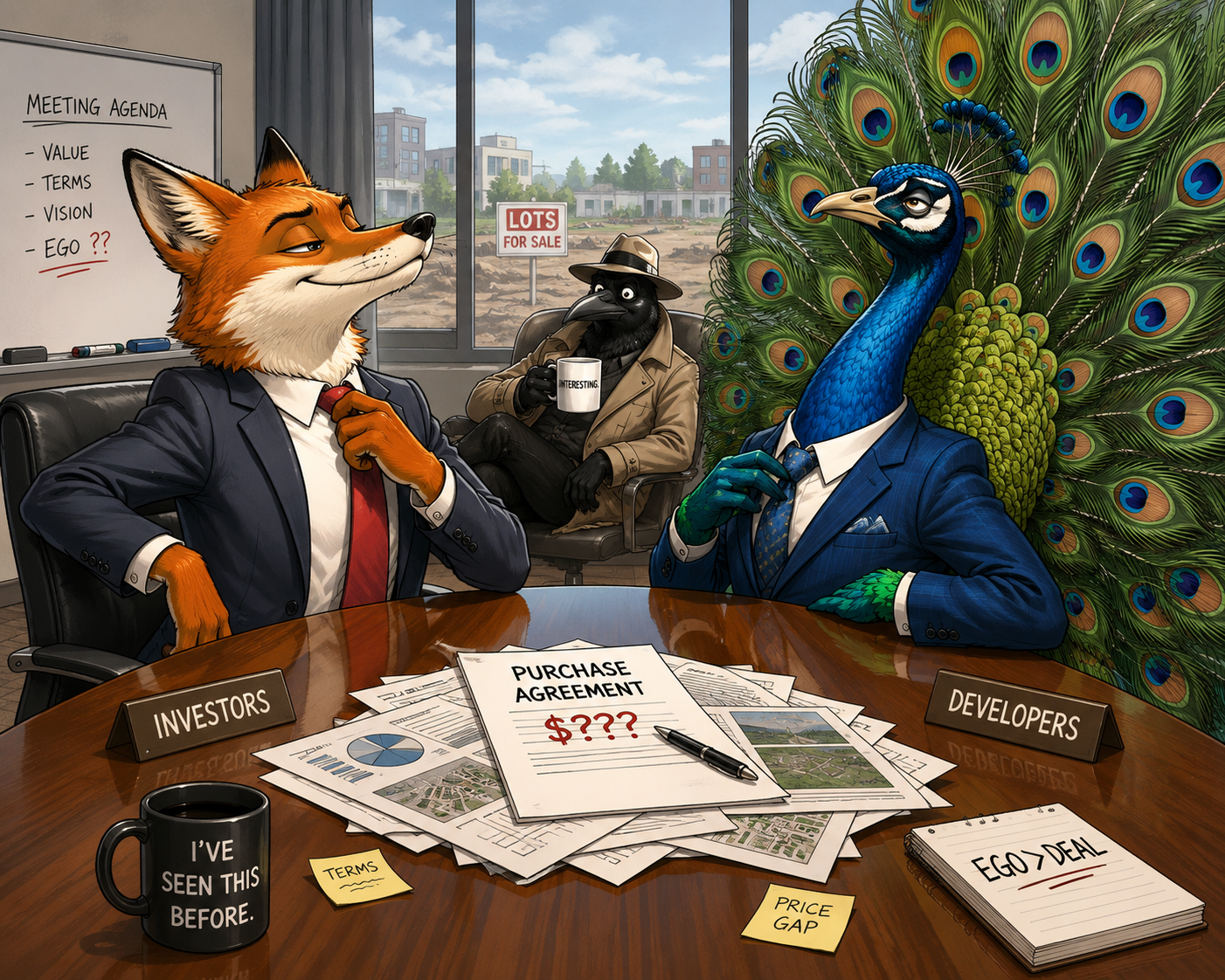
    Just after the mortgage crisis, there were vacant lots everywhere and only a handful of buyers. I represented one of the few builders looking to acquire. We met with an investment group that had been buying lots to see if there was a fit.

    Realistically, a deal probably wasn’t going to happen regardless — the timing wasn’t right, and pricing for builders and sellers was miles apart.

    But this one was doomed from the start.

    The leader for the investors was sharp, but couldn’t resist proving it.

    Our builder’s CEO? Same thing.

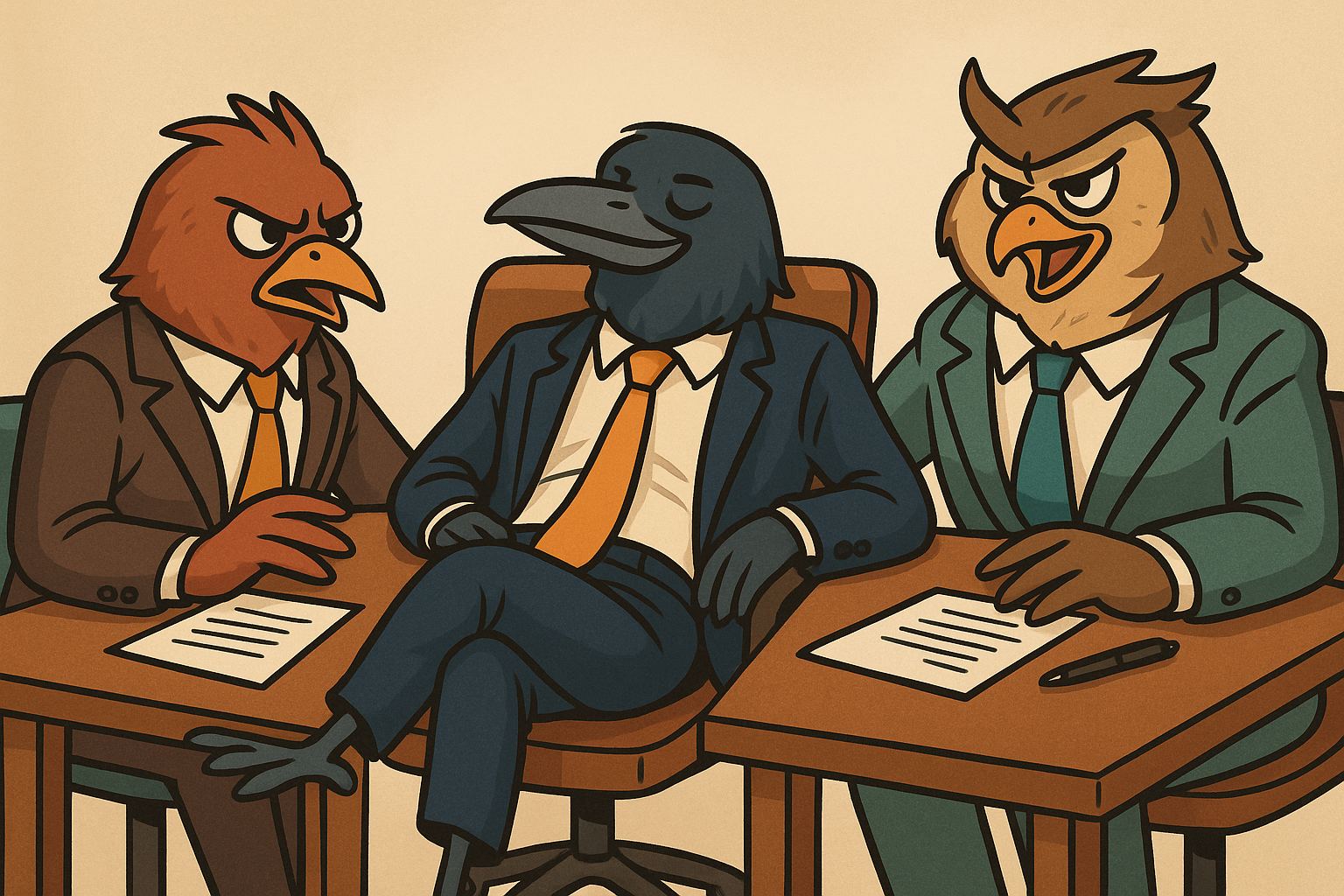
    Two smart guys locked in a measuring contest, and the rest of us just watched it die in real time.

    Not long after, my guy passed acquisitions to someone a little less abrasive and focused on his CEO role. Fifteen years later, that company is publicly traded and one of the largest homebuilders in the country.

    The other guy? Not quite as good. Overconfidence led to overleverage, which led to prison.

    I hear he gets out soon, but I won’t be knocking down doors to deal with him again.

    Jim Camp talks about okayness in Start With No: In any negotiation, only one person can feel totally “okay.” Your job is to make sure it’s them.

    If my guy had just let the other guy show how smart he was, without trying to match him move-for-move it might have been different. Like I said, we probably wouldn’t have made a deal that day, but there would’ve been a better chance of future deals.

    It’s why Columbo solved every case. He looked unprepared and harmless so the criminal let their guard down. Same principle. You don’t have to actually be bumbling; you just have to let them think they’re in control.

    If you walk into a room and everyone immediately knows you’re the smartest person there, you’ve already screwed up. People don’t like a smarty-pants — especially one who makes them feel like the slowest kid in class.

    That doesn’t mean intelligence isn’t valuable. It just means you don’t win by flashing it.

    I’m not recommending clumsiness as a tactic (I’m not big on tactics — I like principles). But just as an experiment, next time you go to a meeting “forget” your pen so you have to borrow one. Or something equally minor.

    Watch how the dynamic changes because you let the other party feel “okay.”

    What’s this got to do with selling real estate? Maybe not much directly. But I think you see the applications — both in how I deal with my clients and with our counterparts on the other side of a deal.

    As for meetings, I try to avoid those as much as I can. And deal strictly in email. I do my best to write clearly — and keep out the tpyos.