Tag: selling land

  • You Know You Should. You Also Know Why You Don’t

    You Know You Should. You Also Know Why You Don’t

    If you own non-residential real estate, you probably find yourself wondering from time to time what it might sell for today. How it fits into your overall financial picture. What’s going on around it.

    Even if you’re not planning to sell. Things change. Sometimes faster than expected. And it’s a lot easier to deal with that when you already have a handle on things, rather than trying to figure it out when you need it yesterday.

    Not to sound like an NRA ad, but it’s better to have the information and not need it than need it and not have it.

    And the reason is pretty simple.

    We’ve all had the experience of getting close to needing a new (or newer) car. You start looking online just to get a feel for things, and before you can even look at anything, a chat box pops up.

    It says there’s a real person there. You know there isn’t.

    If you get past that, you’re not getting much real information without giving them your email or phone number. And once you do, you’ve effectively signed up to hear from them for the foreseeable future.

    All the dealerships say they’re different. Experience says they’re mostly the same.

    Sounds a lot like Realtors, if we’re being honest.

    If you ask for an evaluation, you expect it to come in high. High enough to get your attention. Then adjustments get made later once you’re already in the process. And if you don’t move forward right away, you can expect follow-up. A lot of it.

    So while you know it would be smart to stay on top of things, I understand why you don’t.

    Most people don’t.

    But that doesn’t mean you’re wrong to want the information.

    It just means you don’t want everything that usually comes with it.

    So here’s the question.

    What if you could get a realistic view of where things stand, without someone trying to turn it into a listing conversation before you’ve even had a chance to think about it?

    That’s the difference.

    Am I going to follow up with you? Of course.

    But it won’t feel like what you’re expecting.

    Allow yourself to take a look while the pressure is off.


    PPS- If you’d rather just keep an eye on how this works, you can sign up below and get these posts in your inbox.

    Register to Receive Posts Via Email!

    By submitting, I understand I will receive marketing emails and blog posts from Mike Browning Realty and/or associated companies. Unsubscribe at any time.

  • When Someone Keeps Coming Back

    When Someone Keeps Coming Back

    I got a testimonial recently from one of my longest-running clients. Probably the most consistent relationship I’ve had.

    Jack L. is the Executive Vice President of Acquisitions and Development for a national, publicly traded homebuilder. We’ve worked together on land and lot deals for over 20 years.

    Here’s what he said:

    “I’ve worked with Mike for over 20 years on land and lot deals. He’s a stand-up, trustworthy guy who is very knowledgeable about his market. He has strong relationships with landowners and a deep network in land development.

    He’s always willing to help with anything we need during due diligence, and he does a great job working with sellers, building relationships, and helping them understand what to expect throughout the process.”
    — Jack L.

    I went back and actually added it up after he mentioned the 20 years.

    A couple dozen deals.
    Over $50 million in total transaction volume.

    We haven’t done anything together in the last couple of years. The market shifted, and they opened a regional office in Dallas, so they handle more in-house now. We still stay in touch, but they don’t need outside brokers the same way they used to.

    Groups like that aren’t tied to any one broker. They see a lot of deals, and they’re more than capable of finding opportunities on their own.

    The fact that we continued to work together over that period of time is what matters.

    What stood out to me in that testimonial wasn’t the volume or even the length of the relationship.

    It was this part.

    Helping sellers understand what to expect.

    That’s the part most people underestimate.

    When a developer is the buyer, they can usually pay the most. They’re the ones who can turn the dirt into something else. But those deals come with a lot behind them.

    Underwriting.
    Market testing.
    Internal approvals.
    City approvals.

    The city alone can stretch things out. And it tends to get slower, not faster.

    What looks simple from the outside usually isn’t.

    Someone who doesn’t do this every day might assume a deal like that should close in a couple of weeks. Maybe 30 days.

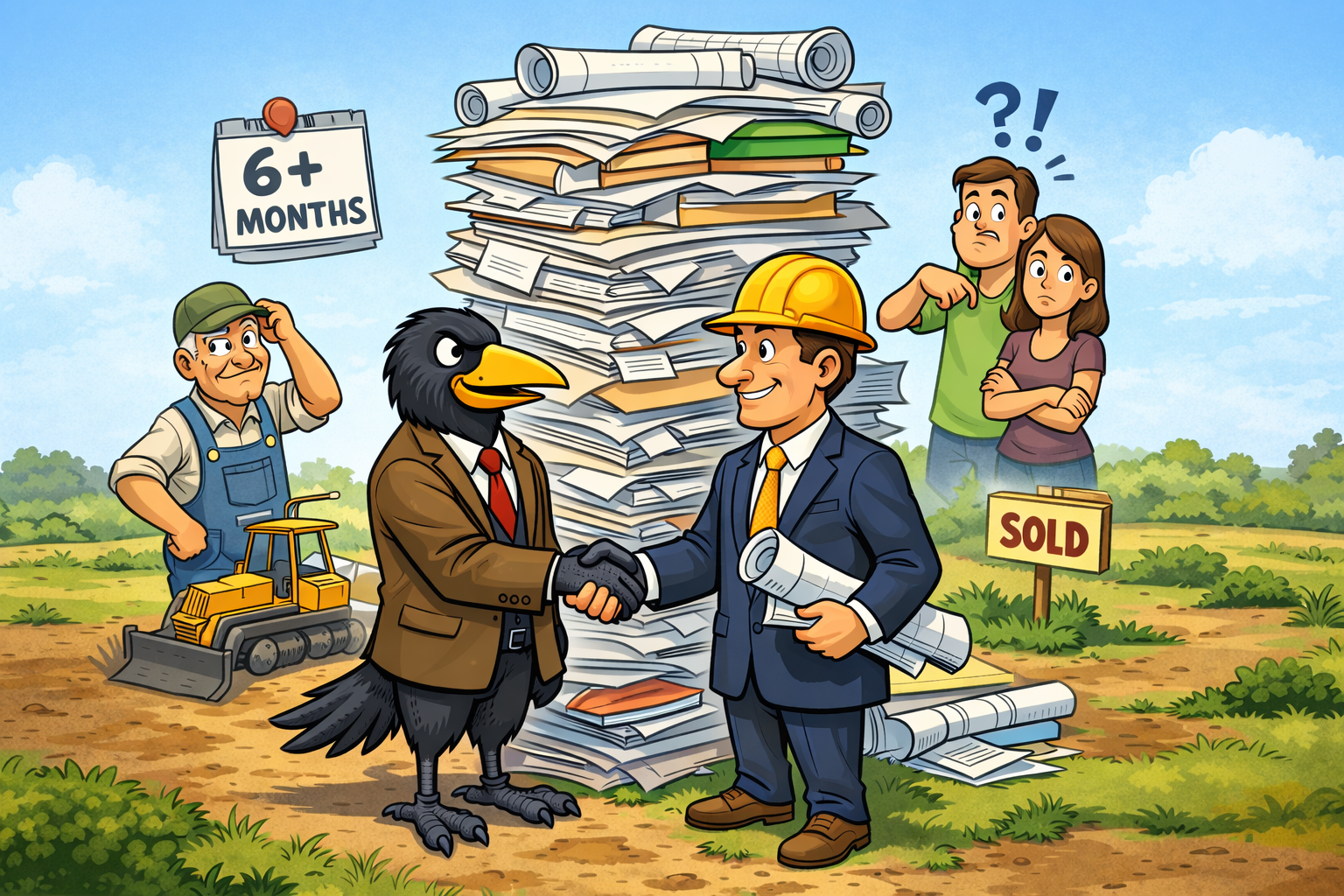
    In reality, you’re often 45 days in just getting a survey and environmental work done. After that, you’re waiting on approvals, and those are not on your timeline. Four to six months is pretty normal if everything goes smoothly. Longer if it doesn’t.

    From the seller’s side, that can feel off.

    You know your property. You’re ready to sell it. Then you’re dealing with a process that feels slow and overly complicated, and it’s easy to start wondering what the buyer is really doing.

    Most of the time, they’re not being difficult.

    They’re trying to make sure the deal actually works before they commit to it.

    If that part isn’t explained up front, it can feel like the whole thing is getting dragged out for no reason.

    That’s where a lot of deals start to go sideways.

    And most of the time, it has nothing to do with price.

    It comes down to expectations.


    PS – Knowing what to expect is step one in making a smart decision.

    You may not be thinking about selling your land today, and you don’t have to make any decisions until you’re ready.

    Is it a bad idea to give yourself permission to just take a look?

    That’s where the MBR Land Reality Check comes in.

    It’s an in-depth look at recent nearby sales, market trends, development activity, and the types of buyers who might be interested in your property right now.

    Once you have it, you still don’t have to make any decisions about selling. But you’ll have what you need if things change.

    Allow yourself to take a look.


    PPS – If you’re not ready for the Reality Check but like this kind of thinking, you can sign up below to get these in your inbox.

    Register to Receive Posts Via Email!

    By submitting, I understand I will receive marketing emails and blog posts from Mike Browning Realty and/or associated companies. Unsubscribe at any time.

  • You Don’t Have To Do Anything

    You Don’t Have To Do Anything

    One of the differences between highly successful people and everyone else is simple.

    They don’t talk themselves out of things before actually looking at them.

    They don’t act on every idea, but they give themselves permission to take a look before deciding it’s not for them.

    Most of the time, nothing changes. But every once in a while, they find something that creates a meaningful shift.

    If you look back over your own life, you can probably point to a handful of decisions that did most of the work getting you where you are.

    Like who you married. Or a job you took (or decided not to take). Something negative you stopped doing.

    It’s not dozens. It’s a few.

    The difference is, some people give themselves more chances to find those moments.

    If you own lots or land, you’re probably not actively trying to sell it.

    You may not even be thinking about it. Maybe you’ve been told the best move is to hold.

    Or maybe there’s an emotional attachment.

    But when you allow yourself to step back and look at the bigger picture, you might see it differently.

    Or you might not. And that’s fine. The point isn’t to force a decision.

    It’s to give yourself permission to look.

    Are you better off selling and paying down debt?

    Would selling allow you to move into something more useful or better located?

    Or does it make the most sense to leave things exactly as they are?

    In a lot of cases, doing nothing is still the right move. Probably most of the time.

    But you don’t really know until you look.

    And that’s where most people stop.

    Because of what comes next.

    Looking into it usually means talking to someone. And talking to someone usually means starting a process.

    Meetings. Conversations. Follow-ups.

    Dealing with someone who seems to be pushing toward a sale, whether it fits or not.

    Feels a lot like going to a car lot.

    Except this is something you don’t actually have to do.

    So you leave it alone. Not because doing nothing is clearly the best move.

    But because looking into it feels like committing to something.

    That’s the part that doesn’t need to be true.

    You don’t have to sell.

    You don’t have to decide.

    You don’t have to move forward with anything.

    But you are allowed to look.

    You’re allowed to understand what you have.

    What it might be worth. What your options actually are, without it turning into a process you didn’t intend to start.

    Sometimes, after looking at it, the answer is still to do nothing. Sometimes it isn’t.

    But either way, it’s a decision you made on purpose.

    Not something you avoided because you didn’t want to deal with what might come next.


    PS – Another reason people put something like this off is simple. It takes time. You have to gather information, sort through it, and figure out what actually matters. And if you don’t deal with it regularly, you may not even know what to look for.

    But what if you could have that done for you without getting pulled into a sales process on the back end?

    That’s what the MBR Land Reality Check is for. It looks at nearby sales, current listings, development pressure, and the details that affect value but don’t show up in a quick search.

    This is typically something I’d charge for, but I’m offering it at no cost for now.

    If you’ve ever wondered what your property actually looks like in today’s market, this is a straightforward way to find out.


    PPS – If you’re not ready for that but like thinking through land, markets, and negotiation, you can sign up below and get these posts in your inbox.


    Register to Receive Posts Via Email!

    By submitting, I understand I will receive marketing emails and blog posts from Mike Browning Realty and/or associated companies. Unsubscribe at any time.

  • You’re Not Avoiding Selling

    You’re Not Avoiding Selling

    Most people like the idea of a new car.

    They don’t like buying one.

    It usually means going somewhere, sitting down, and dealing with someone who says they’re there to help, and you know they’re trying to sell you something.

    That’s not a knock on them. The job is to sell. They also know that if you leave without buying, you’re probably not coming back.

    That changes the conversation.

    You start sorting through everything in real time. What’s real, what’s a line, what’s being left out. After a while, you’re just looking for a way to get up and leave.

    So you put it off.

    Not because you don’t want the car, but because you don’t want that process.

    If you own lots or land, it’s usually the same thing.

    You know at some point it might make sense to sell, or at least understand where things stand. But that usually means stepping into that same kind of conversation.

    Sitting down with someone who talks in generalities, leans on clichés, and keeps nudging things toward a deal. Whether it’s obvious or not, there’s a preferred outcome.

    So you leave it alone.

    Not because doing nothing is clearly right, but because it’s easier than dealing with that.

    I see it all the time. People wait until something forces the issue, and by then they’re reacting instead of deciding.

    What you actually want is pretty simple.

    You want someone who will tell you the truth, even if it doesn’t lead anywhere. Even if it doesn’t make anyone money right now.

    And you don’t want to block off half a day just to get there.

    That’s how I handle it.

    I do things in a way that doesn’t soak up your time or leave you feeling dragged along in the process.

    I’m here to advise, but you’re in control. I work for you, not the other way around.

    A lot of the properties I’ve sold, I didn’t meet the seller until closing. Some I never met at all. Not because I avoid it. I’ll meet whenever it makes sense.

    But it doesn’t have to start there.

    It can start with a conversation. Email is fine. That’s usually what I prefer anyway.

    Sometimes that turns into a sale. Sometimes later. Sometimes not at all.

    But at least you’re deciding based on what actually makes sense, not because you got pulled into something you didn’t really want to deal with in the first place.


    PS – Most people aren’t planning to sell today.

    But things change, timing, markets, personal situations.

    When that happens, the people who already understand where they stand tend to make better decisions.

    That’s what the MBR Land Reality Check is for.

    It looks at nearby sales, current listings, development pressure, and the details that affect value but don’t show up in a quick search.

    This is typically something I’d charge for, but I’m offering it at no cost for now.

    If you’ve ever wondered what your property actually looks like in today’s market, it’s a straightforward way to find out.


    PPS – If you’re not ready for that but you like thinking through land, markets, and negotiation, you can sign up below and get these posts in your inbox.

    Register to Receive Posts Via Email!

    By submitting, I understand I will receive marketing emails and blog posts from Mike Browning Realty and/or associated companies. Unsubscribe at any time.

  • Never Ask a Barber If You Need a Haircut

    Never Ask a Barber If You Need a Haircut

    And be careful asking a real estate agent if it’s a good time to sell.

    You already know how agents get paid.
    Property sells, they get a commission. If it doesn’t, they don’t.

    That part isn’t confusing.

    What people don’t always think through is what that does to the conversation before anything sells.

    Most brokers give out information upfront.
    Valuations, pricing opinions, strategy.

    I do it too.

    It looks free, and in a narrow sense it is. You’re not writing a check for it.

    But it’s not neutral.

    If someone only gets paid when something sells, their advice is going to lean that way. Not because they’re lying. Because that’s how the structure works.

    List it.
    Price it.
    Get it done.

    You’ll hear about timing, positioning, exposure. A lot of that is right.

    What you won’t hear as much about is doing nothing. Holding. Waiting. Changing the plan in a way that doesn’t lead to a quick transaction.

    Those paths don’t pay.

    So they don’t get the same attention.

    That doesn’t make the broker bad. It just means you should understand what’s driving the advice.

    In my case, I’m in the same model. I get paid when something sells.

    But I’m not in a position where every conversation has to end there. I can tell someone to sit still when that’s the better move.

    A lot of brokers can’t.

    If the only path someone lays out for you ends in a listing, it’s worth noticing.

    Not arguing. Not accusing.

    Just noticing.

    And asking yourself one question.

    Would this still make sense if I didn’t sell?


    PS – Most landowners aren’t planning to sell today.
    But situations change, and when they do, the people who already understand their position tend to make better decisions.

    That’s what the MBR Land Reality Check is for.
    It looks at nearby sales, current listings, development pressure, and the details that don’t show up in a quick search.

    Is it a bad idea to know where things stand?


    PPS – If you’re not ready for that but like reading about land, markets, and negotiation, you can sign up below and get these in your inbox.

    Register to Receive Posts Via Email!

    By submitting, I understand I will receive marketing emails and blog posts from Mike Browning Realty and/or associated companies. Unsubscribe at any time.

  • It Doesn’t Have To Be Complicated

    It Doesn’t Have To Be Complicated

    Most landowners assume selling property is going to take a lot of time and effort.

    They’ve usually seen enough to believe that. There are a lot of moving parts. Pricing, marketing, negotiations, due diligence. None of it is complicated on its own, but it stacks up and tends to show up all at once.

    So people expect to be tied to it. Phone calls, emails, decisions every day.

    Sometimes that’s true. But usually it isn’t, if things are handled correctly.

    I worked with a landowner who had owned a lot for about seven years. He planned to build, then didn’t.

    The main concern wasn’t whether it would sell. It was whether it would be positioned correctly from the start.

    Here’s how he described it after the fact:

    “Great. Mike was on top of the entire process. He knew the market. It was priced appropriately to sell it. Instantaneously we had 3 offers. Mike outlined all 3 and negotiated what we felt was the most solid offer. It was an extremely easy experience.

    The main communications happened when I was at a WGC event in Austin. A couple of phone conversations on the golf course was all it took to reach a deal.

    I had owned the property for 7 years and decided not to build. The final outcome was better than expected.

    I had a good experience with Mike. Although we never met I was confident in his skills and ability and he came through.”

    We never met in person. Most of it was handled remotely, with a few conversations when decisions needed to be made.

    That’s not unusual when things are set up correctly.

    Pricing does most of the heavy lifting. If it’s right, the right buyers show up early and you’re choosing between options instead of chasing interest.

    Clarity matters just as much. Multiple offers don’t help if you can’t tell which one actually closes. Laying them out side by side usually answers that.

    And the process itself needs to be managed, not reacted to. Title, access, timing, expectations. Handle those early and they don’t come back later.

    Not every deal is that clean, and some shouldn’t be. But when the setup is right, the amount of effort required tends to drop more than people expect.


    PS – Most landowners aren’t planning to sell today.

    But situations change. And when they do, the people who already understand the market usually have a better experience.

    That’s what the MBR Land Reality Check is for.

    It looks at nearby sales, current listings, development pressure, and the details that don’t show up from the road.

    Is it a bad idea to know where things stand?


    PPS – If you’re not ready for that but like seeing how these deals actually work, you can sign up below and get these posts in your inbox.

    Register to Receive Posts Via Email!

    By submitting, I understand I will receive marketing emails and blog posts from Mike Browning Realty and/or associated companies. Unsubscribe at any time.

  • Waiting Is Always Good. Until It Isn’t.

    Waiting Is Always Good. Until It Isn’t.

    Most landowners don’t feel pain at the beginning of a market shift.

    They notice it much later — after time has already done the damage.

    After the savings and loan crisis, some properties traded for less than the commission paid on the prior sale. Not less than the original purchase price. Less than the fee someone paid to sell it before.

    That didn’t happen because the land suddenly became useless. It happened because demand vanished, capital froze, and landowners who waited ran out of options.

    After 2008, the same thing happened again, just more slowly. Values didn’t bounce back the next year. Or the year after that.

    In many areas it took years just to get back to even, assuming the owner could afford to wait that long.

    Land doesn’t move like houses.

    There is almost always some demand for houses. People get transferred. Families grow or shrink. Some buyers are doing well no matter what the economy is doing.

    Even in soft markets, houses still trade.

    A nice custom home on acreage is different. That buyer isn’t moving because they have to. They’re upgrading. They’re stretching. They’re making a lifestyle decision.

    When things get uncertain, that buyer can disappear almost overnight.

    Developers behave the same way, just at a larger scale. When markets are hot, lots get built quickly. Subdivisions move fast. Capital flows easily.

    When things slow down, that inventory doesn’t vanish. It sits. For a while, there’s simply too much of it.

    So developers change roles. Instead of paying retail on something they can develop immediately, they only buy if the price allows them to wait several years and still hit their return target. Or they step back entirely.

    When that happens, landowners are no longer negotiating with builders — they’re negotiating with patience.

    Investors are always around, but investors don’t buy on hope. They buy on margin. And when they’re the primary buyers left, pricing shifts. Whether landowners like it or not.

    None of this means history is definitely about to repeat itself. It means timing matters more than most landowners want to admit.

    The real risk isn’t the market collapsing tomorrow.

    It’s drifting into a thinner market without realizing the buyer mix has changed.

    When demand narrows, prices can change quickly. The problem is you often don’t know how much. Land is illiquid, and there just aren’t many comps. With houses, year-over-year data tells a story. With land, silence often tells it first.

    When prices fall, time takes over. And once time is in control, landowners don’t get to set the terms anymore.

    That’s usually when regret shows up — not because someone sold too soon, but because they waited too long to be honest about what they owned and who would actually buy it.

    PS- It’s easy to see that housing — and by extension land — has softened over the last couple of years. Interest rates matter. If they fall, houses become more affordable. If they rise further, things tighten.

    You may not be planning to sell today. You may be holding long term. But is it a bad idea to know where things stand right now?

    I offer a free, no-obligation analysis on non-residential property. Real comps. Utility and access info. Market trends. Nearby sales activity that actually matters.

    No pressure.
    No BS.
    Just integrity and diligence.

    Does it ever hurt to have current information?

    Click Below:


  • This Doesn’t Stop ’Til You’re Dead

    This Doesn’t Stop ’Til You’re Dead

    In my younger days, I spent (some might argue wasted) a lot of time playing pool. And I was pretty good. But life changed and I quit spending so much time doing it.

    Now I might pick up a stick once every couple of years. Some days I look like I still have it, and other days I look like a beginner. Either way, I’m nowhere near what I was.

    If you’re into something like weight training, you know the same thing happens. As long as you keep going you’ll keep getting stronger. But the moment you stop, you start getting weaker.

    You’re either moving forward or backward. You can’t sit still.

    The principle works in real estate and business. Or anything else really.

    You’re either growing in knowledge or drifting farther away from the truth of the market. There is no neutral setting. Not for people, and not for property.

    You’re either learning or stagnating.

    You don’t “level off.”

    Not in business, not in life, and definitely not with something as valuable as the dirt you own.

    You might not be ready to sell today. That’s fine. Most people aren’t.

    But if you own land, there will probably come a day when you do want to sell. The question isn’t if. It’s when.

    And here’s the part people forget: that day is getting closer whether you think about it or not.

    Time moves. Markets move. Counties change. Roads get built. Builders shift their focus. Appraisers adjust how they comp acreage. The world doesn’t stop just because you’re not looking.

    So the real question is simple.

    If you know the day is coming — whether it’s six months from now or six years — is it a terrible idea to be learning everything you can now?

    Is it crazy to want to know what the market is doing in your area, what similar tracts are trading for, what’s being planned along your corridors, and what buyers actually want today?

    You don’t have to sell. You don’t even have to think about selling.

    But you should be getting smarter.

    Because the people who learn early make better decisions later.

    And when the moment comes — when life changes, when the right buyer calls, or when the market finally tips in your direction — you’ll know exactly what to do instead of scrambling.

    That’s how you keep moving forward.

    PS — If you want a simple, honest look at what your land might bring in today’s market — plus what’s coming in your area — reach out and I’ll send you my full analysis. No pressure. Just information.

    Just click below to get started:


  • Two Papers In One

    Two Papers In One

    A few years ago I decided to stop watching the news. Turned out to be one of the smartest things I’ve done in a while.

    I’m less worried, my mind seems to work better, I get more done, etc.

    I highly recommend it.

    And don’t worry about being “uninformed.” The way we’re constantly bombarded by media, you can’t really avoid it altogether. I’ve found that if something is big and important enough to actually matter, it will find its way to you.

    So all you really miss is the noise. Give it a try for a month and see how you feel.

    It’s easy to go back to the old way if you don’t like it.

    One exception is that I still look at the Dallas Morning News website a few times a week. I enjoy their sports coverage and also want to see if anything’s happening locally I need to know about.

    But if I’m not careful, I start reading headlines and get pulled down the rabbit hole of thinking the paper is nowhere near what it once was in terms of being a balanced source.

    It can be entertaining though. Pretty often you’ll see what I think of as the “two papers in one” effect.

    One day you’ll read about the “housing shortage” in DFW.

    The next, you’ll see headlines saying builders are slowing down because inventory’s piling up and nothing’s moving.

    So which is it?

    To be fair, it’s more complicated than that.

    DFW isn’t one market — it’s dozens of sub-markets layered on top of each other. Some areas are on fire. Others are cooling. And sometimes they trade places within a few months.

    In some areas, local regulations and land costs can make it nearly impossible to build housing at a price that fits the budget of a middle-class family. So there’s a “shortage.”

    In others, the relative affordability and better schools make it where houses almost can’t be built fast enough — at least until interest rates rise and put the brakes on it. So there’s a “slowdown.”

    In other words, market reality can be very different just a few miles away.

    That’s why broad headlines are almost useless when you’re trying to make a real decision. They can give you a general sense of the climate, but they can’t tell you what’s happening on your street, your corner, or your tract.

    If you own land, a lot, or a development site, your situation could be totally different than what the media portrays.

    That’s where talking with someone who works these deals every day actually helps — because “the market” isn’t one big story.

    It’s a bunch of small ones playing out at the same time. Written by increasingly young reporters who lack the context to really report on the market. Anyone old enough to have seen a Cowboys Super Bowl Championship can tell you today’s rates aren’t particularly high by historical standards. And that what passes for a slow market today would be a roaring success 15-20 years ago.

    Is it ever a bad time to talk to a real expert who shoots straight and knows the local dirt?


  • You Have to Have Trust—But You Need More Than That

    You Have to Have Trust—But You Need More Than That

    Cousin Karen means well. That doesn’t make her a land expert.

    People love getting a new car—or at least one that’s new to them. But just about everyone hates the process of buying one. It’s a beating. Even if you drive off in something you love, there’s a good chance you feel like you got worked over somewhere along the way. Dealers don’t make it easy.

    You might find something that fits your price range, but that’s just the beginning. We all know how your trade gets low-balled. Then most dealerships tack on a bunch of overpriced add-ons you didn’t ask for, ballooning the price by thousands. After that, you sit down with the finance manager—who might as well be called the high-pressure warranty sales guy.

    Even if you make it through the maze, it’s rarely fun. That’s why some dealerships now offer “no-haggle” pricing. The irony? Those lots usually end up making more per sale. People are so burned out on the process, they’ll gladly pay more just to avoid the back-and-forth. But buyers still go through the same options and warranty game—which is the most aggravating part, in my opinion. The stress doesn’t go away; you just think it has.

    Until it hasn’t.

    Part of the problem is that most people only buy a car every few years, so they’re not experienced. That makes it easy to fall victim to pressure and double talk.

    Real estate can be the same way—maybe even worse. I’ve owned 12 cars in the last 30 years. I’ve owned 3 houses. Most people are like me. And if we’re talking about land, there’s even less experience for the vast majority of people.

    The good news is, in real estate, you can hire someone to represent your interests. Even better, lots of the time you don’t have to pay anything up front.

    The bad news? Everyone has a real estate agent horror story. And not paying up front creates a built-in conflict of interest.

    I was licensed when I resold our first house, but since I’m not a “house guy,” I used an agent. I thought I’d be better than most at finding the right one. It was a nightmare. She gave me a price range to expect, then pushed me to take the first offer—which came in at 80% of that. Did she suggest we counter? Nope. Just started listing reasons to accept. She gave other advice I knew was wrong—but only because of my business background. So who knows what happens to people without that experience?

    If you’re buying, of course I recommend using an agent. But again, same issue: they don’t get paid until you buy. So it’s easy for them to push you faster than they should.

    In an old Simpsons episode, Marge becomes a real estate agent. The brokerage slogan was “The Right House for the Right Person.” But when she wasn’t closing deals, her boss explained: “The right house is the one that’s for sale. The right person is anyone.”

    And when it comes to land? 90% of agents simply aren’t qualified to handle it—though they’ll swear they are. A lot of people feel pressure to use a cousin or neighbor who’s an agent. That might ease the conflict of interest, but it creates an even bigger problem: they don’t understand land. That opens up a whole new can of worms.

    Buying or selling lots and land can be tough—like buying a car. You need someone who knows what they’re doing, and someone you can trust.

    I know someone like that. And so do you, if you’ve been around here a while. Just let me know when you need help. I’m here.