Tag: real estate tips

  • Two Papers In One

    Two Papers In One

    A few years ago I decided to stop watching the news. Turned out to be one of the smartest things I’ve done in a while.

    I’m less worried, my mind seems to work better, I get more done, etc.

    I highly recommend it.

    And don’t worry about being “uninformed.” The way we’re constantly bombarded by media, you can’t really avoid it altogether. I’ve found that if something is big and important enough to actually matter, it will find its way to you.

    So all you really miss is the noise. Give it a try for a month and see how you feel.

    It’s easy to go back to the old way if you don’t like it.

    One exception is that I still look at the Dallas Morning News website a few times a week. I enjoy their sports coverage and also want to see if anything’s happening locally I need to know about.

    But if I’m not careful, I start reading headlines and get pulled down the rabbit hole of thinking the paper is nowhere near what it once was in terms of being a balanced source.

    It can be entertaining though. Pretty often you’ll see what I think of as the “two papers in one” effect.

    One day you’ll read about the “housing shortage” in DFW.

    The next, you’ll see headlines saying builders are slowing down because inventory’s piling up and nothing’s moving.

    So which is it?

    To be fair, it’s more complicated than that.

    DFW isn’t one market — it’s dozens of sub-markets layered on top of each other. Some areas are on fire. Others are cooling. And sometimes they trade places within a few months.

    In some areas, local regulations and land costs can make it nearly impossible to build housing at a price that fits the budget of a middle-class family. So there’s a “shortage.”

    In others, the relative affordability and better schools make it where houses almost can’t be built fast enough — at least until interest rates rise and put the brakes on it. So there’s a “slowdown.”

    In other words, market reality can be very different just a few miles away.

    That’s why broad headlines are almost useless when you’re trying to make a real decision. They can give you a general sense of the climate, but they can’t tell you what’s happening on your street, your corner, or your tract.

    If you own land, a lot, or a development site, your situation could be totally different than what the media portrays.

    That’s where talking with someone who works these deals every day actually helps — because “the market” isn’t one big story.

    It’s a bunch of small ones playing out at the same time. Written by increasingly young reporters who lack the context to really report on the market. Anyone old enough to have seen a Cowboys Super Bowl Championship can tell you today’s rates aren’t particularly high by historical standards. And that what passes for a slow market today would be a roaring success 15-20 years ago.

    Is it ever a bad time to talk to a real expert who shoots straight and knows the local dirt?


  • Subtract the Stupid

    Subtract the Stupid

    Remove the dumb stuff. What’s left usually works fine

    Back in my college days, I ran into a little issue with parking.

    Being broke, I didn’t want to pay for a parking pass. So I parked at meters — which cost more over time but less up front. (There’s a lesson in that, too.)

    The problem? The meters only sold one hour at a time. Classes were an hour long. If you parked 10 minutes before class, and left 10–15 minutes after, you were pushing it with just an hour on the meter.

    Could I have just bought two hours? Sure. But I was broke… and stubborn.

    At a big-city campus, maybe this wouldn’t matter. At mine? Parking enforcement made hawks look lazy. And the tickets started piling up.

    So did I fix it by putting more money in the meters? Or paying for a pass?

    No. I just quit driving and started walking.

    I lived about a mile from campus. Not a great walk in bad weather, but usually fine. And it had a lot of benefits:

    • I quit getting parking tickets.
    • I got some exercise.
    • I stayed on campus between classes and actually studied instead of driving home.

    In other words, I got a lot of benefit just by not doing something instead of adding more.

    In his Incerto series, Nassim Taleb calls this idea Via NegativaThe Negative Way.

    Translation: You usually get better results by removing what’s harmful instead of adding what might help.

    In health:

    • Persistent heartburn? Stop eating the garbage that causes it instead of carrying around a pharmacy.
    • Headache every morning? Cut the booze before you double your Advil budget.

    In finance:

    • Before hustling harder, cancel the subscriptions you forgot you had. Free money in three clicks.

    In life:

    • Turn off the phone notifications. Way cheaper than the next productivity fad.

    In my business:

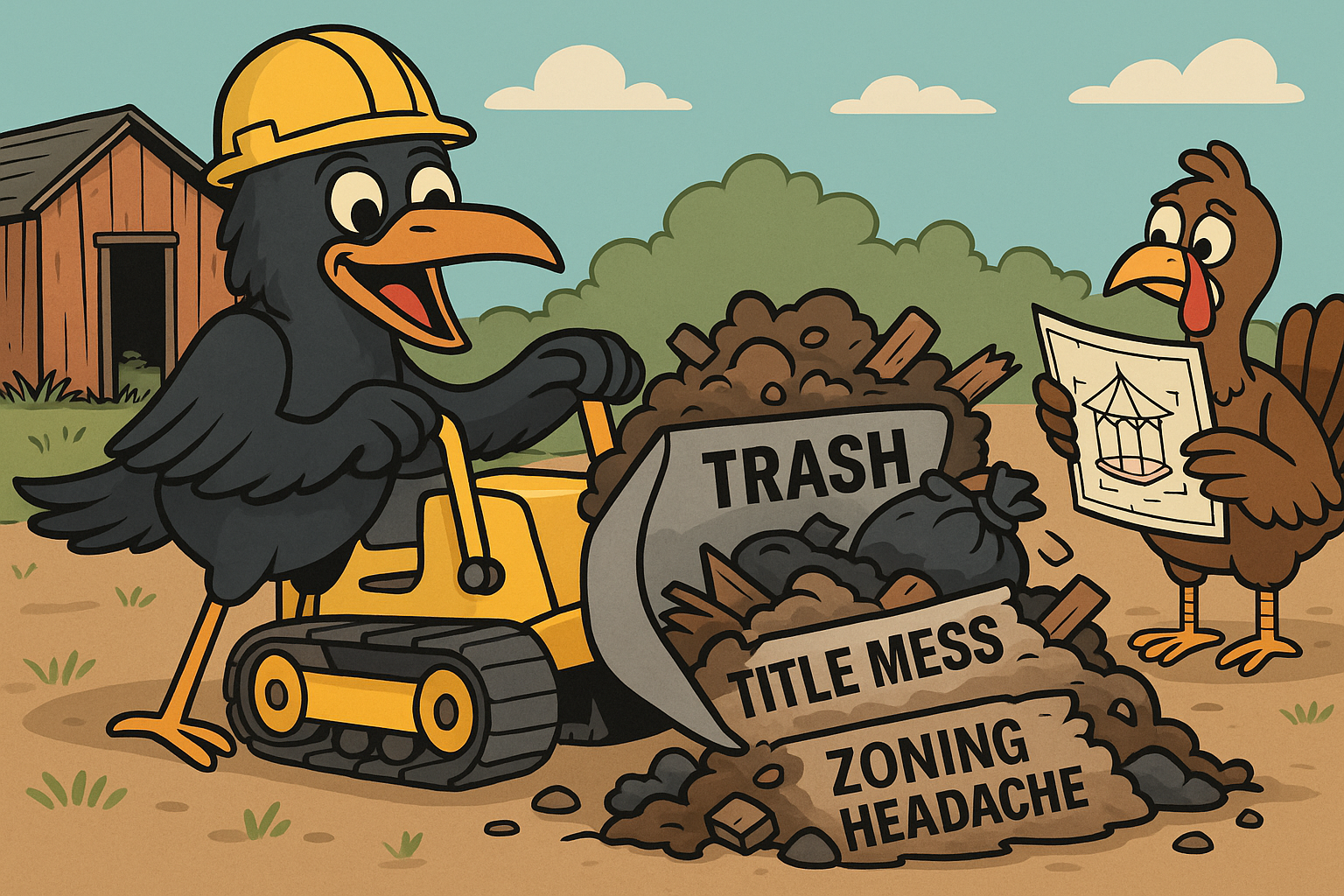
    • I’m listing a property for a widow whose husband’s name is still on the title. Can’t sell it until we fix that. Easy fix. Big result.
    • Another property? Great spot for a convenience store… except the zoning requires an SUP, and the city says “no thanks.” Knowing that early lets us focus marketing elsewhere instead of wasting time — ours or theirs.

    Bottom line: Remove the roadblocks. Cut the noise. Subtract the problems.

    That’s Via Negativa — and it usually works a lot better than duct-taping “improvements” on top of a mess.

    Stop spraying perfume, just get rid of whatever stinks.

    If you want to find the problems before your buyers do, just reach out when you’re ready.


  • Negotiation So Strong, It’d Be Dangerous in the Wrong Hands

    Negotiation So Strong, It’d Be Dangerous in the Wrong Hands

    Only use your powers for good

    Yesterday I mentioned that I use a different kind of negotiating system than most people. Once you get good at it, it honestly feels like you’re playing a whole different game.

    Most folks think negotiation only happens in land deals (or maybe car deals, I’ve got a few stories there for another day). But it’s everywhere.

    Trying to get your kid to clean their room?
    Negotiation.

    Deciding where to eat?
    Negotiation.

    Need time off work for a midweek appointment?
    Yep—negotiation.

    And the better you are at it, the smoother things go and the better your outcomes.

    A lot of people assume great negotiators are pushy. Ruthless, even. Like the guy at the dealership who’ll say anything to close the deal. They’ll lean hard on pressure, power, and urgency. And sure, if you’ve got leverage, sometimes it makes sense to use it.

    But ask yourself how you feel after most car-buying experiences. Even when you like the car, you probably leave thinking, “Never again with that place.”

    That’s the problem with strong-arm tactics: even when they “work,” they burn bridges. People don’t come back. You win the deal but lose the relationship.

    The method I use isn’t weak or soft. It’s not about caving in or rushing to “yes.” If that’s your approach, the sharks out there will eat you alive. But it does lower the tension, make deals easier to close, and keep everyone on good terms when it’s done.

    Sometimes it works so well it’s almost scary.

    Quick story: my wife bought something online from a vendor that was very clear, no refunds, all sales final. And of course, it broke almost immediately. Not a fortune, but enough to be frustrating.

    She reached out. They repeated the no-refund policy. She was even more upset.

    So I wrote a short message, maybe three or four sentences, and told her to send it. She read it and said, “There’s no way this works.”

    I said, “What have you got to lose?”

    She sent it. Refund came back immediately.

    She thought it was magic. Then she looked at me suspiciously and said, “Wait… have you been using this on me?”

    I hadn’t. I only use my powers for good.

    If you want to know how it works,you can buy the book at the link below — only use it for good.


  • Who’s Buying Your Land—and Why Do They Insist on Wasting Your Time?

    Who’s Buying Your Land—and Why Do They Insist on Wasting Your Time?

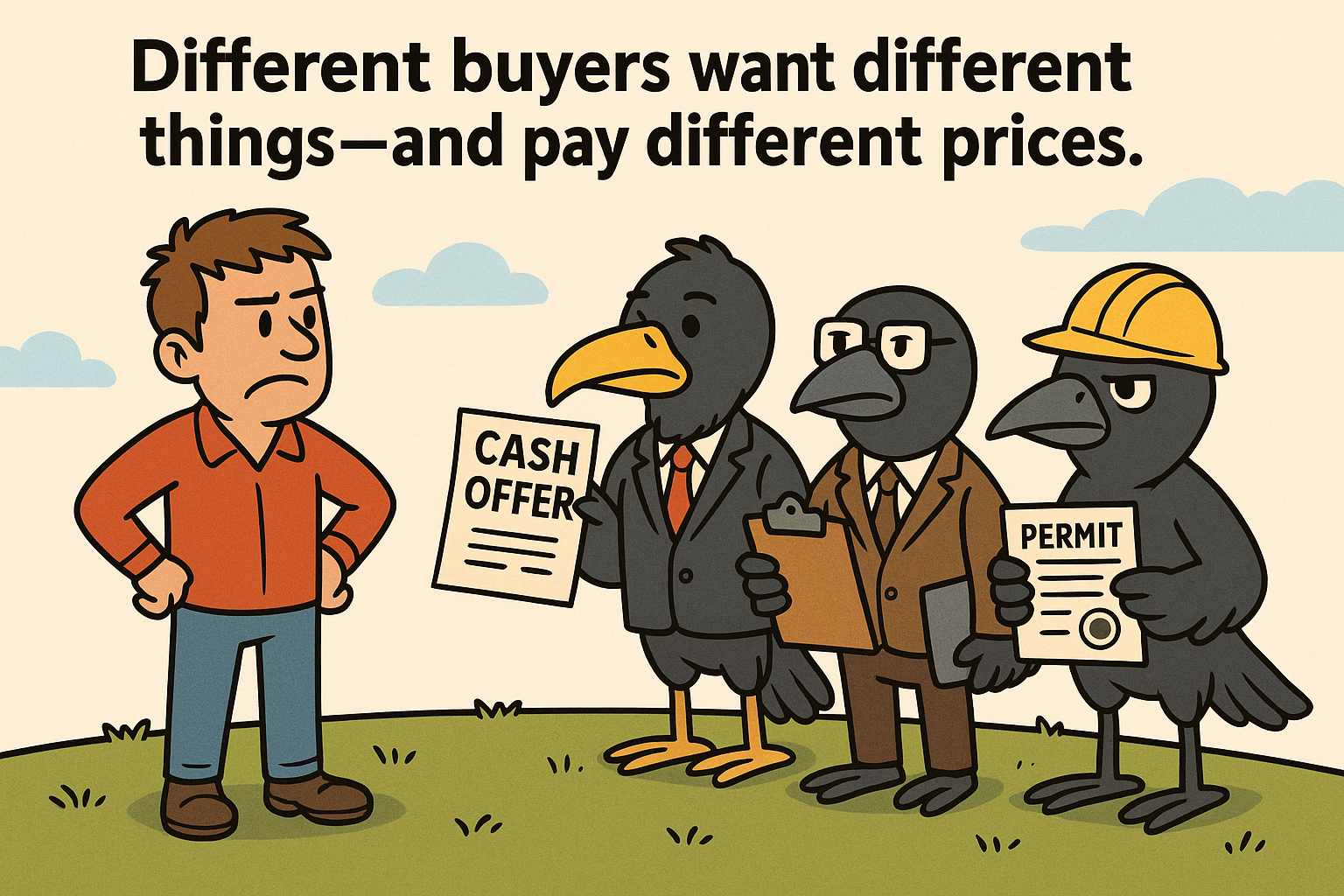
    Not all buyers need the same thing—or can pay the same price

    When you’re selling land, the dream is simple: some rich genius shows up, offers over asking in cash, and closes by 3 p.m. today.

    Unfortunately, that’s not how it usually goes.

    In the real world, buyers vary. Some will pay more than others. Some move fast, others move like molasses. And the more they’re willing to pay? The more time they’re going to need.

    That’s not a red flag—it’s just the cost of doing business, especially when permits, zoning, and government hoops are involved.

    To the uninitiated, the timelines can sound ridiculous. But they’re usually not—they just are what they are.

    This is where a pro comes in. Someone who knows what’s reasonable, how to keep the deal alive, and how to make sure you don’t end up empty-handed if it falls apart.

    If you’re in the market for a pro… I know a guy.

    Here’s a breakdown of the three main buyer types, what they pay, how they think, and how long they take to close.


    These are margin-hunters. They’re not flippers—they’re professional opportunists. The worse your situation looks, the better their offer gets (for them).

    Most of those “We want to buy your land!” letters come from this camp. They’re pulled from tax rolls, mass-printed, and sent to anyone with dirt and a mailbox. The offers are low—laughably low. But a few people say yes, and that’s all they need to make the model work.

    What They’ll Pay:

    The absolute bottom. They’re shooting for big discounts—well under market.

    Contingencies:

    Almost none. No inspections, no appraisals, no drama. They’ll usually cover closing costs to keep it simple.

    Timeline:

    Fastest. Once they’ve checked title, they’re ready to wire funds. You name the closing date.

    What They Want:

    A deal they can brag about. If you’re chasing top dollar, skip ’em. But if you’re in a jam—or chasing a better deal—they’ll clear the runway fast.

    If you do go this route, talk to more than one. Make them compete. Then call me—I’ve got real cash buyers too, and I might be able to get you more without slowing things down.


    This group includes builders, subdividers, and buy-and-hold folks. They’re not sentimental—they’re running numbers. If it pencils out, they’re interested.

    What They’ll Pay:

    More than vultures, but still under market. They’re looking for today’s discount and tomorrow’s upside.

    Contingencies:

    Some. Financing, surveys, maybe a feasibility period—but it’s all pretty reasonable.

    Timeline:

    Shorter. They won’t close overnight, but they move quickly if the deal’s clean.

    What They Want:

    Future value. Appreciation, income potential, or development opportunity. They don’t need a screaming deal—but it has to make sense on paper.


    These are end-users. They’re building a house, a business, or an entire subdivision. Real money, real plans, and usually a lot of homework.

    What They’ll Pay:

    Top of market—or even above—if your property fits what they need.

    Contingencies:

    Plenty. Surveys, engineering, environmental reports, zoning, utilities, site plans—you name it. Cities, counties, and agencies all get a say. And none of them are known for speed.

    Timeline:

    Longest. Not because they’re dragging their feet, but because the process is the process. If they need annexation, zoning, or approvals, it’s a long haul. Six months isn’t unusual—and that’s optimistic.

    What They Want:

    Certainty. They’ll pay more, but only if they’re confident they can build. No approvals = no deal. On the plus side, they pay for the due diligence. And with the right contract, you get copies of everything they generate. Worst case, you might walk away with a free survey, topo, or environmental report.


    Price, contingencies, and time all come down to the kind of buyer you’re dealing with.

    Want it done fast? Be ready to take less.

    Want top dollar? Be ready to wait.

    Know who’s across the table, and you’ll know what kind of offer’s coming. And if you want someone who can help you figure that out—I know a guy.

    Just reply here and ask me about him!


  • Getting In the Way of My Own Success

    Getting In the Way of My Own Success

    Some people say you make your own luck

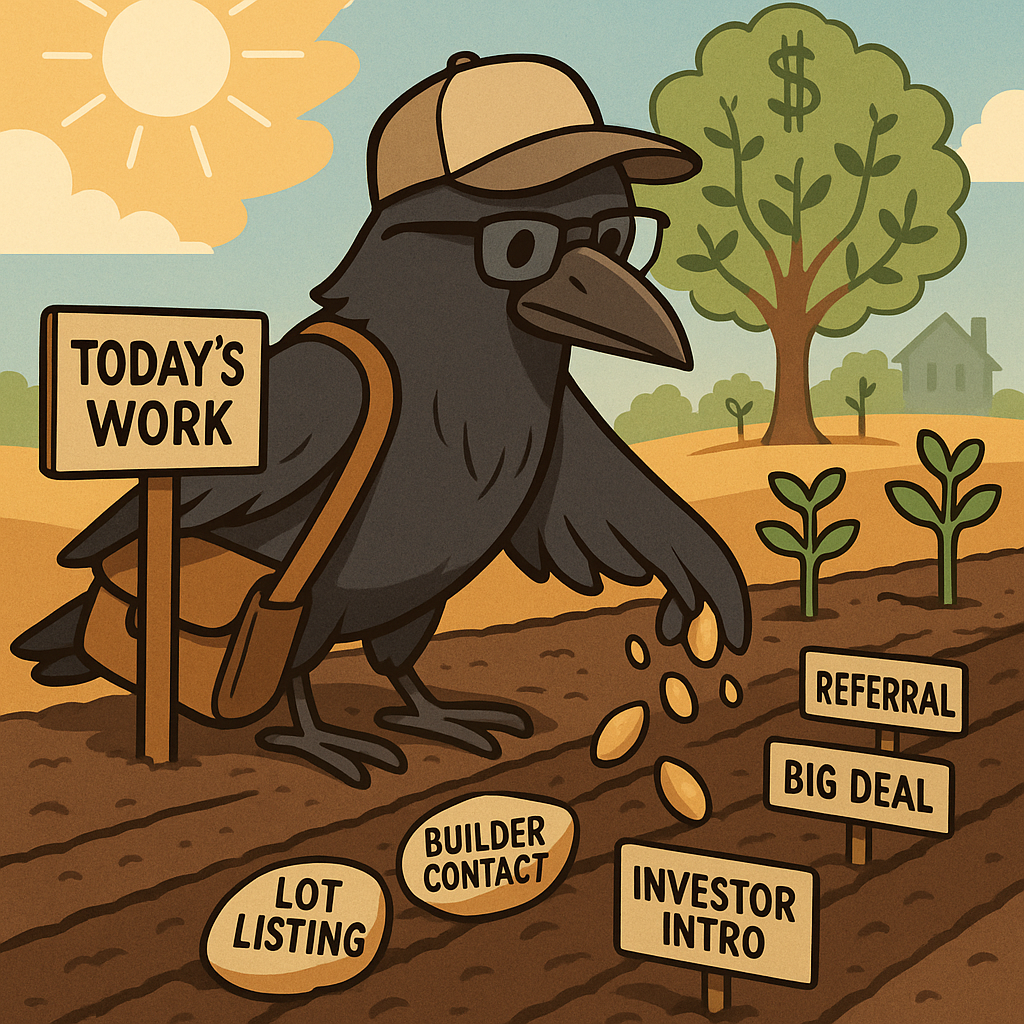
    “Sow your seed in the morning, and at evening let your hands not be idle, for you do not know which will succeed, whether this or that, or whether both will do equally well.”
    — Ecclesiastes 11:6

    When people say someone’s “getting in the way of their own success,” it’s usually a dig—like they’re sabotaging themselves. Looking in the mirror and seeing their own worst enemy.

    But I mean it differently.

    I mean setting things up so that small wins today create bigger wins tomorrow. Succeeding now, while positioning myself for even greater success later.

    Colleagues sometimes ask why I bother listing and selling custom home lots. I’ve spent years building the relationships and knowledge to work on larger land and development deals. My time is limited. So why “waste” it on smaller transactions, when I could be chasing deals that might pay 10x—or more?

    I usually say two things:

    1. I like helping people.
    2. These smaller deals tend to move faster and help smooth out my income.

    And that’s true.

    But the real reason?

    My long-term success depends on staying connected to investors, developers, and builders. Who owns custom home lots? Often, those same people.

    Here’s an example:

    A few years ago, I listed a lot for a guy who had shifted from homebuilding to commercial and multifamily work. I sold it, did my job well, charged my standard fee—and moved on.

    A few months later, I got a call from someone looking to invest in the same area. He’d been referred by the construction guy.

    It’s been nearly four years since that intro. The commissions I’ve earned from helping this new client buy and sell land? Over 150 times what I made on the original lot.

    And that’s not counting the deal we’re working on right now (had to stop while writing this to discuss)—which could be substantial as well.

    That’s just one story. It’s not the only one. The point isn’t to brag—it’s to show this was intentional. I don’t know in advance who’s going to refer me, but I know they’re out there. Every listing creates that chance.

    Worst case? I help someone sell something they don’t need, put the money to better use—and maybe make a friend.

    Best case? The upside is enormous.

    And you know who else might benefit from this network I’ve built?

    Maybe you.