Tag: Real Estate Marketing

  • Have You Heard About the Miracle Hangover Cure?

    Have You Heard About the Miracle Hangover Cure?

    One thing I’ve learned — about business, health, and life in general — is that you can’t tactic your way out of a structural problem.

    If the big stuff isn’t handled correctly, what you do with the small stuff doesn’t really matter. Maybe it works in the immediate term, but it won’t work long term.

    Most people try anyway. It’s easier. It feels productive. It gives you that little hit of “I’m doing something.”

    But it never lasts.

    Think about weight loss.

    People jump on crash diets, detox teas, miracle supplements, or now the latest round of drugs. And look — if a doctor prescribes you something and it helps, great. But none of those things fix the basic structure.

    Your life still has to be built around eating like an adult and moving your body a little. If the structure isn’t right, the tactics are temporary.

    (And if you look at me, you might say I’m not the one who should be talking about that.)

    Same with hangovers. You can chug coffee, pound aspirin, and inhale greasy food, but the structural solution is simple: don’t overdrink in the first place. That one change eliminates all the elaborate morning-after tactics people swap like stock tips.

    Most agents live entirely in tactics. Post more. Boost the ad. Send a mailer. Hack the algorithm. Pay for leads. Hustle harder. They chase the next trick because their structure is wrong.

    The structure — the part underneath everything — is the set of principles you operate from. Things like:

    • Be honest about value.
    • Tell people what they need to hear.
    • Keep clients for years, not transactions.
    • Make your marketing useful instead of loud.
    • Communicate like an adult.
    • Have a real process for valuation, pricing, and negotiation instead of winging it.

    If those structural pieces are solid, almost any tactic becomes productive.

    A mailer works. A blog post works. A phone call works. Because the foundation is right, the activity sits on something stable.

    You’re not trying to manufacture momentum out of thin air — you’re adding fuel to a fire that’s already burning.

    But if the structure is wrong?

    Then the tactics are just noise. They might get you a listing here or there, but they don’t build anything.

    You’ll have a great month followed by three dead ones. You’ll land clients who treat you like a commodity.

    You’ll work twice as hard for half the result because you’re patching problems you created by ignoring the fundamentals.

    And here’s the uncomfortable part: building the right structure isn’t flashy. You can’t brag about it on Instagram. It’s slow habits, consistent communication, telling the truth when it costs you money, and doing things well when nobody’s watching.

    Once the structure is right, tactics finally matter. They multiply. They compound. They stop being desperate moves and start being force multipliers.

    Most people will keep reaching for the aspirin instead of fixing the drinking problem. But if you build the right structure first, you won’t need nearly as many tactics — and the ones you do use will actually work.

    PS — You’re probably not an agent, and probably aren’t buying or selling land today. But the point still applies to you: set the stage ahead of time and things go much smoother when it’s showtime.

    I offer a free, no-obligation opinion of value on any non-residential property. You’ll get real comps in your area and everything pertinent to your situation.

    Development starting nearby? New roads? Utility issues on the horizon? You’ll know about it.

    Delivered with integrity.

    Based on a system developed over 20+ years, not overnight tactics.

    Is it ever a bad idea to be prepared?

    Click below to get started:


  • I Don’t Recommend It (For Them….But Maybe For You)

    I Don’t Recommend It (For Them….But Maybe For You)

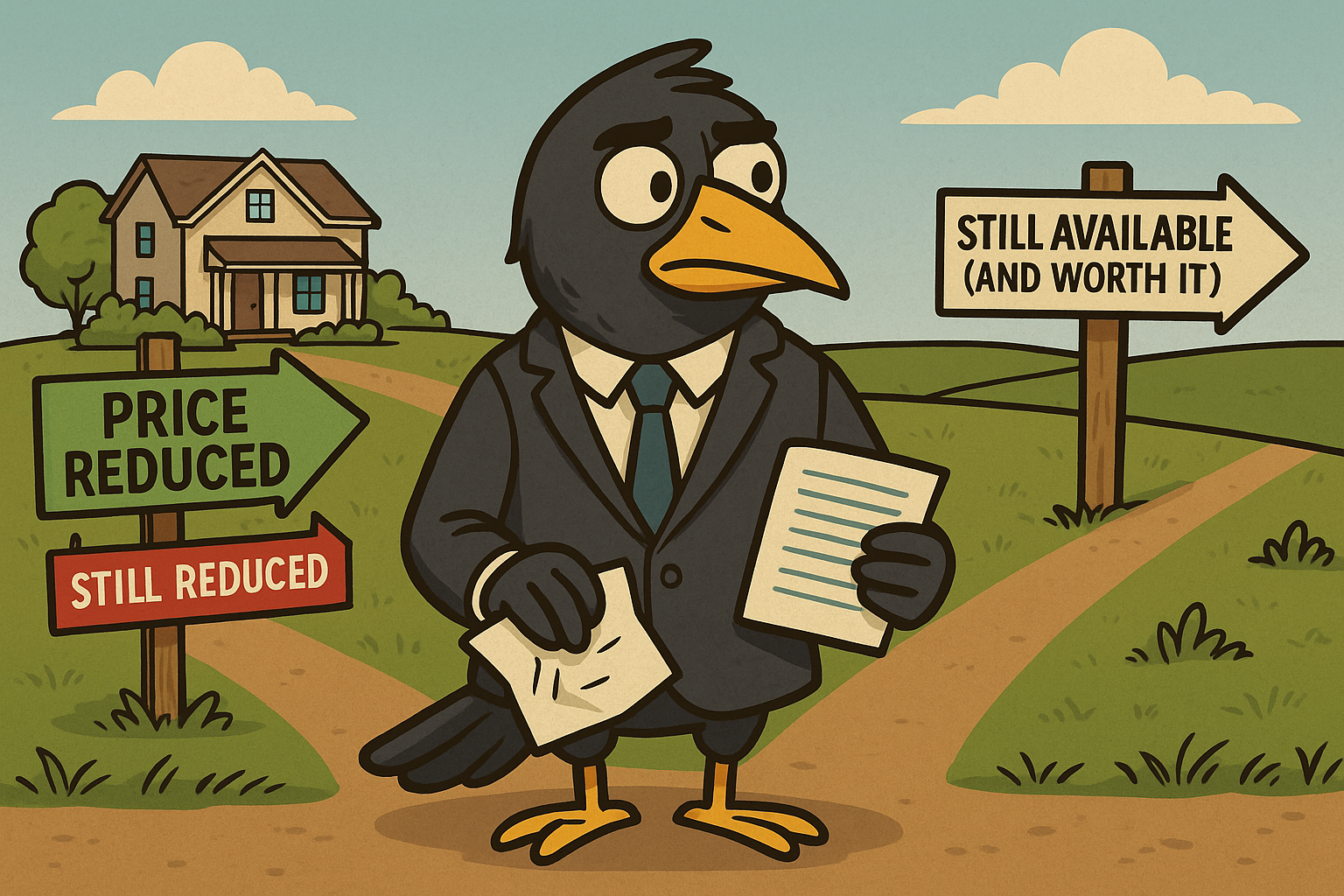
    There’s a certain group of agents who’ll list a property at almost any price just to get their foot in the door.

    The thinking is: get the listing, and once the seller sees the price is unrealistic, they’ll come down.

    From the seller’s side, even if they know it’s high, it’s tempting. They stand to gain if it works — and they can always adjust later, right?

    That premise isn’t completely wrong.

    But you have to be careful.

    From a marketing standpoint, your property gets the most attention right after it hits the market. Most buyers today are plugged in and will spot an overpriced listing immediately. Once they cross it off, it’s tough to get them back.

    Then it sits. And the longer it sits, the more people assume “something must be wrong.”

    Meanwhile, the clock is ticking on carrying costs — mortgage, taxes, insurance — eating away any imagined gain.

    So yes, be optimistic. But overplaying it can backfire fast.

    Especially with houses.

    Land can be different. Different buyers see different value, and if you own it outright with an ag exemption, your costs to hold can be next to nothing. So waiting doesn’t hurt as much.

    Plus, land buyers are often investors or developers. If the market rises, they may be willing to meet your price later.

    Many buyers are actually in the business instead of looking for somewhere to live. If something doesn’t work for them today, that doesn’t mean it won’t later.

    That doesn’t make overpricing good — but with land, it’s often less harmful. And sometimes, it’s even strategic.

    If I were listing a house worth $1 million and the owner wanted to ask $1.3M? Not worth anyone’s time. It would hurt the seller more than help.

    I wouldn’t take that listing.

    But land? Can be a different story.

    If I think it’s worth $1M, listing it for $1.2M or $1.3M can make sense — especially if selling isn’t urgent. You might not be trying to sell, but if someone overpays… maybe it’s worth a look.

    If it doesn’t take huge effort on your part, is it a crazy idea to put your property out there a little high just in case?

    PS — You’re probably not looking to sell today. But it never hurts to have up-to-date info. I offer free reports on any property showing recent nearby sales and current opinion of value.

    Is it ever not worth knowing what your property is worth today? Even if you aren’t ready to sell?

    If someone were to offer you “too much,” would it really be a terrible idea to listen?

    Click below to get your report:


  • Don’t Be an AI Lawyer

    Don’t Be an AI Lawyer

    Yesterday I wrote about how doing things the hard way is often the best way in the long run. Some things are necessarily complex if you do them right — and if they’re not done right, they don’t help you succeed.

    That doesn’t mean you should avoid an easier path if it truly gives you the same result. Or that you shouldn’t look for better ways to do things. It just means the goal should be to get it right first — then evolve from there.

    Like I said yesterday: hard is slow, but slow leads to smooth. Smooth leads to fast. And fast leads to easy.

    A little while after I wrote that post, I read something that said the same thing in fewer words:

    Efficiency is great, but effectiveness comes first.

    If you trade effectiveness for efficiency, you’re playing a losing game.

    There’s something new posted here most days. I try to stay ahead so I don’t have to write daily, but I write these myself. Maybe not the most efficient system — but I’ve found the more I write, the faster and better I get. And the more I write, the more ideas I have.

    If efficiency were the goal, I could hand the writing off to AI. But then you’d be reading “7 Ways to Prepare Your Property for Sale” and “Top 10 Home Staging Tips.” Clickbait.

    You wouldn’t be here if that’s what I did.

    That’s not to say AI tools can’t be useful. Proofreading, formatting, maybe. But you’d still better read the final product yourself and make sure it says what you meant.

    And don’t trust it with facts. It can make up some things that are… creative.

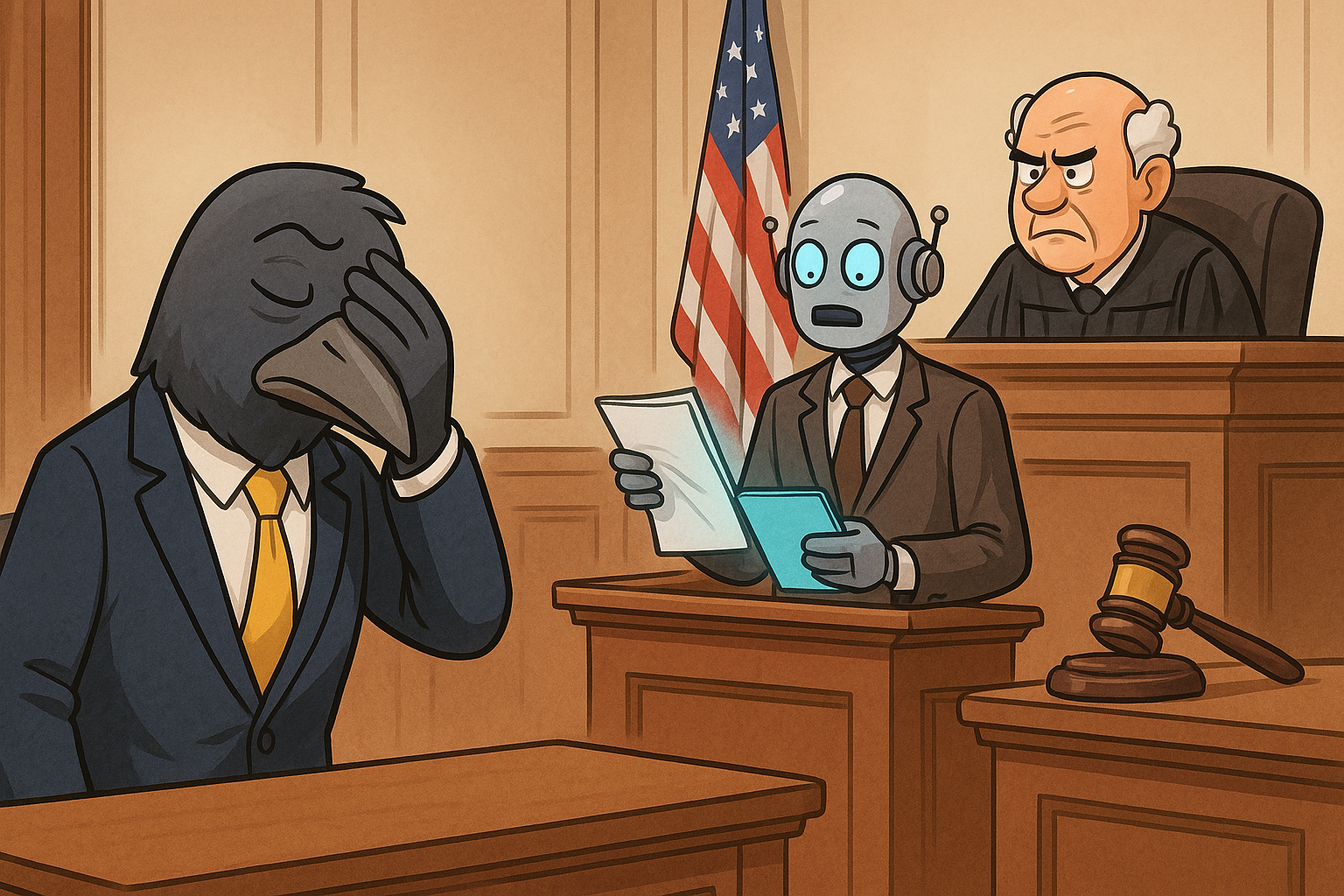
    And for sure don’t use it to write legal briefs. Ask the attorney who did that and ended up submitting fake case law.

    I don’t know what the future holds, but for now AI is fine for handling some basic tasks.

    Anything that requires accuracy or precision? You’d better check it yourself.

    Which means you’d better be an expert in whatever you’re using it for.

    And how do you get to be an expert? By doing the slow, hard work — at least at first.

    Efficiency is great. But not if it compromises effectiveness.

    PS – All this is really just a long-winded way of saying that while what I do might look easy, it isn’t. It’s taken decades of slow, hard work to get to this point.

    It’s not rocket science — but it’s not easy either.

    When it’s time to buy or sell land, is it crazy to say you might benefit from someone who’s done the hard work long enough that it’s second nature?

    Click below.


  • Hard Now, Easy Later

    Hard Now, Easy Later

    Everyone broker wants a fast way to find sellers.

    But the fast way and the way that actually works are often two different things.

    I run two direct mail programs geared toward generating listings — one for lot owners, and one for landowners.

    The lot program’s pretty straightforward. Every lot is different, but they’re not that different. I just pick the subdivisions, remove the ones with houses, and I’ve got a list with everything I need.

    Raw land is a different story. Getting an accurate list takes real work.

    You can pull a quick data list of owners for an area, sure. But here’s the problem: the way land is handled on the tax rolls, one owner might have multiple tracts — some touching, some miles apart.

    So yeah, you can get a list to mail to. It’s fast, it’s cheap.

    But it’s also obvious you don’t really know what those owners have. And to them, it looks like every other “We buy land” letter out there.

    I tried it.

    Response was terrible.

    Those lists are fine for “Just Listed” or “Just Sold” postcards. But for an actual letter asking if they’d like to list? It just doesn’t work.

    I talk a lot about how local knowledge matters. If you’re not dealing with someone who really knows the ropes, you’re asking for trouble.

    So how do you canvas an area and sound like you actually know it?

    Simple — you make sure you do.

    For me, that means manually creating the list while I build a custom aerial and drive the area.

    That way I know exactly how many acres someone owns in a given spot. If they own more than one tract, I know that too. If they’ve got property under different company names, I can see it right away.

    When they call, I can pull up my aerial and know exactly what they’re talking about — and odds are I’ve been out there recently myself.

    Yes, it’s slow. But it’s the only way to really succeed in a relationship business.

    And there’s a compounding effect. Once the work’s done, it doesn’t change much. You benefit for a long time.

    And people notice when someone actually puts in the effort.

    A younger, more technical client once looked at my system and said, “You could do X, Y, and Z and get the same results way faster.”

    Maybe.


    But to me it’s not about speed — it’s about actually knowing the ownerships and boundaries. Without that, you’re just another database user playing a numbers game.

    Maybe I’m missing out on something big.

    But I think the results speak for themselves.

    Besides, that same client still uses my brokerage almost exclusively. So I must be doing something right.

    Is it crazy to want to deal with someone who actually puts in the effort — instead of throwing around buzzwords to sound like it?

    You know it isn’t.

    I don’t deal in pressure, but is it ever a bad time to talk to an honest expert?

    Click below.


  • It’s a Long Way To the Top….

    It’s a Long Way To the Top….

    It really doesn’t matter how old you are, or what kind of music you like. Just about everybody knows at least a few AC/DC songs.

    And generally likes them. There’s just something about it.

    The songs are basic. Formulaic. They don’t deal with complicated subject matter.

    But they’re catchy. They sound great loud. And nobody starts acting highbrow when AC/DC is playing — it’s just fun.

    That’s effective simplicity. On the surface, it looks simple. Underneath, there’s intentional design, clarity, and focus that make it work exceptionally well.

    AC/DC embodies it — to the tune of over 200 million albums sold. And they’ve never run from it.

    Here’s how they put it over the years:

    “I’m sick to death of people saying we’ve made 11 albums that sound exactly the same. In fact, we’ve made 12 albums that sound exactly the same.”

    “We’re just a band that plays rock ’n’ roll. We don’t mess with it. We don’t try to be clever. We just make records we like to play.”

    “To us, the simpler a song is, the better, ’cause it’s more in line with what the person on the street is.”

    They make it look easy. It sounds easy. Like you could do it yourself if you tried.

    Real estate brokerage can be the same way. Done right, it can look like I click a few buttons, take a few calls, and next thing you know there’s a closing where both of us are getting paid.

    It looks simple — like anyone could do it on the first try.

    (self-serving line of the day alert)

    But I don’t recommend it.

    Yes, anybody can throw a listing online and sit back waiting for the phone to ring. And from the outside, it might even look like that’s all I’m doing. But it isn’t.

    My value is in the things you don’t see and don’t notice:

    • The pitfalls you avoid because of my experience (most of which I learned the hard way).
    • Knowing who the likely players are for your property — and having a good relationship with them.
    • Negotiation experience that gets results.
    • Getting to the closing table without ever having to wonder whose side I’m on.

    I value functionality over flash, and I don’t go out of my way to look fancy. I don’t speak in buzzwords.

    (But if I did, I might say my motto is Effective Simplicity.)

    Do you prefer being talked at rather than to?

    Do you like wondering if an agent is working for you or just working you?

    Is it ever a bad time to start a conversation with somebody different?

    You know what to do:


  • What People Say Doesn’t Matter. It’s What They Do.

    What People Say Doesn’t Matter. It’s What They Do.

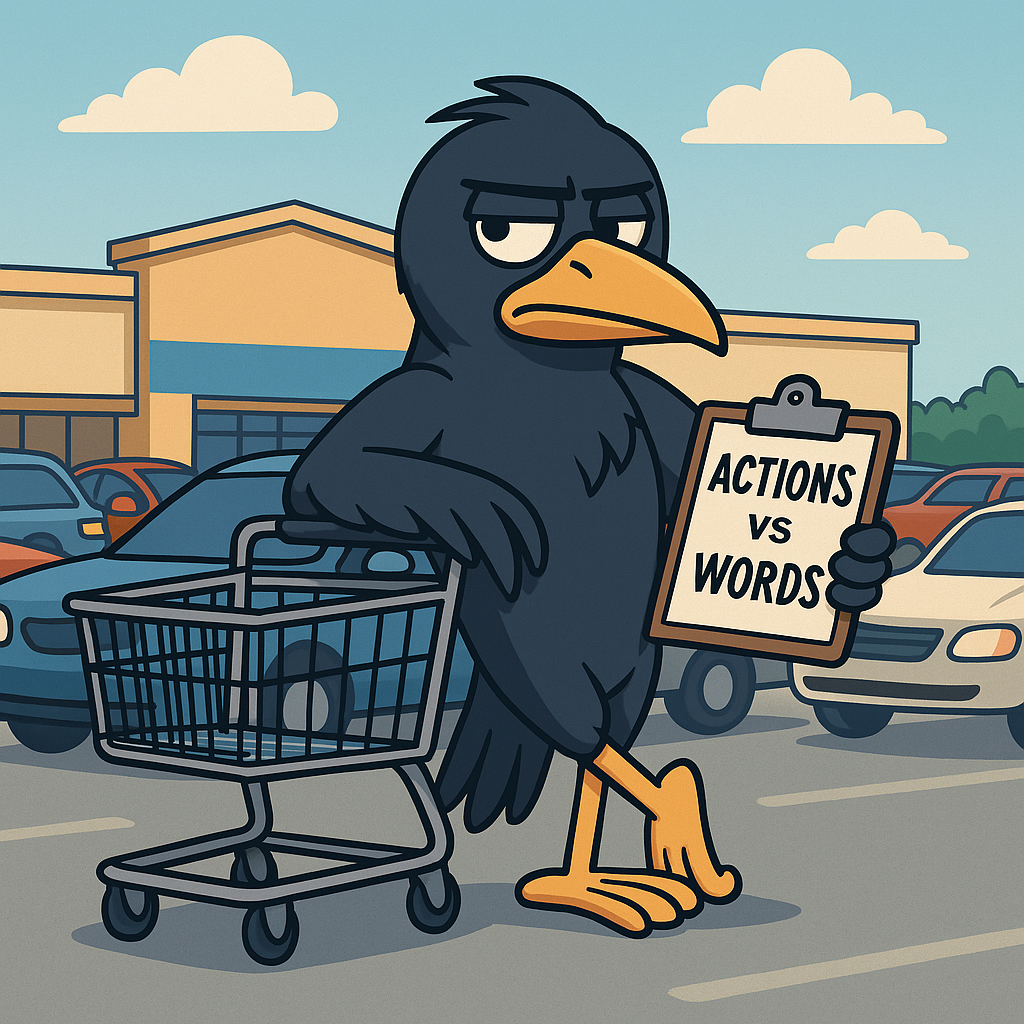
    We’d like to think they are the same thing. Reality tells us otherwise.

    Whenever a big new retail project gets proposed — Walmart, Costco, whatever — the storyline’s predictable:

    The developer and city work through approvals. Most people are happy for the convenience (or don’t care), but there’s always the loud minority who need to virtue-signal.

    “I hate Walmart!”
    “The city shouldn’t allow it!”
    “I’ll never shop there!”

    Then it gets approved. And the parking lot is full — often with the same people who swore they’d never be there.

    I get it — places like that can be a hassle. But if you’re going anyway, don’t pretend you won’t.

    Same thing with the Cowboys.
    “I’m tired of their BS!”
    “I haven’t watched in years!”

    Funny how ratings go one direction — and how the guys who “aren’t paying attention” somehow know every detail about the latest roster moves.

    I get it, it’s been a frustrating 30 years. But the fake boycotts get old.

    Even sports media plays the game. Before the Netflix Cowboys documentary dropped, hosts were saying they didn’t want to watch — “too above it all.” Now? It’s the greatest series ever, and you can’t turn on the radio without hearing about it.

    I’m glad I don’t make my living talking for hours a day about something I say I can’t stand to even think about — but that’s beside the point.

    Here’s the point:

    What people say doesn’t matter. What they do does.

    You probably know plenty of agents and brokers who say they’ll deliver — big promises, smooth talk, all confidence. But when it comes time to back it up? Different story.

    I don’t say much. It’s the best way I’ve found to avoid saying something dumb. But when I do speak, I make sure my actions line up.

    When it’s time to buy or sell, would it be smart to entrust things to someone who doesn’t do what they say?


  • Tomorrow’s Probably Coming—Plan Accordingly.

    Tomorrow’s Probably Coming—Plan Accordingly.

    Sometimes Salespeople Send Slogans Saying Silly Stuff

    I got an email the other day where the sender had a slogan in their signature line:

    Live each day like it’s your last.

    Maybe an ok sentiment for a Hallmark card. Pretty lousy motto for a business email.

    Because if today were actually my last?

    I wouldn’t be working. I wouldn’t be sending emails. You wouldn’t see a blog post, unless it had been scheduled beforehand.

    I’d be with my family, maybe some close friends. That’s it.

    I get the idea—you’re trying to say, “Don’t waste your time,” or “Make the most of today.” And that’s fine. But the way it’s worded sends the wrong signal.

    If I’m considering doing business with someone:

    • Don’t waste time? Great.
    • Seize the day? Fine.
    • Be where you’re supposed to be, doing what you’re supposed to be doing? Now we’re talking.

    But “act like tomorrow’s not coming so I can blow off anything I don’t feel like doing”? Nope.

    Most of the time, tomorrow is coming. And another one after that. We aren’t promised anything, but that doesn’t mean ignore the future.

    If your business is about helping people, you don’t always get to do what you want. You have to put others first, at least some of the time.

    I like to have fun as much as anyone. My family is a priority, and one of the perks of working for myself is being able to show up to my kids’ games or take care of what they need. But that’s not the same thing as “living like there’s no tomorrow.”

    It takes planning and discipline. If I’m out all morning doing something for me, I might need to stay late to make sure the important stuff gets done. I’m not glued to my phone, but I’ll return your call.

    That’s the balance. Not “live like it’s your last day.” More like: live today so you don’t regret it tomorrow.

    Land sales work the same way. They usually move slow… until suddenly they don’t. That can bug me sometimes (I’d rather get it done sooner), but for most people buying or selling land isn’t their most urgent problem. And that’s fine—it gives room for deliberate decisions.

    The key is having someone who doesn’t pressure you but still responds, follows through, and keeps things moving.

    That’s me.

    Is it the wrong time to get the latest market analysis on your property?

    You know what to do.


  • The salesman’s doom loop: chase, convince, close.

    The salesman’s doom loop: chase, convince, close.

    If I’m “explaining”, I’m already losing

    You’ve seen it before, especially with car dealers. You so much as glance at a car online or ask for a quote to sell yours, and suddenly you’ve got your own personal stalker. Usually a guy. He’ll message, call, email, daily, like his only job is bugging you.

    And the more you say “not interested,” the more he hears “maybe later.”

    I swear, ignoring them works better than saying no.

    That’s the “chase” part.

    If you show even a flicker of interest, they move to the “convince” phase. You’ll hear every reason you should do what they want — buy the thing, sign the deal, whatever — completely ignoring the fact that it helps them way more than it helps you.

    They’re just trying to wear you down at that point. It’s exhausting.

    As a customer, it sucks. And if you’ve ever been in sales and your boss made you do it, you know it feels pretty gross.

    Even if you end up saying yes, are you really happy about it? Usually not.

    Then comes the “close.” You walk through the door or agree to a meeting, and now it’s game time.

    They say whatever they need to say to lock it down. Pressure ramps up.

    Nobody’s enjoying themselves at that point.

    I get this same nonsense all the time. People trying to sell me real estate marketing subscriptions. It’s awkward for both sides. I’ve even said yes a few times. Never happy I did.

    Turns out the stuff that’s actually useful doesn’t require a hard sell. Go figure.

    I’m sure you’ve had real estate agents do similar things. Show a little curiosity and suddenly you’ve got someone “following up” forever. You get hit with every sales tactic in the book, some you didn’t know existed. Then if you finally agree to meet, the first listing or offer that comes up is always “perfect.”

    Yeah, sure it is. Cue the close.

    It’s not fun.

    So I don’t do it that way.

    Yes, I send these emails. But I’m not chasing anyone. And I’m not going to browbeat you or wear you down into working with me.

    If anything, you’ll have to chase me, because I only work with people who actually want to work with me. Not folks I had to “convince.”

    I try to make these messages useful, maybe even a little entertaining. There’s good info in here, especially if you read between the lines. Some of it about land and real estate, some just about how the world works. You can unsubscribe anytime.

    But if I’ve got something that will help you and I don’t speak up, what good am I?

    I’m around if you ever need me. No chasing. No convincing. No closing. When you’re ready, we move forward.

    If it makes sense for both of us.

    Simple as that.