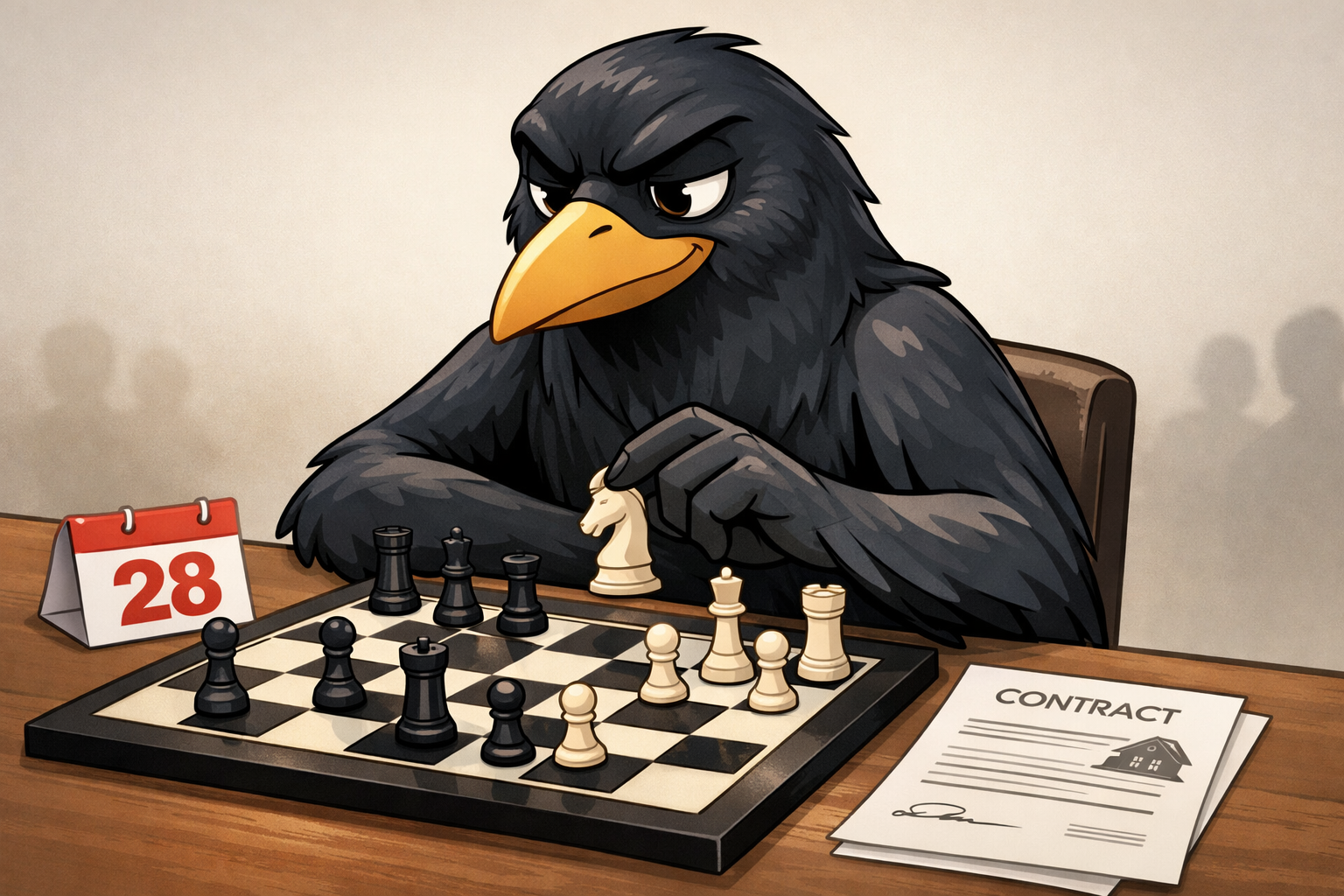
Splitting the difference sounds good but it usually isn’t the answer.
People are taught from childhood that compromise is the fair solution.
If two people want different things, you split the difference. Everyone gives a little. Everyone walks away happy.
That sounds reasonable. But sometimes the “fair” compromise is actually ridiculous.
Some of them I can’t repeat here.
There’s an old story in the First Book of Kings about two women claiming the same baby. They brought the dispute to King Solomon.
Solomon proposed a solution, cut the baby in half and give each woman a piece.
Of course he didn’t really intend for that to happen. The point was to expose the flaw in the idea that every dispute has a reasonable middle. Some problems cannot be solved by compromise.
One woman immediately begged him to give the child to the other. Which revealed who the real mother was.
The point was clarity.
Some things don’t have a middle that works. Negotiation runs into this problem all the time.
People assume that splitting the difference automatically produces a fair agreement. But compromise often just glues two incompatible ideas together.
Think about a simple example.
A landowner wants $1.5 million for a tract.
A buyer wants to pay $1.3 million.
Someone suggests the obvious solution.
Split the difference at $1.4 million.
On paper that looks fair. Each side moved the same amount.
But fairness on paper doesn’t mean the deal actually works.
Maybe the buyer’s financing only supports $1.3 million.
Maybe the seller needs $1.45 million to justify selling.
Maybe the timing or tax consequences change the math.
In those situations, splitting the difference doesn’t solve the problem. It just produces a number that satisfies neither side.
This is why experienced negotiators spend less time looking for the middle and more time understanding what each side actually values.
Sometimes the right solution isn’t halfway between two positions.
Sometimes the right solution is something different entirely.
And sometimes the right solution is realizing there isn’t a deal at all.
P.S. To know whether there’s a deal or not, you need the most current market information.
You’re probably not even considering selling today. But things can change quickly. The best time to start gathering information is well before you actually need it.
That’s what the MBR Land Reality Check is for. Clear-eyed analysis using actual sales and decades of experience in land brokerage.
It’s free (for now). No obligation. And never any pressure to list.
Would it be a bad idea to just see where things stand?
P.P.S. If you’re not ready for a Reality Check but liked reading this, you can get posts like this in your inbox below. Usually daily.