Tag: land valuation

  • All They Did Was Ask

    All They Did Was Ask

    Sometimes people assume there has to be a big reason to reach out.

    That you have to be ready to sell, or at least thinking about it in a serious way.

    Most of the time, that’s not really the case.

    I sent out a Land Reality Check recently to someone who owns property on Bois d’Arc Reservoir. There wasn’t any urgency, no timeline, and no stated plan to sell. As far as I can tell, it was just curiosity. I don’t even think it had been run by the other partners before requesting it.

    Just wanted to understand what to expect.

    After I sent it over, I got this response:

    That’s great to hear, of course, but it’s not really the point.

    What matters is what happened before all that.

    Just raising a hand and asking the question. Not to sell, and not to list, just to take a look.

    People check what their stocks are worth all the time, probably more often than they need to. But with real estate, they tend to avoid looking at it, even though it’s often a much bigger piece of the picture.

    Part of that is because they assume that once they start looking into it, they’re starting a process. That it leads to conversations, meetings, and decisions they may not be ready to make.

    So they leave it alone.

    Not because doing nothing is clearly the best move, but because they don’t want to deal with what might come with it.

    You don’t have to make a decision. You don’t have to move forward with anything. And you don’t have to keep talking beyond whatever you’re comfortable with.

    But you can take a step back and understand what you have and how it might fit with the rest of what you’re doing.

    Sometimes, after looking at it, nothing really changes. That’s probably the case more often than not. But sometimes it does, and when it does, you’re making a decision on purpose instead of avoiding one.

    That’s the difference.

    All they did was ask.


    PPS – If you’re not ready for that but like this kind of thinking, you can sign up below and get these in your inbox.

    Register to Receive Posts Via Email!

    By submitting, I understand I will receive marketing emails and blog posts from Mike Browning Realty and/or associated companies. Unsubscribe at any time.

  • Anchoring (as in Your Top Lip to Your Bottom Lip)

    Anchoring (as in Your Top Lip to Your Bottom Lip)

    There are very few things that can’t be improved with less talking

    People think negotiation is all about talking. Or intimidation. Or acting like it’s a high school debate class.

    It’s not. A lot of the time, the less you talk, the better you do.

    There’s a concept called “anchoring.” It’s when someone sets the first number on the table, and everything after that gets compared to it — whether you like it or not. That number creates a reference point in everyone’s head, even if it makes no sense.

    It can even work when the number isn’t connected to the negotiation at all. If, right before we sit down, someone mentions the Powerball jackpot is over $700 million, that sticks.

    Now, if we’re negotiating a tract worth $5 million, you’re not suddenly walking away with $140 million just because of the Powerball number. But that huge figure can still shape the conversation in subtle ways.

    Even crazier? You don’t need numbers at all.

    If you ask me what something costs, and I say, “It’s expensive,” or, “It’s affordable,” I’ve just anchored the entire discussion.

    You might argue that “expensive” to one person could be “cheap” to someone else, but it doesn’t matter — the frame is set. People fill in the blanks based on their own reference points. And once that frame is in place, you’re steering the deal before it even starts.

    Most people try to anchor with words. They throw out their price first and have a big pitch to back it up, explaining why it’s “fair.” Sometimes, that works. But a lot of the time, silence works better.

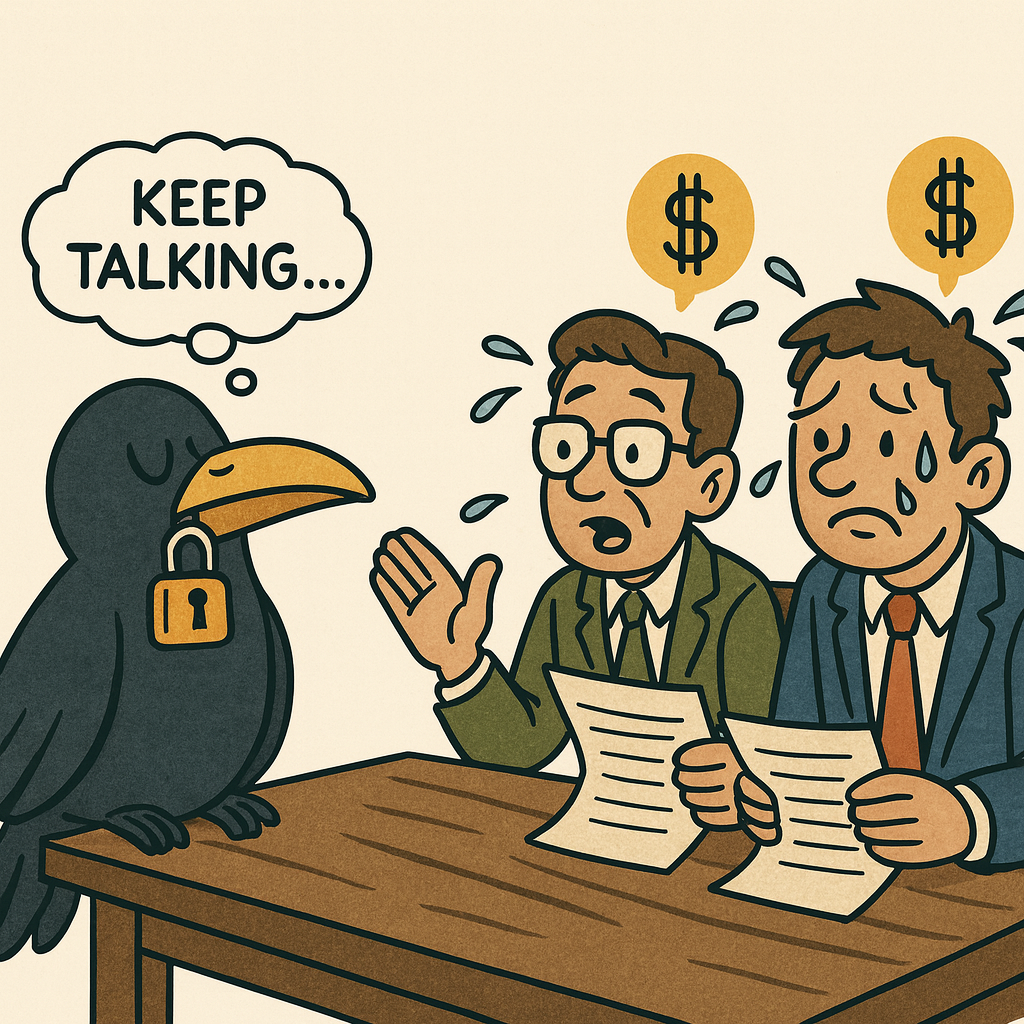
    Here’s why: once a number hits the table, human nature takes over. People hate awkward silence, so they start filling it. And the more they talk, the more they second-guess themselves. I’ve watched buyers negotiate against themselves without me saying a single word.

    Example: I was at the table on a land deal a while back. Buyer comes in low. Really low. I didn’t argue. I didn’t counter. I didn’t defend the price. I just sat there.

    Thirty seconds later, he starts explaining why his offer “makes sense.” Another pause. He talks again: “I could probably come up a little if we can work out the terms.” Another pause. Then comes: “Okay, maybe we can do X.”

    I hadn’t said a single thing. We didn’t end up making a deal — we were just too far apart — but it’s still a perfect example of anchoring without saying a word.

    Of course, most negotiation today doesn’t happen at a table. It’s remote and electronic now. But the principle is the same.

    As a broker, I’m required to respond when someone reaches out to me. That doesn’t mean I have to engage.

    So if a lowball offer comes in on your property, I reply as soon as I see it — but all I say is:

    “Thanks, I’ll review with the seller and let you know what he says (if anything).”

    Then I come to you, and I usually recommend silence as the best strategy. You’re always in control, so it’s your call, but if you agree, we sit tight.

    Before long, if they’re serious, they come back to us — either explaining themselves or raising the price.

    People think power in negotiation comes from talking. The truth is, most of the power comes from not saying what the other side wants you to say. The less you explain, the more they have to. And when they’re talking, they’re usually giving up leverage.

    When you’re ready, click below. No pressure, no cost, no obligation.


  • But Some of My Best Friends Are Appraisers…

    But Some of My Best Friends Are Appraisers…

    You can’t choose the appraiser, but you can choose who’s at your side. Choose wisely.

    Whenever a bank loan’s involved, you can bet an appraiser is too.

    The bank hires them to make sure they’re not loaning a million bucks against something worth $300K. They’re not there to predict whether the buyer will default, just to confirm the collateral makes sense.

    When it comes to houses, they usually get it right. Plenty of comps, plenty of data. Every house is technically different, but they can pull enough nearby sales to pin down value pretty well.

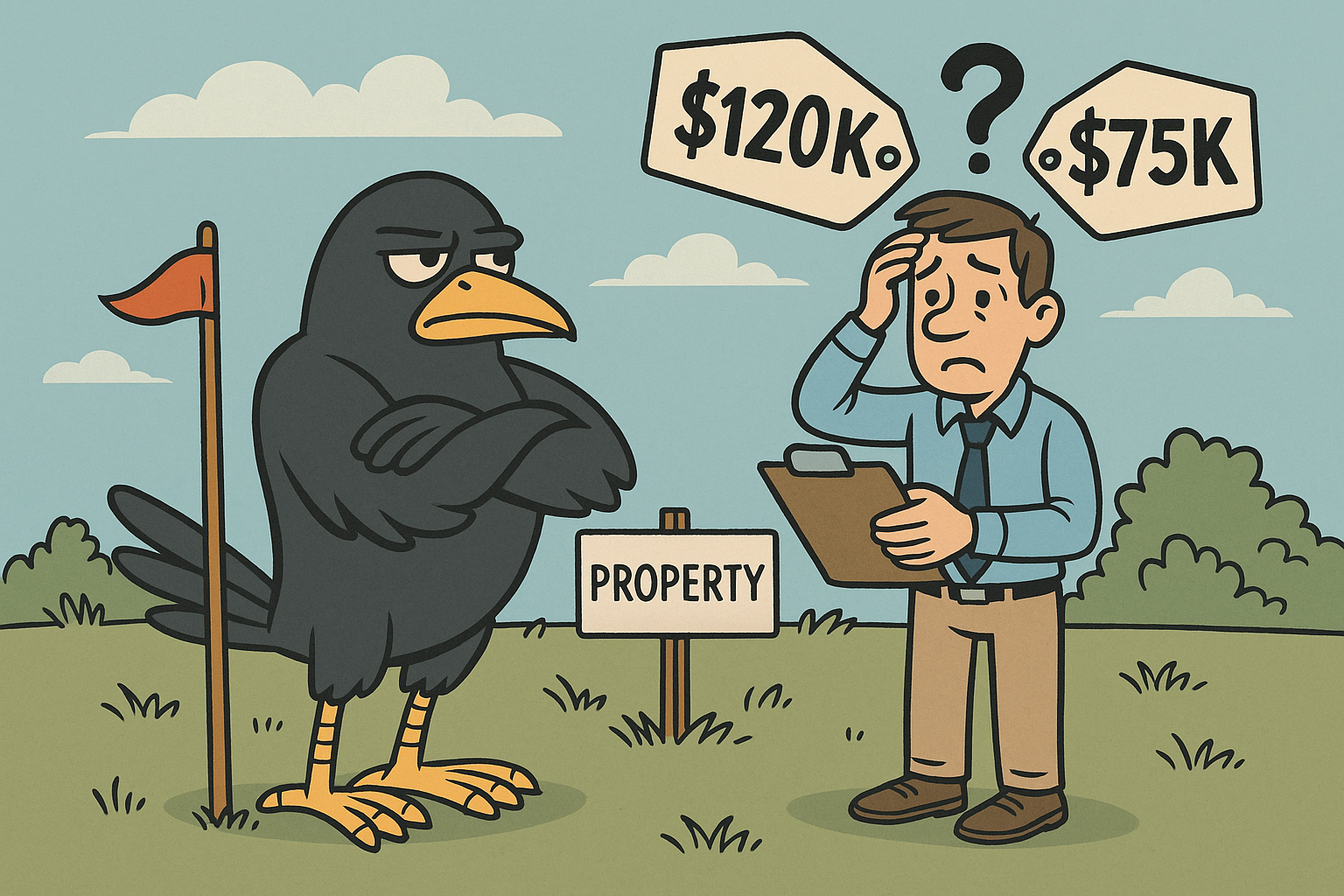
    Finding relevant comps is harder, and the results can get screwy fast. I once had two residential lot deals going at the same time, same area, same price point, roughly $120K each. Two different appraisers. One came back right at $120K. The other came in at $75K.

    One was close. The other wasn’t.

    That buyer kicked in extra cash and closed anyway, but that’s rare. A low appraisal usually blows up the deal for everyone. The appraiser still gets paid the same either way.

    Another listing went under contract at full price. Buyer was paying cash but got an appraisal anyway, just to make the partners feel better.

    You probably know where this is going.

    The appraiser used awful comps. One seven miles away in a rural area, one outdated, and one sitting mostly in floodplain without adjusting for it. The only relevant comp, he adjusted down for no reason anyone could explain. If anything, that comp made us look underpriced.

    His report told my buyers they were overpaying by $500K.

    They walked.

    A few months later, the highway route was announced. That property’s now a future corner. We doubled the price, and we’ll get it.

    That appraiser’s “discount” cost those buyers seven figures in future value.

    To be fair, most appraisers just don’t have enough experience with land. They’re used to houses. Land’s a different animal.

    But you know what wrecks just as many deals? Agents out of their depth.

    Most agents focus on houses. Nothing wrong with that, unless they list land without knowing what they’re doing. Overprice it and the property sits forever. Underprice it and you leave money on the table. Miss a key issue and you get expensive surprises later.

    We all have the same real estate license. That doesn’t make every agent qualified for every deal.

    If you were leasing retail space, would you hire your cousin Karen who’s never read a lease? Even if she asks. And she’ll understand why you don’t.

    So why list land with someone who doesn’t specialize in it? She will understand why you don’t there also.

    Does it make sense to hire people who aren’t experts in a specialized field?

    Does it make sense to fly blind when there’s someone offering a free analysis of your property?

    Even if you aren’t considering selling today, does it hurt to know what you might be sitting on?

    Ready for me to shut up?

    Click below.


  • Who’s Buying Your Land—and Why Do They Insist on Wasting Your Time?

    Who’s Buying Your Land—and Why Do They Insist on Wasting Your Time?

    Not all buyers need the same thing—or can pay the same price

    When you’re selling land, the dream is simple: some rich genius shows up, offers over asking in cash, and closes by 3 p.m. today.

    Unfortunately, that’s not how it usually goes.

    In the real world, buyers vary. Some will pay more than others. Some move fast, others move like molasses. And the more they’re willing to pay? The more time they’re going to need.

    That’s not a red flag—it’s just the cost of doing business, especially when permits, zoning, and government hoops are involved.

    To the uninitiated, the timelines can sound ridiculous. But they’re usually not—they just are what they are.

    This is where a pro comes in. Someone who knows what’s reasonable, how to keep the deal alive, and how to make sure you don’t end up empty-handed if it falls apart.

    If you’re in the market for a pro… I know a guy.

    Here’s a breakdown of the three main buyer types, what they pay, how they think, and how long they take to close.


    These are margin-hunters. They’re not flippers—they’re professional opportunists. The worse your situation looks, the better their offer gets (for them).

    Most of those “We want to buy your land!” letters come from this camp. They’re pulled from tax rolls, mass-printed, and sent to anyone with dirt and a mailbox. The offers are low—laughably low. But a few people say yes, and that’s all they need to make the model work.

    What They’ll Pay:

    The absolute bottom. They’re shooting for big discounts—well under market.

    Contingencies:

    Almost none. No inspections, no appraisals, no drama. They’ll usually cover closing costs to keep it simple.

    Timeline:

    Fastest. Once they’ve checked title, they’re ready to wire funds. You name the closing date.

    What They Want:

    A deal they can brag about. If you’re chasing top dollar, skip ’em. But if you’re in a jam—or chasing a better deal—they’ll clear the runway fast.

    If you do go this route, talk to more than one. Make them compete. Then call me—I’ve got real cash buyers too, and I might be able to get you more without slowing things down.


    This group includes builders, subdividers, and buy-and-hold folks. They’re not sentimental—they’re running numbers. If it pencils out, they’re interested.

    What They’ll Pay:

    More than vultures, but still under market. They’re looking for today’s discount and tomorrow’s upside.

    Contingencies:

    Some. Financing, surveys, maybe a feasibility period—but it’s all pretty reasonable.

    Timeline:

    Shorter. They won’t close overnight, but they move quickly if the deal’s clean.

    What They Want:

    Future value. Appreciation, income potential, or development opportunity. They don’t need a screaming deal—but it has to make sense on paper.


    These are end-users. They’re building a house, a business, or an entire subdivision. Real money, real plans, and usually a lot of homework.

    What They’ll Pay:

    Top of market—or even above—if your property fits what they need.

    Contingencies:

    Plenty. Surveys, engineering, environmental reports, zoning, utilities, site plans—you name it. Cities, counties, and agencies all get a say. And none of them are known for speed.

    Timeline:

    Longest. Not because they’re dragging their feet, but because the process is the process. If they need annexation, zoning, or approvals, it’s a long haul. Six months isn’t unusual—and that’s optimistic.

    What They Want:

    Certainty. They’ll pay more, but only if they’re confident they can build. No approvals = no deal. On the plus side, they pay for the due diligence. And with the right contract, you get copies of everything they generate. Worst case, you might walk away with a free survey, topo, or environmental report.


    Price, contingencies, and time all come down to the kind of buyer you’re dealing with.

    Want it done fast? Be ready to take less.

    Want top dollar? Be ready to wait.

    Know who’s across the table, and you’ll know what kind of offer’s coming. And if you want someone who can help you figure that out—I know a guy.

    Just reply here and ask me about him!


  • Don’t Let Regret (or Fear of it) Run the Show

    Don’t Let Regret (or Fear of it) Run the Show

    Overthinking rarely leads to better outcomes—just longer delays

    This would be a good time to remind everyone I’m not a CPA, a financial professional, or an attorney. I’m a real estate broker. This isn’t financial or legal advice. Talk to a professional before making any big decisions.

    Back when I got into real estate, there was a broker who used to say, “Any deal is a good deal if you give it enough time.”

    Half joke, half truth. I watched him put people in deals that eventually worked out—but took a lot longer than he probably sold them as.

    Even if you overpay around here, odds are you’ll be “proven right” if you wait long enough. I’ve seen people make good money off properties I thought were overpriced 20 years ago. All of them are worth more now.

    A smart aleck might say my only mistake was doing due diligence.

    But here’s the thing: annual return matters more than gross return.

    Sure, land held for 20 years might look good on paper. But what could that money have been doing for you in the meantime?

    By buying and selling when prices were good relative to the market, my clients often made better returns than if they had just held.

    That doesn’t mean you should sell just because. But it also doesn’t mean you should hold forever out of fear you’ll regret it.

    Here are a few good reasons to sell:

    • You need the money. (I’ve got kids in college—enough said.)
    • You’ve got a better opportunity. Favorable tax treatment might make it smart to sell one and buy another.
    • Estate planning. Sometimes selling is simpler and keeps peace in the family.
    • You want more land and less traffic. Sell in the growth area, move a little further out, and repeat. Plenty of people have built wealth this way.

    The point is: no matter what you do, you might feel like you made the wrong call later. That’s normal. But it’s also not helpful.

    Do the best you can with the info you have, for the right reasons at the time. Then look forward—not back.

    No pressure. But if you’re ready to talk it through, you know where to find me.


  • Getting In the Way of My Own Success

    Getting In the Way of My Own Success

    Some people say you make your own luck

    “Sow your seed in the morning, and at evening let your hands not be idle, for you do not know which will succeed, whether this or that, or whether both will do equally well.”
    — Ecclesiastes 11:6

    When people say someone’s “getting in the way of their own success,” it’s usually a dig—like they’re sabotaging themselves. Looking in the mirror and seeing their own worst enemy.

    But I mean it differently.

    I mean setting things up so that small wins today create bigger wins tomorrow. Succeeding now, while positioning myself for even greater success later.

    Colleagues sometimes ask why I bother listing and selling custom home lots. I’ve spent years building the relationships and knowledge to work on larger land and development deals. My time is limited. So why “waste” it on smaller transactions, when I could be chasing deals that might pay 10x—or more?

    I usually say two things:

    1. I like helping people.
    2. These smaller deals tend to move faster and help smooth out my income.

    And that’s true.

    But the real reason?

    My long-term success depends on staying connected to investors, developers, and builders. Who owns custom home lots? Often, those same people.

    Here’s an example:

    A few years ago, I listed a lot for a guy who had shifted from homebuilding to commercial and multifamily work. I sold it, did my job well, charged my standard fee—and moved on.

    A few months later, I got a call from someone looking to invest in the same area. He’d been referred by the construction guy.

    It’s been nearly four years since that intro. The commissions I’ve earned from helping this new client buy and sell land? Over 150 times what I made on the original lot.

    And that’s not counting the deal we’re working on right now (had to stop while writing this to discuss)—which could be substantial as well.

    That’s just one story. It’s not the only one. The point isn’t to brag—it’s to show this was intentional. I don’t know in advance who’s going to refer me, but I know they’re out there. Every listing creates that chance.

    Worst case? I help someone sell something they don’t need, put the money to better use—and maybe make a friend.

    Best case? The upside is enormous.

    And you know who else might benefit from this network I’ve built?

    Maybe you.