Tag: Honest Realtor

  • Anchoring (as in Your Top Lip to Your Bottom Lip)

    Anchoring (as in Your Top Lip to Your Bottom Lip)

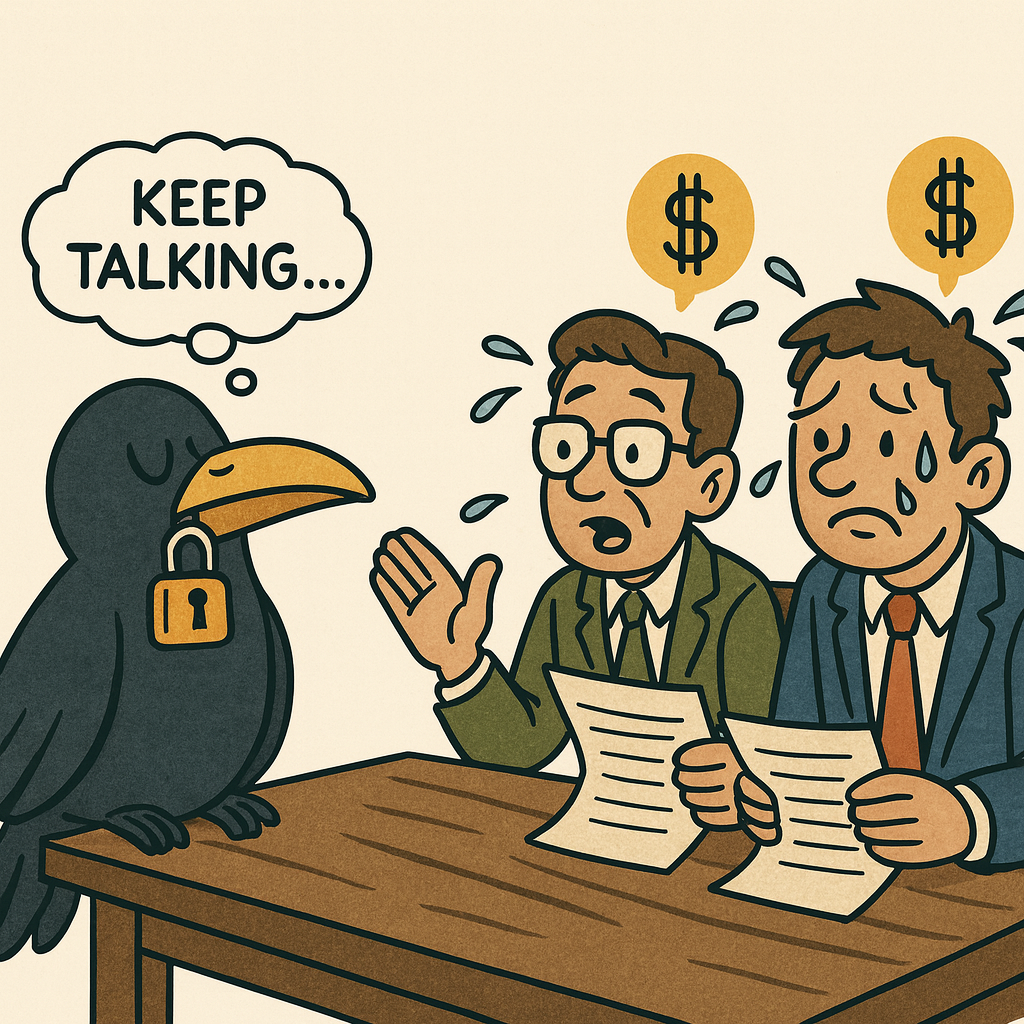
    There are very few things that can’t be improved with less talking

    People think negotiation is all about talking. Or intimidation. Or acting like it’s a high school debate class.

    It’s not. A lot of the time, the less you talk, the better you do.

    There’s a concept called “anchoring.” It’s when someone sets the first number on the table, and everything after that gets compared to it — whether you like it or not. That number creates a reference point in everyone’s head, even if it makes no sense.

    It can even work when the number isn’t connected to the negotiation at all. If, right before we sit down, someone mentions the Powerball jackpot is over $700 million, that sticks.

    Now, if we’re negotiating a tract worth $5 million, you’re not suddenly walking away with $140 million just because of the Powerball number. But that huge figure can still shape the conversation in subtle ways.

    Even crazier? You don’t need numbers at all.

    If you ask me what something costs, and I say, “It’s expensive,” or, “It’s affordable,” I’ve just anchored the entire discussion.

    You might argue that “expensive” to one person could be “cheap” to someone else, but it doesn’t matter — the frame is set. People fill in the blanks based on their own reference points. And once that frame is in place, you’re steering the deal before it even starts.

    Most people try to anchor with words. They throw out their price first and have a big pitch to back it up, explaining why it’s “fair.” Sometimes, that works. But a lot of the time, silence works better.

    Here’s why: once a number hits the table, human nature takes over. People hate awkward silence, so they start filling it. And the more they talk, the more they second-guess themselves. I’ve watched buyers negotiate against themselves without me saying a single word.

    Example: I was at the table on a land deal a while back. Buyer comes in low. Really low. I didn’t argue. I didn’t counter. I didn’t defend the price. I just sat there.

    Thirty seconds later, he starts explaining why his offer “makes sense.” Another pause. He talks again: “I could probably come up a little if we can work out the terms.” Another pause. Then comes: “Okay, maybe we can do X.”

    I hadn’t said a single thing. We didn’t end up making a deal — we were just too far apart — but it’s still a perfect example of anchoring without saying a word.

    Of course, most negotiation today doesn’t happen at a table. It’s remote and electronic now. But the principle is the same.

    As a broker, I’m required to respond when someone reaches out to me. That doesn’t mean I have to engage.

    So if a lowball offer comes in on your property, I reply as soon as I see it — but all I say is:

    “Thanks, I’ll review with the seller and let you know what he says (if anything).”

    Then I come to you, and I usually recommend silence as the best strategy. You’re always in control, so it’s your call, but if you agree, we sit tight.

    Before long, if they’re serious, they come back to us — either explaining themselves or raising the price.

    People think power in negotiation comes from talking. The truth is, most of the power comes from not saying what the other side wants you to say. The less you explain, the more they have to. And when they’re talking, they’re usually giving up leverage.

    When you’re ready, click below. No pressure, no cost, no obligation.


  • I Don’t Use Scripts, But Couldn’t Resist Getting These

    I Don’t Use Scripts, But Couldn’t Resist Getting These

    As usual, when it comes to unsolicited free stuff, you get what you pay for.

    A while back, I talked about how some agents sound so smooth it feels like they’re reading from a script.

    Real estate agents aren’t the only ones. Scripts are everywhere in almost every sales field. And in some roles, they make sense.

    Take receptionists, customer service reps, or “student advisors” at a school. Their job isn’t just answering phones or questions.

    If the business is set up properly, these people are also responsible for some sales functions.

    Inbound calls, upsells, getting your contact info. You want a script for that. Having certain lines ready makes sense, especially if these employees aren’t trained salespeople. You want them to stick to the script to avoid problems, and hand things off if it gets outside their lane.

    For sales presentations like pitching a listing, showing a property, or giving a school tour, a script can turn into a liability fast.

    I took my daughter on a school tour yesterday. It went fine overall. We learned some things and figured out a little more about what we’re looking for. But walking out, the first thing she said was, “That was totally a canned presentation.”

    She’d never been through one before, but spotted it instantly. Now she knows. Especially since she also learned that “Career Services Advisor” is just another way of saying “Salesperson.” Nothing wrong with that — I’m a salesperson too — but it helps to see things clearly.

    It wasn’t that the presentation was polished. It was too polished. Like it wasn’t real.

    I get why scripts exist. They’re safe. They make sure you hit the bullet points.

    And if you’re listing tract houses in a subdivision, maybe they even work.

    But land sales are different. There’s too much variation. Too many what-ifs. Every property’s got its quirks, and if you’re leaning on a script, buyers pick up on it immediately.

    Want to test it? Next time you’re talking to an agent, ask a question they’re not expecting.

    If they lock up or repeat the same line three different ways, you’ve found the edges of the script.

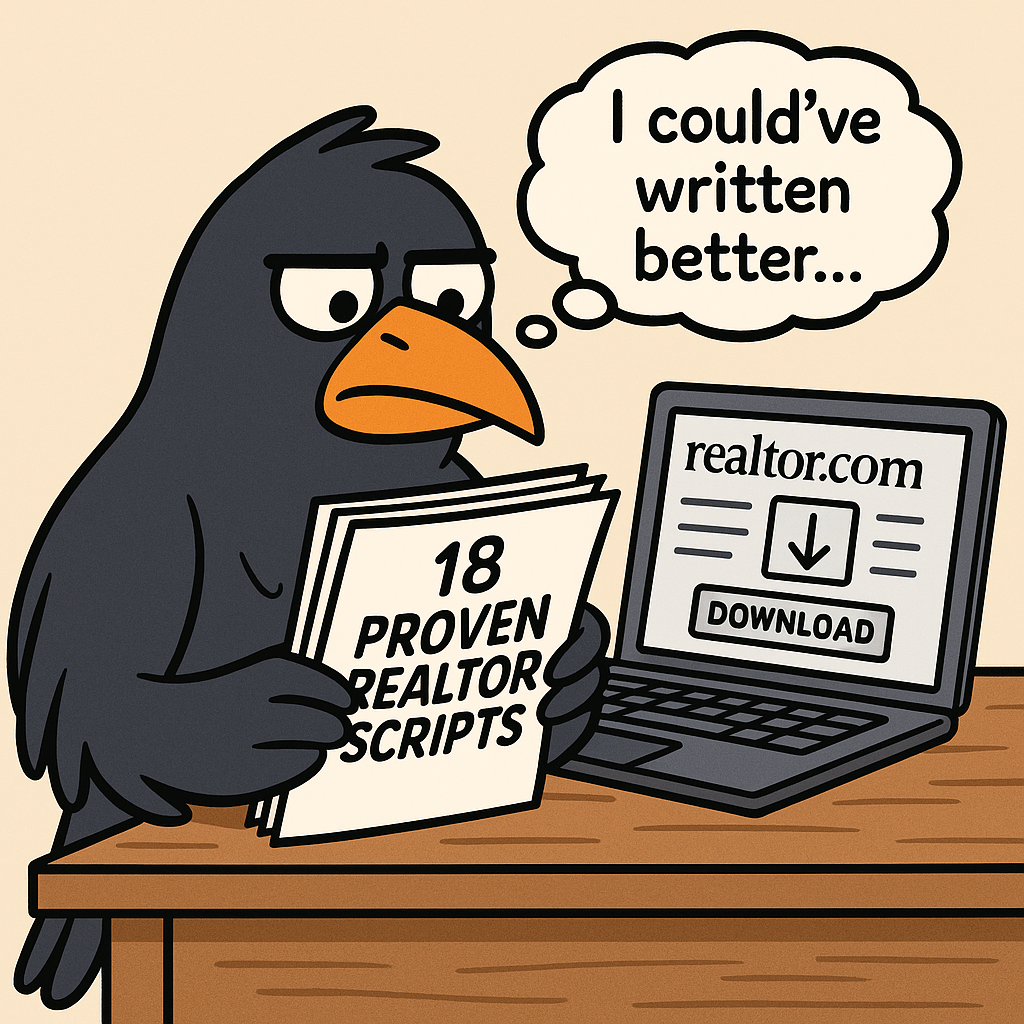
    Right as I sat down to write this, I got an email from realtor.com offering a free download of “18 Proven Scripts to Win the Listing.”

    You know I had to grab it.

    They were fine. Vanilla, predictable, and generic. Nothing you couldn’t make up on the fly when you’re saying, “Thanks, let me know if you have any questions.”

    Honestly, ChatGPT could’ve done better.

    But what do you expect from something offered for free in a blast email?

    When it’s time to start thinking about selling or buying land, do you really want someone treating you like they’re working off a script?


  • Score One for the Little Guys

    Score One for the Little Guys

    Sometimes you can’t help but gloat a little.

    I may have made it sound like they intentionally undervalue properties just to torpedo deals.

    That’s not really what I meant. They aren’t doing that. They’re just not as experienced with land, which can lead to some… wildly different results. I’ve even seen plenty come in higher than what I’d call realistic.

    Appraisers are generally good folks just trying to do their jobs like the rest of us. They just get thrown into situations they probably wish they wouldn’t sometimes. Like the rest of us.

    Most of them, anyway.

    If you’ve ever been through a eminent domain or right-of-way (ROW) proceeding — where the state acquires land to widen roads or build new ones — you deal with appraisers there too.

    My experience with those folks?

    Let’s just say they’re the kind of people you might call something implying their parents weren’t married when they were conceived.

    I’m not saying ROW appraisers intentionally understate values (and if any attorneys are reading, please note this is all opinion and conjecture on my part).

    But here’s what I’ve noticed: banks don’t always control who they hire, but the state tends to use the same appraisers over and over. And those appraisers make a very high percentage of their income from ROW work.

    Incentives for more business. Expectations about what the client wants to see. All that. Make of it what you will.

    They’ll tell you it’s all above board, and I’m not going to contend otherwise.

    Anyway.

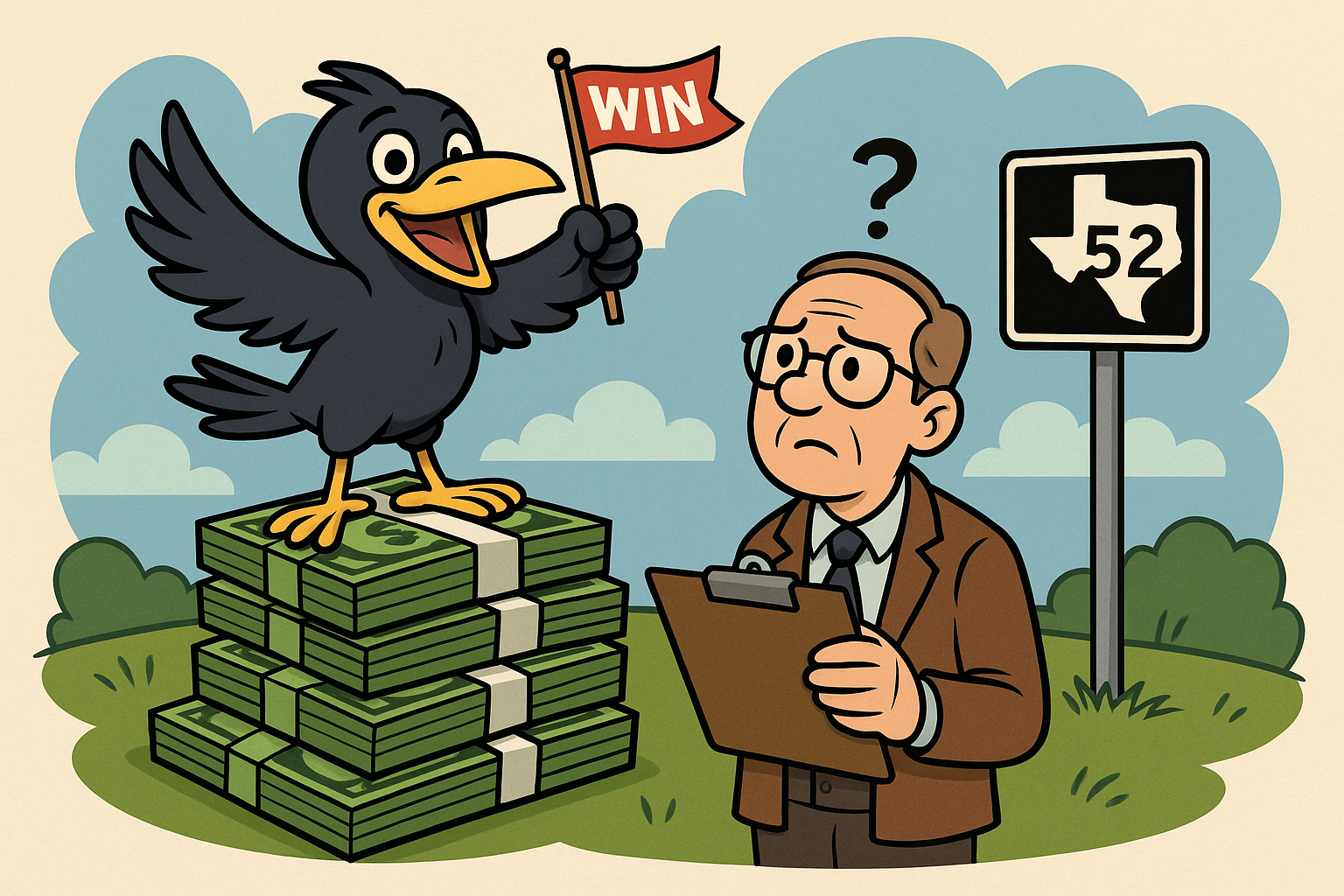
    Last year, an attorney friend of mine had some land taken for ROW. Not surprisingly, he and the state couldn’t agree on a value. We went to a commissioners hearing, and he asked me to help.

    Since I’m not a licensed appraiser, I wasn’t allowed to comment on values directly — though I did manage to slide in the fact that my clients trust my numbers enough to keep coming back.

    We fought through a highly adversarial process stacked against the landowner and did the best we could.

    The commission awarded him about four times what the state originally offered. The state, being the state, appealed and dragged it into court.

    That tied it up for over a year, but it was finally settled this week — and let’s just say he’s very happy with the outcome.

    Sometimes, the little guy does win!

    The part I played was very minor, so I’m not taking the credit. If anything, my value was in knowing what not to say. The state’s rep kept trying to goad me into veering into licensed appraiser territory so he could disqualify me, but I didn’t take the bait.

    Is it ever really the wrong time to discuss your property with a real professional?


  • But Some of My Best Friends Are Appraisers…

    But Some of My Best Friends Are Appraisers…

    You can’t choose the appraiser, but you can choose who’s at your side. Choose wisely.

    Whenever a bank loan’s involved, you can bet an appraiser is too.

    The bank hires them to make sure they’re not loaning a million bucks against something worth $300K. They’re not there to predict whether the buyer will default, just to confirm the collateral makes sense.

    When it comes to houses, they usually get it right. Plenty of comps, plenty of data. Every house is technically different, but they can pull enough nearby sales to pin down value pretty well.

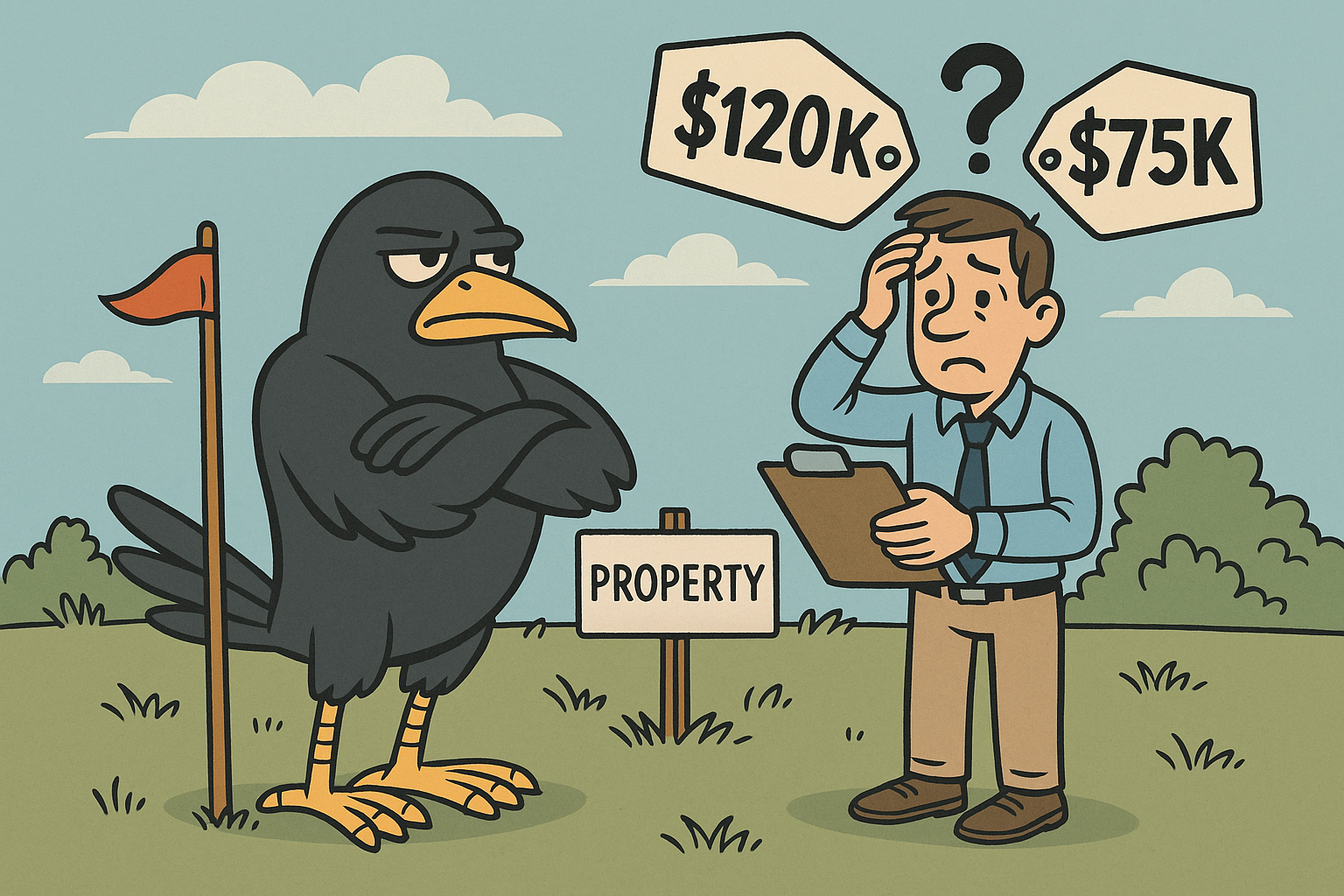
    Finding relevant comps is harder, and the results can get screwy fast. I once had two residential lot deals going at the same time, same area, same price point, roughly $120K each. Two different appraisers. One came back right at $120K. The other came in at $75K.

    One was close. The other wasn’t.

    That buyer kicked in extra cash and closed anyway, but that’s rare. A low appraisal usually blows up the deal for everyone. The appraiser still gets paid the same either way.

    Another listing went under contract at full price. Buyer was paying cash but got an appraisal anyway, just to make the partners feel better.

    You probably know where this is going.

    The appraiser used awful comps. One seven miles away in a rural area, one outdated, and one sitting mostly in floodplain without adjusting for it. The only relevant comp, he adjusted down for no reason anyone could explain. If anything, that comp made us look underpriced.

    His report told my buyers they were overpaying by $500K.

    They walked.

    A few months later, the highway route was announced. That property’s now a future corner. We doubled the price, and we’ll get it.

    That appraiser’s “discount” cost those buyers seven figures in future value.

    To be fair, most appraisers just don’t have enough experience with land. They’re used to houses. Land’s a different animal.

    But you know what wrecks just as many deals? Agents out of their depth.

    Most agents focus on houses. Nothing wrong with that, unless they list land without knowing what they’re doing. Overprice it and the property sits forever. Underprice it and you leave money on the table. Miss a key issue and you get expensive surprises later.

    We all have the same real estate license. That doesn’t make every agent qualified for every deal.

    If you were leasing retail space, would you hire your cousin Karen who’s never read a lease? Even if she asks. And she’ll understand why you don’t.

    So why list land with someone who doesn’t specialize in it? She will understand why you don’t there also.

    Does it make sense to hire people who aren’t experts in a specialized field?

    Does it make sense to fly blind when there’s someone offering a free analysis of your property?

    Even if you aren’t considering selling today, does it hurt to know what you might be sitting on?

    Ready for me to shut up?

    Click below.


  • Tomorrow’s Probably Coming—Plan Accordingly.

    Tomorrow’s Probably Coming—Plan Accordingly.

    Sometimes Salespeople Send Slogans Saying Silly Stuff

    I got an email the other day where the sender had a slogan in their signature line:

    Live each day like it’s your last.

    Maybe an ok sentiment for a Hallmark card. Pretty lousy motto for a business email.

    Because if today were actually my last?

    I wouldn’t be working. I wouldn’t be sending emails. You wouldn’t see a blog post, unless it had been scheduled beforehand.

    I’d be with my family, maybe some close friends. That’s it.

    I get the idea—you’re trying to say, “Don’t waste your time,” or “Make the most of today.” And that’s fine. But the way it’s worded sends the wrong signal.

    If I’m considering doing business with someone:

    • Don’t waste time? Great.
    • Seize the day? Fine.
    • Be where you’re supposed to be, doing what you’re supposed to be doing? Now we’re talking.

    But “act like tomorrow’s not coming so I can blow off anything I don’t feel like doing”? Nope.

    Most of the time, tomorrow is coming. And another one after that. We aren’t promised anything, but that doesn’t mean ignore the future.

    If your business is about helping people, you don’t always get to do what you want. You have to put others first, at least some of the time.

    I like to have fun as much as anyone. My family is a priority, and one of the perks of working for myself is being able to show up to my kids’ games or take care of what they need. But that’s not the same thing as “living like there’s no tomorrow.”

    It takes planning and discipline. If I’m out all morning doing something for me, I might need to stay late to make sure the important stuff gets done. I’m not glued to my phone, but I’ll return your call.

    That’s the balance. Not “live like it’s your last day.” More like: live today so you don’t regret it tomorrow.

    Land sales work the same way. They usually move slow… until suddenly they don’t. That can bug me sometimes (I’d rather get it done sooner), but for most people buying or selling land isn’t their most urgent problem. And that’s fine—it gives room for deliberate decisions.

    The key is having someone who doesn’t pressure you but still responds, follows through, and keeps things moving.

    That’s me.

    Is it the wrong time to get the latest market analysis on your property?

    You know what to do.


  • Begging Strangers Is a Terrible Strategy

    Begging Strangers Is a Terrible Strategy

    Thoughts and prayers” won’t pay your bills, proper preparation will.

    I’ve ranted before about people who think they can predict the future—and insist on telling you even though nobody asked. If they really knew, they wouldn’t be here lecturing you.

    But here’s one prediction you can take to the bank:

    If someone starts with “you know I’m not racist…,” you can bet your last dollar the next word will be “but,” and whatever follows will be racist.

    And when someone says “I’m not trying to be political…”? Same story.

    It’s either about to get political, or they’re pointing out something so obvious it shouldn’t be controversial—although there’s always that chunk of society that will argue with a stop sign.

    So. I’m not being political here.

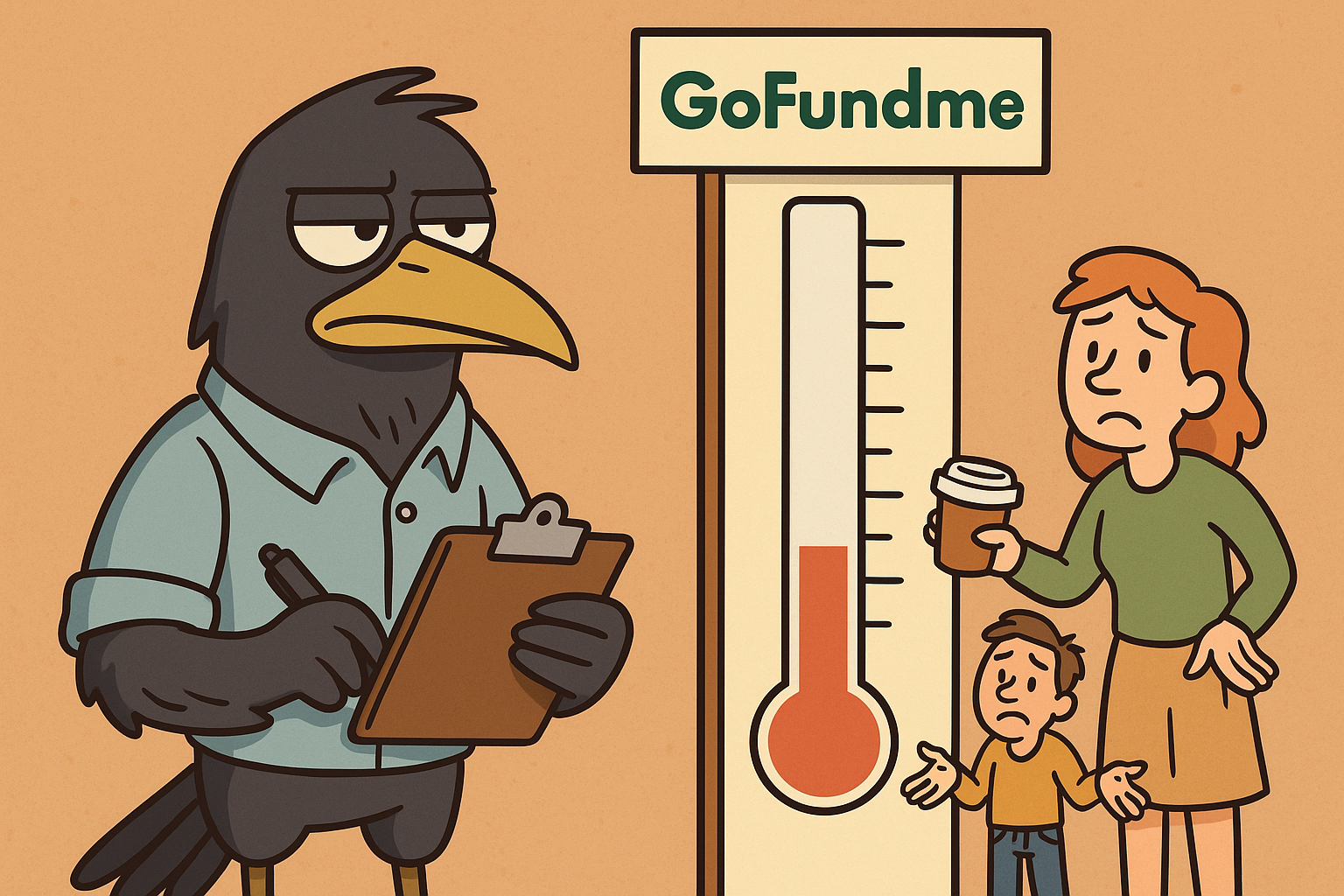
    A while back, somebody told me their friend got sick—cancer, I think. No insurance. Didn’t know what they were going to do, except maybe start a GoFundMe.

    Apparently my response wasn’t the “right” one.
    Instead of a sympathetic head tilt, I said, “Maybe they should have had insurance.”

    You’d think I’d just kicked a puppy.

    Here’s the thing: insurance isn’t a mythical gift your employer hands you if they’re feeling generous.

    It’s for sale. You can go buy it.

    I do. And it’s not cheap—I pay more for my family’s insurance than I do for our house every month. It sucks. But that beats begging strangers on the internet for treatment money.

    But if you don’t make much money? What do you do then?

    I literally just helped someone price full coverage. For them the total cost—premiums plus max out-of-pocket—worked out to about seven bucks a day. That’s a fancy coffee.

    Don’t mistake this for an endorsement of Obamacare. I wish it were gone yesterday.

    But you play the hand you’re dealt, not the one you wish you had.

    It’s called being prepared.

    If you can protect yourself for $7/day—or even my number—it’s a no-brainer.

    What’s this got to do with real estate?

    If you own land or lots and there’s even a chance you’ll sell soon, is there any downside to having the most current info?

    Especially considering I’m not going to charge you a penny to talk.

    You know what to do below. But if you’re not subscribed yet, fix that first—before your GoFundMe for “real estate mistakes” goes live.


  • Faith Isn’t Magic. It’s Harder Than That. And More Than That.

    Faith Isn’t Magic. It’s Harder Than That. And More Than That.

    What works between you and God works everywhere else too.

    When you hear “faith,” what comes to mind?

    If it’s some hazy, mystical just believe and the universe will deliver thing… congratulations, you’ve been sold the “name it and claim it” version.

    That’s not faith. That’s a bad infomercial.

    It’s not insert prayer, get dream house. And don’t get me started on the guys who tell you that if you only send them money, God will pay you back.

    Biblical faith is a lot more grounded—and a lot harder.

    It’s trusting what God says is true even when all the visible evidence screams otherwise.

    Case in point: the gospel says if you’ve trusted in Jesus, you’re perfect in God’s sight.

    Not “getting better.” Not “almost there.” Perfect. Right now.

    But look around your life and tell me how perfect you feel.

    • You still want to do stuff you know is wrong.
    • You still do it—maybe less than you used to, but still.
    • You skip doing what you know you should.
    • You screw up without even realizing it—by forgetting to trust, by thinking you know better, by not even knowing what you don’t know.

    From where you’re standing, “perfect” is the last word you’d use.

    Faith says, “Yeah, but I believe what God says over what I see.”

    In Think and Grow Rich, Napoleon Hill talks about faith too—but it’s a different animal. He’s talking about believing you’re going to achieve your goal before you’ve got a shred of proof.

    You carry yourself like it’s already a done deal.

    But when you see evidence your way isn’t working, you don’t just stand there and wait for it to fix itself. You change something. You adjust. You improve.

    That’s the split right there. With God, you’re not the one making the thing happen—He already did it. You’re not improving His system. You’re just trusting it.

    With your own goals? You are building the thing. So you trust the end result will happen, but you also fix what’s broken as you find it.

    Jeff Olson in The Slight Edge doesn’t call it faith, but it’s basically the same principle: small actions, repeated over time, lead to huge results.

    The problem is, most people quit because they can’t see it working yet.

    Faith, in Olson’s world, is knowing those boring little actions are paying off—even when the scoreboard says zero. So you keep doing them.

    Biblical faith says: trust what God says, even when the evidence doesn’t back it up. Hill’s faith says: trust your goal enough to take every step like it’s already yours. Olson’s edge says: trust the process long enough for it to work.

    The difference is who’s doing the heavy lifting. With God, He’s the Creator. You rest. In your life when you’re the creator, you adapt.

    Either way, the key is the same: live and act today like the unseen thing is already real—because in the ways that matter most, it already is.

    I’m not even going to try to tie this one to real estate—you either see it or you don’t. But I’ll still ask you to subscribe…


  • Relax — I’m Not Talking About You. Probably.

    Relax — I’m Not Talking About You. Probably.

    Unless you’re ready to sell your land — then I’m definitely talking to you.

    I talk about all kinds of things here, then twist myself into a pretzel trying to tie it back to real estate brokerage. With varying degrees of grace.

    I always make it back to real estate — just not always smoothly or convincingly.

    Most days I’m writing about whatever catches my eye. Lots of times there are other people in the picture.

    The principles are pretty universal, and the stuff I write about happens to most of us. So you might wonder:

    Is he talking about me?

    Almost certainly not.

    Although… a while back, a new subscriber popped up who I had definitely been thinking of when I wrote one or more of these.

    I’m not trying to single anyone out, so I keep things vague.

    So if you think I’m talking about you, I’m not. Unless I am. But usually not.

    If you own lots or land, I’m probably not talking about you — but I am talking to you.

    When you’re ready to sell, you want someone who’ll shoot you straight (me) without shooting you in the foot (also me).

    I won’t try to hurt your feelings, but if you’re allergic to honesty, this might not be the partnership you’re looking for. No hard feelings.

    If you’re fine with it — you know what to do below.

    P.S. If you haven’t subscribed yet, hit the button. It helps me, and you might even enjoy it.


  • Reading Between the Bumper Stickers

    Reading Between the Bumper Stickers

    You’re signaling all right — just not what you think.

    So I was driving up Preston Road this week, looked at the back of the car in front of me, and there it was.

    The Coexist bumper sticker.

    Always displayed by someone trying to signal that they’re tolerant, smart, and above the fray — while convincing nobody but themselves.

    Tolerant? Anyone who’s dealt with these folks knows they’re rarely as tolerant as they claim.

    Smart? We all agree it would be nice if everyone got along. But to act like centuries of conflicting worldviews can be squared with a one-word bumper sticker? “Smart” isn’t the right word.

    Above the fray? Only until you say something — probably by accident — that contradicts one of their beliefs.

    In truth, the sticker’s a red flag. Stay clear.

    One thing they don’t coexist with is critical thinking.

    There are plenty of other examples of people thinking they’re sending one signal while the rest of us read something very different:

    • The 50-year-old who brings up their college in every conversation — wants to sound educated, but really shows they haven’t done anything impressive in 25 years.
    • The guy with the aftermarket exhaust — thinks it’s swagger, but it reads like overcompensation.
    • The middle-aged woman getting tattoo sleeves — aiming for youthful and edgy, but looks like chasing something that should’ve been outgrown decades ago.

    It happens in real estate too. The classic is overtalking — trying to impress a potential client with a flood of knowledge. It might fly in the housing market, where most buyers and sellers know little beyond their own home and some market generalities.

    But in land? Owners tend to know a lot more. It doesn’t take long to spot when someone is saying things that sound good but are flat-out wrong. And that makes all of us look bad.

    I try to avoid signaling as much as possible. I want to be seen as smart, but I’d rather be trusted than flashy. If I say something, it’s because I’m as sure as I can be that it’s right.

    Give me the less flashy guy I can trust over whatever else is out there.

    And as long as we are talking about signaling, how about this:

    I voted for Trump.


  • If It’s Time, Don’t Waste Time

    If It’s Time, Don’t Waste Time

    If you’re ready and the market’s open, take the shot.

    Yesterday I was talking about how landowners are rarely under pressure to sell.

    In the home market, it’s different. A job transfer, a growing family, downsizing after the kids move out—life timing usually matters more than market timing.

    Land? Almost the opposite.

    If your place has an ag exemption, your carrying costs are basically zero. You don’t live there, you can own it from across the country, and even if you do move halfway across the map, you usually don’t need to sell.

    You might want to sell when the market’s good, but you can wait when it’s not.

    Here’s the catch:

    With houses, there’s always some activity. People always need to move, one way or another. Demand might go up or down, but it doesn’t just vanish.

    Land is different. Most buyers don’t need it—they want it.

    They’d like to build their dream place in the country or have a weekend spot to hunt or fish. If interest rates or construction costs get too high, they’ll just wait.

    That means land demand can disappear almost overnight.

    So if you’re thinking about selling and can get a price that satisfies you, the smart move is usually to do it.

    Like I always say—there’s never pressure from me. I’m not here to tell you to sell. But once you’ve decided you might want to, it often makes sense to move forward before the market changes.

    Because it will.

    In the meantime… is it ever a bad idea to keep tabs on the market with a trusted advisor?