Tag: Grayson County Land Sales

  • Anyone Can Promise “No Pressure”

    Anyone Can Promise “No Pressure”

    Every real estate agent says there’s “no pressure.”

    Every car salesman says it too.

    Which is probably why most people don’t believe it.

    The reality is a lot of people avoid even asking questions about property values because they know what often comes next.

    The follow-up calls.
    The texts.
    The emails.
    The “just checking in.”
    The slow transition from “free information” into feeling like you accidentally entered a sales funnel you can’t get out of.

    So people avoid the process altogether.

    Even when they know that having a handle on what they own and what it’s worth is in their interests.

    Honestly, I understand that completely.

    My industry has absolutely earned that skepticism.

    That’s part of why I structured the MBR Land Reality Check differently.

    Not because I’m morally superior to everybody else.
    And not because I somehow don’t want listings.

    But I also understand something important:

    They just know information is good to have.

    Sometimes they inherited property.
    Sometimes they’re thinking ahead.
    Sometimes they’re dealing with probate, partnerships, taxes, changing plans, or just plain curiosity about what something might realistically bring today.

    A lot of them simply want a clearer picture without feeling like they’re about to get dragged into a process they didn’t ask for.

    And apparently that difference stands out more than I realized.

    Recently I started asking people what surprised them most after receiving a Land Reality Check.

    Here are a few of the responses regarding how much pressure they felt:

    Honestly, that may say more than anything I could write myself.

    You don’t have to sell. You don’t have to decide anything.

    But it’s just smart business to allow yourself to get a qualified opinion.

    Because things change. Sometimes slowly, sometimes fast.


    PPS- If you’re not ready for the Reality Check but like reading these, enter your info below to get these in your inbox.


    Register to Receive Posts Via Email!

    By submitting, I understand I will receive marketing emails and blog posts from Mike Browning Realty and/or associated companies. Unsubscribe at any time.

  • You Can’t Sell Something That Is Free

    You Can’t Sell Something That Is Free

    Continuing with the pattern of God giving first, it just keeps showing up.

    God gives, and we keep screwing it up.

    A man named Naaman comes to Elisha because he has leprosy. Naaman is important, wealthy, and powerful, but none of that can fix what’s wrong with him.

    Aside from that, he’s the commander of an enemy army. An enemy of Israel.

    That doesn’t prevent God from healing him. He doesn’t even require him to switch sides first.

    That part is probably worth remembering whenever we start thinking we need to clean ourselves up before going to God. If He’s willing to heal Naaman, He’s willing to heal us.

    Anyway.

    Elisha tells him what to do, Naaman is healed, and naturally he tries to give Elisha gifts afterward.

    Elisha refuses them because the healing wasn’t for sale. It was a gift from God, given long before Naaman could think about earning it.

    Then enters Gehazi.

    Gehazi is Elisha’s servant, and apparently the whole thing bothers him. Naaman leaves healed, wealthy, and still in possession of all his money and gifts.

    Gehazi can’t leave it alone.

    So he runs after him and lies. Says Elisha changed his mind and now wants payment after all.

    It almost feels modern. God gives freely, and somebody immediately starts trying to figure out how to monetize it.

    You can see it on TV every Sunday.

    “Plant your seed!” “Give first and God will multiply it back!” “Send your offering here!”

    Curiously, the address is usually their own.

    But it’s not just televangelists. It’s all of us.

    We do it ourselves with churches. With ministry. With generosity. With reputation. With morality itself. We constantly try to turn grace into transaction.

    We want a formula. A leverage point. A way to put God in debt to us.

    He gives first, and keeps giving despite how persistently we misuse what we’re given.

    As for Gehazi, he ends up struck with Naaman’s leprosy and is told it will cling to him and his descendants forever. There’s not much mention of him after that, so we don’t really know how his story ended.

    But considering everything else we’ve looked at, it wouldn’t surprise me if even that wasn’t the end of it.

    Which is fortunate for all of us.

  • Maybe You Don’t Want Their House.

    Maybe You Don’t Want Their House.

    If you’ve been looking in Bridges at Preston Crossing, you already know what’s happening.

    There are new lots coming.

    But most of those are tied up with production builders.

    That works for some buyers.

    Other buyers want more control than that.

    They want to choose the builder.
    Control the design.
    Build on their own timeline.
    Not pick from three floorplans and a design center menu.

    That narrows the field pretty quickly now.

    At that number, it’s probably the best value currently available in the subdivision if your goal is still to build custom.

    Both neighboring lots are already built, so you’re not sitting there wondering what eventually gets dropped beside you.

    That matters more than people think.

    Especially in subdivisions transitioning away from purely custom product.

    This is one of the few remaining spots where you still control the process.

    You either care about that or you don’t.

    If you do, this one deserves another look.

    Photos, aerials, and property details are below.

    MLS #20995494

    If you’d like to walk the lot or discuss the neighborhood, text me at 214.354.3583. Or have your agent reach out.

  • Maybe It’s Time For Another Look

    Maybe It’s Time For Another Look

    H2 Deerwood is back on the market.

    And the math has changed.

    This is the one-acre lot in Waterstone Estates northeast of McKinney. Minimum 3,500 square foot build requirement. Higher-end neighborhood. Custom home product.

    If you’re a builder in Collin County, or an agent working with buyers looking for this type of area, you already understand the appeal.

    At that number, it’s currently the best-priced lot in the subdivision.

    That doesn’t suddenly make it “cheap.” That’s not the point.

    Most serious lot buyers are not reacting emotionally to land right now.

    They’re running numbers.

    Interest rates being what they are, the monthly cost of a custom home is materially higher than it was a few years ago. The less somebody spends on the lot, the lower the overall project cost and the less money they have to borrow.

    Also don’t ignore lot prep costs.

    A heavily treed lot may look beautiful finished, but it can also cost substantial money to clear and prep before construction even starts.

    This lot is flat, open, and straightforward.

    That matters more right now than it did when money was cheap.

    This is also one of those properties where the right buyer probably knows fairly quickly whether it fits or not.

    You either need a build site in this type of area, or you don’t.

    If you do, this one deserves another look.

    Photos, aerials, and property details are below.

    If you’d like to walk the lot, text me at 214.354.3583 and I’ll give you the gate code. Or have your agent reach out.

  • It Happens To Me Too

    It Happens To Me Too

    I write on here often that the reason many people don’t check into their land’s value isn’t because they don’t want to know or don’t think it’s smart business to know.

    It’s everything that tends to go with it.

    You just want to know what’s happening, and next thing you know you feel like you’re in a timeshare presentation. Where you feel like the thing isn’t going to end until you say yes, no matter how many times and ways you say no.

    It just happened to me.

    There are a couple commercial real estate platforms that sell subscriptions with various marketing and data tools. I’ve tried both over the years. For what I do, they usually aren’t worth carrying full-time.

    If I need exposure for a particular property, I can just pay to promote that listing specifically and be done with it.

    What they really want to sell is data.

    Buyer information.
    Seller information.
    Mailing lists.
    Contact databases.

    All of that could theoretically be useful to me.

    So they call me. And call. And call.

    I generally ignore the calls. But sometimes one slips through because I think it might actually be somebody calling about property. Like the other day.

    The guy complimented me on the number of listings I have, started talking about how much local buyer and seller information they had access to, and wanted to meet and show me the platform.

    I told him it was probably going to cost more than I was willing to spend.

    To his credit, he at least admitted pricing was somewhat dynamic instead of pretending there was one magic number for everyone. I eventually got a rough range out of him anyway.

    It was more than I wanted to spend. As expected. I told him I didn’t want to waste his time.

    Didn’t matter.

    He still wanted to meet. He suggested a day that was already blocked out on my calendar. When I told him that, he just pushed it back a week.

    Eventually I just said okay because I was tired of the conversation and figured at least I’d get a free cup of coffee out of it.

    Now I’m probably going to have to say no several more times later.

    And eventually I may have to be rude about it.

    I don’t really blame the guy. I understand why companies sell that way. It must work often enough to keep doing it.

    But it also reminds me why so many people avoid talking to agents, salespeople, and brokers in the first place.

    It’s not that people hate buying things. And it’s usually not even that they hate being sold.

    They hate the feeling that they are no longer fully in control of the conversation.

    There’s a difference between staying in touch and trying to corner somebody.

    If you ask me for a valuation, am I going to follow up lightly from time to time?

    Of course. It only makes sense to.

    But am I going to make you feel trapped in a process you can’t comfortably back out of?

    Never.

    You should always feel like you can say no.

    The minute somebody feels like they can’t comfortably say no anymore, the entire interaction changes.


    PPS – If you’re not ready for a Land Reality Check but enjoy reading about land, markets, negotiation, and how this business actually works, you can sign up below and get these posts in your inbox.

    Register to Receive Posts Via Email!

    By submitting, I understand I will receive marketing emails and blog posts from Mike Browning Realty and/or associated companies. Unsubscribe at any time.

  • It’s Not Free To Try

    It’s Not Free To Try

    One thing that makes land different from houses is that having it sit on the market a little while usually doesn’t damage it the same way.

    A house sitting unsold starts raising questions pretty quickly.

    Land is slower by nature.

    So after a Land Reality Check, sometimes the conversation becomes:

    “Okay, if you think this is worth around $8,500 an acre, why don’t we just throw it out there at $14,000 and see what happens?”

    And within reason, that’s not necessarily crazy.

    If somebody is willing to sell around market value, but wants to push a little first just to make sure we’re not leaving money on the table, fine. I understand that completely.

    You’ve probably noticed if you’ve read any of my Land Reality Checks that I tend to lean conservative anyway.

    I’d rather be slightly conservative than explain later why fairy tales didn’t happen.

    But there’s another side to this too.

    If you’re selling a small residential lot, it usually doesn’t take much more than a yard sign and an MLS listing. Which isn’t free, but usually doesn’t involve substantial upfront expense either.

    If somebody wants to throw one of those out there at an unrealistic number “just to see,” I might play along.

    Maybe.

    Larger signs.
    Drone photography.
    Aerials.
    Professional brochures.
    Landing pages.
    Targeted marketing.
    Industry websites.
    Paid Google ads sometimes.
    Mailers sometimes.

    It adds up faster than people think.

    A decent custom sign can easily run $500 to $1,000 depending on what’s needed. Drone photography might be another few hundred. Professionally printed brochures are expensive if you want them done correctly.

    And that’s before getting into the less visible costs, the platforms, memberships, advertising accounts, and all the little things that make the marketing possible in the first place.

    Depending on the tract, it’s not unusual for me to spend $1,500 to $2,000 or more getting a property positioned before anything even happens.

    That doesn’t mean every listing sells.

    Markets change.

    Sometimes sellers change their minds. Sometimes buyers disappear. Sometimes a property just sits there longer than expected.

    That’s business.

    But there still has to be some reasonable overlap between where a seller is realistically willing to sell and where the market is realistically willing to buy.

    Otherwise everybody is mostly participating in a very expensive form of wishful thinking.


    PPS – If you’re not ready for a Reality Check but enjoy thinking about land, markets, negotiation, and how this business actually works, you can sign up below and get these posts in your inbox.

    Register to Receive Posts Via Email!

    By submitting, I understand I will receive marketing emails and blog posts from Mike Browning Realty and/or associated companies. Unsubscribe at any time.

  • Don’t Get Your Feelings Hurt

    Don’t Get Your Feelings Hurt

    When people ask for a Land Reality Check, sometimes they’re disappointed in what I tell them.

    That’s just part of it.

    A lot of times they heard about some property up the road that sold for X, so naturally the question becomes, “Why are you telling me mine is worth Y?”

    The other property may have had water or sewer. Maybe the frontage was better. Maybe the topo worked better. Maybe more of it was usable. Sometimes one side of the road is simply more desirable than the other. There are a hundred little things that can move value around.

    But the bigger thing to understand is the approach I take when I do these.

    I generally don’t ask ahead of time what your motivation is.

    Whether you want to sell immediately, inherited the property, are under pressure, or wouldn’t sell at all unless somebody got aggressive, I generally don’t build the analysis around that.

    Instead, I make a basic assumption.

    If you were what I’d call a sensible seller, meaning you are not under pressure to sell but you would sell at a reasonable market price, what would the property likely bring?

    That’s the framework.

    And all the comparable sales are there in the report. The relevant ones anyway. I try to show what sold, what didn’t, and explain why I came to the conclusion I did.

    Not a desperate seller.

    Not somebody demanding fantasy pricing either.

    Just somebody willing to make a reasonable deal if the numbers make sense.

    On a million-dollar transaction, that usually means you’re not going to blow the whole thing up over six hundred dollars on a survey when everything else is lined up correctly.

    Most legitimate transactions happen somewhere in that world.

    Does that mean somebody more aggressive might test the market higher?

    Does a more motivated seller sometimes take less for speed or certainty?

    That’s not really the point.

    The point is giving you a baseline grounded in what buyers have actually been willing to pay, instead of just whatever number happens to sound good that day.

    Then you decide whether you want to sell, wait, push harder on price, or ignore the whole thing for another five years.


    PPS- If you’re not ready for the Reality Check but like this kind of thinking, you can sign up below to get these in your inbox.

    Register to Receive Posts Via Email!

    By submitting, I understand I will receive marketing emails and blog posts from Mike Browning Realty and/or associated companies. Unsubscribe at any time.

  • God Still Gives First (And Last)

    God Still Gives First (And Last)

    The last couple of Sundays I’ve been writing about how God gives first.

    With Solomon, the wisdom and wealth came before the instructions on what to do with them. With Israel as a whole, God repeatedly delivered, restored, protected, and provided before they promptly drifted again.

    Once you see it, the same thing shows up lots of places you hadn’t considered.

    Like with Moses.

    Moses didn’t earn his position. God chose him, sent him, empowered him, and used him to bring Israel out of Egypt. The miracles, authority, provision, all of it was given first.

    Then came the responsibility.

    But God also promised to be with Moses in a way most of us can barely imagine. God met with him face to face, spoke to him directly, and answered his questions.

    Most of us think that if we had an advantage like that, obeying would be easy.

    By now you’re probably seeing the problem with that assumption.

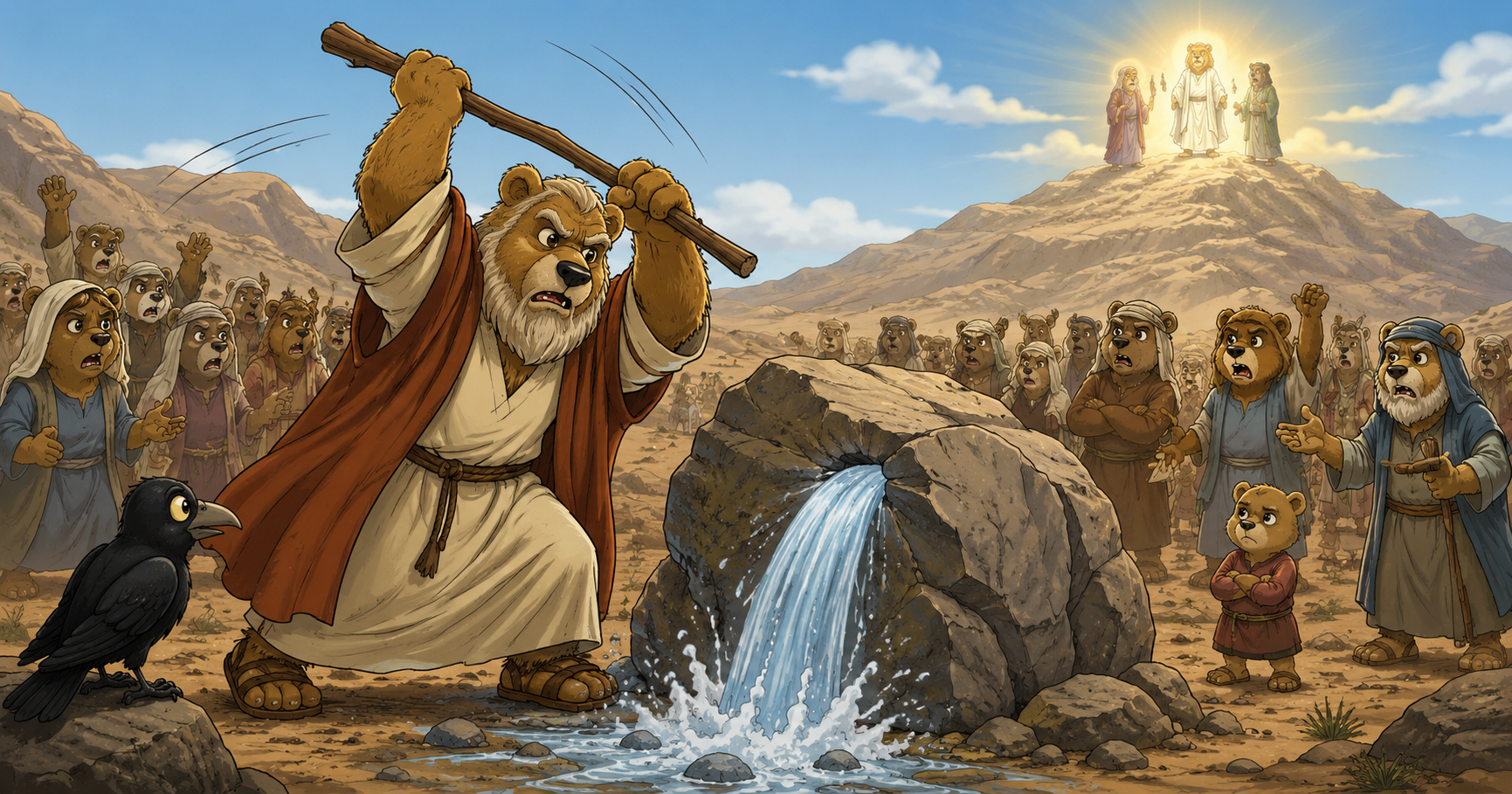
    By the time you get to the incident with the rock, Moses is worn down. The people are complaining about water again, which by that point had become a recurring theme.

    God tells Moses to speak to the rock.

    Instead, he strikes it. Angrily, while telling the Israelites what ingrates they are.

    Water still comes out. The people get what they needed. If you judged strictly by outcome, it wouldn’t even look like much of a problem.

    But God had been clear.

    And Moses did something else.

    That was enough.

    He was told he would not enter the Promised Land. After everything else, after leading Israel for decades, that was the line.

    We struggle with that because it feels disproportionate. We immediately start grading the sin ourselves. It wasn’t murder. It wasn’t idolatry. He didn’t steal anything. He got frustrated, lashed out, and did something he wasn’t supposed to do.

    Sound familiar?

    But the Bible doesn’t treat sin the way we do. Moses knew what God had said, and he did something different. That was enough.

    And there wasn’t a way for Moses to fix it himself.

    No second attempt. No chance to go back and do it correctly the next time. He led Israel to the edge of the land, and stopped there.

    But don’t overlook something that happens later.

    At the transfiguration, Jesus Christ is seen speaking with Moses and Elijah.

    I used to glide right over that part. If you’re talking about the most important figures in the Bible, Moses is obviously one of them. Of course he’s there.

    But then it hits you.

    By God.

    The consequence still happened. Moses did not walk into the land with Israel. But it wasn’t the end of the story.

    Same pattern over and over. God gives. We fail. God restores.

    Which is fortunate, because if the arrangement depended on us fixing ourselves first, none of us are getting very far.

    It’s never too late.

    Until it is.

  • Sometimes Things Go Sideways On You

    Sometimes Things Go Sideways On You

    When people ask me for valuation help, or are thinking about selling, one of the things they often want to know is how much the property is going to be worth in the future.

    My answer is always the same. I don’t know, and neither does anyone else.

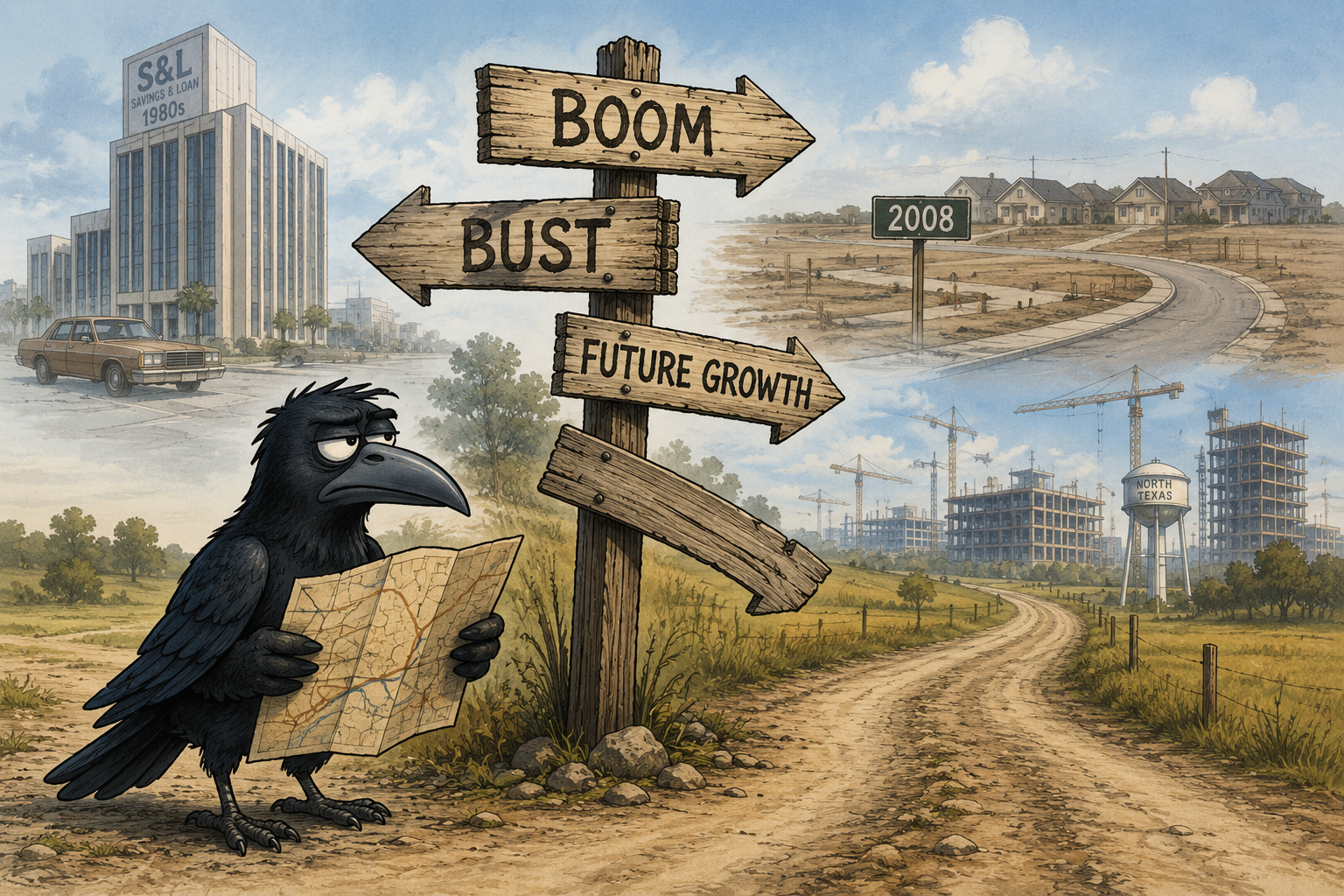
    Now historically, land and lot values around here have generally gone up over time. As long as North Texas keeps growing, people keep moving here, and the economy stays relatively strong, there’s a decent chance that continues over the long run.

    Back in the late 1980s and early 1990s, land values ran up very quickly during the savings and loan era. A few years later, some of those same properties sold out of receivership for less than the commission paid on the earlier sale.

    A few years before that, acreage in southwest Sherman was trading around $20,000 to $25,000 per acre because people thought a GM plant was coming.

    The plant ended up going to Tennessee.

    I worked on a deal in that same area years later at exactly $6,500 per acre.

    Then there were the lot markets around 2006 to 2008.

    I saw subdivision custom home lots in Collin County selling for over $75,000 during that runup. A few years later after the financial crisis, some of those same lots were changing hands around $20,000.

    In 2020, many people thought the lot market was going to freeze up completely.

    Instead, it got hotter than anything I’ve personally ever seen. In some areas values doubled between roughly 2020 and 2023.

    Since then? Not so much.

    Here are the prices on a lot I have seen trade three separate times:

    Pretty flat.

    That doesn’t mean the market is collapsing. And it doesn’t mean land is bad.

    It just means markets move in cycles, and people have a tendency to mistake temporary conditions for permanent ones.

    So what’s the takeaway?

    A couple things.

    First, you’re usually better off making decisions based on what makes sense today rather than based on what you paid, what you hope happens, or what somebody confidently predicts the property will be worth years from now.

    Second, if somebody tells you with certainty what your property is going to be worth in the future, they’re probably giving you more certainty than the market actually allows.

    Even if you’re not planning to sell, there’s still value in understanding where things actually stand today.

    You don’t have to do anything with the information.

    But things change. Sometimes slowly, sometimes fast.

    And it’s usually better to already know what you’re dealing with instead of trying to figure it out under pressure later on.


    PS- Even if you’re not considering selling today, is it a bad idea to have a handle on what you’ve got?

    That’s where the MBR Land Reality Check comes in.

    It’s a free, no obligation look at what your property might sell for today, based on what buyers are actually doing today. Real comps with real prices.


    PPS- If you’re not ready for a Reality Check but would like to follow along, enter your info below to get these in your inbox.

    Register to Receive Posts Via Email!

    By submitting, I understand I will receive marketing emails and blog posts from Mike Browning Realty and/or associated companies. Unsubscribe at any time.

  • You’re Better Off Knowing, Even If It Hurts At First

    You’re Better Off Knowing, Even If It Hurts At First

    Last week I put together an MBR Land Reality Check for a Collin County acreage owner.

    I went through the comparable sales, looked at the utility situation, and worked through it the same way I would if it were coming to market, whether it actually ends up happening or not.

    The projected value range came in meaningfully below what the county currently has it assessed at.

    That’s something I’m seeing more often lately.

    For a long time, if you saw a rural tract priced at or below tax value, it at least got your attention. It didn’t always mean it was a deal, but it was usually worth a closer look.

    That’s not as reliable as it used to be.

    In a number of cases now, especially with more rural acreage, tax values appear to have caught up to, or in some cases moved ahead of, where the market would actually transact.

    It’s likely a function of the way values moved over the last several years.

    At the same time, most of these properties carry an agricultural exemption. So while the assessed value may be high on paper, the owner isn’t being taxed on that number.

    Which means there’s very little incentive to challenge it.

    If anything, it tends to have the opposite effect. A higher assessed value feels like a positive signal, even if it doesn’t reflect what a buyer would actually pay.

    That can create a disconnect.

    And in some cases, it matters more than people realize.

    If an agricultural exemption is removed, rollback taxes are calculated based on the assessed value. If that number is higher than it should be, the exposure is higher as well.

    I’m not going to get into the mechanics of that here.

    And to be clear, I’m not an appraiser. The MBR Land Reality Check isn’t designed for use in a property tax protest. If that’s the objective, a tax consultant or appraiser is better equipped for it.

    If nothing else, it gives you context.

    You don’t have to sell. You don’t have to even consider selling.

    But things change.

    And it’s a lot easier to make a good decision when you already understand what you have than when you’re trying to figure it out under pressure.

    So the question isn’t whether you’re planning to sell.

    It’s whether it makes sense to know where things stand.


    PPS – If you’d rather just keep an eye on how this works, you can sign up below and get these posts in your inbox.

    Register to Receive Posts Via Email!

    By submitting, I understand I will receive marketing emails and blog posts from Mike Browning Realty and/or associated companies. Unsubscribe at any time.