Tag: Goal Setting

  • Repetition Is the Point

    Repetition Is the Point

    I recently read something that said there’s usually one thought or chapter in any business book that’s worth reading. I think that probably applies to personal development books too.

    It’s an interesting thought, but not the whole story. If you only read one book, you’ll probably take away quite a bit from it.

    But once you’ve read several, you’ll notice they cover a lot of the same ground. You might not find much new in any single book.

    Still, that doesn’t mean it’s a waste of time. In fact, it’s the opposite — you’re doing yourself a disservice if you don’t.

    If you’ve got kids, you already know that people often have to be told something more than once before it sticks. Even when they’re well-behaved, it can take patience to steer them the right way.

    And where do you think they got that from?

    Even if these books share the same ideas, each approaches them from a different angle — and that’s what helps. Sometimes one phrasing or example hits differently and gives you insight you missed elsewhere.

    (This might be that one “thought or chapter” the person was talking about.)

    As a quick example, take goal setting:

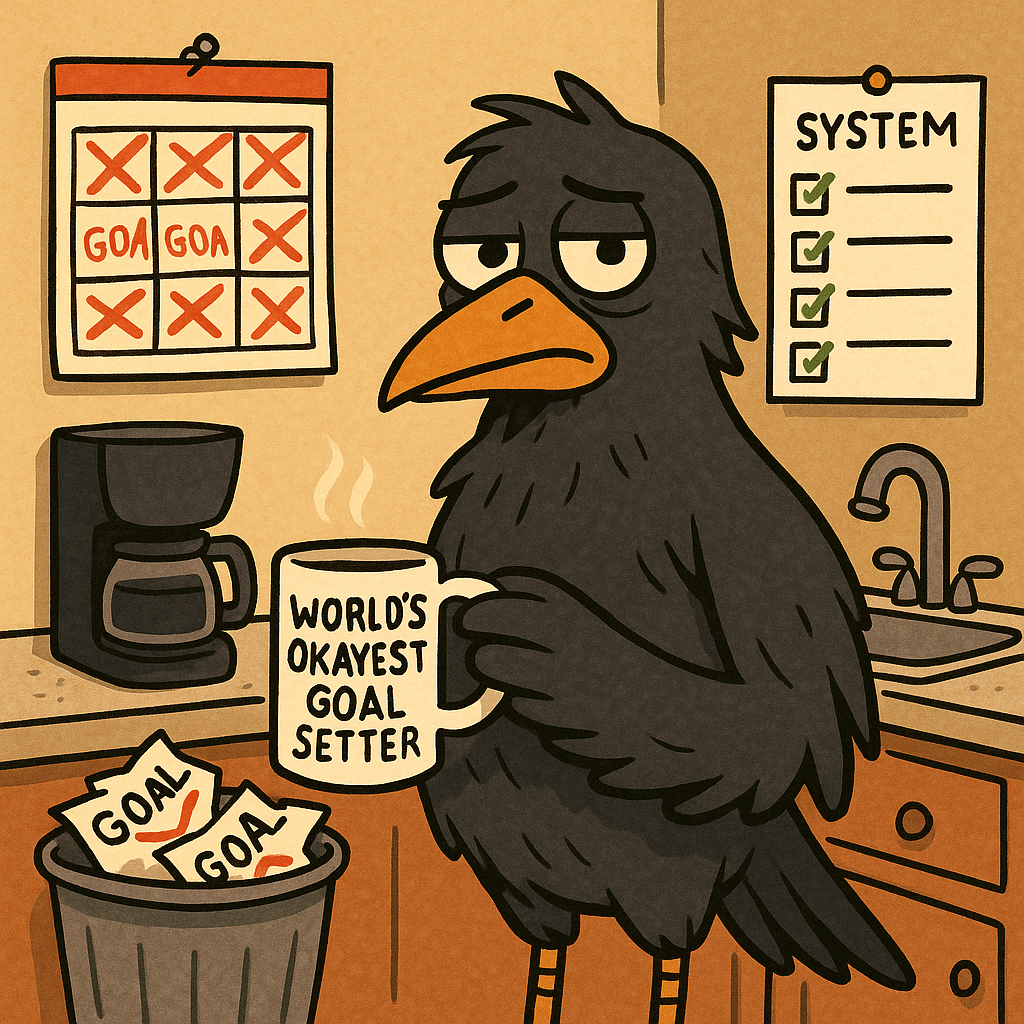
    In his various books, Scott Adams says systems > goals.

    In Start With No, Jim Camp says the only valid goals are those you have near 100% control over.

    In The Slight Edge, Jeff Olson says your small daily habits deserve more focus than your larger goals.

    All slightly different — all pointing to the same idea. Focus on the process, not the outcome.

    If you want to lose weight, don’t obsess over what the scale says every morning. Commit to eating a certain way every day and exercising regularly. Those are daily actions you can actually complete — and feel good about.

    Then check occasionally to see if those habits are getting you closer to the result you want. If so, great. If not, you’re still succeeding by completing the process — just make adjustments and keep going until you get there.

    Even if a lot of it seems redundant.

    PS — This one didn’t have much to do with real estate directly. But if you’re the kind of person who values learning and improvement, is it really that crazy to think you’d want to deal with similar people in life and business?

    You’re probably not ready to buy or sell land today. I don’t deal in pressure — but is it ever a bad idea to get ahead of things? Especially something consequential like this?

    I offer a free, no-obligation opinion of value on any lots or land you own. Even if you’re not ready to sell, can it hurt to know where things stand?

    There’s also free analysis and thoughts like these posted frequently.

    Just click below:


  • Good Enough Gets Better Results Than Perfect

    Good Enough Gets Better Results Than Perfect

    If you’re trying to “get it right” before you start, you’re probably lying to yourself.

    I’ve written before about goal setting and success, and the basic formula is pretty simple:

    1. Decide what you want.
    2. Figure out what it’ll take to get there — or what it’ll cost.

    Then comes the step everyone forgets: check if what you did actually worked. If it did, great. If it didn’t, adjust and repeat. Every round should get you closer.

    Most people get stuck at step 2. I see it all the time. A client once told me they were “waiting until they figured everything out” before listing their land. A year later, prices dipped, interest rates spiked, and the window they thought they had disappeared.

    That’s the trap.

    If you’ve never done something before, you probably don’t know the “right” way to do it. You’ve got two choices:

    • Start now, learn as you go, and adjust along the way.
    • Or wait until you have every detail perfect before taking the first step.

    Guess which one succeeds faster? Right — the first one.

    Guess which one most people pick anyway? Also right — the second one.

    And we know it, but we can’t help ourselves. We decide we want everything lined up before we move.

    Not because failure is fatal, but because we don’t want anyone to see us fail.

    The irony? Nobody’s watching.

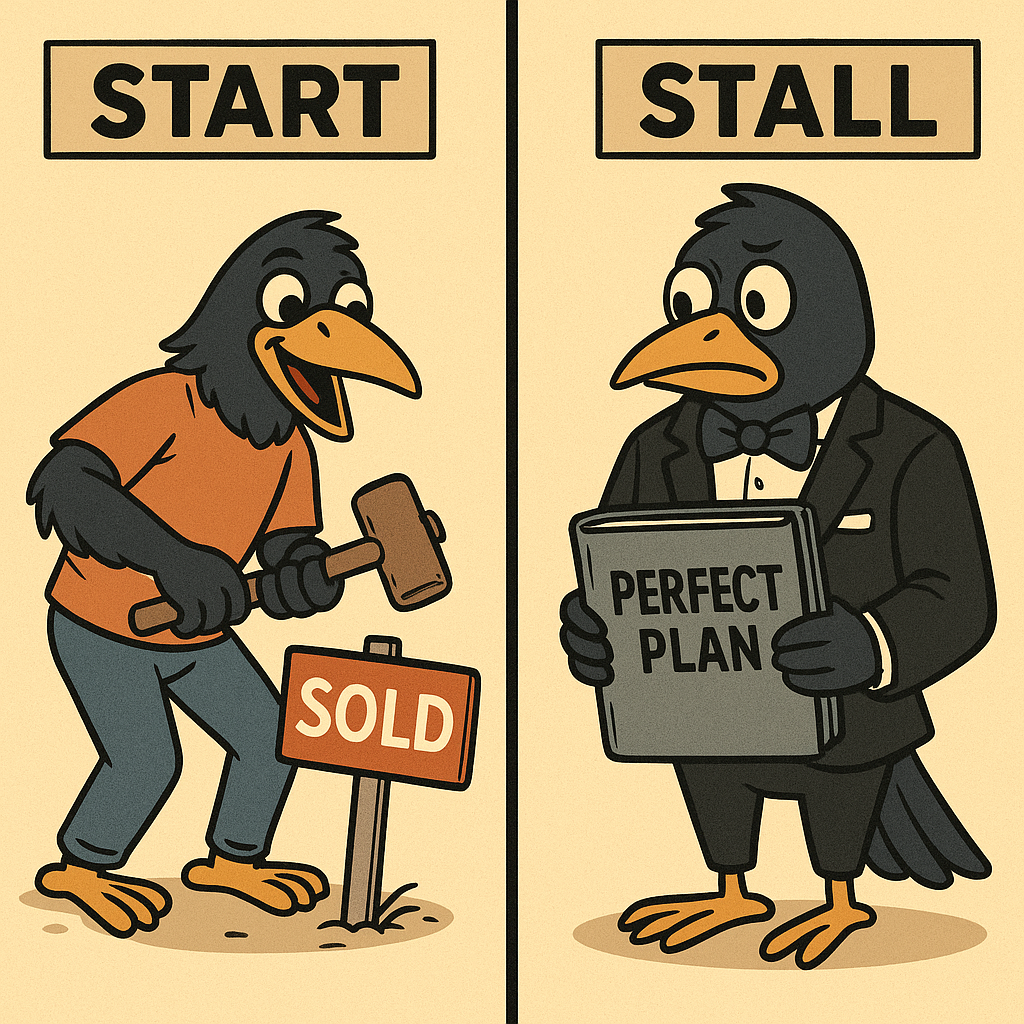
    Here’s the truth: perfectionism and procrastination are the same thing.

    Perfectionism just wears a tuxedo and pretends it’s working hard.

    We tell ourselves we’re “waiting until we figure it out,” but we’re really just putting off action. We make it sound smart. Responsible. Even strategic.

    But deep down, it’s fear in a tailored suit.

    Stop trying to perfect everything. Most of the time, “good enough” is exactly what gets results.

    Take land, for example. Maybe it’s not the right time for you to sell — or buy — today. That’s fine. But here’s the thing: how will you know when the timing is right if you’re not paying attention?

    It doesn’t have to be perfect to start. The first step is knowing where you stand right now.

    Is it ever the wrong time to have a quick conversation and get the facts from someone you trust?


  • The Secret to Success? It’s Boring.

    The Secret to Success? It’s Boring.

    The most boring part? Filling out the deposit slips.

    About a week ago I wrote about goal setting, and how most people get it wrong.

    That’s how Scott Adams puts it in How to Fail at Almost Everything and Still Win Big. The idea shows up in other books too—most personal or business development books overlap a lot. Which is a good thing. See a concept enough times, in different words, and it’s more likely to stick.

    In The Slight Edge, Jeff Olson hits the same idea from a different angle:

    Success comes from doing small, simple things you can control—consistently.

    Instead of setting a big goal and swinging for the fences (and missing), you set the big goal but start small. Keep repeating the simple steps and you get a compound interest effect over time.

    Eat right and exercise today? You won’t notice a difference tomorrow. Skip it? Same thing. But do either one for years, and the difference is obvious.

    Which is why it’s easy to put off. Your condition a year from now won’t be much different if you start tomorrow instead of today. But that “tomorrow” thinking can stretch into a year before you know it.

    In my world, I might have 20+ projects going at once—brokerage, investments, business development. I don’t work on them all daily. But there are a few things I do at least every weekday (and try to do every day):

    • Check the prior day’s sales in MLS and update my maps. One day’s data doesn’t matter much, but years of it gives me an instant, detailed comp set. That’s gold for property analysis.
    • Check for new opportunities. Most MLS listings are priced at or above retail. But sometimes one’s a deal, and you have to move fast. Daily comp research makes spotting them easy.
    • Return every call and message. I’m not glued to my phone, but if you reach out during the day, I’ll get back to you. Quick response makes for a better client experience.

    Missing a day—or even two—wouldn’t end the world. But over time, that’s how you lose your edge.

    For me, the goal isn’t just to stay busy. It’s to make sure I’m doing the little things every day that give my clients the best chance to win. It doesn’t always look like much in the moment, but the results speak for themselves.


  • How to Stop Failing Before Breakfast

    How to Stop Failing Before Breakfast

    Got your goals wrong? You don’t have a chance.

    If you read business development books (or personal development books in general) for long enough, you start to notice they all circle the same handful of ideas. Not identical, but close enough that after a while you see the patterns.

    That’s not a bug. It’s a feature. Most people need to hear something several times before it sticks. And if you hear it in different words from different people, there’s a better chance one of those versions will click.

    One idea that comes up over and over is goal setting. Which is good, because most people are terrible at it. Not because they aim too high—usually the opposite—but because they approach it the wrong way. So they set goals that, at best, make them miserable in the process of chasing them. Which of course makes success even more remote.

    Scott Adams (the Dilbert guy) puts it plainly in his book How to Fail at Almost Everything and Still Win Big:

    Systems > Goals.

    You can control a system. You can’t control results.

    Take weight loss. Most of us could stand to lose a few pounds. But setting a “goal” of losing 20 pounds? Adams says that’s a terrible idea. For one thing, when you step on the scale each morning, you’ll almost always be disappointed. You haven’t hit the number yet. Not a great way to start the day.

    More importantly, you don’t control when—or if—the weight comes off. Hormones, metabolism, random life stuff… all of it matters. And what if you start exercising, lose fat, and gain an equivalent amount of muscle? You’ve actually improved, but the scale hasn’t moved. Now you feel like you’ve failed when you haven’t.

    A better approach is a system. Eat a certain way. Exercise a certain amount. That’s something you can control daily. Check your results periodically, and if they’re not where you want them, adjust the system.

    You’re succeeding when you run the system well, regardless of the short-term outcome. That’s a much better way to live than waking up every day and feeling behind.

    It’s not that you shouldn’t think big. You should. But instead of staring at the big objective and throwing up your hands when it doesn’t fall into place right away, do this: picture the big goal, then work backward to the smaller steps that will get you there. Figure out what you need to do daily to accomplish the first step, then do that. Periodically check your progress. Adjust if needed.

    It’s simple because it is. And it will get you there faster than you think. Without feeling like a failure before you’ve even had your coffee.

    What does this have to do with me? Plenty.

    I don’t chase listings or start the year with a dollar figure in mind. I focus on treating people right, adding to my knowledge base, and looking for opportunities to help people. That way I succeed almost every day—and the results I’ve had are better than anything I could have planned a few years ago.

    When you’re ready for me to do the same for you, I’m here.