Tag: Collin County Land Sales

  • The Part Nobody Sees Is the Part That Matters

    The Part Nobody Sees Is the Part That Matters

    A couple of weeks ago I was reading in Exodus as part of the yearly Bible reading plan at HisWordTogether.com, and I noticed something I hadn’t before.

    Whenever God gave the Israelites very specific, technical instructions, they nailed it.

    Build the tabernacle this way.
    Use these materials.
    These measurements.
    These colors.
    These garments for Aaron.
    This order.
    This process.

    And they did it. Immediately. Precisely. No drama.

    The pattern repeats throughout Exodus. When the instructions are detailed, external, and easy to verify, compliance is almost perfect.

    But when God gives instructions that are internal, harder to measure, and impossible to check off, that’s where things start to break down.

    Worship Me only.
    Trust Me.
    Do not turn to other gods.
    Do not harden your heart.

    Those commands come with no measurements.
    No checklist.
    No visible progress bar.
    No way to prove you are done.

    And before God is even finished speaking, they are melting gold and building a calf.

    It is tempting to read that and think, how could they be so dense?

    But we do the same thing.

    We love rules that are clear, concrete, and external.
    Tell me exactly what to do and how to do it, and I am in.
    Give me something I can complete, track, and point to, and I will work hard at it.

    But tell me to examine my motives.
    To surrender control.
    To trust instead of hedge.
    To obey when it costs something internally.

    That is where resistance shows up.

    Because those things cannot be tallied.
    You cannot fake them for long.
    And you cannot outsource them.

    It is easier to build something impressive for God than it is to quietly submit to Him.
    Easier to perform obedience than to actually live it.

    And the uncomfortable truth is this: we often prefer visible faithfulness over real faithfulness.

    One can be admired.
    The other often cannot be seen at all.

    That was true in Exodus.
    It is true now.
    And it is something worth sitting with.

    Not fixing.
    Not resolving.
    Just noticing.

    Because the parts of faith we struggle with most are usually the parts that matter most.

    PS –I mentioned HisWordTogether.com above. It’s a site I run that helps you read through the Bible in a year, spending about twenty minutes a day or less.

    It’s completely free. There’s no commentary, no spin, and no one telling you what to think. Just the readings, posted weekly every Sunday. You can sign up to have them emailed to you, or just check the site when you want.

    There’s no need to wait until January. Just start where we are and keep going.

    For a long time, I heard people confidently telling others what the Bible “says” about this or that. Until I started reading it myself, I had no real way to know whether they were right. Even when it sounded fishy.

    Turns out, a lot of the time they either do not know what they are talking about, or they are not being honest.

    Is it a crazy idea to want to know what the most famous book of all time actually says?

  • Why Speed Is Overrated (And Control Isn’t)

    Why Speed Is Overrated (And Control Isn’t)

    Everyone says they want things to move quickly.

    Fast offers.
    Fast closings.
    Fast decisions.
    “No drama.”

    Speed feels like progress. It feels decisive. It feels professional.

    And sometimes it is.

    But speed, by itself, is not a virtue. Control is.

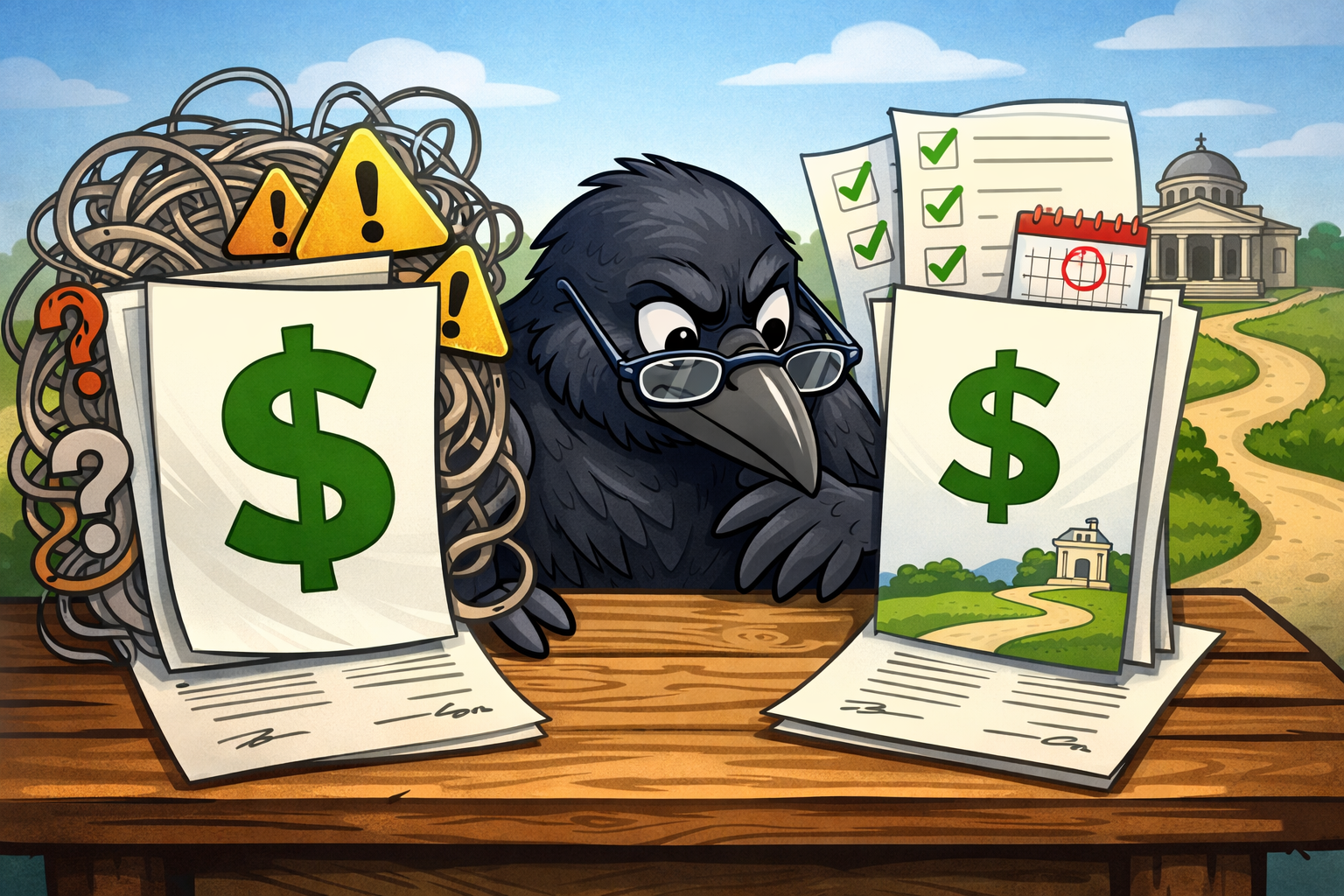
    I see sellers rush sometimes, not because it benefits them, but because they are uncomfortable sitting in uncertainty. Silence feels like failure. Waiting feels risky. So they push.

    “Let’s just get this done.”
    “I don’t want this dragging on.”
    “I don’t want to lose the buyer.”

    That mindset almost always gives away leverage.

    Markets do not reward urgency. They punish it.

    The buyer who senses haste slows down.
    The buyer who sees flexibility presses harder.
    The buyer who believes you need resolution waits for concessions.

    Ironically, the fastest closings I see usually come from sellers who are in control, not in a hurry.

    They are clear on price.
    They are calm about timing.
    They are willing to let silence do its job.

    That confidence compresses timelines naturally. Buyers move faster when they believe the seller does not need them.

    Speed without control is reaction.
    Control creates speed when it matters.

    This is especially true with land and non-residential property, where deals are rarely emotional and almost always strategic. Rushing those transactions rarely improves outcomes. It just transfers value.

    The goal is not to be slow.
    The goal is to be unpressured.

    When you are not rushing, you make better decisions.
    When you are not rushing, you negotiate from strength.
    When you are not rushing, you avoid mistakes that cost real money.

    Good agents do not confuse momentum with haste.
    They manage tempo, not panic.

    There is a difference between moving efficiently and moving nervously. Buyers can tell which one you are doing.

    And so can the market.

    PS – If you own land or acreage and want a clear, no-obligation opinion of value, I offer a free analysis based on real comps and actual market experience.

    No algorithms. No guesswork. No pressure.

    You will know where you stand today and what realistic options actually look like, without being rushed into anything.

  • Why “Full Transparency” Is Often Bad Advice

    Why “Full Transparency” Is Often Bad Advice

    “Full transparency” sounds virtuous.
    It sounds ethical.
    It sounds like something a professional should offer.

    And in the abstract, it feels right.

    But in real negotiations, especially in real estate, it is often terrible advice.

    Not because honesty does not matter.
    It does.

    But because transparency is not the same thing as honesty.

    Honesty means not lying.
    Transparency means volunteering information.

    Those are very different standards.

    A seller can be completely honest without disclosing every thought, pressure point, or internal debate.

    In fact, that restraint is usually what protects their outcome.

    Problems start when agents confuse being helpful with being transparent.

    They start explaining things that do not need explaining.
    They start sharing context that was never requested.
    They start narrating the deal instead of managing it.

    “I just want to be upfront.”
    “I believe in full transparency.”
    “I don’t want there to be any surprises.”

    Those phrases sound good. They feel professional. And they regularly cost clients money.

    The market does not reward openness.
    It rewards leverage.

    Buyers do not pay more because you were candid.
    They pay more when they believe alternatives exist and pressure does not.

    Once motivation is disclosed, it cannot be undisclosed.
    Once flexibility is revealed, it becomes the floor.
    Once urgency is admitted, time stops working for you.

    And no amount of goodwill puts that leverage back.

    Good representation is not about hiding things.
    It is about controlling timing.

    What gets said.
    When it gets said.
    And whether it needed to be said at all.

    Most sellers assume their agent understands this instinctively.
    Many do not.

    They believe being liked is the same as being trusted.
    They believe cooperation creates value.
    They believe transparency speeds things up.

    Sometimes it does.
    Usually it just cheapens the result.

    A professional agent knows the difference between truth and disclosure.
    Between ethics and exposure.
    Between serving the deal and serving the client.

    That difference rarely shows up in marketing.
    But it shows up clearly at the closing table.

    PS – If you own land or acreage and want a clear, no-obligation opinion of value, I offer a free analysis based on real comps and actual market experience.

    No algorithms. No guesswork. No pressure.

    You will know where you stand today and what realistic options actually look like.

    You probably are not even thinking about selling right now. Is it a bad idea to have that clarity before you need it?

  • Why Would a Client Ever Authorize That?

    Why Would a Client Ever Authorize That?

    Yesterday I mentioned that agents sometimes disclose things they should not.

    Pricing flexibility. Motivation. Pressure.

    And I said something important.
    Unless the client explicitly authorizes it, that information should not leave the room.

    That raises a fair question.

    Why would a client ever authorize that?

    Because sometimes, done deliberately, it is a tool.

    Not every transaction.
    Not casually.
    And never without understanding the tradeoffs.

    Here are a couple situations where it can make sense.

    One is misdirection.

    Occasionally a client may authorize me to let the other side believe I am being loose, careless, or even conflicted. Not because I am, but because it may cause the other side to relax and talk more than they should.

    Good negotiators do not fall for that.
    Average ones sometimes do.

    If it works, information flows back the other way. If it does not, no harm is done because nothing critical was actually given away.

    Another situation is closing fatigue.

    Some buyers and sellers simply have to feel like they won. You know the type. They cannot accept a clean proposal. There must be one more concession. One more ask. One last turn of the screw.

    In those cases, I may suggest we float a position slightly beyond where they are actually willing to land, paired with a clear signal.

    If they counter here, we are done.

    They get their win.
    The deal gets signed.
    No real leverage is lost.

    That is not loose talk. That is strategy.

    The common thread in all of this is intent.

    Information is never shared accidentally.
    Nothing is revealed without a reason.
    And the client understands exactly why it is happening.

    That is very different from an agent who talks too much, wants to be liked, or is trying to speed things along because they need a check.

    From the outside, those situations can look the same.
    From the inside, they are not even close.

    This is why agency matters.
    This is why discretion matters.

    And this is why most sellers never realize how much damage can be done by someone who thinks they are being helpful.

    The right agent does not just protect your leverage.
    He knows when, and if, to spend it.

    PS – If you own land or acreage and want a clear, no-obligation opinion of value, I offer a free analysis based on real comps and actual market experience.

    No algorithms. No guesswork. No pressure.

    You will know where you stand and what your realistic options look like.

    You probably are not even thinking about selling right now. Is it a bad idea to have that clarity before you need it?

  • Independent Voter (Yeah, Right)

    Independent Voter (Yeah, Right)

    Every time I hear someone describe themselves as an “independent voter,” my radar goes up.

    Not because it’s impossible to be independent.
    But because real independence doesn’t need a label.

    People don’t announce neutrality unless they think it buys them credibility.

    They think it makes them sound more reasonable.
    More thoughtful.
    Smarter than the room.

    Most of the time, it does the opposite.

    It’s a tell.

    I’m already cautious when reading something in the Dallas Morning News. Not because everything is factually wrong. Much of it is technically accurate.

    But it’s framed.
    Selective.
    Pointed in a direction they won’t admit to.

    Then comes the quote.

    “I’m an independent voter, but…”

    Sure you are.

    If you’re going to lie, at least tell a better one. Say you voted one way and changed your mind. That would actually explain your position and cost you something socially.

    They won’t say that.
    So instead they put on the credibility costume.

    Politics is just the easy example. The real damage shows up in places that cost people money.

    Like real estate.

    A surprising number of agents will tell you they “represent your interests” while quietly doing the opposite.

    Not always out of malice.
    Sometimes it’s sloppiness.
    Sometimes it’s pressure.
    Sometimes they just need something to close, yesterday.

    Agents tell me things they should never say.

    “We’re asking X, but he’d probably take Y.”
    “The seller’s under pressure.”
    “They need this sold.”
    “They’re about to move.”

    Unless the client explicitly authorized that disclosure, leverage just walked out the door.

    And no, I don’t keep that information to myself.

    If I’m working for my client and I hear it, I’m obligated to tell him. Anything else would be negligence.

    Most sellers assume their agent is discreet.
    They assume their leverage is protected.
    They assume their agent actually has their back.

    They’re often wrong.

    Not because the agent is evil.
    But because loose talk, false neutrality, and a desire to be liked get in the way.

    The wrong agent can impair your outcome without you ever realizing it.

    No bad intent required.

    So when someone feels the need to announce how neutral, independent, or “on your side” they are, pay attention.

    Real neutrality doesn’t need to introduce itself.

    PS – If you own land or acreage and want a clear, no-obligation opinion of value, I offer a free analysis based on real comps and actual market experience.

    No algorithms. No guesswork. No pressure.

    You’ll walk away knowing where you stand today and what your realistic options look like.

    You probably aren’t even looking to sell right now. Is it a bad idea to have clear, current information before you’re under any pressure?

  • When Did “Professional” Start Meaning “Whenever I Get Around To It”?

    When Did “Professional” Start Meaning “Whenever I Get Around To It”?

    You used to be able to count on certain things.

    If someone said they’d call, they called.
    If they had a deadline, they met it.
    If they were running late, they let you know.

    Now? You’re lucky if you get a reply at all.

    I don’t know exactly when reliability became optional. But it’s a weird thing to watch erode — especially in business, where it used to be the bare minimum.

    These days people want to be paid like professionals, spoken to like experts, and praised like geniuses. But a lot of them work like interns on their third strike.

    They’re late. They ghost. They vanish without warning. And then when you call them on it, they act like you’re the problem — for expecting something they promised to deliver.

    Being competent used to be table stakes. Now it’s a differentiator.

    I’ve said before that being on time is a kind of superpower. This is the broader version of that. Just do what you say you’re going to do, and you’re in the top 10% automatically. Maybe higher.

    Which is both sad and useful.

    Sad that it’s where we are.

    Useful if you’re trying to stand out.

    PS – If you own land or a lot and want a valuation from someone who still believes in showing up, following through, and telling the truth — I do free, no-pressure property analyses for non-residential owners.

    No fluff. Just comps, context, and a real number based on real knowledge.

    PPS- if this was useful, feel free to forward it to someone who might need it.

  • Waiting Isn’t Wrong. But Wishing Won’t Work.

    Waiting Isn’t Wrong. But Wishing Won’t Work.

    If you’ve got land that’s ag-exempt, not costing much to hold, and you’re not living under any kind of pressure it’s fine to wait.

    No rush. No urgency.
    You’re not doing anything wrong.

    But just because you don’t have to sell… doesn’t mean the market owes you more than it’s offering.

    I talk to a lot of landowners who are in that same position. The taxes are low. The property’s been in the family a while. It’s not hurting anything to hang on. So they’re not in a hurry.

    Makes sense.

    Where things start to drift off course is when they decide, since they can wait, they’ll only sell if the number is one they make up.

    Not one tied to real comps.
    Not one based on what similar tracts are actually closing for.
    Just a number that sounds good. Or that someone once mentioned. Or that they “saw something sell for” ten miles away.

    That’s not a strategy. That’s a stall.

    And stalls usually end in one of two ways:

    • Nothing ever happens. Years go by. Conditions change. The opportunity they could’ve taken passes.
    • Or a real offer comes in, they say no, and six months later they regret it because it turns out the offer was more than fair.

    If you don’t need to sell, you’re in a position of strength. That’s good.

    But strength doesn’t mean ignoring reality.

    It means understanding where things actually stand, so when the right moment comes, you’re ready.

    PS – If you want a clear, no-nonsense opinion of what your land is worth today, I offer a free valuation on any non-residential tract. It includes real comps, utility and access info, and market-specific insight based on actual experience — not just a price-per-foot guess.

    You don’t have to be ready to sell.
    But knowing where you stand gives you options when it counts.

  • The Only “Market Update” That Matters

    The Only “Market Update” That Matters

    Everyone loves to talk about the market.
    What it’s doing.
    Where it’s going.
    Whether we’re at the top or bottom or just stuck.

    The problem is, most of that talk isn’t useful.

    I don’t say that as someone who ignores the data.
    I look at comps daily. I track sales activity. I live in this stuff.

    But if you’re an actual property owner, here’s the real market update:

    If your property hasn’t sold, the market is telling you something.
    And if someone else’s has, that’s telling you something too.

    Everything else is background noise.

    If your lot’s been sitting for six months with no real interest, I don’t care what direction the arrow is pointing on a graph, your market isn’t “hot.”

    And if three similar tracts sold while yours didn’t, you’ve got a pricing or positioning issue. Not a timing one.

    That’s the only update that matters.


    PS – If you’ve got land or acreage and want to know what it’s actually worth in today’s market, not just a guess or a Zillow estimate, I offer a free, no-obligation valuation.

    It’s based on real comps, local market knowledge, and actual experience in non-residential deals.
    Land is different than residential. Not rocket science, but most residential agents don’t know what they don’t know.

    The report is concise and practical. You’ll walk away with a clear picture of where you stand and what your next move could look like.

    Even if you’re not ready to sell yet, the time to start preparing is before you’re under any pressure should something change.

    Is it a bad idea to know where you stand?

    PPS – You can request yours here:

    And if this was useful, feel free to forward it to someone who might need it.

  • Most People Don’t Get Stopped. They Stop Themselves.

    Most People Don’t Get Stopped. They Stop Themselves.

    A lot of people spend time wondering if the system’s rigged.
    Whether the economy’s working against them.
    Whether the timing is right.
    Whether someone else is getting all the breaks.

    And maybe sometimes they are.

    But in most cases, that’s not what’s holding people back.

    What holds them back is indecision.
    Overthinking.
    Fear of doing the wrong thing, so they do nothing.
    Waiting for absolute certainty… in a world that never gives it.

    I’ve talked to hundreds of property owners over the years.

    A surprising number reach out, start the conversation, and then vanish — not because the deal was wrong, but because they started spiraling through every possible “what if.”

    What if I regret selling?
    What if I could get more later?
    What if I need this land for something someday?
    What if the market changes?
    What if someone in the family wants it?

    The truth is: they wanted to move on.
    They reached out for a reason.
    They were already halfway through the decision.
    Then they stopped.
    Not because the world said no.
    But because they did.

    And this part is important:

    Until you stop getting in your own way, it doesn’t really matter what the market is doing.

    You won’t move forward until you decide to.

    I’m not in the business of pushing people to sell.

    But I am in the business of helping people move when they’re ready.

    And if you’re not — or you’ve got twenty “what ifs” still hanging out — maybe take a second look in the mirror.

    Because more often than not, that’s the person you need to deal with first.

    PS – You’re probably not ready to buy or sell real estate today. But I’ve found the best time to start preparing for any big decision is well before you’re actually ready to do anything.

    I offer a free, no-obligation opinion of value on any non-residential property.

    It includes real comps, utility and access info, market trends, and any nearby sales activity that matters.

    It’s a concise report that helps you understand where you stand today — and gives you some clarity on what to expect when the time comes.

    By looking at the info now and discussing it with someone who actually understands your market, you make calmer decisions, with fewer regrets.

    Is it a crazy idea to want less anxiety in your life?

  • But What Are You Going To Do For An Encore?

    But What Are You Going To Do For An Encore?

    A lot of people in business and in life declare victory too soon.

    I saw a commercial recently where a guy was in a job interview. They told him they couldn’t hire him right now, but they’d keep him in mind for later.

    He walked out saying, “Keep me in mind,” and immediately went out to celebrate.

    I don’t even remember what the commercial was for — which probably tells you everything about how ineffective most advertising is these days.

    But the point stuck.

    People get a job, or a listing, or a small win, and they act like that’s the finish line. They relax. They stop pushing. They assume the rest will just work itself out. That momentum will carry them.

    In real estate, that shows up when an agent gets a listing, drops it into the MLS as a “list and hope,” and mentally checks the box. The celebration happens up front. Then it’s mostly waiting.

    That’s not how I look at it — and not how I try to operate.

    For me, victory isn’t getting the listing. Victory is when someone is so satisfied with how I handled their situation that they wouldn’t consider working with anyone else. They come back when they need help again. They tell people they know to call me.

    You don’t get there by stopping early.

    I don’t stop at the listing. I’ve built marketing tools and processes specifically to keep things moving. Pricing is handled aggressively and honestly, which sometimes means it takes time. But the work doesn’t stop just because the sign is up.

    We’ve all heard the saying that success is a journey, not a destination. I’m not big on clichés, but sometimes they’re true.

    The goal isn’t something you reach once and then relax. You keep pushing. That’s the mindset I try to bring to everything.

    It’s the only way to get anywhere worth going.

    To get these in your email, sign up here:

    Register to Receive Posts Via Email!

    By submitting, I understand I will receive marketing emails and blog posts from Mike Browning Realty and/or associated companies. Unsubscribe at any time.

    PS – If this was useful, please pass it along to someone who might need it.