Tag: Collin County Land Sales

  • You May “Know,” But Do You Know?

    You May “Know,” But Do You Know?

    Understanding something in theory is useful.

    But theory isn’t the same as knowing what to do.

    Understanding what’s happening in the market around your land is theoretical knowledge. Sales. Listings. Prices. Buyer activity. Development pressure. All of that is information.

    Knowing what it means, and what to do with it, is applied skill.

    And like most applied skills, it’s better to develop it before you actually need it.

    Or find a trusted advisor who will be on your side when that time comes.

    Because life changes quickly. What you expect the next six months to look like today might look very different tomorrow. Health changes. Jobs change. Kids move. Opportunities appear. Problems appear.

    We all know this. We just prefer not to think about it too much because it reminds us how little control we actually have.

    Most landowners aren’t planning to sell. That’s normal. In fact that’s the default.

    Sometimes people even call me after getting one of my letters just to tell me they would never sell their land. Thank you very much. Like I asked them to sell a kidney.

    And then six months later the property is on the market.

    Sometimes listed by me.

    You don’t have to decide anything today. You may never have to make that decision. But if the day ever comes, it helps to already understand the terrain.

    Is there any downside to learning?


    P.S.- For landowners who would like to get the most current info on things affecting their land and its value, I’ve created the MBR Land Reality Check.

    It’s a professional Broker Opinion of Value based on current listings, recent sales, and what buyers are actually doing in your area. And more.

    It’s free today (tho it may not always be). And never any pressure to list.


    P.P.S. If you don’t need the Reality Check today but enjoyed reading this, you can get these in your inbox whenever I publish them (usually daily).

  • You Can Want It to Happen. You Can’t Make It Happen.

    You Can Want It to Happen. You Can’t Make It Happen.

    You can want a deal to close.

    You can need it to close.

    You can structure it cleanly, communicate clearly, respond quickly, keep everybody calm, solve problems before they become problems.

    And it still may not happen.

    That’s the part people don’t like.

    All you really control is your side of the table.

    You can approach it honestly. You can do the homework. You can try to structure it in a way that works for everyone involved.

    Sometimes that’s enough, sometimes it isn’t.

    Sometimes the other side just won’t move.

    Sometimes they want to — but they can’t.

    Financing changes. A partner gets nervous. A spouse has doubts. A lender tightens up. Numbers stop penciling.

    Sometimes it just dies.

    We tend to equate results with success.

    If it closed, you were right.
    If it didn’t, you failed.

    That’s too simple.

    You can handle something poorly and still get lucky.

    You can handle it well and still watch it fall apart.

    Years ago, Earl Nightingale defined success as the progressive realization of a worthy ideal.

    Not the trophy.

    The pursuit.

    In brokerage, if you conduct yourself with discipline, competence, and integrity, you’ve done your job.

    The result is influenced by too many variables you don’t control.

    That doesn’t make losing easier.

    But it does keep you sane.

    If you tie your identity to every closing, this business will grind on you.

    Focus on the process.

    Do your part well.

    Let the rest land where it lands.

    Over time, the math works.


    P.S. If you own land, you might not be ready to sell today.
    But clarity should come before urgency.

    That’s what the MBR Land Reality Check is for. A grounded look at where you actually stand, based on real sales and real demand.

    No cost. No obligation. Just clarity before decisions.


    P.P.S. Not ready for that?

    You can still enter the circle.

    I write about how land really trades, how deals come together, and sometimes how they don’t. If you want those notes in your inbox,

  • Nothing Stays Little

    Nothing Stays Little

    I was reading an old Dan Kennedy fax the other day about what he called “the negative power of acceptance.”

    Most problems don’t start big. They start small enough that ignoring them seems harmless.

    His basic point was simple. Nothing stays little.

    Whatever you tolerate, overlook, or ignore tends to grow. Not all at once, and usually slowly enough that you don’t notice until it’s already a problem.

    That’s true in government, business, relationships, and just about everything else. Small allowances compound.

    I’ve seen the same thing in my own life.

    Years ago I quit smoking. Not because anyone forced me to, and not because the government told me to.

    I quit because I realized something that should have been obvious. If I was standing there smoking, my kids were never going to believe it was that bad.

    You can tell someone something all day long. But what people actually believe is what they see. If Dad’s doing it, it must not be that big a deal.

    So I stopped.

    Not to preach about it. I didn’t go around trying to force anyone else to quit. I’m not the government. But I knew leaving it alone meant the example would keep doing its work.

    The same principle shows up in business all the time.

    A little sloppiness in operations becomes real sloppiness. Occasional dishonesty becomes habitual dishonesty. A little neglect in marketing turns into no marketing.

    Real estate works the same way.

    Owners who pay attention tend to benefit from changes early. Owners who don’t usually find out about those changes later, sometimes after the opportunity has already passed.

    Development corridors change. Infrastructure moves. Buyers show up where nobody expected them. Sometimes the opposite happens and momentum fades.

    Things are always moving toward one end or the other whether we notice it or not.

    That’s why it’s usually smart to stay on top of what you have and what it’s worth. Not because you’re planning to sell tomorrow, but because the worst time to find out what something is worth is when you suddenly need to know.

    Much better to understand what you have and what it’s worth before you need the answer.

    Because when things start moving, they rarely give you much warning.


    P.S. You may not be ready to sell today, but does it help to know what your realistic bottom line looks like before you negotiate?

    Request a MBR Land Reality Check below.

    No cost. No obligation. Just clarity before decisions.


    P.P.S. Not ready for an audit yet?

    If you’d rather stay in the loop and see how land is actually trading in North Texas, you can get these notes in your inbox here:

  • Before You Buy Land, Know How You’ll Exit

    Before You Buy Land, Know How You’ll Exit

    You make your money when you buy, not when you sell.

    Most investors nod at that line.

    Fewer think through the second half of it.

    If you’re buying land as an investment, you should have a clear idea of how you could exit.

    Not because you need to commit to one path.

    But because you need to understand your options.

    If you’re buying to build immediately, that’s simple. The exit is the finished product.

    But when you’re buying raw land to hold, development may be years away. Markets shift. Infrastructure moves. Capital tightens or loosens.

    You don’t want to discover later that your only plan was wishful thinking.

    Before you close, make a short list of realistic exits:

    • Sell the entire tract to the next investor
    • Divide it and sell in smaller pieces if the layout allows
    • Solve zoning and development hurdles, then sell it “teed up”
    • Develop it yourself

    Each of those paths requires a different level of time, money, and involvement.

    The mistake is locking yourself into one of them too early.

    I once knew a commercial site owner in a small town who was convinced his property was a future hotel site.

    And he might not have been wrong.

    But he was wrong about timing.

    He spent years waiting for the perfect hotel flag. Passed up solid offers from other users. Dismissed anything that didn’t fit his vision.

    Twenty years later, there are still no hotels in that town.

    Being early and being wrong often look the same.

    Land rewards patience.

    But it punishes rigidity.

    The way I typically advise investors is simple:

    If the deal works at the lowest intensity — buy it, hold it, and sell it later at reasonable appreciation — it will usually work on the higher-effort exits as well.

    That gives you flexibility.

    You buy discipline and hold optionality.

    But you have to think about it beforehand.

    Because once you own it, emotion starts creeping in.

    And emotion is rarely part of a good exit strategy.


    P.S. If you own land, you might not be ready to sell today.
    But clarity should come before urgency.

    That’s what the MBR Land Reality Check provides — a market-grounded opinion of value based on real sales, real demand, and current positioning.

    No cost. No obligation. Just clarity before decisions.


    P.P.S. Not ready for a formal review?

    You can still enter the circle.

    I write regularly about land positioning, negotiation, growth corridors, and investment mechanics. If you’d like those notes in your inbox,

  • Gambling When You Don’t Realize It

    Gambling When You Don’t Realize It

    Everyone knows investing involves risk.

    What most people don’t realize is when they’re gambling.

    Most landowners I talk to have received unsolicited offers in the mail.

    A lot of them are laughable. Half of what the property is worth. Easy to ignore.

    But not all of them.

    Sometimes the number is decent. Not full retail, but not absurd either.

    If a property would reasonably sell for $200,000 and net about $185,000 after expenses, an unsolicited net of $170,000 to $175,000 gets your attention.

    So they bring it to me.

    The first questions I ask are simple:

    How long to close?
    How much earnest money?

    Almost every time it’s something like a six-month close and $500 down.

    I tell them I could be wrong, but the odds of that buyer closing with their own money are close to zero.

    They are contracting your property and spending six months trying to flip the contract to someone else.

    If they succeed, maybe they make $10,000 to $15,000.

    If they fail, they lose $500.

    If they hit even one out of three, that’s a solid business model.

    They are gambling.

    Which is fine, as long as they understand the math and believe they have an edge.

    Now look at it from the other side.

    If you own a custom home lot you’ve decided not to build on, you probably tell yourself you’re holding it as an investment.

    And maybe you are.

    But you’re gambling too — and you may not realize it.

    Not in the abstract “everything has risk” sense.

    I mean you’re writing checks every year just to stay in the game.

    If property taxes are $5,000, HOA dues $2,000, and mowing another $500, that’s $7,500 out of pocket every year.

    The lot has to appreciate at least $7,500 just to break even.

    Some years it does.

    Some years it doesn’t.

    Markets don’t move in straight lines.

    And unlike a stock, you don’t see the price update daily.

    The bills, however, show up right on time.

    Now compare that to rural land with an ag exemption.

    Minimal taxes.
    No HOA.
    A farmer keeping it maintained.

    Your carrying cost might be a few hundred dollars instead of several thousand.

    That property can appreciate more slowly and still produce a better return because you’re not constantly feeding it cash.

    I’m not saying you have to sell.

    But you should at least know the math.

    Because whether you call it investing or not, you’re placing a bet.

    The only question is whether you understand the odds.


    P.S. You may not have to sell. But it would be wise to know exactly where you stand.

    That’s what you get with a MBR Land Reality Check.

    No cost. No obligation. Just clarity before decisions.


    P.P.S. If you’re not ready to even see the value of your property but like reading these you can get them in your inbox (daily) here:

  • In the Path of Growth

    In the Path of Growth

    Most people say they want to be “in the path of growth.”

    Very few actually buy there.

    Because when it’s obvious, it feels expensive.
    And when it’s cheap, it doesn’t look obvious yet.

    This one is obvious.

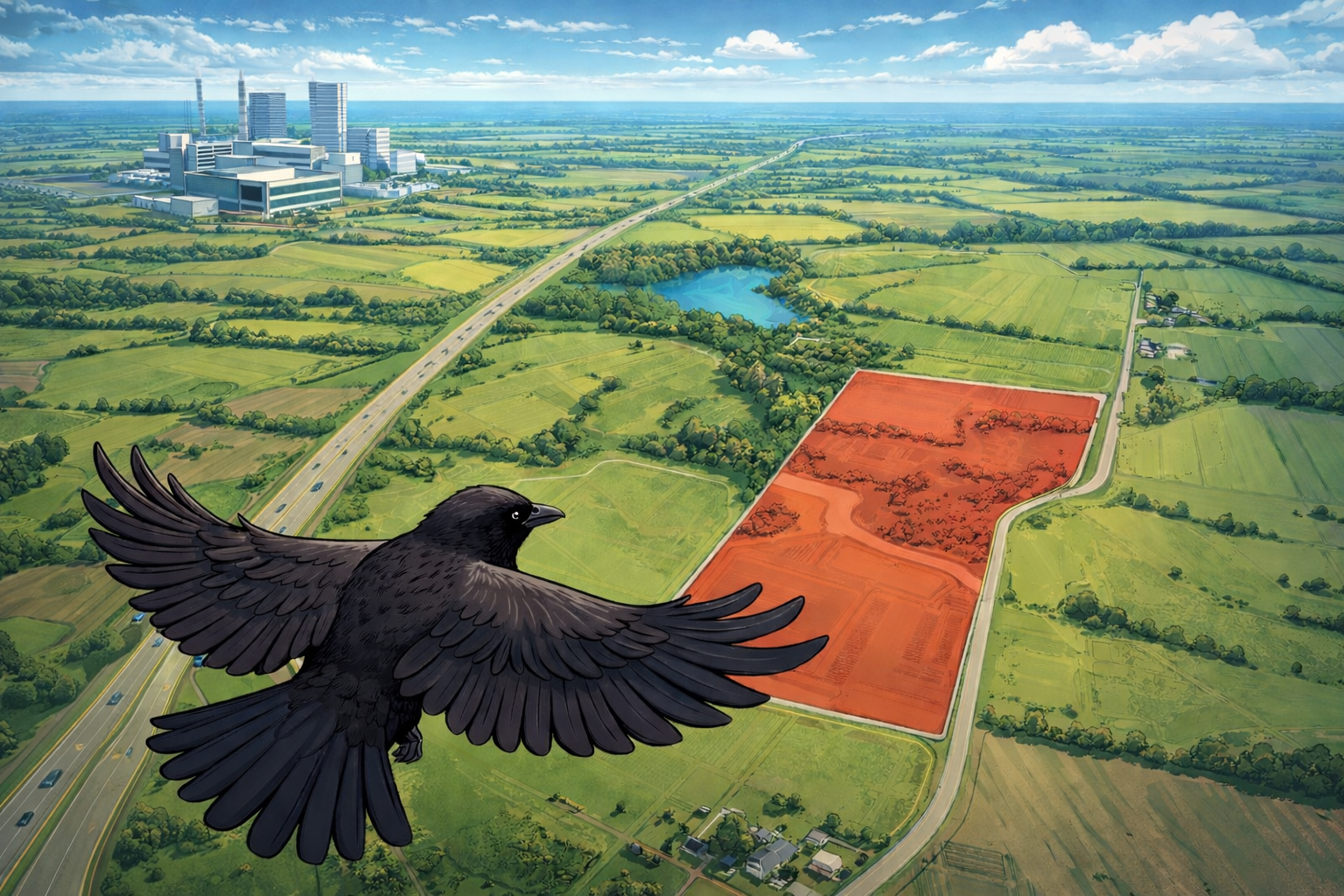
    57.14 acres just east of Howe, near the new Texas Instruments and Globitech plants. This isn’t theoretical growth or a line drawn on a future land plan. The momentum in this corridor is already happening.

    The property is outside city limits and ETJ, currently ag exempt, with approximately 3,236 feet of road frontage on two sides. From a development standpoint, that matters. It makes subdivision practical instead of forced.

    This tract sets up well for half-acre or one-acre lot development, and we have conceptual development layouts available for review. It also works for rural acreage tracts or as a long-term hold in an area that continues to move north.

    Tom Bean ISD. $50K per acre.

    Land of this size and configuration in a growth corridor does not become easier to buy over time. It gets developed, repriced, or absorbed by someone who recognized what was in front of them.

    If you’d like the brochure or want to review the development concepts, enter your information below and it will be sent immediately. Or call or email me directly.

    For my licensed colleagues:

    Get the Info Here!

    By submitting, I understand I will receive marketing emails and blog posts from Mike Browning Realty and/or associated companies. Unsubscribe at any time.

  • It’s Not Too High For Everyone

    It’s Not Too High For Everyone

    I don’t know if it’s because today is primary election day where I live, but for some reason I thought of the “Rent Is Too Damn High” guy from New York.

    I don’t remember his name.

    I don’t even remember what office he was running for. Mayor, I think.

    But I remember the slogan.

    Give him credit for one thing. You don’t remember most politicians’ campaign lines. That one stuck.

    It had the same problem those Progressive “Don’t turn into your parents” ads had. I loved the ads but for the longest time I couldn’t remember what they were selling.

    Rent was too high. That’s all I knew.

    And here we are, years later, and politicians are still running on the same thing. Different words, same pitch.

    Groceries are too high.
    Gas is too high.
    Housing is too high.
    Somebody isn’t paying their “fair share.”

    That message never goes out of style because it feels true.

    Costs do go up.

    But here’s the uncomfortable part.

    Prices are mostly outside your control. And politicians.

    Your income isn’t.

    You can spend a lifetime voting for someone who promises to make everything cheaper.

    Or you can spend that same lifetime figuring out how to make yourself more valuable so you can make more money.

    One of those gives you control.

    The other gives you a yard sign.

    Even in real estate I see this constantly.

    People tell me land prices are crazy.

    Sometimes they are.

    But I’ve watched plenty of landowners quietly get wealthier while prices were “crazy” because they positioned themselves correctly, reduced taxes legally, structured deals well, and focused on making smart decisions instead of arguing with the market.

    You don’t lower the tide by yelling at the ocean.

    You either build a better boat or move uphill.

    I won’t tell you who to vote for.

    But don’t confuse politics with a personal income strategy.

    If rent is too high, the long-term answer isn’t hoping someone else fixes it.

    It’s becoming the kind of person for whom it isn’t too high anymore.


    PS- For people who want to make smart decisions involving their land, I offer the MBR Land Reality Check for any non residential property.

    No cost. No obligation. Just clarity that benefits you no matter what you decide.


    PPS- Not ready for a valuation yet but enjoy reading stuff like this? Enter the inner circle and get them in your inbox daily

    .

  • Brokerage Isn’t About Brokerage

    Brokerage Isn’t About Brokerage

    Dan Kennedy makes a point that most people in business miss.

    Success in a given business usually has less to do with the core craft than people think.

    Restaurants don’t fail because the food isn’t Michelin-star quality.

    They fail because the numbers don’t work.

    The food has to be good enough. After that, location, systems, consistency, pricing, and marketing determine who survives.

    You can see the same thing in music.

    The most technically gifted musicians rarely sell the most records. Read the comment section under any article about KISS or Mötley Crüe. Plenty of people will explain why they weren’t the “best” players.

    Doesn’t matter.

    They built machines around the music. Branding. Touring. Merchandising. Positioning. Distribution. They understood the business side.

    The craft mattered.

    It just wasn’t the deciding factor.

    Brokerage is the same way.

    There are plenty of agents who can fill in a contract correctly. Plenty who understand the forms. Plenty who can unlock a door and stick a sign in the yard.

    That’s table stakes.

    The difference shows up elsewhere.

    Positioning.
    Timing.
    Leverage.
    Awareness.
    Calm under pressure.
    Pattern recognition.
    And most importantly, trust that the client actually feels — not trust that gets talked about.

    Land especially does not move like houses do.

    It requires vision.
    Patience.
    The ability to recognize unusual activity.
    The discipline not to panic when something doesn’t sell immediately.

    The agent who understands how assemblages work, who watches adjacent sales daily, who knows when silence is leverage and when to press — that agent produces different outcomes.

    From the outside, brokerage can look simple.

    A sign.
    A listing.
    A closing.
    A check.

    From the inside, the real work is less visible.

    It’s in the judgment.
    The restraint.
    The positioning.
    The pattern recognition.

    The contract is the easy part.

    The hard part is knowing what to do before the contract ever gets written.


    P.S. You may not be ready to sell today, but does it hurt to know where you stand?

    No cost. No obligation. Just clarity before decisions.


    That’s fine.

    If you want to see how I think about land and positioning before ever making a move, you can enter the inner circle here:

  • What People Say They Want (And What They Actually Buy)

    What People Say They Want (And What They Actually Buy)

    I talk on here a lot about the gap between what people say they want and what they actually buy.

    If you’re in business, you better pay attention to the second one.

    Years ago, I had a client start a homebuilding company focused on “active adult” buyers.

    He did everything right.

    Spent two years interviewing prospects. Asking what they liked. What they hated. What was missing in the market.

    The answers were clear.

    Open layouts.
    Smaller footprints.
    Different finish packages.
    More practical storage.

    So he built exactly what they asked for.

    And waited.

    Turns out what people describe in a quiet interview and what they emotionally respond to when it’s time to write a check are not the same thing.

    The company failed.

    I’ve seen the same thing with custom homes.

    Buyers walk in with a vision. A look. A stack of inspiration photos.

    The builder already knows half of it won’t function the way they imagine. Or will cost far more than they think. Or will look very different once it’s actually built.

    People think they want something in the abstract.

    But they don’t want it in the concrete.

    One of the more successful builders I know builds 100% spec.

    No presales.
    No option sheets.
    No custom changes.

    Risky? Yes.

    But it removes a massive problem.

    The buyer walks into something real.

    They either love it or they don’t.

    And when they love it, they forget about the list of “must-haves” they swore they needed.

    Now zoom out.

    We say we want authenticity.

    We say we value substance.

    We say we want “real.”

    Then we spend hours consuming curated lives, filtered success, and carefully edited highlight reels.

    The market doesn’t reward what people claim to value.

    It rewards what they actually respond to.

    That’s true in homebuilding.

    It’s true in land.

    And it’s true in negotiations.

    Landowners say they want the highest number.

    Buyers say they want discipline.

    Both say they want fairness.

    Then a real contract hits the table.

    The seller who swore price was everything suddenly values certainty.

    The buyer who claimed to be rigid stretches when the property feels rare.

    Behavior reveals priorities.

    Words are cheap.

    That’s why I don’t build strategy around what sounds good in theory.

    I build it around what actually closes.

    Closed sales matter more than listing prices.

    Executed contracts matter more than opinions.

    And real movement matters more than what someone says over coffee.

    If you want to understand a market, watch what people do.

    Not what they post.


    P.S. You may not be ready to sell today, but does it hurt to know where you stand?

    No cost. No obligation. Just clarity before decisions.

  • Price Matters But It’s Not the Only Concern

    Price Matters But It’s Not the Only Concern

    Most landowners start in the same place when they think about selling:

    Price.

    And yes, price matters.

    But price always comes attached to terms, timelines, contingencies, and execution.

    That’s the part that doesn’t get much attention until something shifts.

    I grew up in the land business. My father was a broker and syndicator. I learned early how deals are structured, how risk gets priced, and how fortunes are made when someone misjudges leverage.

    I also learned this.

    The number on the first page of a contract doesn’t mean much if the deal never makes it to closing.

    Over the years, I’ve been on every side of the table. Syndicating deals. Working with investor groups. Brokering between experienced developers. Negotiating options. Watching retrades surface late in the process.

    You see patterns after a while.

    Buyers price risk differently than sellers do.

    An aggressive offer with a long diligence period and broad contingencies is not the same thing as a slightly lower offer from a buyer who has a clear path to close.

    I’ve seen the strongest number on paper turn out to be the weakest deal in reality.

    Some sellers have the time and patience to hold out and squeeze every dollar. Others care more about certainty and getting their capital deployed elsewhere.

    Neither approach is wrong.

    But the tradeoffs need to be understood.

    Landowners rarely regret choosing the wrong number.

    They regret not fully understanding what came with it.

    Price is obvious.

    Risk usually isn’t.

    And once a contract is signed, those tradeoffs are no longer theoretical.

    My job isn’t to promise outcomes I can’t control.

    It’s to make the structure visible before the decision becomes permanent.

    If you’re evaluating offers, slow down long enough to understand what each one is really attached to.

    Then decide.


    PS — If you own land or acreage and want a clear, no-obligation property analysis based on real comps and actual market behavior, I offer one at no cost.

    No algorithms.
    No guesswork.
    No pressure.

    You’ll know where you stand and what realistic options actually look like, without being rushed into anything.