It means something, especially when they don’t have to (or necessarily need to).
I got a testimonial recently from one of my longest-running clients. Probably the most consistent relationship I’ve had.
Jack L. is the Executive Vice President of Acquisitions and Development for a national, publicly traded homebuilder. We’ve worked together on land and lot deals for over 20 years.
Here’s what he said:
“I’ve worked with Mike for over 20 years on land and lot deals. He’s a stand-up, trustworthy guy who is very knowledgeable about his market. He has strong relationships with landowners and a deep network in land development.
He’s always willing to help with anything we need during due diligence, and he does a great job working with sellers, building relationships, and helping them understand what to expect throughout the process.”
— Jack L.
I went back and actually added it up after he mentioned the 20 years.
A couple dozen deals.
Over $50 million in total transaction volume.
We haven’t done anything together in the last couple of years. The market shifted, and they opened a regional office in Dallas, so they handle more in-house now. We still stay in touch, but they don’t need outside brokers the same way they used to.
Groups like that aren’t tied to any one broker. They see a lot of deals, and they’re more than capable of finding opportunities on their own.
The fact that we continued to work together over that period of time is what matters.
What stood out to me in that testimonial wasn’t the volume or even the length of the relationship.
It was this part.
Helping sellers understand what to expect.
That’s the part most people underestimate.
When a developer is the buyer, they can usually pay the most. They’re the ones who can turn the dirt into something else. But those deals come with a lot behind them.
Underwriting.
Market testing.
Internal approvals.
City approvals.
The city alone can stretch things out. And it tends to get slower, not faster.
What looks simple from the outside usually isn’t.
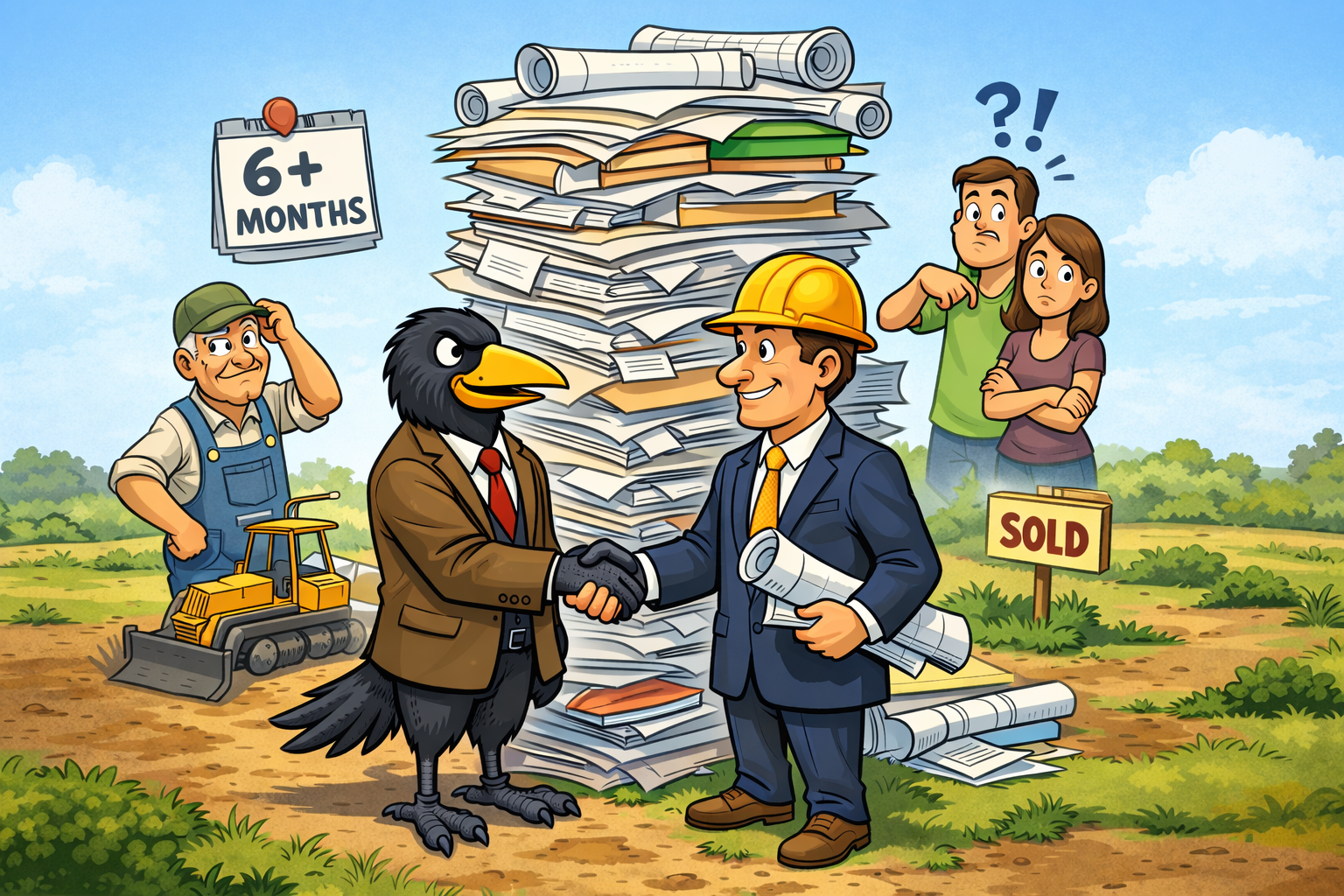
Someone who doesn’t do this every day might assume a deal like that should close in a couple of weeks. Maybe 30 days.
In reality, you’re often 45 days in just getting a survey and environmental work done. After that, you’re waiting on approvals, and those are not on your timeline. Four to six months is pretty normal if everything goes smoothly. Longer if it doesn’t.
From the seller’s side, that can feel off.
You know your property. You’re ready to sell it. Then you’re dealing with a process that feels slow and overly complicated, and it’s easy to start wondering what the buyer is really doing.
Most of the time, they’re not being difficult.
They’re trying to make sure the deal actually works before they commit to it.
If that part isn’t explained up front, it can feel like the whole thing is getting dragged out for no reason.
That’s where a lot of deals start to go sideways.
And most of the time, it has nothing to do with price.
It comes down to expectations.
PS – Knowing what to expect is step one in making a smart decision.
You may not be thinking about selling your land today, and you don’t have to make any decisions until you’re ready.
Is it a bad idea to give yourself permission to just take a look?
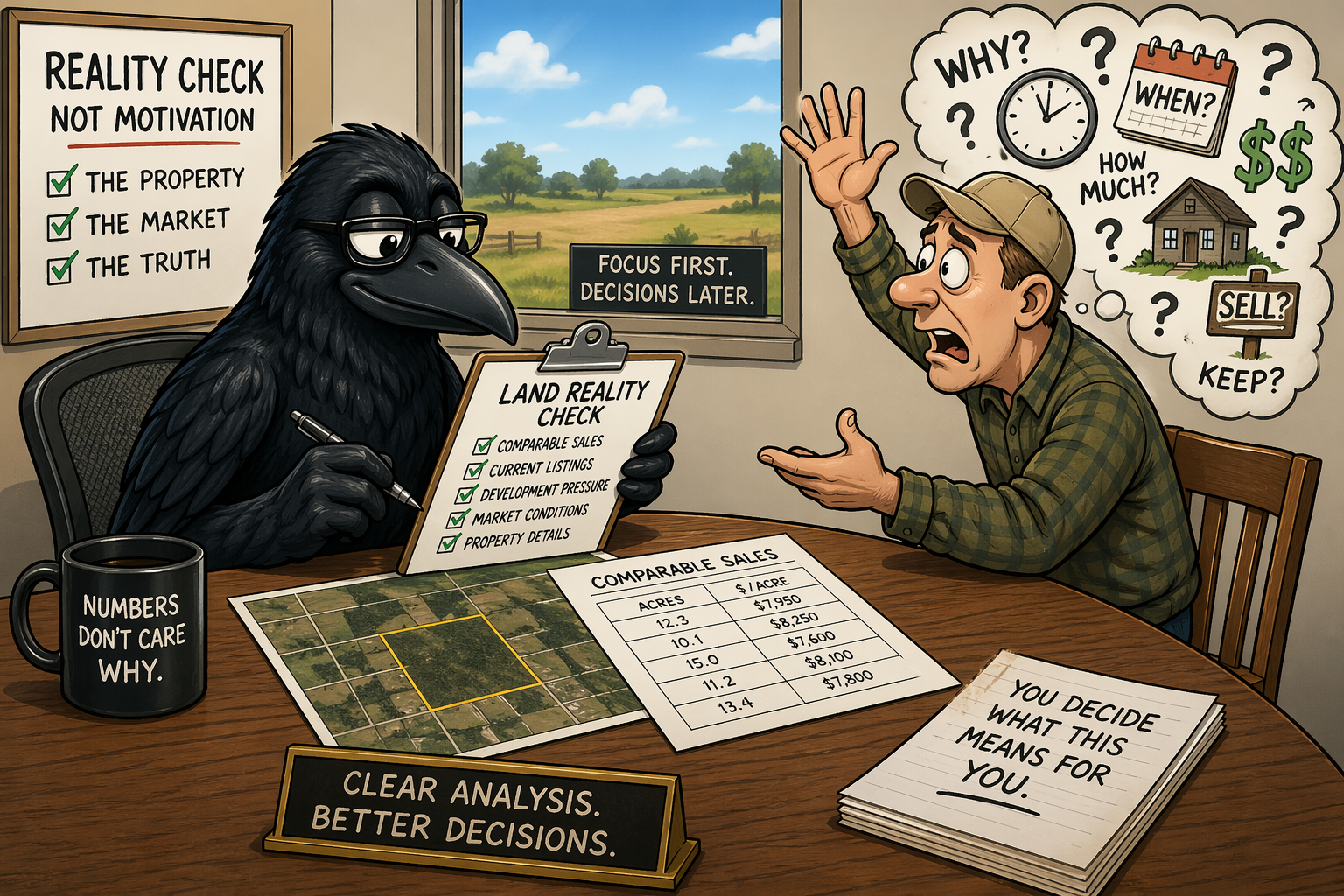
That’s where the MBR Land Reality Check comes in.
It’s an in-depth look at recent nearby sales, market trends, development activity, and the types of buyers who might be interested in your property right now.
Once you have it, you still don’t have to make any decisions about selling. But you’ll have what you need if things change.
Allow yourself to take a look.
Get the MBR Land Reality Check here.
PPS – If you’re not ready for the Reality Check but like this kind of thinking, you can sign up below to get these in your inbox.