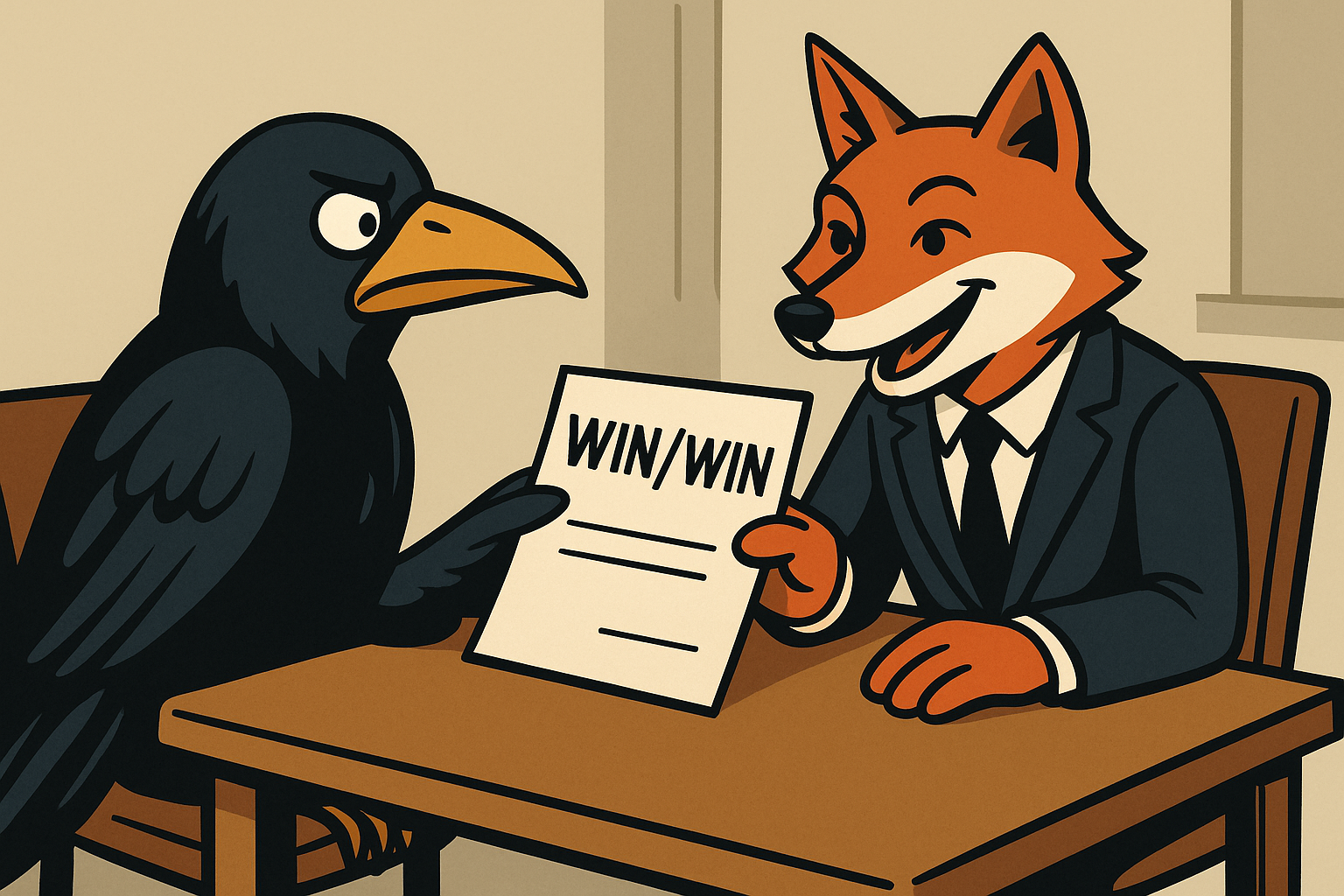
Win/Win usually means they plan to win twice.
There are certain phrases that just scream “look out” as soon as you hear them.
Most guys know that if a woman says “we need to talk,” it’s not an invitation to a discussion. You’re about to be told something—most likely about how you’re being a jerk.
If someone shows up talking about “fairness?” It’s a pretty safe bet they aren’t about to start listing ways they can improve things for you.
And if someone tells you “it’s not about the money?” Trust me, it’s about the money.
If you’re perceptive, you’ve noticed that all three of those things usually come right before a negotiation of some sort.
There’s another phrase that should set off the same alarm bells: Win/Win.
For most people, that phrase conjures visions of cooperation, collaboration, and conviviality. But win/win usually isn’t the real goal of those who preach it.
For a trained negotiator, it’s a tactic—a way to use your good nature (and your neediness) to skin you alive.
They say win/win, but they mean win/lose. And they don’t intend to be on the losing side.
What win/win really means in practice is: “I’m about to demand concessions from you and give little or nothing in return.”
And if you complain afterward? They’ll tell you the deal was fair.
After all, any agreement you voluntarily sign is technically win/win by definition.
Negotiation is voluntary. Everyone has the right to say “no.” The fact that you didn’t means you saw yourself as better off with the deal.
So technically, you “won.” Just not as much as they did.
So what do you do about it?
First, lose your neediness. In almost every case, you don’t need to make any particular deal. You may want to, but the sun will come up tomorrow either way.
Don’t let your need for approval push you into doing things you don’t want to. If your counterpart’s a pro, they might act offended—but that’s just theater. People actually respect those who won’t be pushed around. Once you drop the neediness, everything changes overnight.
Finally, learn to live in your adversary’s world. You don’t have to agree with their position, but you have to understand it and be able to explain it as well as they can. When you can describe their perspective and get back a calm “That’s right,” (not “You’re right”)—you’re ready to win for real.
PS — I talk a lot here about how negotiation touches every part of life. It’s one of the biggest leverage points you can improve. Two of the best books I know on the subject are Start With No by Jim Camp and Never Split the Difference by Chris Voss.
I recommend both, but you can start with either. You can buy them at the link below.
Disclosure: As an Amazon Associate I earn from qualifying purchases. If you buy something—anything—after clicking that link, I may receive a small commission. It doesn’t change your price.
