Tag: Time Management

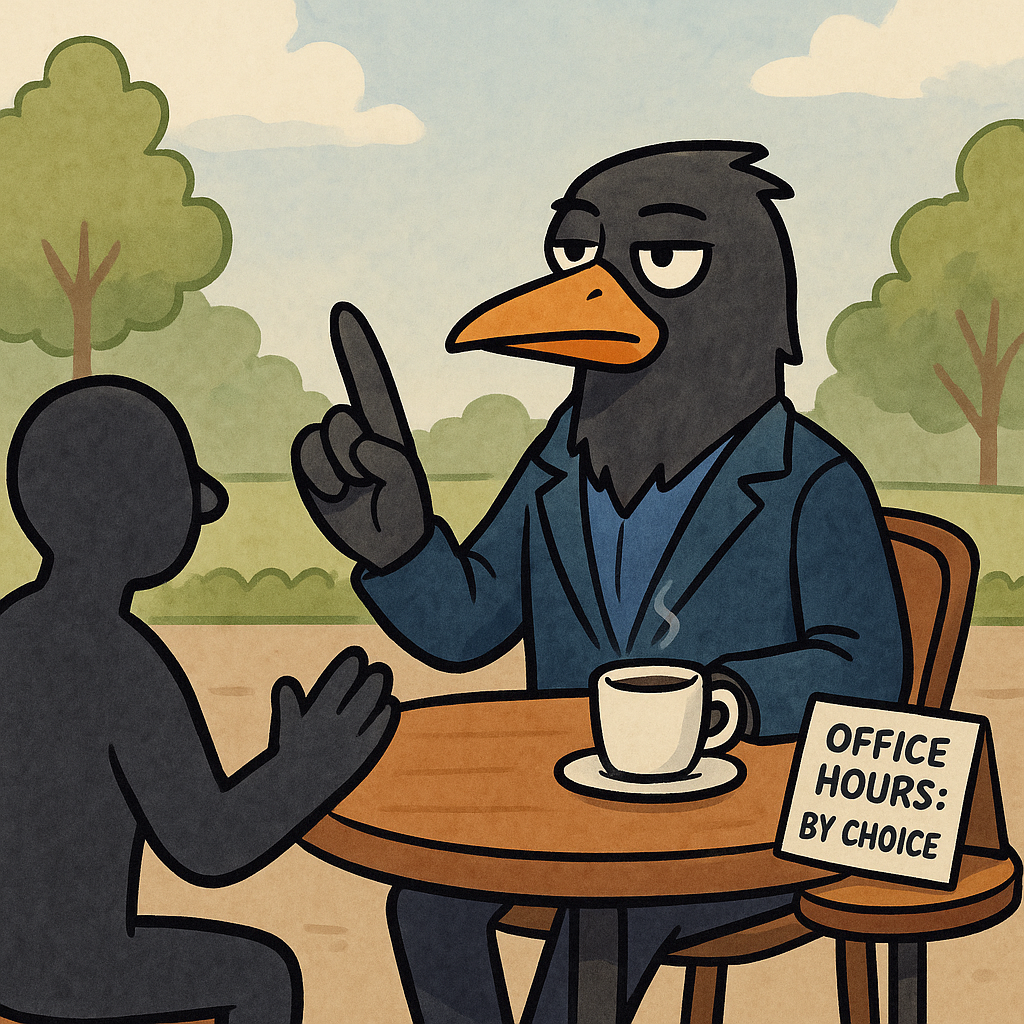
  • Tell Me No Anytime (I’ll Do the Same)

    Tell Me No Anytime (I’ll Do the Same)

    A funny thing happens when you’re friendly, kind, approachable, or easy to talk to:

    People start to assume you’re available.

    Available to help. Available to listen. Available to change your schedule. Available to bend your day around theirs.

    They don’t ask.

    They just sort of… lean in your direction and expect you’ll catch them.

    Most of the time, it’s not malicious.

    It’s just how people operate when they haven’t built their own structure.

    And a lot of us were raised to be polite. We were taught to:

    • Hold the door
    • Let people finish their sentences
    • Speak respectfully
    • Not act like we’re the center of the universe

    All good things.

    But somewhere along the way, a lot of people picked up a wrong idea:

    That being polite means being accessible.

    It doesn’t.

    You can care about people and still protect your time.

    You can treat people well without making yourself available on demand.

    The problem is, if you’ve been polite your whole life, the first time you say “No, that doesn’t work for me,” somebody is going to act like you just keyed their car.

    That’s fine. Let them. They will live.

    If you have a hard time saying no, try this: the next 3 times someone asks you to do something, resolve now to tell them no. Without even knowing what it is.

    You’ll find out quick that they don’t stay mad long. They’ll stop asking for things they shouldn’t have been asking for in the first place.

    (and if it’s something you wanted to do you can always call back later and say you changed your mind)

    Because here’s the alternative:

    If you make all your decisions based on who might get upset, you’ll end up living a life that isn’t even yours.

    And then you’ll resent everyone around you — quietly, constantly — while still trying to smile through it.

    No thanks.

    Here’s the real rule:

    Polite is how you behave.

    Available is what you choose.

    They are not the same thing.

    Once you separate those two, life gets a whole lot easier.

    You can look someone in the eye, speak kindly, and say:

    “No, that’s not going to work for me.”

    No apology. No justification. No performance.

    If someone needs you to sacrifice yourself to prove you’re good…

    that’s not a relationship — that’s leverage.

    And you don’t owe anyone that.

    Now lets shoehorn real estate into this…

    When you call me with questions about your land or lot, I’m glad to help.

    But I’m not going to pressure you. I’m not going to “stay in your ear.” And I’m not going to chase you around trying to convince you of anything.

    Because your time is your time.

    And mine is mine.

    The way it should be.

    If you want to understand the value of what you own — now or just for the future — I’ll get you the information straight. No sales pitch. No urgency.

    Polite — not available.

    Click Below:


  • How Do You Think I Got That Way?

    How Do You Think I Got That Way?

    There’s a management concept that says, “If you want something done, give it to a busy person.”

    People usually take that as a joke, but there’s a lot of truth to it.

    The busiest people are often the most reliable — not because they have more hours in the day, but because they know how to use them. They’ve built systems, habits, and standards that keep things moving.

    It’s not uncommon for a landowner to wonder how someone who lists and sells as many properties as I do could still have time to represent their property properly.

    Probably lucky for me they don’t also see the institutional client work I handle — the kind that doesn’t show up on MLS or get publicized. Then they’d really be worried.

    It’s a fair question. But in real estate, the truth is usually the opposite.

    The agents who are truly “too busy” aren’t the ones with a full plate — they’re the ones barely managing the plate they already have.

    The productive ones have rhythm. They’re working off systems, checklists, and experience that let them keep multiple deals in motion without losing sight of the details that matter.

    Highly productive agents also have the revenue to invest in tools and automation that make them more efficient.

    It wouldn’t make sense for a one-off landowner to pay for those things — and low-volume agents can’t afford them.

    So when you see a broker juggling multiple listings and still communicating clearly, showing up on time, and staying ahead of issues — that’s a good sign.

    It means they’ve figured out how to run their business, not just survive it.

    It means I’ve built a network of buyers who trust what I bring to market.

    It means I’ve learned how to keep deals organized, inspections scheduled, title issues handled, and marketing rolling without letting anything slip.

    It means when you list with me, you’re plugging into something that’s already working — not waiting for someone to “get around to it.”

    Busy isn’t the same as distracted. It’s the byproduct of momentum.

    If I were sitting around waiting for the phone to ring, that would be a problem.

    But I’m in constant contact with the people most likely to buy your property — because I’m already helping others like you.

    Deals create opportunities for other deals.

    Activity creates visibility.

    Momentum attracts attention.

    So no, I’m not too busy to take on another listing.

    I’m busy because I know how to get things done — and because the people who’ve worked with me know it too.

    If you’re ready to sell, or just curious what your property’s worth in today’s market, I’m happy to give you an honest, expert opinion.

    Because the busiest guy usually is the right one for the job.


    PS — You’re probably not ready today, but is there really a bad time to know what your property might be worth?

    That’s one of the ways highly productive people get that way — they start the non-urgent steps early, so they’re ready to move when the time is right.


    Click below:


  • I Don’t Care How Busy You Are

    I Don’t Care How Busy You Are

    Having lots to do isn’t the goal.

    We all know people who, when you ask how things are going, default to telling you how busy they are.

    Like they think if they say it enough, you’ll assume they must be wildly successful.

    But being busy and being successful aren’t the same thing.

    You can be busy without being successful — I’d say that’s the norm.
    You can also be successful without being busy — I’d say that’s the goal.

    There’s a difference between being busy and “being busy.” Having a lot going on is fine — even healthy — but it has to be intentional.

    For me, I usually have many projects going at any given time.

    Not all of them need attention every day, but there’s pretty much always something I can be pushing ahead.

    And that doesn’t just mean work. Family life matters, too.

    I want time for my kids’ performances, their games, social events — and yes, a little “sharpen-the-saw” leisure time in there somewhere.

    That’s the point of building a business like this: if you do it right, you should have the flexibility to fit in what actually matters.

    I say a lot on here that I’m not glued to my phone. And I’m not.

    But that’s not because I’m screwing off somewhere (okay, sometimes I am).

    Most of the time, it’s because if I’m always working on moving something forward, I can’t stop every time the phone rings.

    I’ll call you back — I promise.

    But by focusing on the task at hand, I actually get more done.

    The point isn’t to rack up the most appointments or have the fullest calendar. Appointments for appointments’ sake are just noise.

    Once I learned that, everything changed for me — and it can for you, too.

    It’s not about being busy.

    There’s no excuse for laziness, either. Focusing your effort in the right places ensures you get a much bigger return on your time.

    I’d rather have four quarters than a hundred pennies. That’s why I don’t just take any listing — I spend my time where it matters.

    Busy is easy.
    Effective is rare.
    And rare is where the results are.

    If you own investment quality real estate, you probably get it already.

    Even if you’re not looking to sell in the next six months to a year, does it ever hurt to know the current market situation?

    And is it ever a bad time to start a conversation with someone who gets it, too?


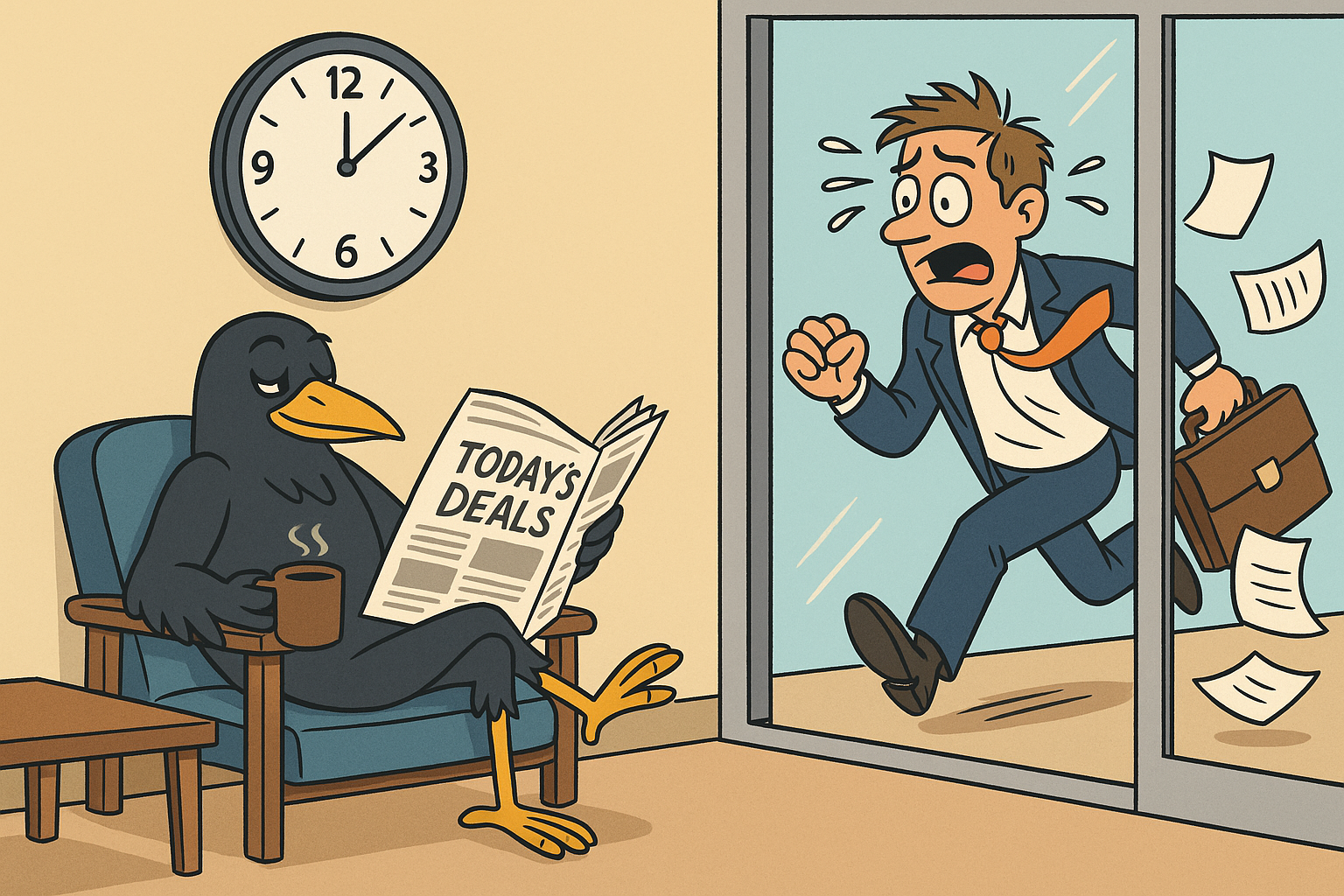
  • Be On Time

    Be On Time

    It’s Not Just Polite—It’s Powerful.

    I’ve been talking recently about how poisonous neediness is in negotiation. That desperate energy repels people. Drop it, and your conversations immediately shift. You become more credible, more in control, more likely to get what you want.

    And since just about everything in life involves some kind of negotiation—business, relationships, money, everyday decisions—any improvement there multiplies fast.

    But there’s another habit that’s even simpler. One that doesn’t get talked about much, but quietly moves the needle in just about every part of life:

    Punctuality.

    Being on time.

    Being on time seems minor. It’s not. In fact, it’s one of the clearest tells about how you operate.

    Most people won’t call you out for being a few minutes late. Especially if you shoot them a text or call ahead. But don’t kid yourself—they’re still taking mental notes the second you show up behind schedule. Maybe not actively, but they notice.

    Even if they don’t say it, they’re wondering:

    • Does this person respect my time?
    • Do they follow through on commitments?
    • Can they manage themselves?

    Showing up late—even just a few minutes—starts chipping away at those answers. And if the story they tell themselves is that you’re careless or unprepared, it sticks. That impression is tough to shake, especially when you’re trying to sell something, pitch a deal, or get someone on your side.

    And make no mistake—you’re always selling, pitching, or persuading. Whether you know it or not.

    Now flip that around. Arrive five minutes early, and the message is completely different. You’re signaling reliability. Discipline. Respect. It puts the other person at ease. And when they feel calm and unpressured, they’re more open, more generous, more willing to say yes.

    And that’s just the external benefit.

    Internally, punctuality gives you space. You’re not flustered. You’re not catching your breath or mentally scrambling to recover. You’re clear-headed. Grounded. Focused. That gives you an edge in whatever happens next—conversation, negotiation, decision-making, or execution.

    To get punctual, you’ve got to manage the stuff before the appointment better. Time buffers, traffic, prep, saying no to the extra thing you don’t really have time for. That’s where the discipline kicks in. But the results are worth it.

    There’s no downside to being on time. None.

    But there’s plenty of upside. Some of it instant, some of it long-term. Eventually, people will start trusting you more, choosing you more, looping you into better opportunities. You’ll be surprised how often it leads to doors opening.

    And by the time that starts happening, you might not even realize where it’s coming from.

    Unless you remember this.

    Want a win that compounds over time and takes zero talent?

    Be on time. Every time.