Tag: Sunday Reflection

  • Don’t Assume God Wouldn’t Use You

    Don’t Assume God Wouldn’t Use You

    Even among professing Christians, many people’s exposure to the Bible mostly consists of whatever passage their pastor teaches from on Sunday, or from devotionals they read during the week.

    There’s nothing wrong with any of that. But it can leave you with a strange idea of what the Bible is actually like when read straight through.

    You mostly hear the stories where somebody trusted God, did the right thing, and things worked out in the end. It gets in your head that the people in scripture were kind of superheroes of faith. More disciplined. More obedient. More spiritually stable than regular people are.

    At least that’s how it felt to me.

    Then I actually read the whole thing straight through.

    Surprising to say the least. A huge percentage of the Bible is people screwing things up.

    Moses kills a man and runs away.

    David impregnates one of his loyal soldiers’ wives, tries to cover it up, then arranges for the man to die in battle.

    The sons of Eli the priest were corrupt and openly abusing their position.

    The disciples themselves constantly misunderstand Jesus, even while following Him directly.

    And this kind of thing keeps happening over and over.

    At first it’s confusing because you expect the “heroes” of the Bible to act differently. But most of them were not spiritual superheroes. They were regular people. Flawed people.

    In some cases, people who did things most of us have never done and hopefully never will.

    Yet God kept working through them anyway.

    That does not mean their sins were unimportant. Scripture is very clear that actions have consequences. But it also means failure was never automatically the end of the story.

    People sometimes disqualify themselves because of things they’ve done wrong. Or because they assume God only uses unusually gifted, disciplined, impressive people.

    The Bible really doesn’t support that idea very well.

    God uses regular people.

    It’s the only kind He has.

    PPS- If you’d like to receive these in your inbox, enter your info below:

    Register to Receive Posts Via Email!

    By submitting, I understand I will receive marketing emails and blog posts from Mike Browning Realty and/or associated companies. Unsubscribe at any time.

  • You’re Not Going To Break It

    You’re Not Going To Break It

    A lot of people are waiting to understand perfectly before they move.

    It may sound wise, but it’s really just fear with religious language wrapped around it.

    We all tend to want certainty. To know exactly what God is doing, exactly what the outcome will be, exactly how things are supposed to unfold before they take a step.

    But if you actually read the Bible, that’s not really how it works.

    Abraham is told to go somewhere without being told where.

    The disciples follow Jesus while constantly misunderstanding Him. Even near the end they still don’t fully grasp what’s happening.

    Peter gets corrected repeatedly.

    Moses loses his temper.

    David wrecks things more than once.

    Solomon is the wisest man who ever lived, but also screwed things up on an order we can’t really fathom.

    Notice a pattern?

    God keeps working through people who do not fully understand what they are doing while they are doing it. And they screw up repeatedly, yet God keeps working through them anyway.

    That does not mean mistakes don’t matter, because they do. Sometimes painfully. Moses still didn’t enter the Promised Land. David still suffered consequences for what he did. Actions matter, and scripture never pretends otherwise.

    But there’s another mistake people make.

    They act like one honest error can somehow derail God’s entire plan for their life.

    As if the outcome ultimately depends on them executing everything flawlessly.

    It doesn’t.

    Romans says all things work together for good for those who love God and are called according to His purpose. Most people apply that only to external suffering, and things that don’t look like our fault.

    But it also applies to our mistakes.

    You are going to misunderstand things sometimes and make decisions that later look immature. You’ll move too slowly in some situations and too quickly in others.

    That’s being human. God has already accounted for it.

    A baby doesn’t learn to walk by studying for years. They just start moving, wobble around a bit, and learn through the movement itself.

    Faith works similarly.

    A lot of people are frozen because they are waiting for a level of certainty that they will never see.

    Meanwhile the people throughout scripture were often moving forward with partial understanding at best.

    The outcome was never resting entirely on them getting everything right. And it is not resting entirely on you either.

    God already knew imperfect people were going to be involved.

    Our mistakes don’t surprise Him.

    PPS- if you’d like these in your inbox simply enter your info below:

    Register to Receive Posts Via Email!

    By submitting, I understand I will receive marketing emails and blog posts from Mike Browning Realty and/or associated companies. Unsubscribe at any time.

  • It’s a bad idea to try to fix yourself.

    It’s a bad idea to try to fix yourself.

    The end of the Book of Judges is a long, ugly chain of decisions that all trace back to one moment.

    Israel made a vow not to give their daughters in marriage to the tribe of Benjamin. At the time it probably felt justified. Benjamin had done something so evil that the other tribes went to war over it.

    Then the war ended, and the consequences of that vow became clear. Benjamin wouldn’t recover. An entire tribe of Israel would disappear, not because God commanded it, but because of something they said.

    They saw the problem, but they wouldn’t deal with it directly. They could have admitted the vow was wrong and broken it. That would have cost them, mostly in pride, but it would have been clean.

    Instead, they started working around it.

    There was a town that hadn’t joined the war, so they attacked it, killed the inhabitants, and kept about four hundred young women alive to give to Benjamin. That solved part of the problem, if you ignore what they had just done to get there.

    It still wasn’t enough, so they came up with something else. There was a festival at Shiloh, and they told the men of Benjamin to hide nearby and take the women when they came out to dance. That way, technically, Israel wasn’t “giving” their daughters.

    They stacked one decision on top of another, each one designed to protect the original vow, and each one making things worse.

    Most people don’t go that far, but the pattern isn’t hard to recognize.

    We don’t like admitting we were wrong, so we adjust instead. We explain it, justify it, and look for ways to clean it up without ever backing up and saying it shouldn’t have happened in the first place.

    That trade almost always goes the same way. A smaller, honest wrong gets replaced by something bigger that’s easier to defend.

    The instruction from Jesus is simple. Confess.
    Not manage it. Not reframe it. Not work around it.

    Confess, and He will forgive you.
    Even the mess you made trying to fix it.

    The sooner you set aside your pride and say it plainly, the less you usually have to clean up later.

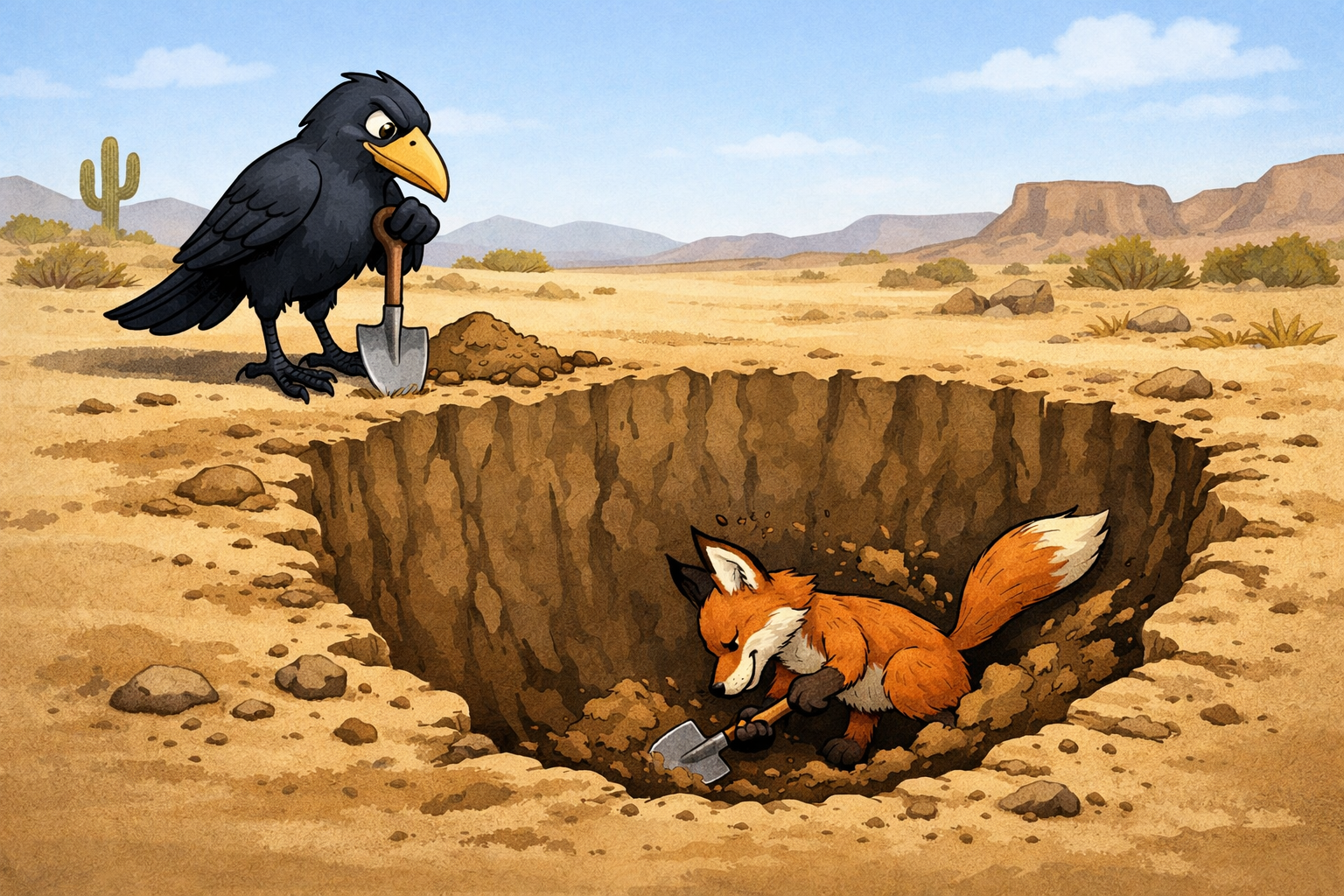
    Or you can keep digging.


    P.S.-If you’d like to read through the Bible this year, you can join us at His Word Together.

    No commentary.
    No telling you what to think.
    Nothing to buy.
    Nothing fancy.

    Just steady time in the Word.

  • We All Talk a Good Game

    We All Talk a Good Game

    Most people know the right answers.

    Put God first. Don’t chase money. Be content with what you have. You’ll hear all of that from people who mean it when they say it.

    And most of the time, nothing really tests it. It just sits there as something we agree with and repeat back when it comes up.

    Then something real shows up. An opportunity with a big number attached to it that doesn’t quite line up with how we say we want to live. Or a situation where saying no actually costs something. A job. Status. Comfort.

    That’s where things change.

    Not always out loud, but in practice. Because what we do is what we actually believe, not what we say.

    If someone says God told them not to take a shot, then takes it anyway to keep a job, that’s the answer.

    If someone says money doesn’t matter that much, but keeps pushing for more long after they have enough, that’s the answer.

    If someone says they trust God, but panic shows up the second things get uncertain, same thing.

    Most people don’t lie directly. It’s quieter than that. We say the right things, then make decisions that contradict them and don’t even notice the gap.

    The lottery is a clean example. Everyone’s seen how that tends to go. Not every time, but often enough that it’s predictable. People win, and then things start to come apart. Health slips, relationships get strained, the money goes faster than it should.

    It’s not complicated. When you don’t have to say no anymore, most people don’t become more disciplined. They lose whatever discipline they had. And when you can afford anything, saying no to other people gets harder too. That creates a different set of problems that money doesn’t solve.

    None of this is new information.

    But it doesn’t change behavior. People still line up to buy tickets.

    Which tells you something.

    Most of us don’t actually believe what we say we believe, at least not when there’s something in front of us that we want.

    There’s an easy test. Don’t listen to what you say. Watch what you do when it costs you something.

    That’s the part you actually believe.

    If you want to see it in real time, watch how people act when there’s real money or real pressure involved. Or just pay attention the next time you’re standing in line buying a ticket.

    And don’t tell anyone you saw me.


    P.S.– If you’d like to read through the Bible with us this year, you can join at His Word Together.

    No commentary. No telling you what to think.

    Nothing to pay for. Nothing to buy.

    Nothing fancy. Just steady time in the Word.

  • Don’t Forget When It Gets Easy

    Don’t Forget When It Gets Easy

    There’s a part of Deuteronomy that’s easy to skip past.

    It’s not about struggle or hardship. It’s about what happens when things go right.

    In Deuteronomy 8, Moses is warning the Israelites before they cross into the promised land. They are going to get there, without him, and everything will be working the way it should. Crops growing, buildings already there from the prior inhabitants, everything they need already provided.

    And he says, in plain terms, when things are going well, you’re going to think you did it.

    “My power and the might of my hand have gotten me this wealth.”

    This is when we are in the most danger. Not when things are falling apart, but when they’re working.

    We all remember to pray when something is wrong. When we’re worried, when something breaks, or when someone we love is in trouble, you don’t have to remind yourself. We start asking God to fix it. Yesterday, if possible.

    A few years ago I was in one of those stretches. I needed help and was asking for it.

    Then an opportunity came along and everything lined up. Timing, people, outcome. One of those deals where it just works.

    I had basically been asking for a miracle, and then something happened I wasn’t expecting. It wasn’t exactly what I was asking for, but it sure came in handy.

    Next thing I know I was telling myself, “Man, I did a great job on that.”

    Not really funny, but I had to laugh at myself.

    It’s easy to see dependence when you need something. It’s harder to see it when you just got it. That’s the warning.

    If you read during the week here, you’ll see I still get close to it sometimes. Like when I talk about how I operate in a way that makes it more likely that things line up.

    And that’s true. I am consciously doing things that put me in the path of what we like to call luck.

    But if I’m not careful, I can forget why it really happens.

    There’s nothing wrong with things going well. There is something wrong with rewriting the story after the fact, forgetting where it came from, how much of it was outside your control, and how quickly things can change.

    Lucky for us, God knows what we’re made of and that we go off course all the time. I think, or at least hope, He laughs sometimes too.

    Most people don’t forget on purpose. They adjust the story a little at a time until they’re the hero of it.

    Deuteronomy calls that out before it even happens.

    If things are going well right now, that’s a good thing.

    Just don’t let your memory get selective.


    P.S. If you’d like to read through the Bible with us this year, you can join at His Word Together.

    No commentary, no telling you what to think.

    Nothing to pay for, nothing to buy.

    Nothing fancy. Just steady time in the Word.

  • Why Do We Keep Asking?

    Why Do We Keep Asking?

    We like to act like if God would just tell us clearly what to do, it would be easy.

    That’s what makes the story of Balaam so uncomfortable.

    Balak wants Israel cursed.
    So he hires Balaam, a man who actually hears from God.

    God tells Balaam the first time:

    Do not go.
    Do not curse them.
    They are blessed.

    Seems pretty straightforward, right?

    Then Balak comes back with more money and more honor.

    Balaam says the right words.
    “I can only do what God tells me.”

    And then he asks again.

    He already knew the answer. He just wanted a different one.

    God tells him to go ahead, but only say what He says.

    So Balaam goes.

    God’s anger burns against him on the way.

    Because even while his feet were moving in “obedience,” his heart was chasing money and honor.

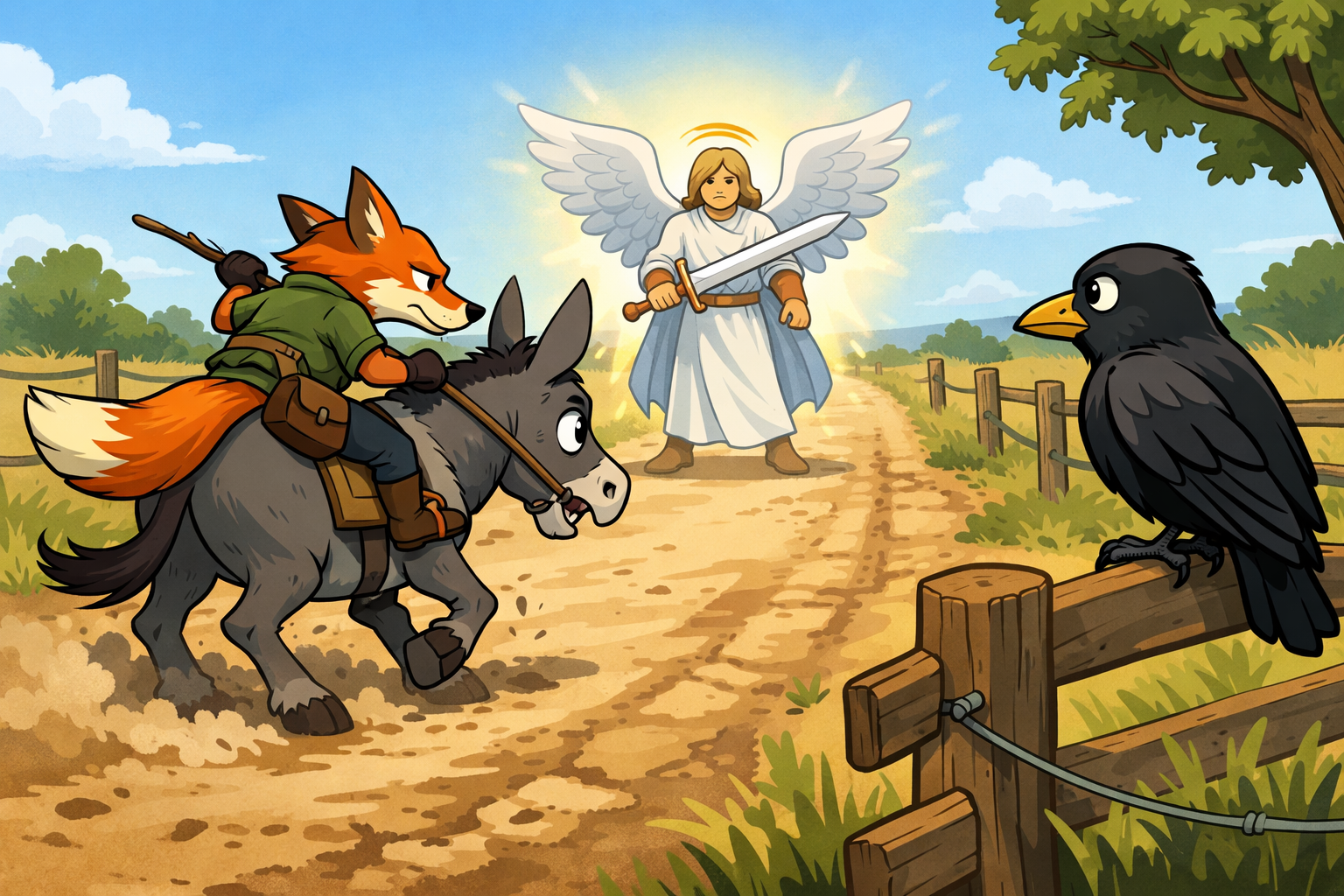
    So God stands in the road against him.

    Balaam doesn’t see it.
    His donkey does.

    Three times the donkey turns aside to avoid the angel with a drawn sword.
    Three times Balaam beats the donkey.

    The only thing keeping him alive is the thing he’s angry at.

    God opens Balaam’s eyes and he finally sees what was right in front of him.

    He was on a road God had already warned him not to go down.

    But he kept asking until he got permission to go anyway.

    And even then, God opposed him on that road.

    That’s the lesson.

    We like to think our problem is that we don’t know what God wants.

    Most of the time, we do. (By most of the time, I mean pretty much all the time.)

    We just don’t like the answer.

    So we ask again.
    We look for a loophole.
    A technicality we can stand on.

    We want God to bless what we’ve already decided to do.

    Sometimes He gives us what we insisted on.

    That is not a blessing.
    That is judgment.

    We get our way.
    We get what we wanted.
    And it costs more than we thought.

    So what do you do with that?

    You don’t need one more conversation.
    You don’t need to “pray about it” again if God has already spoken clearly in His Word.

    You need to decide whether you are going to obey what you already know.

    Turn around while it’s still just a nudge.

    It’s a lot better than having to be stopped by force later.


    P.S. If you’d like to read through the Bible with us this year, you can join at His Word Together.

    No commentary, no telling you what to think.

    Nothing to pay for, nothing to buy.

    Nothing fancy. Just steady time in the Word.

  • Almost Is a Dangerous Word

    Almost Is a Dangerous Word

    In Acts 26, Paul is defending himself before King Agrippa.

    He tells the whole story. What he believed. What changed. What he saw. What it cost him.

    And Agrippa answers:

    “In a short time would you persuade me to be a Christian?”

    Depending on the translation, it sounds sarcastic. Curious. Half-serious.

    Almost.

    That word should bother you.

    Agrippa heard it straight.
    He wasn’t ignorant.
    He wasn’t hostile.
    He wasn’t confused.

    He was close.

    And close is not the same thing as in.

    I suspect Paul did convince him. Agrippa knew Paul wasn’t crazy. He knew there was weight there.

    But following that line all the way through would have blown up his life. Position. Alliances. Reputation. Everything shifts if that’s true.

    That’s usually where people stall.

    We think the danger is open rejection.

    It isn’t.

    The bigger danger is endless consideration.

    Interested.
    Thinking about it.
    Respectful.
    Open-minded.
    Almost persuaded.

    Almost obedient.
    Almost serious.
    Almost surrendered.

    Almost doesn’t move anything.

    There’s no credit for being near the line.

    You cross it or you don’t.

    And most people living in “almost” feel fine about it, because they aren’t far away.

    But one inch short and a thousand miles short are the same result.

    So the question this Sunday isn’t whether you’re hostile.

    It’s whether you’re decisive.

    Where are you almost?

    Because almost is comfortable.

    And comfortable is where decisions quietly die.


    P.S. I usually offer a MBR Land Reality Check to landowners here.

    But I also run another site called HisWordTogether.com.

    It’s simple. It helps people read through the Bible in a year. Every year.

    No commentary. No spin. No one telling you what to think. Just the readings, posted weekly every Sunday.

    You can sign up to get them by email, or just check the site when you want.

    There’s no need to wait until January. Start where we are and keep going.

    If you want to take a look:

  • Everything Is Over. Except It Isn’t.

    Everything Is Over. Except It Isn’t.

    When adversity hits, we act like this is the moment.

    If God doesn’t come through here, we’re not going to make it.
    If He doesn’t fix this, everything falls apart.
    If this doesn’t change, it’s over.

    And if we’re being honest, most of the time whatever is bothering us doesn’t get fixed.
    At least not quickly.
    And often not in the way we want.

    So we don’t just hurt.
    We resent.

    At the same time, we say something completely different.

    We say we believe we are destined to spend eternity with God.
    We say that is what we want more than anything.
    We say this life is temporary, and the next one is permanent.

    Those two claims don’t sit well together.

    Because when pressure comes, we don’t act like people who believe eternity is secure.
    We act like people who think this moment is the final verdict.

    We get angry at God.
    We accuse Him of being distant or unfair.
    We act like unanswered prayer means the story has ended.

    That reaction exposes something.

    It’s not that we don’t believe in eternity.
    It’s that we don’t let it govern anything when things get hard.

    Israel did the same thing.

    They had just witnessed deliverance so obvious it left no room for doubt.
    And yet the very next obstacle felt like the end of the world.

    The problem wasn’t that God failed them.
    It was that pain shrank their horizon.

    They couldn’t hold present suffering and eternal promise in the same frame.

    Neither can we.

    If we really believed eternity with God was settled, adversity would still hurt.
    But it wouldn’t feel catastrophic.
    Fear would still show up, but it wouldn’t get to decide what’s true.

    Instead, we act like God owes us rescue now,
    even while claiming to trust Him with forever.

    That contradiction doesn’t make us monsters.
    It makes us exposed.

    It shows how bent we are toward measuring God by immediate outcomes,
    even as we confess long-term faith with our mouths.

    The invitation isn’t to stop caring about this life.
    It’s to stop treating every hard moment like a referendum on God’s faithfulness.

    If everything were really over every time God didn’t fix things on our timeline,
    none of us would still be here.

    But we are.

    Which means God’s story was never as fragile as we act like it is.


    PS – If you want a simple, steady way to stay anchored in what Scripture actually says — especially when life isn’t cooperating — you can read along with us here:

    No commentary.
    No hot takes.
    Just God’s Word, read together, week by week.

  • It’s Not a Vending Machine

    Give, and it will be given back. But not always how you think.

    Luke 6:38 says:

    “Give, and it will be given to you. A good measure, pressed down, shaken together and running over, will be poured into your lap. For with the measure you use, it will be measured to you.”

    That verse is true.

    It’s also one of the most misused verses in the Bible.

    A lot of people read it as a formula.
    Give money.
    Get more money back.
    Preferably a lot more.

    That interpretation sounds appealing.
    It also sounds suspiciously convenient.

    Because if that’s what Jesus meant, the whole thing falls apart under even light scrutiny.

    If giving money reliably produced a guaranteed twenty-fold return, the people preaching it wouldn’t be asking you for money.
    They’d be giving you money.
    They’d be chasing you down to do it.

    The fact that they aren’t tells you something.

    The problem isn’t the verse.
    It’s the assumption that “given back” has to mean “in kind.”

    Jesus doesn’t say you’ll get back the same thing you gave.
    He says it will be given to you.

    Sometimes that’s provision.
    Sometimes it’s peace.
    Sometimes it’s relationships.
    Sometimes it’s freedom from fear, or a loosened grip on money altogether.

    And yes, sometimes it may be financial.
    But that’s not the promise.

    Turning generosity into a transaction misses the point.
    It turns trust into strategy.

    Less scrupulous churches and charities lean on that misunderstanding. Not always maliciously. Sometimes because people want to hear it. But it still takes advantage of the same confusion.

    Giving isn’t a trick to get rich.
    It’s a way of learning who you actually trust.

    If you give expecting a payout, you’re still clinging to control.
    If you give because it’s right, the return takes care of itself.

    Just not always in the way you’d script.

    P.S. If you want to read Scripture regularly, without anyone telling you what to think about it, I also run a separate site called His Word Together. It’s just the readings, posted each week. You can find it here:

  • Faith Comes First. Understanding Follows.

    Faith Comes First. Understanding Follows.

    Faith is believing in things unseen.

    That is not a poetic line. It is a description of how belief actually works.

    You do not start with full understanding.
    You start with trust.
    You learn as you go.

    Deep down, most people already know this.

    There is a part of you that wants to believe.
    A part of you that recognizes the truth in what the Bible says about Jesus.

    But doubts get planted.

    Not by God.
    By people.

    Questions framed as sophistication.
    Skepticism treated like intelligence.
    Hesitation praised as wisdom.

    Those doubts do not make you thoughtful.
    They keep you from growing.

    Belief comes first.
    Understanding can come after, if you are willing to look for it.

    Although it is not even necessary.

    Jesus commanded us to believe.
    Not believe, then study for some theology test you have to pass.

    You might say that if you really believe, you would become curious about understanding everything.
    You would probably be mostly right.

    But that is not what the Word says.

    Think about how most people live their lives.

    Most people could not explain how to wire lights in a house.

    They do not know how electricity works.
    They do not understand the panel, the circuits, or the load.

    But they have no problem believing that when they flip the switch, the light should come on.

    And if it does not?

    They do not conclude that electricity is fake.

    They assume something is wrong with the setup.

    A burned out bulb.
    A loose wire.
    A tripped breaker.

    The failure does not disprove the reality.
    It points to a problem that needs attention.

    The same is true with cars.

    You do not need to know what is under the hood to turn the key, or push the button, and expect it to start.

    You trust that it will.

    And if it does not, you do not abandon the idea of engines.
    You look for what is broken.

    Faith works the same way.

    You do not wait until you understand everything to believe.
    You believe, and understanding grows as you stay with it.

    Reading Scripture is not about mastering theology.
    It is about choosing to trust what God has already revealed.

    Growth does not start with certainty.
    It starts with belief.

    And belief is not the end of the journey.

    It is the beginning.

    PS. I also run another site that offers a simple weekly reading plan to help you read through the Bible in a year.

    It just started, so you could begin at the beginning and catch up without much trouble. Or you can jump in where we are. The plan repeats every year, so you will get it all either way.

    There is nothing to buy.
    Nothing to pay.
    No analysis.
    No commentary.
    No pressure.

    You read on your own and let it meet you where you are.

    If you want the weekly readings emailed to you, you can sign up.
    If not, you can just check the site.

    Either way works.

    It is here:

    (This is public. Share it if it helps someone.)