Some Risk Is the Price of Admission. Learn to deal with it.
Trying to remove every downside usually creates a bigger one.
People spend half their lives trying to “not lose” in the future. And in the process, they lose right now.
Extended warranties are the perfect example.
You just agreed to buy a car or a laptop or a $2,000 TV. Or whatever. The deal is done.
Then instantly they pivot to telling you how fragile it all is.
“Repairs are expensive.”
“These electronics just don’t last like they used to.”
“Most people choose the protection plan.”
And of course:
“It’s a no-brainer.”
A no-brainer for them.
Warranties are one of the biggest profit centers in the auto business and high ticket retail. They don’t make much on the actual sale.
But that finance office?
That’s where the margins live.
They train those people to sell fear with a smile, and a few of them are incredible at it.
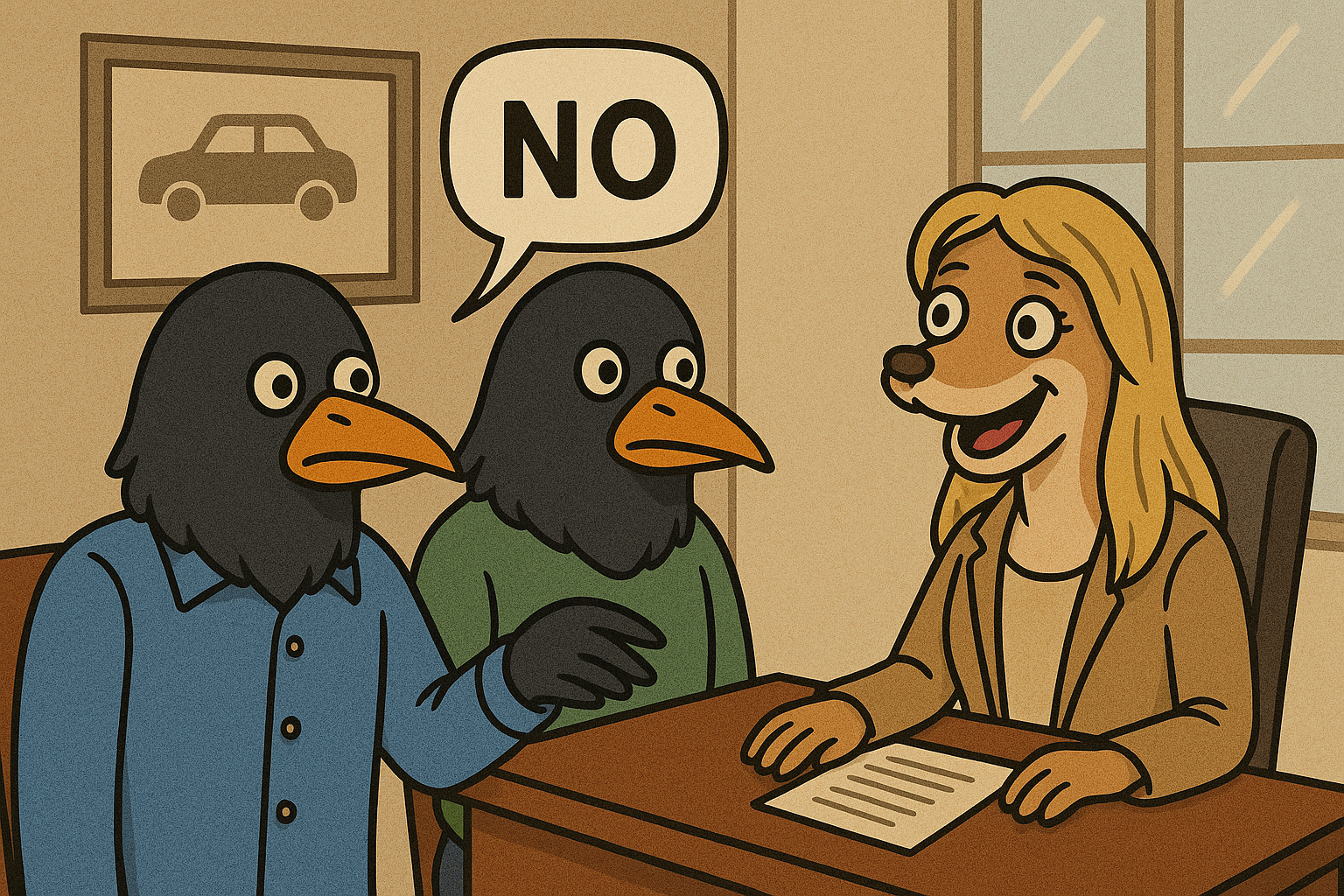
When I bought my wife’s car, the finance director put on a master class. She made it sound like only an idiot would say no. Then she started low-key shaming me when I held firm.
Told me I was the first person who had ever turned her down — obvious nonsense — so I said that makes me either the smartest person she’s met or the dumbest.
She doubled down, telling me all the ways I’d suffer when the car broke.
I finally grabbed her business card and told her if she ended up being right, I’d call and congratulate her.
My wife loved that.
The whole pitch is built on loss aversion.
In our minds, the pain of losing is about twice as strong as the pleasure of gaining. So people pay a big premium today to avoid a possible big bill tomorrow.
Never mind that the warranty may not even cover everything later.
And that’s assuming they don’t try to wriggle out of it altogether.
(Furniture stores, by the way, are experts at this. Don’t ask how I know.)
People view each warranty as a one-off decision. But you have to look at this over a lifetime.
If you refuse every extended warranty you’re ever offered, yes — at some point you’ll pay full price for a repair or a replacement. But stack up all the money you saved by saying no a hundred times before that?
You’re way ahead.
You can’t eliminate risk.
Not in purchases.
Not in life.
Not in business.
All you can do is decide whether the downside is known and acceptable. If it is, then buying “insurance” for every small thing doesn’t make sense.
Real estate isn’t much different.
You can’t predict what rates will do, and you can’t predict where the market will be in two years.
You make the best decision with the information you have, and you get expert help so you aren’t flying blind.
(Hello)
Trying to wait for perfect certainty is just another version of the extended warranty pitch — paying a premium today to avoid a maybe tomorrow.
If you’re thinking about selling land, your job isn’t to eliminate all risk.
It’s to understand it, weigh it, and make the smartest call you can.
Get More Like This In Your Inbox Here!
PS- You’re probably not ready to buy or sell real estate today. But I’ve found the best time to start preparing for any big decision is well before you’re actually ready to do anything.
I offer a free, no obligation opinion of value on any non-residential property. Including real comps, utility and access info, market trends, and any nearby sales activity that matters.
It’s a concise report that gives you a basic idea where you stand today, and helps you get your head around what you might be looking at when it is time to move.
By looking at the info today and discussing it with a trusted professional, you can make a clear headed decision and not be talked into something not in your interests. And you can worry less.
Is it a crazy idea to want less anxiety in your life?
Click Below:
Got a lot you might want to sell?
Get a FREE, no obligation report on what it could sell for today.
Get Your Lot Valuation
Own land instead?
Get a report for that here:
Get Your Land Value
Just a glutton for punishment?
Sign up now to get more articles like this in your email.
Sign Up Now