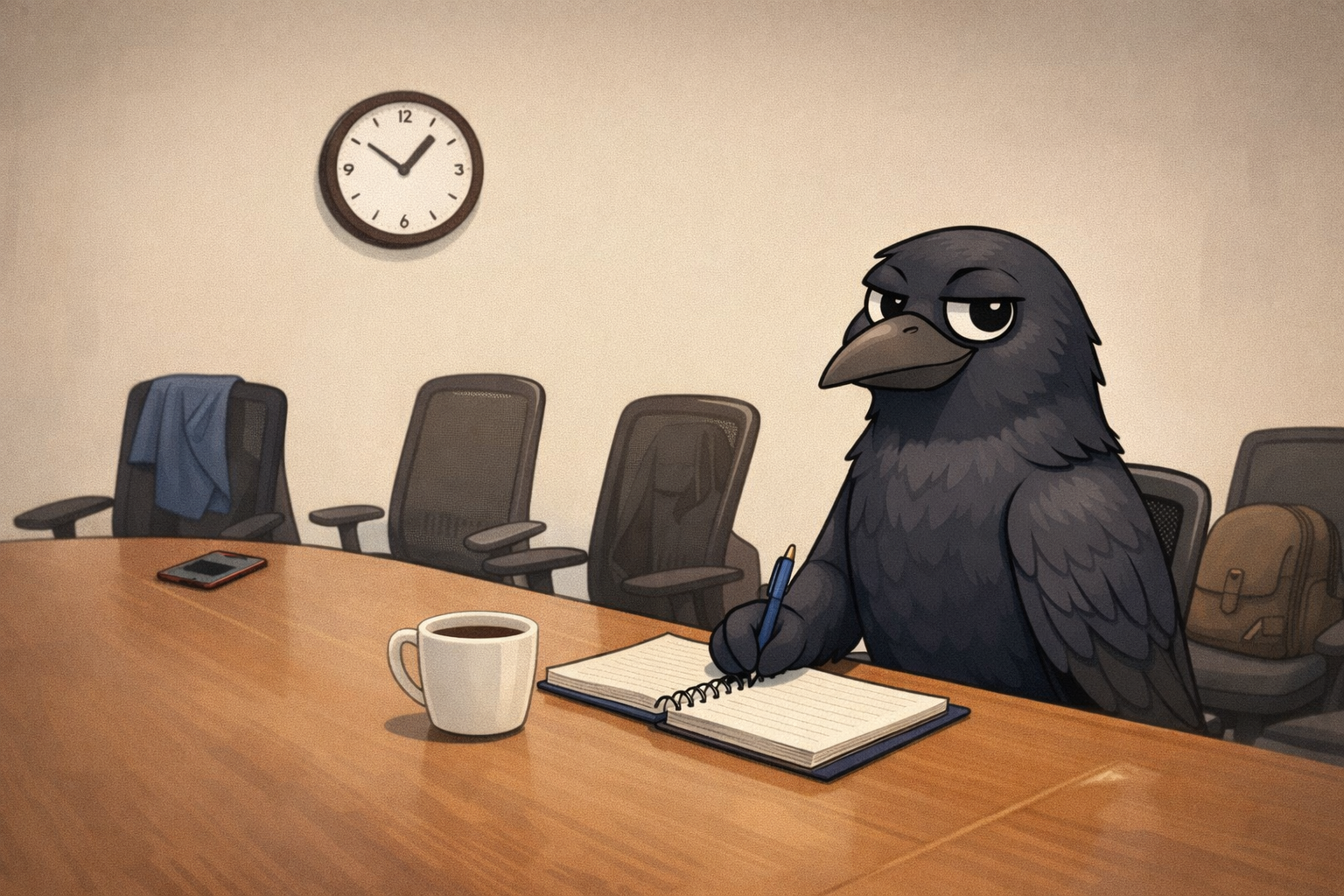
It’s built fifteen minutes at a time.
Last week I talked about the majority reliably being wrong, and how that teaches you what not to do. You just quietly stop doing what everyone else does, and let the results show up later. No need to announce it.
Here’s another one almost nobody will notice. Which is exactly why it works.
Everybody’s in a hurry. We’ve got a supercomputer in our pocket that’s supposed to make everything faster, so naturally we’ve filled it up with optimizing and multitasking. But of course we all still feel behind.
Behind enough that most people have decided that showing up when you said you would is optional. Fifteen minutes late isn’t really late anymore. It’s just how it is.
When your whole day depends on other people doing things at the time they said they’d do them, one person running late doesn’t just cost you fifteen minutes. It costs you the next three things you had lined up behind it too.
The thing we forget is that it’s not just us who has too much to do. It’s everyone else as well.
That anxiety that wells up when somebody throws off your day by being late? Other people feel it when you’re late too.
So here’s the move.
Be on time. Every time.
Not most of the time. Not “on time for me.” On time by the clock, the way you agreed to it.
Don’t make a thing out of it. That’s its own kind of annoying, and it puts people on notice to check. Just show up when you said you would, do what you said you’d do, and let it sit there.
Your counterpart notices. Maybe not out loud. Probably not even consciously most of the time. But somewhere in the back of their head, a little file gets updated.
This guy does what he says he’s going to do.
And when they’re dealing with you, they feel a little less anxious about things. They may not even be able to tell you why.
Deals get done with people you don’t have to manage. Repeat business goes to whoever didn’t make the first transaction a headache. None of that gets decided in a meeting. It gets decided quietly, the way most real decisions do, based on a pattern somebody noticed and never mentioned.
Showing up on time isn’t dramatic. Most people aren’t going to thank you for it in the moment. That’s kind of the point.
It’s boring, it’s free, and enough people don’t do it that it’s still one of the cheapest ways to stand out.
This is the same math as The Slight Edge, the Jeff Olson book I mentioned a couple weeks back. Small, easy actions that are just as easy to skip, done consistently long enough that the compounding takes over and does the rest.
Being fifteen minutes late doesn’t feel like it costs anything.
Being on time doesn’t feel like it earns anything.
Neither one shows up on a scoreboard today.
Check the scoreboard again in a year.
P.S. That link goes through Amazon, and I’m an affiliate. Doesn’t cost you a dime more, but if you click through and buy the book, or anything else while you’re there, I get a small commission.