
Tag: Real Estate Valuation

  • Aggressive, Not Reckless

    Aggressive, Not Reckless

    I’m working on a deal involving some lake acreage in Fannin County. I have part of it under contract for a few of my clients.

    We’re under contract at a price we believe is solid relative to the market. Otherwise, they wouldn’t be buying it as investors. Even so, I’m always researching the area. I watch new listings and recent sales to make sure the numbers still make sense and that we’re doing the right thing.

    So far, so good.

    Yesterday a new listing popped up on a tract that’s fairly similar. Small parts of it are definitely better because it’s actual waterfront instead of just near the lake. A large portion of it, though, is very comparable to what we have under contract.

    The asking price on that tract is roughly twenty times what we’re paying.

    I like to think I’m a good negotiator, but I’m not going to claim I’m getting my guys in at 5% of market value. Our price is good, but this example is really about something else.

    It shows what a lot of listing agents will do just to get a listing. They’ll take it at almost any price the owner wants, no matter how unrealistic, and worry about walking them back later.

    I don’t operate that way. I don’t have the time, and besides it doesn’t make sense to spend money on signs, marketing, drone shots, professionally done brochures etc. for something that has no hope of performing as advertised.

    And if it does sell, it usually happens at a steep discount from what the owner was originally told, which leads to frustration and bad feelings.

    Of course this doesn’t mean I’m not aggressive, or I only list properties that are at no-brainer prices. Higher prices are good for me of course, partially because of commissions but more because the more I sell your property for the more likely it is your neighbors might want to sell too.

    So I push it as much as I can, within reason. But you’re going to hear what I think the market is going to bear before we do it, so you’re not surprised or upset.

    If you want an honest analysis of what a property might be worth, not a computer-generated estimate, you can reach out. Anything non-residential. I’ll do it for free and update it as needed within reason.

    PS – If this was useful, feel free to forward it to someone who might need it.
  • They’re Worth How Much? But They Didn’t Even Win Last Week.

    They’re Worth How Much? But They Didn’t Even Win Last Week.

    Doesn’t matter whether you win or lose — it’s how you sell TV ads.

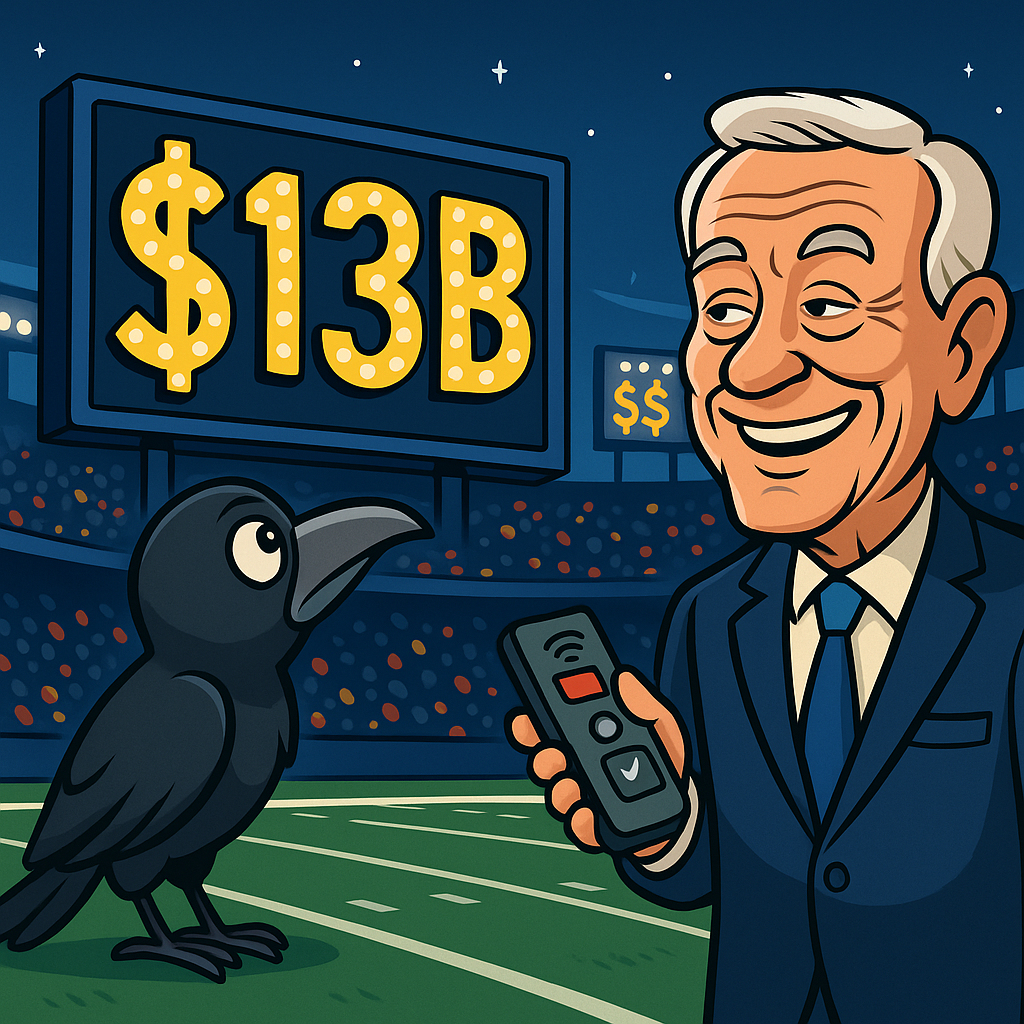
    A recent Forbes article says the Cowboys are worth $13 billion. That’s a big number, but if they were ever actually up for sale, it would almost certainly go higher.

    I’d bet if you looked at past Forbes valuations and compared them to actual sale prices, you’d be a lot less confident in their analysis.

    But here’s the part these articles always throw in:

    “They’re worth this much even though they haven’t won anything in years.”

    That misses the point entirely.

    Winning isn’t what drives franchise value. Look at the other teams near the top — the Giants, the Rams, the 49ers, and Washington.

    None of them are exactly stacking Lombardis lately.

    It’s not about rings. It’s about revenue.

    According to Forbes, the Cowboys brought in $1.2 billion in revenue last year, with $629 million in operating income. That’s what matters. The market values what a business makes — or what it could make.

    Championships are nice for fans, but they’re almost irrelevant to valuation. Would it be worth more if they also won? Maybe. But if everyone’s already watching, already buying tickets, and already loading up on merch, how much more can that really move the needle?

    To real estate (something Jerry also knows a thing or two about).

    When we value a strip center, we don’t walk through the bathrooms and start assigning dollar amounts based on fixtures. We take the net income and apply a cap rate.

    Land’s the same way. Two tracts might look similar on the surface, but if one allows commercial use and the other is restricted to residential, which is worth more? And lower development costs almost always override any advantage a tract might have from being “prettier.”

    The value isn’t in how it looks today. It’s in what you can do with it tomorrow.

    That’s why you need a broker who actually understands what drives value. A beautiful piece of land that’s impossible to develop is worth less than the ugly, flat one you can build on. Future use is everything.

    I don’t know much about houses, so I don’t sell them — even though I’m licensed to. A lot of agents don’t know land, but that doesn’t stop them from acting like they do. And they sure don’t return the favor.

    So it falls on you to pay attention when it’s time to buy or sell land, and work with an agent who actually understands these things.

    Is it ever a bad time to just have a conversation?