Tag: real estate humor

  • Relax — I’m Not Talking About You. Probably.

    Relax — I’m Not Talking About You. Probably.

    Unless you’re ready to sell your land — then I’m definitely talking to you.

    I talk about all kinds of things here, then twist myself into a pretzel trying to tie it back to real estate brokerage. With varying degrees of grace.

    I always make it back to real estate — just not always smoothly or convincingly.

    Most days I’m writing about whatever catches my eye. Lots of times there are other people in the picture.

    The principles are pretty universal, and the stuff I write about happens to most of us. So you might wonder:

    Is he talking about me?

    Almost certainly not.

    Although… a while back, a new subscriber popped up who I had definitely been thinking of when I wrote one or more of these.

    I’m not trying to single anyone out, so I keep things vague.

    So if you think I’m talking about you, I’m not. Unless I am. But usually not.

    If you own lots or land, I’m probably not talking about you — but I am talking to you.

    When you’re ready to sell, you want someone who’ll shoot you straight (me) without shooting you in the foot (also me).

    I won’t try to hurt your feelings, but if you’re allergic to honesty, this might not be the partnership you’re looking for. No hard feelings.

    If you’re fine with it — you know what to do below.

    P.S. If you haven’t subscribed yet, hit the button. It helps me, and you might even enjoy it.


  • The Answer to Every Question in Real Estate

    The Answer to Every Question in Real Estate

    In my business, “it depends” is a real answer not a cop-out

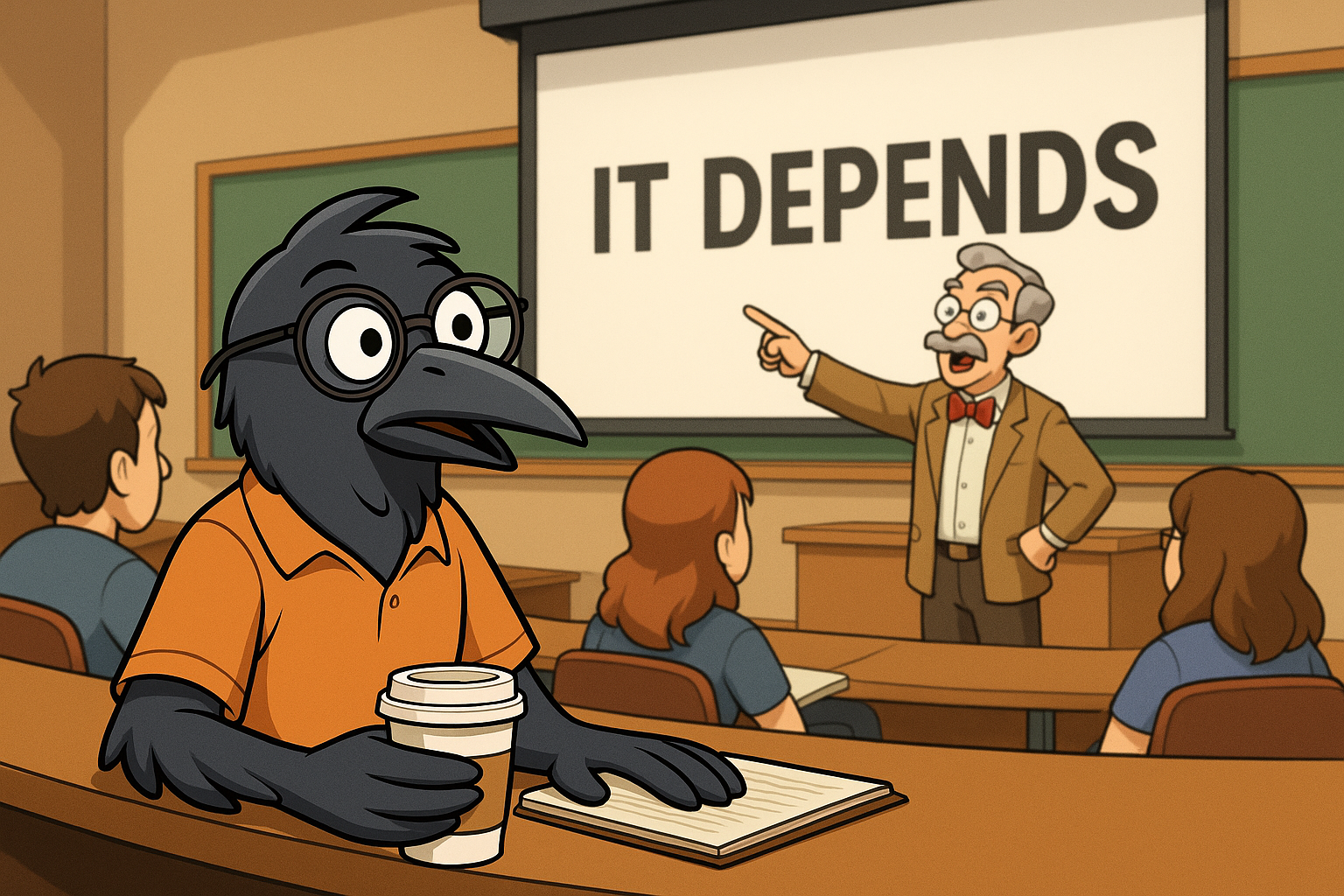
    Back when I was at the University of North Texas, my favorite professor was a guy named Dr. John Baen. He was one of those colorful real estate personalities—funny, sharp, and full of stories from the real world. Nobody missed his class because you never knew what he was going to say next.

    He wasn’t just a professor—he was also a practicing broker. So when he talked, you knew it wasn’t theory. It was the way things actually work.

    I don’t remember a lot from college. But I do remember things he said, like:

    • You don’t want to make straight A’s—the C students end up making all the money (thank God).
    • Don’t be a crook.
    • If you’re in real estate long enough, even if you aren’t a crook, you’ll eventually get sued. (Hasn’t happened yet—fingers crossed.)

    But the one I’ve never forgotten was on the first day of class:

    “The answer to every question in real estate is: it depends.”

    At first, it sounded like a joke—or maybe just a way to avoid giving a straight answer. But over time, I realized it’s the most honest response you can give.

    What’s your land worth?

    It depends—on zoning, access, floodplain issues, comps, demand, utilities, timing… and all of that can change.

    Is now a good time to sell?

    It depends. What’s your plan? What does it cost to hold it? What are you comparing it to?

    Most of what you hear online is too generic to be helpful—and sometimes, it’s flat-out self-serving. The truth? Real estate is local, situational, and constantly changing.

    If you own property in North Texas—Grayson, Collin, Denton, or somewhere nearby—there’s no one-size-fits-all answer.

    But I can give you a real one.

    No pressure. Just data, comps, and honest advice.

    Because in real estate, the only real answer is:

    It depends.


  • Why I Don’t Nickel-and-Dime People in Business (Except for Car Dealers)

    Why I Don’t Nickel-and-Dime People in Business (Except for Car Dealers)

    I’ll squeeze a car dealer like a lemon—but I won’t lowball a pro.

    I was buying a car for my wife recently and negotiated with several dealerships at once—exclusively by email. In my opinion, that’s the only way to get the best result (more on that another time).

    I wrung every nickel out of the deal and ended up with a better price than I expected. More importantly, my wife’s happy.

    Whenever I’m buying a car, jewelry, real estate—anything like that—I approach it the same way. I work the numbers hard, and if I don’t like the deal, I walk. No hard feelings.

    But when it comes to professional services? I don’t negotiate rates. Not one bit.

    Now, a fee might be more than I’m willing to pay for my situation, and I may decide to go elsewhere. But I’ll never ask a real estate broker, attorney, accountant, or consultant to “do it for less.”

    These folks have the same 24 hours in a day as anyone else. The best in their field bring real value, and they expect to be paid for it. They deserve to be.

    Top professionals are usually in high demand. Their schedules are packed. Every hour they give me is an hour they can’t spend with someone else. If I ask them to cut their rate, I’m not just negotiating—I’m taking money out of their pocket. That’s not right.

    At best, they’ll turn me down. At worst, they’ll take the job and resent it. Either way, I lose. And I definitely don’t want someone working for me half-heartedly because I pressured them on price.

    If I hire someone, I want them all-in. Focused. Energized. I want them glad they’re working with me—not counting the minutes.

    Now look—I get how this could come across as self-serving. I’m in real estate. But I think you know where I’m coming from. If you’re hiring someone to help sell your property and you want the best, why shoot yourself in the foot by asking for a discount?

    That’s not negotiating—that’s working against your own interest.

    Now, it’s totally possible that what you need can be handled by a discount broker. If so, I’ll tell you. I might even help you find one.

    But if you’re looking for a seasoned pro with a track record of strong results, it just makes sense to pay what they’re worth.

    If you’re ready to sell your property, just respond here.


  • Getting In the Way of My Own Success

    Getting In the Way of My Own Success

    Some people say you make your own luck

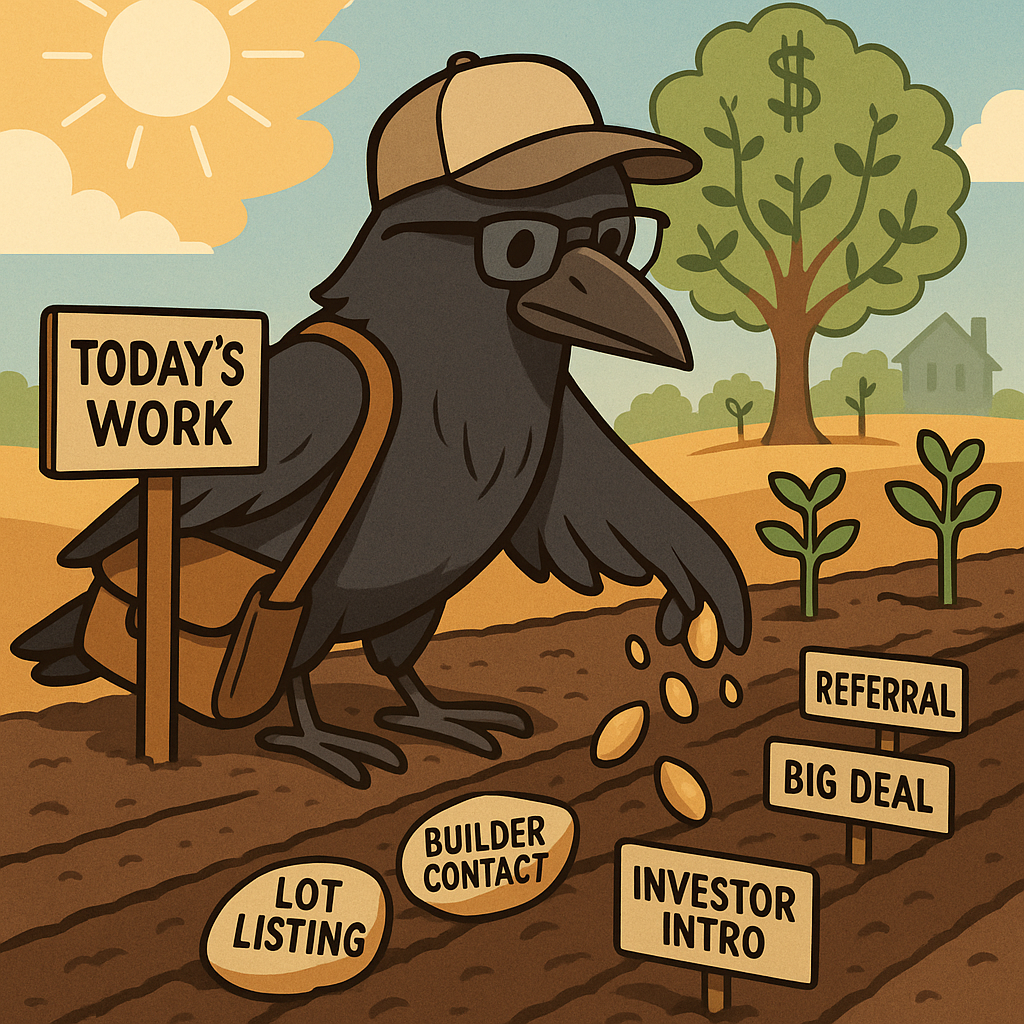
    “Sow your seed in the morning, and at evening let your hands not be idle, for you do not know which will succeed, whether this or that, or whether both will do equally well.”
    — Ecclesiastes 11:6

    When people say someone’s “getting in the way of their own success,” it’s usually a dig—like they’re sabotaging themselves. Looking in the mirror and seeing their own worst enemy.

    But I mean it differently.

    I mean setting things up so that small wins today create bigger wins tomorrow. Succeeding now, while positioning myself for even greater success later.

    Colleagues sometimes ask why I bother listing and selling custom home lots. I’ve spent years building the relationships and knowledge to work on larger land and development deals. My time is limited. So why “waste” it on smaller transactions, when I could be chasing deals that might pay 10x—or more?

    I usually say two things:

    1. I like helping people.
    2. These smaller deals tend to move faster and help smooth out my income.

    And that’s true.

    But the real reason?

    My long-term success depends on staying connected to investors, developers, and builders. Who owns custom home lots? Often, those same people.

    Here’s an example:

    A few years ago, I listed a lot for a guy who had shifted from homebuilding to commercial and multifamily work. I sold it, did my job well, charged my standard fee—and moved on.

    A few months later, I got a call from someone looking to invest in the same area. He’d been referred by the construction guy.

    It’s been nearly four years since that intro. The commissions I’ve earned from helping this new client buy and sell land? Over 150 times what I made on the original lot.

    And that’s not counting the deal we’re working on right now (had to stop while writing this to discuss)—which could be substantial as well.

    That’s just one story. It’s not the only one. The point isn’t to brag—it’s to show this was intentional. I don’t know in advance who’s going to refer me, but I know they’re out there. Every listing creates that chance.

    Worst case? I help someone sell something they don’t need, put the money to better use—and maybe make a friend.

    Best case? The upside is enormous.

    And you know who else might benefit from this network I’ve built?

    Maybe you.