Tag: Real Estate Decision Making

  • Sometimes It Just Makes Sense to Sell

    Sometimes It Just Makes Sense to Sell

    Yesterday we completed a transaction where a long-time client of mine sold a residential lot at 702 Sperry in Red Oak to a spec builder. Thanks to Dawn Cano of United Real Estate, who represented the buyer.

    This was a pretty straightforward deal. A ready-to-build residential lot priced so someone can build a house that fits the neighborhood and still make a fair profit. Not a large transaction, but they all count. And you can’t ignore what might happen later. As you continue to do business, your circle grows, which creates opportunities down the line.

    But the most important part here is the seller’s thinking.

    I often say that the right way to approach these decisions is to look at how a property fits into your overall financial picture. Everyone wants to sell for the highest amount possible, and historically that has been in the future. But sometimes it just makes sense to sell now.

    Sounds self-serving, I know. But it’s true.

    This lot was directly behind a couple of retail centers my client used to own. He bought it at a good price, but the real motivation was control. He wanted to make sure nothing went in there that negatively affected his centers.

    Since then, he sold the strip centers along with other properties in the area. This lot became the only thing he owned on the south side of the DFW Metroplex.

    So the original reason for owning it was gone.

    At that point, he was just holding it and paying taxes.

    So he stepped back and looked at it.

    Does this still fit what I’m doing?

    The answer was no.

    So he decided the smart move was to sell it and deploy the proceeds somewhere else. Somewhere that aligned with his current strategy.

    We put it on the market and got it done. We didn’t give it away, but we also didn’t nickel-and-dime the buyer. When a reasonable offer came in, we accepted it and moved forward without worrying about whether it might be worth slightly more next year.

    He’ll put the money somewhere else, and hopefully that’s worth more next year.

    That’s what I mean when I say look at the big picture.

    Sometimes it makes sense to sell when you didn’t expect it.

    Sometimes it doesn’t.

    But you don’t know unless you allow yourself to look.

    You’re not tied to any particular decision or timeline. But you should give yourself the chance to make the right move, whatever that ends up being.


    PS – If you own lots or land, you’re probably not thinking about selling today. If you don’t live on the property, there’s usually no pressure.

    That’s where the MBR Land Reality Check comes in.

    It’s an in-depth look at recent nearby sales, market trends, development activity, and the types of buyers who might be interested in your property right now.

    Once you have it, you still don’t have to make any decisions about selling. But you’ll have what you need if things change.


    PPS – If you’re not ready for the Reality Check but like this kind of thinking, you can sign up below to get these in your inbox.


    Register to Receive Posts Via Email!

    By submitting, I understand I will receive marketing emails and blog posts from Mike Browning Realty and/or associated companies. Unsubscribe at any time.

  • When Doing Nothing Is The Best Option

    When Doing Nothing Is The Best Option

    I’ve written on here a lot about understanding what business you’re really in.

    As a real estate broker, the obvious answer is real estate. And that’s true in a literal sense. If you hire me, you’re getting advice and brokerage services. That’s my deliverable.

    But that’s not really the business.

    I’m really in the marketing business.

    Part of that is the visible side. Things like positioning properties, getting them in front of the right people, dealing with buyers, getting something from sitting to sold. That’s the part everyone sees.

    The other part is quieter.

    If you don’t know I exist, or don’t have a reason to pay attention when I show up, none of the rest of it matters.

    So a lot of what I do has nothing to do with a specific property. It’s making sure that when someone does have a decision to make, I’m already in the conversation.

    That’s where most people get this wrong. They think the job starts when someone decides to sell.

    It doesn’t.

    By the time you’re ready to act, most of the important decisions are already made—who you trust, who you listen to, what you think the market looks like. That gets set long before a listing agreement shows up.

    I’ve spent a lot of time studying how that works.

    One of the concepts that stuck with me is Dan Kennedy’s idea of a Unique Selling Proposition.

    To get that right, you have to answer a simple question:

    Most people skip that last part.

    But unlike something like a haircut or a restaurant, where doing nothing isn’t really an option, here it often is. Most of the time, it’s the best option for most people. You can afford to wait and see.

    Which means the bar is higher.

    It’s not enough to say I can sell your property. Plenty of people can do that. The real question is whether selling is the right move in the first place.

    Lots of brokers skip that step. When the only outcome is a transaction, that’s the recommendation you’re going to hear.

    List it. Price it. Move it.

    Sometimes that’s correct. Sometimes it isn’t. And once you’re moving, it’s a lot harder to slow down and rethink it.

    So I’ve tried to structure things a little differently.

    Yes, I get paid when something sells. But I’m not set up in a way where every conversation has to end there.

    A lot of the time, the right move is just understanding what you have, what’s happening around it, and what your options actually look like—then deciding.

    That tends to produce fewer deals. It also tends to produce better ones, with less regret.

    Most landowners don’t need someone to sell their property.

    They need someone who can look at it without needing that outcome.


    PS- Most landowners are not planning to sell today.

    But things change. Timing, markets, personal situations. When that happens, the people who already understand where they stand tend to make better decisions.

    That’s what the MBR Land Reality Check is for.

    It looks at nearby sales, current listings, development pressure, and the details affecting value that aren’t obvious from the road.

    Is it a bad idea to know where things stand?


    PPS- If you’re not ready for that but like thinking through land, markets, and negotiation, you can sign up below and get these posts in your inbox.

    Register to Receive Posts Via Email!

    By submitting, I understand I will receive marketing emails and blog posts from Mike Browning Realty and/or associated companies. Unsubscribe at any time.

  • Good Enough Beats Perfect in the Real World

    Good Enough Beats Perfect in the Real World

    A lot of people think the goal is to get things perfect.

    Perfect pricing. Perfect marketing. Perfect timing.

    So they wait.

    They revise copy. Adjust the marketing plan. Debate the price another week. It feels responsible. Like they’re doing the work required to get the outcome right.

    Meanwhile the market is moving.

    A buyer who studies listings for six months learns almost nothing. A buyer who makes five offers learns the market very quickly.

    A seller who debates pricing for months gets zero feedback. A seller who lists the property gets reactions immediately.

    Action produces information. Thinking usually doesn’t.

    The market is the only place where learning happens.

    Until something is live, it’s all theory.

    Theory feels safe because it hasn’t been tested yet. A draft can still be perfect. Once the market sees it, that illusion disappears pretty quickly.

    Most deals that actually happen don’t start perfect. They start good enough.

    Then the feedback starts.

    Buyers react. Sellers react. The numbers tighten up. Reality replaces the guesses.

    People who wait for perfect usually watch someone else close the deal.

    Good enough goes to market.

    Perfect stays in a draft folder.


    P.P.S. If you like thinking about land, negotiation, and how these deals really work, you can keep reading here or get the posts by email so they show up automatically.

  • Quit Making it Where You’re Almost Certain to Lose

    Quit Making it Where You’re Almost Certain to Lose

    Trying to remove every downside usually creates a bigger one.

    People spend half their lives trying to “not lose” in the future. And in the process, they lose right now.

    Extended warranties are the perfect example.

    You just agreed to buy a car or a laptop or a $2,000 TV. Or whatever. The deal is done.

    Then instantly they pivot to telling you how fragile it all is.

    “Repairs are expensive.”
    “These electronics just don’t last like they used to.”
    “Most people choose the protection plan.”
    And of course:
    “It’s a no-brainer.”

    A no-brainer for them.

    Warranties are one of the biggest profit centers in the auto business and high ticket retail. They don’t make much on the actual sale.

    But that finance office?

    That’s where the margins live.

    They train those people to sell fear with a smile, and a few of them are incredible at it.

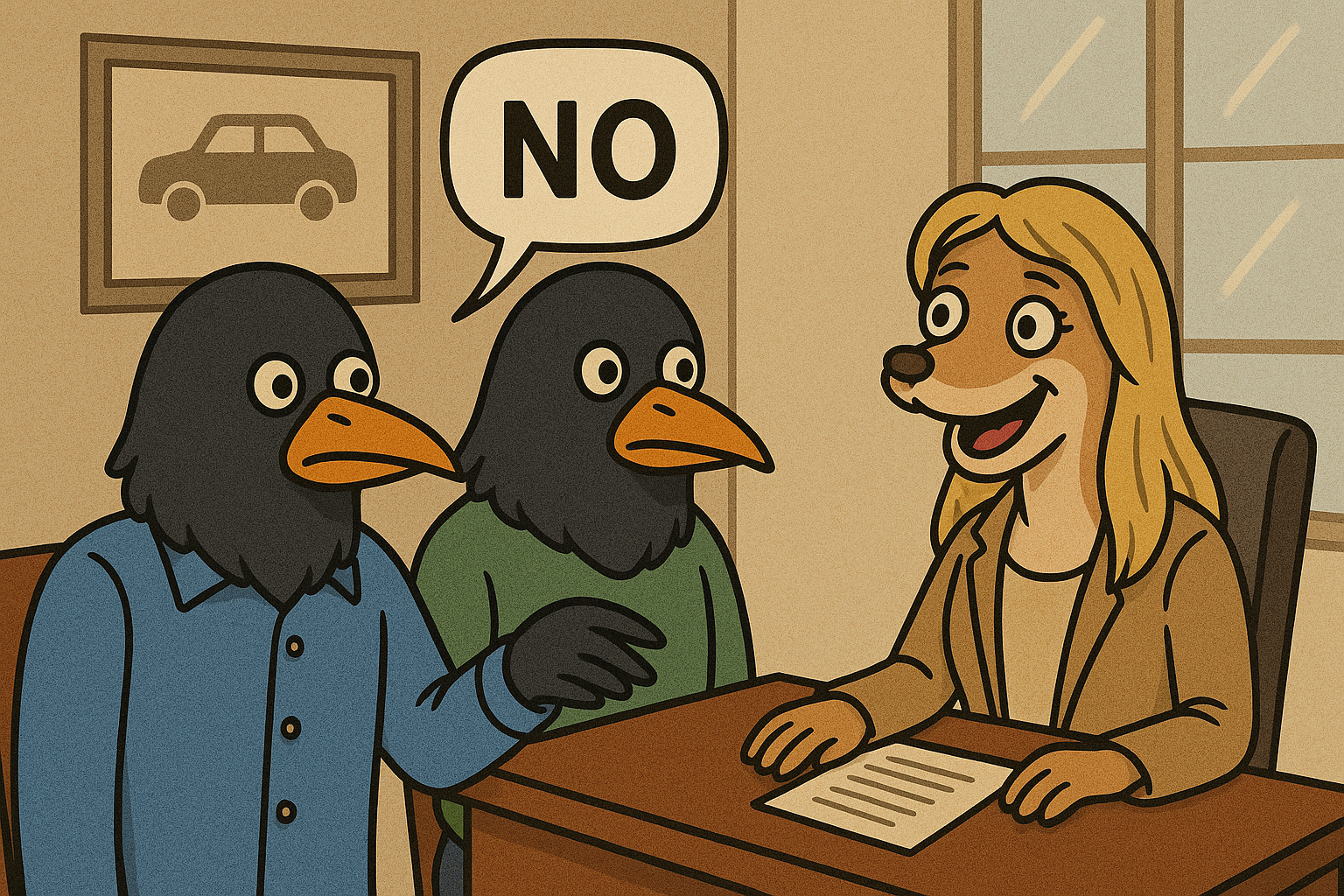
    When I bought my wife’s car, the finance director put on a master class. She made it sound like only an idiot would say no. Then she started low-key shaming me when I held firm.

    Told me I was the first person who had ever turned her down — obvious nonsense — so I said that makes me either the smartest person she’s met or the dumbest.

    She doubled down, telling me all the ways I’d suffer when the car broke.

    I finally grabbed her business card and told her if she ended up being right, I’d call and congratulate her.

    My wife loved that.

    The whole pitch is built on loss aversion.

    In our minds, the pain of losing is about twice as strong as the pleasure of gaining. So people pay a big premium today to avoid a possible big bill tomorrow.

    Never mind that the warranty may not even cover everything later.

    And that’s assuming they don’t try to wriggle out of it altogether.

    (Furniture stores, by the way, are experts at this. Don’t ask how I know.)

    People view each warranty as a one-off decision. But you have to look at this over a lifetime.

    If you refuse every extended warranty you’re ever offered, yes — at some point you’ll pay full price for a repair or a replacement. But stack up all the money you saved by saying no a hundred times before that?

    You’re way ahead.

    You can’t eliminate risk.

    Not in purchases.
    Not in life.
    Not in business.

    All you can do is decide whether the downside is known and acceptable. If it is, then buying “insurance” for every small thing doesn’t make sense.

    Real estate isn’t much different.

    You make the best decision with the information you have, and you get expert help so you aren’t flying blind.

    (Hello)

    Trying to wait for perfect certainty is just another version of the extended warranty pitch — paying a premium today to avoid a maybe tomorrow.

    If you’re thinking about selling land, your job isn’t to eliminate all risk.

    It’s to understand it, weigh it, and make the smartest call you can.

    PS- You’re probably not ready to buy or sell real estate today. But I’ve found the best time to start preparing for any big decision is well before you’re actually ready to do anything.

    I offer a free, no obligation opinion of value on any non-residential property. Including real comps, utility and access info, market trends, and any nearby sales activity that matters.

    It’s a concise report that gives you a basic idea where you stand today, and helps you get your head around what you might be looking at when it is time to move.

    By looking at the info today and discussing it with a trusted professional, you can make a clear headed decision and not be talked into something not in your interests. And you can worry less.

    Is it a crazy idea to want less anxiety in your life?

    Click Below: