
Tag: Never Split the Difference

  • Say It Before They Do

    Say It Before They Do

    One of my repeat clients told me something I really appreciated not long ago. They are capable of performing on large transactions both as a buyer and seller, so naturally they have lots of brokers showing them anything and everything.

    Some of it makes sense and a lot of it doesn’t. But as you can expect, most of it gets presented to them with all the good parts highlighted and the not-so-good downplayed. If mentioned at all.

    So what did he say? Basically that he knows I want to sell deals, that’s how I make money after all. But he really likes that I get to the so-called “hair” on a deal pretty quick, if not right from the jump.

    To me, it’s the only sensible way to operate. But if you’ve dealt with real estate folks very long, you know it doesn’t always work that way.

    For my part, it’s just smart business. If you intend to be around a long time, you need people to trust what you tell them. And the best way to keep a client wanting to buy land deals is to make sure they do well on the ones they’re buying today.

    Besides, these are sophisticated guys. If I know about something affecting a deal, they’re going to find it sooner or later anyway.

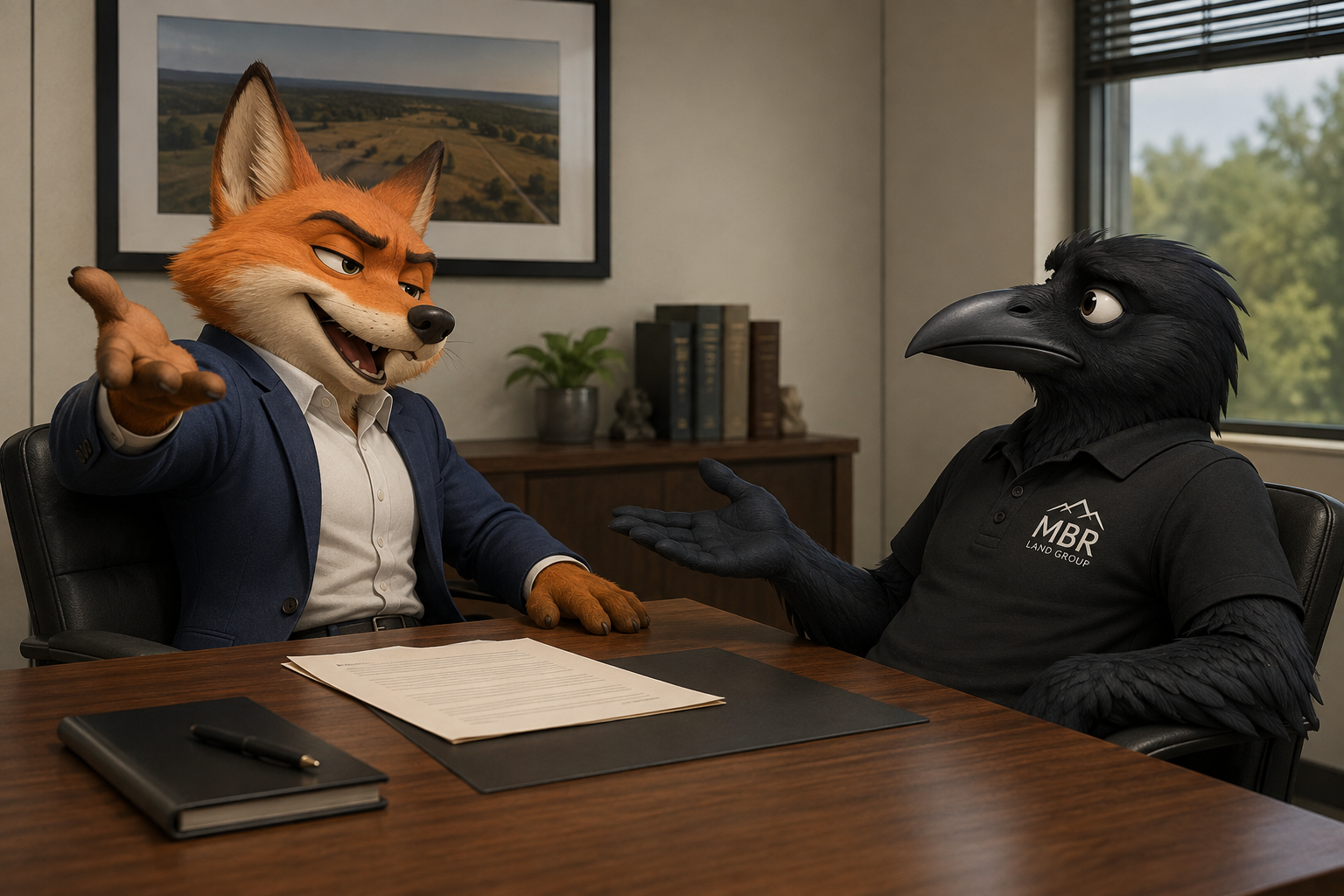
    Chris Voss has a name for this in Never Split The Difference. He calls it an accusation audit. The best way to deal with baggage where your counterpart might have an issue with what you’ve said or done is to be the one who brings it up first. Usually right at the start.

    It sounds like handing the other person ammunition. It’s usually the opposite. Once you’ve said the uncomfortable thing yourself, they don’t have to wonder whether you see it too. You’ve put it on the table where both of you can deal with it. And often, hearing their own worst thought said back to them plainly takes some of the force out of it.

    Or maybe you are right, and they are carrying a grudge and they aren’t going to do business with you no matter what. At least you found it out up front, and saved time and effort for both of you.

    There’s a difference between defending yourself against an accusation and never letting it land in the first place.

    It only works if you’re honest about what the accusations actually are. Sugarcoating them defeats the whole point, and people can tell when you’re doing it. You have to say the version that actually stings a little.

    PS- That link goes through Amazon, and I’m an affiliate. Doesn’t cost you a dime more, but if you click through and buy the book, or anything else while you’re there, I get a small commission.
    Register to Receive Posts Via Email!

    By submitting, I understand I will receive marketing emails and blog posts from Mike Browning Realty and/or associated companies. Unsubscribe at any time.

  • How Am I Supposed to Do That?

    How Am I Supposed to Do That?

    Some people think a good comeback is the whole game.

    When someone makes an unrealistic proposal or a demand that doesn’t work the first thing most people want to do is explain why. Lay out the reasons. Walk through the math. Win the point.

    But winning the point doesn’t do much for you in a negotiation. The other side just digs in, maybe comes up with a competing set of facts and reasons. Worse, they’re no longer thinking about making a deal, they are thinking about not losing. Which isn’t good if you want to make a deal.

    Chris Voss has a fix for this that sounds almost too simple to work.

    Instead of arguing, you ask how you’re supposed to make it happen. Not sarcastic. Not a setup. An actual question. “How am I supposed to take that to the seller when there are two other offers on the table?” Now he’s not defending his number anymore. He’s trying to solve your problem, which used to be his demand.

    Voss calls these calibrated questions. Open-ended, no yes or no available, and they hand your problem to the other person instead of making it a fight. Most people can’t resist answering a question that starts with “how.” Refusing to answer feels rude in a way that refusing to agree never does.

    I had a buyer a while back convinced he could get a large reduction, much more than what was realistic. I could’ve argued comps at him all day and gotten nowhere, because in his head the comps were the ones that made his number look right. So instead I asked him how I was supposed to bring that number to a seller who had competing offers. Then I asked how many people were going to want to work with us in the future if we got a reputation for chiseling and retrading every deal.

    He thought about it, came up with a more realistic number, and we got the deal done.

    Works the other way too. A seller with a too-high price in mind doesn’t need me to lecture him on it. He needs to hear himself try to answer how a buyer’s supposed to make the math work at that price. He’ll usually get there faster than I would’ve gotten him there.

    Statements draw a line and dare the other guy to cross it. Anybody can say no to a line. It’s a lot harder to say no to a question you have to actually sit and answer first.

    I still slip and argue the number sometimes. Old habit. But the times I remember to just ask, it goes better, and I don’t have to be right in the room to get the outcome I wanted.


    PS- That link goes through Amazon, and I’m an affiliate. Doesn’t cost you a dime more, but if you click through and buy the book, or anything else while you’re there, I get a small commission.

    Register to Receive Posts Via Email!

    By submitting, I understand I will receive marketing emails and blog posts from Mike Browning Realty and/or associated companies. Unsubscribe at any time.

  • “You’re Right”

    “You’re Right”

    I’ve said it plenty of times and almost never meant it.

    Usually I’m on the wrong side of a desk somewhere. Buying a vehicle and sitting through the extended warranty pitch. Standing in a furniture store while somebody walks me through the protection plan…the one that covers everything except whatever eventually happens to it.

    I’ve already decided. I’m not doing it. Decided a while back, quietly, and now I’m just looking for a clean way out of the conversation.

    And the man keeps going. He’s got reasons. Some of them are decent reasons.

    So I tell him he’s right.

    Not because he moved me. Because I want it to be over.

    Then I read Never Split the Difference and found out that’s a known thing, and that it has a matching pair.

    Chris Voss says “you’re right” is the one you don’t want. When somebody hands you that, you’ve lost them. They’ve stopped arguing, they’d like you to stop talking, and nothing has changed except they’re now looking for the door.

    What you want to hear is “that’s right.”

    One word different. Opposite meanings. “That’s right” comes out of somebody when you’ve just described their own situation back to them better than they’d have put it themselves. It isn’t agreement with your argument. It’s recognition. And you only get there by shutting up long enough to have actually listened.

    Once you know the difference you start hearing it everywhere. My wife. My kids. Anybody who’s ever wrapped up a conversation with me a little earlier than I expected.

    The catch is you have to give up being the smartest man in the room to get there. You don’t get to lead with what you know, which is generally the whole reason you opened your mouth. Most people can’t stand that. Which is exactly why it keeps working for the ones who can.

    I still tell the warranty guy he’s right. Some things you don’t fix.

    But I quit taking it as a compliment when somebody says it to me.


    PS- That link goes through Amazon, and I’m an affiliate. Doesn’t cost you a dime more, but if you click through and buy the book, or anything else while you’re there, I get a small commission.

  • Nobody Ever Wins an Argument

    Nobody Ever Wins an Argument

    A few years ago I decided to quit discussing politics and current events with other people. For the most part. I still fall into it from time to time, but usually just end up realizing I wasted my time.

    Not because I ran out of things to say. I just noticed something.

    It doesn’t matter how good my facts are, how airtight the logic, or how many times I’ve clearly won the exchange in my own head on the drive home. The other person never once said, “Huh, good point. I’ve changed my mind.”

    They found a different fact. Or decided mine didn’t count. Or got quiet and waited for their turn to talk again.

    It happens with sports too, although the stakes are usually lower. Somebody’s convinced the game is rigged against their team, their quarterback is elite (or he sucks), or the coach should’ve been fired two years ago.

    You can show them the stats. Use logic. Doesn’t matter. They’ve already got their own stats, and if they don’t, they’ll find some. Or make them up.

    I used to think this meant people were just bad at arguing, or too stubborn to admit when they were wrong.

    Then I read Never Split the Difference by Chris Voss.

    Voss spent years as an FBI hostage negotiator, and one of the things he learned was that moving a conversation forward often had less to do with presenting the better argument than making the other person feel understood.

    He’d say things like, “It sounds like you’re feeling backed into a corner,” and then wait. He wasn’t agreeing with them. He wasn’t trying to solve anything yet. He was naming what he thought the other person was feeling and giving them a chance to correct him if he had it wrong.

    And being wrong wasn’t necessarily a problem. When someone corrected him, they were explaining themselves. Now they weren’t defending themselves against his argument. They were helping him understand their position.

    There’s a difference between winning a conversation and actually moving one forward.

    Most every argument I’ve ever “won” ended with the other person more locked in, not less. But when I name what I think someone is thinking or feeling, without immediately trying to fix or correct it, the conversation usually goes somewhere.

    That’s a strange thing to learn from a guy who negotiated with people holding hostages. Stranger still is how often it applies to conversations that have nothing to do with a crisis at all.

    After Jim Camp’s Start With No, Never Split the Difference has probably helped me more with negotiation than any other book. They aren’t the same system, but they’re similar enough that a lot of Voss’s ideas fit naturally with Camp’s.

    Like I’ve said several times, basically everything involves negotiation. So if you get better at it, you improve your life across the board.

    If you’ve read Start With No, I’d recommend Never Split the Difference next.

    Is it crazy to think it’s worth improving a skill that touches almost every area of your life?

    As an Amazon Associate, I earn from qualifying purchases. If you click the link above and buy anything on Amazon, not just this book, I may earn a small commission at no extra cost to you.

    Register to Receive Posts Via Email!

    By submitting, I understand I will receive marketing emails and blog posts from Mike Browning Realty and/or associated companies. Unsubscribe at any time.