Tag: Lot Sales

  • The 4-Hour Workweek

    The 4-Hour Workweek

    It’s been a few years now, but Tim Ferriss wrote a book called The 4-Hour Workweek.

    The basic idea was that a lot of work can be automated, delegated, or redesigned so the owner doesn’t have to be involved all the time. If you do it right, the business can keep running even when you’re not there.

    That idea isn’t crazy.

    If your business requires 100 percent of your time just to stay alive, you don’t really have a business. You have a job.

    Dan Kennedy makes a similar point in a different way. He says you should design your business, especially the marketing side, so it can operate independently of you.

    At the same time, Kennedy is also famous for saying something else.

    Successful people work. A lot.

    Those two ideas sound like they contradict each other, but they really don’t.

    The real issue is focus.

    Most people who work “40 hours a week” are not actually working 40 hours. Between office chatter, long lunches, checking their phones, scrolling social media, and a hundred other little distractions, the amount of actual productive effort is a fraction of that.

    Kennedy once joked that most people already have the 4-hour workweek.

    They’ve just spread it across forty hours.

    When you actually concentrate on the task in front of you, something interesting happens. Work compresses. Problems get solved faster. Decisions happen sooner.

    Two focused hours can produce more than an entire distracted day.

    You see this in brokerage all the time.

    A deal often happens because someone noticed something and acted on it. A buyer quietly assembling land. A property that fits a need. A phone call made at the right time.

    That doesn’t usually require eighty hours a week.

    It requires someone who is actually paying attention.

    A distracted broker working twelve hours might miss the opportunity entirely.

    A focused broker working two hours might catch it.

    A lot of people think the secret is escaping work.

    Usually the real secret is doing the work you’re supposed to be doing while you’re (supposedly) doing it.


    PS – You’re probably not considering selling your land today.

    But having the most current information already on hand allows you to focus and move quickly if the time ever comes.

    The MBR Land Reality Check gets you up to speed on the latest market activity without you having to spend a week digging through listings and sales trying to figure it out yourself.

    It’s still free (for now). No obligation and never any pressure to list.

    Is it a bad idea to know how things stand?


    PPS – If you’re not ready for a Reality Check but like reading this sort of thing, sign up below and get these in your inbox (almost daily).
    Register to Receive Posts Via Email!

    By submitting, I understand I will receive marketing emails and blog posts from Mike Browning Realty and/or associated companies. Unsubscribe at any time.

  • Everyone’s An Optimist, At Least For Today

    Everyone’s An Optimist, At Least For Today

    Opening day of baseball season. Technically the first game was last night, but for most teams, today is when it starts.

    A lot of people find baseball boring, but this is one of my favorite days of the year. A couple of years ago, the Rangers won the World Series. It hasn’t gone great since, but for today at least, everyone has some level of hope.

    Teams operate with a plan. They build a roster to fill the holes from last year. The goal is simple. Score more runs. Give up fewer. While it’s all playing out, you’ll hear the usual lines about doing the little things, having a strong culture, and taking it one game at a time.

    You’ll also hear a lot about how much teams value defense. Meanwhile, if a guy can hit, he’s going in the lineup ahead of the great fielder who can’t, every time.

    They all talk a good game, but what they say doesn’t always line up with their actual plan. You have to watch what they do, not what they say.

    Otherwise you might start thinking they don’t have a plan. But they do.

    But like Mike Tyson said, everyone has a plan until they get punched in the mouth.

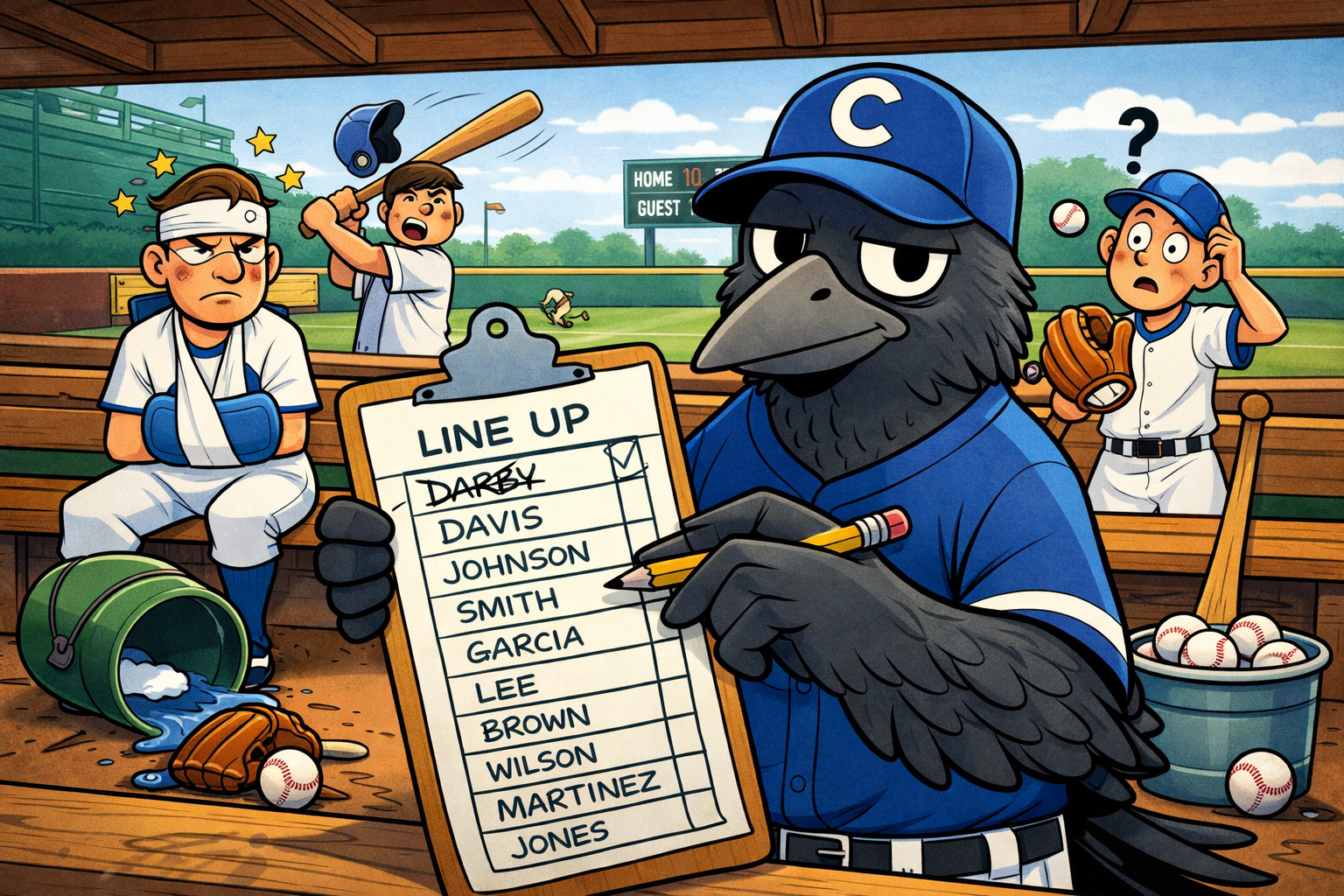
    You’ve got 26 guys on the roster. There will probably be an injury in the first week. Hopefully not, but it happens, and it usually happens to someone you were counting on.

    Some players don’t perform the way you expect. Others you barely thought about end up carrying more of the load than they were ever supposed to. You don’t really know until you play the games, and once you start, the plan starts changing whether you like it or not.

    That’s where patience comes in. You don’t want to overreact too early, but doing nothing isn’t the same as being patient.

    It’s the same in business.

    I know how to value a property. I know what should happen based on the market in front of it.

    The market doesn’t care.

    I’ve got a listing right now that’s priced where it needs to be. I’ve shared it with a number of agents who handle similar properties, and I haven’t gotten a single objection to the price, which if you’ve been around long enough, tells you something.

    Price is usually the first thing agents go after, even when it’s not the real problem.

    So I’m not chasing price.

    Part of it is just the nature of higher-end land. Fewer buyers. Every tract is a little different. It can take time to line up the right one.

    But if something isn’t happening, something is off. Maybe not the number. Could be exposure. Could be positioning. Could be that the right buyer hasn’t seen it yet.

    Most people default to cutting price because it feels like action. It usually isn’t.

    It’s also the one move that’s hardest to undo once you’ve made it.

    So we adjust, just not there yet. We’ll change the marketing, change the exposure, and see what that produces before touching the number.

    Plan A hasn’t worked so far.

    That tells you something.


    P.S. – Most landowners aren’t planning to sell today.

    But things change. Timing shifts, priorities change, or an opportunity shows up and you have to make a decision quicker than you expected.

    The ones who already understand their market tend to handle that better.

    That’s what the MBR Land Reality Check is for. It looks at nearby sales, current listings, and the details that actually move value, not just what people hope something is worth.

    Is it a bad idea to know where you stand?


    P.P.S. – If you’re not looking for numbers right now but you like seeing how this stuff actually plays out, you can sign up below and get these posts when I send them. Or just check back when you feel like it.

    Register to Receive Posts Via Email!

    By submitting, I understand I will receive marketing emails and blog posts from Mike Browning Realty and/or associated companies. Unsubscribe at any time.

  • Shocking Headline Calculated to Make You Open This

    Shocking Headline Calculated to Make You Open This

    Last week I got an email with the subject line:
    Breaking news: Mortgage demand sinks nearly 11% as rates hit monthslong highs.

    Normally, I try not to consume too much news. It’s a distraction, and the truly important stuff usually finds its way to you anyway.

    But this is kind of what I get paid to know, and it didn’t line up with what I’d been seeing in the real world. So I clicked.

    I mean, an 11% drop in mortgage demand in a week? That can’t be good, right?

    As always, the answer in real estate is: it depends.

    It helps to remember there are two types of customers in the mortgage market.

    People borrowing to buy.
    And people refinancing or pulling equity.

    That second group doesn’t really tell you much about the health of the housing market. It mostly reflects where rates are.

    If rates go up, fewer people refinance.
    That’s not a signal. That’s math.

    Refinance applications fell 19%. Which is a big number, but it makes perfect sense. If you already have a 3% loan, you’re not jumping into a 6% loan. And even the ones who might consider it are probably waiting to see what rates do next.

    Now look at the part that actually matters.

    Purchase applications?

    Up 1%.

    In other words, basically flat. Maybe even a little stronger.

    That’s not a collapsing market. That’s a steady one with some crosscurrents.

    This is really bad news for people who make their living selling mortgages. The rest of us, not so much.

    This isn’t to say everything is perfect. There could absolutely be challenges ahead. Rates matter. Confidence matters. Inventory matters.

    And yes, something could change tomorrow that makes this look outdated. And hopefully something didn’t happen between the time I wrote this last week and when it posted today. If so then I look pretty silly right now.

    But that’s not the point.

    The point is that most media outlets are not really in the business of providing information.

    They’re in the business of gathering attention and selling it.

    You are the product.

    The more dramatic the headline, the more clicks.
    The more clicks, the more valuable the audience.

    So you get headlines about “demand sinking,” when the part of demand that actually reflects the housing market is holding steady.

    That doesn’t mean ignore the news.

    Just understand the incentives behind it.

    Because once you do, a lot of these “shocking” stories start to look pretty ordinary.


    PS- If you own rural land, your values are (indirectly) tied to the strength of the housing market. But from what you saw above, it’s kind of hard to tell noise from signal at times.

    You’re probably not looking to sell today, but is it a bad idea to stay on top of things?

    Enter the MBR Land Reality Check.

    A current opinion of value based on actual recent sales, market activity and (yes) external factors.

    It’s free this month, never any obligation or pressure to list.


    PPS- If you’re not ready for the MBR Land Reality Check but enjoyed reading, you can get these in your inbox. Usually daily, just enter your info below.

    Register to Receive Posts Via Email!

    By submitting, I understand I will receive marketing emails and blog posts from Mike Browning Realty and/or associated companies. Unsubscribe at any time.

  • A Legend or an Out-of-Work Bum?

    A Legend or an Out-of-Work Bum?

    I’m an old guy. One of the first movies I remember seeing was Smokey and the Bandit. Late 70s, back when Burt Reynolds was on his first hairpiece.

    There’s a scene where the Burdettes walk up on the Bandit sleeping in a hammock. Little Enos looks at him and says, “Seems like a legend and an out-of-work bum look a lot alike, daddy.”

    It’s a funny line, but there’s a lot of truth in it. A lot of things in life look almost identical from the outside if you don’t know what you’re looking at.

    A legend and a bum. A disciplined person and someone who just got lucky. A successful business owner and someone who “doesn’t seem to work very much.”

    Land can be the same way.

    Two tracts can look almost identical driving down the road. Same pasture. Same fence. Same trees. But one might be sitting in the path of development while the other isn’t.

    One might have access to a nearby sewer line that actually works for the property. Sewer flows downhill, as they say. The other might technically be “near sewer,” but at the wrong elevation to connect without a lift station.

    Or they may be served by different water providers, only one of which has the capacity to add new connections.

    From the road they look the same.

    Until you understand what’s actually going on.

    That’s one reason land prices can surprise people. They’re looking at the grass. Someone else is looking at the context.

    Sometimes a legend and an out-of-work bum really do look the same.

    The difference is knowing what you’re looking at.


    PS – Land markets can be a lot like that scene in the movie.

    Two properties can look identical from the road, but the context around them can make a big difference in value.

    That’s what the MBR Land Reality Check looks at. Actual nearby sales, current listings, development pressure, utilities, and the other details that aren’t obvious just driving by.

    It’s still free this month. No obligation and never any pressure to list.

    Sometimes it helps to know what you’re really looking at.


    PPS – If you’re not ready for a Reality Check but enjoy reading about land, markets, and negotiation, you can sign up below and get these posts in your inbox.

    Register to Receive Posts Via Email!

    By submitting, I understand I will receive marketing emails and blog posts from Mike Browning Realty and/or associated companies. Unsubscribe at any time.

  • Turn This Lot on Hawk to a Porch Sitting Thing

    Turn This Lot on Hawk to a Porch Sitting Thing

    Some properties make you sort through a lot of noise before you understand what they are.

    This one doesn’t.

    It’s a little over four acres in Flower Mound. No HOA, no build timeline, and no real pressure to do anything with it right away.

    That’s most of the story.

    I’ve noticed over time that a lot of buyers say they want space, but what they usually mean is a slightly bigger lot in a neighborhood.

    This is different.

    You’re not really in a neighborhood in the way most people use that word. You’ve got room, and more importantly, you’ve got separation. That’s the part people don’t always realize they’re looking for until they see it.

    At the current price, it’s not set up as a builder deal. It doesn’t really need to be.

    This is for someone who already knows what they want to build and doesn’t want to be told how or when to do it.

    There’s a mobile home on the property. It’s livable, which gives you options. You can stay there while you plan, or use it while something else gets built.

    There’s also a chicken coop out back. Not a selling point for everyone, but it tells you how the place has been used.

    The value is still in the land. That part doesn’t change.

    Flower Mound doesn’t have many of these left. Most of what’s left gets turned into something more structured, more controlled.

    This one didn’t.

    That tends to appeal to a pretty specific buyer. Usually they know who they are.


    P.S. Most landowners aren’t planning to sell today.

    But that can change quicker than people expect. When it does, the ones who already understand their market tend to make better decisions.

    That’s what the MBR Land Reality Check is for. It looks at nearby sales, current listings, development pressure, and the things that actually move value.

    You don’t have to do anything with the info, and it can only help you.

    Is it a bad idea to know where things stand?

    It’s free (for now)


    P.P.S. If you’re not ready for that but like reading about how these properties actually work, you can sign up below and get the posts in your inbox.

    Send Me The Info!

    By submitting, I understand I will receive marketing emails and blog posts from Mike Browning Realty and/or associated companies. Unsubscribe at any time.

  • Don’t Forget When It Gets Easy

    Don’t Forget When It Gets Easy

    There’s a part of Deuteronomy that’s easy to skip past.

    It’s not about struggle or hardship. It’s about what happens when things go right.

    In Deuteronomy 8, Moses is warning the Israelites before they cross into the promised land. They are going to get there, without him, and everything will be working the way it should. Crops growing, buildings already there from the prior inhabitants, everything they need already provided.

    And he says, in plain terms, when things are going well, you’re going to think you did it.

    “My power and the might of my hand have gotten me this wealth.”

    This is when we are in the most danger. Not when things are falling apart, but when they’re working.

    We all remember to pray when something is wrong. When we’re worried, when something breaks, or when someone we love is in trouble, you don’t have to remind yourself. We start asking God to fix it. Yesterday, if possible.

    A few years ago I was in one of those stretches. I needed help and was asking for it.

    Then an opportunity came along and everything lined up. Timing, people, outcome. One of those deals where it just works.

    I had basically been asking for a miracle, and then something happened I wasn’t expecting. It wasn’t exactly what I was asking for, but it sure came in handy.

    Next thing I know I was telling myself, “Man, I did a great job on that.”

    Not really funny, but I had to laugh at myself.

    It’s easy to see dependence when you need something. It’s harder to see it when you just got it. That’s the warning.

    If you read during the week here, you’ll see I still get close to it sometimes. Like when I talk about how I operate in a way that makes it more likely that things line up.

    And that’s true. I am consciously doing things that put me in the path of what we like to call luck.

    But if I’m not careful, I can forget why it really happens.

    There’s nothing wrong with things going well. There is something wrong with rewriting the story after the fact, forgetting where it came from, how much of it was outside your control, and how quickly things can change.

    Lucky for us, God knows what we’re made of and that we go off course all the time. I think, or at least hope, He laughs sometimes too.

    Most people don’t forget on purpose. They adjust the story a little at a time until they’re the hero of it.

    Deuteronomy calls that out before it even happens.

    If things are going well right now, that’s a good thing.

    Just don’t let your memory get selective.


    P.S. If you’d like to read through the Bible with us this year, you can join at His Word Together.

    No commentary, no telling you what to think.

    Nothing to pay for, nothing to buy.

    Nothing fancy. Just steady time in the Word.

  • It Looks Different From The Inside

    It Looks Different From The Inside

    Jim Rohn once said something simple that explains a lot.

    Follow a very successful person around for a week and there will be no mystery about why they are successful.

    You’ll see all the things they do that others don’t.

    And all the things they don’t do that everyone else does.

    Most people imagine that someone who works for themselves must have a lot of free time.

    That’s the dream people picture when they talk about owning a business.

    I remember taking my licensing classes, back when you actually had to sit in a classroom. I was struck by how many people said their main motivation was being able to work from home.

    Ironically, that’s exactly what a lot of young people are looking for today, and now it’s more available than ever.

    Flexible schedule.
    Lots of freedom.
    Working when you feel like it.

    Sometimes that happens eventually.

    But even then I knew the people who were mostly trying to avoid having a boss were headed for a rude awakening.

    Working for yourself can look like you’re not doing much. But the reality is different for people who are actually successful.

    They make calls when other people are waiting for calls.

    They follow up when other people move on.

    They notice things in the market that most people never see.

    And they spend a lot of time doing work that nobody is watching.

    From the outside it can sometimes look like they aren’t working much.

    But the truth is they’re just doing the things that matter while everyone else is busy doing things that don’t.

    Most people are active, especially if someone is watching.

    Very few people are focused, especially if nobody is watching.

    That’s why success often looks mysterious from a distance.

    Up close, it usually looks like discipline.


    PS – If you own land, the disciplined move is to stay on top of the market even if you’re not planning to sell today.

    Things can change quickly. It’s better to have information you don’t need than need information you don’t have.

    That’s what the MBR Land Reality Check is for.

    You get the most current activity affecting your property, including nearby sales, listings, and development pressure. Plus analysis done by hand by someone with decades of experience working this market.

    It’s free this month. No obligation, and never any pressure to list.

    Can it hurt anything to just take a look?


    Register to Receive Posts Via Email!

    By submitting, I understand I will receive marketing emails and blog posts from Mike Browning Realty and/or associated companies. Unsubscribe at any time.

  • The Negotiation Nobody Notices

    The Negotiation Nobody Notices

    Buyers sometimes lose deals for a strange reason.

    They win too many small arguments.

    Most people think negotiation means squeezing every last concession out of the other side.

    But small concessions often trigger the same psychology we talked about earlier. People feel losses about twice as strongly as equivalent gains.

    So every small “win” for the buyer can feel like a loss to the seller.

    And losses tend to demand compensation.

    Imagine you’re buying a tract of land.

    The price is close to working.

    But during negotiations you start asking for a list of smaller items:

    Pay for the survey.
    Pay for title.
    Fix the fence.
    Cover some closing costs.

    None of these things are huge by themselves.

    But to the seller, every one of them feels like giving something up.

    Soon the deal starts to feel worse than the original offer.

    And the seller reacts the same way most people do when they feel losses stacking up.

    They push back harder on the price.

    Or they simply decide the deal isn’t worth the trouble.

    Ironically, buyers sometimes end up paying more by trying to win those smaller battles.

    The deals that close smoothly usually look different.

    Both sides focus on the big economics first.

    Once that works, they stop trying to win every small point.

    Because in negotiation, momentum matters.

    If the deal feels good, people want to finish it.

    If it starts to feel like a series of losses, they start looking for a way out.

    And most deals that fall apart don’t fail because of the big numbers.

    They fail because of the little ones.


    P.S. Before negotiating anything, it helps to know where you stand in the market. Even if you’re not looking to do anything today, the time to start paying attention is before you actually need to.

    That’s what the MBR Land Reality Check is for. Real market intelligence from someone with decades in the land business. You’ll know what’s selling, for how much, and what’s happening in terms of development.

    It’s free today. Never any obligation, and never any pressure to list.


    P.P.S. If you’re not ready for a Reality Check but liked reading this, you can get posts like this in your inbox below. Usually daily.

    Register to Receive Posts Via Email!

    By submitting, I understand I will receive marketing emails and blog posts from Mike Browning Realty and/or associated companies. Unsubscribe at any time.

  • The Quiet Compromise

    The Quiet Compromise

    One of the most important things to understand about negotiation has nothing to do with price.

    It has to do with how people experience gains and losses.

    Research by psychologist Daniel Kahneman showed that people feel losses much more strongly than gains. In simple terms, a loss hurts about twice as much as an equivalent gain feels good.

    Lose $100 and it bothers you.

    Gain $100 and it feels nice, but not nearly as strongly.

    To emotionally wipe out the loss of $100, you often need a gain closer to $200.

    This tendency is wired into us. It probably helped our ancestors avoid taking too many risks.

    But it also shows up constantly in negotiations.

    Imagine someone makes an offer on your land. The net number is close to acceptable to you, but not quite.

    Part of the deal is that they want you to pay for a survey that costs about $3,000.

    A lot of sellers immediately push back on that.

    They argue that the buyer should pay for the survey.

    But there’s usually an easier way to handle it.

    If you already plan to counter the price higher anyway, just leave the survey alone and increase your counter by a little more than you otherwise might.

    Maybe $5,000 higher.

    From your perspective, the math still works. In fact, it’s a little better for you than it would have been.

    But from the buyer’s perspective, the deal feels different.

    If you push them to pay for the survey, they experience that as a loss. And losses tend to loom larger than gains.

    They feel like they are giving something up.

    But if the survey stays the same and the price changes slightly, they don’t have the same reference point. They don’t know what your counteroffer would have been otherwise.

    So it doesn’t feel like they lost anything.

    The numbers may be almost identical either way.

    But one structure feels like friction.

    The other often sails right through.

    That’s what I think of as a quiet compromise.

    Same economics, different psychology.

    And in negotiation, psychology often decides which deals actually happen.


    P.S. Before negotiating anything, it helps to know where you stand in the market. Even if you’re not looking to do anything today, the time to start paying attention is before you actually need to.

    That’s what the MBR Land Reality Check is for. Real market intelligence from someone with decades in the land business. You’ll know what’s selling, for how much, and what’s happening in terms of development.

    It’s free today. Never any obligation, and never any pressure to list.


    P.P.S. If you’re not ready for a Reality Check but liked reading this, you can get posts like this in your inbox below. Usually daily.

    Register to Receive Posts Via Email!

    By submitting, I understand I will receive marketing emails and blog posts from Mike Browning Realty and/or associated companies. Unsubscribe at any time.

  • Compromising Positions

    Compromising Positions

    People are taught from childhood that compromise is the fair solution.

    If two people want different things, you split the difference. Everyone gives a little. Everyone walks away happy.

    That sounds reasonable. But sometimes the “fair” compromise is actually ridiculous.

    Some of them I can’t repeat here.

    There’s an old story in the First Book of Kings about two women claiming the same baby. They brought the dispute to King Solomon.

    Solomon proposed a solution, cut the baby in half and give each woman a piece.

    Of course he didn’t really intend for that to happen. The point was to expose the flaw in the idea that every dispute has a reasonable middle. Some problems cannot be solved by compromise.

    One woman immediately begged him to give the child to the other. Which revealed who the real mother was.

    The point was clarity.

    Some things don’t have a middle that works. Negotiation runs into this problem all the time.

    People assume that splitting the difference automatically produces a fair agreement. But compromise often just glues two incompatible ideas together.

    Think about a simple example.

    A landowner wants $1.5 million for a tract.
    A buyer wants to pay $1.3 million.

    Someone suggests the obvious solution.

    Split the difference at $1.4 million.

    On paper that looks fair. Each side moved the same amount.

    But fairness on paper doesn’t mean the deal actually works.

    Maybe the buyer’s financing only supports $1.3 million.
    Maybe the seller needs $1.45 million to justify selling.
    Maybe the timing or tax consequences change the math.

    In those situations, splitting the difference doesn’t solve the problem. It just produces a number that satisfies neither side.

    This is why experienced negotiators spend less time looking for the middle and more time understanding what each side actually values.

    Sometimes the right solution isn’t halfway between two positions.

    Sometimes the right solution is something different entirely.

    And sometimes the right solution is realizing there isn’t a deal at all.


    P.S. To know whether there’s a deal or not, you need the most current market information.

    You’re probably not even considering selling today. But things can change quickly. The best time to start gathering information is well before you actually need it.

    That’s what the MBR Land Reality Check is for. Clear-eyed analysis using actual sales and decades of experience in land brokerage.

    It’s free (for now). No obligation. And never any pressure to list.

    Would it be a bad idea to just see where things stand?


    P.P.S. If you’re not ready for a Reality Check but liked reading this, you can get posts like this in your inbox below. Usually daily.

    Register to Receive Posts Via Email!

    By submitting, I understand I will receive marketing emails and blog posts from Mike Browning Realty and/or associated companies. Unsubscribe at any time.