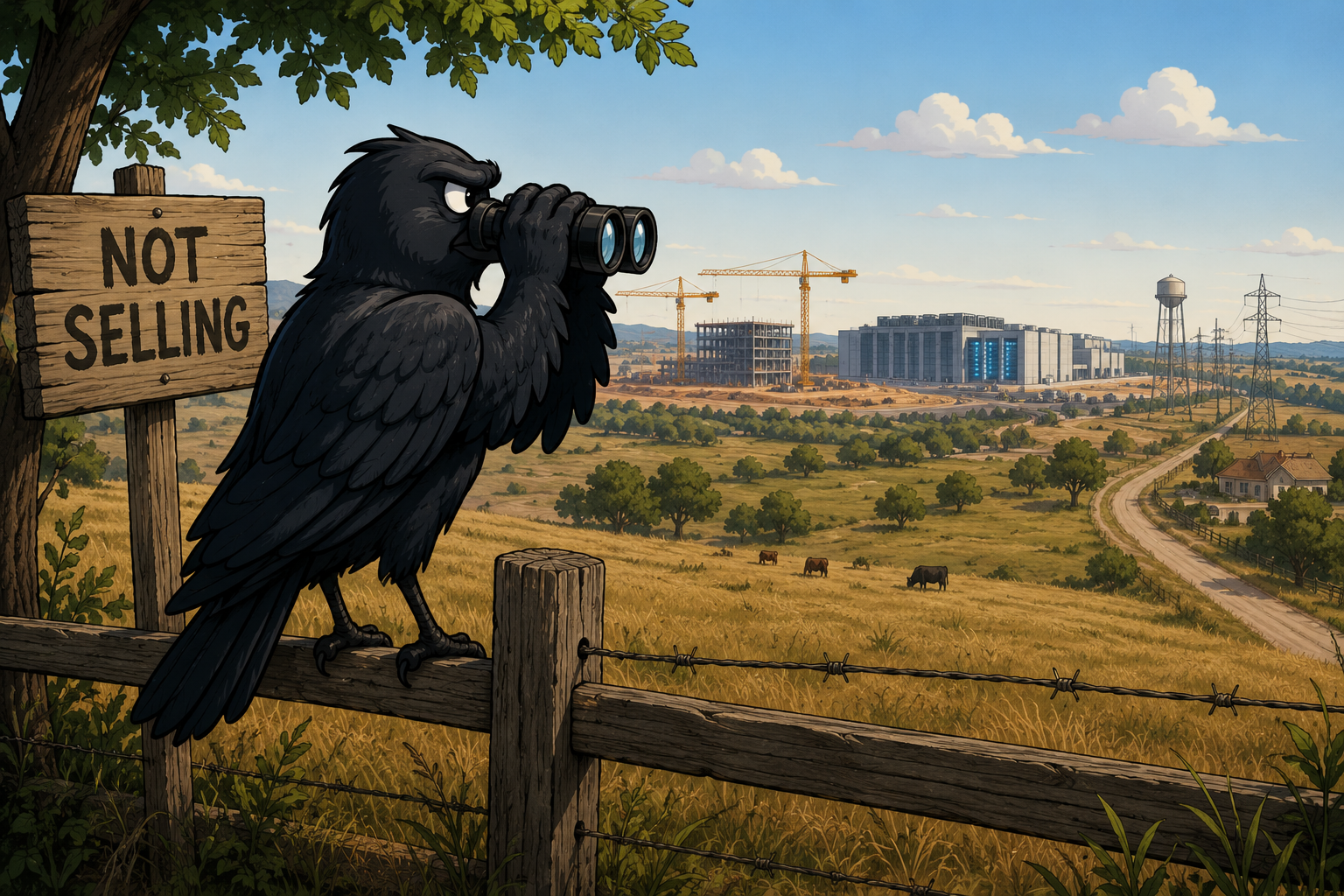
Good. Look Anyway.
Most landowners aren’t thinking about selling. If anything, they’re thinking they never will.
They’re at a 1 or a 2 on a 10-point scale. If that.
But life comes at you fast. Kids going to college. Estate planning conversations you weren’t expecting. Something happening nearby that changes how you feel about owning land there. We’re seeing that a lot right now, data centers, crypto mining operations moving into rural areas. Things that weren’t on anyone’s radar two years ago.
You can go from “I’m never selling” to “I wish I’d sold last year” faster than you’d think.
So it’s worth having a baseline. Most people agree with that in theory. Most people still won’t do it.
Because the last time they asked a question like this, they ended up in a conversation moving faster than they wanted to move. Some agent walking the property, running numbers, and applying list-now pressure that would make a timeshare salesman blush.
It’s uncomfortable.
So they wait. Market shifts. They finally get serious two years later with worse information than they would have had if they’d just asked the question when they first had it.
That’s an expensive way to stay comfortable.
The landowners who make good decisions are almost never the ones who acted fast. They’re the ones who started paying attention early. Understood the market before they needed to. Weren’t scrambling when the time came.
That takes time. And it starts before you’re ready.
Looking doesn’t mean selling. Getting a clear picture of what your land is worth, what’s selling nearby, where development pressure is headed, none of that commits you to anything. It just means you’re not guessing when it matters.
The only thing that makes early conversations uncomfortable is working with someone who treats them like a sales call.
That’s not how I operate. If you’re at a 3, I’d rather you know where things stand than stay in the dark because you were worried I’d push you somewhere you weren’t ready to go.
You control the timeline. That part is on you.
My job is simply to make sure you have the information when you’re ready to use it.
PS – Most landowners aren’t planning to sell today.
But things can change quickly. When the time comes, the people who already understand the market tend to make better decisions.
That’s what the MBR Land Reality Check is for. It looks at nearby sales, current listings, development pressure, and the details affecting value that aren’t obvious from the road.
Is it a bad idea to know where things stand?
PPS– If you’re not ready for a Reality Check but enjoy reading about land, markets, and negotiation, you can sign up below and get these posts in your inbox.