Tag: land selling strategy

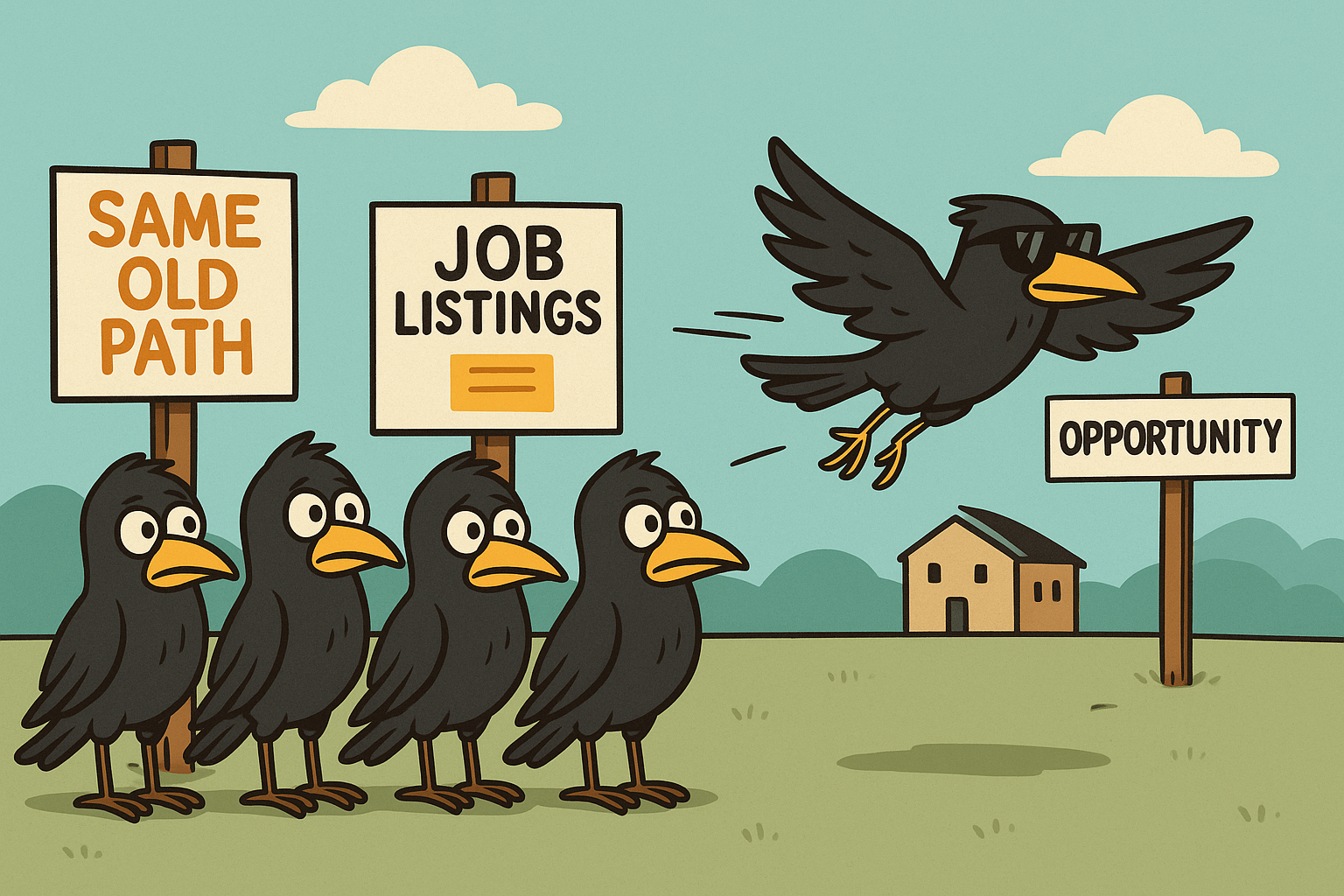
  • Doing What Everyone Else Is Doing Ain’t Enough

    Doing What Everyone Else Is Doing Ain’t Enough

    Scroll less. Do more. Whether it’s land or a job

    I’ve been helping my daughter look for a job lately. Like a lot of people, she’s been combing through Indeed and ZipRecruiter. Good places to start, but it’s only a start.

    We talked about how most job seekers stop there. They wait for something to pop up on a listing site. Then they apply—usually only if it feels like the perfect fit—and wait. And then they sit around wondering why nothing’s happening.

    If you really want to stand out, you’ve got to go further. Apply to jobs even if they’re slightly outside what you’re looking for, as long as you’re qualified. Not every opportunity gets posted. There might be a better role that isn’t public yet, or one that could be shaped around the right person.

    Check company websites directly. Reach out to businesses even if they don’t have anything listed. Tell them what you’re looking for. Get on their radar before they realize they need someone.

    Sometimes the payoff isn’t immediate. But showing initiative, doing what others won’t, leaves a mark. A hiring manager might not respond today, but when something opens up next month, they may remember the person who reached out. That kind of effort stands out.

    And don’t forget—your next job almost certainly isn’t your last, especially early in your career. The best time to find a job is like the best time to find a car: when you don’t need one.

    So when you do land something, you don’t stop looking. You just get more selective. And because you’ve already gotten yourself in front of more employers than most people, you’re ahead of the game. Your network keeps growing, and opportunities start to build on each other.

    It’s the same in real estate.

    I talk to a lot of people—buyers, sellers, curious neighbors, folks who aren’t quite ready. Most of those conversations don’t turn into a deal that day. But they all matter. The compound effect of those touchpoints builds relationships, credibility, and trust. You never know which one will circle back into something real.

    The market rewards consistency and integrity. Not every action has a dollar sign attached. But if you keep showing up and doing what others skip, you build momentum. That momentum turns into opportunity.

    If I’m running comps every day, I know a good deal when I see it—or when someone mentions wanting to sell fast. If I’m regularly talking to buyers, I know exactly who’s looking for what. When those pieces line up, it can look like an overnight success. One or two phone calls, and suddenly it’s a five or six-figure deal.

    It might sound like a lucky break. But in reality, I’ve been working on that deal for years without knowing it. And when the timing is right, it pays off.

    But I don’t stop there. I keep having conversations, sharing what I know, and doing the kinds of things that help people and add value. Working on the next opportunity—before I even realize it’s an opportunity.

    Whether you’re job hunting or buying land, the people who get ahead are the ones who do what others won’t. And they do it consistently.

    The funny thing is, all of this looks obvious in writing. But it takes years to make it work the way it really can. So if you’re thinking about buying or selling real estate, doesn’t it make sense to work with someone who’s already been doing the work that will pay off for you?


  • Who’s Buying Your Land—and Why Do They Insist on Wasting Your Time?

    Who’s Buying Your Land—and Why Do They Insist on Wasting Your Time?

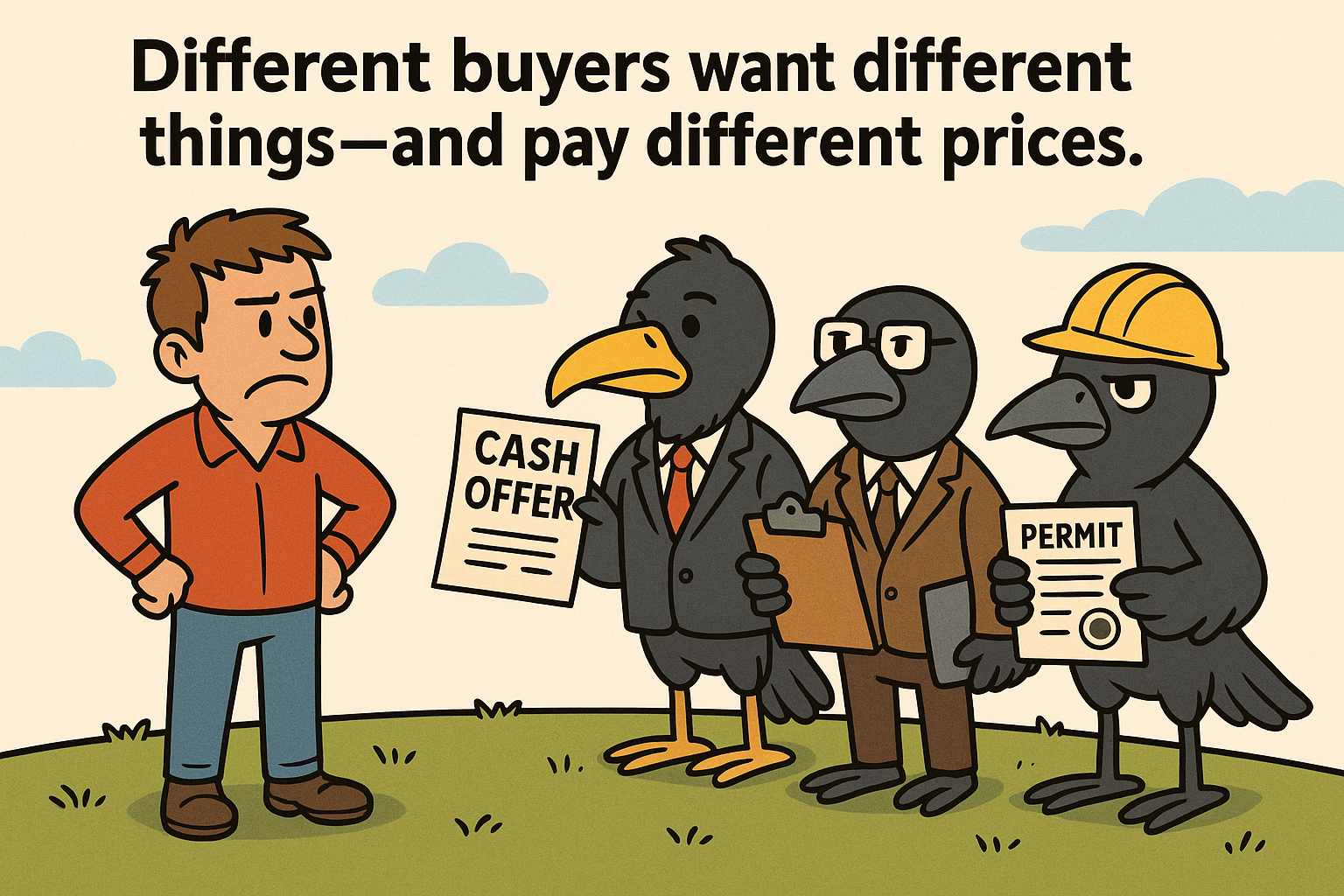
    Not all buyers need the same thing—or can pay the same price

    When you’re selling land, the dream is simple: some rich genius shows up, offers over asking in cash, and closes by 3 p.m. today.

    Unfortunately, that’s not how it usually goes.

    In the real world, buyers vary. Some will pay more than others. Some move fast, others move like molasses. And the more they’re willing to pay? The more time they’re going to need.

    That’s not a red flag—it’s just the cost of doing business, especially when permits, zoning, and government hoops are involved.

    To the uninitiated, the timelines can sound ridiculous. But they’re usually not—they just are what they are.

    This is where a pro comes in. Someone who knows what’s reasonable, how to keep the deal alive, and how to make sure you don’t end up empty-handed if it falls apart.

    If you’re in the market for a pro… I know a guy.

    Here’s a breakdown of the three main buyer types, what they pay, how they think, and how long they take to close.


    These are margin-hunters. They’re not flippers—they’re professional opportunists. The worse your situation looks, the better their offer gets (for them).

    Most of those “We want to buy your land!” letters come from this camp. They’re pulled from tax rolls, mass-printed, and sent to anyone with dirt and a mailbox. The offers are low—laughably low. But a few people say yes, and that’s all they need to make the model work.

    What They’ll Pay:

    The absolute bottom. They’re shooting for big discounts—well under market.

    Contingencies:

    Almost none. No inspections, no appraisals, no drama. They’ll usually cover closing costs to keep it simple.

    Timeline:

    Fastest. Once they’ve checked title, they’re ready to wire funds. You name the closing date.

    What They Want:

    A deal they can brag about. If you’re chasing top dollar, skip ’em. But if you’re in a jam—or chasing a better deal—they’ll clear the runway fast.

    If you do go this route, talk to more than one. Make them compete. Then call me—I’ve got real cash buyers too, and I might be able to get you more without slowing things down.


    This group includes builders, subdividers, and buy-and-hold folks. They’re not sentimental—they’re running numbers. If it pencils out, they’re interested.

    What They’ll Pay:

    More than vultures, but still under market. They’re looking for today’s discount and tomorrow’s upside.

    Contingencies:

    Some. Financing, surveys, maybe a feasibility period—but it’s all pretty reasonable.

    Timeline:

    Shorter. They won’t close overnight, but they move quickly if the deal’s clean.

    What They Want:

    Future value. Appreciation, income potential, or development opportunity. They don’t need a screaming deal—but it has to make sense on paper.


    These are end-users. They’re building a house, a business, or an entire subdivision. Real money, real plans, and usually a lot of homework.

    What They’ll Pay:

    Top of market—or even above—if your property fits what they need.

    Contingencies:

    Plenty. Surveys, engineering, environmental reports, zoning, utilities, site plans—you name it. Cities, counties, and agencies all get a say. And none of them are known for speed.

    Timeline:

    Longest. Not because they’re dragging their feet, but because the process is the process. If they need annexation, zoning, or approvals, it’s a long haul. Six months isn’t unusual—and that’s optimistic.

    What They Want:

    Certainty. They’ll pay more, but only if they’re confident they can build. No approvals = no deal. On the plus side, they pay for the due diligence. And with the right contract, you get copies of everything they generate. Worst case, you might walk away with a free survey, topo, or environmental report.


    Price, contingencies, and time all come down to the kind of buyer you’re dealing with.

    Want it done fast? Be ready to take less.

    Want top dollar? Be ready to wait.

    Know who’s across the table, and you’ll know what kind of offer’s coming. And if you want someone who can help you figure that out—I know a guy.

    Just reply here and ask me about him!