The thing about marketing something people don’t need most of the time.
I’ve written on here a lot about understanding what business you’re really in.
As a real estate broker, the obvious answer is real estate. And that’s true in a literal sense. If you hire me, you’re getting advice and brokerage services. That’s my deliverable.
But that’s not really the business.
I’m really in the marketing business.
Part of that is the visible side. Things like positioning properties, getting them in front of the right people, dealing with buyers, getting something from sitting to sold. That’s the part everyone sees.
The other part is quieter.
If you don’t know I exist, or don’t have a reason to pay attention when I show up, none of the rest of it matters.
So a lot of what I do has nothing to do with a specific property. It’s making sure that when someone does have a decision to make, I’m already in the conversation.
That’s where most people get this wrong. They think the job starts when someone decides to sell.
It doesn’t.
By the time you’re ready to act, most of the important decisions are already made—who you trust, who you listen to, what you think the market looks like. That gets set long before a listing agreement shows up.
I’ve spent a lot of time studying how that works.
One of the concepts that stuck with me is Dan Kennedy’s idea of a Unique Selling Proposition.
To get that right, you have to answer a simple question:
Why would someone choose to work with me over every other option, including doing nothing?
Most people skip that last part.
But unlike something like a haircut or a restaurant, where doing nothing isn’t really an option, here it often is. Most of the time, it’s the best option for most people. You can afford to wait and see.
Which means the bar is higher.
It’s not enough to say I can sell your property. Plenty of people can do that. The real question is whether selling is the right move in the first place.
Lots of brokers skip that step. When the only outcome is a transaction, that’s the recommendation you’re going to hear.
List it. Price it. Move it.
Sometimes that’s correct. Sometimes it isn’t. And once you’re moving, it’s a lot harder to slow down and rethink it.
So I’ve tried to structure things a little differently.
Yes, I get paid when something sells. But I’m not set up in a way where every conversation has to end there.
A lot of the time, the right move is just understanding what you have, what’s happening around it, and what your options actually look like—then deciding.
That tends to produce fewer deals. It also tends to produce better ones, with less regret.
Most landowners don’t need someone to sell their property.
They need someone who can look at it without needing that outcome.
PS- Most landowners are not planning to sell today.
But things change. Timing, markets, personal situations. When that happens, the people who already understand where they stand tend to make better decisions.
That’s what the MBR Land Reality Check is for.
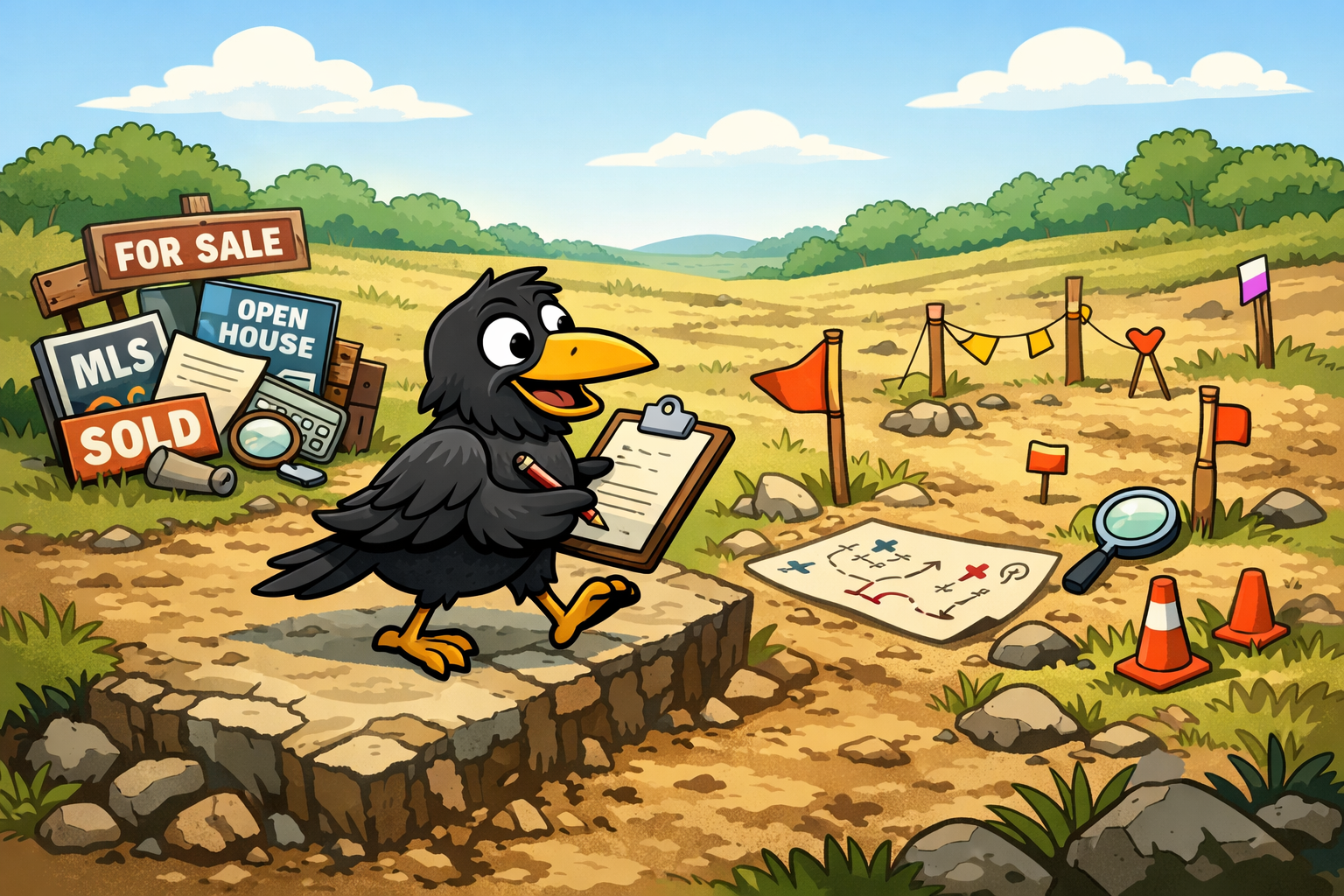
It looks at nearby sales, current listings, development pressure, and the details affecting value that aren’t obvious from the road.
Is it a bad idea to know where things stand?
PPS- If you’re not ready for that but like thinking through land, markets, and negotiation, you can sign up below and get these posts in your inbox.