Tag: Land Investment Strategy

  • Before You Buy Land, Know How You’ll Exit

    Before You Buy Land, Know How You’ll Exit

    You make your money when you buy, not when you sell.

    Most investors nod at that line.

    Fewer think through the second half of it.

    If you’re buying land as an investment, you should have a clear idea of how you could exit.

    Not because you need to commit to one path.

    But because you need to understand your options.

    If you’re buying to build immediately, that’s simple. The exit is the finished product.

    But when you’re buying raw land to hold, development may be years away. Markets shift. Infrastructure moves. Capital tightens or loosens.

    You don’t want to discover later that your only plan was wishful thinking.

    Before you close, make a short list of realistic exits:

    • Sell the entire tract to the next investor
    • Divide it and sell in smaller pieces if the layout allows
    • Solve zoning and development hurdles, then sell it “teed up”
    • Develop it yourself

    Each of those paths requires a different level of time, money, and involvement.

    The mistake is locking yourself into one of them too early.

    I once knew a commercial site owner in a small town who was convinced his property was a future hotel site.

    And he might not have been wrong.

    But he was wrong about timing.

    He spent years waiting for the perfect hotel flag. Passed up solid offers from other users. Dismissed anything that didn’t fit his vision.

    Twenty years later, there are still no hotels in that town.

    Being early and being wrong often look the same.

    Land rewards patience.

    But it punishes rigidity.

    The way I typically advise investors is simple:

    If the deal works at the lowest intensity — buy it, hold it, and sell it later at reasonable appreciation — it will usually work on the higher-effort exits as well.

    That gives you flexibility.

    You buy discipline and hold optionality.

    But you have to think about it beforehand.

    Because once you own it, emotion starts creeping in.

    And emotion is rarely part of a good exit strategy.


    P.S. If you own land, you might not be ready to sell today.
    But clarity should come before urgency.

    That’s what the MBR Land Reality Check provides — a market-grounded opinion of value based on real sales, real demand, and current positioning.

    No cost. No obligation. Just clarity before decisions.


    P.P.S. Not ready for a formal review?

    You can still enter the circle.

    I write regularly about land positioning, negotiation, growth corridors, and investment mechanics. If you’d like those notes in your inbox,

  • Gambling When You Don’t Realize It

    Gambling When You Don’t Realize It

    Everyone knows investing involves risk.

    What most people don’t realize is when they’re gambling.

    Most landowners I talk to have received unsolicited offers in the mail.

    A lot of them are laughable. Half of what the property is worth. Easy to ignore.

    But not all of them.

    Sometimes the number is decent. Not full retail, but not absurd either.

    If a property would reasonably sell for $200,000 and net about $185,000 after expenses, an unsolicited net of $170,000 to $175,000 gets your attention.

    So they bring it to me.

    The first questions I ask are simple:

    How long to close?
    How much earnest money?

    Almost every time it’s something like a six-month close and $500 down.

    I tell them I could be wrong, but the odds of that buyer closing with their own money are close to zero.

    They are contracting your property and spending six months trying to flip the contract to someone else.

    If they succeed, maybe they make $10,000 to $15,000.

    If they fail, they lose $500.

    If they hit even one out of three, that’s a solid business model.

    They are gambling.

    Which is fine, as long as they understand the math and believe they have an edge.

    Now look at it from the other side.

    If you own a custom home lot you’ve decided not to build on, you probably tell yourself you’re holding it as an investment.

    And maybe you are.

    But you’re gambling too — and you may not realize it.

    Not in the abstract “everything has risk” sense.

    I mean you’re writing checks every year just to stay in the game.

    If property taxes are $5,000, HOA dues $2,000, and mowing another $500, that’s $7,500 out of pocket every year.

    The lot has to appreciate at least $7,500 just to break even.

    Some years it does.

    Some years it doesn’t.

    Markets don’t move in straight lines.

    And unlike a stock, you don’t see the price update daily.

    The bills, however, show up right on time.

    Now compare that to rural land with an ag exemption.

    Minimal taxes.
    No HOA.
    A farmer keeping it maintained.

    Your carrying cost might be a few hundred dollars instead of several thousand.

    That property can appreciate more slowly and still produce a better return because you’re not constantly feeding it cash.

    I’m not saying you have to sell.

    But you should at least know the math.

    Because whether you call it investing or not, you’re placing a bet.

    The only question is whether you understand the odds.


    P.S. You may not have to sell. But it would be wise to know exactly where you stand.

    That’s what you get with a MBR Land Reality Check.

    No cost. No obligation. Just clarity before decisions.


    P.P.S. If you’re not ready to even see the value of your property but like reading these you can get them in your inbox (daily) here:

  • It’s Not Too High For Everyone

    It’s Not Too High For Everyone

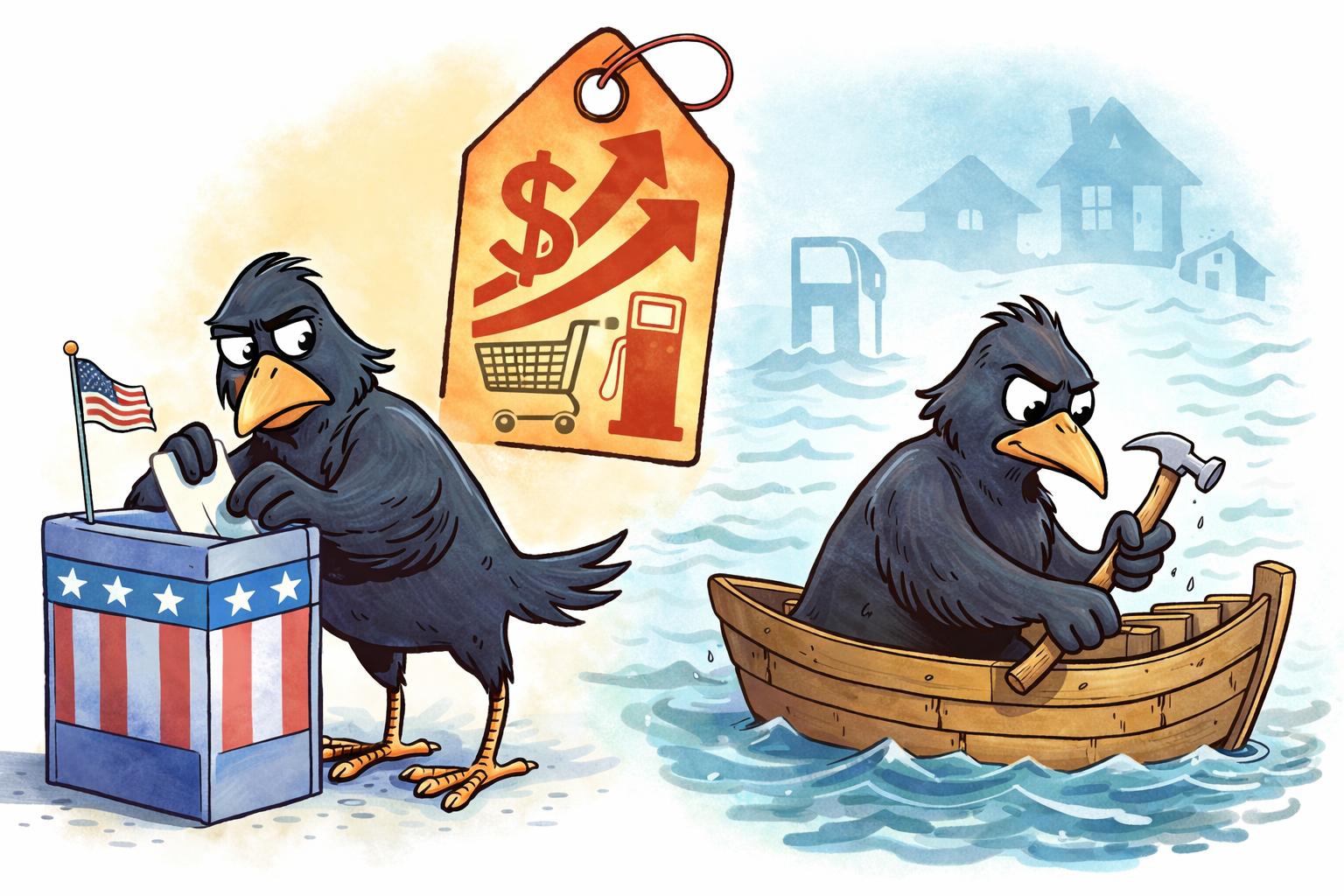
    I don’t know if it’s because today is primary election day where I live, but for some reason I thought of the “Rent Is Too Damn High” guy from New York.

    I don’t remember his name.

    I don’t even remember what office he was running for. Mayor, I think.

    But I remember the slogan.

    Give him credit for one thing. You don’t remember most politicians’ campaign lines. That one stuck.

    It had the same problem those Progressive “Don’t turn into your parents” ads had. I loved the ads but for the longest time I couldn’t remember what they were selling.

    Rent was too high. That’s all I knew.

    And here we are, years later, and politicians are still running on the same thing. Different words, same pitch.

    Groceries are too high.
    Gas is too high.
    Housing is too high.
    Somebody isn’t paying their “fair share.”

    That message never goes out of style because it feels true.

    Costs do go up.

    But here’s the uncomfortable part.

    Prices are mostly outside your control. And politicians.

    Your income isn’t.

    You can spend a lifetime voting for someone who promises to make everything cheaper.

    Or you can spend that same lifetime figuring out how to make yourself more valuable so you can make more money.

    One of those gives you control.

    The other gives you a yard sign.

    Even in real estate I see this constantly.

    People tell me land prices are crazy.

    Sometimes they are.

    But I’ve watched plenty of landowners quietly get wealthier while prices were “crazy” because they positioned themselves correctly, reduced taxes legally, structured deals well, and focused on making smart decisions instead of arguing with the market.

    You don’t lower the tide by yelling at the ocean.

    You either build a better boat or move uphill.

    I won’t tell you who to vote for.

    But don’t confuse politics with a personal income strategy.

    If rent is too high, the long-term answer isn’t hoping someone else fixes it.

    It’s becoming the kind of person for whom it isn’t too high anymore.


    PS- For people who want to make smart decisions involving their land, I offer the MBR Land Reality Check for any non residential property.

    No cost. No obligation. Just clarity that benefits you no matter what you decide.


    PPS- Not ready for a valuation yet but enjoy reading stuff like this? Enter the inner circle and get them in your inbox daily

    .

  • The Myth of the Perfect Market

    The Myth of the Perfect Market

    People waste a lot of time waiting for the market to become “perfect.”

    Perfect for buying.
    Perfect for selling.
    Perfect for building.
    Perfect for subdividing.
    Perfect for investing.

    Much of the time, it seems like their main fear is that other people are going to point out how they screwed up after the fact.

    If you wait long enough, the perfect moment eventually shows up… about two years after it would have done you any good.

    I’ve watched this play out for two decades:

    someone waits and waits and waits because they’ve convinced themselves they’re going to catch the absolute top or the absolute bottom. They think there’s going to be a magic bell that rings to tell them, “OK, now.”

    That bell doesn’t exist. The perfect market doesn’t exist.

    Only hindsight pretends it does.

    And hindsight is a world-class liar.

    Real estate — and land especially — never lines up neatly.

    Interest rates rise.
    Then construction costs fall.
    Then inventory drops.
    Then a factory announces expansion.
    Then a buyer disappears.
    Then a new buyer shows up out of nowhere.

    It’s never tidy.
    It’s never predictable.
    And it never waits for you.

    Here’s the truth:

    Most success in land deals doesn’t come from timing.
    It comes from clarity and execution.

    Clarity means knowing what you want out of the transaction before you start.

    Execution means acting when the numbers make sense — not when the voices in your head finally stop arguing.

    The people who do well aren’t the ones who wait for perfect conditions.

    They’re the ones who look at the information in front of them today, make a plan, and move. Or don’t. If it makes sense to wait.

    They adjust when new information arrives.
    They don’t re-litigate the decision every morning.
    They don’t pull back because their neighbor’s cousin said “the market’s about to crash.”
    They don’t freeze because the new highway is “probably” moving three years from now.

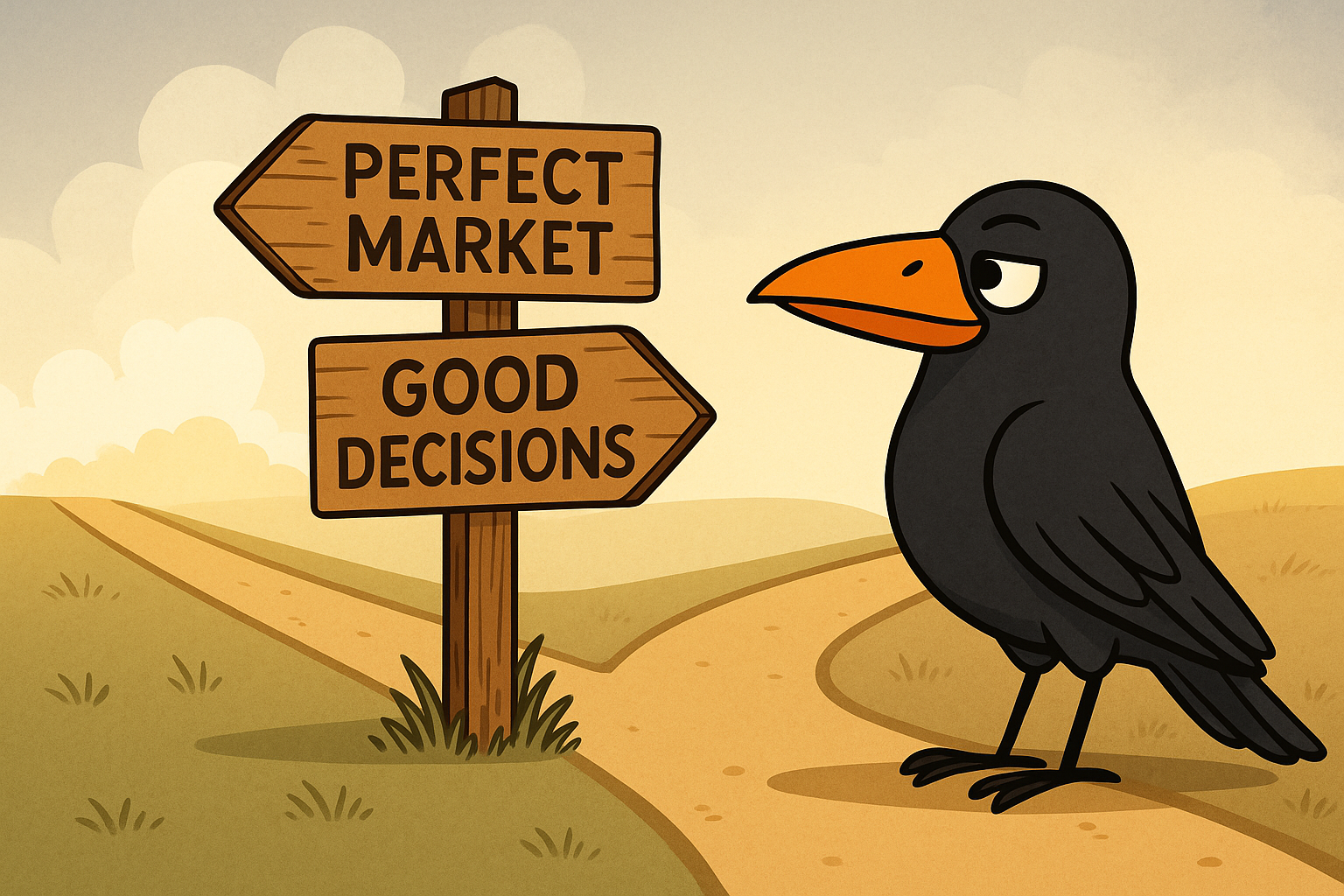
    Perfect markets are a mirage.

    Good decisions are real.

    And good decisions tend to have a few things in common:

    1. The price makes sense today.
    Not “if rates fall.” Not “if a developer shows up.” Today.

    2. The timeline fits your life.
    If you don’t want to hold something for five more years, that matters more than whatever Yahoo Finance says.

    3. The numbers work even without the dream scenario.
    If a deal only makes sense with the perfect buyer, perfect zoning, perfect weather, and perfect timing… it’s not a deal.

    4. You’re not trying to outsmart the universe.
    Markets reward discipline, not clairvoyance.

    There is no perfect moment.

    There’s only the moment when the facts line up well enough that you can move confidently.

    People who act on “good enough” usually beat the people waiting on “perfect” — because they’re actually in the game.

    Pick your direction. Know your numbers. Then act.

    Everything else is noise.

    PS- It may not be the right time for you to buy or sell land today. But is it ever a bad time to have the most current information?

    I offer a free, no obligation value report on any property (non residential). All you have to do is click the relevant link below to get started.

    No pressure, no BS, just straight talk.

    Is it crazy to want to deal with someone like that?

    Click Below: